自动驾驶

Search documents
黄仁勋与李飞飞,让AI不止于“动嘴”
首席商业评论· 2026-01-07 10:00
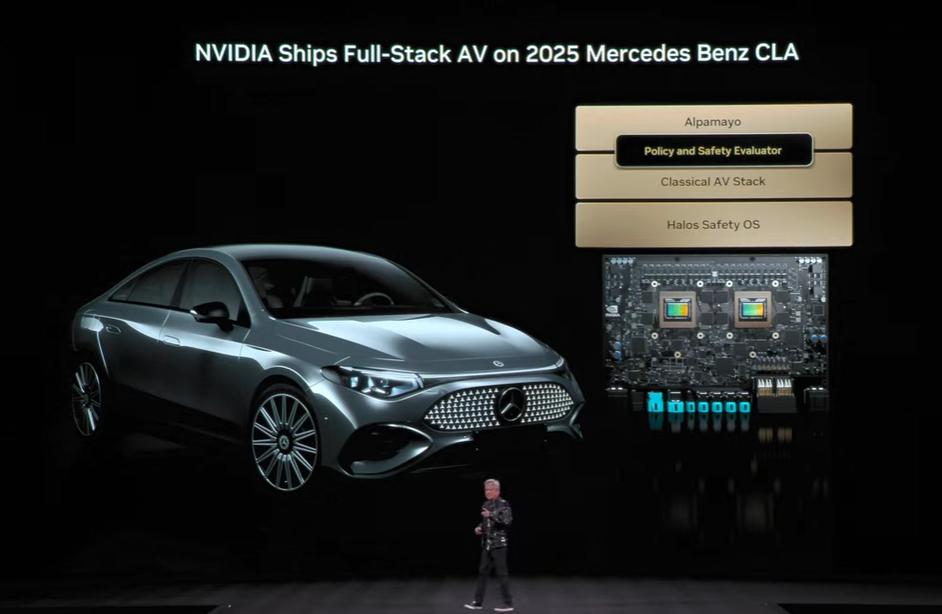
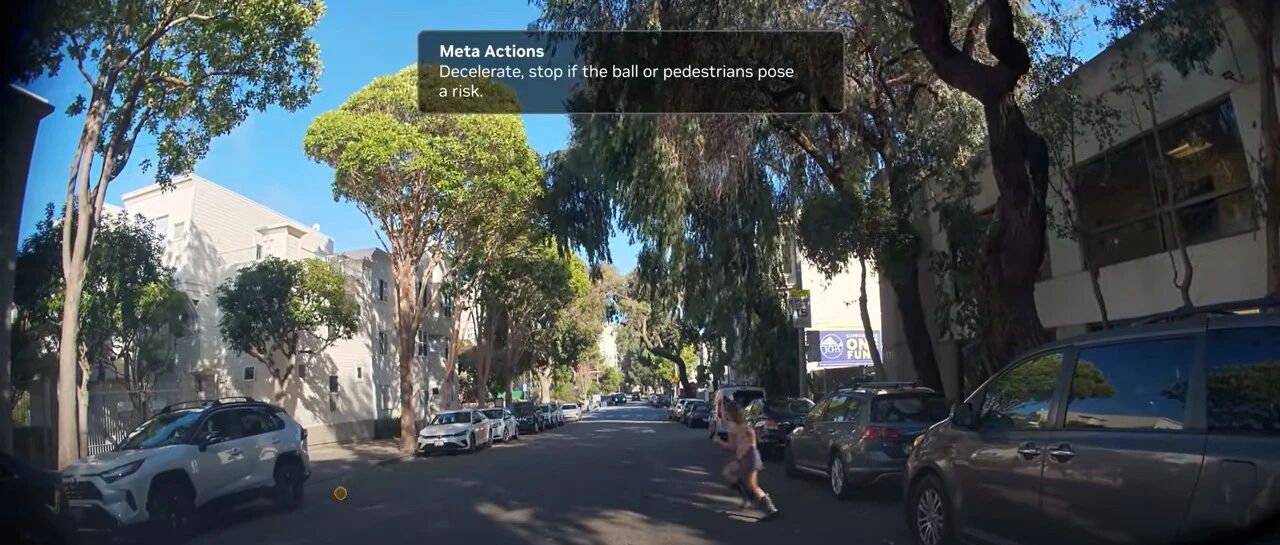
Core Viewpoint - NVIDIA's CEO Jensen Huang announced a historic shift from "Generative AI" to "Physical AI" and "Reasoning AI" during his keynote at CES 2026, marking a significant evolution in AI technology [1]. Group 1: Product Announcements - The Vera Rubin platform has entered full production, with delivery expected in the second half of 2026. Its inference performance is five times that of the previous Blackwell generation, and training performance is 3.5 times better, while the cost of generating AI tokens has been reduced to one-tenth of the previous cost [1]. - The Cosmos Physical AI platform was introduced, featuring foundational models like Reason2 and Predict2.5, which can learn physical laws through video and telemetry data, enabling AI to understand gravity, collisions, and physical properties of objects [3]. - The Alpamayo reasoning-based autonomous driving model was unveiled as the first model capable of "thinking," allowing it to logically reason through complex scenarios rather than relying solely on preset rules. The first vehicle equipped with this system, the Mercedes-Benz CLA, is set to hit the roads in the U.S. in Q1 2026 [3]. Group 2: Strategic Vision - NVIDIA aims to become the "Android" of general robotics by providing the Isaac platform and open-source models, thereby lowering the barriers to robot development. This signifies a pivotal moment for Physical AI, where embodied intelligence could become as ubiquitous as smartphones [5]. - The introduction of the Alpamayo model indicates a new pathway for autonomous driving, moving away from the reliance on vast amounts of data to a reasoning model that can handle unprecedented extreme situations, suggesting the potential for commercial viability in fully autonomous driving [5]. - Huang highlighted the narrowing gap between open-source and closed-source models, emphasizing NVIDIA's strategy to build a global open ecosystem powered by its chips through the open-source Alpamayo and Cosmos platforms [5]. Group 3: Comparison with Other Initiatives - There is a connection between NVIDIA's Physical AI and Fei-Fei Li's "World Model," both aiming for AI to evolve from a symbolic understanding of text to a three-dimensional understanding of the physical world. However, their paths and commercial ecosystems differ [6][7]. - Li's World Lab focuses on creating a model architecture for understanding the real world with both academic and practical purposes, while NVIDIA aims to establish an operating system for Physical AI [9]. - The competition for defining "Physical AI" exists, but there is also a complementary aspect in hardware, as NVIDIA possesses chips and open-source systems. The distinction lies in NVIDIA's engineering focus compared to Li's more abstract approach [9].


小米&杭电提出ParkGaussian:业内首个泊车场景重建算法,效果还不错
自动驾驶之心· 2026-01-07 09:44
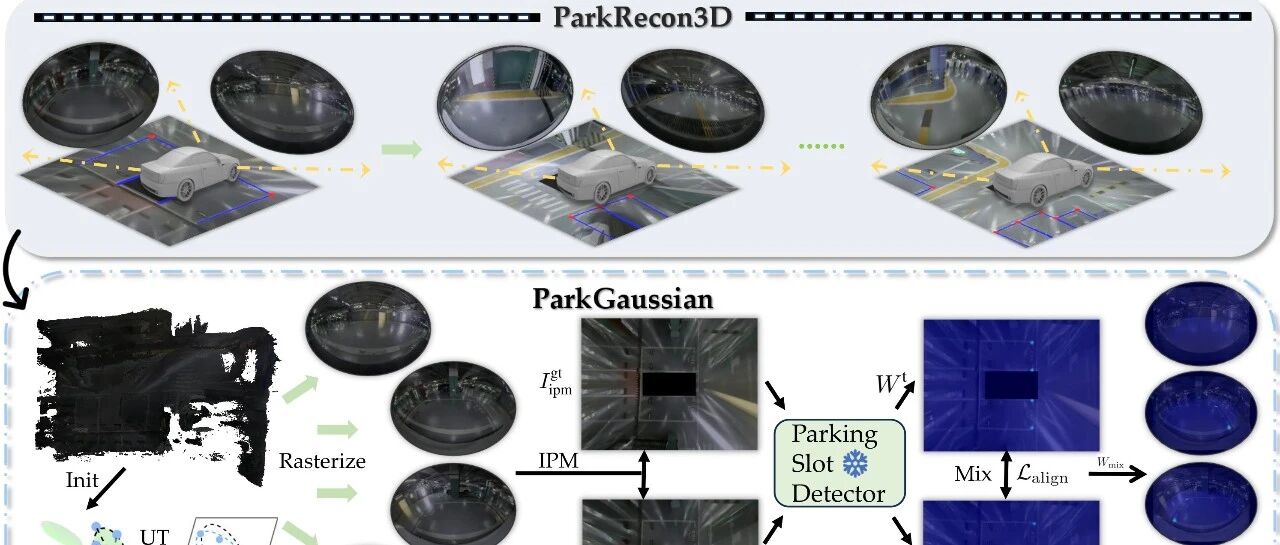
Core Viewpoint - The article discusses the development of ParkGaussian, a framework designed for 3D reconstruction of parking scenarios, which significantly enhances the quality of parking space detection and reconstruction in autonomous driving systems [2][8][57]. Group 1: Background and Importance - Autonomous parking is a critical component of autonomous driving systems (ADS), facing unique challenges in environments with limited GPS signals and complex spatial geometries [3][4]. - Existing research has primarily focused on 2D parking space perception and mapping, with insufficient exploration in 3D reconstruction, which is essential for capturing the intricate geometries of parking scenarios [2][3]. Group 2: ParkRecon3D Dataset - The ParkRecon3D dataset is the first benchmark specifically designed for 3D reconstruction in parking scenarios, containing over 40,000 frames of synchronized sensor data and 60,000 accurately labeled parking spaces [5][11][8]. - The dataset was collected in an underground parking lot using four calibrated fisheye cameras, providing a comprehensive resource for training and evaluating 3D reconstruction models [11][5]. Group 3: ParkGaussian Framework - ParkGaussian integrates 3D Gaussian Splatting (3DGS) with a parking space perception reconstruction strategy, enhancing the fidelity of reconstructed parking areas [8][6]. - The framework utilizes a novel approach to align the reconstruction process with downstream perception tasks, ensuring that the generated data is consistent with real-world parking space detection [6][20]. Group 4: Experimental Results - Experiments demonstrate that ParkGaussian achieves state-of-the-art reconstruction quality on the ParkRecon3D dataset, outperforming existing methods that focus solely on visual fidelity [48][49]. - The integration of the parking space perception strategy significantly improves detection performance, with both DMPR-PS and GCN-Parking networks achieving near-real-world detection accuracy [49][50]. Group 5: Limitations and Future Work - The ParkRecon3D framework faces inherent challenges in underground parking environments, such as mirror reflections, repetitive textures, and motion blur under low light conditions, which will be addressed in future research [55][57].

禾赛科技:成为英伟达 DRIVE AGX Hyperion 10 平台激光雷达合作伙伴 共推 L4 级自动驾驶规模化落地
Zhong Guo Qi Che Bao Wang· 2026-01-07 09:38
Group 1 - Hesai Technology has been selected by NVIDIA as a laser radar partner for the "NVIDIA DRIVE AGX Hyperion 10 platform," aimed at supporting L4-level autonomous driving [1][3] - The DRIVE Hyperion architecture is expanding its sensor ecosystem, covering cameras, millimeter-wave radar, laser radar, and ultrasonic technology, providing full-stack support for L4-level autonomous driving perception systems [3] - The DRIVE AGX Hyperion 10 platform features two NVIDIA DRIVE AGX Thor system-on-chip units, delivering over 2000 FP4 TFLOPS of computing power, sufficient for real-time data fusion from 360-degree sensors [3] Group 2 - NVIDIA's automotive VP emphasized that the DRIVE Hyperion platform is crucial for the transition to autonomous driving, integrating computing, sensors, and safety features into a unified open platform [4] - Hesai Technology will use its ETX laser radar as the core product for this collaboration, designed for L3 and L4 autonomous driving scenarios, featuring high resolution and long-range detection capabilities [4] - This partnership marks a significant milestone in the long-term collaboration between Hesai Technology and NVIDIA, reinforcing Hesai's position as a trusted core partner within NVIDIA's ecosystem [4] Group 3 - Looking ahead, Hesai Technology aims to collaborate with global automotive manufacturers to accelerate the marketization of next-generation autonomous driving technology, contributing to the upgrade of the global smart mobility industry [5]

黄仁勋CES回应全场!内存卡了GPU脖子,游戏玩家可能只能用旧显卡了
量子位· 2026-01-07 09:11
Core Viewpoint - Huang Renxun emphasizes that robots are the "AI immigrants" capable of taking on jobs that humans are unwilling to do, highlighting the need for AI to support economic growth and job creation [10][11]. Group 1: AI and Robotics - Huang states that the "robot revolution" will drive economic progress and create more job opportunities while maintaining low inflation levels [11]. - He predicts that by the end of this year, robots will achieve human-level capabilities in mobility, joint movement, and fine motor skills [12]. - The development of robots requires not only visual perception but also tactile capabilities, which poses significant technical challenges [13]. Group 2: Autonomous Driving - Huang introduced the world's first open-source, large-scale autonomous driving visual-language-action (VLA) reasoning model, Alpamayo 1, and praised Tesla's FSD technology as world-class [15][16]. - NVIDIA's role is to provide a complete technology stack for companies developing autonomous vehicles, rather than manufacturing the vehicles themselves [16][20]. - The company has a high industry penetration rate, with over 1 billion vehicles on the road, and expects that millions will have strong autonomous driving capabilities in the next decade [20]. Group 3: AI Infrastructure and Memory Supply - Huang introduced NVIDIA's next-generation AI supercomputing platform, Vera Rubin, and discussed the challenges posed by rising memory prices and supply constraints [24][25]. - The company is positioned as a key player in the memory market, addressing the growing demand for high-bandwidth memory (HBM) and collaborating closely with suppliers to ensure production capacity aligns with product launches [36]. Group 4: Gaming and AI - NVIDIA upgraded its super-resolution model with the new DLSS 4.5 version, indicating a shift towards AI-driven gaming experiences [31]. - Huang predicts that future video games will be filled with AI characters, significantly enhancing realism and interactivity [32][33].

美股异动丨Mobileye盘前大涨超10%,官宣9亿美元收购机器人公司Mentee
Ge Long Hui· 2026-01-07 09:10
值得注意的是,两家公司均由以色列计算机科学家Amnon Shashua共同创立,他目前担任Mobileye首席 执行官,同时也是Mentee的董事长。Mentee的另一位联合创始人Shai Shalev-Schwartz则是Mobileye的首 席技术官。对此,Mobileye表示,Amnon Shashua在此次收购决策中回避表决,该交易已获得Mobileye 董事会及其最大股东英特尔的批准。(格隆汇) 自动驾驶技术公司Mobileye(MBLY.US)盘前大涨超10%,报13.41美元。消息面上,Mobileye公布,将以 现金加股票的方式收购以色列人形机器人初创公司Mentee Robotics,交易价值9亿美元。公司称,交易 包括6.12亿美元现金和最多2622.97万股Mobileye A类普通股,预计于今年第一季完成交易。 ...


人文交流与“智造出海”助力中国与海湾国家合作
Xin Hua She· 2026-01-07 07:47
Group 1: Cultural Exchange and Human Connection - The "China-Saudi Cultural Year" has led to increased cultural exchanges, with over 60 events promoting mutual understanding and strengthening the strategic partnership between China and Saudi Arabia [2][6] - Activities included exhibitions of Chinese minority heritage and tea culture, performances of operas, and immersive experiences in Saudi Arabia, enhancing cultural appreciation among Gulf nations [2][3] Group 2: Technological Collaboration and Economic Opportunities - Chinese companies are entering the Gulf market with innovations in autonomous driving, exemplified by the launch of the first self-driving taxi service in Saudi Arabia [4] - Approximately 300 Chinese tech firms showcased advancements in AI, IoT, and digital governance at the Gulf Information Technology Exhibition in Dubai, indicating strong interest in Chinese technology products [4] - The partnership in renewable energy is growing, with companies like BYD signing contracts for energy storage projects in Saudi Arabia, highlighting the shift towards sustainable energy solutions [5] Group 3: Strengthening Multilateral Cooperation - The ASEAN-China-GCC summit in May 2025 emphasized enhanced cooperation in trade, investment, and energy transition, signaling a commitment to future collaboration [5][6] - The Gulf Cooperation Council (GCC) Secretary-General expressed a desire for a free trade agreement with China, indicating a high level of trust and strategic partnership [5][6]
黄仁勋称特斯拉FSD代表自动驾驶机器人领域最先进的技
Jin Rong Jie· 2026-01-07 07:10
Core Insights - Nvidia CEO Jensen Huang praised Tesla's Full Self-Driving (FSD) system advancements, stating that the approach taken by Tesla, led by Elon Musk, is "unassailable" [1] - Huang highlighted the differences between Nvidia's autonomous driving AI platform, Alpamayo, and Tesla's FSD technology, noting that Alpamayo integrates vision, radar, and lidar technologies, while still being "quite similar" to Tesla's approach [1] - Huang believes Musk's method represents the most advanced technology in the current autonomous driving robotics field [1] Financial Commitments - Musk revealed that by the end of this year, Tesla's cumulative investment in Nvidia hardware for training will reach approximately $10 billion, and without its own AI4 chip, this amount could potentially double [1] Competitive Landscape - Musk expressed hope that Nvidia will succeed in its exploration of autonomous driving technology, indicating that it may take 5 to 6 years for Nvidia's technology to pose a competitive challenge to Tesla's FSD system [1]

特稿丨人文交流与“智造出海”助力中国与海湾国家合作
Xin Hua She· 2026-01-07 06:44
Group 1: Cultural Exchange and Human Connection - The "China-Saudi Cultural Year" has led to over 60 cultural exchange activities, enhancing mutual understanding and strengthening the strategic partnership between China and Saudi Arabia [2] - Events included exhibitions of Chinese minority heritage and tea culture, performances of operas, and immersive experiences in Saudi Arabia, fostering deeper cultural interactions [2] - Similar cultural activities have been organized in other Gulf countries, such as Qatar and Kuwait, increasing local interest in Chinese culture [2] Group 2: Technological Collaboration and Market Expansion - Chinese companies are entering the Gulf market with innovative technologies, such as autonomous driving services launched by WeRide in Saudi Arabia [4] - Approximately 300 Chinese tech firms showcased advancements in AI, IoT, and digital governance at the Gulf Information Technology Exhibition in Dubai, indicating strong regional interest in Chinese technology [4] - Partnerships in renewable energy are emerging, with companies like BYD signing contracts for energy storage projects in Saudi Arabia, highlighting the growth of the "new energy + storage + manufacturing" model [4][5] Group 3: Future Cooperation and Strategic Partnerships - The ASEAN-China-GCC summit in May 2025 emphasized enhanced cooperation in trade, investment, and energy transition, signaling a commitment to future collaboration [5] - The Gulf Cooperation Council (GCC) Secretary-General expressed a desire for a free trade agreement with China and anticipation for upcoming summits, indicating a high level of diplomatic engagement [6] - The ongoing collaboration between China and Gulf countries is expected to evolve into more concrete and sustainable partnerships, driven by mutual learning and shared development goals [6]
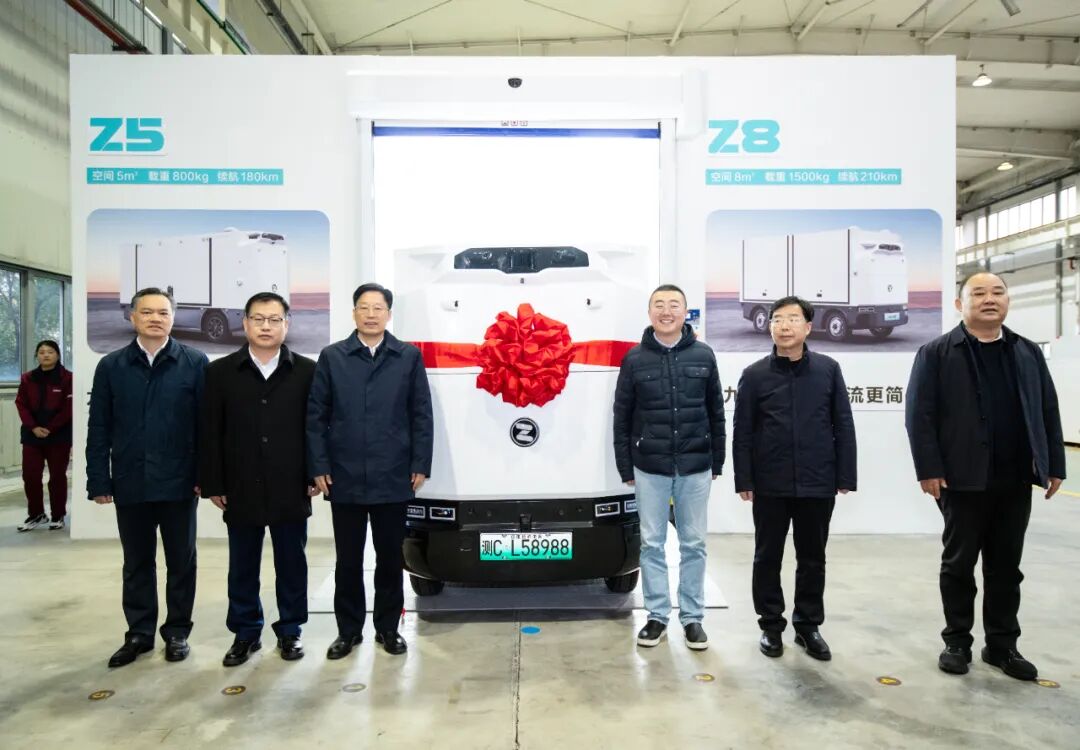
九识智能自动驾驶物流配送车阜阳生产基地正式投产
Xin Lang Cai Jing· 2026-01-07 04:56
Core Viewpoint - The official launch of the autonomous logistics delivery vehicle production line by Jiushi Intelligent at the Jiangqi Group's Fuyang production base marks a significant milestone in the collaboration between Fuyang City, Jiushi Intelligent, and Jianghuai Automobile, aimed at advancing technological and industrial innovation integration [1][3][9]. Group 1: Company Developments - Jiushi Intelligent has invested 1 billion yuan in Fuyang, planning to establish a production base with an annual capacity of 20,000 autonomous logistics delivery vehicles [7][13]. - The project from initiation to the first vehicle off the line took only two months, showcasing the rapid execution capabilities of Jiushi Intelligent and its partners [11]. Group 2: Strategic Goals - The collaboration aims to leverage Fuyang's advantages in talent, transportation, logistics, and industrial support to create a leading production base and ecosystem for autonomous logistics vehicles [3][9]. - Jiushi Intelligent plans to develop a comprehensive ecosystem covering research and development, manufacturing, operation, and service, contributing to improved urban operational efficiency and innovative urban governance models [5][11]. Group 3: Industry Impact - The partnership is expected to enhance the integration of technology and manufacturing, with a focus on creating a robust supply chain and industry ecosystem for smart connected new energy vehicles [1][3]. - Jiushi Intelligent is recognized as a leading player in the autonomous driving sector, having achieved large-scale operations in urban logistics with its self-developed L4 autonomous driving technology [7][13].

黄仁勋的“物理 AI 革命”:Alpamayo 让自动驾驶学会 “思考”
3 6 Ke· 2026-01-07 03:48
Core Insights - Nvidia's CEO Jensen Huang announced the arrival of "physical AI" at CES 2026, highlighting the transformative potential of the Alpamayo autonomous driving AI system, which signifies a shift from "data-driven" to "reasoning-driven" autonomous driving [1][10] Group 1: Alpamayo's Technological Breakthrough - Alpamayo addresses the "long tail problem" in autonomous driving, where 99% of scenarios can be covered by data, but the remaining 1% poses significant safety risks. Traditional solutions focused on accumulating vast amounts of data, which are costly and insufficient for unprecedented scenarios [2] - Alpamayo is the first visual-language-action (VLA) model that enables autonomous systems to possess "human-like reasoning capabilities." It breaks down problems similarly to human drivers, enhancing decision-making safety and providing clear directions for system optimization [2][3] Group 2: Development Ecosystem and Partnerships - Alpamayo employs a 10 billion parameter architecture and supports trajectory generation and reasoning logic from video inputs. Nvidia has created a comprehensive development ecosystem, including the open-source AlpaSim simulation framework and a dataset of over 1,700 hours of physical AI data [3][5] - The first vehicle equipped with Alpamayo will be launched in the first quarter of 2026 in partnership with luxury car manufacturer Mercedes-Benz, marking a significant step in Nvidia's dominance in the autonomous driving sector [5][7] Group 3: Market Position and Competitive Landscape - Nvidia's strategy combines "hardware dominance" with "algorithmic ecosystem dominance," allowing automakers to quickly access advanced autonomous driving capabilities without starting from scratch [7][10] - The introduction of Alpamayo shifts the competitive focus in the autonomous driving industry from "computational power" and "data volume" to "reasoning capabilities," potentially redefining the competitive landscape [10][11] Group 4: Implications for the Industry - For traditional automakers, Alpamayo presents both opportunities and challenges. The open-source ecosystem lowers the barrier for high-level autonomous driving development, enabling smaller companies to compete without massive R&D investments [11] - Tech companies like Google Waymo and Baidu Apollo must accelerate their reasoning model development to remain competitive, while chip manufacturers need to adapt to the new demands of integrating reasoning models with computational power [11][9]