商业航天

Search documents
和讯投顾吴钰莹:大跌的原因找到了,这个市场到底怎么了?
Sou Hu Cai Jing· 2026-02-02 13:18
Core Viewpoint - The recent decline in the A-share market is primarily driven by external factors rather than domestic issues, with significant movements in global markets influencing investor behavior [1] Group 1: Market Performance - The Shanghai Composite Index dropped by 142 points over two days, with many stocks hitting the daily limit down [1] - The commercial aerospace sector had just begun to recover, while precious metals experienced a significant decline [1] Group 2: External Influences - Large capital is seeking to avoid uncertainties in the external environment, affecting not only the A-share market but also U.S. stocks and Bitcoin, which have also seen declines [1] - The tightening of external liquidity is identified as the root cause of the market downturn, particularly impacting the technology sector that relies on loose monetary policies [1] Group 3: Market Sentiment and Future Outlook - The current situation in the precious metals futures market shows no signs of stabilization, which is crucial for the recovery of the A-share market [1] - A potential short-term pain is preferred over a prolonged decline, as smart capital may take the opportunity to acquire undervalued assets [1] - Maintaining a positive mindset is emphasized, as the market will continue to evolve and investors need to engage with the right market leaders [1]
当VC开始"团购"项目:揭秘2025年最拥挤的13轮融资,谁在为高估值买单?
3 6 Ke· 2026-02-02 13:08
Core Insights - In 2025, China's primary market witnessed a unique "queueing up" phenomenon, with numerous hard tech companies attracting multiple investors in single rounds of financing, indicating a shift in investment strategies towards collective participation rather than individual dominance [1][13] Group 1: Investment Trends - A total of 13 projects in 2025 had over 15 investors in single financing rounds, covering strategic sectors such as AI chips, commercial aerospace, robotics, semiconductors, and biomedicine [1][2] - Notable companies include Mu Xi Co., Ltd. (C round, nearly 50 investors), Qingwei Intelligent (C round, 24 investors), and the Hainan Commercial Aerospace Innovation Center (angel round, nearly 30 investors) [2][3] Group 2: Mu Xi Co., Ltd. Case Study - Mu Xi Co., Ltd. completed a record financing round in February 2025, raising over 7.2 billion yuan with nearly 50 investment institutions participating, marking it as the most participated equity transaction in the primary market for the year [3][4] - The investor lineup included state-owned institutions, market-oriented VC/PE firms, and industrial capital, showcasing a diverse range of market participants [4][5] - The motivation behind the investment was driven by the urgency for domestic AI computing power alternatives due to restrictions on high-end chips from Nvidia, positioning Mu Xi as a key player in the domestic GPU market [5][6] Group 3: Hainan Commercial Aerospace Innovation Center - The Hainan Commercial Aerospace Innovation Center was established in July 2025 with nearly 30 industry chain companies participating, marking a precedent for competitors in the aerospace sector to collaborate [7][9] - The motivations for participation included leveraging Hainan's favorable launch conditions and tax policies, establishing technology standard alliances, and securing future launch window resources [8][9] Group 4: Qingwei Intelligent Financing - Qingwei Intelligent completed a 2 billion yuan C round financing in December 2025, with 24 institutions participating, setting a record for the largest single financing in the domestic AI chip sector in recent years [10][11] - The investment was characterized by a leading role from state-owned platforms and collaboration with market-oriented institutions, emphasizing the strategic importance of the company’s reconfigurable computing architecture [11][12] Group 5: Market Dynamics and Challenges - The phenomenon of multiple investors in single financing rounds reflects structural changes in the primary market, driven by a scarcity of high-quality projects and a surplus of capital [13][14] - The need for risk-sharing mechanisms in hard tech projects, which require significant investment and have long development cycles, has led to a trend of group investments to mitigate individual risks [15][16] - The influence of state-owned capital and the trend of pre-IPO speculation, as seen in Mu Xi's dramatic stock performance, highlight the potential for valuation bubbles and exit pressures in the primary market [17]
昊志机电(300503) - 300503昊志机电投资者关系管理信息20260202
2026-02-02 13:06
Group 1: Company Overview and Market Position - The company specializes in high-end CNC machine tools, robots, new energy vehicles, and core components, recognized as a national high-tech enterprise [2][3] - The company holds a 60% market share in mechanical drilling spindles and an 80% share in forming machine spindles within the PCB industry [3] - The expected net profit for 2025 is projected to be between CNY 128 million and CNY 165 million, representing a year-on-year growth of 54.40% to 99.03% [3] Group 2: Market Growth and Projections - The global PCB equipment market is expected to grow at a CAGR of 8.7%, reaching approximately USD 10.765 billion by 2029, with China's market projected to reach about USD 6.139 billion [4] - Drilling and exposure equipment are expected to maintain high growth rates of 10.3% and 10.0% CAGR, respectively, from 2024 to 2029 [4] Group 3: Technological and Product Advantages - The company has achieved "domestically leading, internationally advanced" technology levels, with some products filling domestic technical gaps and breaking foreign monopolies [5] - A unique integrated business chain has been established around spindle products, providing high-value solutions through a combination of machine, parts, and service [5] Group 4: Emerging Business Areas - In the commercial aerospace sector, the company has developed key components for rocket control systems and satellite propulsion systems, with small-scale applications already in place [6][9] - The robotics sector includes core components such as harmonic reducers and torque motors, with ongoing development and small batch orders from humanoid robot manufacturers [7][8] Group 5: Future Strategies and Risks - The company plans to focus on household applications for charging robots while cautiously exploring commercial markets [8] - Current business in commercial aerospace and robotics accounts for approximately 1% of total revenue, indicating a need for careful investment decisions [9] - The company is committed to maintaining a robust technical foundation and ensuring product delivery quality while exploring market opportunities [9]

周末重点速递 | SpaceX申请部署百万颗卫星 欲建轨道AI数据中心网络;券商:商业航天将成为2026年主线
Mei Ri Jing Ji Xin Wen· 2026-02-02 12:09
(一)重磅消息 1月31日,SpaceX已向美国联邦通信委员会(FCC)提交申请,计划发射高达100万颗卫星,以构建一个环 绕地球的轨道数据中心网络。该公司在周五晚提交的文件中,将该项目描述为一个具有空前计算能力的 卫星星座,旨在为先进AI模型及其应用提供算力支持。SpaceX在一份8页文件中阐述了其"轨道数据中 心系统"的构想,称为了向全球数十亿用户提供大规模AI推理和数据处理所需的能力,公司目标部署多 达100万颗卫星,这些卫星将在厚度不超过50公里的多个狭窄轨道层中运行。 (二)券商最新研判 (三)券商行业掘金 东吴证券:商业航天为何会成为2026年的主线? 1、产业质变的逻辑:运力瓶颈实现从0到1的飞跃。长期以来,我国商业航天的核心痛点在于"星多箭 少",即海量卫星组网需求受制于极度稀缺的投送能力。2025年12月3日,朱雀三号遥一成功入轨,标志 着国产商业火箭具备了成熟的大规模入轨实力,正式拆除了制约行业发展的物理围墙。 2、步入2026年,行业将迎来技术闭环、订单释放与资本溢价的多重共振。随着长征十号甲、朱雀三号 遥二等可回收火箭进入密集首飞期,叠加SpaceX星舰V3于2026Q1的试飞压力,中 ...

中国航天发布“十五五”蓝图,万亿级太空基建时代开启
Jin Rong Jie· 2026-02-02 12:04
Core Viewpoint - The China Aerospace Science and Technology Corporation (CASC) has unveiled a new blueprint for the "14th Five-Year Plan" period, focusing on the development of four key areas in commercial space: space tourism, space digital infrastructure, space resource development, and space traffic management, marking a significant shift towards industrialization and large-scale application in China's commercial space sector [1] Strategic Drivers - Establishing space as a new infrastructure hotspot is driven by the dual imperatives of national security and economic development. The increasing number of satellites in orbit (approximately 15,000, with the U.S. accounting for over half) necessitates an effective space traffic management system to ensure the safety of national space assets [2] - The global space economy is projected to grow from approximately $600 billion in 2024 to $1.8 trillion by 2035, highlighting the vast economic potential of space, including the mining of rare elements from celestial bodies [2] Four Key Tracks - The four identified tracks for future space economy development include: 1. **Space Tourism**: Aiming to develop mature suborbital and orbital flight products and establish a comprehensive operational system for suborbital tourism [3] 2. **Space Digital Infrastructure**: Plans to build gigawatt-level space computing facilities to enable "space intelligence" and liberate space-based productivity [3] 3. **Space Resource Development**: The "Tian Gong Kai Wu" initiative will focus on comprehensive experimental systems for space resource development, moving from conceptualization to systematic engineering [3] 4. **Space Traffic Management**: Emphasizing the need for monitoring, early warning, and removal technologies for space debris to ensure safety and gain a proactive stance in future international regulations [3] Solid Foundation - China's advancements in space technology include the establishment of a comprehensive infrastructure network and breakthroughs in metal 3D printing in microgravity, alongside the testing of reusable rockets to significantly reduce space access costs [4] - Policy support is also strengthening, with the establishment of a Commercial Space Bureau by the National Space Administration in 2025 and the release of a three-year action plan to facilitate industry development [4] Market Opportunities - The announcement of this national strategy has garnered significant attention in the capital markets, with expectations that 2026 will be a pivotal year for commercial space. Domestic policy support is unprecedented, and leading companies are likely to achieve breakthroughs in capital markets [6] - The potential successful listings of international commercial space leaders could lead to a revaluation of the global industry chain [6]
SpaceX:从“变革”中崛起的“星际先行者”
Soochow Securities· 2026-02-02 11:53
证券研究报告 SpaceX:从"变革"中崛起的"星际先行者" 东吴证券研究所所长助理、计算机首席分析师 王紫敬 执业证书编号:S0600521080005 联系邮箱:wangzj@dwzq.com.cn 2026年2月2日 核心观点 ◆ 1. 传统主业:由"星链"与"火箭发射"构筑的万亿航天基本盘 ◆ SpaceX已通过技术代差重塑了航天经济学,其核心收入来源由星链(Starlink)和火箭发射业务组成 。星链已从早期的空间互联网集群进化为全球维度的数字资 产,截至2026年1月,在轨卫星已超9500颗,全球活跃用户达900万,Payload Space预计2025年星链将贡献公司约70%的收入 。特别是通过收购频谱许可证和部署 DTC(手机直连)技术,星链正转型为全球移动运营商,消除通信盲区 。火箭发射则是其物理支撑,猎鹰9号作为世界上最成功的商业复用火箭,已将发射成本 压低至传统火箭的十分之一 。这种强大的发射能力不仅支撑了星链的快速组网,更确立了SpaceX在全球商业发射市场近乎垄断的地位 。 ◆ 2. 太空算力:从地球代偿到构建"在轨智能"的生态闭环 ◆ 随着星舰带来的发射成本大幅下行,每一枚卫星正在 ...
看涨率跌破5成
第一财经· 2026-02-02 11:27
Market Overview - The A-share market has experienced a significant adjustment, with the Shanghai Composite Index falling below the 4100-point mark, primarily due to the decline of resource cyclical stocks [3] - The Shenzhen Component Index has seen a substantial drop influenced by both technology and cyclical sectors, while the ChiNext Index is under pressure from high-valuation stocks [3] Sector Performance - The market is characterized by a broad decline, although some sectors remain active, such as the strong performance of ultra-high voltage concept stocks and the resilience of liquor stocks [3] - Other sectors like cultural media AI applications and film industry themes are also showing activity, while gold, non-ferrous metals, oil and gas, coal, steel, and chemical sectors are experiencing significant downturns [3] Trading Volume and Sentiment - The total trading volume in the two markets has decreased by 8.8%, indicating a reduction in trading activity as the Spring Festival approaches, leading to increased risk aversion and a strong wait-and-see sentiment among investors [5] - There is an adjustment demand within the market, with previously popular sectors facing profit-taking pressure, prompting a shift in funds from high-risk, cyclical sectors to more defensive and stable sectors [5] Fund Flow Dynamics - There has been a net outflow of 19.98 billion from institutional funds, while retail investors have seen a net inflow [6] - Institutions are reallocating funds away from sectors like electronics, semiconductors, and non-ferrous metals, directing them towards defensive sectors such as electric grid equipment, liquor, and food and beverage [7] Retail Investor Behavior - Retail investor sentiment is reported at 75.85%, indicating a relatively high level of engagement despite market volatility [8] - The current positioning shows 28.19% of retail investors increasing their holdings, while 19.85% are reducing their positions, with 51.96% choosing to hold their positions steady [10]


商业航天跟踪 30 期:国内首个商业航天共性试验平台正在建设
GUOTAI HAITONG SECURITIES· 2026-02-02 09:17
产业观察 [table_Header]2026.02.02 国内首个商业航天共性试验平台正在建设 ——商业航天跟踪 30 期 摘要:商业航天周报(2026.1.26-2026.1.30) | 产业研究中心 | | --- | | [Table_Authors] | | | --- | --- | | | 周天乐(分析师) | | | 0755-23976003 | | | zhoutianle@gtht.com | | 登记编号 | S0880520010003 | | | 徐淋(分析师) | | | 021-38677826 | | | xulin4@gtht.com | | 登记编号 | S0880523090005 | | | 肖洁(分析师) | | | 021-38674660 | | | xiaojie3@gtht.com | | 登记编号 | S0880513080002 | [Table_Report] 往期回顾 | 1. 火箭卫星发射动态 3 | | | --- | --- | | 2. 产业发展动态 | 3 | | 2.1. 国内首个商业航天共性试验平台正在建设 3 | | | 2.2. 2 ...

“基建狂魔”,要上太空了!
Jing Ji Ri Bao· 2026-02-02 08:01
Core Viewpoint - The China Aerospace Science and Technology Corporation has unveiled a new blueprint for the "14th Five-Year Plan," focusing on the development of space tourism, smart space infrastructure, space resource development, and space traffic management, marking a significant shift in infrastructure development towards space [1] Group 1: Security Perspective - Space is considered a "high frontier" for national security, with approximately 15,000 satellites in orbit globally, over half of which are owned by the United States [2] - The increasing congestion in low Earth orbit raises collision risks, necessitating the establishment of a space traffic management system to ensure safety [2] - Developing key technologies for space debris monitoring, early warning, and removal is crucial for securing China's position in international space traffic management rules [2] Group 2: Economic Perspective - The global space economy is projected to reach approximately $600 billion in 2024, with forecasts suggesting it could grow to $1.8 trillion by 2035 [2] - Space resource development, including mining on the Moon and asteroids, is expected to turn the concept of "space mining" into reality, driven by the rich resources available beyond Earth [2] - Building gigawatt-level smart space infrastructure is essential for unleashing space-based productivity and accelerating the development of the space economy [2] - Space tourism is anticipated to emerge as a new engine for consumer spending [2] Group 3: Current Capabilities - China has established a solid foundation for advancing space infrastructure, with significant technological advancements in satellite navigation and space computing [3] - Successful return of lunar soil samples and breakthroughs in 3D metal printing in microgravity demonstrate China's growing capabilities in space technology [3] - The development of reusable rockets is entering a verification phase, which is expected to significantly reduce launch costs [3] - Favorable policies, such as the establishment of a commercial space administration and initiatives to promote the utilization of commercial satellite data, are emerging [3] Group 4: Challenges Ahead - Technical challenges remain, particularly in the maturity of reusable rocket technology and the need for breakthroughs in key areas such as resource exploration and autonomous mining [4] - There is a significant regulatory gap in international space law, with existing treaties not adequately addressing current commercial space activities [4] - High capital risks associated with commercial space ventures necessitate a layered approach to investment, breaking down operations into independently profitable modules to lower entry barriers for private capital [4]
白酒板块领涨,近3500只个股下跌,三大指数跌幅均超1%
Sou Hu Cai Jing· 2026-02-02 07:49
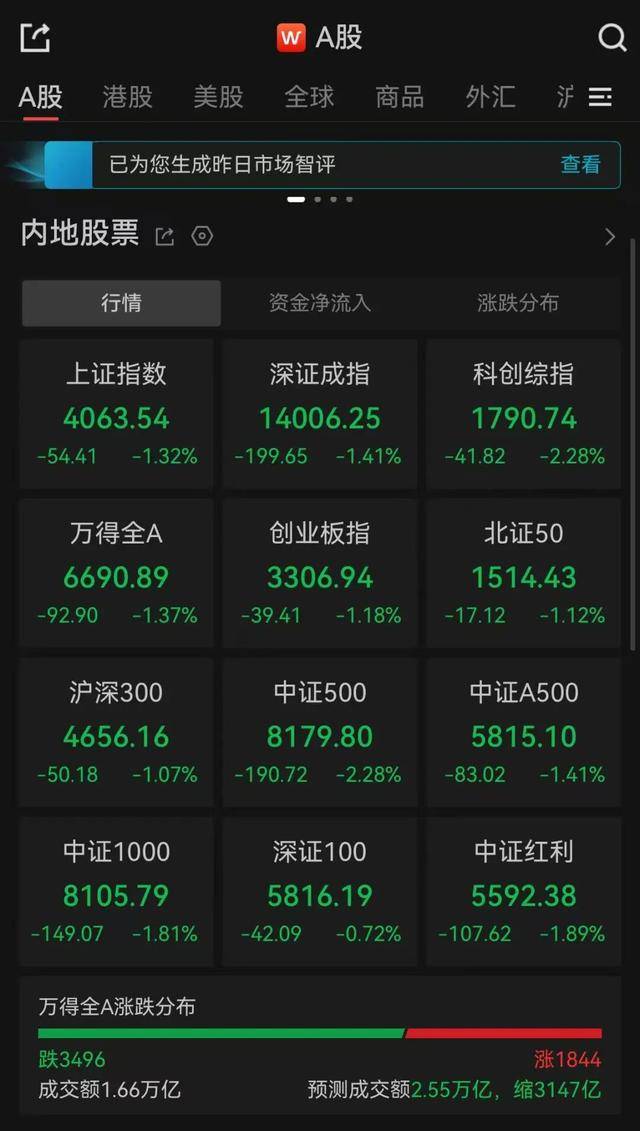
Market Overview - The A-share market opened with mixed performance among the three major indices, followed by a downward trend with all indices falling over 1% [1] - As of the midday close, the Shanghai Composite Index decreased by 1.32%, the Shenzhen Component Index fell by 1.41%, and the ChiNext Index dropped by 1.18% [1][2] - The total trading volume for the half-day reached 1.66 trillion yuan, with nearly 3,500 stocks declining [1] Index Performance - Shanghai Composite Index: 4063.54, down 54.41 points (-1.32%) [2] - Shenzhen Component Index: 14006.25, down 199.65 points (-1.41%) [2] - ChiNext Index: 3306.94, down 39.41 points (-1.18%) [2] - CSI 300 Index: 4656.16, down 50.18 points (-1.07%) [2] - CSI 500 Index: 8179.80, down 190.72 points (-2.28%) [2] - CSI 1000 Index: 8105.79, down 149.07 points (-1.81%) [2] Sector Performance - The liquor sector showed strong performance with multiple stocks rising significantly [3] - The commercial aerospace sector was also active, with several stocks experiencing substantial gains [3] - Other sectors that performed well included optical communication, CPO concepts, and superhard materials [3] - Conversely, the three major telecom operators collectively weakened, and the chip industry chain continued to decline, particularly in the storage sector [3] - Other sectors with notable declines included non-ferrous metals, oil and gas, agriculture, and semiconductors [3]