国际贸易

Search documents
综述|关税谈判迎关键周 美国暗示或延长截止期限
Xin Hua She· 2025-07-07 16:13
Group 1 - The U.S. is set to end a 90-day grace period for "reciprocal tariffs" on July 9, with Treasury Secretary Mnuchin indicating that countries failing to reach agreements by August 1 will see tariffs revert to previously announced levels [1] - President Trump plans to send letters to 12 to 15 trade partners regarding the tariffs, suggesting that agreements may be reached before the July 9 deadline [1] - The U.S. has only reached trade agreements with the UK and Vietnam, while negotiations with the EU, Japan, South Korea, and India are progressing slowly [2] Group 2 - Mnuchin acknowledged the complexity of negotiations due to the high number of ongoing talks, describing the situation as a "traffic jam" in the final stages [2] - The EU is prepared to reach a principle agreement on tariffs but will take countermeasures if negotiations fail, while Mnuchin claims good progress has been made with the EU [2] - Japan has not made significant breakthroughs in negotiations, with Prime Minister Kishida stating that Japan is prepared for all possible tariff scenarios [2]
最终关税低于10%?欧盟发言人:美欧贸易协议谈判取得进展,至少会达成原则性协议
Hua Er Jie Jian Wen· 2025-07-07 12:13
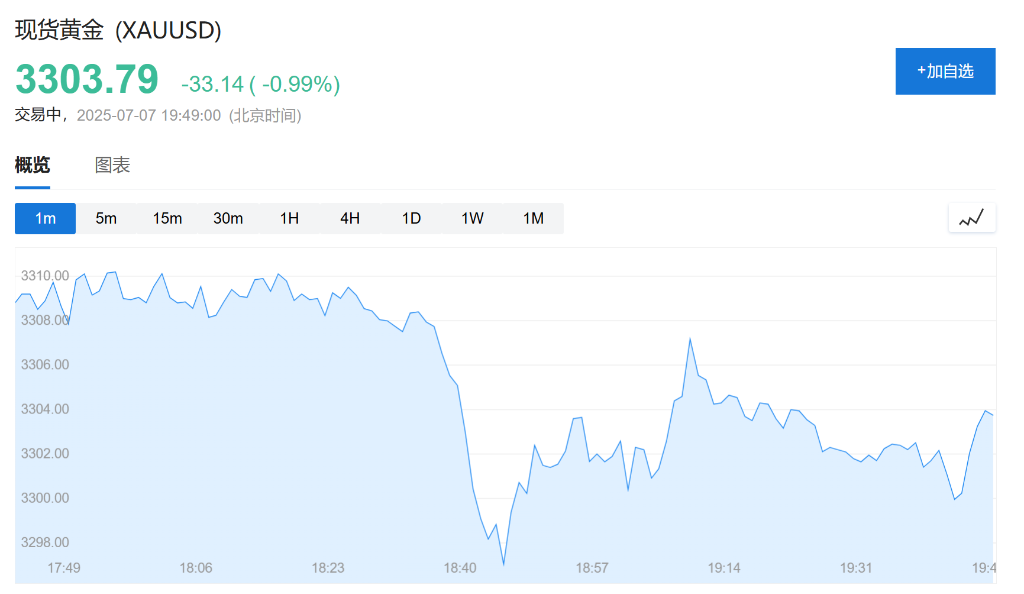
这一消息公布后,欧元兑美元短线波动不大,现货黄金一度跌破3300美元大关。 7月9日关税大限逼近之际,欧美贸易谈判进入关键冲刺阶段。 欧盟委员会发言人周一表示,欧盟与美国贸易协议谈判已经取得了进展,目前已进入"最终阶段的开始",至少会达成原则性协议。据央视新闻此 前报道,美国总统特朗普曾威胁称,如果7月9日前美欧贸易谈判没有取得突破,他将对欧盟商品征收50%关税。目前,美国对欧盟钢铝产品征收 50%关税,对汽车领域征收25%关税,对几乎所有其他商品征收10%基准关税。 同一天,葡萄牙财政部长Joaquim Miranda Sarmento表示,欧盟与美国有望达成"非常低"的关税协议,很可能低于10%。他在接受媒体采访时称, 这一协议"可能被视为对双方都有利,并能让我们继续贸易往来"。 另外,葡萄牙财政部长Sarmento周一在布鲁塞尔接受媒体采访时表示,欧盟与美国可能达成"关税非常低"的协议。他说: 可能达成关税非常低的协议,这一协议可能被双方视为有利,并能让我们继续贸易往来,为我们的公民增加价值。 当被问及关税水平可能有多低时,Sarmento称"可能低于10%,但让我们看看结果如何"。他期待在周一和周二举 ...

特朗普祭出关税大招,除了中国以外,170多国都要给美国一个交代
Sou Hu Cai Jing· 2025-07-07 11:46
Group 1 - The core viewpoint of the article highlights the intensifying trade conflict initiated by the U.S., with President Trump planning to notify over 170 countries about impending tariffs, indicating a shift towards a more aggressive trade stance [1][3][10] - The U.S. has only successfully negotiated agreements with the UK and Vietnam, with both countries accepting tariffs of 10% and 20% respectively, showcasing the slow progress in negotiations with other nations [1][3] - Trump’s frustration with the slow negotiation process has led him to opt for a direct communication method, sending approximately 10 letters daily to inform countries of their respective tariff rates [1][3] Group 2 - The potential tariff rates for countries could range from 20% to 30%, with Japan facing threats of 30% to 35% tariffs due to stalled negotiations on key issues like rice and automobiles [3][7] - The European Union has taken a hardline stance, demanding the U.S. lift existing tariffs before any agreements can be made, while also preparing for potential retaliatory measures [3][10] - The passage of the "Big and Beautiful Act" has emboldened Trump’s tariff policies, as it aims to fill the fiscal gap created by tax cuts and increased government spending through tariff revenues [4][5][7] Group 3 - The U.S. has made recent moves to ease restrictions on exports to China, indicating a potential de-escalation in the trade war, contrasting with the aggressive tariff strategy towards other nations [8] - The imposition of tariffs is expected to raise export costs for countries closely trading with the U.S., potentially harming their economic growth and employment [10] - While tariffs may temporarily boost U.S. fiscal revenues, they could lead to higher consumer prices and inflation in the long run, negatively impacting American consumers [10]
刚刚!欧盟突传放弃!特朗普最新发声
券商中国· 2025-07-07 11:23
Core Viewpoint - The trade negotiations between the US and the EU have encountered significant setbacks, with the EU potentially seeking to extend the suspension of "reciprocal tariffs" and abandoning hopes for a comprehensive trade agreement before the deadline [5][6]. Group 1: US-EU Trade Negotiations - The EU has given up on reaching a comprehensive trade agreement before the suspension of "reciprocal tariffs" ends on September 9, and it is uncertain if a lighter principle agreement can be achieved [5][6]. - Internal divisions within the EU regarding trade cooperation with the US are hindering progress, with countries like Germany and Italy favoring a swift agreement, while France, Spain, and Denmark express concerns over necessary concessions [5]. - The EU's trade with the US is projected to reach €1.7 trillion (approximately $2 trillion) in 2024, with daily trade averaging €4.6 billion [5]. Group 2: US-Japan Trade Relations - Japan's Prime Minister Shigeru Ishiba stated that Japan will not easily compromise in trade negotiations, indicating that discussions are challenging and time-consuming [2][8]. - Trump has threatened to impose tariffs of 30% to 35% on Japan if an agreement is not reached, and Japan is preparing for various scenarios in response [8][9]. - Japan's Economic Revitalization Minister Akira Amari previously visited the US for negotiations but returned without progress, leading to increased pressure from Trump for higher tariffs [9]. Group 3: US Tariff Plans - Trump plans to send letters to various countries notifying them of the tariffs they will be required to pay, with a potential implementation date of August 1 [3][10]. - The US has already announced a 10% basic tariff on most countries and punitive tariffs of up to 50% on specific goods, with some implementations delayed to allow for negotiations [11]. - The US Treasury Secretary indicated that notifications will be sent to 100 countries with minimal trade relations, warning of higher tariffs if negotiations do not progress [12].
最后时限将至,中方通告全球,不许一事发生,美欧日印都收到通牒
Sou Hu Cai Jing· 2025-07-07 10:50
很明显,特朗普已经摩拳擦掌,要在印度、日本身上捞到在中国未能捞到的好处。除印度和日本外,欧盟也不例外,近期欧盟方面已经深切地感受到特朗普 关税政策带来的压力了,所以在不久前的七国集团也就是G7峰会期间,欧盟委员会主席冯德莱恩玩命向特朗普吹风,试图以美欧合作针对中国稀土和磁铁 出口管制措施作为交换,让特朗普放弃对欧盟加征关税,至少是暂缓。 进入7月,标志着美国总统特朗普此前开出的3个月期限进入最后的倒数计时。4月9号,特朗普推出"对等关税"政策不过一周时间,因想不到中方会对自己的 关税措施发起强势反制,特朗普决定将对其他很多国家和地区的关税延迟3个月左右时间,专注针对中国。截至当下,最后时限已经将至了。 经过在日内瓦和伦敦的两轮会谈,中美在贸易问题上的分歧得到了暂时性的缓和。虽说考虑到中国不太可能单方面对特朗普进行让步,因此中美当前谈妥归 谈妥,却未必是一心想讹诈中国的特朗普最初希望看到的。但有意思的是,尽管如此,近期在公开场合特朗普还是盛赞和中方谈的不错,宣称中美达成 了"很棒的协议",再加上近期特朗普自己也当着媒体的面宣称,中美相处得很好。从这些表态大家不难发现,此前的对抗也令特朗普心有余悸,在这个时 候, ...
律师解读美越贸易协议:如何理解40%转运关税?零关税又意味着什么?
Di Yi Cai Jing· 2025-07-07 10:16
Core Viewpoint - The recent trade agreement between the U.S. and Vietnam introduces a 40% tariff on transshipped goods, which may significantly impact the supply chain and trade dynamics, particularly for Chinese products passing through Vietnam [1][6]. Group 1: Understanding the 40% Transshipping Tariff - The term "transshipping" refers to goods that undergo minimal processing in Vietnam before being labeled as Vietnamese origin for export to the U.S., thus incurring a higher tariff [1][4]. - The U.S. aims to strengthen its oversight on supply chains and origin rules through this tariff, which is designed to prevent circumvention of trade regulations [1][4]. - The definition of transshipped products hinges on value addition and origin, with products needing to demonstrate sufficient local content to qualify for lower tariffs [4][5]. Group 2: Implications of Zero Tariff for U.S. Products - Vietnam's commitment to allow U.S. products to enter its market at zero tariffs could enable these products to be re-exported to other RCEP countries, potentially undermining tariff barriers [6][7]. - This arrangement may inadvertently create competitive pressure on similar Chinese products within the RCEP region, affecting market dynamics [6][7]. - The U.S. is projected to import over $136 billion worth of goods from Vietnam in 2024, highlighting the significance of this trade relationship [6]. Group 3: Changes and Industry Impact - The new tariff structure may lead to increased export costs and uncertainties for Chinese companies, prompting a reassessment of supply chain strategies [7][8]. - The higher tariffs on transshipped goods could deter companies from using Vietnam as a transit point, as the cost of goods may rise significantly due to the 40% tariff [7][8]. - The evolving trade landscape suggests that companies may need to diversify their supply chains more effectively to mitigate risks associated with these new tariffs [8].
特朗普威胁对金砖国家加征10%新关税,中方回应
证券时报· 2025-07-07 07:49
Core Viewpoint - The article discusses the recent developments regarding tariffs and trade negotiations involving the United States and other countries, particularly in the context of the BRICS nations and the ongoing trade talks with Japan and the European Union. Group 1: Tariff Developments - The Chinese government has reiterated its stance against trade wars and tariff battles, emphasizing that there are no winners in such conflicts and that protectionism is not a viable solution [3][4]. - U.S. President Trump has threatened to impose a 10% tariff on BRICS nations, which China views as an aggressive move that does not align with the principles of cooperation and mutual benefit [2][3]. - The U.S. is expected to announce new tariffs on certain countries, with a maximum rate potentially reaching 70% starting August 1 [4][7]. Group 2: Trade Negotiations - The U.S. has been engaged in trade negotiations with multiple countries, but progress has been slower than anticipated [5]. - U.S. Treasury Secretary Mnuchin indicated that the deadline for negotiations might be extended, suggesting that countries genuinely negotiating could see their deadlines pushed back [7][9]. - Japan's Prime Minister has stated that Japan will not easily compromise in trade talks with the U.S., highlighting the ongoing stalemate in negotiations [11]. Group 3: EU-U.S. Trade Relations - The article notes significant divisions within the EU regarding trade negotiations with the U.S., with some countries pushing for quick agreements while others express concerns about potential concessions [13][14]. - The EU's ability to present a unified front in trade discussions is crucial, as internal disagreements could lead to unfavorable outcomes for the bloc [14].

特朗普关税摊牌了,只有中国是个例外,美国盟友将无一人幸免?
Sou Hu Cai Jing· 2025-07-07 05:05
美国总统特朗普 进入最后倒计时,特朗普就关税摊牌了,这次只有中国是个例外,美国盟友将无一人幸免? 根据英媒《金融时报》报道,美国官员希望在7月9日之前,也就是"90天对等关税暂停期"结束前,跟关键贸易伙伴们逐步签署协议,否则的话,一旦到了截 止日期,特朗普将对未达成协议的国家,加征"最为严厉"的关税。 按照美方的说法,这一原则适用于所有国家,哪怕是美国最亲密的盟友,也不能成为例外。 在中方一系列的精准反制打出后,效果立竿见影,仅仅过了短短一个月,美方就主动寻求跟中方展开接触,这才有了中美日内瓦会谈中达成的重要成果。 中美关系 然而值得注意的是,美方在谈论这件事的时候,中国反而被视为了一个"特例"。因为早在第一轮中美贸易磋商中,双方就在日内瓦达成了共识,互相取消 91%的加征关税、并且暂停24%的关税90天。 所以眼下,7月9日的"关税大限",主要针对的其实是欧盟、加拿大、印度、日本等,长期对美国处于贸易顺差的国家,而这其中,大多都是美国的盟友。 欧委会主席冯德莱恩、美国总统特朗普 面对此情此景,欧洲心里很不是滋味,有人感慨"在特朗普的关税游戏中,中美是赢家,欧洲反而沦为出资者和啦啦队的角色"。 这其实只看到了 ...
大摩:市场预期不会升级,如果“7月9日”的结果不同,会发生什么?
Hua Er Jie Jian Wen· 2025-07-07 03:43
当投资者普遍押注关税不会升级时,摩根士丹利却在思考一个关键问题:如果7月9日的结果与预期不 符,市场将面临怎样的冲击? 央视新闻指出,7月9日(本周三)是美国与各国谈判贸易协议的截止日期。据追风交易台消息,摩根士 丹利全球固定收益和主题研究主管Michael Zezas发布研报警示,尽管市场普遍预期美国关税政策不会进 一步升级,但7月9日关税暂停期到期这一关键节点仍存在多种可能性,投资者需要为不同情形做好准 备。 该行的基本预期是美国有效关税水平仅会适度上升,但会伴随一些新的波动,并分析了三种可能的情 形。 基本情形:延期策略 摩根士丹利认为最可能的情况是,白宫将以双边谈判取得了"进展"为由,延长对大多数主要贸易伙伴 的"对等关税"暂停期,同时宣布与某些贸易伙伴(包括越南)达成高层协议,并可能在未来某个日期对其 他国家提高关税税率。 "对等关税"暂停期结束,8月1日又要开始支付新关税? 随着截止日期的临近,据环球时报5日报道,美国总统特朗普表示,美政府7月4日起将向尚未达成贸易 协议的国家发出新关税税率的通知,税率区间为10%至70%,并计划从8月1日起正式实施。这一税率上 限(70%)远高于其4月份宣布的5 ...

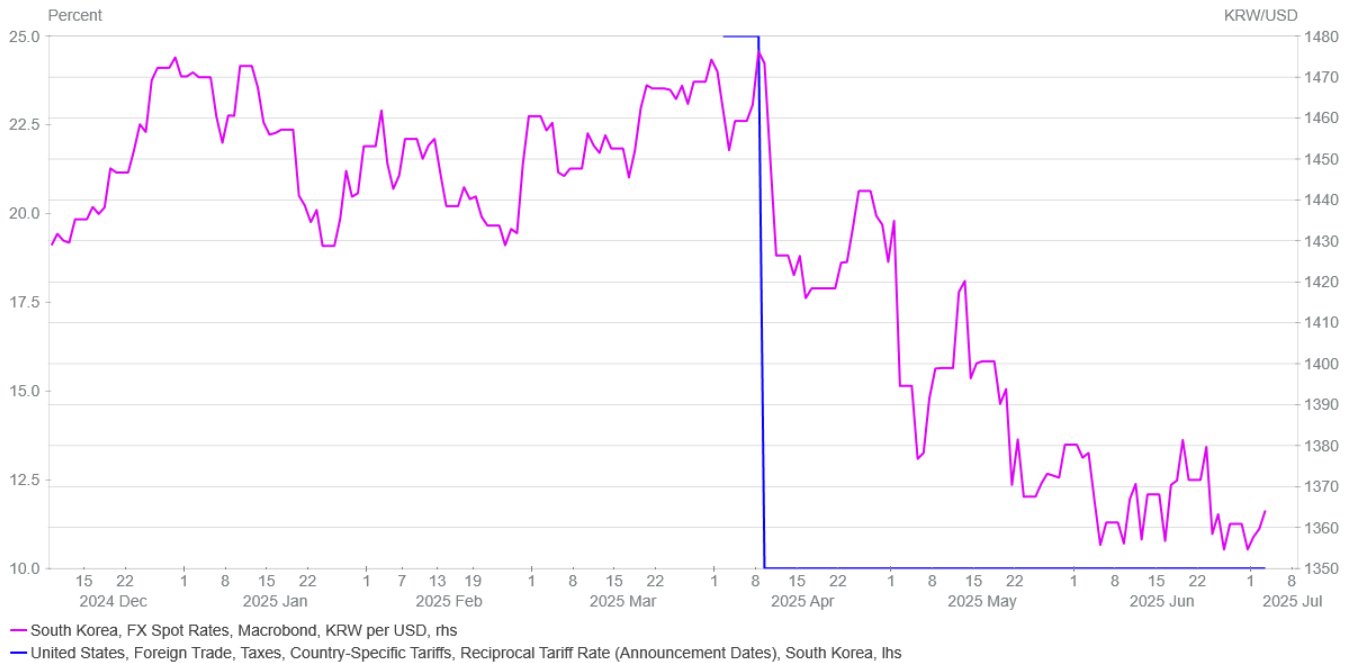
美元持续下坠暗示关税风险升级 美国高税率或将反噬股债涨势
Zhi Tong Cai Jing· 2025-07-07 03:21
Group 1 - The currency market is signaling that the stock and bond markets, particularly the US stock market, may be significantly underestimating the risks of tariff increases after the July 9 deadline set by the Trump administration [1][2] - There is a possibility that tariffs could exceed the previously anticipated 10%, as indicated by the strengthening of currencies from countries facing tariffs against the US dollar [1][3] - The recent trade negotiations with Vietnam and India highlight that even close US trading partners may face tariffs higher than 10%, increasing risks to global trade and economic growth [1][2] Group 2 - The market may be misjudging the situation, similar to the miscalculation in March that led to a market downturn when the Trump administration's tariff policies were perceived as gradual and not severe [3][5] - The strengthening of currencies from countries facing high tariff threats suggests that investors are hedging against potential higher tariffs, indicating a disconnect between currency and equity market perceptions [3][5] - The US dollar index has weakened significantly, down 11.5% this year, reflecting market bets against the "American exceptionalism" narrative [5][6] Group 3 - There is a growing concern among investors regarding the potential for higher tariffs, with calls for risk management and hedging strategies becoming more prominent [6][7] - The situation remains uncertain, with the primary risk centered around the Trump administration's trade policy [6][7]