互联网广告

Search documents
易点天下上半年电商增速翻倍,将切入短剧、AI应用新赛道
2 1 Shi Ji Jing Ji Bao Dao· 2025-08-20 00:07
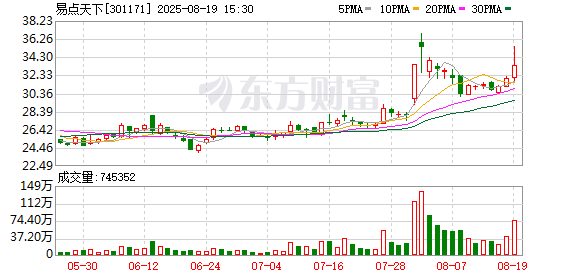
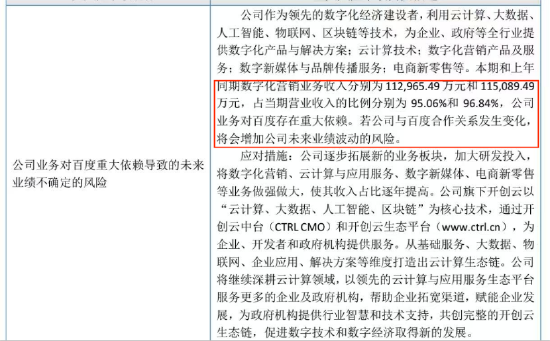
Core Insights - The company, 易点天下, reported a significant revenue increase of 59.95% year-on-year, reaching 1.737 billion yuan in the first half of 2025, with a net profit of 144 million yuan, up 8.81% [2][3] - The growth is attributed to market expansion and technological iteration, particularly in the AI sector, which has garnered increased attention in recent years [3] - The e-commerce segment of the company experienced a remarkable growth rate of over 100% [4] Business Development Focus - The company is actively exploring AI applications and short video content as new growth avenues, aiming to build an "AI intelligent ecosystem focused on growth" [3][8] - The global mobile internet advertising market is projected to grow to $503.875 billion by 2024, with a compound annual growth rate of 11.10% until 2029 [3] - The company has established itself as a key player in providing global marketing solutions for major platforms like Alibaba and SHEIN, and has expanded its services to new sectors such as electric vehicles and short video content [4] Technological Advancements - The company's programmatic advertising platform, zMaticoo, covers over 10,000 mobile applications and reaches more than 2 billion devices, processing 170 billion ad requests daily [4] - R&D investment reached 60.4535 million yuan in the first half of 2025, a 26.23% increase, focusing on generative AI and intelligent agent technology [7] - The company is shifting its strategic focus from model application to task-driven approaches, with the introduction of the AI Drive 2.0 solution that integrates multiple intelligent agents for marketing automation [7][8] Strategic Partnerships - The company has become the first-level agent for AppLovin in Greater China and an official service provider for Snapchat, establishing deep collaborations with tech giants like Huawei and Alibaba [5] - The ongoing technological upgrades aim to enhance the precision of system predictions by integrating Transformer architecture with dynamic optimization algorithms [7]

取消独家! 百度,亲手砸了代理商的“铁饭碗”
Xin Lang Ke Ji· 2025-08-19 03:33
Core Insights - Baidu is reportedly initiating an adjustment in its agency model, transitioning from exclusive agency arrangements in cities like Jinan, Chongqing, Wuhan, Fuzhou, and Xiamen to a service provider operation model [1][4] - This change has caused significant concern among long-time Baidu agents, with some already facing severe operational challenges [1][2] - The financial struggles of major agents, such as Kaichuang Group, highlight a broader issue regarding the declining health of Baidu's advertising business [2][4] Company Performance - Baidu's Q1 2025 performance report indicates online marketing revenue of 16 billion yuan, a year-on-year decrease of 6% [1][5] - Despite core revenue growth of 7% to 25.5 billion yuan, the decline in online marketing revenue suggests a stagnation in Baidu's advertising business [5] - Analysts from Citigroup have downgraded Baidu's core advertising revenue forecasts for Q2 and Q3 by 6.1% and 8.9%, respectively, reflecting a negative outlook on advertising income [5] Industry Context - The shift in Baidu's agency model is seen as a response to increasing competition from platforms like Douyin, Xiaohongshu, and WeChat, which are capturing traditional search advertising market share [6] - The recent changes in Baidu's advertising strategy may be part of a larger effort to adapt to market pressures and improve user experience, despite potential short-term impacts on advertising revenue [6][7] - The transition from exclusive to general agency models indicates a significant shift in Baidu's approach to its advertising ecosystem, prompting agents to seek new business models and directions [7]

QuestMobile2025年互联网广告市场半年报告:总规模近3600亿,头部三家吞下5成硬广份额,监管进化驱动进入秩序规范期
3 6 Ke· 2025-08-19 03:20
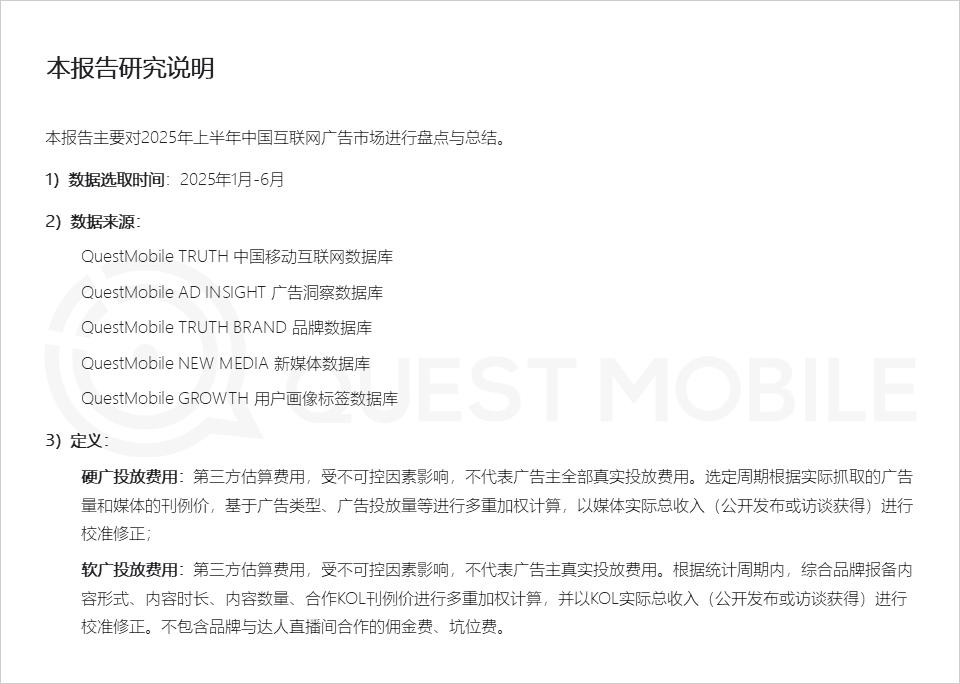
Core Insights - The Chinese internet advertising market is experiencing regulatory evolution and increased orderliness, with a market size of 359.85 billion yuan in the first half of 2025, reflecting a year-on-year growth of 5.6% [1][2][9] - Major platforms like Taobao, Douyin, and WeChat dominate the market, accounting for 22.5%, 19.1%, and 10.8% of hard advertising revenue respectively [1][2] - Mobile devices remain the primary revenue source, contributing 88.9% of total income, while other devices like OTT and PCs account for 9% and 2.1% respectively [1][2] Advertising Market Overview - The advertising market is expanding, driven by a resilient economy and the shift towards online consumption, which has intensified competition for advertising space and increased traffic costs [7][11] - The growth rate of the internet advertising market is moderate, influenced by conservative advertising budgets, saturation of top-tier traffic, and slowing growth in advertising prices [11][19] Industry-Specific Advertising Trends - The beauty and personal care sector is the most active, with a marketing expenditure of 72.45 billion yuan, up 19% year-on-year, followed by apparel and food & beverage sectors [2][22] - The maternal and infant products sector has seen a significant boost, with a 32.4% increase in spending to 13.26 billion yuan, driven by national childcare subsidy policies [2][22] - Conversely, industries like home appliances, transportation, and IT electronics have experienced declines in advertising spending, with decreases of 21.8%, 9.3%, and 7% respectively [2][22] Marketing Strategies and Trends - Brands are increasingly focusing on integrated marketing strategies that create a closed loop of "target audience - channel - content" to enhance conversion efficiency [1][51] - The use of emotional marketing is on the rise, as consumers are more willing to make purchases based on emotional resonance, leading brands to adopt diverse emotional marketing strategies [71][73] - AI technology is becoming a new trend in brand marketing, facilitating efficient interaction and emotional connection through various AI applications [82] Media Channel Dynamics - The concentration of media traffic is notable, with the top three platforms capturing a significant share of the market, while mid-tier and lower-tier media still have growth potential [15][19] - The integration of various media channels, including social media, e-commerce, and short videos, is essential for brands to maximize their advertising effectiveness [15][35] - The emergence of new marketing touchpoints, such as smart hardware and AI applications, is expanding the landscape for advertising opportunities [32][34]
QuestMobile2025年互联网广告市场半年报告:总规模近3600亿,头部三家吞下5成硬广份额,监管进化驱动进入秩序规范期
QuestMobile· 2025-08-19 02:02
Core Viewpoint - The article discusses the growth and trends in the Chinese internet advertising market for the first half of 2025, highlighting the impact of regulatory changes, technological advancements, and evolving marketing strategies on the industry [4][11][13]. Advertising Market Overview - The Chinese internet advertising market reached a scale of 359.85 billion in the first half of 2025, with a year-on-year growth of 5.6% [4]. - Major platforms such as Taobao, Douyin, and WeChat dominate the market, with market shares of 22.5%, 19.1%, and 10.8% respectively [4]. - Mobile devices account for 88.9% of advertising revenue, while OTT, smart hardware, and PC contribute 9% and 2.1% respectively [4]. Industry-Specific Advertising Investment - The beauty and personal care sector remains the most active, with an advertising investment of 72.45 billion, growing by 19% year-on-year [5]. - The apparel and food & beverage sectors follow, with investments of 20.23 billion and 17.32 billion, reflecting growth rates of 11.2% and 7.3% respectively [5]. - The mother and baby products sector saw a significant increase of 32.4%, reaching an investment of 13.26 billion, driven by national childcare subsidy policies [5]. - Conversely, sectors like home appliances, transportation, and IT electronics experienced declines in advertising investment, with decreases of 21.8%, 9.3%, and 7% respectively [5]. Marketing Trends and Strategies - The article emphasizes the importance of a combination marketing model that helps brands create a closed loop of "target audience - channel - content," enhancing conversion efficiency [4][58]. - The marketing landscape is shifting towards emotional marketing, which is becoming a key driver of consumer decision-making [82]. - Brands are increasingly focusing on integrating AI technologies into their marketing strategies, enhancing interaction and emotional resonance with consumers [92]. Media Channel Insights - The distribution of media traffic is relatively concentrated, with short video, e-commerce, and social media platforms being the primary advertising venues [17]. - The top three media platforms account for 50% of the market share, indicating growth potential for mid-tier and lower-tier media [19]. - Brands are adjusting their marketing investments based on industry dynamics, with a notable shift towards channel-based media for over 50% of advertising expenditures in sectors like beauty and home appliances [65]. Future Outlook - The article predicts that advertising resource allocation will continue to prioritize effectiveness and brand exposure, with a trend towards diversified exposure formats and integrated online-offline marketing strategies [78][80]. - The integration of AI in marketing is expected to become a new trend, with brands leveraging AI for enhanced consumer engagement and emotional connection [92].



取消独家! 百度,亲手砸了代理商的“铁饭碗” 丨 BUG
Xin Lang Ke Ji· 2025-08-19 01:08
Core Viewpoint - Baidu is reportedly adjusting its agency model by eliminating exclusive agency arrangements in several cities, shifting to a service provider operation model, which has raised concerns among its long-time advertising agents about the sustainability of their businesses [2][8]. Group 1: Agency Model Changes - The adjustment will remove the exclusive agency mechanism in cities such as Jinan, Chongqing, Wuhan, Fuzhou, and Xiamen, transitioning to a service provider model [2][8]. - Internal sources confirm that Baidu is indeed undergoing a commercial strategy adjustment, moving from a general agent model to a regular agent model [8][9]. - The change has significantly impacted agencies like Kaichuang Group, which has begun to face severe financial difficulties, including delayed employee salaries [3][4]. Group 2: Financial Performance - Baidu's Q1 2025 performance report indicates online marketing revenue of 16 billion yuan, a year-on-year decrease of 6% [3][9]. - Despite core revenue growth of 7% year-on-year, the decline in online marketing revenue suggests a weakening in Baidu's advertising business, which remains a key revenue driver [9][10]. - Analysts from Citigroup have downgraded Baidu's advertising revenue forecasts for the second and third quarters by 6.1% and 8.9%, respectively, reflecting a negative outlook on the advertising business [9][10]. Group 3: Industry Implications - The operational difficulties faced by agencies like Wuhan Century Baijie and Kaichuang Group signal a broader issue within Baidu's advertising ecosystem, indicating a potential downturn in the advertising market [9][10]. - The rise of competing platforms such as Douyin, Xiaohongshu, and new AI search engines is intensifying market pressure on Baidu, prompting the need for strategic transformation [10]. - Baidu's recent significant search overhaul and agency model adjustments may be aimed at enhancing user experience and long-term growth, despite short-term impacts on advertising revenue [10].
建银国际:升腾讯控股(00700)目标价至717港元 重申“跑赢大市”评级
Zhi Tong Cai Jing· 2025-08-15 03:32
报告表示,凭借腾讯常青游戏《三角洲行动》(Delta Force)的强劲势头以及即将推出《特战英豪》 (Valorant Mobile)的贡献,该行预计集团第三季游戏收入将增长16%,其中国内/国际市场分别增长 14%/20%,另预计第三季广告收入亦将增长19%。 智通财经APP获悉,建银国际发布研报称,腾讯控股(00700)作为独特且重要的人工智能受益企业,重申 其为行业首选及"跑赢大市"评级。并上调目标价13%,由635港元升至717港元。该行表示更相信腾讯有 能力在所有业务线部署人工智能,借助其独特且尚未充分变现的微信生态系统,推动可持续的盈利增 长。该行在业绩后,上调集团2025-2027年收入和盈测分别2%/3%/3%及3%/5%/5%。 ...
大厂广告业务的新变化,从小红书的变动说起
Hu Xiu· 2025-08-15 00:06
Group 1 - The core point of the article is that the integration of advertising and transaction functions within internet platforms is becoming a significant trend, as exemplified by the organizational changes at Xiaohongshu and other major platforms like Google and Douyin [2][10][54] - Xiaohongshu is establishing a new commercial division led by Conan, while its advertising and transaction businesses will remain unchanged as primary departments [1] - The shift in organizational structure reflects a broader trend where advertising is no longer just about selling exposure but is increasingly integrated into the entire transaction process [5][27][55] Group 2 - Major platforms are moving towards a model where advertising serves as a tool to drive business rather than being an end goal, indicating a shift in the role of advertising within these companies [27][56] - The demand-side budget logic is evolving, with companies like Unilever focusing their marketing investments on larger, multi-channel platforms rather than fragmented smaller channels [30][31] - User behavior is changing, leading to a more integrated approach where advertising and transactions occur simultaneously, compressing the decision-making process for consumers [35][36][50] Group 3 - The trust structure among consumers is shifting from brand-based trust to content and influencer-based trust, indicating a need for platforms to adapt their strategies accordingly [40][44][46] - The integration of advertising and transaction systems requires platforms to have strong content and transaction capabilities, as seen in successful platforms like Douyin, Kuaishou, Xiaohongshu, and Bilibili [53] - The future of advertising will focus on how to bring customer business into the platform rather than merely selling traffic, emphasizing the need for a shift from a monetization focus to a growth-centric approach [56][57]



普华永道:预计2029年中国娱乐及媒体业收入达5610亿美元
Zhong Guo Jing Ying Bao· 2025-08-14 16:06
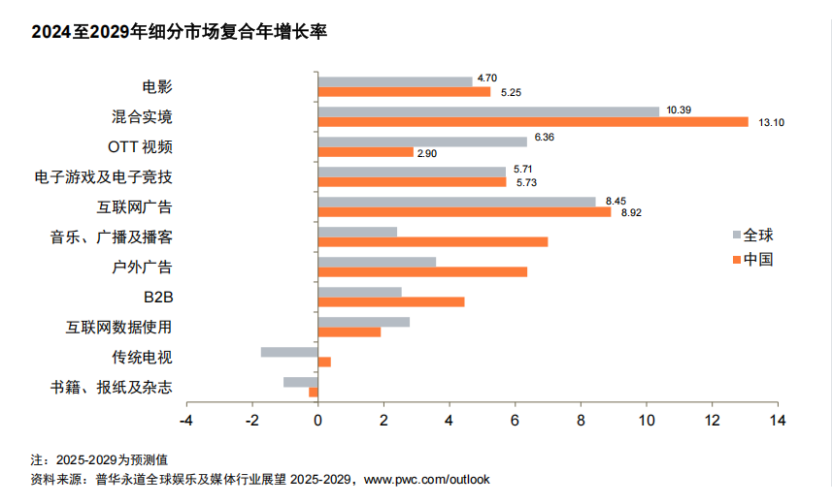
Group 1 - The core viewpoint of the article is that China's entertainment and media industry is projected to generate approximately $561 billion by 2029, accounting for 16% of the global market, with a compound annual growth rate (CAGR) of 4.5% from 2024 to 2029, surpassing the global CAGR of 3.7% [1] Group 2 - Internet advertising in China is experiencing rapid growth, becoming the second-largest market globally, with projected revenues of $143.8 billion in 2024 and expected to reach $220.4 billion by 2029 [1] - The film market in China is recovering steadily, with a projected CAGR of 5.25% from 2024 to 2029, and the revenue share of Chinese films is expected to reach 22% of the global total by 2029 [2] - As of July 2025, domestic box office revenues have reached 70.6% of the total for 2024, indicating a positive trend in the film market [2] Group 3 - The global entertainment and media industry is expected to recover, with total revenues reaching $2.9 trillion in 2024 and projected to grow to $3.5 trillion by 2029 [3] - The application of generative artificial intelligence is anticipated to enhance efficiency and productivity, fostering new business opportunities across industries, which is beneficial for the development of the global entertainment and media sector [3]
普华永道:预计中国娱乐及媒体行业五年复合年增长率4.5% 高于全球增速
Zheng Quan Ri Bao Wang· 2025-08-14 06:11
Group 1 - The total revenue of China's entertainment and media industry is expected to reach approximately $561 billion by 2029, accounting for 16% of the global market [1] - The compound annual growth rate (CAGR) for China's entertainment and media industry from 2024 to 2029 is projected to be 4.5%, surpassing the global rate of 3.7% [1] - The mixed reality, internet advertising, and film sectors are anticipated to maintain high growth rates [1] Group 2 - The augmented reality (AR) market is identified as the fastest-growing segment within mixed reality, with China being the second-largest mobile AR market globally [1] - Mobile AR revenue is expected to reach $11.9 billion in 2024, reflecting a year-on-year growth of 27.9%, and is projected to grow at a CAGR of 13.1% to $22.5 billion by 2029, surpassing the United States [1] - China is the second-largest internet advertising market, with total revenue expected to reach $143.8 billion in 2024 and grow to $220.4 billion by 2029 [1] Group 3 - China is the largest market for video games and esports, with total revenue projected to grow at a CAGR of 5.73% to $82.7 billion by 2029 [2] - The share of social/casual games in China's total video game revenue is expected to increase from 85% in 2024 to 87% in 2029 [2] - The gaming industry is focusing on high-quality production and immersive experiences as key growth drivers [2] Group 4 - The domestic film market is showing signs of recovery, with box office revenue reaching 70.6% of the total for 2024 by July 8, 2025 [2] - The overall trend in the film market is positive, with a projected CAGR of 5.25% for China's film revenue from 2024 to 2029 [2]
普华永道:中国娱乐及媒体行业市场预计五年复合年增长率高于全球
Shang Hai Zheng Quan Bao· 2025-08-13 13:48
Core Insights - The global entertainment and media industry is projected to see significant growth, with China's total revenue expected to reach approximately $561 billion by 2029, accounting for 16% of the global market [1] Group 1: Market Growth Projections - China's entertainment and media industry is anticipated to have a compound annual growth rate (CAGR) of 4.5% from 2024 to 2029, surpassing the global CAGR of 3.7% [4] - The mixed reality market (VR & AR, Metaverse) is expected to grow at a CAGR of 13.1%, reaching $22.8 billion by 2029, with a growth rate of 25.2% in 2024 [4] - The mobile AR market in China is projected to generate $11.9 billion in revenue in 2024, with a year-on-year growth of 27.9% [4] Group 2: Internet Advertising and Film Industry - China's internet advertising market is the second largest globally, with total revenue expected to reach $143.8 billion in 2024 and $220.4 billion by 2029 [4] - The film industry in China is expected to grow at a CAGR of 5.25% from 2024 to 2029, driven by the international success of films like "Ne Zha" [6] - The domestic box office still accounts for 97% of the revenue for "Ne Zha," indicating a need for improved distribution channels for international markets [6] Group 3: Gaming Industry Developments - China's gaming industry is projected to grow at a CAGR of 5.73%, reaching $82.7 billion by 2029, with increasing global influence [7] - The game "Black Myth: Wukong" achieved over 10 million sales within three days of its release, showcasing the potential for Chinese games in international markets [7] - The focus on high-quality narratives and immersive experiences is seen as crucial for overcoming growth bottlenecks in the gaming sector [7]