
体育服务

Search documents
功勋机器人集中亮相首钢园,服贸会也可以看机器人足球比赛
Xin Jing Bao· 2025-09-11 11:36
Group 1 - The 2025 China International Service Trade Fair (CIFTIS) features award-winning humanoid robots from the recent World Humanoid Robot Games, attracting significant public interest [1][4] - The sports service section of the fair focuses on internationalization, professionalism, and marketization, showcasing new technologies and innovations in the sports industry [2] - The exhibition area spans 7,650 square meters, with over 60 offline exhibitors and more than 350 online exhibitors, including participation from over 40 international organizations [2] Group 2 - A new gel ice material, developed by a team from Beijing Institute of Technology, offers a cost-effective and energy-efficient alternative for ice rink construction, reducing energy consumption by over 50% [3] - The fair includes interactive experiences such as 5G+VR technology for sports like skiing and table tennis, allowing audiences to engage with professional-level data analysis services [2] - The event features robot soccer and free fighting competitions, showcasing autonomous robots that have previously competed in international events [4][5] Group 3 - There is a growing interest in robotics, particularly in applications for the elderly care sector, with expectations for significant advancements in the next 5 to 10 years [5] - Current challenges in robotics include the need for breakthroughs in battery technology to support longer operational times for robots in various applications [5]

2025服贸会“新窗口”透视:中国服务如何链通全球?
2 1 Shi Ji Jing Ji Bao Dao· 2025-09-10 13:57
Core Insights - The 2025 China International Fair for Trade in Services (CIFTIS) opened on September 10, showcasing the growth and innovation in China's service industry and trade [1][6] - This year's fair features participation from 85 countries and international organizations, with nearly 2000 enterprises, including around 500 Fortune Global 500 companies [1][6] - The fair emphasizes technological and intelligent applications, focusing on new technology application scenarios and solutions [3][4] Industry Developments - The fair includes nine thematic exhibitions covering telecommunications, computer and information services, financial services, cultural tourism, education, and sports services [3][4] - The telecommunications and information services exhibition highlights digital service trade and advanced industries, showcasing innovations in low-altitude economy and AI technologies [3][4] - The rapid development of the low-altitude economy is a focal point, with companies like Hangjing Innovation presenting their heavy-lift drone products [4] Policy and Economic Context - The Chinese government aims to enhance service trade innovation and competitiveness, encouraging service exports and expanding quality service imports [6][7] - In the first half of the year, China's service trade reached a total import and export value of 3.9 trillion yuan, with service exports growing by 15% [6] - Future strategies will focus on leveraging China's service market advantages and promoting coordinated development of service imports and exports [7]

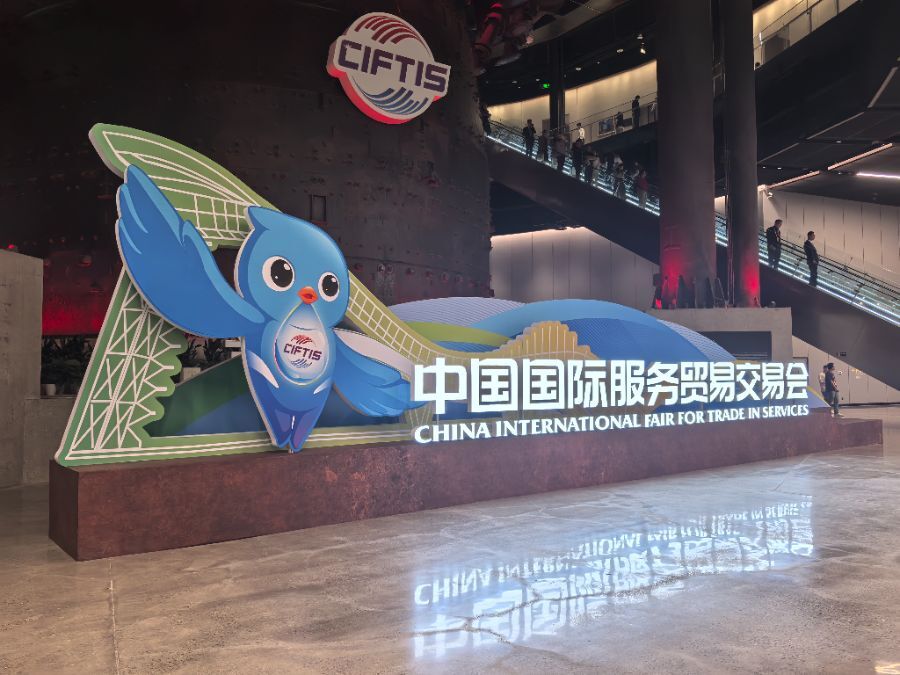
40余场配套活动、近50个打卡点位!服贸会怎么逛?打卡指南来了→
Bei Jing Qing Nian Bao· 2025-09-10 10:59
Core Points - The 2025 China International Service Trade Fair (CIFTIS) will be held from September 10 to 14 at Shougang Park in Beijing, featuring over 70 countries and international organizations, with nearly 2,000 enterprises participating [1] - The theme of this year's fair is "Digital Intelligence Leading, Service Trade Renewed," emphasizing the integration of various activities and the vibrant atmosphere of the event [3][4] Event Highlights - The fair will include over 40 diverse supporting activities, integrating service consumption, trade, and investment, with a focus on creating a multi-functional "exhibition town" [4][5] - Various cultural and tourism activities will be organized, such as the "Camping Art Life Fair" and "Cultural Tourism Carnival," aimed at enhancing visitor experience [4] - The event will feature interactive experiences, including AI-driven demonstrations and robotics, allowing attendees to engage with services in a tangible way [5][6] Innovative Features - The first China International Candy Season will take place from September 10 to November 16, offering a unique blend of exhibitions, events, and consumer experiences [6][7] - Advanced technologies like MR and XR will be utilized to create immersive experiences, allowing visitors to interact with historical artifacts and cultural displays [8][10][12] - The fair will showcase over 190 new products and achievements from more than 100 enterprises, promoting "Beijing Services" and "China Services" [14] Infrastructure and Logistics - The exhibition area will exceed 100,000 square meters, with significant renovations to historical industrial sites to enhance visitor engagement [16] - A comprehensive service system will be implemented, including a centralized operation center and a mobile app for visitor convenience [17][18] - Transportation logistics will be optimized with over 10,000 parking spaces and shuttle services connecting key locations [19]
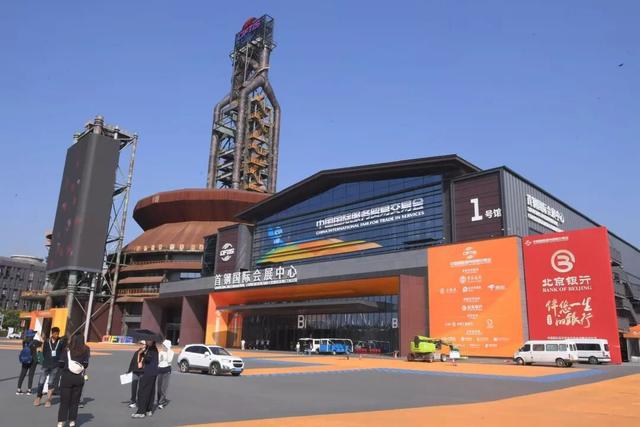
有效释放体育消费潜力 “体育外卖”需系好“安全带”
Mei Ri Jing Ji Xin Wen· 2025-09-07 12:16
Core Viewpoint - The emerging "sports delivery" service model is becoming a significant force in promoting the development of the sports industry, driven by the increasing demand for personalized training and supported by recent government policies aimed at enhancing sports consumption potential [1][2]. Group 1: Industry Overview - "Sports delivery" refers to a service model where professional coaches provide personalized training at users' locations, effectively addressing the limitations of traditional sports training [1][2]. - The service initially targeted youth but has expanded to the adult market, filling gaps in traditional sports training offerings [1]. - The recent government policy issued on September 4 aims to cultivate influential sports enterprises and events, projecting the sports industry to exceed 70 trillion yuan by 2030 [1]. Group 2: Advantages of Sports Delivery - The model significantly reduces time costs for users by allowing training sessions to occur in nearby parks or community spaces instead of requiring travel to sports facilities [2]. - Coaches benefit from flexible service models that provide substantial income opportunities, with some earning up to 20,000 yuan per month [1]. - The integration of digital technology in the booking process aligns with the government's push for intelligent, customized, and experiential sports consumption [2]. Group 3: Challenges Facing the Industry - The quality of coaching staff is inconsistent, with many being university students lacking formal training, which affects service quality and user experience [3]. - Safety risks are prevalent due to the use of non-specialized venues, which may lead to injuries during training sessions [3]. - There is a lack of standardized service protocols and dispute resolution mechanisms, making it difficult for users to seek recourse in case of issues [3]. Group 4: Recommendations for Development - Regulatory bodies should establish clear guidelines and standards for the industry, including coach certification and safety requirements for training venues [4]. - Service platforms must take responsibility for vetting coaches and implementing ongoing training and assessment processes [4]. - A dual approach of regulation and platform accountability is essential for the sustainable growth of the "sports delivery" model, ensuring it contributes positively to the sports industry's high-quality development [4].
国办出台20条举措推进体育产业高质量发展 体育消费站上新风口(附概念股)
Zhi Tong Cai Jing· 2025-09-04 23:26
Group 1: Industry Overview - The State Council issued an opinion to enhance the sports industry, aiming for a total scale exceeding 7 trillion yuan by 2030, with significant improvements in development levels [1] - The sports industry in China reached a total scale of 3.67 trillion yuan in 2023, with an average annual growth rate of 10.3% since the 14th Five-Year Plan [1] - The sports service industry, led by competition performance and fitness leisure sectors, accounted for 72.7% of the added value in the sports industry [1] Group 2: Outdoor and Ice Sports Development - The opinion emphasizes the development of outdoor sports, proposing differentiated development based on local natural resources and promoting high-quality outdoor sports destinations [2] - The ice and snow economy is being cultivated, with measures to support ice sports equipment and expand participation in ice sports [2] - The outdoor sports online consumption is projected to reach approximately 300 billion yuan by 2024, with participation expected to be around 200 million people [3] Group 3: Financial Support and Investment - The opinion encourages financial institutions to optimize financing services for sports enterprises, including support for listings, refinancing, and asset securitization [3] - The sports industry has seen significant investment activity, with 16 disclosed financing events totaling about 559 million yuan as of September 4, 2025 [4] - The domestic consumption stimulus policies are expected to improve macro consumption conditions, benefiting the sports apparel market [4] Group 4: Company Performance - Li Ning has established a clear product matrix and is focusing on product development, aiming to strengthen its market share against international brands [6] - Anta Sports reported a 15% year-on-year increase in net profit, driven by a 14% revenue growth, with an improved operating profit margin [6] - Xtep International achieved a revenue of 6.838 billion yuan for the first half of 2025, a 7.14% increase year-on-year, with significant growth attributed to online sales channels [6]




释放体育消费潜力“20条”:到2030年体育产业规模超7万亿
2 1 Shi Ji Jing Ji Bao Dao· 2025-09-04 13:13
Core Viewpoint - The Chinese government aims to unleash the potential of sports consumption and significantly elevate the sports industry, targeting a total scale exceeding 7 trillion yuan by 2030 through a series of 20 key measures outlined in the recent policy document [1] Group 1: Sports Industry Growth - The sports industry in China reached a total scale of 3.67 trillion yuan in 2023, with an average annual growth rate of 10.3% since the 14th Five-Year Plan [2] - The value of professional sports events is increasing, with ticket sales for events like the CBA and WTT showing strong demand, and the 2024 China Open tennis tournament expected to generate over 80 million yuan in ticket revenue [3] - The ice and snow industry is projected to grow from 381.1 billion yuan in 2020 to 970 billion yuan by 2024, reflecting an annual growth rate of 26.3% [4] Group 2: Sports Events and Activities - The policy emphasizes the need to enrich sports events and optimize event management, including the introduction of special policies for event economic development and support for emerging sports events [2] - Major events like the Hangzhou Asian Games have shown a significant impact on local economies, with surrounding areas experiencing consumption growth of over 40% during the event [3] - The document encourages the development of outdoor sports and the establishment of high-quality outdoor sports destinations, leveraging local natural resources [3] Group 3: Infrastructure and Facilities - The government plans to enhance the supply of sports facilities, including the construction of community sports centers and public sports venues, supported by various funding sources [5][6] - Over 170,000 fitness facilities have been installed in nearly 20,000 old residential communities and over 5,000 urban parks, contributing to the realization of a 15-minute fitness circle in communities [6] - The policy supports the renovation and upgrade of public sports venues to promote green, low-carbon, and smart transformations [7] Group 4: Financial and Policy Support - The policy outlines financial support measures for sports enterprises, including loan interest subsidies for qualifying sports service providers and the promotion of sports consumption vouchers [7] - The government encourages private sector investment in the sports industry and aims to strengthen the supply chain of sports enterprises [7] - Several listed companies in the sports industry, such as Anta Sports and Li Ning, are highlighted as part of the growing market [7]
【财经分析】创新业态场景 探索多元发展——体育用品制造业向服务业转型拓展观察
Xin Hua She· 2025-08-31 01:33
Core Viewpoint - Domestic sports goods manufacturing companies are increasingly exploring transformation from traditional manufacturing to service-oriented models, driven by government policies and market demand [1][2][4]. Group 1: Industry Trends - The National Sports Administration's "14th Five-Year Plan for Sports Development" encourages the development of smart and home-based sports equipment, promoting the integration of manufacturing and service industries [1][4]. - Companies are moving away from a "heavy production, light service" model to innovate new business formats and application scenarios, aiming to create a new industrial development pattern [1][4]. Group 2: Company Transformations - Tianxiang Sports has transitioned from manufacturing to operating marathon events and developing a smart sports complex, investing 510 million yuan in the Tianxiang Yuedong City project, which is expected to be completed by the end of the year [2][3]. - Xtep has established running clubs in various cities, providing both free and paid services, enhancing brand recognition and consumer loyalty [3][4]. - Shuhua Sports has launched its own chain of fitness centers, integrating its fitness equipment with services, and plans to introduce AI technology to create a smart gym experience [3][4]. Group 3: Market Opportunities and Challenges - The growing trend of national fitness has created new market opportunities for sports companies, but many still rely on traditional revenue models, facing challenges in establishing profitable service-oriented businesses [2][5]. - Companies like Shuhua and Xtep are exploring new business models and consumer engagement strategies to enhance profitability and reduce reliance on single business lines [4][5]. - The industry faces challenges such as undervaluation of service offerings, low consumer recognition, and a lack of skilled talent, necessitating government support and infrastructure improvements [5][6].

中体产业:8月28日召开董事会会议
Mei Ri Jing Ji Xin Wen· 2025-08-29 08:25
Group 1 - The core point of the article is that Zhongti Industry (SH 600158) held its ninth fifth board meeting on August 28, 2025, to review the proposal regarding the company's daily related transactions for 2025 [1] - For the fiscal year 2024, Zhongti Industry's revenue composition is as follows: sports services account for 47.87%, real estate for 17.73%, sports manufacturing for 17.38%, sales of sports-related products for 15.78%, and other businesses for 0.95% [1] - As of the report, Zhongti Industry has a market capitalization of 8.5 billion yuan [1]
2025年服贸会体育服务专题将聚焦构建体育服贸新生态
Zhong Guo Xin Wen Wang· 2025-08-27 08:45
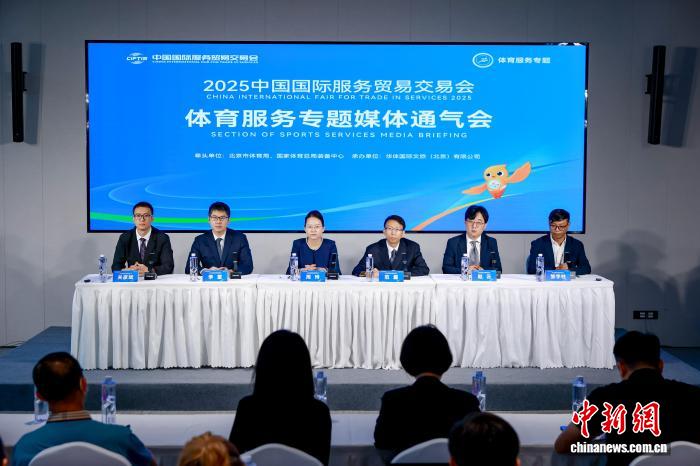
Core Viewpoint - The 2025 China International Service Trade Fair (CIFTIS) will focus on building a new ecosystem for sports service trade, themed "Event City Linking the World," emphasizing innovation in the sports industry through event aggregation, technological empowerment, industry integration, and global collaboration [1][2]. Exhibition Details - The sports service section will take place from September 10 to 14 at Shougang Park, covering a total exhibition area of 7,650 square meters [2]. - There will be 60 offline exhibitors and over 350 online exhibitors, with participation from more than 40 international organizations, showcasing companies from over ten countries including the UK, France, Australia, New Zealand, and Brazil [2]. - Notable participation includes 24 Fortune 500 companies, highlighting 100 premium events from the dual Olympic cities and innovations in digital technology within the sports sector [2]. Key Highlights - Five major highlights will be presented: 1. **Technological Sports Services**: Showcasing enterprises with strong technological leadership and independent intellectual property, such as China Mobile's NBA Metaverse and China Unicom's "FOLO" ball integrating traditional culture with AR technology [3][5]. 2. **Sports Services Going Global**: Promoting the transition from "product export" to "service value-added" through standardized service outputs, such as the Bird's Nest model for venue alliance construction [5]. 3. **International Sports Exchange**: Leveraging the dual Olympic city advantage to enhance sports cultural exchange and international cooperation [5]. 4. **Integration of Industry, Education, Research, and Application**: Utilizing Beijing's technological advantages to apply innovative results in the sports industry [5]. 5. **Event Introduction and Release**: Focusing on attracting top international events to support the development of the dual Olympic city as a hub for international sports events [5]. Forum Structure - The event will feature a "1+2+1" forum structure, including one main forum, two sub-forums, and one closed-door seminar, addressing key topics such as high-quality development in sports event economics [6]. Public Engagement - The sports service section will have public open days on September 13 and 14, featuring over 50 interactive events and activities to enhance public participation [7]. "Sports+" Practices - Various "Sports+" practices will be showcased, including: - Huati Group's full-chain business system in sports service trade [8]. - China Unicom's AI+MR technology project "FOLO" aimed at enhancing industry consumption [8]. - Orange Lion Sports' AI visual algorithm system for sports service innovation [8]. - Tencent's focus on "non-typical esports" through interactive experiences [8]. Integration of Events and Exhibitions - The event will adopt a "competition-exhibition integration" model to showcase the international promotion of pickleball, creating a platform for resource connection between professional events and industry displays [9].
电竞赛车、低空飞行模拟器精彩上演,服贸会体育服务专题下月启动
Xin Jing Bao· 2025-08-27 06:22
Core Points - The 2025 China International Service Trade Fair's sports service section will take place from September 10 to 14, covering an exhibition area of 7,650 square meters, with the theme "Event City, Linking the World" [1] - The event aims to showcase new technologies, business models, and achievements in the sports sector, focusing on resource aggregation, technological empowerment, industry integration, and global service collaboration [1][2] - Over 60 offline exhibitors and more than 350 online exhibitors are participating, including 24 Fortune Global 500 companies, with international representation from over ten countries [1][2] Group 1: Event Highlights - The sports service section will feature a public open day on September 13-14, offering over 50 interactive events, including esports racing and basketball matches [1][4] - The main forum will focus on high-quality development in the sports event economy, with the release of the "2024 China Sports Service Trade Development Report" [4] - The event will also include sub-forums on outdoor sports and ice and snow economy development, as well as innovation and entrepreneurship in sports [4] Group 2: Technological Innovations - The event will highlight technological advancements in sports services, showcasing companies with strong intellectual property and international standards [2][5] - China Unicom will launch the "FOLO福禄球" project, integrating AI and MR technology for a new sports experience that promotes industry consumption upgrades [5][6] - Other companies, such as Orange Lion Sports and Tencent, will present their innovations in AI visual algorithms and interactive gaming experiences, respectively [6]
