军事装备

Search documents
韩美贸易协议落定:韩国斥资3500亿美元投资美国,换取关税下调与核技术让步
Hua Er Jie Jian Wen· 2025-11-14 12:38
Core Points - South Korea and the United States have signed a memorandum of understanding, with South Korea committing to a $350 billion investment in exchange for tariff reductions and concessions on core defense technologies [1] - The agreement provides greater certainty for South Korean automotive and semiconductor manufacturers' export plans [1] Investment Framework - The $350 billion investment framework will direct South Korean capital into strategic industries in the U.S., including shipbuilding, energy, semiconductors, pharmaceuticals, critical minerals, artificial intelligence, and quantum computing [2] - The investment will be limited to commercially viable projects, addressing public concerns about potential aid or unrecoverable losses [2] - The U.S. has agreed to limit South Korea's annual dollar outflow to $20 billion and provide flexibility for adjustments to prevent currency market instability [2] - A special fund will be established by the South Korean government to finance these projects, relying on existing foreign exchange asset returns or issuing foreign currency bonds [2] - An "investment special purpose vehicle" will manage the projects, pooling risks to offset losses from individual projects [2] Tariff Reductions - The U.S. will impose a 15% tariff cap on South Korean imports, with automotive tariffs reduced from 25%, although still higher than the previous free trade agreement rate of 2.5% [3] - The timeline for the reduction of the 25% automotive tariff to 15% has not been specified [3] Semiconductor and Product Treatment - The U.S. has committed to providing South Korea with treatment no less favorable than that given to other major trading partners in the semiconductor sector [4] - Certain supplementary tariffs on specific products, including generics and certain natural resources not produced domestically, will be eliminated [4] Defense Technology Advances - South Korea has confirmed plans to advance the construction of nuclear-powered submarines, a long-standing strategic goal [6] - The agreement includes expanded rights related to uranium enrichment and spent nuclear fuel reprocessing, with the U.S. reaffirming its commitment to extended deterrence, including nuclear capabilities [6] - South Korea has committed to purchasing $25 billion worth of U.S. military equipment by 2030 and contributing $33 billion to support U.S. troops stationed in South Korea [6]
俄军冬季攻势专打电厂,意图给西方放血,欧洲军援从炮弹变渔网
Sou Hu Cai Jing· 2025-11-13 07:23
Core Viewpoint - The Russian military is shifting its strategy against Ukraine, focusing on energy and power facilities to weaken the Ukrainian resistance and force a surrender as winter approaches [1][3]. Group 1: Military Strategy - Recent Russian airstrikes have led to a complete shutdown of many Ukrainian power plants, resulting in nationwide blackouts [1]. - The attacks aim to cut off Kyiv's logistical support to the front lines, facilitating the Russian ground forces' occupation of strategic locations like Red Army City [3]. Group 2: European Response - Ukraine's reliance on Western support, particularly from Europe, is increasing as it faces severe shortages in energy, funding, and military supplies [3]. - European countries are experiencing financial strain due to economic downturns, leading to public discontent over continued support for Ukraine [5][6]. - Several pro-Ukrainian governments in Europe have been replaced by more hardline administrations that are less willing to provide military aid or support for Ukrainian refugees [5]. Group 3: Aid Dynamics - Recent European aid to Ukraine has shifted from military supplies to minimal support, such as purchasing old fishing nets under the guise of enhancing air defense capabilities [6]. - The lack of substantial military aid indicates a significant change in Europe's commitment to Ukraine, with potential implications for the Ukrainian government [6]. Group 4: Internal Ukrainian Issues - The Ukrainian National Anti-Corruption Bureau has conducted a raid on a close associate of President Zelensky, indicating potential internal strife and corruption issues within the government [7]. - The escape of Zelensky's associate before the raid suggests that there may be growing Western scrutiny and possible changes in leadership in Ukraine [7].

“福特”号开进加勒比海,委内瑞拉开展大规模动员应对美航母逼近
Huan Qiu Shi Bao· 2025-11-12 22:43
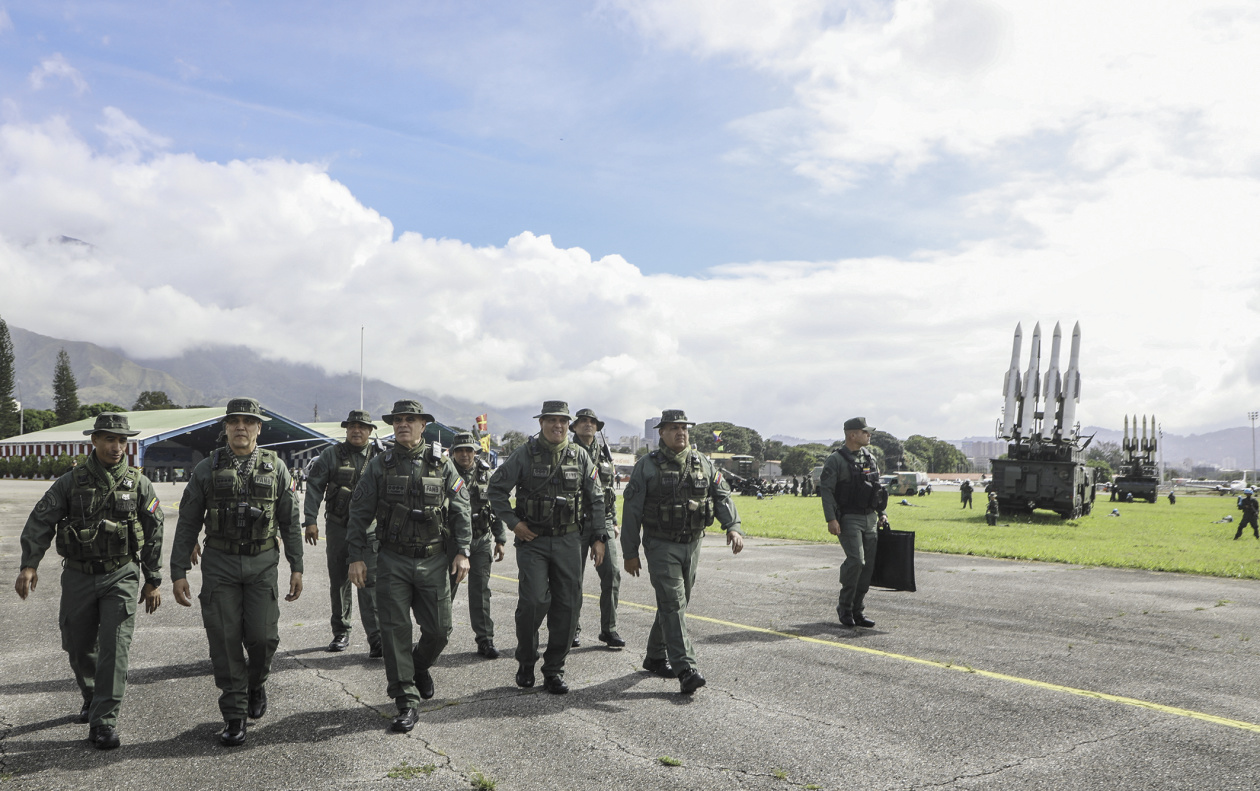
Core Viewpoint - The arrival of the USS Ford aircraft carrier strike group in the Caribbean marks the highest level of U.S. military presence in the region in decades, escalating tensions between the U.S. and Venezuela under the pretext of combating drug trafficking [1][3][4]. Military Deployment - The USS Ford strike group, which includes over 4,000 sailors and dozens of tactical aircraft, has been deployed to the Caribbean, enhancing U.S. military capabilities in the region [3]. - The total U.S. military presence in the Caribbean has exceeded 15,000 personnel, representing the largest military buildup in decades [3]. - The deployment is characterized as "extraordinary," with the USS Ford's mission being a rare shift from its originally planned Mediterranean deployment [3]. Venezuela's Response - In response to the U.S. military buildup, Venezuela has initiated a large-scale military exercise involving nearly 200,000 personnel, aimed at enhancing military command and control capabilities [1][5]. - Venezuelan President Maduro has signed a law to establish a comprehensive defense command, indicating preparations for potential armed conflict [5]. International Relations - The U.S. military actions have led to a suspension of intelligence cooperation from Colombia and the UK, reflecting growing skepticism about the legality and motives behind U.S. operations in the region [7]. - Reports indicate that the UK ceased sharing intelligence with the U.S. due to concerns over potential violations of international law [7]. Drug Trafficking Context - Since September, U.S. operations have reportedly sunk around 20 vessels alleged to be involved in drug trafficking, resulting in 76 fatalities [4]. - Despite these actions, experts suggest that attacking Venezuela is unlikely to significantly impact U.S. drug trade, as cocaine primarily originates from Colombia [8].
美军最大航母打击群进入加勒比海
Xin Hua She· 2025-11-12 02:55
Core Points - The U.S. Navy has deployed the aircraft carrier USS Gerald R. Ford and its strike group to the Caribbean, enhancing U.S. capabilities in detection, monitoring, and combat against drug trafficking and transnational crime organizations [1] - The USS Gerald R. Ford carries over 4,000 sailors and is equipped with various aircraft, including F/A-18E Super Hornets and E-2D Advanced Hawkeye [1] - The deployment marks one of the largest military gatherings in the Caribbean in decades, with over 15,000 troops now in the region [1] Military Operations - The U.S. has been conducting operations in the Caribbean and Eastern Pacific, sinking approximately 20 so-called "drug boats" since early September, resulting in over 70 deaths [2] - President Trump has authorized the CIA to conduct covert operations in Venezuela and is considering military strikes against ground targets within the country [2] Regional Implications - The Venezuelan government has accused the U.S. of attempting to instigate regime change through military threats and expanding its military presence in Latin America [2]
日本市民团体催促美军撤走“堤丰”中导发射装置
Yang Shi Xin Wen Ke Hu Duan· 2025-11-10 11:51
Core Viewpoint - Local citizen groups in Hiroshima and Yamaguchi prefectures submitted a request to the Japanese Ministry of Defense on November 10, urging the removal of the "Aegis" medium-range missile launch system deployed at the U.S. military's Iwakuni base, expressing concerns over the prolonged deployment and potential normalization of the base's functions [1] Group 1 - The "Aegis" medium-range missile launch system was deployed in Japan for the first time as part of large-scale joint military exercises between Japan and the U.S. in September [1] - The Iwakuni city government indicated that the Japanese Ministry of Defense had previously stated the system would be removed about a week after the training period ended on September 25, but no reports of removal have been received, and the system remains deployed [1]
美军两架B-52轰炸机接近委内瑞拉海岸
Yang Shi Xin Wen Ke Hu Duan· 2025-11-07 00:54
Core Viewpoint - The relationship between the United States and Venezuela is increasingly tense, highlighted by recent military activities near Venezuelan waters [1] Military Activities - Two U.S. Air Force B-52H strategic bombers approached the Venezuelan coast, flying within 70 kilometers of it [1] - The U.S. is intensifying its military presence in the Caribbean, with the USS Gerald R. Ford aircraft carrier recently passing through the Strait of Gibraltar towards the Caribbean [1] Political Context - Venezuelan President Maduro has accused the U.S. of attempting to use military threats for regime change in Venezuela and expanding its military influence in Latin America [1] - On October 23, flight tracking data indicated at least one U.S. B-1B bomber was near the Venezuelan coast, which was later denied by President Trump [1]
American Superconductor (AMSC) - 2026 Q2 - Earnings Call Transcript
2025-11-06 16:00
Financial Data and Key Metrics Changes - Revenue for Q2 fiscal 2025 was nearly $66 million, representing over 20% year-over-year growth, marking the third consecutive quarter at this revenue level [4][8] - Gross margins exceeded 30% for the second consecutive quarter, reaching 31% compared to 29% in the year-ago quarter [9] - Non-GAAP net income for Q2 fiscal 2025 was $8.9 million, or $0.20 per share, down from $10 million, or $0.27 per share in the prior year [9][10] - The company ended the quarter with $218.8 million in cash and generated operating cash flow of $6.5 million [10] Business Line Data and Key Metrics Changes - The grid business unit accounted for 83% of total revenues, with a 16% increase in revenue year-over-year [8] - The wind business unit saw a 53% increase in revenue, primarily due to additional shipments of electrical control systems [8] Market Data and Key Metrics Changes - Approximately 65% of total orders came from traditional energy and renewables, with military orders making up about 15% [13] - Significant capital spending is projected in various sectors, including over $1 trillion in traditional energy and more than $750 billion in renewables for 2025 [13] Company Strategy and Development Direction - The company is diversifying its revenue streams across power electronics, grid infrastructure, and military systems, positioning itself to benefit from growing demand in these sectors [14][17] - There is a focus on expanding into data center construction projects, leveraging existing relationships with utilities and engineering procurement construction companies [51] Management's Comments on Operating Environment and Future Outlook - Management expressed optimism about sustained revenue growth, with expectations for Q3 fiscal 2025 revenues to be in the range of $65-$70 million [11] - The company is experiencing strong order demand across energy and military markets, with a robust pipeline of opportunities and a backlog exceeding $200 million [14][17] Other Important Information - The company has won a new contract with the U.S. Navy for the design of a new class of product, which is expected to have a significant long-term impact [56][58] - Management highlighted the importance of lead times and timely delivery as competitive advantages in the current market environment [27] Q&A Session Summary Question: Thoughts on order front and next steps for revenue growth - Management indicated that the next steps depend on the cadence of orders and highlighted an expected acceleration in military orders and semiconductor build-out [24][25] Question: Data center opportunities and engagement with developers - Management confirmed engagement with both utilities and data center developers, emphasizing the importance of managing power variability for data centers [50][51] Question: Competitive advantages in the data center market - Management noted the significance of compact form factors and the ability to handle high voltage and noisy power as key competitive advantages [33][39] Question: Progress on military business and new contracts - Management discussed the potential for growth in military business, particularly in powering ship systems and port infrastructure, while cautioning that new contracts will take time to develop [41][56]

大外交|停购俄油、眼盯中美,印度在大国雄心与地缘现实中求解
Sou Hu Cai Jing· 2025-11-06 10:21
Group 1 - Russia's crude oil exports to India have significantly decreased to an average of 1.19 million barrels per day from 1.95 million barrels per day in the previous two weeks, indicating India's response to U.S. sanctions on Russian energy [1] - Indian refiners are adjusting operations in light of U.S. sanctions, with Reliance Industries halting purchases of Russian oil and state-owned companies reviewing trade documents to ensure compliance [2][3] - The shift in India's oil imports is notable, with Russian oil now accounting for approximately 35% of India's total crude imports, up from less than 3% previously [3] Group 2 - The U.S. has intensified pressure on India regarding its energy trade with Russia, including the withdrawal of sanctions waivers for the Chabahar port project, which is crucial for India's access to Afghanistan and Central Asia [4] - Despite the pressure, the U.S. has also moved towards a significant defense cooperation agreement with India, indicating a complex balancing act in U.S.-India relations [5] - The U.S. has imposed high tariffs on Indian goods, including a 50% tariff rate, which has led to tensions in trade relations, with India criticizing these measures as unfair [6] Group 3 - The geopolitical landscape is shifting, with concerns in India about being sidelined in the emerging U.S.-China dynamics, particularly after the recent G2 discussions between the U.S. and China [7][8] - India's strategic positioning is challenged by the perception of being marginalized in the global power structure, leading to increased anxiety within its strategic community [7] - The evolving U.S. strategy appears to focus on preventing the rise of another competitor, which complicates India's aspirations for a more prominent role in global affairs [8] Group 4 - Recent improvements in Sino-Indian relations are noted, with high-level visits and resumed dialogues, suggesting a cautious approach to balancing relationships with both the U.S. and China [10][11] - The economic ties between China and India remain strong, with China being India's largest trading partner, indicating a complex interdependence despite geopolitical tensions [11] - The path to a harmonious relationship between India and China is expected to be gradual, requiring adjustments in India's strategic mindset towards its position relative to both China and the U.S. [12]
委内瑞拉向中俄伊寻求军事装备?外交部:中委合作不针对第三方
Zhong Guo Xin Wen Wang· 2025-11-04 12:50
Core Viewpoint - China expresses its clear stance against the use of force by the United States in the Caribbean, emphasizing the importance of international cooperation to combat transnational crime and opposing actions that undermine peace and stability in Latin America and the Caribbean [1] Group 1: China's Position on U.S. Actions - China opposes the U.S. using or threatening to use force in international relations, particularly in the context of its actions against alleged drug trafficking groups in the Caribbean [1] - The Chinese government advocates for normal law enforcement and judicial cooperation through bilateral and multilateral legal frameworks rather than unilateral actions [1] Group 2: China-Venezuela Relations - China's cooperation with Venezuela is characterized as normal interactions between sovereign nations, which are not aimed at third parties and are not influenced by external factors [1]
美国喊话中国,稀土卡脖子,中方淡定应对
Sou Hu Cai Jing· 2025-11-03 11:55
Group 1 - The meeting between the US and China in Busan resulted in verbal agreements, including the US's decision to delay the imposition of fentanyl-related tariffs and port surcharges, while China extended its rare earth export controls for another year, indicating a cautious exploration of each other's limits [1] - US Treasury Secretary Yellen expressed concerns about China's compliance with commitments, threatening to reinstate tariffs, but previous attempts to address trade deficits and technology restrictions have yielded diminishing returns, with tariffs on some goods reaching 145% during 2023-2024, ultimately leading to inflation and corporate withdrawals in the US [3] - China controls over 70% of global rare earth mining and processing, making it difficult for the US to source alternatives from countries like Australia or Myanmar, which cannot meet the demands of the military and electric vehicle industries [5][6] Group 2 - The lack of a joint statement from the recent talks highlights unresolved details, such as the ambiguity surrounding the proposed suspension of 24% reciprocal tariffs and the unclear inclusion of products like mobile phones and chip components, reflecting internal coordination issues within the US government [8] - The perception that China might act unpredictably like the US is misguided; China has not abandoned any trade commitments since joining the WTO, relying on systematic capabilities rather than verbal promises, which contrasts with the US's approach [10] - China's advancements in technology, particularly in semiconductors and military capabilities, demonstrate its establishment of an independent technological system, while the US's attempts to decouple and apply financial pressure have not deterred China's progress [12]