
原材料工业

Search documents
16家“川字号”中试平台入选
Si Chuan Ri Bao· 2025-06-28 20:57
Group 1 - The Ministry of Industry and Information Technology has announced the first batch of key pilot platforms, with 16 platforms from Sichuan province selected, ranking fifth nationally and first in the western region [1] - The selected platforms are primarily distributed across raw materials industry, consumer goods industry, equipment manufacturing, information technology, and emerging and future industries, with a total investment exceeding 4.3 billion yuan [1] - The platforms provide various services including technology verification, product performance testing, engineering services, compliance support, technology transfer, and value-added services [1] Group 2 - Notable projects include the ultra-precision micro-nano structure optical materials and devices manufacturing pilot platform by Chengdu Feiste Technology Co., which offers concept verification services for optical materials [1] - The Dongfang Electric Group's hydrogen industry technology pilot platform aims to achieve green energy supply and core equipment verification, promoting key technological breakthroughs [1][2] - The province plans to enhance the pilot platform cultivation mechanism in line with the development needs of six major advantageous industries and the "15+N" key industrial chains [2][3]
多部门加力部署,打通科技创新“最后一公里”
Di Yi Cai Jing· 2025-06-16 11:56
Group 1 - The Chinese government is intensifying efforts to promote the integration of technological innovation and industrial innovation, focusing on improving the efficiency of technology transfer and addressing bottlenecks in the process [1][2] - The State Council emphasizes the importance of optimizing evaluation systems for technology research and industrial development, enhancing the alignment between industrial demand and technological supply [2][3] - The National Development and Reform Commission is working on establishing a network of pilot platforms for technology transfer, with a focus on key manufacturing sectors [3][4] Group 2 - The Ministry of Industry and Information Technology (MIIT) is launching a national pilot program for the industrialization of high-tech achievements, targeting advanced manufacturing and new materials [4][5] - MIIT has introduced a management approach for technology incubators, categorizing them into standard and excellent levels to enhance the quality of incubation services [5] - There are currently 16,000 incubation institutions across China, contributing significantly to the development of high-tech enterprises and promoting economic growth [5]
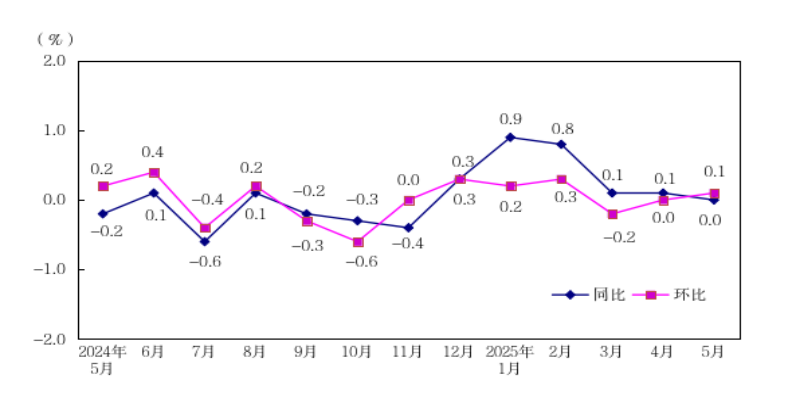
5月份深圳PPI同比持平,环比上涨0.1%
Shen Zhen Shang Bao· 2025-06-13 04:39
Core Insights - In May 2025, Shenzhen's Producer Price Index (PPI) remained unchanged year-on-year, with a month-on-month increase of 0.1% [1] - The average PPI from January to May showed a year-on-year increase of 0.4%, while the purchasing price index increased by 0.3% [1] Group 1: Producer Prices - Year-on-year, the prices of production materials decreased by 1.5%, with mining industry prices dropping by 23.5% and processing industry prices down by 1.3%. Raw materials prices increased by 1.0% [3] - Year-on-year, consumer goods prices increased by 3.1%, with clothing prices down by 1.4%, durable goods prices stable, food prices up by 0.3%, and general daily goods prices up by 15.0% [3] - Month-on-month, production materials prices increased by 0.1%, with mining industry prices down by 7.3% and raw materials prices up by 2.5%. Consumer goods prices increased by 0.2% [3] Group 2: Purchasing Prices - In the purchasing price index, prices for building materials and non-metallic products decreased by 7.1%, fuel and power prices decreased by 6.8%, and wood and pulp prices decreased by 5.1% [3] - Other industrial raw materials and semi-finished products saw a price decrease of 1.8%, while chemical raw materials increased by 0.9% and textile raw materials increased by 1.0% [3] - Notably, prices for non-ferrous metals and wires increased by 17.9% [3]

广州南沙金融30条发布;今年预计7~9个台风登陆我国丨大湾区财经早参
Mei Ri Jing Ji Xin Wen· 2025-05-13 14:04
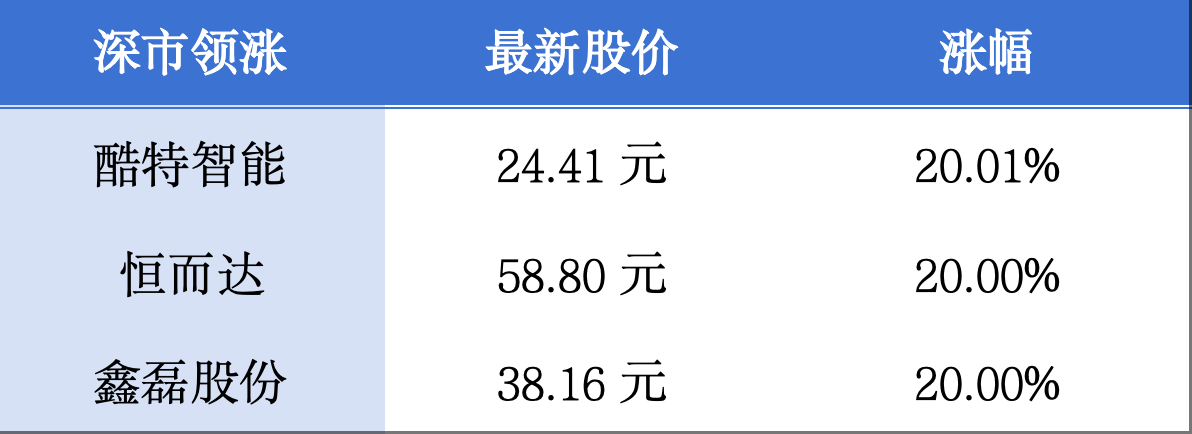
Group 1 - The People's Bank of China and four other departments issued 30 measures to support the financial services in Nansha, Guangzhou, aimed at enhancing cooperation in the Guangdong-Hong Kong-Macao Greater Bay Area [1] - The measures focus on improving innovative financial services, enhancing financial support for social welfare, and developing specialized financial services [1] Group 2 - Nine pilot platforms from Shenzhen were included in the first batch of key cultivation lists by the Ministry of Industry and Information Technology, highlighting the city's manufacturing innovation capabilities [2] - The selected platforms cover critical areas for high-quality development in manufacturing, including five in raw materials, two in consumer goods, one in equipment manufacturing, and one in information technology [2] Group 3 - The National Climate Center predicts that 7 to 9 typhoons will make landfall in China in 2025, which is consistent with the annual average of 7 [3] - The typhoons are expected to primarily affect the eastern coastal regions of South China and East China, with 1 to 2 typhoons potentially moving northward [3] Group 4 - Hong Kong officials will visit Hungary and Egypt to promote opportunities in the Greater Bay Area during a trade cooperation exchange meeting [4] - This initiative aims to deepen international cooperation and expand the Belt and Road market, enhancing the economic connectivity and openness of the Bay Area [4] Group 5 - The Shenzhen Component Index closed at 10,288.08 points, down 0.13% on May 13 [5] Group 6 - The top gainers in the Shenzhen market included Kute Intelligent, with a price of 24.41 yuan and a rise of 20.01%, and Hengliangda, with a price of 58.80 yuan and a rise of 20.00% [6] - The biggest losers included ST Lifang, with a price of 4.29 yuan and a drop of 11.91%, and Huawu Co., with a price of 9.42 yuan and a drop of 11.88% [6]
济南4家企业入选山东省首批制造业中试平台名单
Qi Lu Wan Bao Wang· 2025-05-13 10:29
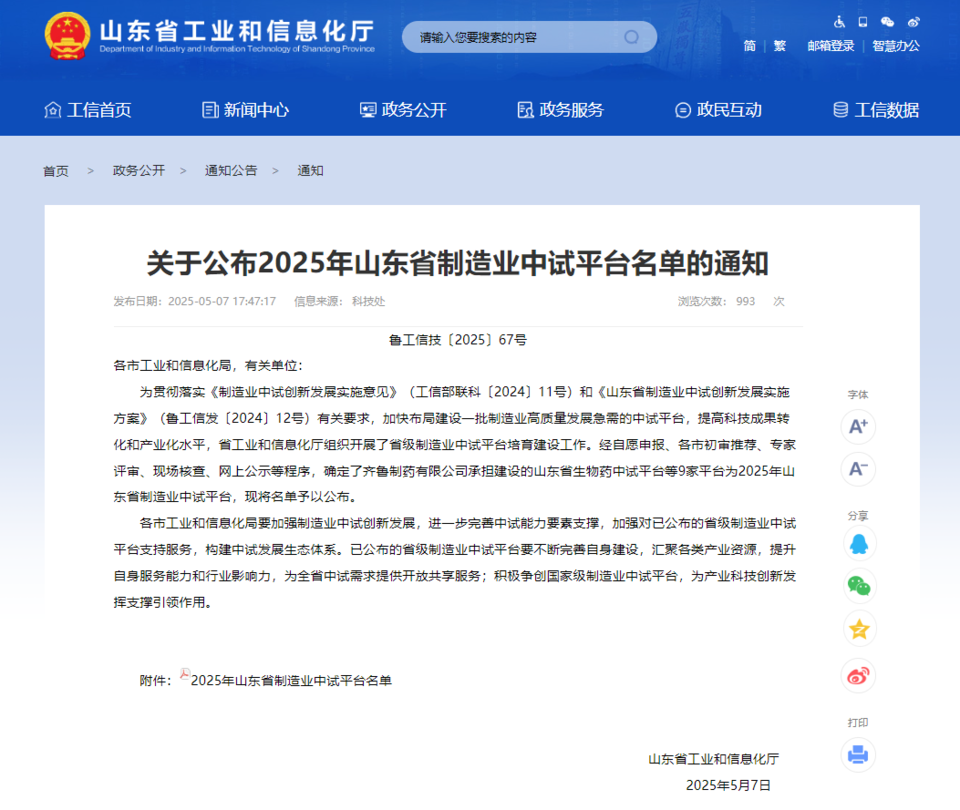
Core Viewpoint - The Shandong Provincial Department of Industry and Information Technology has released the list of manufacturing pilot platforms for 2025, with nine platforms selected, including the Shandong Biopharmaceutical Pilot Platform led by Qilu Pharmaceutical Co., Ltd. [1] Group 1: Overview of Pilot Platforms - The establishment of manufacturing pilot platforms is a new initiative in Shandong Province aimed at supporting the transition of new products from trial production to mass production [1] - The pilot platforms are collaborative entities formed by enterprises, professional institutions, universities, and research institutes, driven by market mechanisms [1] Group 2: Selected Platforms in Jinan - Jinan City has four selected pilot platforms, ranking first in the province, which include: - Shandong Biopharmaceutical Pilot Platform by Qilu Pharmaceutical Co., Ltd. - Shandong Medical Equipment Pilot Platform by Boke Holdings Group Co., Ltd. - Shandong Functional Special Resin Pilot Platform by Shandong Shengquan New Materials Co., Ltd. - Shandong Integrated Circuit Pilot Platform by Jinan Jinggu Research Institute [4] - These platforms focus on key areas such as biomedicine, medical equipment, advanced materials, and integrated circuits, addressing the innovation needs of Shandong's manufacturing sector [4] Group 3: Future Development Plans - The Jinan Municipal Bureau of Industry and Information Technology plans to enhance support services for technological innovation platforms, leveraging pilot platforms and innovation centers to drive technology research and development, achievement transformation, and industry-academia-research collaboration [4] - The goal is to create a more systematic and ecological pilot service network, promoting sustainable development of pilot services and facilitating breakthroughs in traditional, emerging, and future industries [4]

首批名单公布,又一国家级平台来了
Mei Ri Jing Ji Xin Wen· 2025-05-12 23:27
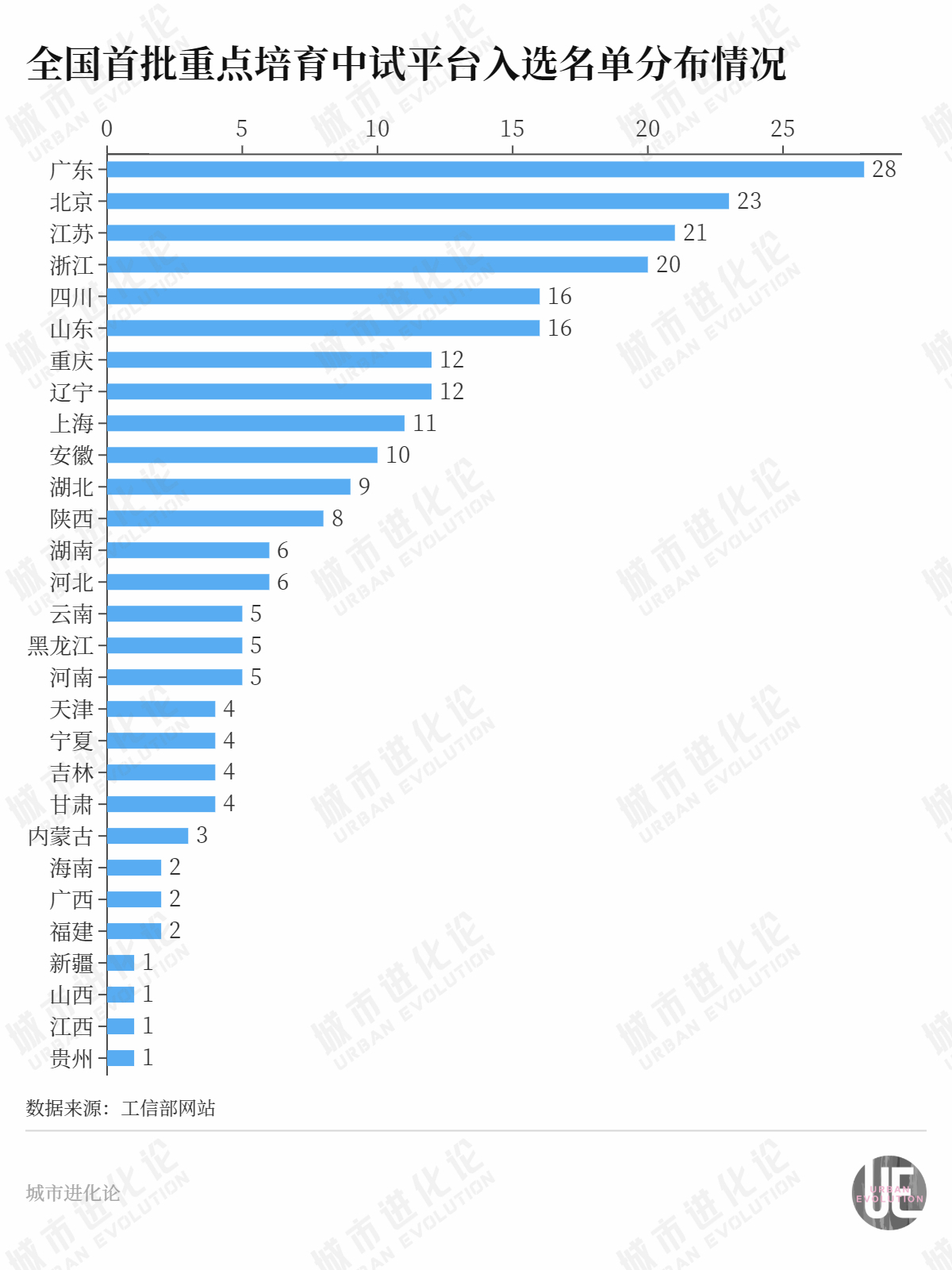
Core Insights - The Ministry of Industry and Information Technology (MIIT) has announced the preliminary list of 242 key pilot platforms for manufacturing, covering six major sectors essential for high-quality development [1][2] - The success of pilot testing is crucial for the industrialization of technological achievements, with a success rate of 80% for those that undergo pilot testing compared to only 30% for those that do not [1] - The government aims to establish provincial and national pilot platforms by 2027 to enhance the engineering breakthroughs and industrial applications of traditional and emerging industries [2] Group 1: Pilot Platforms Overview - The 242 pilot platforms are distributed across 29 provinces, excluding Qinghai and Tibet, with Guangdong, Beijing, Jiangsu, and Zhejiang leading in the number of platforms [2][3] - Guangdong has the highest number of pilot platforms across all six sectors, indicating strong industrial transformation capabilities [3] Group 2: Regional Development Plans - Guangdong plans to establish 30-50 provincial pilot platforms by 2025, with 5-8 expected to reach industry benchmark levels [2] - Shandong aims to create around five exemplary provincial pilot platforms by 2027 in key industrial sectors, striving for national-level recognition [2]
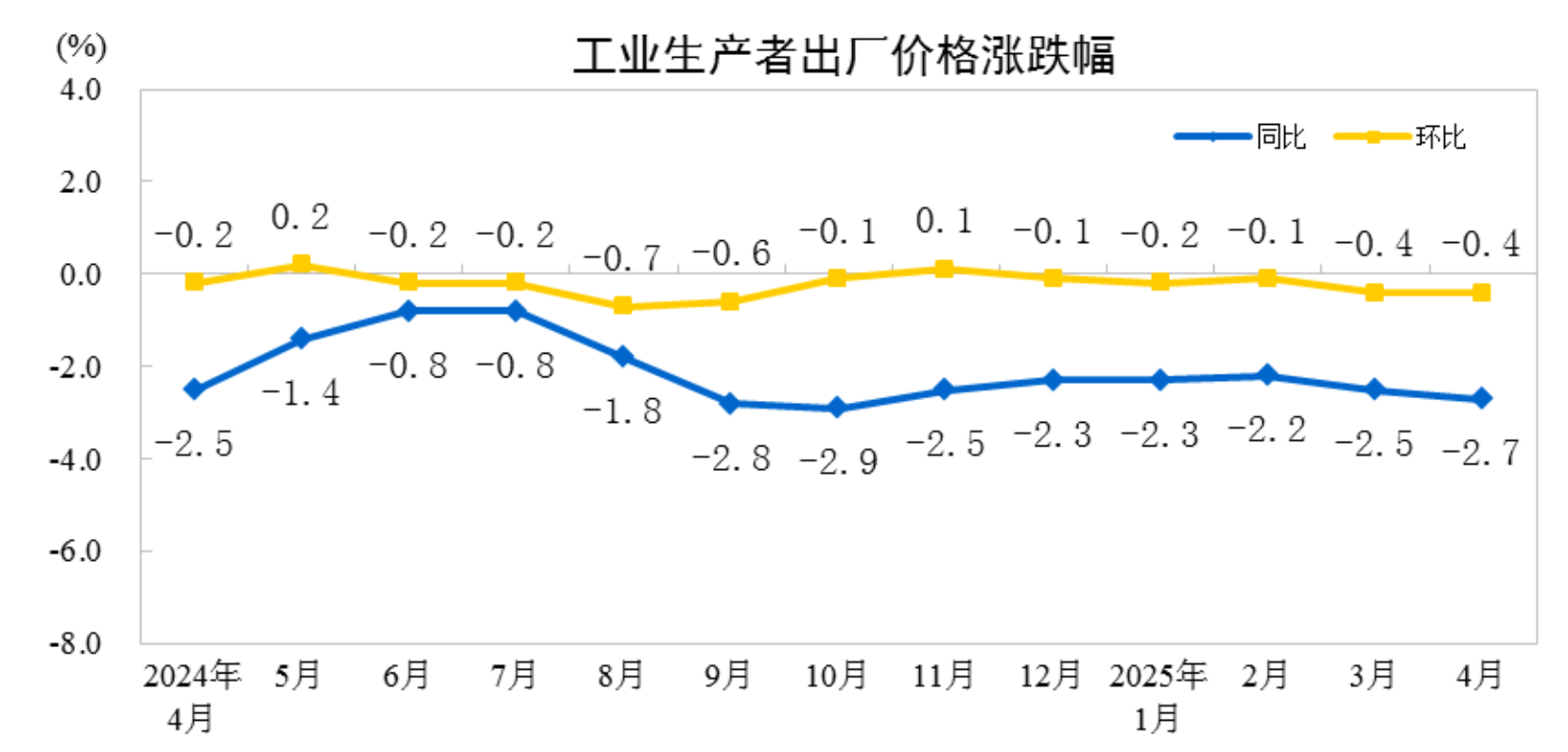
2025年4月份工业生产者出厂价格同比下降2.7%
Guo Jia Tong Ji Ju· 2025-05-10 01:31
Core Insights - In April 2025, the national industrial producer's ex-factory prices decreased by 2.7% year-on-year and 0.4% month-on-month, while the purchase prices decreased by 2.7% year-on-year and 0.6% month-on-month [1][4][6] - The average decline in ex-factory and purchase prices from January to April 2025 was 2.4% compared to the same period last year [1][7] Group 1: Year-on-Year Changes - In April, the prices of production materials fell by 3.1%, contributing approximately 2.28 percentage points to the overall decline in ex-factory prices [3][6] - The mining industry saw a significant price drop of 9.4%, while raw materials and processing industries experienced declines of 3.6% and 2.3%, respectively [3][7] - Consumer goods prices decreased by 1.6%, with food prices down by 1.4% and durable goods prices down by 3.7% [3][7] Group 2: Month-on-Month Changes - In April, production material prices decreased by 0.5%, impacting the overall ex-factory price level by approximately 0.37 percentage points [6][9] - The mining sector's prices fell by 2.1%, while raw materials and processing industries saw declines of 1.0% and 0.2%, respectively [6][9] - Consumer goods prices decreased by 0.2%, with food prices down by 0.1% and durable goods prices down by 0.7% [6][9] Group 3: Purchase Price Trends - In April, the purchase prices for fuel and power decreased by 7.7%, while black metal materials and chemical raw materials saw declines of 6.7% and 4.1%, respectively [9][10] - Prices for agricultural products and textile raw materials fell by 2.9% and 2.3%, respectively, while prices for non-ferrous metal materials and wires increased by 8.5% [9][10]
3月物价数据点评:警惕关税带来的价格压力
Soochow Securities· 2025-04-10 13:35
Price Data Overview - In March, CPI decreased by 0.4% month-on-month (previous value: -0.2%) and by 0.1% year-on-year (previous value: -0.7%), indicating a narrowing decline[2] - PPI also fell by 0.4% month-on-month (previous value: -0.1%) and by 2.5% year-on-year (previous value: -2.2%), showing an expanded decline[2] Key Influencing Factors - The decline in CPI was primarily driven by three factors: a 3.5% decrease in domestic gasoline prices due to falling international oil prices, which contributed approximately 0.12 percentage points to the CPI decline[2] - Food prices fell by 1.4% month-on-month, impacting CPI by about 0.24 percentage points, with significant drops in fresh vegetables (5.1%), pork (4.4%), and eggs (3.1%)[2] - Weak terminal consumption and industrial demand continued to exert downward pressure, with service prices slightly below historical levels[2] Future Price Trends - Moving forward, tariff impacts are expected to become a significant factor in price evolution, with supply and demand dynamics shifting[2] - The interplay between excess supply and weakening domestic demand will influence price stability, while tariff shocks may lead to lower prices through increased domestic supply[2] Policy Implications - Incremental policies to counter tariff impacts will be crucial, particularly in promoting consumption and stabilizing the real estate market[2] - The effectiveness of these policies will be key in determining future price trends[2] Risks and Challenges - Potential risks include a weakening real estate market, declining exports, and the possibility that incremental policies may not meet expectations[4] - The go-capacity policy may face tougher decisions, as the short-term pain from capacity reduction could be challenging for the domestic economy to absorb[2]
通胀延续惯性-宏观经济专题报告
格林大华期货· 2025-03-10 04:40
Inflation Trends - In February, China's Consumer Price Index (CPI) decreased by 0.7% year-on-year, against a market expectation of a 0.4% decline, following a 0.5% increase in January[1] - The average CPI for January-February showed a slight decline of 0.1% compared to the same period last year, while December's CPI had a 0.1% increase[5] - Food prices fell by 1.3% year-on-year in January-February, compared to a 0.5% decline in December[5] Core CPI and PPI Analysis - The core CPI for January-February increased by 0.3% year-on-year, slightly down from a 0.4% increase in December[5] - The Producer Price Index (PPI) in February dropped by 2.2% year-on-year, slightly worse than the expected 2.1% decline and an improvement from a 2.3% drop in the previous month[9] - The prices of production materials decreased by 2.5% year-on-year, contributing approximately 1.86 percentage points to the overall PPI decline[9] Price Movements and Policy Implications - February's PPI saw a month-on-month decrease of 0.1%, following a 0.2% decline in January[10] - The government has set a CPI growth target of around 2% for 2025, down from 3% in 2024, indicating a shift in monetary policy focus[13] - The report emphasizes the importance of maintaining liquidity and aligning monetary supply growth with economic growth and price expectations[13]