
服务贸易

Search documents
徐奇渊:扩内需与对外政策紧密相关 以外促内、以内稳外|首席对策
Di Yi Cai Jing Zi Xun· 2025-12-21 14:15
Core Viewpoint - China's goods trade surplus reached a historic milestone of 1.08 trillion USD in the first eleven months of 2025, marking the first time it has surpassed 1 trillion USD, despite facing challenges from U.S. tariffs and global trade restructuring [1] Group 1: Trade Performance - China's exports amounted to 3.41 trillion USD in the first eleven months, reflecting a year-on-year growth of 5.9% [1] - The trade surplus is primarily from goods trade, with a service trade deficit of approximately 230 billion USD, indicating that the overall trade imbalance may not be as significant as perceived [9][11] - The current account surplus as a percentage of GDP remains below the 4% threshold, suggesting that the trade surplus is manageable [9][10] Group 2: Economic Policy and Strategy - The Central Economic Work Conference emphasized the need for structural reforms to boost domestic demand while addressing external pressures, highlighting the importance of balancing internal stability with external challenges [7][15] - The strategy of "external pressure promoting internal reform" is crucial, as external challenges can drive necessary domestic structural changes [7] - The focus on expanding domestic demand has been prioritized, with a clear policy framework for the service sector, which is essential for economic resilience [4][15] Group 3: Manufacturing and Competitiveness - China's manufacturing sector has not been adversely affected by the trade war, maintaining and even increasing its global market share outside the U.S. [4][5] - There is a need for Chinese enterprises to enhance their competitiveness by transitioning from manufacturing to setting industry standards, which will help in establishing a more resilient supply chain [5][6] - The increase in value-added exports is critical, as it reflects the benefits derived from exports, including profits, wages, and taxes [11] Group 4: Future Outlook - The geopolitical landscape is shifting, with increased economic pressure expected from non-U.S. countries, necessitating a focus on regional economic integration [8][14] - The outlook for foreign trade remains stable, but its contribution to economic growth may diminish, necessitating a greater emphasis on domestic consumption and investment in 2026 [18][19] - The potential for inflation in the U.S. could impact global markets, including China's trade dynamics, highlighting the need for vigilance in economic forecasting [16][17]
《中国对外开放报告2025》发布会暨学术研讨会圆满召开
Sou Hu Cai Jing· 2025-12-17 07:45
Core Insights - The report highlights a significant transformation in China's foreign openness, shifting from market-driven to rule-driven approaches, emphasizing the establishment of a new open economic system centered on institutional openness [6] Group 1: Trade Developments - China's total goods trade is projected to reach 43.8 trillion yuan in 2024, accounting for approximately 12.5% of global trade, showcasing resilience despite global economic challenges [7] - The trade structure is continuously optimizing, with an increasing proportion of high-tech and high-value-added product exports [7] - China is enhancing its trade system's resilience through various measures, including deepening regional economic cooperation and promoting green and low-carbon trade transitions [7] Group 2: Service Trade - China has become a global leader in service trade but faces internal and external pressures, including geopolitical factors and regulatory barriers [8] - The report identifies service trade as a key area for future breakthroughs in China's openness, necessitating institutional innovations to align with international standards [8] Group 3: Financial Opening - China is cautiously advancing financial sector openness, capital account liberalization, and the internationalization of the yuan, achieving notable progress [9] - The yuan has become the world's third-largest payment currency and the second-largest trade financing currency, with its functions steadily enhancing [9] - Challenges include balancing efficiency and security amid rising financial protectionism and uncertainties in the international monetary system [9] Group 4: International Technology Cooperation - The global technology cooperation landscape is facing fragmentation and politicization, prompting China to restructure its international technology cooperation framework [10] - There is a shift from a single global innovation network to a focus on regional collaboration and self-sufficiency in key areas [10] Group 5: Foreign Investment - China's foreign investment structure is evolving, characterized by regionalization, greening, and high-end features [11] - The report introduces the "China Foreign Investment Uncertainty Index (IPU)," indicating multifaceted risks in foreign investments, particularly in strategic sectors like AI and biotechnology [11] Group 6: Future Outlook - The report concludes that China is undergoing a profound historical transformation in its foreign openness, aiming to establish a new cooperation framework centered on institutional openness [12] - Key strategies include aligning with international trade rules, enhancing resource allocation capabilities, and strengthening risk prevention systems [12]


印度经济将面临显著短期风险
Jing Ji Ri Bao· 2025-12-15 08:42
Core Viewpoint - The International Monetary Fund (IMF) report indicates that the Indian economy is performing well, supported by improving domestic conditions, with a projected growth rate of 6.5% for FY2024-2025 and 7.8% year-on-year GDP growth for Q1 FY2025-2026, despite facing significant short-term risks [1][2]. Economic Growth Projections - For FY2025-2026, India's actual GDP is expected to grow by 6.6%, with inflation projected to decrease to 2.8% [2] - By FY2026-2027, GDP growth is anticipated to slow to 6.2%, with inflation rebounding to 4% [2] Trade and External Debt - Commodity trade exports are projected to reach $416.3 billion, a year-on-year decline of 5.8%, while imports are expected to rise to $746.6 billion, a growth of 2.4% [2] - External debt is forecasted to increase to $791 billion, accounting for 19.2% of GDP [2] Structural Reforms - The implementation of the Goods and Services Tax (GST) on September 22, 2025, is expected to simplify the tax structure, stimulate domestic consumption, and mitigate the adverse effects of high tariffs [2][3] - Continuous structural reforms and fiscal consolidation are deemed crucial for achieving fiscal deficit targets and enhancing economic resilience [3] Risks and Challenges - The report highlights significant short-term risks, including potential tightening of financial conditions due to geopolitical fragmentation and unpredictable climate change impacts on agriculture, which could elevate inflation pressures [3] - The need for ongoing financial structural reforms and careful monitoring of non-bank financial institutions is emphasized to mitigate associated risks [3] Recommendations for Sustainable Growth - The Indian government is advised to enhance human capital accumulation, increase female labor participation, and optimize the business environment to attract foreign direct investment [4] - There is a call for increased R&D investment and innovation to support green economic transformation and ensure sustainable growth [4]
【新华解读】稳中提质 培育新能——从中央经济工作会议看外贸新动向
Xin Hua Cai Jing· 2025-12-12 12:34
Group 1 - The central economic work conference emphasized the importance of "institutional opening" and the development of service, digital, and green trade as new growth points for foreign trade and investment [1][2][4] - The meeting outlined a strategic focus on expanding service sector openness, optimizing the layout of free trade zones, and promoting the integration of trade and investment [2][3] - The emphasis on service, digital, and green trade reflects a clear strategic layout aimed at optimizing trade structure and promoting sustainable development [4][5] Group 2 - The conference highlighted the need to encourage service exports and actively develop digital and green trade, indicating a continuity in policy direction [4][5] - Data from customs showed that in the first eleven months, exports and imports reached 24.46 trillion yuan and 16.75 trillion yuan, respectively, with a year-on-year growth of 6.2% and 0.2% [4] - The focus on green trade, particularly in electric vehicles and renewable energy products, demonstrates China's competitive advantage in green technology and design [4][5] Group 3 - Experts believe that service exports, digital trade, and green trade are key areas for optimizing China's foreign trade structure and driving economic transformation [5] - Future efforts should include enhancing traditional advantages in machinery and electronics while focusing on green economy-related industries [5] - The rise of digital trade is expected to empower manufacturing and become a new highlight in foreign trade [5]
商品贸易改善带动美国单月逆差回落 全年赤字压力未减
Xin Hua Cai Jing· 2025-12-11 14:18
Core Viewpoint - The latest data from the U.S. Department of Commerce indicates a narrowing of the trade deficit in September, driven primarily by a reduction in the goods trade deficit, although cumulative trends show ongoing pressure on the overall trade balance [1] Trade Data Summary - In September, U.S. exports of goods and services reached $289.3 billion, an increase of $8.4 billion month-over-month [1] - Imports for the same month totaled $342.1 billion, with a slight increase of $1.9 billion [1] - The overall trade deficit for September narrowed to $52.8 billion, marking the smallest level since mid-2020 [1] Goods and Services Breakdown - The goods trade deficit decreased by $7.1 billion to $79 billion in September, which was the main driver behind the overall deficit reduction [1] - The services trade surplus slightly narrowed by $600 million to $26.2 billion [1] Cumulative Trends - From the beginning of 2025 to date, the overall trade deficit has expanded by $112.6 billion compared to the same period in 2024, representing a 17.2% increase [1] - Total exports have grown by 5.2% year-over-year, reaching $125.1 billion, while total imports increased by 7.7% to $237.7 billion [1] Market Influences - The growth in September exports may have benefited from a rebound in certain manufacturing and energy product sales, while the sluggish growth in imports could be attributed to corporate inventory adjustments and changes in consumer spending patterns [1] - Despite the positive signals in monthly data, the structural imbalance in U.S. foreign trade remains unresolved [1]
货物贸易顺差首次超万亿,中央鼓励支持服务出口
Di Yi Cai Jing· 2025-12-11 11:29
Group 1 - The core viewpoint of the articles emphasizes the significant growth in service exports compared to imports, leading to a continuous narrowing of the service trade deficit [1][2] - The Central Economic Work Conference highlighted the importance of "encouraging and supporting service exports" and developing digital and green trade as key tasks for economic work in 2026 [1] - In the first ten months of 2025, China's total service trade reached 65,844.3 billion yuan, with exports growing by 14.3% and imports by 2.6%, resulting in a service trade deficit of 7,663.7 billion yuan, which decreased by 2,693.9 billion yuan year-on-year [2] Group 2 - Knowledge-intensive service exports increased by 9.5% in the first ten months of 2025, with a significant expansion of the surplus by 1,036 billion yuan compared to the previous year [2] - Travel service exports saw a remarkable growth of 52.5%, contributing to a total travel service trade of 18,125.4 billion yuan, which grew by 8.5% [2] - The trade surplus for goods reached a historical high of 1.08 trillion USD in the first eleven months of 2025, with a notable increase in exports to non-US markets, particularly ASEAN, Europe, and Africa [3]
推动贸易创新发展
Ren Min Ri Bao· 2025-12-09 03:12
Core Viewpoint - The 20th Central Committee's Fourth Plenary Session emphasizes "promoting trade innovation development" as a strategic deployment for expanding high-level opening-up and accelerating the transition from a trade power to a trade strong nation [1] Group 1: Significance of Promoting Trade Innovation Development - Trade innovation development is essential for high-quality economic growth, as it is a key component of an open economy and directly impacts employment and economic expansion [2] - It supports the construction of a new development pattern by facilitating domestic and international dual circulation, leveraging China's market advantages [3] - It is necessary for developing new productive forces, adapting to technological revolutions, and enhancing the international trade landscape [4] Group 2: Basic Requirements for Promoting Trade Innovation Development - Coordination between goods trade and service trade is crucial, as service trade is becoming a significant growth driver in the global economy [5] - Balancing export and import is necessary for sustainable trade development, with both elements complementing each other [6] - Integrating traditional and emerging trade dynamics is important for maintaining competitiveness and adapting to market changes [7] Group 3: Main Tasks for Promoting Trade Innovation Development - Optimizing and upgrading goods trade involves improving product structure and market strategies while enhancing trade quality [8] - Developing service trade through high-level openness and innovation is vital for expanding its scale and competitiveness [9] - Innovating in digital trade by promoting cross-border data flow and establishing digital trade platforms is essential for future growth [10]
打造对外贸易更强劲新引擎
Jing Ji Ri Bao· 2025-12-09 00:28
Core Insights - China's service trade is experiencing robust growth, with a significant increase in both scale and structural optimization, contributing positively to global economic development [1][2] - The service trade sector is projected to grow from $661.72 billion in 2020 to $1,056.46 billion by 2024, reflecting an annual growth rate of 12.4%, outpacing goods trade [1] - Key urban clusters such as the Yangtze River Delta, Beijing-Tianjin-Hebei, and Guangdong-Hong Kong-Macao Greater Bay Area are playing a pivotal role in driving service trade development [1] Group 1 - In October, China's international balance of payments for goods and services trade reached 42,858 billion yuan [1] - The total service trade import and export volume exceeded $737 billion in the first eight months of the year [1] - The narrowing of the service trade deficit and enhanced coordination in imports and exports indicate a healthier trade balance [1] Group 2 - Challenges facing China's service trade include the need for improved overall competitiveness, structural optimization, and reduced regional disparities [2] - There is a call for increased participation in global digital service trade standards, as decision-making power is largely held by Western countries [2] - Future strategies should focus on institutional openness, digital innovation, and industry integration to foster service trade growth [2] Group 3 - Accelerating the construction of new infrastructure is essential for enhancing the digital transformation of service trade [3] - Collaboration among enterprises, universities, and research institutions is necessary to overcome core technology challenges [3] - Active engagement in international negotiations on high-standard economic and trade rules is crucial for improving international competitiveness [3]
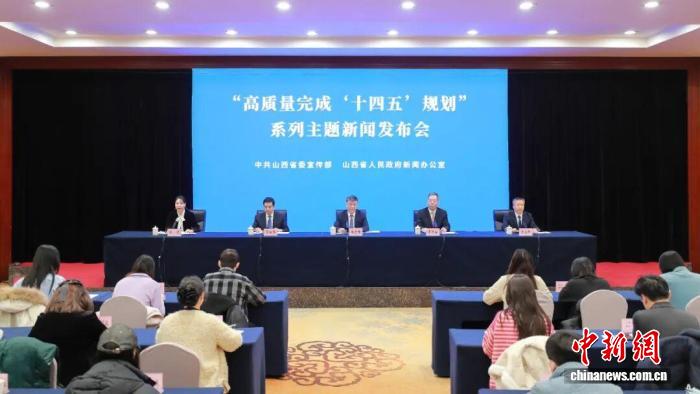
“十四五”期间山西服务贸易进出口额累计达107.9亿美元
Zhong Guo Xin Wen Wang· 2025-12-05 10:35
Core Viewpoint - During the "14th Five-Year Plan" period, Shanxi's service trade import and export volume reached a total of 10.79 billion USD, indicating significant growth in the sector [1]. Group 1: Service Trade Development - Shanxi's service trade has maintained rapid and stable growth, with a service export growth rate of 27.8% in the first three quarters of this year, and ten out of twelve sectors experiencing growth rates above 10% [2]. - The province has focused on enhancing market entities by utilizing various resources to support enterprises in service trade, leading to the emergence of service outsourcing brands like Hengyan and Naitesi [2][3]. Group 2: Financial Support and Training - Shanxi's Commerce Department has established a special loan of 3.5 billion CNY to support the development of digital trade, alongside annual business training to empower market entities [2]. - The province is actively promoting international qualifications for enterprises to help them expand into European and Southeast Asian markets [2]. Group 3: Cultural and Promotional Activities - Shanxi has launched the "Jinfu Global" brand to promote its services globally, organizing participation in various international exhibitions and trade fairs [2]. - The province is implementing a series of "Cultural Going Global" activities, with six initiatives included in the national "Thousand Sails Going to Sea" project for 2024 [3]. Group 4: Digital Trade and Cultural Promotion - Shanxi has created an international online platform for "Shanxi Cultural Tourism," which regularly showcases cultural features and promotes tourism routes, facilitating cross-border e-commerce transactions for cultural products [3]. - The focus will continue on developing service trade and innovating digital trade to inject new momentum into Shanxi's high-quality development and comprehensive transformation [3].
商务部部长王文涛:扩大高水平对外开放 加快建设强大国内市场
Xin Lang Cai Jing· 2025-12-05 10:08
Core Viewpoint - The article emphasizes the importance of expanding high-level opening-up and accelerating the construction of a strong domestic market as outlined in the 15th Five-Year Plan, highlighting specific measures such as actively expanding autonomous opening and significantly boosting consumption [1][12]. Group 1: Importance of High-Level Opening-Up - Expanding high-level opening-up is a strong driving force for promoting high-quality development, especially during the critical period of the 15th Five-Year Plan, which faces both strategic opportunities and risks [2][13]. - It is an inherent requirement to meet the people's needs for a better life, with nearly 700,000 foreign trade enterprises and around 500,000 foreign-funded enterprises projected for 2024, directly and indirectly supporting over 200 million jobs [3][14]. - It serves as proactive engagement in economic globalization, countering unilateralism and protectionism while promoting multilateralism and free trade [3][15]. Group 2: Key Tasks for High-Level Opening-Up - The 15th Five-Year Plan outlines four key tasks for expanding high-level opening-up, including strengthening the Party's leadership in open work and enhancing the level of opening-up [5][16]. - Actively expanding autonomous opening by aligning with international high-standard trade rules, focusing on service sectors, and increasing market access [5][16]. - Promoting trade innovation development by solidifying the three pillars of goods trade, service trade, and digital trade, while enhancing import and export balance [7][17]. Group 3: Boosting Domestic Consumption - The plan emphasizes the strategic basis of expanding domestic demand, with China's market advantages including a population of over 1.4 billion and a growing middle-income group [9][19]. - Significant efforts will be made to enhance service consumption through policy measures and the development of new growth points in sectors like tourism and sports [10][20]. - The initiative aims to innovate consumption scenarios and establish a management framework that adapts to new consumption models, supporting the development of international consumption center cities [11][21].