电动两轮车

Search documents
冲刺港股IPO!台铃营收能否扛住“新国标”与“投诉潮”?
Sou Hu Cai Jing· 2025-12-10 10:16
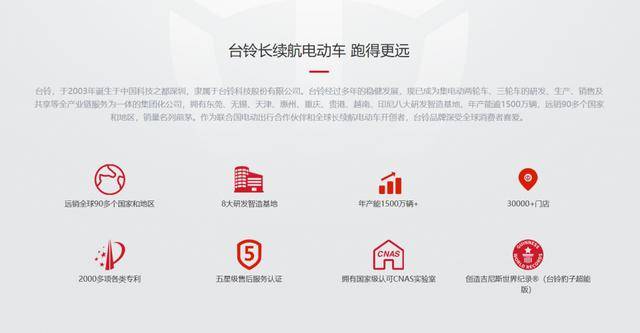
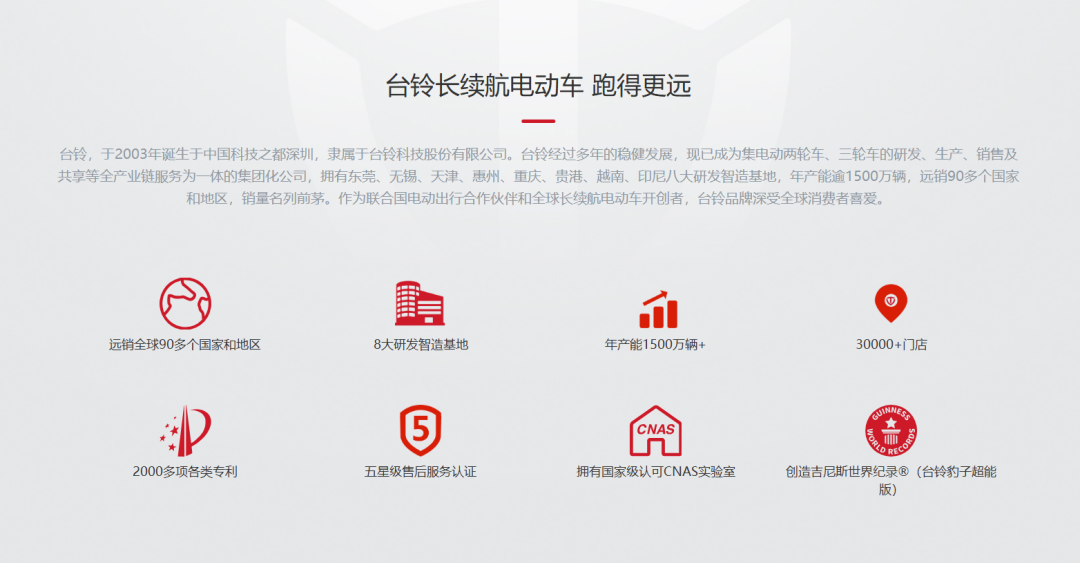
Core Viewpoint - The electric two-wheeler company Tailg has officially initiated its listing guidance, aiming for a Hong Kong IPO in 2026, which would make it the third major player in the industry to go public after Yadea and Aima, marking the complete assembly of the top three in the capital market [1][2]. Group 1: Company Overview - Tailg, founded by the Sun brothers, has transformed from a small repair shop into an industry giant with annual revenue exceeding 12 billion yuan and an annual production capacity of over 15 million units [3][5]. - The company has a global network of over 30,000 stores and exports to more than 90 countries, with estimated annual sales between 5 million and 7 million units, securing its position as the third-largest player in the market [3][5]. Group 2: Market Challenges - The implementation of the new national standard for electric bicycles (GB 17761-2024) starting September 1, 2025, poses significant compliance challenges and market adaptation issues for Tailg [2][10]. - The industry is shifting from a focus on volume expansion to value enhancement centered on smart and high-end products, which presents a challenge for Tailg, as its current offerings may not meet the expectations of younger consumers who prioritize technology and smart features [5][9]. Group 3: User Experience and Brand Reputation - Tailg faces significant user complaints, with over 2,000 valid complaints reported, primarily concerning after-sales service and battery performance, which could impact brand reputation and user loyalty [5][9]. - The company's smart features, while present, have not penetrated the market effectively compared to competitors, raising concerns about its ability to attract tech-savvy consumers [5][9]. Group 4: Regulatory and Compliance Issues - The new national standard introduces stringent safety requirements, and any compliance failures could lead to product recalls, fines, or regional sales bans, directly affecting revenue and the IPO process [10][12]. - Past regulatory cases have highlighted compliance gaps in Tailg's channel management, indicating potential vulnerabilities as the company prepares for its IPO [12]. Group 5: Governance and Ownership Structure - Tailg's ownership is highly concentrated among the founding Sun brothers and their partners, which has facilitated efficient decision-making but may hinder the company's ability to innovate and adapt in a rapidly changing market [13][15]. - The current ownership structure poses challenges for meeting public market requirements, as the company must significantly dilute ownership to comply with public holding regulations, potentially raising concerns about stock liquidity [15].

三个潮汕人的百亿生意,能否扛住“新国标”与“投诉潮”?
Feng Huang Wang Cai Jing· 2025-12-10 06:04
Core Viewpoint - The electric two-wheeler company Tailling, with annual revenue exceeding 12 billion yuan, has officially initiated its listing guidance, planning to go public in Hong Kong by 2026, potentially becoming the third major player in the industry to enter the capital market after Yadi and Aima [1] Group 1: Company Overview - Tailling has transformed from a small workshop into an industry giant, boasting ten R&D and manufacturing bases, an annual production capacity exceeding 15 million units, and a global store network of over 30,000, with products sold in more than 90 countries [2][4] - The company is projected to achieve approximately 12 billion yuan in revenue for 2024, with estimated annual sales between 5 million and 7 million units, maintaining its position as the third-largest player in the industry [4] Group 2: Market Challenges - The implementation of the new national standard for electric bicycles (GB 17761-2024) starting September 1, 2025, poses significant compliance challenges and market adaptation pains for Tailling [1][9] - The shift in industry growth logic from "quantity expansion" to "value enhancement" centered on smart and high-end products presents a profound transformation challenge for Tailling [1] Group 3: User Experience and Brand Reputation - Tailling's reliance on the "downstream market" has led to a focus on price-sensitive consumers, such as delivery riders and rural commuters, which has resulted in a practical product image but has hindered its appeal to younger consumers who prioritize technology and smart features [4] - User complaints regarding after-sales service and battery performance have emerged, with over 2,000 complaints reported, highlighting issues such as battery life being only 60% of advertised figures [4][8] Group 4: Regulatory Compliance - The new national standard introduces stringent requirements aimed at addressing long-standing safety issues in the industry, which could significantly impact Tailling's operations if compliance is not met [9] - Previous regulatory cases have revealed compliance management vulnerabilities within Tailling's distribution channels, raising concerns about the company's ability to enforce the new standards across its extensive network [9] Group 5: Governance and Ownership Structure - Tailling's ownership is highly concentrated among the founding brothers and their partners, which has facilitated efficient decision-making during the company's rapid growth but may pose challenges as the company transitions to a publicly traded entity [10][12] - The current ownership structure may limit Tailling's ability to offer attractive equity incentives to attract talent, potentially putting it at a disadvantage compared to competitors with more balanced governance structures [12]
三个潮汕人的百亿生意,能否扛住“新国标”与“投诉潮”?
凤凰网财经· 2025-12-10 03:35
Core Viewpoint - The article discusses the upcoming IPO of Tai Ling, a leading electric two-wheeler company in China, which plans to go public in Hong Kong by 2026, marking a significant moment for the industry as it joins other major players like Yadea and Aima in the capital market [1][2]. Group 1: Company Overview - Tai Ling has transformed from a small repair shop into a major industry player, achieving annual revenues exceeding 12 billion yuan (approximately 1.2 billion) and an annual production capacity of over 15 million units [4][6]. - The company has established a global network of over 30,000 stores and exports products to more than 90 countries, positioning itself as the third-largest player in the industry with estimated annual sales between 5 million and 7 million units [4][6]. Group 2: Market Challenges - The upcoming implementation of the new national standard for electric bicycles (GB 17761-2024) poses significant compliance challenges for Tai Ling, as it requires strict adherence to safety regulations and could impact the company's operations [3][11]. - The shift in industry growth from quantity expansion to value enhancement through smart and high-end products presents a challenge for Tai Ling, which has primarily focused on cost-sensitive consumers such as delivery riders and rural commuters [7][10]. Group 3: Governance and Ownership Structure - Tai Ling's ownership is highly concentrated among the founding brothers and their partners, which has facilitated efficient decision-making during the company's growth phase [18][21]. - However, this concentrated ownership structure may hinder the company's ability to attract talent and innovate as it transitions to a publicly traded company, where a more balanced governance structure is often required [21][22]. - The current ownership structure, with 100% held by founders, poses a challenge for meeting public shareholding requirements for the IPO, potentially leading to concerns about stock liquidity [23][24].
雅迪“毛豆”遭“全网群嘲”,行业标杆为何躺平?
阿尔法工场研究院· 2025-12-09 00:06
以下文章来源于智趣财经 ,作者小趣姐 智趣财经 . 雅迪为何"自爆"? 半年赚16亿,却选择最省事的方案 "毛豆"之名本意可爱,实车却让人大跌眼镜。多位车主实测发现,这款所谓的新国标车型几乎砍掉了所有日常通勤所需的实用功能:储物空间被彻 底取消,座桶封死或直接移除;座垫短小,无法安装儿童安全座椅,更别说搭载成人;座椅采用廉价薄垫,避震系统形同虚设,有用户形容"骑十 分钟,腰疼半小时"。 这些设计被广泛批评为"反人性"——不是技术做不到,而是企业选择不做。当一辆交通工具只剩下"移动"这一项功能,它便失去了作为"生活伙 伴"的价值。 舆情发酵后,不少网友将矛头指向"新国标",认为是政策逼企业做出如此简陋的产品。但事实恰恰相反。 12月4日,中国自行车协会和工信部消费品工业司接连发声澄清:新国标(GB 17761—2024)的核心目标是提升安全性,包括防火阻燃、防篡 改、限速、整车重量(含电池不超过55公斤)等,并从未禁止设计舒适的座椅、合理的储物空间或合规的载人结构。 有趣有料的商业故事和商业人物 导语: 从"高端标杆"到"全网群嘲",雅迪"毛豆"如何透支行业信任? 一场看似寻常的产品迭代,却让中国电动两轮车龙头 ...

星星科技:12月5日召开董事会会议
Mei Ri Jing Ji Xin Wen· 2025-12-08 11:00
Company Overview - Xingxing Technology (SZ 300256) announced its fifth board meeting on December 5, 2025, which was conducted both in-person and via telecommunication [1] - The meeting reviewed the proposal for the election of non-independent director candidates for the sixth board [1] Financial Performance - For the year 2024, the revenue composition of Xingxing Technology is as follows: 52.54% from the electronic components industry and 47.46% from the electric two-wheeler industry [1] - As of the report, the market capitalization of Xingxing Technology is 9.7 billion yuan [1]

以创新因子拓展全球市场 中国品牌出海展现新气象
Ren Min Ri Bao· 2025-12-08 00:38
Group 1 - The core viewpoint of the articles highlights the transformation of Chinese brands from merely exporting products and capital to a comprehensive upgrade in brand output, organizational capabilities, management mechanisms, and governance systems in the global market [1] - Chinese brands are increasingly favored by overseas consumers due to their technological content, cultural heritage, design inspiration, and emotional value, leading to enhanced product recognition and influence [1] - The global recognition of Chinese companies, such as Yushutech, which won an award from the World Intellectual Property Organization, underscores the hard power of Chinese brands in the robotics sector [2] Group 2 - Chinese brands are innovating by adapting to local consumer habits, as seen with Niu Electric optimizing its products for European and Southeast Asian markets [3] - International experts praise the Chinese government's emphasis on technological innovation and the establishment of manufacturing clusters that enhance productivity and foster innovation [4] - China is recognized as a global innovator, moving beyond being the "world's factory" to becoming a source of innovation, which is expected to reshape its global identity and drive balanced economic growth [5] Group 3 - Chinese consumer electronics brands like Xiaomi and OPPO are gaining popularity among young consumers due to their high cost-performance ratio, while companies like BYD are contributing to green transportation [6] - The rise of Chinese brands is accelerating technological, environmental, and service model upgrades in local markets, as noted by experts in Spain [6] - Chinese enterprises are committed to improving global consumer quality of life by sharing technological advancements and providing opportunities for developing countries to access the latest technologies at lower costs [6] Group 4 - China continues to expand high-level opening-up policies, supporting domestic companies in entering international markets while welcoming foreign brands into China, promoting fair competition and mutual benefits [7]
电动自行车新国标落地:雅迪、爱玛、九号密集澄清争议
Feng Huang Wang· 2025-12-05 03:52
Core Viewpoint - The implementation of the new national standard for electric bicycles marks a significant compliance milestone for the electric two-wheeler industry, addressing various public concerns and clarifying misconceptions about the new regulations [1][2]. Group 1: New National Standard Implementation - The new national standard, effective from December 1, 2023, introduces clear definitions regarding vehicle structure and safety, notably eliminating the mandatory installation of pedals, which enhances design flexibility and range [1]. - The standard imposes strict limits on materials and weight, capping the total weight of plastic components at 5.5% of the vehicle's total mass and raising the weight limit for lead-acid battery models to 63 kg [1]. - Additional improvements in fire resistance, braking distance, and dynamic safety monitoring are mandated, with encouragement for vehicles to include mirrors and turn signals to enhance industry standardization [1]. Group 2: Industry Response and Product Supply - Major electric vehicle companies, including Yadea, Aima, and Ninebot, have issued statements to clarify misconceptions regarding the new standard, particularly concerning the comfort of "metal seats" and the ability to install child seats [2]. - These companies assert that their compliant models have been optimized for seat comfort and load-bearing capacity, meeting the safety requirements for carrying children [2]. - Yadea has launched 68 models that comply with the new standard, ensuring stable market supply during the transition period for existing models [2].
涨价、限速、可带娃,3.8亿骑行大军“安保升级”
阿尔法工场研究院· 2025-12-05 00:07
Core Viewpoint - The electric bicycle industry in China is undergoing a significant transition as the new national standards are implemented, leading to a phase of replacement where old models are being phased out and new models are being introduced [1][2]. Group 1: Market Transition - The new national standards for electric bicycles officially took effect on December 1, 2023, prohibiting the sale of old standard models [2]. - Many dealers are experiencing an "empty window" period with no new stock available, while some consumers express dissatisfaction with the new models' functionality compared to the old ones [2][5]. - The new models are reported to have limited styles and higher starting prices, with some dealers hesitant to stock them until sales performance is confirmed [8][7]. Group 2: Consumer Concerns - Consumers have raised concerns about the new models lacking features such as storage space and the ability to carry passengers, which were available in the old models [12][11]. - Misconceptions about the new standards, such as restrictions on carrying children, have been clarified, indicating that many new models can still accommodate child safety seats [14][10]. Group 3: Company Responses - Companies like Aima Technology are adjusting their production strategies in response to the new standards, including shutting down old production lines and shifting capacity to new facilities [20]. - Aima's financial performance has shown stagnation, with revenue growth rates significantly lower than in previous years, raising concerns about future growth under the new regulations [24][25]. - In contrast, Ninebot Company is diversifying its product lines and maintaining strong growth in electric motorcycle sales, which are not affected by the new standards [26][27]. Group 4: Industry Outlook - The introduction of new standards is seen as a catalyst for the electric bicycle industry's upgrade, shifting from initial purchase demand to replacement demand as the market matures [32]. - The overall market growth is expected to be driven by increasing short-distance travel needs, policy-driven compliance vehicle replacements, and the upgrade of aging vehicles [32].
旧版标准车辆全面禁售 九号首款新国标电动自行车发布
Zhong Zheng Wang· 2025-12-01 14:17
Core Viewpoint - The introduction of the new Fz series electric bicycles by Ninebot Company marks a significant step towards compliance with the upcoming stringent national standards for electric bicycles, emphasizing innovation and user experience in the industry [1] Group 1: Product Launch and Features - Ninebot Company showcased its new Fz series of electric bicycles during the "Ninebot Open Day" at its Changzhou production base, featuring three models equipped with the innovative Nimble OS system [1] - The Nimble OS system enables a "human-vehicle-cloud" ecosystem, allowing the electric bicycles to possess capabilities of learning, growth, and perception, with functionalities that can evolve through OTA updates [1] Group 2: Regulatory Context - The new mandatory national standard for electric bicycles (GB17761-2024) will be implemented on September 1, 2025, prohibiting the sale of vehicles that do not comply with the updated regulations starting December 1 [1] - The enforcement of the new standard is seen as a responsibility for industry standardization and an opportunity for technological innovation and deep integration with user needs [1] Group 3: Industry Outlook - The implementation of the new standard is expected to drive the electric two-wheeler industry towards high-quality development, with a focus on smart transportation solutions [1] - The future of the transportation industry is anticipated to be intelligent, providing ample growth opportunities for companies like Ninebot that possess continuous innovation capabilities, transitioning two-wheelers from traditional "transportation tools" to advanced "smart mobility terminals" [1]
雷军“抄底”小米,国资接手恒大汽车,固态电池加速量产,新能源接下来怎么走?
Sou Hu Cai Jing· 2025-11-28 09:36
Group 1: Xiaomi's Current Situation - Xiaomi's stock price has dropped significantly, reaching a six-month low despite a profitable quarter in its automotive business, with CEO Lei Jun increasing his stake in the company [1][2][4] - The company has faced a public relations crisis, including a major overhaul of its PR team and negative social media backlash regarding its legal team's comments about Lei Jun [2][4] - There are concerns about Xiaomi's ESG management, which may be contributing to its current challenges [2] Group 2: Evergrande Auto's Developments - Guangzhou state-owned enterprises have taken over two subsidiaries of Evergrande Auto, which hold significant assets and operational value in the region [5][6] - Evergrande's collapse is attributed to a broken funding chain rather than technical or market positioning failures, despite its aggressive investment strategy [6] Group 3: Battery Technology Trends - Solid-state batteries, which offer higher energy density and safety compared to liquid batteries, are seen as a game-changer for the electric vehicle market, with companies like Funeng Technology planning to scale production by 2026 [8] - The competition in battery technology is intensifying, presenting significant opportunities for the industry [8] Group 4: Panasonic's Market Position - Panasonic has seen a decline in market share, now ranking sixth globally, as it struggles to compete with faster-growing Chinese battery manufacturers [10] - The company's conservative approach has hindered its ability to adapt to the aggressive strategies of competitors like Tesla [10] Group 5: Electric Two-Wheeler Market Dynamics - The Chinese electric two-wheeler market is evolving, with companies like Tailin planning to go public, potentially reshaping the competitive landscape [12] - The market is transitioning to a phase of stock replacement, with a focus on high-end, lithium-powered, and smart products, despite a slowdown in sales growth [12]