计算机通信电子设备

Search documents
新动能支撑制造业韧性:高技术产业指数连续6个月扩张 企业预期回升
Yang Shi Wang· 2025-07-31 09:03
Core Viewpoint - The manufacturing Purchasing Managers' Index (PMI) in China decreased to 49.3% in July, indicating a slight contraction in manufacturing activity due to seasonal factors and adverse weather conditions [1][3]. Group 1: Manufacturing PMI Overview - The manufacturing PMI fell by 0.4 percentage points from the previous month, reflecting a decline in manufacturing sentiment after two months of recovery [1]. - The new orders index for manufacturing dropped into the contraction zone, signaling weaker demand [3]. Group 2: Production and Price Indices - Despite the decline in new orders, the production index remained in the expansion zone at 50.5%, marking three consecutive months of growth [3]. - The raw material purchase price index rose to 51.5%, increasing by 3.1 percentage points, indicating improved price levels in the manufacturing sector [5]. - The equipment manufacturing PMI was at 50.3%, down 1.1 percentage points but still in the expansion zone, while the high-tech manufacturing PMI was at 50.6%, down 0.3 percentage points, maintaining expansion for six months [5]. Group 3: Economic Outlook - The PMI data suggests that despite short-term fluctuations, production remains in the expansion zone, with optimism among manufacturers regarding future business activities, as indicated by a production expectation index of 52.6%, which increased by 0.6 percentage points [7].

7月中国制造业PMI为49.3% 汽车等行业预期较强
Zhong Guo Xin Wen Wang· 2025-07-31 05:27
Group 1 - In July, China's manufacturing Purchasing Managers' Index (PMI) dropped to 49.3%, influenced by seasonal production slowdowns and adverse weather conditions [1] - The production index and new orders index for July were 50.5% and 49.4%, respectively, indicating a slowdown in market demand despite continued expansion in manufacturing activities [1] - Major raw material purchase price index rose to 51.5%, marking the first increase above the critical point since March, while the factory price index was at 48.3% [1] Group 2 - Large enterprises' PMI was 50.3%, down 0.9 percentage points, while medium-sized enterprises' PMI improved to 49.5%, indicating a continued recovery in sentiment [1] - Key industries such as equipment manufacturing and high-tech manufacturing maintained PMIs above the critical point at 50.3% and 50.6%, respectively [2] - The production and business activity expectation index rose to 52.6%, reflecting increased confidence among manufacturing enterprises [2]
国家统计局发布重磅数据!
Zheng Quan Ri Bao Wang· 2025-07-31 03:27
Group 1: Manufacturing Sector - The manufacturing Purchasing Managers' Index (PMI) decreased to 49.3% in July, down 0.4 percentage points from the previous month, indicating a decline in manufacturing activity [1][2] - The production index remained in expansion at 50.5%, while the new orders index fell to 49.4%, reflecting a slowdown in market demand [2] - Large enterprises maintained expansion with a PMI of 50.3%, while medium-sized enterprises improved to 49.5%, and small enterprises decreased to 46.4% [3] Group 2: Non-Manufacturing Sector - The non-manufacturing business activity index was 50.1%, down 0.4 percentage points from last month, but still above the critical point [4] - The service sector's business activity index was stable at 50.0%, with strong performance in transportation and tourism-related industries [4] - The construction sector's business activity index fell to 50.6%, influenced by adverse weather conditions [4] Group 3: Price Indices - The price indices for major raw materials increased, with the purchasing price index at 51.5% and the factory price index at 48.3%, indicating an overall improvement in market prices [2] Group 4: Market Expectations - The production and business activity expectations index rose to 52.6%, showing increased confidence among manufacturing enterprises regarding market development [3] - The business activity expectations index for the service sector increased to 56.6%, indicating optimism among service industry enterprises [4]
国家统计局发布重磅数据
Zheng Quan Ri Bao Wang· 2025-07-31 03:03
Group 1: Manufacturing Sector - The manufacturing Purchasing Managers' Index (PMI) decreased to 49.3% in July, down 0.4 percentage points from the previous month, indicating a decline in manufacturing activity [1][2] - The production index remained in expansion at 50.5%, while the new orders index fell to 49.4%, reflecting a slowdown in market demand [2] - Large enterprises maintained expansion with a PMI of 50.3%, while medium-sized enterprises improved to 49.5%, and small enterprises decreased to 46.4% [3] Group 2: Price Indices - The price index for major raw materials increased, with the purchasing price index at 51.5% and the factory price index at 48.3%, indicating an overall improvement in manufacturing market prices [2] - The purchasing price index for major raw materials rose above the critical point for the first time since March, suggesting a recovery in market conditions [2] Group 3: Non-Manufacturing Sector - The non-manufacturing business activity index was 50.1%, down 0.4 percentage points from the previous month, but still above the critical point, indicating continued expansion [1][4] - The service sector's business activity index remained stable at 50.0%, with certain industries like transportation and entertainment showing strong growth due to seasonal effects [4] - The construction sector's business activity index fell to 50.6%, influenced by adverse weather conditions, while the business activity expectation index for the service sector rose to 56.6%, indicating optimism among service enterprises [4] Group 4: Composite PMI - The composite PMI output index was 50.2%, down 0.5 percentage points from the previous month, but still indicating overall expansion in production and business activities [5][6] - The manufacturing production index and non-manufacturing business activity index contributed to the composite PMI, standing at 50.5% and 50.1% respectively [6]
刚刚发布:49.3%
中国基金报· 2025-07-31 02:42
Group 1: Manufacturing PMI Overview - In July, the Manufacturing Purchasing Managers' Index (PMI) was 49.3%, a decrease of 0.4 percentage points from the previous month, indicating a decline in manufacturing activity [2][21][22] - The production index was 50.5%, down 0.5 percentage points, while the new orders index was 49.4%, down 0.8 percentage points, suggesting a slowdown in market demand [6][22] - Large enterprises maintained expansion with a PMI of 50.3%, while medium-sized enterprises improved to 49.5%, and small enterprises decreased to 46.4% [5][23][24] Group 2: Non-Manufacturing PMI Overview - The Non-Manufacturing Business Activity Index was 50.1%, a decrease of 0.4 percentage points, but still above the critical point, indicating continued expansion [11][25] - The service sector's business activity index was stable at 50.0%, while the construction sector's index fell to 50.6%, down 2.2 percentage points due to adverse weather conditions [14][25] - The business activity expectation index for non-manufacturing was 55.8%, indicating optimism among most enterprises regarding market development [17][25] Group 3: Comprehensive PMI Overview - The Comprehensive PMI Output Index was 50.2%, a decrease of 0.5 percentage points, but still indicating overall expansion in production and business activities [20][26] - The manufacturing production index and non-manufacturing business activity index were 50.5% and 50.1%, respectively, contributing to the comprehensive index's performance [26]

7月份制造业采购经理指数有所回落非制造业商务活动指数保持扩张
Guo Jia Tong Ji Ju· 2025-07-31 02:23
Group 1: Manufacturing PMI Analysis - In July, the manufacturing PMI decreased to 49.3%, down 0.4 percentage points from the previous month, indicating a decline in manufacturing activity due to seasonal factors and adverse weather conditions [2][3] - The production index remained in expansion at 50.5%, while the new orders index fell to 49.4%, reflecting a slowdown in market demand [2] - Large enterprises maintained expansion with a PMI of 50.3%, while medium-sized enterprises improved to 49.5%, and small enterprises decreased to 46.4% [3] Group 2: Price Index and Market Conditions - The price index showed an upward trend, with the main raw materials purchasing price index at 51.5%, marking the first rise above the critical point since March [2] - The production and new orders indices for high-tech manufacturing and equipment manufacturing remained above the critical point, indicating sustained growth in these sectors [3] Group 3: Non-Manufacturing PMI Insights - The non-manufacturing business activity index was at 50.1%, down 0.4 percentage points, but still above the critical point, indicating continued expansion [4] - The service sector showed stability, with a business activity index of 50.0%, while sectors related to travel and consumption experienced high activity levels [4] - The construction sector's business activity index fell to 50.6% due to adverse weather conditions affecting construction activities [4] Group 4: Comprehensive PMI Output Index - The comprehensive PMI output index was at 50.2%, down 0.5 percentage points, indicating overall expansion in production and business activities across sectors [6]
国家统计局:7月份制造业PMI为49.3% 比上月下降0.4个百分点(解读)
Guo Jia Tong Ji Ju· 2025-07-31 02:03
Group 1: Manufacturing PMI Insights - In July, the manufacturing purchasing managers' index (PMI) decreased to 49.3%, down 0.4 percentage points from the previous month, indicating a decline in manufacturing activity [2][3] - The production index remained in expansion at 50.5%, while the new orders index fell to 49.4%, reflecting a slowdown in market demand [3] - Large enterprises maintained expansion with a PMI of 50.3%, although it decreased by 0.9 percentage points, while medium-sized enterprises improved to 49.5% [4] Group 2: Non-Manufacturing PMI Insights - The non-manufacturing business activity index stood at 50.1%, down 0.4 percentage points from the previous month, but still above the critical point [5] - The service industry business activity index was stable at 50.0%, with sectors related to travel and consumption showing strong performance, while real estate and residential services lagged [5][6] - The construction business activity index fell to 50.6%, down 2.2 percentage points, due to adverse weather conditions affecting construction activities [6] Group 3: Comprehensive PMI Insights - The comprehensive PMI output index was 50.2%, a decrease of 0.5 percentage points from the previous month, indicating overall expansion in production and business activities [7] - The manufacturing production index and non-manufacturing business activity index contributed to the comprehensive PMI, standing at 50.5% and 50.1% respectively [7]
国家统计局:7月受制造业进入传统生产淡季等因素影响,制造业景气水平较上月回落
Guo Jia Tong Ji Ju· 2025-07-31 01:39
Manufacturing Sector - In July, the Manufacturing Purchasing Managers' Index (PMI) decreased to 49.3%, down 0.4 percentage points from the previous month, indicating a decline in manufacturing activity due to seasonal factors and adverse weather conditions [2][3] - The production index remained in expansion at 50.5%, while the new orders index fell to 49.4%, reflecting a slowdown in market demand [3] - Large enterprises maintained expansion with a PMI of 50.3%, while medium-sized enterprises improved to 49.5%, and small enterprises decreased to 46.4% [4] - The price index showed an upward trend, with the main raw materials purchasing price index rising to 51.5%, marking the first increase above the critical point since March [3][4] - New momentum in the manufacturing sector is evident, with the equipment manufacturing PMI at 50.3% and high-tech manufacturing PMI at 50.6%, both above the critical point [4] Non-Manufacturing Sector - The Non-Manufacturing Business Activity Index stood at 50.1%, down 0.4 percentage points from the previous month, but still above the critical point [5] - The service sector's business activity index was stable at 50.0%, with significant growth in transportation and tourism-related industries, while real estate and residential services lagged [5][6] - The construction sector's business activity index fell to 50.6%, influenced by adverse weather conditions, with a corresponding decrease in market expectations [6] Composite PMI - The Composite PMI Output Index decreased to 50.2%, down 0.5 percentage points from the previous month, indicating overall expansion in production and business activities [7] - The manufacturing production index and non-manufacturing business activity index were recorded at 50.5% and 50.1%, respectively, both indicating continued expansion [7]
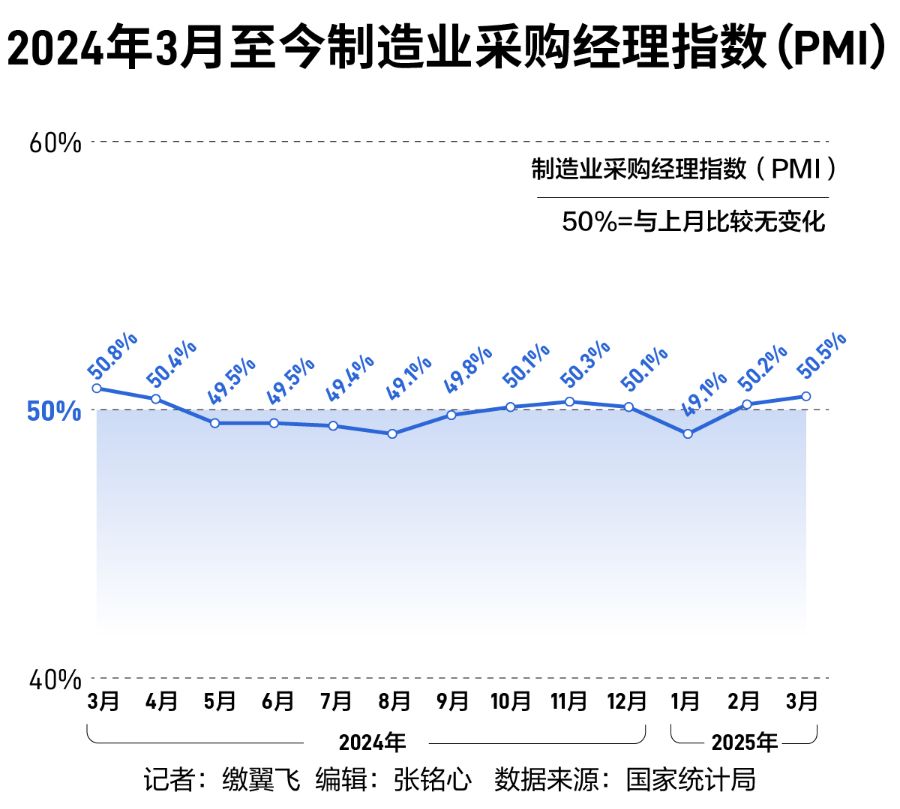
3月制造业PMI回升至50.5%,需求回暖提振企业生产意愿
2 1 Shi Ji Jing Ji Bao Dao· 2025-03-31 12:09
Core Viewpoint - The manufacturing Purchasing Managers' Index (PMI) in March rose to 50.5%, indicating a slight improvement in manufacturing activity compared to February, driven by seasonal factors, policy support, and technological innovations [1][4]. Manufacturing PMI Analysis - The production index, new orders index, new export orders index, and raw materials inventory index all increased, with rises between 0.1 to 0.7 percentage points [1]. - The new orders index reached 51.8%, up 0.7 percentage points from February, indicating sustained demand [4]. - The production index was at 52.6%, reflecting a continuous upward trend for two months [4]. Sector Performance - High-tech manufacturing sectors, such as railway, aerospace, and electronics, showed strong performance with production and new orders indices above 55.0% [6]. - Conversely, industries like wood processing and coal showed indices below the critical point, indicating supply-demand imbalances [6]. - The consumer goods manufacturing PMI rose to 50.0%, driven by policies promoting consumption [6]. Price Indices and Market Dynamics - The main raw materials purchase price index fell to 49.8%, while the factory price index dropped to 47.9%, indicating a supply surplus [7][8]. - The decline in prices is attributed to weak demand and increased production, particularly in the basic raw materials sector [7][8]. Future Outlook - The manufacturing sector is expected to continue its stable recovery in the second quarter, supported by government policies aimed at expanding domestic demand and promoting new urbanization [9]. - The manufacturing production and business activity expectation index was at 53.8%, indicating optimism among enterprises [9]. - However, potential challenges include the impact of increased tariffs on exports and the need for further stabilization in the real estate market [9].