
金属期货

Search documents
铜、镍、锡、铝,期货价格集体上涨
新华网财经· 2026-01-07 07:57
Core Viewpoint - Concerns over tight supply in metal futures have led to significant price increases in various industrial metals, including copper and nickel [1][2]. Group 1: Price Movements - On June 6, nickel prices on the London Metal Exchange (LME) rose by 8.95%, closing at $18,524 per ton, reaching a high not seen since June 5, 2024 [1]. - Copper prices increased by 1.9%, closing at $13,238 per ton, with an intraday peak of $13,387.50, marking a historical high [1]. - Citigroup raised its first-quarter copper price target for this year from $12,000 per ton to $14,000 per ton [1]. Group 2: Other Metals Performance - Other industrial metals also saw price increases on June 6, with tin prices rising by 4.85% to $44,526 per ton, reaching the highest level since March 2022 [2]. - Aluminum prices increased by 1.41%, closing at $3,129 per ton, hitting a peak not seen since April 2022 [2].


铜、镍、锡、铝,集体上涨
Sou Hu Cai Jing· 2026-01-07 06:57
当地时间6日,由于投资者对金属期货供应紧张的担忧情绪有所升温,包括铜和镍在内的多种工业金属 期货价格大幅上涨。 其中,伦敦金属交易所(LME)三个月期镍价格当天收涨8.95%,报每吨18524美元,盘中一度触及 2024年6月5日以来高点。当天,三个月期铜价格上涨1.9%,报每吨13238美元,盘中一度升至13387.50 美元的历史新高。花旗集团6日将今年第一季度期铜目标价从之前的每吨12000美元上调至每吨14000美 元。 其中,伦敦金属交易所三个月期锡价格上涨4.85%,报每吨44526美元,盘中一度触及2022年3月以来的 最高点。6日,三个月期铝价格上涨1.41%,报每吨3129美元,盘中一度触及2022年4月以来最高点。 记者:张曼曼 其他工业金属价格6日也普遍上涨。 ...

金属期权:金属期权策略早报-20260105
Wu Kuang Qi Huo· 2026-01-05 02:21
Report Summary 1. Investment Rating The report does not mention the industry investment rating. 2. Core Viewpoints - For non - ferrous metals with a bullish upward trend, construct a neutral volatility strategy for sellers; for the black series with large - amplitude fluctuations, construct a short - volatility combination strategy; for precious metals with a rebound, construct a bull spread combination strategy [2]. 3. Summary by Category 3.1 Futures Market Overview - The report provides the latest prices, price changes, price change rates, trading volumes, volume changes, open interests, and open interest changes of various metal futures contracts, including copper, aluminum, zinc, etc. For example, the latest price of copper (CU2602) is 98,240, with a price increase of 820 and a price change rate of 0.84% [3]. 3.2 Option Factors - **Volume - to - Open - Interest PCR**: The report presents the volume - to - open - interest PCR of various metal options, which is used to describe the strength of the option underlying market and whether the underlying market has a turning point. For instance, the volume PCR of copper options is 0.42, with a change of - 0.13, and the open - interest PCR is 0.67, with a change of - 0.02 [4]. - **Pressure and Support Levels**: The pressure and support levels of various metal options are analyzed from the perspective of the strike prices with the largest open interests of call and put options. For example, the pressure level of copper options is 110,000, and the support level is 94,000 [5]. - **Implied Volatility**: The report shows the at - the - money implied volatility, weighted implied volatility, change in weighted implied volatility, annual average implied volatility, call implied volatility, put implied volatility, 20 - day historical volatility, and the difference between implied and historical volatilities of various metal options. For example, the at - the - money implied volatility of copper options is 27.36%, and the weighted implied volatility is 33.51%, with a change of - 0.18% [6]. 3.3 Strategy and Recommendations - **Non - ferrous Metals**: - **Copper**: The copper market shows a bullish upward trend with support below. It is recommended to construct a short - volatility seller option combination strategy for volatility strategies and a spot hedging strategy for spot positions [7]. - **Aluminum**: The aluminum market is in a short - term retracement after a bullish rise. It is recommended to construct a call option bull spread combination strategy for directional strategies and a short - call + short - put option combination strategy for volatility strategies [9]. - **Other non - ferrous metals**: Similar analyses and strategy recommendations are provided for zinc, nickel, tin, and lithium carbonate options, including fundamental analysis, market trend analysis, option factor research, and corresponding option strategies [9][10][11]. - **Precious Metals (Silver)**: The silver market shows large - amplitude fluctuations in a bullish trend. It is recommended to construct a neutral short - volatility option seller combination strategy for volatility strategies and a spot hedging strategy for spot positions [12]. - **Black Series**: - **Rebar**: The rebar market shows a weak oscillatory retracement with pressure above. It is recommended to construct a short - bearish call + short - put option combination strategy for volatility strategies and a spot covered - call strategy for spot positions [13]. - **Iron Ore**: The iron ore market shows a bullish oscillatory trend with support below and pressure above. It is recommended to construct a neutral short - call + short - put option combination strategy for volatility strategies and a long - collar strategy for spot positions [13]. - **Other black series**: Similar analyses and strategy recommendations are provided for ferroalloys, industrial silicon, and glass options [14][15].
白银、铜、铂金等金属期货:周五涨跌不一,本周多下跌
Sou Hu Cai Jing· 2026-01-03 01:56
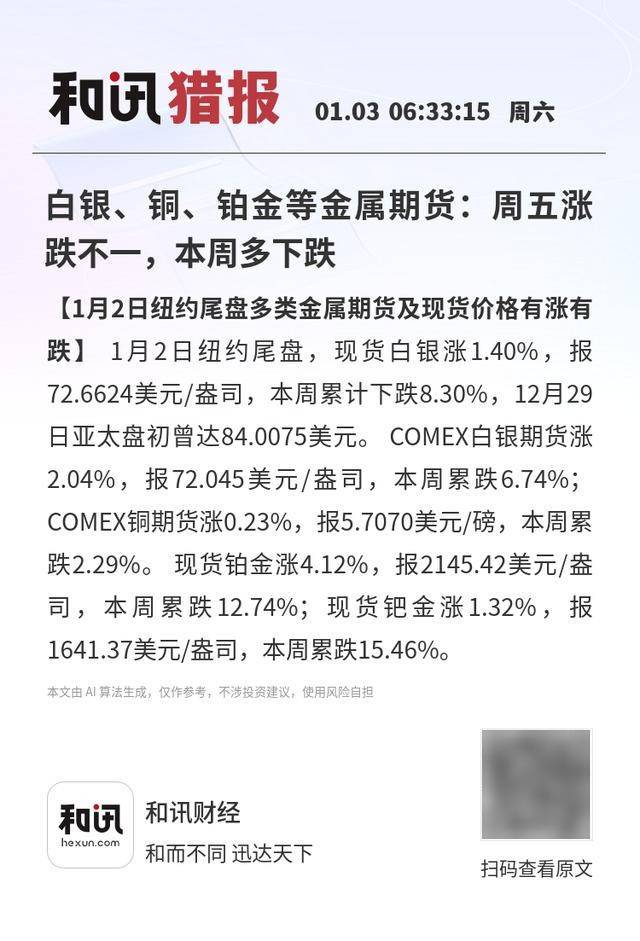
【1月2日纽约尾盘多类金属期货及现货价格有涨有跌】1月2日纽约尾盘,现货白银涨1.40%,报72.6624 美元/盎司,本周累计下跌8.30%,12月29日亚太盘初曾达84.0075美元。 COMEX白银期货涨2.04%,报 72.045美元/盎司,本周累跌6.74%;COMEX铜期货涨0.23%,报5.7070美元/磅,本周累跌2.29%。 现货 铂金涨4.12%,报2145.42美元/盎司,本周累跌12.74%;现货钯金涨1.32%,报1641.37美元/盎司,本周 累跌15.46%。 本文由 AI 算法生成,仅作参考,不涉投资建议,使用风险自担 和讯财经 和而不同 迅达天下 扫码查看原文 白银、铜、铂金等金属期货:周五涨 跌不一,本周多下跌 【1月2日纽约尾盘多类金属期货及现货价格有涨有 跌】 1月2日纽约尾盘,现货白银涨1.40%,报 72.6624美元/盎司,本周累计下跌8.30%,12月29 日亚太盘初曾达84.0075美元。COMEX白银期货涨 2.04%,报72.045美元/盎司,本周累跌6.74%; COMEX铜期货涨0.23%,报5.7070美元/磅,本周累 跌2.29%。 现货铂金涨4. ...
LME金属全线飙升 伦铜连涨六日
Xin Lang Cai Jing· 2025-12-31 00:22
截止收盘,伦铜报12673.5美元涨486美元,涨幅3.99%;伦铝报2986.5美元涨36美元,涨幅1.22%;伦锌 报3130美元涨46美元,涨幅1.49%;伦铅报2024.5美元涨15.5美元,涨幅0.77%;伦锡报42195美元涨 2185美元,涨幅5.46%;伦镍报16780美元涨1020美元,涨幅6.47%。 新浪合作大平台期货开户 安全快捷有保障 长江有色网12月31日早讯:周二晚间LME金属期货全线飙升。伦镍涨逾6%;伦铜连涨六日屡创新高; 伦铝报自2022年4月底以来最高位。 ...

上期所基本金属期货夜盘多数上涨,沪镍涨3.64%
Mei Ri Jing Ji Xin Wen· 2025-12-30 22:28
(文章来源:每日经济新闻) 每经AI快讯,周三(12月31日),上期所基本金属期货夜盘多数上涨,沪镍涨3.64%,沪铜涨1.85%, 沪锡涨1.49%,沪铝涨0.87%,不锈钢涨0.65%,沪锌涨0.6%,氧化铝涨0.47%,沪铅跌0.6%。 ...
大爆发!板块行情要来了吗?
Mei Ri Jing Ji Xin Wen· 2025-12-30 12:17
Currency and Market Trends - The offshore RMB has appreciated, breaking the 6.99 mark against the USD, reaching a high of 6.98555, while the onshore RMB also surpassed the 7.0 mark, the highest level since May 17, 2023. This appreciation is supported by foreign capital inflows, economic growth recovery expectations, and optimism in the tech sector [1] - After a significant drop, metal futures rebounded sharply, with COMEX silver rising over 5%, COMEX copper up over 3%, and LME nickel reaching a new high since April. The A-share non-ferrous sector showed resilience, recovering half of the previous day's losses [1][3] Company Developments - Meta announced the acquisition of AI company Manus, marking its third-largest acquisition since its inception, following WhatsApp and Scale AI. This move is expected to bolster market confidence in AI applications and the computing power industry [1][2] Market Performance - The Shanghai Composite Index closed nearly flat, while the Shenzhen Component and ChiNext Index rose by 0.49% and 0.63%, respectively. The total trading volume in the two markets was 21,426 billion yuan, a slight increase from the previous day [3] - The market saw a higher number of declining stocks (3,481) compared to advancing stocks (1,840), with a median decline of 0.50% in individual stock prices [3] Sector Analysis - The humanoid robot sector experienced a significant surge, with key stocks like Sanhua Intelligent Control and Top Group seeing substantial gains. This was driven by rumors of supplier visits to North America and upcoming contracts [7][8] - The humanoid robot industry is transitioning from thematic investment to growth investment, with a focus on companies involved in the supply chain for Tesla [8][9] - The commercial aerospace sector remained active but faced some pullback after the humanoid robot sector's rise, with notable stocks experiencing high volatility [9] Future Outlook - The AI hardware sector is expected to see a recovery in market sentiment, particularly with upcoming annual performance forecasts from key stocks starting in mid-January [10] - The AI application sector gained traction following Meta's acquisition news, with several stocks hitting their daily limit up [10]
金银价格“过山车”
Sou Hu Cai Jing· 2025-12-30 07:21
Group 1 - The core viewpoint of the articles highlights significant price fluctuations in precious metals, with gold and silver experiencing their largest single-day declines in years on December 29, 2023 [1][2] - Gold futures dropped over 4.5%, closing at $4,343.6 per ounce, while silver futures fell more than 8%, closing at $70.460 per ounce, marking the largest single-day drop since February 2021 [1] - Palladium futures saw an even steeper decline, dropping over 16% to close at $1,687.9 per ounce, indicating extreme volatility in the market [1] Group 2 - The sharp decline in precious metal prices is attributed to profit-taking after previous price surges, increased implied volatility, and the introduction of stricter risk control measures by exchanges [2] - The Chicago Mercantile Exchange raised margin requirements significantly, with gold futures up by 10%, silver by approximately 13.6%, and platinum by about 23%, prompting many speculative investors to close positions [2] - Analysts suggest that while the recent price drops may represent a correction within an overall upward trend, there are concerns that continued selling pressure could indicate a potential market top for gold and silver [2]
巨震!黄金,大跌!白银,暴跌!
Sou Hu Cai Jing· 2025-12-30 06:22
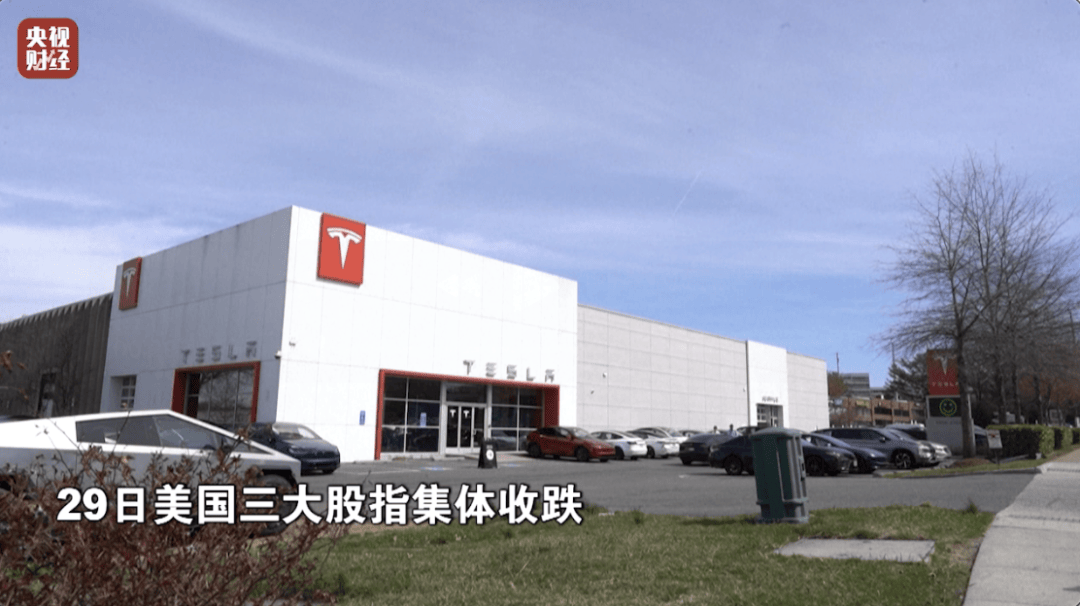
据央视财经,当地时间周一,贵金属市场再现剧烈波动。黄金、白银、钯金价格集体暴跌,其中白银期价创近五年来最大单日跌幅,钯金价格波动更为剧 烈,周一跌超16%。 29日美国三大股指集体收跌 29日欧洲三大股指涨跌不一 欧洲方面,多方正在推进的俄乌和平谈判主导市场情绪,美方称谈判已经进入"最后阶段",俄乌"已经非常接近达成协议"。这些进展令欧洲多国的国防与 军工股承压下跌,因年末期间股市交投清淡,国防与军工股下跌导致部分国家股指微幅下跌,欧洲三大股指周一涨跌不一。截至收盘,英国股市微跌 0.04%,法国股市微涨0.10%,德国股市微涨0.05%。 29日国际油价显著上涨 原油市场方面,投资者预期俄罗斯石油重返国际市场仍需时日。此外,沙特近日对也门发动空袭,也在一定程度上引发了投资者对中东原油供应受到干扰 的担忧,以上因素推动国际油价周一显著上涨。截至收盘,纽约商品交易所明年2月交货的轻质原油期货价格收于每桶58.08美元,涨幅为2.36%;明年2月 交货的伦敦布伦特原油期货价格收于每桶61.94美元,涨幅为2.14%。 29日国际贵金属价格普遍大跌 白银期价创近五年来最大单日跌幅 贵金属方面,由于多个品种金属期货价 ...
建信期货碳酸锂期货日报-20251230
Jian Xin Qi Huo· 2025-12-30 01:58
Report Information - Report Title: Carbonate Lithium Futures Daily Report [1] - Date: December 30, 2025 [2] - Researcher Team: Non - ferrous Metals Research Team [4] - Researchers: Zhang Ping, Yu Feifei, Peng Jinglin [3] 1. Report Industry Investment Rating No relevant content provided. 2. Report's Core View - The lithium price first rose and then fell, with the main contract almost hitting the daily limit at the end of the session but opening before the close. The total open interest decreased by 94,439 lots, and the spread between LC2605 and LC2601 narrowed to 840. The price of high - quality battery - grade carbonate lithium dropped by 3,100 to 119,300, and the spot became at a premium to LC2601. As the delivery month approaches, the linkage between futures and spot strengthens. The prices of Australian ore, lithium mica, and cathode materials increased, while the price of electrolyte remained flat. The increase in maintenance of lithium iron phosphate manufacturers, high lithium prices, and the four - week decline in power battery weekly output led to more maintenance in cathode plants and weakened demand, which dragged down the lithium price. In the short term, the futures price has approached the spot price, and with the futures - spot linkage, the spot support is gradually emerging. It is expected that the decline of lithium price will slow down [12]. 3. Summary by Directory 3.1 Market Review and Operation Suggestions - Carbonate lithium price showed a trend of rising first and then falling, with the main contract almost hitting the daily limit at the end of the session. The total open interest decreased by 94,439 lots, and the 05 - 01 spread narrowed to 840. The price of high - quality battery - grade carbonate lithium dropped by 3,100 to 119,300, and the spot became at a premium to LC2601. The prices of Australian ore, lithium mica, ternary materials, and lithium iron phosphate increased, while the price of electrolyte remained flat. The increase in maintenance of lithium iron phosphate manufacturers and the decline in power battery output led to weakened demand and dragged down the lithium price. In the short term, the futures price has approached the spot price, and the decline of lithium price is expected to slow down [12]. 3.2 Industry News - Chilean state - owned copper miner Codelco and Chilean chemical company SQM reached a milestone cooperation agreement to expand lithium mining in the Atacama Desert. They merged their subsidiaries to form NovaAndino Litio SpA. SQM transferred its mining concessions for the Salar de Maricunga salt lake to Codelco. NovaAndino Litio will control all lithium exploration, production, and sales in the Atacama salt flat until 2060 [13]. - CME Group announced on December 26 that it would raise the performance margins for gold, silver, lithium, and other metal futures contracts after the close on December 29, aiming to cope with market fluctuations and ensure sufficient collateral coverage [13][14].