餐饮连锁

Search documents
2025第十四届上市公司发展年会将在海口举行
Mei Ri Jing Ji Xin Wen· 2025-12-10 16:20
Group 1 - The Hainan Free Trade Port will officially start its full island closure on December 18, marking a significant step towards China's high-level opening-up [1] - The "2025 14th Annual Development Conference of Listed Companies and Hainan Free Trade Port Opportunity Exchange Conference" will be held from December 11 to 13, gathering over 400 industry leaders to discuss macroeconomic trends and the benefits of the free trade port [1][2] - The conference will feature key speeches from prominent figures, including former Vice Minister of Industry and Information Technology Su Bo, who will discuss the path to breakthroughs in manufacturing technology [2] Group 2 - The 20th Central Committee's Fourth Plenary Session emphasized the importance of expanding autonomous opening-up and implementing a high-standard construction of the Hainan Free Trade Port [3] - The conference will include discussions on AI technology's transition from concept to commercial realization and the collaborative paths for Chinese enterprises in global supply chains [3] - The "International Consumption New Opportunities" session will explore new directions in the consumption industry, featuring insights from leaders of well-known companies [4][5]
两只今日上市的新股,一只大涨425%,一只破发28%,为何截然不同
Sou Hu Cai Jing· 2025-12-05 16:37
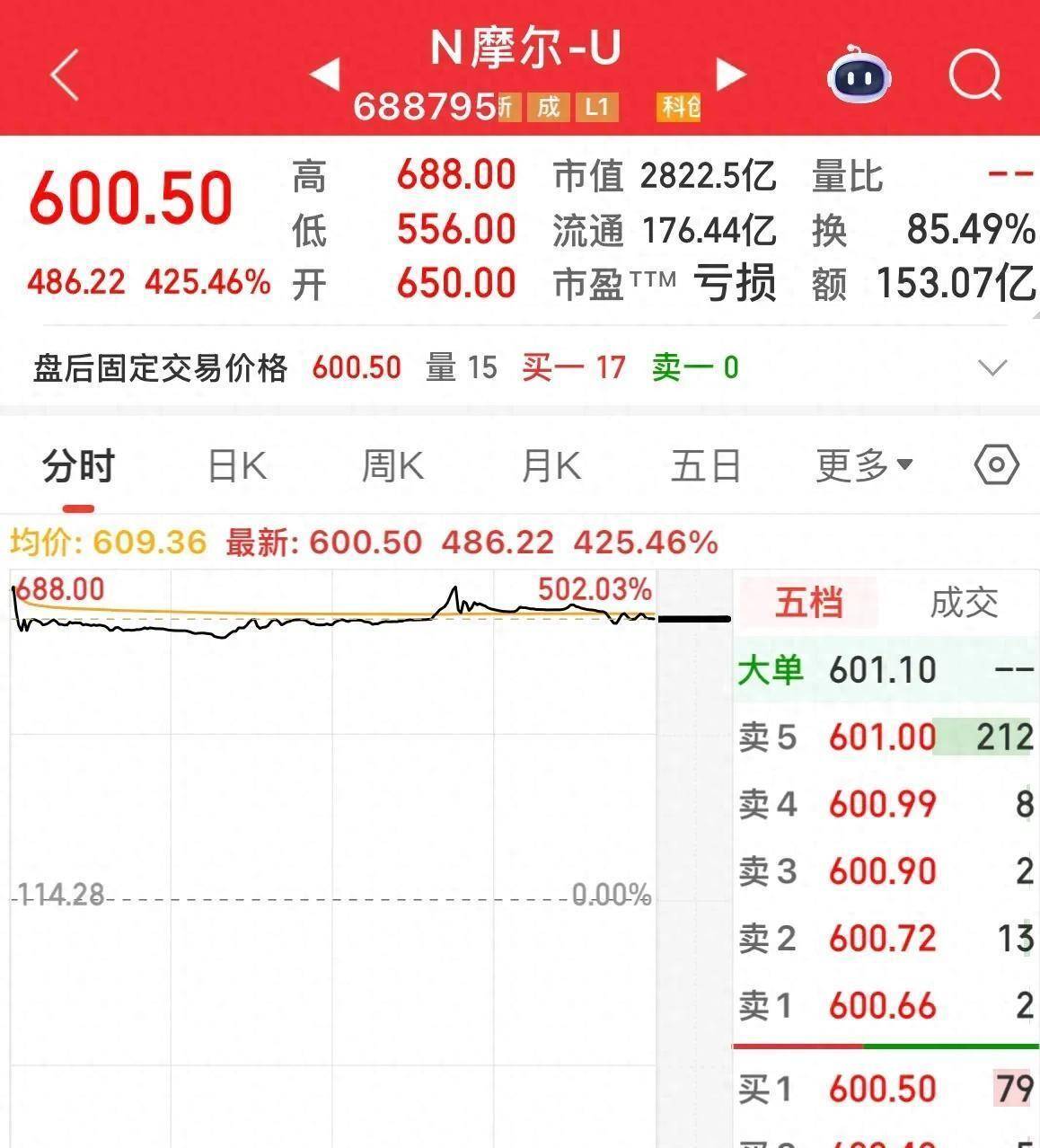
Core Viewpoint - The stark contrast in the stock market performance of two companies, "Moore Threads" in A-shares and "Meet Small Noodles" in Hong Kong, highlights the differences in market mechanisms and investor behavior between the two exchanges [1][5]. Group 1: Company Performance - Moore Threads, a chip company, listed on A-shares with an opening price of 650 CNY, representing a 473% increase from its issue price of 114.28 CNY, allowing investors to gain approximately 268,000 CNY for a single lot [2][5]. - In contrast, Meet Small Noodles, a restaurant chain, listed on the Hong Kong exchange at an issue price of 7.02 HKD, but opened with a 24.23% drop, closing at 5.08 HKD, a 27.81% decline from the issue price [3][12]. Group 2: Market Mechanisms - The A-share market operates under a unique issuance system that often leads to new stocks being undervalued at issuance, creating a significant price gap that investors seek to exploit upon listing [5][7]. - The Hong Kong market employs a market-oriented pricing mechanism where the issue price reflects institutional investors' assessments, leading to less volatility and a more rational pricing environment [11][12]. Group 3: Investor Behavior - A-share investors are predominantly retail, often driven by excitement for new technology and high-growth sectors, which can lead to inflated stock prices on debut [7][16]. - In contrast, Hong Kong's market is dominated by institutional investors who focus on fundamental metrics and are less likely to engage in speculative trading, resulting in a more cautious approach to new listings [12][16]. Group 4: Financial Metrics - Moore Threads reported significant losses, with an average loss of approximately 1.75 billion CNY from 2022 to 2024, yet this did not deter investor enthusiasm due to the perceived potential in the semiconductor sector [8][9]. - Meet Small Noodles had a revenue of 703 million HKD and a net profit of 41.83 million HKD for the first three quarters of 2025, but faced skepticism regarding its valuation and growth potential, leading to its poor market performance [12][14].

塔斯汀回应90天关店907家
2 1 Shi Ji Jing Ji Bao Dao· 2025-12-05 06:08
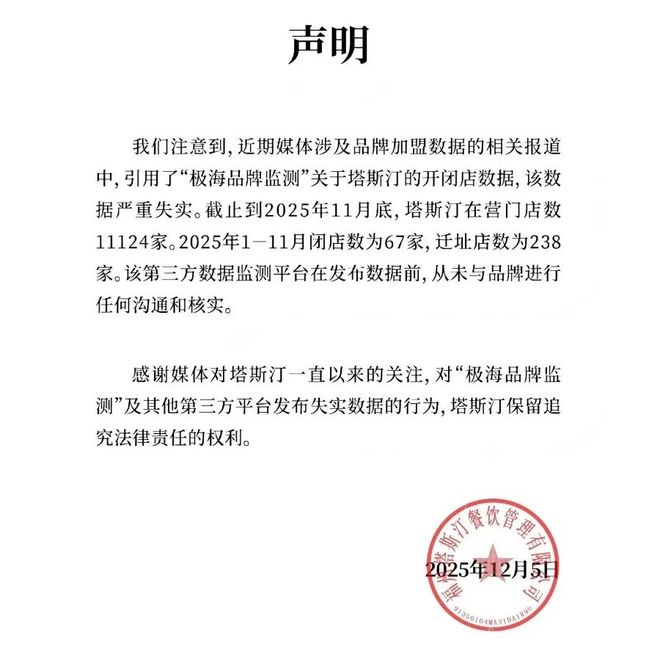
Group 1 - The core message of the article is the clarification from the company regarding false reports about its store closures, specifically addressing the claim that "Tastin" closed 907 stores in 90 days [1][3] - Tastin's official statement indicates that as of November 2025, the total number of operating stores is 11,124, with only 67 closures and 238 relocations reported from January to November 2025 [3] - The company asserts that the data published by "Extreme Sea Brand Monitoring" was inaccurate and that they had not communicated or verified the information with the brand prior to its release [3] Group 2 - Tastin, established in 2012, is a restaurant chain specializing in Chinese hamburgers and is managed by Fuzhou Tastin Catering Management Co., Ltd [3] - The company reserves the right to pursue legal action against "Extreme Sea Brand Monitoring" and other third-party platforms for disseminating false data [3]
塔斯汀回应90天关店907家
21世纪经济报道· 2025-12-05 05:58
Group 1 - The core viewpoint of the article is the clarification from the company Ta Si Ting regarding false reports about its store closures, emphasizing the importance of accurate data reporting [1][3]. - Ta Si Ting stated that as of November 2025, it has 11,124 operating stores, with only 67 closures and 238 relocations from January to November 2025 [3]. - The company criticized "Extreme Sea Brand Monitoring" for publishing inaccurate data without prior communication or verification, and it reserves the right to pursue legal action against such misinformation [3]. Group 2 - Ta Si Ting is a Chinese hamburger restaurant chain established in 2012, under Fuzhou Ta Si Ting Catering Management Co., Ltd [3]. - The article highlights the significant public interest and concern regarding the reported closure of 907 stores within 90 days, which was proven to be misleading [1][3].

华尔街顶级分析师最新观点:Toast获上调评级,PayPal遭下调评级
Xin Lang Cai Jing· 2025-12-04 15:13
Core Viewpoint - The article summarizes key research rating adjustments from Wall Street that are likely to influence market trends, highlighting companies with upgraded, downgraded, and newly initiated ratings [1][6]. Upgraded Ratings - Toll Brothers (TOL): JPMorgan upgraded the rating from "Neutral" to "Overweight," raising the target price from $138 to $161, citing significantly higher gross and operating margins compared to industry averages [5]. - Toast (TOST): JPMorgan upgraded the rating from "Neutral" to "Overweight," maintaining the target price at $43, with expectations of improved performance if regulatory policies on transaction fees are implemented [5]. - Accelerant (ARX): Citizens JMP upgraded the rating from "Market Perform" to "Outperform," setting a target price of $20, indicating that market concerns over its related party business have been overstated [5]. - UMH Properties (UMH): Colliers upgraded the rating from "Neutral" to "Buy," increasing the target price from $16 to $17, highlighting the resilience of the manufactured housing sector [5]. - Descartes Systems (DSGX): Raymond James upgraded the rating from "Market Perform" to "Outperform," setting a target price of $118, noting that the current price-to-EBITDA ratio is near a 10-year low, positioning it well for a market recovery [5]. Downgraded Ratings - PayPal (PYPL): JPMorgan downgraded the rating from "Overweight" to "Neutral," lowering the target price from $85 to $70, indicating that 2026 will be a critical year for execution and investment [5]. - Sociedad Química y Minera (SQM): Goldman Sachs downgraded the rating from "Buy" to "Neutral," raising the target price from $45 to $63, as the stock has risen 80% this year, exceeding fundamental support [5]. - Lennar (LEN): JPMorgan downgraded the rating from "Neutral" to "Underweight," lowering the target price from $118 to $115, maintaining a cautious stance on the residential builders sector for 2026 [5]. - Halozyme (HALO): Goldman Sachs downgraded the rating from "Neutral" to "Sell," setting a target price of $56, expressing concerns over the ambitious revenue targets set for 2041 [5]. - Fidelity National Information Services (FISV): JPMorgan downgraded the rating from "Overweight" to "Neutral," maintaining the target price at $85, indicating that 2026 will be a year requiring proof of execution [5]. Newly Initiated Ratings - United Airlines (UAL): Citigroup initiated coverage with a "Buy" rating and a target price of $132, citing a positive outlook for the airline industry [10]. - General Electric Aviation (GE): Susquehanna initiated coverage with a "Positive" rating and a target price of $350, noting its dominant position in the commercial aviation engine market [10][12]. - Hershey (HSY): Jefferies resumed coverage with a "Hold" rating and a target price of $181, acknowledging the company's strategies to manage cocoa cost pressures while noting high current valuations [10][13]. - Monday.com (MNDY): Guggenheim initiated coverage with a "Buy" rating and a target price of $250, indicating a potential 64% upside from current levels [10][13]. - Cava Group (CAVA): Truist initiated coverage with a "Buy" rating and a target price of $66, highlighting its leadership in the Mediterranean fast-casual dining sector [10][13].






一周上新!东更道点心、赛拉维、cute cube面包立方...海内外新品资讯抢先看 | 全球职人情报站
东京烘焙职业人· 2025-11-30 08:33
Group 1 - The article highlights the latest product launches and innovations in the baking industry, showcasing various brands and their new offerings [2][3][4][5][6][8][12][14][16][18][19][23][26][29][31][33][35][36][38][42][46][49][51][53][56][59][67][69][71][75][77][80][82][84][86][88][90][93][95][97][99][101][103][105][107][110][111][113][116][118][120][122][124][126][127][128][129][130][131][132][133][134][135][137][139][140][141][143][144] - The article emphasizes the rise of chain bakeries and the competition within the baking sector, indicating a shift in consumer preferences and market dynamics [143][144] Group 2 - The article mentions the introduction of new flavors and products by various brands, such as Kiri's cheese baguette and Häagen-Dazs' winter ice cream offerings [126][127] - It discusses the expansion of brands like "Tea Yan Yue Se" into the coffee market, indicating diversification strategies within the food and beverage sector [128] - The article notes the launch of new product lines by companies like Gu Ming, focusing on high-quality ingredients and unique preparation methods [129]

美团Keeta联合袁记云饺支援香港大埔3000份免费餐食,首批已送达
Xin Lang Cai Jing· 2025-11-28 07:55
Group 1 - Meituan's delivery platform Keeta is collaborating with the restaurant chain Yuanji Yunjiao to donate 3,000 free meals starting from November 28 [1] - The initiative will provide lunch and dinner supplies to multiple shelters in Tai Po for three consecutive days [1] - The donated meals will primarily consist of dumplings and wontons, designed for easy consumption by affected residents [1]

【投融资动态】遇见小面基石投资轮融资,融资额2200万美元,投资方为高瓴资本、君宜资本等
Sou Hu Cai Jing· 2025-11-27 11:33
Group 1 - The core point of the news is that Guangzhou Yujian Xiaomian Restaurant Co., Ltd. has completed a cornerstone investment round, raising $22 million, with participation from notable investors including Hillhouse Capital, Junyi Capital, Shengying Investment, Zeta Fund, and Haidilao [1][2]. Group 2 - The investment round took place on November 26, 2025, and the total amount raised was $22 million [2]. - Yujian Xiaomian is a chain brand specializing in Sichuan-Chongqing style noodles, primarily offering Chongqing noodles along with other products like pea sauce noodles, pig intestine noodles, cold noodles, and spicy fried hands [2]. - The company retains 20% of its star products while iterating its offerings based on seasonal sales and climate conditions [2].

这一次,华与华老板没有向罗永浩服软
凤凰网财经· 2025-11-26 12:56
Core Viewpoint - The article discusses the ongoing public relations conflict involving Xibei, a prominent Chinese restaurant chain, and its marketing consultant, Huayi Huayi, highlighting the complexities of brand management and public perception in the restaurant industry [1][43]. Group 1: Conflict Overview - Huayi Huayi's founder, Hua Shan, publicly defended Xibei, claiming it is the "ceiling of the Chinese restaurant industry" and suggesting it has been unfairly targeted online [1][3]. - This statement sparked a response from entrepreneur Luo Yonghao, who demanded an apology from Hua Shan and threatened to release recordings if not addressed [4][20]. - The conflict is not new, as Luo previously criticized Xibei for high-priced pre-made dishes, leading to a heated exchange with Hua Shan [6][9]. Group 2: Marketing and Financial Performance - Xibei has invested over 600 million yuan in consulting fees to Huayi Huayi over the past decade, which has contributed to its growth from 1.6 billion yuan in revenue in 2013 to 6.2 billion yuan in 2019 [23][26]. - Despite past successes, Huayi Huayi faces criticism for its marketing strategies and design choices, which have been labeled as aesthetically poor and legally questionable [28][33]. - The associated company, Duku Culture, has seen a decline in revenue since its IPO, with figures dropping from 519 million yuan in 2021 to 168 million yuan in the first half of 2025 [37][39]. Group 3: Public Perception and Controversies - The article highlights the mixed public reactions to Hua Shan's statements, with some supporting him while others criticize his approach as detrimental to Xibei [15][20]. - Huayi Huayi's marketing philosophy, which combines traditional culture with branding, has garnered both acclaim and backlash, reflecting the dual nature of its impact on clients [24][43]. - The ongoing controversies surrounding Huayi Huayi's practices raise questions about the role of marketing firms in managing brand crises and public relations [43][44].

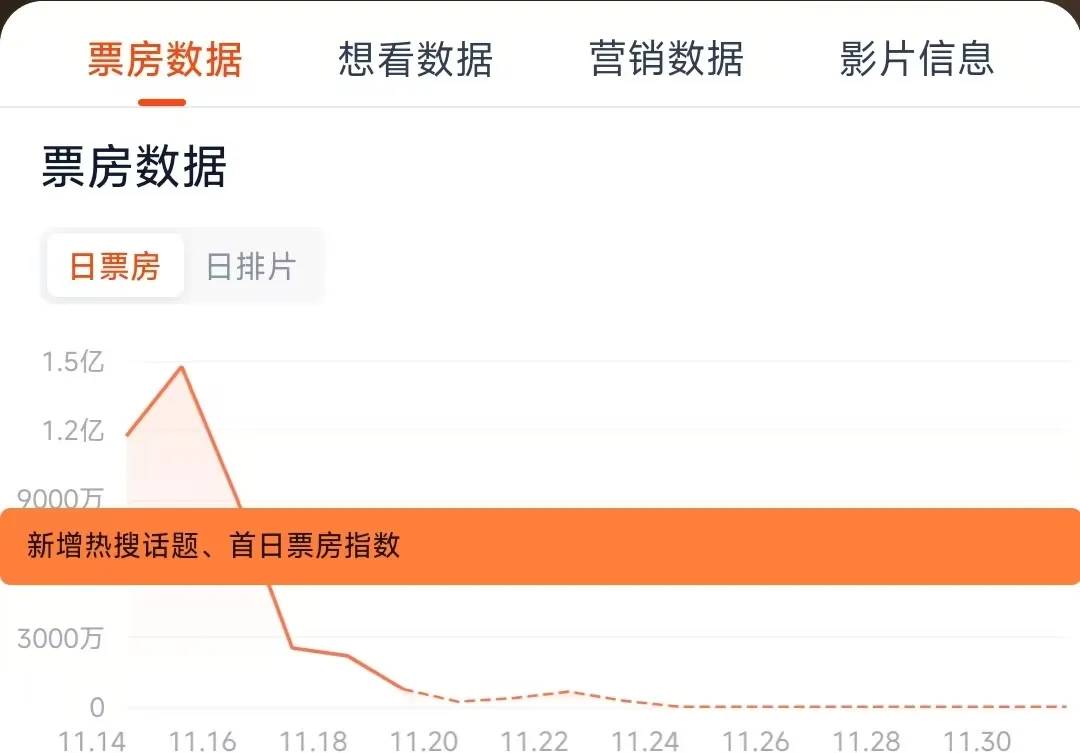
退票率飙至7.6% 日本电影《鬼灭之刃》上座率大跌!
Bei Jing Shang Bao· 2025-11-19 05:26
Core Viewpoint - The provocative remarks made by Japanese Prime Minister Kishi Nobuo are expected to negatively impact Chinese audiences' perception of Japanese films, leading to a significant decline in box office performance for the animated film "Demon Slayer: Infinity Castle Chapter One" shortly after its release [1][7]. Group 1: Box Office Performance - "Demon Slayer: Infinity Castle Chapter One" achieved over 100 million in box office revenue on its opening day, benefiting from a strong fan base [1]. - Following the controversial comments from the Japanese Prime Minister, the film's box office saw a notable decline within three days of its release [1]. - The film's ticket refund rate increased from 3.2% to 7.6% between November 18 and 21, indicating growing dissatisfaction among viewers [3]. Group 2: Market Reactions - The film's attendance rate dropped significantly, with less than 3% attendance reported on November 18 [3]. - Several Japanese films, including "Crayon Shin-chan: The Hot Spring Dancer of Kasukabe" and "Cells at Work," have had their releases postponed, reflecting broader market concerns [5][7]. - The negative sentiment has also affected Japanese companies operating in China, such as sushi chain Sushi郎 and Uniqlo's parent company Fast Retailing, which have seen stock declines [7]. Group 3: Government and Diplomatic Impact - The Chinese government has issued warnings to citizens regarding travel to Japan and advised caution for study plans in Japan due to the diplomatic tensions [7]. - Analysts suggest that if the Japanese government does not retract its statements, it could lead to more severe damage to the Japanese economy [7].