家居

Search documents
造纸轻工行业周报:三丽鸥业绩继续超预期关注国内IP潮玩个股;浆纸价格底部反弹北京限购放松政策催化家居估值;轻工制造个股外延业务增加看点-20250812
Shenwan Hongyuan Securities· 2025-08-12 02:35
Investment Rating - The report indicates a positive investment outlook for the IP toy sector, paper industry, and home furnishing sector, highlighting specific companies to watch [2][4][17]. Core Insights - The IP toy market continues to thrive, with Sanrio's FY26Q1 performance exceeding expectations, driven by strong IP character sales, particularly Hello Kitty, across various regions [2][4]. - The paper industry is entering a peak demand season in Q3, with expectations for price stabilization and potential upward movement due to supply-side improvements [14][15]. - The home furnishing sector is poised for recovery as Beijing relaxes housing purchase restrictions, which may enhance valuation and stimulate demand [17][19]. Summary by Sections 1. IP Toy Sector - Sanrio's FY26Q1 revenue reached 431 billion JPY, a 49% year-on-year increase, with operating profit up 88% and net profit up 38%, attributed to strong IP character performance [2][4]. - Companies such as Morning Glory, Chuangyuan, Chaohongji, Guobo, and Blucor are highlighted for their innovative IP collaborations and product launches [2][4][6][9][10]. 2. Paper Industry - The report notes that Q3 demand is gradually increasing, with expectations for paper prices to stabilize and potentially rise, supported by reduced production from overseas suppliers [14][15]. - Key companies to monitor include Sun Paper, Nine Dragons, and Bohui Paper, as they are positioned to benefit from the improving supply-demand dynamics [14][15]. 3. Home Furnishing Sector - The easing of purchase restrictions in Beijing is expected to boost the home furnishing sector, with companies like Sophia, Oppein, Gujia, and others identified as having strong dividend safety margins [17][19][23]. - The report emphasizes the potential for valuation recovery in the home furnishing sector, driven by improved consumer confidence and demand from the secondary housing market [19][23].


总裁联播+政企双补,红星美凯龙818大促超级直播携9大品牌引爆全域流量
Xin Lang Cai Jing· 2025-08-11 07:35
Core Insights - Red Star Macalline launched a themed live stream event "Peeling Back the Smoke and Fire of Life" on Douyin for the 818 promotion, breaking regional barriers with a "one coupon, one product" strategy to stimulate consumer engagement [1] - The live stream achieved over 6.14 million exposures, a 25% increase compared to the 618 promotion, with peak online viewers exceeding 20,000 and nearly 50,000 new followers gained during the event [1] Group 1: Live Stream Event - The live stream featured executives from major brands such as Gujia, Midea, and Hisense, collaborating with Red Star Macalline's leadership to create an immersive home culture showcase [1] - The event recreated realistic living scenarios, including living rooms and kitchens, integrating featured products from various brands to resonate with the theme [1] Group 2: Marketing Strategy - Red Star Macalline upgraded the "818 Shopping Festival" to "818 Good Goods Festival," emphasizing dual subsidies from government and enterprises, and highlighting integrated marketing strategies [1] - The company implemented a competitive all-category product lineup through a three-dimensional strategy of cost optimization, price assurance, and quality selection, enhancing consumer experience [1] Group 3: Traffic and Engagement - The live stream served as a practical application of Red Star Macalline's all-domain traffic operation, integrating resources from platforms like Douyin and Xiaohongshu to enhance online and offline experiences [1] - To boost consumer participation, the event included universal coupons, brand subsidies, and 800 brand lucky bags for giveaways, along with 10 round-trip flight tickets as grand prizes [1] - The goal of "quantifying user growth" was evident, with nearly 50,000 new followers added during the live stream [1]

国际品牌持续加码中国市场,宜家为何选择京东?
Sou Hu Cai Jing· 2025-08-11 04:33
Core Insights - The Chinese market has become increasingly attractive for international brands due to rising consumer demand and digital economic opportunities [1][4] - IKEA has partnered with JD.com to enhance its omnichannel strategy in China, launching an official flagship store on JD that offers over 6,500 products across various categories [1][4] - The collaboration is seen as a response to the competitive home furnishings market, with IKEA implementing price reductions on over 300 products to attract consumers [5][7] Market Dynamics - The number of new foreign-invested enterprises in China increased by 10.4% year-on-year from January to May, indicating a growing interest from international brands [1] - Chinese consumers are becoming more discerning, leading international brands to adapt their strategies to be more localized and service-oriented [4][5] - The home furnishings market is expected to continue evolving, driven by urbanization, diverse consumer needs, and the digitalization of shopping experiences [6][7] Digital Integration - The partnership with JD.com allows IKEA to leverage JD's advanced logistics and digital marketing capabilities, enhancing the customer experience [10][11] - JD's unique business capabilities, including full-channel marketing and innovative technologies like AIGC, provide IKEA with a competitive edge in reaching consumers [11][13] - The collaboration aims to address common online shopping concerns such as product quality and delivery efficiency, offering services like same-day delivery and comprehensive after-sales support [13][14] Consumer Trends - The shift in consumer demographics, particularly the rise of younger consumers, is driving demand for personalized and high-quality home furnishings [7][10] - The integration of online and offline shopping experiences is becoming essential for brands, with consumers seeking both convenience and tangible product experiences [15][17] - JD's extensive network of offline stores complements its online presence, providing a comprehensive shopping experience for consumers [15][17] Strategic Implications - The partnership between IKEA and JD.com represents a significant move towards the deep integration of international brands into the Chinese market, combining global design standards with local operational capabilities [17][18] - As more international home brands join JD's ecosystem, consumers can expect a richer and more convenient shopping experience, positioning JD as a key player in the market [18]



“抓强、壮干、提弱” 四川夯实县域新底座
Sou Hu Cai Jing· 2025-08-11 01:16
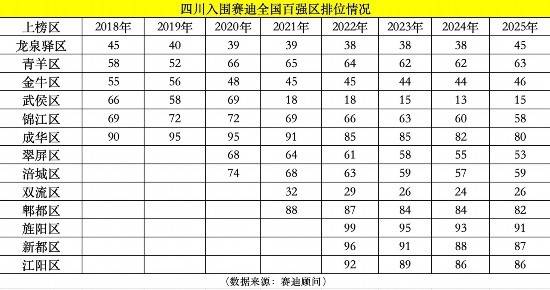
Core Insights - The recent rankings of the top counties and districts in Sichuan show that the province has 20 counties (cities, districts) listed, maintaining its position as the third highest in the country and the first in the western region for three consecutive years [1][4] - The top counties and districts significantly contribute to the local economy, accounting for over 42% of the province's total economic output despite representing less than 11% of the total counties [1][4] - Sichuan's strategy for enhancing county-level economic development includes a roadmap focusing on strengthening strong areas, expanding capabilities, and improving weaker regions [1][16] Rankings and Performance - In the 2025 rankings, Sichuan has 13 districts and 7 counties listed among the national top counties and districts, with no change in the number from the previous year [2] - Over the years, Sichuan has shown improvement in its rankings, with the number of top districts increasing from 6 in 2018 to 13 currently, and top counties rising from 2 in 2021 to 7 [2][4] - Notable progress includes Chengdu's Jinjiang District moving from 72nd to 58th over five years, and Jianyang County achieving a ranking of 79th, marking it as the "first county" in Sichuan [2][4] Economic Structure and Growth - The coverage of top counties and districts in Sichuan has expanded to 8 cities (prefectures), indicating a broader regional economic development [4] - Despite being in the top tier nationally, Sichuan still lags behind provinces like Jiangsu and Zhejiang in terms of the number of top counties and the scale of economic output, with no counties exceeding the "trillion" GDP threshold [4] - The GDP of the top districts in Sichuan for 2024 shows significant figures, with Wuhou District at 418.83 billion and Shuangliu District at 222.60 billion, reflecting growth rates of 6.2% and 5.9% respectively [5] Industrial Development and Future Prospects - Emerging industries and the transfer of industries to the central and western regions present opportunities for growth, particularly for counties like Jianyang and Xichang, which are close to reaching the "trillion" GDP mark [7] - Deyang's Jingyang District has already achieved "trillion district" status and aims to enhance its industrial base through digital transformation and service sector growth [7] - The overall economic structure in Sichuan is shifting, with a notable increase in the number of counties with GDPs between 500 million and 1 billion, indicating a healthier economic balance [8] Support for Underdeveloped Areas - Sichuan is focusing on supporting underdeveloped counties, particularly in regions like Ganzi and Aba, with significant investments and initiatives aimed at improving economic conditions [12][14] - The province's strategy includes targeted support in key areas to address disparities and enhance overall economic performance [12][14] - The restructuring of the economic framework in underdeveloped areas has led to a shift where the secondary industry now contributes more than the primary industry for the first time [14]
东莞金融市场周报:绿通科技超5亿豪赌半导体;东阳光药港股上市
2 1 Shi Ji Jing Ji Bao Dao· 2025-08-10 08:30
Group 1: Financial News - Dongguan has released a comprehensive implementation plan for enhancing financial services, focusing on "technology innovation + advanced manufacturing" and proposing five key projects and 21 tasks to support strategic areas and weak links in the economy [1][2] - The plan includes initiatives for technology finance, such as increasing loans against intellectual property and promoting innovative loan products [1] - The plan also emphasizes inclusive finance, aiming to enhance financial services for small and micro enterprises through various supportive policies [2] Group 2: Company Developments - Dongyangguang Pharmaceutical successfully listed on the Hong Kong Stock Exchange, marking a significant milestone in its development and expanding its capital market presence [3] - Kaipu Cloud is planning to acquire control of Shenzhen Jintaike Semiconductor Co., which specializes in storage solutions, as part of its strategy to enhance its AI capabilities [4] - Lvtong Technology announced a cross-industry acquisition of Jiangsu Damo Semiconductor, acquiring a 51% stake at a premium of 325%, aiming to explore new growth opportunities [5] - Mingpu Optoelectronics intends to purchase a 60% stake in Shenzhen ABB Electric Transportation, focusing on the electric vehicle charging market, which is expected to grow rapidly [7][8] - Mosi Health Sleep Co. is addressing a stock distribution issue due to share buybacks by proposing a capital reserve transfer to restore compliance with listing requirements [9][10]


轻工制造行业定期报告:SUZANO提涨8月浆价北京购房政策优化
Huafu Securities· 2025-08-10 08:04
Investment Rating - The report maintains an "Outperform" rating for the industry [3] Core Insights - Suzano announced a price increase of $20 per ton for commodity pulp in the Asian market for August, indicating a potential recovery in pulp and paper prices from current cyclical lows [2][4] - The report highlights the ongoing price adjustments in the paper industry, with various paper types experiencing different price movements, suggesting a recovery trend driven by supply-demand dynamics [4][50] - The report emphasizes the importance of policy catalysts in the home furnishing sector, particularly in light of recent housing policy optimizations in Beijing [4][31] Summary by Sections Home Furnishing - Recent policy changes in Beijing allow families to purchase multiple properties outside the city center, which is expected to stimulate the housing market [4][31] - Major home furnishing companies are currently valued at historical lows, presenting potential investment opportunities as market sentiment improves [4][31] Paper Industry - As of August 8, 2025, various paper prices are reported: double glue paper at 4993.75 CNY/ton (unchanged), copper plate paper at 5320 CNY/ton (unchanged), white card paper at 3955 CNY/ton (down 35 CNY/ton), box board paper at 3463.4 CNY/ton (up 12.8 CNY/ton), and corrugated paper at 2582.5 CNY/ton (up 46.25 CNY/ton) [4][50] - The report notes that the current pulp and paper prices are at cyclical lows, with expectations for a rebound due to supply-demand imbalances [4][50] Consumer Goods - The report discusses the launch of new health-focused products in the personal care sector, indicating a shift towards higher quality and compliance with health standards [4][6] - The collaboration between Morning Glory stationery and popular anime IPs is expected to enhance brand visibility and sales [4][6] Export Chain - In July, China's total exports increased by 7.2% year-on-year, with significant growth in exports to ASEAN countries [4][6] - The report suggests that the ongoing shift of production capacity to Southeast Asia may enhance the long-term competitiveness of companies with overseas supply chain layouts [4][6] Packaging - New regulations in Shanghai aimed at reducing single-use plastics are expected to drive demand for recyclable and biodegradable packaging solutions [4][6] - The report recommends companies involved in eco-friendly packaging solutions as potential investment opportunities [4][6] New Tobacco Products - The introduction of new electronic cigarette products in the UK is anticipated to boost market share for refillable devices [4][6] - The report highlights the potential for growth in the new tobacco sector, particularly for companies with strong partnerships and product offerings [4][6] Textile and Apparel - The textile and apparel sector has shown resilience, with notable increases in revenue for key players despite some challenges [4][6] - The report identifies leading companies in the apparel sector as potential investment opportunities based on their performance [4][6]

Suzano提涨8月浆价,北京购房政策优化
Huafu Securities· 2025-08-10 06:07
Investment Rating - The report maintains an "Outperform" rating for the industry [2] Core Insights - Suzano announced a price increase of $20 per ton for commodity pulp in the Asian market for August, indicating a potential recovery in pulp and paper prices from current cyclical lows [1][4] - The report highlights the positive impact of policy changes in Beijing on the housing market, which may stimulate demand in the home furnishings sector [4] - The report emphasizes the ongoing trend of price recovery in the paper industry due to supply-demand imbalances and anti-competitive pressures [4][6] Summary by Sections Home Furnishings - Recent policy optimizations in Beijing allow families to purchase multiple homes outside the city center, which is expected to enhance market dynamics [4] - Major home furnishing companies are currently valued at historical lows, presenting potential investment opportunities [4] Paper Industry - As of August 8, 2025, the prices for various paper types are as follows: double glue paper at 4993.75 CNY/ton (unchanged), copper plate paper at 5320 CNY/ton (unchanged), white card paper at 3955 CNY/ton (down 35 CNY/ton), box board paper at 3463.4 CNY/ton (up 12.8 CNY/ton), and corrugated paper at 2582.5 CNY/ton (up 46.25 CNY/ton) [4][51] - The report notes that Suzano plans to reduce commodity pulp production by approximately 3.5% over the next year, which may further influence market prices [4][6] Consumer Goods - The launch of new health-focused sanitary products by brands like Pro indicates a shift towards higher quality and health-conscious consumer goods [6] - The report suggests that companies with strong IP strategies, such as Morning Glory, are likely to see improved performance in the coming quarters [6] Export Chain - In July, China's total exports increased by 7.2% year-on-year, with significant growth in exports to ASEAN countries [6] - The report highlights the importance of companies with overseas supply chain capabilities in maintaining competitive advantages [6] Packaging - New regulations in Shanghai banning single-use plastic products are expected to drive demand for recyclable and biodegradable packaging solutions [6] - The report recommends companies involved in eco-friendly packaging, such as Hengxin Life and Jialian Technology, as potential investment opportunities [6] New Tobacco Products - The introduction of new electronic cigarette products in the UK is anticipated to boost market share for refillable devices [6] - The report suggests focusing on leading companies in the new tobacco sector that have strong partnerships and product offerings [6] Textile and Apparel - The textile and apparel sector has shown resilience, with notable increases in sales for major brands [6] - The report recommends monitoring leading companies in the apparel sector, such as Anta and Li Ning, for potential growth [6]
2025年淘宝直播商家运营方法论白皮书
艾瑞咨询· 2025-08-10 00:06
Core Viewpoint - The article emphasizes the transition of the live e-commerce industry in China into a new phase driven by efficiency, focusing on refined operations in product management, traffic, and marketing strategies to achieve sustainable growth [1][2]. Group 1: Market Overview - The live e-commerce market in China is projected to reach 5.8 trillion yuan in 2024, reflecting a year-on-year growth of 17.7%, indicating a shift from extensive growth to deep operational efficiency [2]. - The industry is facing structural challenges as user growth slows, with user penetration rates in short videos, live broadcasts, and online shopping exceeding 75%, leading to a focus on existing user engagement [5]. Group 2: User Behavior and Demand - User behavior is evolving towards a multi-threaded approach, with consumers actively comparing products across platforms, necessitating a non-linear, dynamic outreach strategy from merchants [8]. - There is a notable shift in consumer demand from "extreme cost-effectiveness" to a dual focus on "price + quality," with 76.9% of consumers prioritizing product quality over price sensitivity [14]. Group 3: Merchant Strategies - Merchants are required to adopt refined strategies for user operations, focusing on "activating existing users, deepening demand, and recreating value" to maximize user lifetime value [5]. - The E-MAX merchant operation framework is introduced, emphasizing full-cycle supply, all-touchpoint penetration, and cross-field marketing to enhance product efficiency and integrate marketing resources [21][60]. Group 4: Operational Methodologies - The full-cycle supply strategy involves enhancing the efficiency of product supply across different stages: incubation, explosion, and deep cultivation, with tailored strategies for each phase [23][61]. - The all-touchpoint penetration strategy aims to connect various traffic channels, including public and private domains, to reach dispersed users effectively [33][36]. Group 5: Marketing Integration - The all-field marketing approach integrates live marketing with brand marketing, creating a resonance effect that enhances both short-term sales and long-term brand positioning [63]. - Merchants are encouraged to leverage platform resources for dynamic marketing strategies that balance promotional bursts with ongoing operational efficiency [19][46]. Group 6: Case Studies and Examples - Successful case studies highlight how brands like UR and vivo have utilized the E-MAX framework to achieve significant sales growth and brand exposure through strategic live broadcasts and marketing campaigns [66][84]. - The article illustrates how high-quality content and differentiated product offerings can drive brand recognition and consumer trust, essential for long-term success in the live e-commerce landscape [78][79].

企业家的生死困局与破局之道
Sou Hu Cai Jing· 2025-08-09 14:26
Core Viewpoint - The article discusses the precarious situation faced by entrepreneurs, highlighting the risks to their lives and wealth due to macroeconomic downturns, strategic missteps, and legal challenges, emphasizing the need for better risk management and planning [2][3][4]. Group 1: Entrepreneurial Risks - Entrepreneurs are often seen as the creators of family wealth and stability, but their health and financial security are crucial for the family's fate [4]. - Many entrepreneurs mistakenly equate their past successes with personal capability, failing to recognize the changing economic landscape and the risks involved [8][10]. - The intertwining of personal and business finances leads to significant vulnerabilities, as seen in cases where personal assets are at risk due to business debts [22][23]. Group 2: Psychological and Legal Challenges - Entrepreneurs face immense psychological pressure, compounded by legal risks and financial strain, which can lead to severe mental health issues [12][13][18]. - The stigma of being a "successful person" makes it difficult for entrepreneurs to acknowledge their vulnerabilities, leading to isolation [16][17]. - Legal troubles can result in a rapid decline in reputation and financial stability, creating a vicious cycle of stress and despair [19][20]. Group 3: Solutions and Strategies - Effective risk management strategies include establishing family trusts and separating personal and business assets to mitigate financial risks [30][31]. - Building a risk-resistant financial structure, such as a cash flow safety net, is essential for sustaining business operations during downturns [34]. - Proactive succession planning is critical to avoid family conflicts and ensure smooth transitions in business ownership [27]. Group 4: Societal Implications - The well-being of entrepreneurs is vital not only for their families but also for the broader economy, as they are key drivers of social and economic development [40][41]. - There is a need for systemic changes to provide entrepreneurs with the tools and support necessary to navigate risks effectively [39][42].

湖北首富坠亡、实控人接连“出事”!家居行业到底怎么了?
券商中国· 2025-08-09 07:24
Core Viewpoint - The home furnishing industry is experiencing significant challenges, with a notable decline in revenue and profits among major companies, despite some firms increasing their dividend payouts. The overall market is showing signs of recovery, but the underlying issues remain critical [3][5][30]. Revenue and Profit Trends - The total revenue of 30 selected A-share home furnishing companies peaked in 2021 at 167.8 billion yuan, but has since declined for three consecutive years, dropping to 135.5 billion yuan in 2024, a decrease of approximately 20% [3][11]. - Net profits reached a historical high of 18.8 billion yuan in 2019 but plummeted to 3 billion yuan in 2024, with one-third of the companies reporting losses [3][15]. Employment and Operational Challenges - The total number of employees in the home furnishing sector decreased from 217,000 in 2021 to 165,000 in 2024, resulting in a loss of over 50,000 jobs [4][22]. - The average accounts payable turnover days increased from 88 days in 2018 to 154 days in 2024, indicating worsening cash flow issues for suppliers [19][21]. Stock Performance and Shareholder Returns - The median stock price decline for the 30 companies is 64%, with over half of the companies experiencing declines of more than 64% [25][28]. - Despite poor financial performance, some companies have increased their dividend payouts significantly, with 12 companies having a cash dividend ratio exceeding 70% in 2024 [30][31]. Management and Ownership Changes - Several founding families have transferred control of their companies due to financial difficulties, including major players like Meikailong and Gujia Home [5][35][36]. - The trend of high dividend payouts amidst declining profits may reflect the financial strain on controlling shareholders [34]. Market Recovery and Future Outlook - Since the low point in 2024, the total market capitalization of the "Home 30" has shown signs of recovery, with a year-on-year increase of 19% [5][28]. - Companies are increasingly focusing on overseas markets, with 12 companies reporting overseas revenues exceeding 100 million yuan in 2024, accounting for 17% of their total revenue [5][38].