保险业

Search documents
红河金融监管分局同意生命人寿建水支公司变更营业场所
Jin Tou Wang· 2025-12-03 03:36
2025年11月28日,红河金融监管分局发布批复称,《富德生命人寿保险股份有限公司红河中心支公司关 于富德生命人寿保险股份有限公司建水支公司变更经营场所的请示》(富保寿云红河〔2025〕2号)收 悉。经审核,现批复如下: 一、同意富德生命人寿保险股份有限公司建水支公司将营业场所变更为:云南省红河哈尼族彝族自治州 建水县临安镇迎晖路旁B幢5-6号。 二、富德生命人寿保险股份有限公司红河中心支公司应按照有关规定及时办理变更及许可证换领事宜。 ...
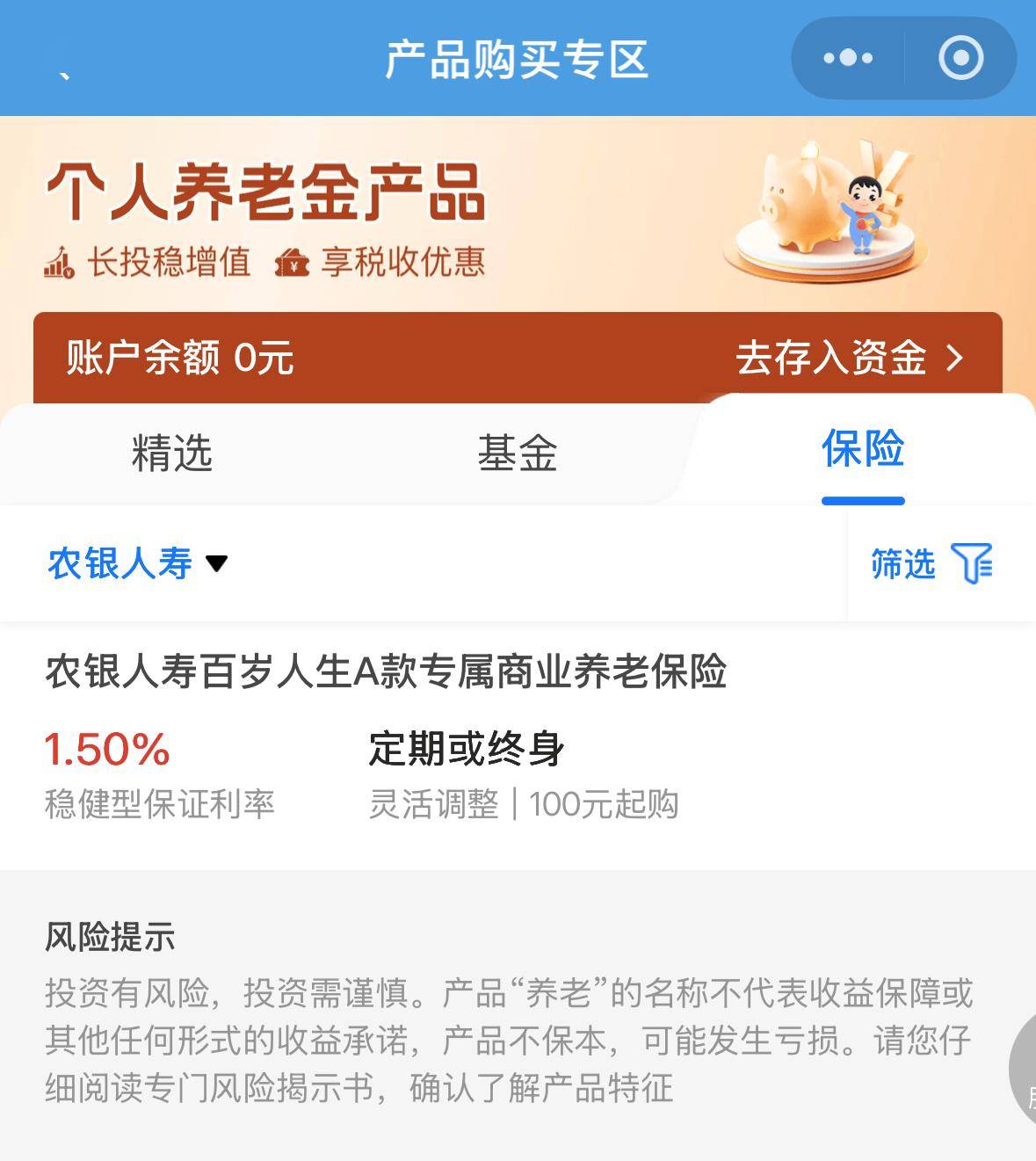
农银人寿专属商业养老保险产品正式入驻 人社部电子社保卡平台
Sou Hu Cai Jing· 2025-12-03 03:23
为积极践行"金融五篇大文章",深度融入国家社会保障数字化建设进程,近日,经国家人力资源与社会保障部批准,"农银人寿百岁人生(A款)"专属商业 养老保险产品正式入驻电子社保卡平台,为超10亿的电子社保卡用户提供安全稳健、多重保障、投资灵活的养老保险服务,积极助力养老"第三支柱"保险业 务高质量发展。 "农银人寿百岁人生(A款)"专属商业养老保险产品同时又是一款个人养老金产品,此次进驻人社部电子社保卡平台,是中国农业银行(个人金融部)与人社 部框架合作的重点工作,是不断拓宽养老金融服务新赛道的重要举措。 目前,该产品位于个人养老金专区四款保险产品首位,产品设计灵活,提供"保底+浮动"利率,百元起投,领取灵活,根据政策每年最高可享5400元个人所 得税税收优惠,为百姓提供"省心、省力、省钱"更具性价比养老金储备解决方案。 来源:金融界资讯 ...

为新质生产力发展精准护航
Jin Rong Shi Bao· 2025-12-03 03:03
Core Insights - The development of new quality productivity has become a key focus for promoting high-quality development in China, with a five-year plan for technology insurance aimed at expanding coverage, improving quality, and increasing efficiency [1] Group 1: Technology Insurance and Risk Management - The technology insurance system has been established to support key national strategic industries, providing over 10 trillion yuan in risk protection during the 14th Five-Year Plan period [2] - Insurance for first-of-a-kind major technical equipment and new materials has provided nearly 1 trillion yuan in risk protection, supporting 3,600 innovation application projects since its pilot launch in 2015 [2] Group 2: Collaborative Insurance Mechanisms - The collaborative insurance mechanism has enhanced risk coverage in strategic emerging industries, with the first commercial aerospace insurance consortium providing over 5 billion yuan in risk protection for 11 private aerospace projects [3] - The integrated circuit insurance consortium has provided over 4 trillion yuan in risk protection for 30 leading domestic integrated circuit companies over three years [3] Group 3: Comprehensive Services for Innovation - The insurance industry is innovating products to cover the entire innovation chain, including R&D interruption insurance and mid-term project insurance, with a total of 2 billion yuan in financial support planned for mid-term projects over the next three years [4] - Cybersecurity insurance has been initiated to support the digital economy, with over 1,500 policies issued and a total premium of over 150 million yuan during the pilot phase [4] Group 4: Green Insurance Initiatives - The insurance industry is focusing on green transformation needs, developing a range of green insurance products for renewable energy, electric vehicles, and green buildings [5][6] - Insurance companies are exploring "insurance + service" models to help enterprises reduce risks associated with green transformation through risk assessments and low-carbon consulting [6]
个人养老金制度实施三周年:制度升级 产品丰富 吸引力仍待增强
Jin Rong Shi Bao· 2025-12-03 01:08
Core Insights - The personal pension system has been implemented for three years, with over 150 million accounts opened and 1,245 products available, indicating steady growth and diversification in offerings [1][2][4] - The system aims to transition residents from savings-based to investment-based retirement planning, addressing the challenges of an aging population [2][3] - Future enhancements are expected to focus on increasing participation rates and optimizing support policies and product systems [1][3][6] System Design and Optimization - The personal pension system has evolved significantly, expanding from 36 pilot cities to nationwide implementation, with a focus on market-driven operations and individual account management [2][4] - The annual contribution limit is currently set at 12,000 yuan, with all workers eligible to participate, emphasizing the voluntary nature of the system [2] - The product range includes savings deposits, financial products, pension insurance, public funds, and savings bonds, catering to diverse investor needs [2][4] Product Supply and Performance - The current market features 1,245 personal pension products, with notable performance in fund categories, where 96% of funds have positive returns since inception [4] - Despite the growth in product offerings, there remains a mismatch between supply and investor demand, particularly for low to medium-risk products [4][6] - The inclusion of electronic savings bonds in the product range starting in June 2026 will further diversify offerings and enhance system attractiveness [5] Enhancing Investor Participation - As of June 2025, over 150 million personal pension accounts have been opened, but the actual funding and product allocation remain low, indicating a need for improved engagement strategies [6] - Recommendations include tax incentives, adjustments to contribution limits, and the introduction of more tailored products to attract a broader investor base [6][7] - A comprehensive approach integrating financial services with healthcare and community support is suggested to enhance the overall pension ecosystem [7]
吸引险资“活水” 多地竞相抛橄榄枝
Xin Lang Cai Jing· 2025-12-03 00:40
Core Viewpoint - Insurance capital, characterized by its large scale, long duration, and strong stability, is becoming a key target for investment attraction across various regions in China [1][5]. Group 1: Regional Efforts to Attract Insurance Capital - Multiple regions, including Tibet and Shaanxi, have recently implemented policies and organized special activities to attract insurance capital investments [1][5]. - The Tibet Autonomous Region has initiated actions to encourage insurance capital investment, exploring partnerships with state-owned enterprises and large private enterprises [1][5]. - Shaanxi Province hosted an event to promote insurance capital investment, attracting over ten leading domestic insurance institutions [1][5]. Group 2: Characteristics and Benefits of Insurance Capital - Insurance capital is recognized for its large single investments and long investment cycles, providing stable financial support for local economic development [1][6]. - The capital is particularly beneficial for long-term major projects, especially in infrastructure and industrial upgrades, helping alleviate local financing pressures and promoting high-quality economic growth [2][6]. Group 3: Diversification of Investment Methods - The investment approach of insurance capital has evolved from primarily debt and equity to a diversified model that includes stocks, real estate, and private equity funds [3][7]. - A notable example includes the introduction of insurance institutions into a private equity fund in Henan, marking a significant breakthrough in insurance capital investment [3][7]. - Insurance capital is increasingly targeting sectors beyond traditional infrastructure, such as technology and elderly care, with recent projects signed in these areas [3][7]. Group 4: Regulatory Support and Future Trends - The enhancement of insurance capital investment enthusiasm is supported by regulatory policies aimed at promoting high-quality development in the insurance industry [4][8]. - Future investment trends may see insurance capital expanding into areas like technological innovation and green industries, with a focus on risk prevention and long-term benefits [4][8]. - Predictions indicate a shift from traditional debt investments to tools like REITs and industrial funds, aiming to create a closed loop of investment, operation, and exit to improve capital efficiency [9].
万科债务展期方案曝光前,险企已主动优化“非标敞口”
阿尔法工场研究院· 2025-12-03 00:06
Core Viewpoint - The insurance and banking industry is facing a significant adjustment period as high-yield non-standard assets approach their maturity window in the next one to two years, necessitating a reevaluation of investment strategies and risk management [4][15]. Group 1: Vanke's Debt Situation - Vanke announced an extension of the repayment period for its 2022 fourth phase medium-term notes (22 Vanke MTN004) by 12 months, now due on December 15, 2026, while maintaining the interest rate [5][7]. - Vanke has a total of 15 outstanding bonds, with a total balance of 20.316 billion yuan, and 88.9% of these bonds are due before 2026 [7]. - The market's focus on Vanke reflects a shift in the credit assessment framework for the real estate industry, as risks are increasingly concentrated among smaller firms [7][11]. Group 2: Insurance Capital Involvement - Insurance capital has historically maintained a deep funding relationship with the real estate sector, with non-standard assets being a key collaboration vehicle [8]. - Major insurance firms have invested over 34 billion yuan in Vanke through non-standard financial products, indicating significant exposure [9]. - The overall risk exposure of insurance capital to Vanke is considered manageable, with a focus on ensuring the safety of returns through collateralized debt plans [11]. Group 3: Non-Standard Asset Challenges - Non-standard assets, which were once a major source of investment returns for insurance companies, are now facing challenges due to structural adjustments in the industry [13][14]. - The proportion of non-standard assets peaked at nearly 28% of total investment assets in 2019, but has since seen a decline, with a projected 1.1 trillion yuan maturing in 2024 [14][15]. - The average yield on insurance capital's debt investment plans has dropped to around 3.7%, with some products yielding below 2.5%, indicating a narrowing window for high-yield non-standard asset investments [16]. Group 4: Strategic Adjustments - In response to the dual pressures of maturing non-standard assets and declining yields, insurance capital is actively adjusting its asset allocation strategies [19]. - There is a shift towards increasing allocations in long-term government and local bonds to match liabilities and mitigate interest rate volatility [19]. - The insurance industry is undergoing a structural transition, with a focus on low-interest, stable dividend stocks and exploring pathways for "non-standard to standard" asset conversions [20][21].


借道私募股权基金 险资深入参与产业链投资
Zhong Guo Zheng Quan Bao· 2025-12-02 20:22
Group 1 - The establishment of Shanghai Jindongge Private Investment Fund marks a renewed influx of insurance capital into the private equity investment market, with partners including China Merchants Jin'ao Life and Lian'an Life [1] - Insurance capital is increasingly participating in private equity funds to address low interest rate challenges, broaden asset allocation channels, and enhance long-term asset holdings [1][2] - Recent collaborations, such as the partnership between China Life and Cainiao to create a logistics investment fund exceeding 1.7 billion RMB, highlight the focus on high-standard logistics infrastructure in key regions [1] Group 2 - The Guotai Haitong Zhongji Xuchuang Technology Equity Investment Fund has been registered, with a target scale of 30 billion RMB, focusing on state-owned enterprise reform and modern industrial system construction in Shanghai [2] - The active participation of insurance capital in private equity funds this year is attributed to changing asset allocation needs amid declining market interest rates [2][3] - Insurance capital is increasingly acting as limited partners in venture capital and private equity funds, leveraging professional investment institutions for better industry positioning [3] Group 3 - Policies supporting insurance capital's participation in private equity investments have been continuously improved, with local governments facilitating the introduction of long-term funds [3][4] - The Shenzhen government has proposed initiatives to enhance the role of government investment funds in promoting venture capital and private equity development [3] - Future trends indicate a strengthening of insurance capital's involvement in private equity investments, necessitating the establishment of appropriate assessment mechanisms [4]



全面提升金融服务的可得性、适配性和综合性
Shang Hai Zheng Quan Bao· 2025-12-02 18:09
Core Viewpoint - The article emphasizes the need for financial institutions to enhance the effectiveness of financial services by focusing on three key dimensions: accessibility, adaptability, and comprehensiveness, in order to better serve the real needs of clients and promote a symbiotic relationship between finance and the real economy [1][2]. Group 1: Accessibility of Financial Services - Accessibility aims to ensure that various business entities can easily obtain basic financial services. Challenges in accessibility include insufficient coverage of financial services, high hidden costs, and a lack of understanding of financial products [7][8][9]. - As of Q3 2025, the balance of inclusive small and micro loans in China exceeded 36 trillion yuan, yet many startups and county-level enterprises still face difficulties in financing due to long approval processes and high entry barriers [3][7]. - The average interest rate for newly issued inclusive small and micro enterprise loans fell to 3.48% in June 2025, but the actual financing costs remain high due to additional fees, leading to a comprehensive financing cost that can exceed nominal rates by 2 to 3 percentage points [8]. Group 2: Adaptability of Financial Services - Adaptability reflects the degree to which financial tools match the needs of enterprises. Current mismatches include issues with long-term funding being filled with short-term resources and the confusion between equity and debt financing [14][16]. - Enterprises often face a mismatch in risk management tools, particularly in managing price volatility risks, which can lead to inefficiencies in capital usage and increased operational risks [15][18]. - Financial institutions need to provide targeted financial solutions based on the real financial structure and operational needs of enterprises, particularly in long-term investments and technology upgrades [16][17]. Group 3: Comprehensiveness of Financial Services - Comprehensiveness refers to the ability of financial institutions to meet diverse financial needs through collaboration. Current limitations stem from regulatory frameworks that restrict cross-sector cooperation among financial institutions [19][21]. - There is a growing demand for integrated financial services that encompass asset evaluation, risk investment, and strategic consulting, yet financial institutions often fail to respond adequately to these needs [21][22]. - Establishing financial service joint ventures for large projects and promoting regional financial community models can enhance the comprehensive service capabilities of financial institutions [22][23].
吸引险资“入市” 各地政府竞相抛橄榄枝!这些产业投资成新看点
Bei Jing Shang Bao· 2025-12-02 12:44
Core Viewpoint - Insurance capital is increasingly becoming a focal point for local governments aiming to attract investment, given its large scale, long duration, and stability, which can provide robust financial support for local economic development [1][2]. Group 1: Local Government Initiatives - Various regions, including Tibet and Shaanxi, are actively implementing policies and hosting events to attract insurance capital investments, such as the "Insurance Capital into Tibet" initiative and the "Insurance Capital into Shaanxi" exchange event [1][2]. - Local governments are promoting investment projects while engaging in discussions with insurance representatives to address relevant issues [2]. Group 2: Characteristics of Insurance Capital - Insurance capital is characterized by its large scale, long investment horizon, and stability, making it an attractive option for local governments to support long-term major projects, particularly in infrastructure and industrial upgrades [2][3]. - The ability of insurance capital to adapt to longer investment cycles helps mitigate short-term volatility, enhancing the sustainability of local economic development [2]. Group 3: Diversification of Investment Methods - The investment approach of insurance capital has evolved from primarily debt and equity to a more diversified strategy that includes stocks, real estate, and private equity funds [3]. - Recent examples include the introduction of insurance institutions into private equity funds in Henan, marking a significant development in insurance capital's investment landscape [3]. Group 4: Future Trends and Regulatory Support - Regulatory policies are guiding the increased enthusiasm for insurance capital investments in local economies, emphasizing the need to focus on national strategic priorities and enhance the quality of service to the real economy [4]. - Future investment trends may see insurance capital expanding into areas such as technological innovation and green industries, with a focus on risk management and long-term benefits [4].
吸引险资“入市”,各地政府竞相抛橄榄枝!这些产业投资成新看点
Bei Jing Shang Bao· 2025-12-02 12:30
Core Viewpoint - Insurance capital is increasingly becoming a focal point for local governments aiming to attract investment, due to its large scale, long duration, and stability, which can provide robust financial support for local economic development [1][4]. Group 1: Policy Initiatives - Various regions, including Tibet and Shaanxi, have recently implemented policies and organized events to attract insurance capital investments, such as the "Insurance Capital into Tibet" initiative and the "Insurance Capital into Shaanxi" exchange event [3][4]. - The measures include establishing platforms for cooperation and optimizing mechanisms to facilitate insurance capital investments in key industries and projects [3][4]. Group 2: Investment Characteristics - Insurance capital is characterized by its large single investments and long investment cycles, making it suitable for supporting long-term major projects, particularly in infrastructure and industrial upgrades [4][5]. - The investment approach has diversified from primarily debt and equity to include stocks, real estate, and private equity funds, reflecting a broader investment horizon [5]. Group 3: Sector Focus - Insurance capital is increasingly targeting not only traditional infrastructure sectors like transportation and energy but also emerging industries such as technology and elder care [5][6]. - Recent collaborations in elder care projects, such as the partnership between Dongwu Life Insurance and Suzhou City Investment, highlight the growing interest in this sector [5]. Group 4: Regulatory Environment - The enhancement of insurance capital's investment enthusiasm is supported by regulatory policies aimed at guiding investments towards national strategic priorities and key sectors, thereby improving the quality of service to the real economy [6][7]. Group 5: Future Trends - Predictions indicate that insurance capital may further expand into areas like technological innovation and green industries, with a focus on risk management and long-term benefits in partnerships with local governments [7]. - The investment landscape is expected to evolve from traditional debt instruments to include REITs and industrial funds, creating a closed loop of "investment-operation-exit" to enhance capital efficiency [7].