自动驾驶

Search documents
AAAI 2026 | 小鹏联合北大,专为VLA模型定制视觉token剪枝方法
具身智能之心· 2026-01-05 01:03
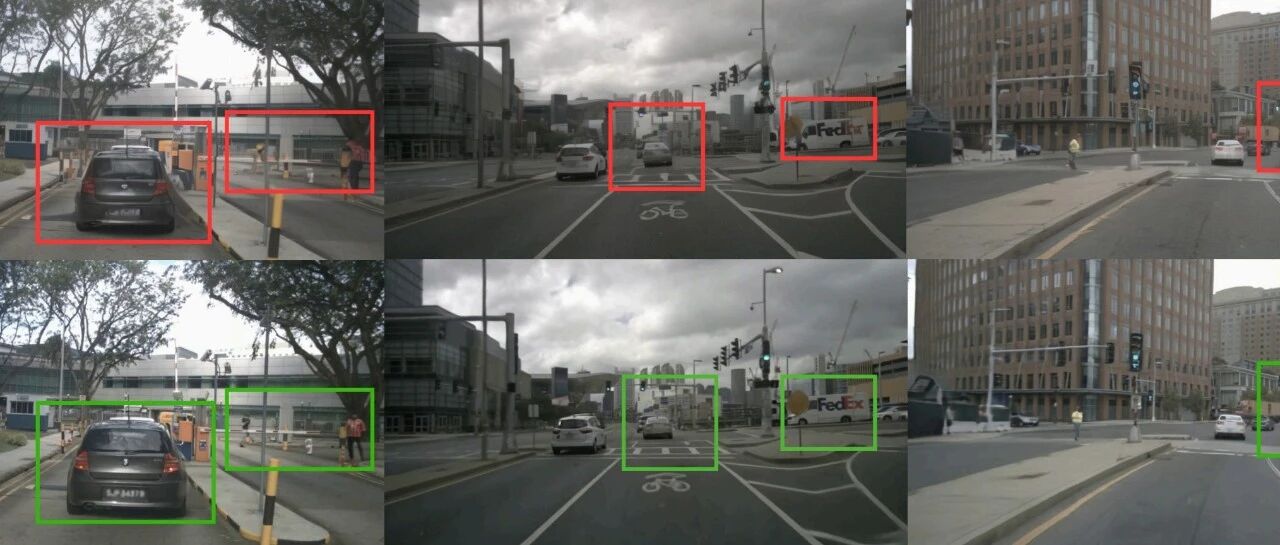
Core Viewpoint - The article discusses the development of FastDriveVLA, a new framework for efficient visual token pruning in end-to-end autonomous driving systems, which significantly reduces computational costs and improves inference efficiency [1][8]. Group 1: Research Background and Problem - End-to-end autonomous driving shows great potential to transform future transportation systems, learning the entire driving process within a unified framework, thus reducing errors in information transfer between modules [7]. - Existing VLA models convert visual inputs into a large number of visual tokens, leading to significant computational overhead and increased inference latency, posing challenges for real-world deployment [7][8]. - Previous research aimed at reducing visual tokens has limitations in autonomous driving scenarios, as new designs often require retraining the entire model, and pruning strategies based on attention or similarity may retain irrelevant information [7][8]. Group 2: Methodology and Innovations - FastDriveVLA introduces a novel, reconstruction-based visual token pruning framework specifically tailored for end-to-end autonomous driving [8]. - The research team hypothesized that visual tokens related to foreground information are more valuable than those related to background content, leading to the creation of the nuScenes-FG dataset, which includes 241,000 images with foreground annotations [2][13]. - The lightweight, plug-and-play pruning tool, ReconPruner, is designed to effectively identify and select meaningful foreground visual tokens, utilizing a masked image modeling approach for pixel reconstruction [16][19]. Group 3: Experimental Results - FastDriveVLA achieved state-of-the-art (SOTA) performance in open-loop planning benchmarks on the nuScenes dataset, demonstrating significant efficiency improvements [2][20]. - When the number of visual tokens was reduced from 3,249 to 812, FastDriveVLA's FLOPs decreased by approximately 7.5 times, and it reduced prefill time by 3.7 times and decode time by 1.3 times, enhancing inference efficiency [26][27]. - The framework outperformed existing methods across various pruning ratios, particularly at a 50% pruning rate, where it maintained a balanced performance across all metrics [25][28]. Group 4: Efficiency Analysis - FastDriveVLA's efficiency was analyzed in terms of FLOPs and CUDA latency, showing a significant reduction in computational requirements while maintaining high performance [26][27]. - At a 25% pruning rate, FastDriveVLA demonstrated the best performance across all evaluation metrics, indicating that focusing on foreground-related visual tokens is crucial for enhancing autonomous driving performance [28].


中国超火90后,又融资 35.5 亿元
Sou Hu Cai Jing· 2026-01-04 12:53
Group 1: Fund Establishments - Sichuan Social Security Science and Technology Innovation Fund officially signed with a total scale of 50 billion yuan, focusing on key industries and strategic emerging industries in Sichuan and the Chengdu-Chongqing economic circle [2] - Hubei Water Conservancy Development Industry Investment Fund established with a capital contribution of approximately 2 billion yuan, focusing on venture capital and private equity investment management [3] Group 2: Financing Activities - Moonshot AI completed a Series C financing round of 500 million USD (approximately 3.55 billion yuan), significantly exceeding its target, with current cash holdings exceeding 10 billion yuan [4] - Churui Intelligent completed a Series C financing round of several hundred million yuan, attracting local state-owned and industrial capital [4] - Hongxiong AI announced the completion of an 80 million yuan Pre-A+ financing round, focusing on building a customer intelligent interaction service platform [6] Group 3: IPO Developments - Blue Arrow Aerospace's IPO application accepted on the Sci-Tech Innovation Board, aiming to become the first commercial aerospace stock [7] - Changxin Technology's IPO application accepted, planning to raise 29.5 billion yuan, potentially setting a record for IPO fundraising on the Sci-Tech Innovation Board [7] - Zhiyu Technology initiated its IPO process, with a market valuation potentially exceeding 51.8 billion HKD [8] Group 4: Corporate Developments - Guizhou Moutai established a wholly-owned subsidiary, Guizhou Aimaotai Digital Technology Co., Ltd., with a registered capital of 600 million yuan [11] - Xiaoma Zhixing's Robotaxi fleet exceeded 1,159 vehicles, surpassing its 2025 strategic goal ahead of schedule [11]

美股科技行业周报:CES2026将召开,建议关注端侧AI、PhysicalAI等方向-20260104
Guolian Minsheng Securities· 2026-01-04 12:02
Investment Rating - The report suggests a focus on AI consumer applications, embodied intelligence, autonomous driving, and XR technologies, indicating a positive outlook for companies in these sectors [6][24]. Core Insights - The CES 2026 event is highlighted as a key opportunity to observe advancements in AI, particularly in consumer applications such as AI PCs and embodied intelligence [6][24]. - Significant developments in chip technology are anticipated, with AMD, Intel, and Qualcomm expected to unveil new products that enhance processing capabilities [2][11]. - The report emphasizes the evolution of video models into general visual foundation models, showcasing the capabilities of Google DeepMind's Veo 3 [5][14]. - DeepSeek's mHC architecture aims to address the stability issues in training large models, which could lead to more reliable AI applications [18][19]. Summary by Sections CES 2026 Preview - Focus on new chip products from leading companies: AMD's Ryzen 7 9850X3D and Intel's Panther Lake chips, which promise a 50% performance increase [2][11]. - Emphasis on advancements in autonomous driving technologies, with companies like Sony Honda Mobility and BMW showcasing new models and AI systems [3][12]. Technology Industry Dynamics - Google DeepMind's research indicates that video models are evolving into versatile visual models capable of zero-shot learning, enhancing their applicability across various tasks [5][14]. - DeepSeek's mHC architecture is designed to improve the training stability of large models while maintaining high expressiveness, potentially paving the way for larger-scale model training [18][19]. Weekly Insights - The report recommends focusing on companies that can effectively implement AI technologies in real-world scenarios, particularly in hardware and platforms that support multimodal reasoning [6][24]. - Suggested companies for investment include NVIDIA, Tesla, LITE, AVGO, and Google, which are positioned to benefit from advancements in AI and computing infrastructure [6][24].




明日主题前瞻一年一度的开年科技盛宴来临,CES展会已经成为前沿AI硬件的主要秀场
Xin Lang Cai Jing· 2026-01-04 10:44
Group 1: AI Hardware and Applications - CES has become a major showcase for cutting-edge AI hardware, with a focus on consumer-grade AI expected to accelerate by 2026, featuring AI-enabled robots and wearable devices [2] - Companies like Zhaowei and Megmeet are showcasing advanced AI products at CES, including a new dexterous hand with 20 degrees of freedom and high-performance AI modules for robotics [2] - The AI medical sector is entering a critical commercialization phase, supported by new policies from Beijing aimed at fostering innovation and product evaluation in AI healthcare [7][8] Group 2: Low-altitude Economy - The low-altitude economy is at a pivotal growth stage, with approximately 30 provinces incorporating it into their 14th Five-Year Plans, indicating strong governmental support [3] - Major eVTOL manufacturers are seeing orders materialize, and the industry is expected to grow significantly over the next 3-5 years as regulatory frameworks and infrastructure improve [3][4] Group 3: Autonomous Driving - Significant advancements in autonomous driving have been reported, with China officially entering the mass production phase for L3 vehicles, marking a regulatory breakthrough [6] - Companies like Haon Automotive are actively involved in the development of intelligent driving systems, collaborating with leading domestic automakers [6] Group 4: AI Model Development - The AI application landscape is shifting towards performance realization and edge computing, with notable advancements in multimodal models like Google's Gemini-3-pro and domestic models like Doubao [9] - The investment logic in the AI industry is transitioning from a focus on computational power to application value, highlighting the importance of software and high-growth edge hardware companies [9]
AAAI 2026 | 小鹏联合北大,专为VLA模型定制视觉token剪枝方法,让端到端自动驾驶更高效
机器之心· 2026-01-04 05:43
Core Insights - The article discusses the increasing application of VLA models in end-to-end autonomous driving systems, highlighting the challenges posed by lengthy visual tokens that significantly raise computational costs [2][8] - A new paradigm for efficient visual token pruning in autonomous driving VLA models is introduced through the paper "FastDriveVLA," co-authored by Xiaopeng Motors and Peking University [2][5] - The research proposes that visual tokens related to foreground information are more valuable than those related to background content, leading to the development of a large-scale annotated dataset, nuScenes-FG, containing 241,000 images with foreground area annotations [2][13] Summary by Sections Research Background and Issues - End-to-end autonomous driving shows great potential to transform future transportation systems, learning the entire driving process within a unified framework [6] - Existing VLA models convert visual inputs into numerous visual tokens, resulting in significant computational overhead and increased inference latency, posing challenges for real-world deployment [8] Methodology and Innovations - FastDriveVLA is a novel, reconstruction-based visual token pruning framework tailored for end-to-end autonomous driving VLA models [10] - The framework includes a lightweight, plug-and-play pruner called ReconPruner, which identifies and selects meaningful foreground visual tokens using a masked image modeling approach [16][18] - An innovative adversarial foreground-background reconstruction strategy is introduced to enhance ReconPruner's ability to distinguish between foreground and background tokens [19] Experimental Results - FastDriveVLA demonstrates state-of-the-art performance across various pruning ratios in the nuScenes open-loop planning benchmark [20][25] - When the number of visual tokens is reduced from 3,249 to 812, FastDriveVLA achieves a reduction in FLOPs by approximately 7.5 times and significantly improves CUDA inference latency [26] - The framework outperforms existing methods, particularly at a 50% pruning ratio, achieving a balanced performance across all metrics [25] Efficiency Analysis - FastDriveVLA's efficiency is highlighted by its substantial reduction in FLOPs and CUDA latency, showcasing its potential for real-time applications in autonomous driving [26][27] - At a 25% pruning rate, FastDriveVLA shows the best performance across all evaluation metrics, indicating that focusing on foreground-related visual tokens is crucial for enhancing autonomous driving performance [28]
至高150美元,特斯拉Robotaxi或加收清洁费,网友吵翻天了
3 6 Ke· 2026-01-04 01:36
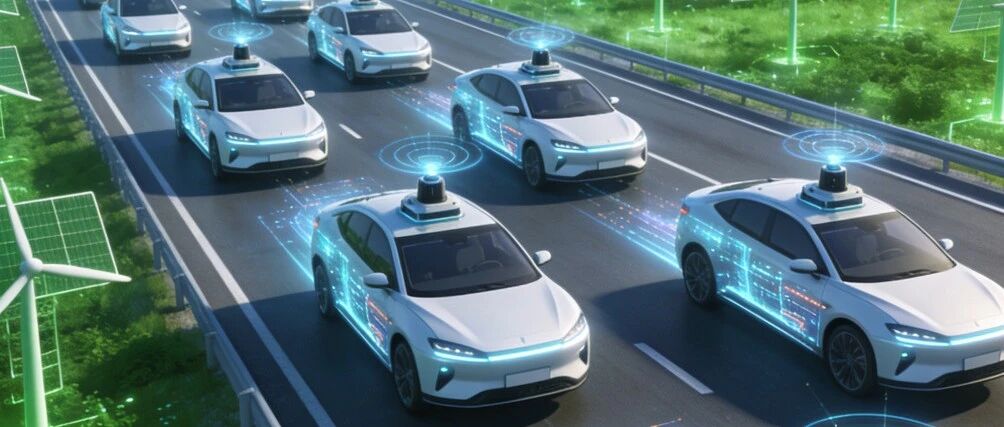
特斯拉的Robotaxi已经在北美地区开启试运营,但根据海外社交平台博主Sawyer Merritt的爆料:特斯拉不仅计划对无人出租车收取清洁费,还玩起了「阶梯 定价」——按车内脏乱程度分两档收费,50美元起步,重度脏污直接飙到150美元! 截图:X@Sawyer Merritt 在下方评论的海外用户纷纷叫好,认为此举可以大大减少乘客在车内制造脏乱的行为,而且电车通编辑在此前报道CES时入住拉斯维加斯某酒店也被额外收 取了"清洁费",看来在北美市场针对服务额外收费似乎并没什么不合理。 不过也有网友对此感到担忧,并指责特斯拉的清洁费标准过高,50美元的起征点已经很离谱,150美元的清洁费更是近乎「天价」,存在利用无人化服务垄 断优势来「收割用户」之嫌。这不禁让人思考:清洁费究竟是马斯克急于变现的「收割行为」,还是Robotaxi赛道走向成熟必须跨越的「规范化门槛」? 国内的萝卜快跑、小马智行等自动驾驶企业均未主动列出清洁费,但一次亲身提车经历,让电车通坚定支持企业加收这一费用。 图源:特斯拉官方 清洁是底线!Robotaxi收费合情合理 电车通相信,反对清洁费的网友只有一小部分,毕竟对于大多数人而言,特斯拉收取 ...
为什么蔚来会押注世界模型?
自动驾驶之心· 2026-01-04 01:04
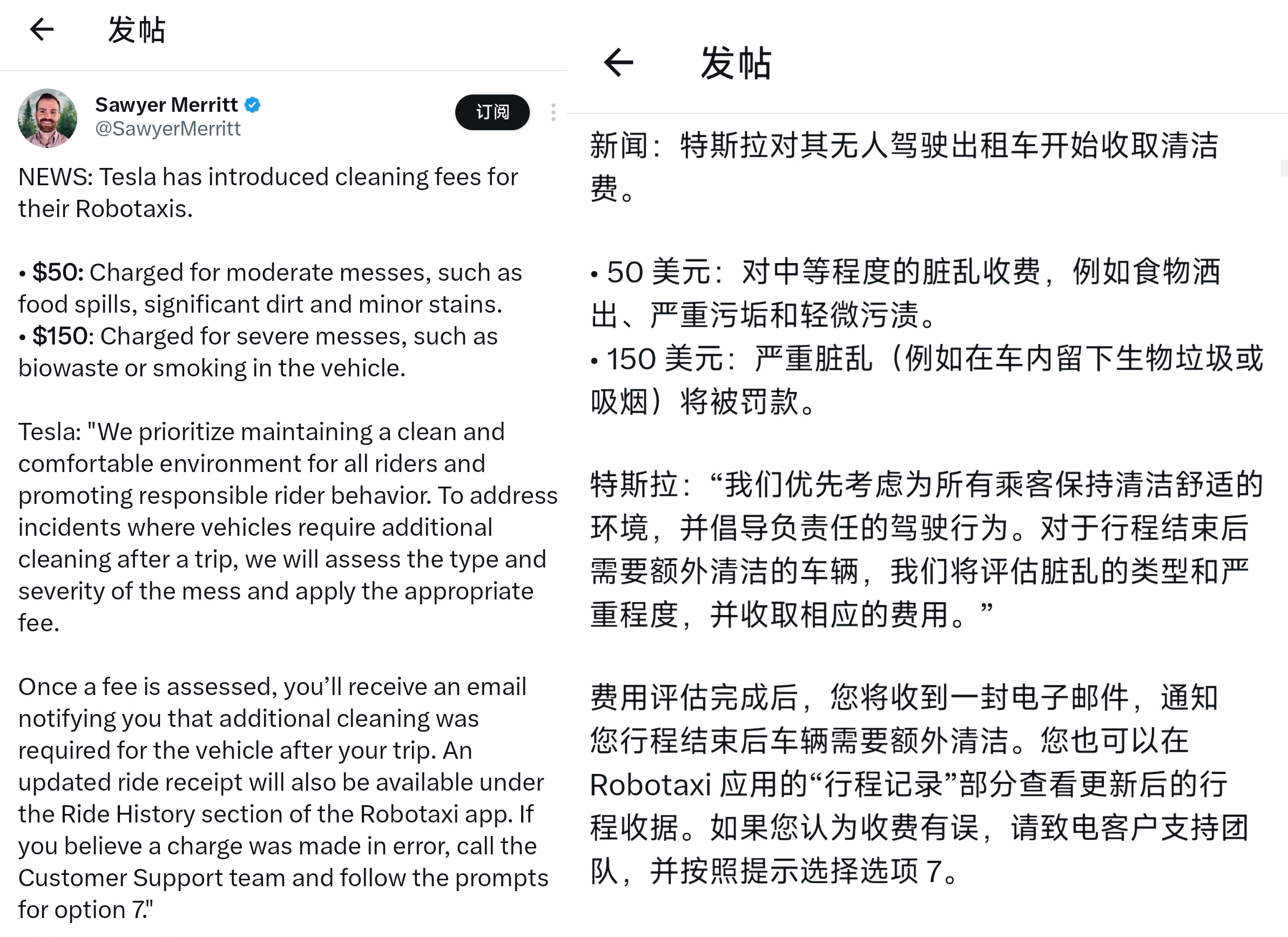
Core Insights - NIO's NWM 2.0 launch has reportedly shown promising results, with expectations for the world model to deliver surprises in intelligent driving [1] - The concept of the world model is crucial for understanding spatiotemporal cognition, which is essential for autonomous driving systems [1] Group 1: World Model Concept - The world model focuses on high-bandwidth cognitive systems that directly utilize video data rather than converting it into language, addressing the limitations of language models in modeling real-world spatiotemporal dynamics [1] - The world model encompasses two levels of cognition: spatiotemporal understanding and conceptual understanding, with the former being critical for autonomous driving applications [1] Group 2: Industry Applications and Challenges - Various companies are building their own cloud and vehicle-based world models using open-source algorithms for data generation and closed-loop simulation [1] - The definition of a world model remains ambiguous, leading to confusion among newcomers in the field, who often struggle to grasp the concept and its applications [1] Group 3: Course Overview - A course is being offered to help individuals understand the world model in autonomous driving, covering topics from foundational principles to practical applications [6][11] - The course includes multiple chapters focusing on the history, background knowledge, and various streams of world models, including pure simulation and generative models [6][7][8] Group 4: Technical Foundations - The course will cover essential technical concepts such as Transformer architecture, BEV perception, and occupancy networks, which are critical for understanding world models [12][14] - Participants are expected to have a foundational knowledge of autonomous driving modules and relevant programming skills to fully benefit from the course [14]
超越DriveVLA-W0!DriveLaW:世界模型表征一统生成与规划(华科&小米)
自动驾驶之心· 2026-01-04 01:04
Core Viewpoint - The article discusses the advancements in autonomous driving technology, particularly focusing on the integration of world models to enhance system robustness and generalization in long-tail scenarios. It introduces DriveLaW, a unified world model that combines video generation and trajectory planning to address existing challenges in autonomous driving systems [2][5][43]. Group 1: Advancements in Autonomous Driving - Recent breakthroughs in perception and planning technologies have significantly improved autonomous driving capabilities [2]. - Existing systems still struggle with long-tail scenarios, limiting closed-loop driving performance [2]. - A surge of research is exploring world models to predict future driving scenarios, enhancing system robustness and generalization [2][3]. Group 2: World Model Applications - World models are being applied in various ways, including synthesizing data for rare scenarios, simulating environments for policy learning, and providing future visual predictions as supervisory signals [3]. - Current world models often lack tight coupling with decision-making processes, leading to indirect contributions to planning [3]. Group 3: DriveLaW Overview - DriveLaW is introduced as an end-to-end world model that innovatively shifts from parallel to chain structures in generation and planning [5]. - It leverages latent features from large-scale video generation models to enhance planning capabilities, ensuring consistency between generated visuals and planned trajectories [5][10]. - The model consists of two main components: DriveLaW-Video for video generation and DriveLaW-Act for trajectory planning [10]. Group 4: Performance Metrics - DriveLaW achieved a FID score of 4.6 and an FVD score of 81.3, surpassing previous world model approaches in video generation quality [35]. - In the NAVSIM benchmark, DriveLaW reached a PDMS score of 89.1 without any reinforcement learning fine-tuning, demonstrating its effectiveness in closed-loop planning [36]. Group 5: Training Strategy - A three-stage training strategy is employed to balance high-fidelity video synthesis and stable trajectory generation [34]. - The first stage focuses on learning robust motion patterns at reduced spatial resolutions, while the second stage enhances visual quality at higher resolutions [34]. - The final stage conditions the trajectory planner on the latent features from the video generator, effectively coupling generation and planning [34].
为梦想奋斗、为幸福打拼 “开局之年”这样干!
Xin Lang Cai Jing· 2026-01-03 03:48
Group 1 - China's economy is expected to reach 140 trillion yuan this year, marking a significant increase in economic, technological, and national defense strength [1] - The introduction of L3-level autonomous driving license plates in Beijing and Chongqing signifies China's leadership in the electric vehicle sector and its rapid advancement towards smart technology [3] - The Hainan Free Trade Port has expanded its "zero tariff" goods to over 6,600 items, with the first day of customs clearance valued at over 500 million yuan, showcasing the benefits of open trade policies [3] Group 2 - The cultural and tourism market is thriving, with increased attendance at cultural venues and events, reflecting a growing demand for cultural experiences and boosting consumer confidence [4] - Policies supporting the replacement of old products with new ones, particularly in the automotive and home appliance sectors, are being enhanced to meet consumer demand for high-tech and green products [6] - The implementation of various social welfare policies, such as free preschool education and the addition of 114 new drugs to medical insurance, aims to invest in human resources and promote long-term economic returns [6]
招商证券国际:首予小马智行H股“增持”评级 属L4领域先行者
Xin Lang Cai Jing· 2026-01-02 05:35
Core Viewpoint - The report from China Merchants Securities International initiates coverage of Pony.ai's H-shares with an "Overweight" rating, highlighting its position as a pioneer in the L4 autonomous driving sector, with strong technological and commercialization capabilities forming a competitive moat [1] Group 1: Company Overview - Pony.ai is recognized as a leader in the L4 autonomous driving field, leveraging world models and virtual driver technology to deepen its market presence [1] - The company has achieved significant breakthroughs in commercialization, notably reaching profitability for its Robotaxi single vehicle in Guangzhou during the third quarter of last year, marking a milestone in its commercial journey [1] Group 2: Market Position and Growth Potential - Pony.ai holds a substantial market share in both autonomous ride-hailing services and autonomous trucking, benefiting from its first-mover advantage and industry standing [1] - The acceleration of the deployment of its seventh-generation vehicles and the expansion of its fleet size are expected to sustain strong growth momentum [1]