自动驾驶

Search documents
大行评级|招商证券国际:首予小马智行H股“增持”评级 属L4领域先行者
Ge Long Hui· 2026-01-02 05:27
招商证券国际发表研报指,首次覆盖小马智行H股并予"增持"评级,指其属L4领域先行者,技术及商业 化能力构筑护城河。依托于世界模型和虚拟司机技术,公司在L4领域深耕厚植,更在商业化应用方面 取得了实质性突破,尤其是去年第三季度在广州实现的Robotaxi单车盈利转正,标志着其商业化迎来阶 段性的里程碑式时刻。该行表示,小马智行凭借先发优势和行业地位,公司在自动驾驶出行服务和自动 驾驶货车领域占据重要的市场份额,随着第七代车型的加速部署和车队规模扩大,强劲的增长势头有望 延续。 ...

特斯拉Q4交付恐大跌15%,华尔街大幅下调2026年销量预期至180万辆
Hua Er Jie Jian Wen· 2026-01-02 04:17
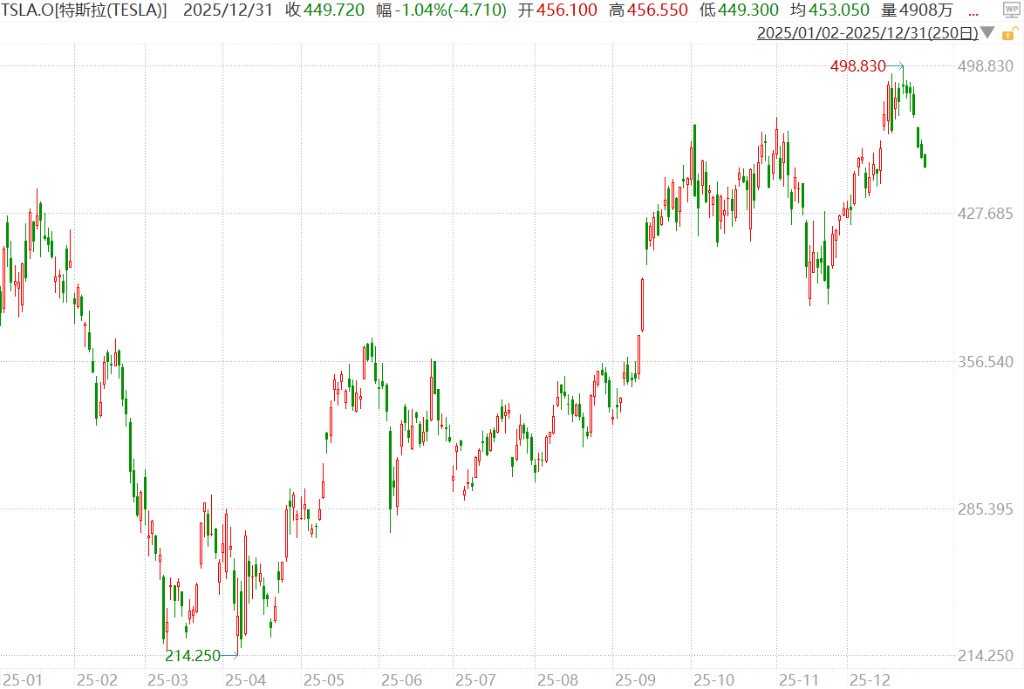
周五特斯拉即将公布第四季度交付量数据。据彭博社数据,预计特斯拉第四季度交付约44.09万辆汽车,同比下降11%,这意味着公司下半年销量 将低于去年同期水平。 华尔街见闻此前提及,特斯拉本周发布了分析师预测汇总,该数据更为悲观,预期特斯拉第四季度交付量为422850辆,同比下降15%。 此外根据彭博汇编的数据,华尔街对特斯拉2026年的交付预期已从超300万辆大幅下调至约180万辆。 尽管该公司股价在2025年下半年大涨,但主要驱动力来自CEO马斯克宣扬的人工智能和机器人技术进展,而非电动车的销售业绩。 分析师指出,投资者目前将焦点放在特斯拉未来5至15年的发展潜力上,而忽视了短期财务表现。但随着美国联邦电动车税收抵免取消、全球市场 竞争加剧以及欧洲监管审批受阻等不利因素显现,这一策略面临考验。 特斯拉在投资者热捧其自动驾驶愿景的同时,正面临实际汽车销量的持续下滑。 此外,特斯拉第三季度交付量远超产量44.745万辆,这种库存消耗也对第四季度销售构成压力。 交付数据将显著走低 特斯拉预计第四季度交付量将显著低于去年同期的49.6万辆和第三季度创纪录的49.7万辆。 特斯拉周一在其网站上罕见发布了分析师预测汇总, ...


2天20小时、零接管横穿美国,特斯拉FSD已通过“物理图灵测试”?
Hua Er Jie Jian Wen· 2026-01-01 03:29
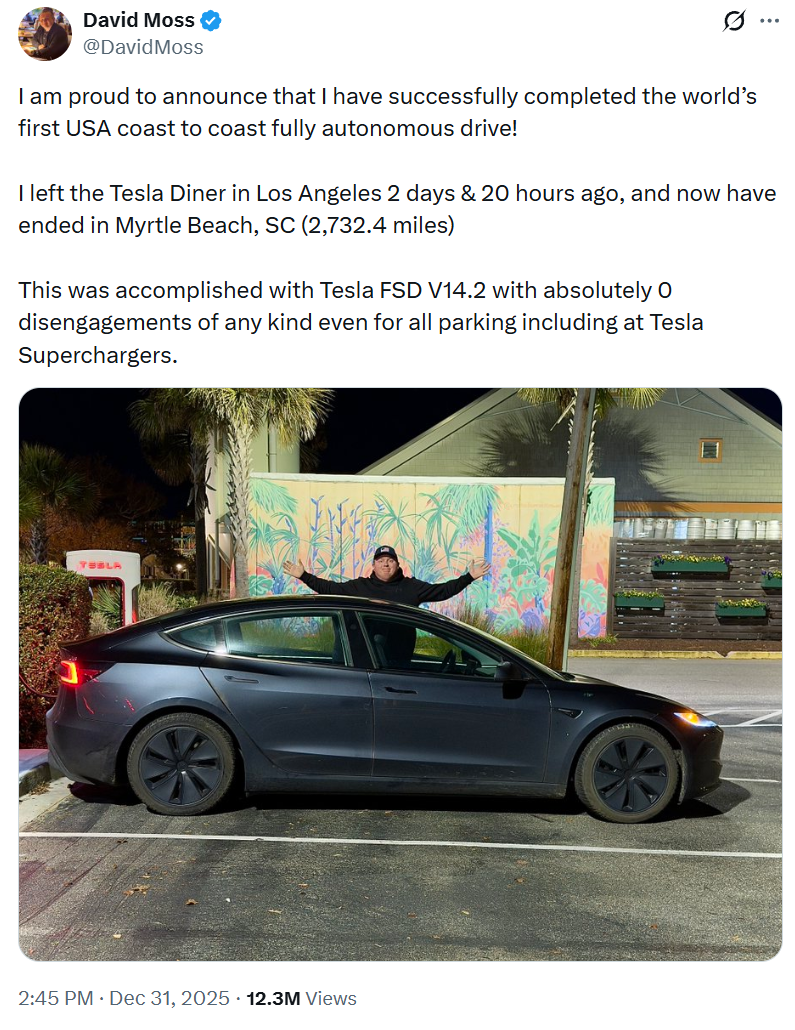
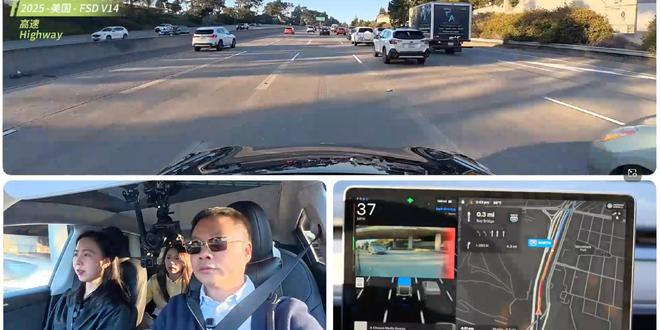
Core Insights - Tesla's Full Self-Driving (FSD) system has achieved a significant milestone by completing a coast-to-coast journey across the United States without any human intervention, showcasing the system's capabilities in real-world conditions [1][4][13]. Group 1: Journey Details - A Tesla Model 3 equipped with FSD v14 completed a 2,732-mile journey from Los Angeles to Myrtle Beach, South Carolina, in 2 days and 20 hours, relying entirely on FSD [1][4]. - The journey included diverse driving environments such as highways, city streets, and complex scenarios like nighttime driving and multiple supercharger stops, with no need for human takeover [1][4][13]. - The driver, Davis Moss, had previously driven 10,638.8 miles using FSD before this trip, emphasizing the system's reliability [4]. Group 2: Industry Significance - This journey marks a pivotal moment for the autonomous driving industry, as it raises the question of whether FSD can fully replace human drivers [4][13]. - Elon Musk celebrated this achievement, noting that it fulfills a long-standing goal he set in 2016 for coast-to-coast autonomous driving [6][13]. Group 3: Technological Advancements - The success of FSD v14 is attributed to Tesla's shift from rule-based systems to an end-to-end neural network, trained on nearly 7 billion miles of real-world driving data [15]. - The system has demonstrated its ability to handle complex urban driving scenarios, which are significantly more challenging than highway driving [15]. - Nvidia's Jim Fan suggested that FSD v14 may have passed a "Physical Turing Test," indicating that the system's driving behavior is increasingly indistinguishable from that of a cautious human driver [13][14]. Group 4: Future Implications - The advancements in FSD technology could lead to a paradigm shift in how autonomous systems are perceived, moving from mere compliance with instructions to understanding intent [15]. - Despite the progress, the system still requires human supervision, as complete autonomy has not yet been achieved [15].
智能汽车产业链全景图(2025年12月版)
自动驾驶之心· 2026-01-01 03:05
Group 1: Automotive Manufacturers - Key manufacturers mentioned include Kia, Geely, Volvo, Jaguar Land Rover, and BYD [3][4][5][11][12] - Notable electric vehicle manufacturers include Rivian, VinFast, and NIO [14][11] - The article highlights the growing presence of Chinese automotive brands in the global market [11][12] Group 2: ADAS and Autonomous Driving Technology - Tier 1 suppliers for Advanced Driver Assistance Systems (ADAS) include Desay SV, Huawei, and Baidu Apollo [16][17] - High-precision positioning suppliers mentioned are Qianxun S, Beidou Star, and Huace Navigation [18][19] - Key players in the LiDAR market include Luminar, Innoviz, and Hesai Technology [21] Group 3: Vehicle Connectivity and Cloud Services - Major cloud service providers for automotive applications include AWS, Microsoft, and Huawei [31][32] - Companies involved in data integration and vehicle-to-everything (V2X) communication include Freetech and MAXIEYE [32][33] Group 4: In-Vehicle Technology and User Experience - Tier 1 suppliers for cockpit technology include Bosch, Aptiv, and Visteon [50][54] - The article discusses the importance of user interface and interaction technologies, highlighting companies like iFlytek and Tencent [61] Group 5: Electric and Hybrid Vehicle Components - Key suppliers for electric vehicle components include Bosch, AUMOVIO, and Magna [26][40] - The article emphasizes the role of battery technology and management systems in the growth of electric vehicles [40][41] Group 6: Commercial Vehicle Technologies - Companies providing ADAS for commercial vehicles include Eastsoft and ZF [48] - The article notes the increasing demand for smart logistics and fleet management solutions [48][49]





L3只是过渡?小鹏Robotaxi与L4同源,中国车企弯道超车倒计时
Jing Ji Guan Cha Bao· 2026-01-01 02:11
Core Insights - Physical AI is emerging as a new benchmark for assessing the core competitiveness of global tech companies, marking a shift from digital algorithm competition to real-world interactions [2][4] - The competition in autonomous driving, a key battleground for AI and the physical world, is characterized by a bipolar development trend led by the US and China [4][20] Industry Developments - Xiaopeng Motors' CEO He Xiaopeng plans to retest Tesla's FSD V14 in the US in December 2025, highlighting a collaborative dialogue between leading tech firms [2][3] - The second-generation VLA model from Xiaopeng is set to enter mass production, transforming industry consensus into practical momentum for change [3][20] Competitive Landscape - The competition in the physical AI sector is defined by a consensus on technology routes, with Tesla focusing on a pure vision approach and Xiaopeng developing a full-stack self-research system [4][10] - Both companies are moving away from the contentious L3 transitional phase, aiming for L4 capabilities directly, which reflects a collective understanding of the limitations of L3 [13][20] Technological Innovations - Xiaopeng's second-generation VLA model eliminates the language translation step, allowing for direct generation of driving commands from visual signals, significantly enhancing response speed and decision-making accuracy [8][10] - The model's training data volume reaches 100 million clips, equivalent to 65,000 years of human driving experience, enabling it to handle complex scenarios effectively [17][18] Market Positioning - Xiaopeng's full-stack self-research system creates a competitive barrier, allowing for rapid iterations and deployment of advanced models, with a cloud-based model supporting 72 billion parameters [8][18] - The unique challenges of Chinese road conditions have become a strategic asset for local companies, enhancing their AI capabilities and providing a rich training environment [17][20] Future Outlook - 2026 is projected to be a pivotal year for Xiaopeng, with plans to launch L4-level vehicles and Robotaxis, positioning the company as a key player in defining the next generation of AI paradigms [20] - The collaboration and competition between Tesla and Xiaopeng are expected to drive innovation and set industry standards, with both companies aiming for a fair competitive landscape in the global market [9][20]
中央经济工作会议定调 推动智能驾驶产业迈入新阶段
Zhong Guo Jing Ying Bao· 2026-01-01 01:44
Core Insights - The article highlights the significant advancement of autonomous driving in China, marking a transition from demonstration to commercial operation, with companies like Changan Automobile and XPeng obtaining L3 autonomous driving licenses [1][3][4]. Industry Developments - The autonomous driving sector is witnessing a clear differentiation and acceleration, with various companies, including Changan and XPeng, moving towards conditional autonomous driving responsibilities [2]. - The first batch of L3 autonomous vehicles has received product access approval, indicating a shift towards institutionalized operation within public transport systems [3]. - The operational landscape for autonomous driving is evolving from capability demonstration to responsibility integration, with clearer operational boundaries and accountability [4]. Technological Advancements - Companies are focusing on real-world testing, with Changan's SL03 completing over 5 million kilometers of open road testing under challenging conditions, maintaining a zero-accident record [3]. - The technology logic is shifting towards embedding responsibility within the operational framework, allowing for more cities to become practical applications of "Artificial Intelligence+" [4]. Business Models and Commercialization - Robotaxi services are entering a sustainable commercial expansion phase, with companies like Pony.ai achieving full unmanned commercial operations in cities like Guangzhou and Beijing [5]. - The operational verification of autonomous driving is proving its commercial viability, while data collection systems are being restructured to enhance technological iteration limits [5]. - Companies are exploring various paths to integrate autonomous driving with ride-hailing platforms and data services, aiming for lower-cost business models [2][6]. Policy and Regulatory Environment - The Chinese government is actively shaping the autonomous driving industry through policies that encourage innovation while emphasizing safety and regulation [7]. - The recent policy changes are expected to accelerate the commercialization of autonomous driving, expanding its application from closed environments to complex urban traffic systems [7]. - Regulatory frameworks are crucial for the sustainable large-scale commercialization of autonomous driving, necessitating a dynamic and tiered approach to ensure safety while allowing for innovation [9].
看2026|小马智行彭军:让自动驾驶技术从“示范”到“实用”
Bei Ke Cai Jing· 2025-12-31 15:41
Core Viewpoint - The article discusses the economic outlook for 2026 and the strategic initiatives that companies, particularly in the autonomous driving sector, are planning to implement in response to the central economic work conference's emphasis on expanding domestic demand and optimizing supply [1][2]. Company Initiatives - Pony.ai, led by CEO Peng Jun, is positioned as a key player in the autonomous driving industry, which integrates multiple sectors such as automotive, transportation, energy, and artificial intelligence [9]. - The company aims to convert national macroeconomic guidelines into specific industry development actions, leveraging its world model™ (PonyWorld) to create a virtual driver™ that has achieved 500,000 hours of fully autonomous operation, demonstrating a safety performance ten times better than human drivers [9][10]. - Pony.ai has successfully launched autonomous driving services in major Chinese cities, including Beijing, Shanghai, Guangzhou, and Shenzhen, achieving regular operations without human intervention [9]. Strategic Development Goals - For 2026 and beyond, Pony.ai plans to adopt a "T" shaped strategic layout, focusing on deepening its presence in existing markets while exploring new opportunities [11]. - The company has reached a milestone with its seventh-generation vehicle achieving profitability in Guangzhou, validating its business model and enhancing confidence in expanding operations in first-tier cities [11]. - Future growth will be driven by expanding into more domestic cities and international markets, with strategies involving collaboration with local partners and government agencies to establish market presence [11].

小马智行(PONY.US)盘前涨1.5% Robotaxi规模超1159辆 超额完成目标
Zhi Tong Cai Jing· 2025-12-31 14:38
Group 1 - The core viewpoint of the article is that Pony.ai has exceeded its target for autonomous taxi deployment by announcing a fleet of over 1,159 Robotaxis by December 31, 2025, surpassing the goal of 1,000 vehicles [1] Group 2 - On Wednesday, Pony.ai's stock rose by 1.5%, reaching a price of $14.86 [1] - The announcement indicates strong progress in the company's autonomous vehicle strategy and operational capabilities [1]
美股异动 | 小马智行(PONY.US)盘前涨1.5% Robotaxi规模超1159辆 超额完成目标
智通财经网· 2025-12-31 14:32
Core Insights - Pony.ai (PONY.US) shares rose by 1.5% in pre-market trading, reaching $14.86 [1] - The company announced that by December 31, 2025, its Robotaxi fleet will exceed 1,159 vehicles, surpassing its target of 1,000 vehicles for 2025 [1]
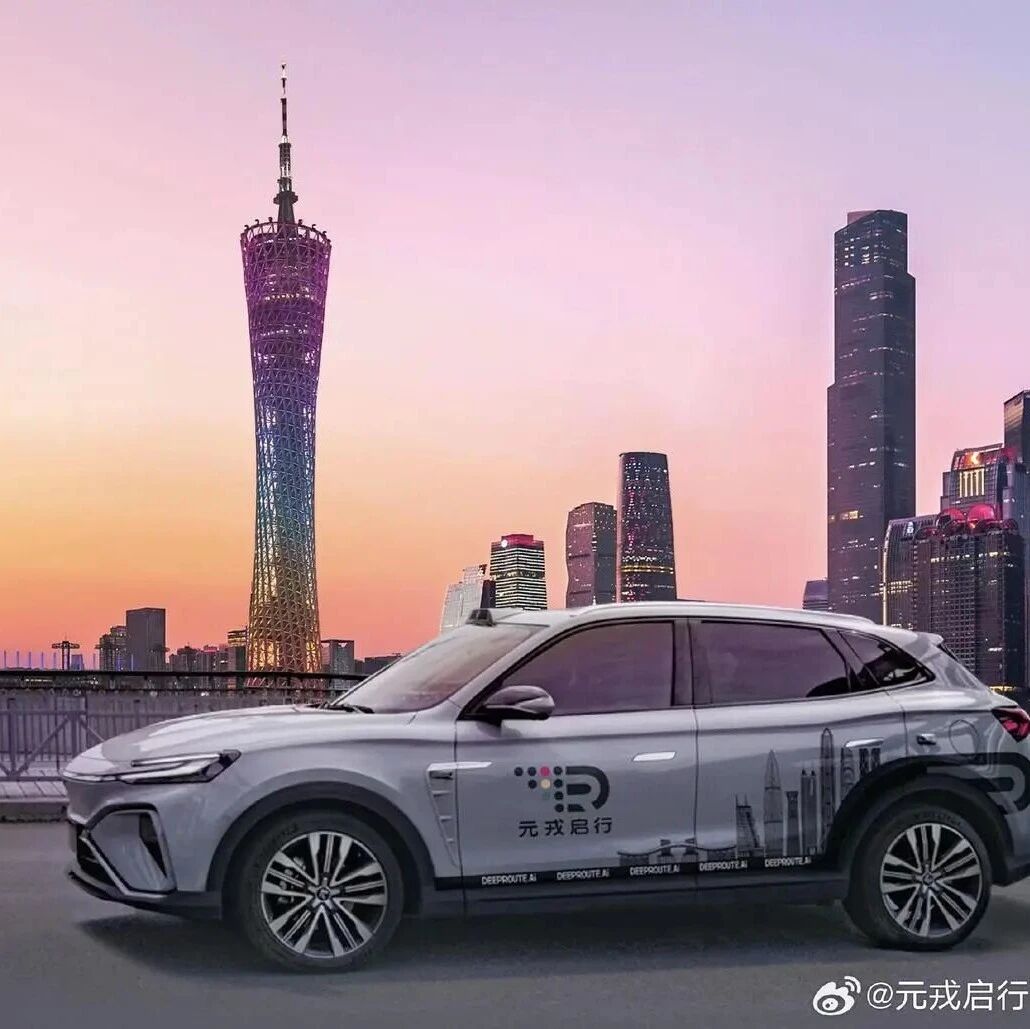
独家丨元戎启行月交付跨过4万辆,智驾竞争加速向头部集中
雷峰网· 2025-12-31 11:41
Core Viewpoint - Yuanrong Qixing aims to achieve a delivery target of 1 million units by 2026, driven by the rapid increase in monthly deliveries of its advanced driver-assistance systems (ADAS) [1][5]. Group 1: Delivery Performance - In November, Yuanrong Qixing's city NOA (Navigation on Autopilot) system exceeded 40,000 units in monthly deliveries, with previous months seeing over 10,000 and 30,000 units delivered in June and September, respectively [2]. - The total delivery volume for Yuanrong Qixing is expected to surpass 200,000 units this year, while competitor Momenta is projected to deliver approximately 350,000 to 400,000 units, with a cumulative total exceeding 600,000 units by the end of the year [2]. Group 2: Product Line and Sales - More than 10 vehicle models are currently in mass production with Yuanrong Qixing's ADAS, with three models showing particularly strong sales performance [4]. - The Weipai Lanshan, which debuted in November 2024, has sold over 50,000 units in the past year, while the Weipai Gaoshan has approached 50,000 units in sales within six months. The Geely Galaxy M9 has also seen monthly sales exceeding 10,000 units for the past two months [5]. - Additional models from Great Wall Motors, including the Tank 500 and Tank 400, are also equipped with Yuanrong Qixing's systems, contributing to the rapid increase in delivery scale [5]. Group 3: Future Outlook - The emergence of popular models has instilled confidence in Yuanrong Qixing's delivery prospects for the upcoming year, with expectations of doubling supply to Great Wall Motors as more models adopt its systems [5]. - The competitive landscape in the smart driving industry is anticipated to intensify by 2026, with a more pronounced clustering effect among leading companies [6].