量子科技

Search documents
“创业江苏”科技创业大赛行业赛打响
Xin Hua Ri Bao· 2025-08-05 23:50
Group 1 - The "Entrepreneur Jiangsu" technology entrepreneurship competition has attracted 5,905 entrepreneurial teams and companies, ranking among the top in the nation for participation [1] - A total of 539 quality projects advanced to the industry competition after selection from 13 local competitions across the province [1] - Jiangsu has maintained the highest number of awards in the national finals of the China Innovation and Entrepreneurship Competition for six consecutive years, with 15% of awarded companies achieving listing or registration post-competition [1] Group 2 - The competition aims to strengthen the innovative role of enterprises and promote deep integration of technological and industrial innovation, focusing on emerging industries such as artificial intelligence, quantum technology, and 6G communication [1] - The event has facilitated over 400 billion yuan in loans and financing support from various financial institutions for participating companies [1] - The competition also integrates policies, talent, and financial resources to create a "one-stop" service platform for enterprises, fostering a favorable ecosystem for development [2]

量子模拟:技术路线激辩与产业化破局——WAIC思辨会顶尖学者共议发展路径
Guan Cha Zhe Wang· 2025-08-04 02:03
Core Insights - The 2025 World Artificial Intelligence Conference (WAIC) highlighted the importance of quantum simulation in overcoming classical computing limitations, with discussions focusing on the future trends and technological advancements in quantum technology [1][6] Group 1: Fundamental Research and Application Scenarios - Quantum simulation is seen as a key pathway to address the limitations of classical computing, but current NISQ devices face challenges such as hardware noise and modeling errors [2] - There is a debate on the core bottlenecks: one side emphasizes hardware measurement capabilities, while the other points to the lag in practical algorithms and software adaptation [2] - The relationship between computational power and understanding of material design is becoming increasingly intertwined, influencing scientific research and technological innovation [2] Group 2: Development Pathways - Experts propose differing technological routes for the industrialization of quantum computing, reflecting critical choices in the development of quantum technology [3] - One perspective advocates for photonic quantum computing through chip integration to achieve quantum superiority, which could lead to efficient simulations of molecular systems [3] - Another viewpoint stresses the need for collaborative innovation in algorithms, transmission, and architecture to address challenges in biomedicine and financial forecasting [3] Group 3: Algorithm Breakthroughs - Quantum simulation is described as a tool that can accurately replicate molecular processes, significantly reducing computational resource requirements for complex simulations [4] - Innovations in algorithms are expected to make complex molecular simulations feasible within the next five years, driving new material designs [4] Group 4: Collective Insights - The discussions at the conference reached a consensus on the potential of quantum simulation in optimization and material simulation, while also highlighting the need to overcome foundational research and industrialization challenges [5] Group 5: Industry Progress - The quantum computing industry is making steady progress, with companies like Turing Quantum showcasing the potential for industrial applications through advancements in photonic quantum technology [6] - The ongoing optimization of hybrid architectures is anticipated to lead to significant improvements in quantum simulation capabilities [6]
思辨会 | 量子模拟:技术路线激辩与产业化破局
Guan Cha Zhe Wang· 2025-08-03 13:37
Core Insights - The 2025 World Artificial Intelligence Conference (WAIC) highlighted the importance of quantum simulation in overcoming classical computing limitations, with a focus on interdisciplinary dialogue and expert discussions on future trends in quantum technology [1][6] Group 1: Fundamental Research and Application Scenarios - Quantum simulation is seen as a key pathway to address the limitations of classical computing, but current NISQ devices face challenges such as hardware noise and modeling errors [3] - There is a debate on the core bottlenecks: one side emphasizes hardware measurement capabilities, while the other points to the lag in practical algorithms and software adaptation [3] - The relationship between computational power and understanding of material design is becoming increasingly intertwined, influencing scientific research and daily life [3] Group 2: Development Pathways - Experts propose differing technological routes for the industrialization of quantum computing, reflecting critical choices in the development of quantum technology [4] - One perspective advocates for photonic quantum computing through chip integration to achieve quantum superiority, which could lead to efficient simulations of molecular systems [4] - Another viewpoint stresses the need for collaborative innovation in algorithms, transmission, and architecture to address challenges in biomedicine and financial forecasting [4] Group 3: Algorithm Breakthroughs - Quantum simulation is described as a tool that can accurately replicate molecular processes, significantly reducing computational resource requirements for complex simulations [5] - Innovations in algorithms are expected to make complex molecular simulations feasible within the next five years, driving new material designs [5] Group 4: Diverse Perspectives - The discussions at the conference reached a consensus on the potential of quantum simulation in optimization and material simulation, while also recognizing the need to overcome foundational research and industrialization challenges [6] - The quantum computing industry is progressing steadily, with companies like Turing Quantum showcasing the potential for industrial applications through advancements in photonic quantum technology [6] - The breakthroughs in quantum hardware and algorithms are poised to redefine the boundaries of scientific research and industrial innovation, prompting reflections on the future of human civilization [6]


安徽:未来产业已来 青年“加速进场”
Zhong Guo Qing Nian Bao· 2025-08-03 01:59
Group 1: Future Industry Development in Anhui - Anhui is accelerating the layout of a future industry system focusing on innovation, quality project introduction, and talent cultivation, with an aim to form a competitive and self-controlled industry by 2027, targeting a scale of over 200 billion yuan and 500 billion yuan by 2030 [1][2] - The province is concentrating on seven key areas including quantum technology, aerospace information, general intelligence, low-carbon energy, life sciences, advanced materials, and future networks, along with third-generation semiconductors and blockchain [1][2] - The future industry in Anhui is characterized by high technological content, long transformation cycles, significant R&D investment, and high policy demand [1][2] Group 2: Quantum Technology and Nuclear Fusion - Anhui has established a strategic action plan for the commercial application of nuclear fusion energy, aiming for a three-step development strategy involving experimental, engineering, and commercial reactors [2][3] - The province has nearly 60 nuclear fusion energy enterprises, covering the entire industry chain from superconducting wire production to main equipment manufacturing [3] - Quantum technology is being applied in various fields, with over 70 quantum industry chain enterprises in Hefei, focusing on quantum computing, communication, and precision measurement [4][5] Group 3: Talent Development and Youth Involvement - The influx of young talent into future industries is notable, with companies like Zhixiang Future actively recruiting professionals from diverse backgrounds to enhance their AI capabilities [5][6] - Local enterprises are implementing training programs to develop skilled workers, with a focus on integrating local youth into the workforce [6][7] - The aerospace sector in Hefei is also expanding, with initiatives aimed at nurturing young scientists and providing them with practical applications in the industry [6][7] Group 4: Industry Integration and Innovation - Companies in Anhui are increasingly interconnected, with products becoming essential components in future industry supply chains, such as the IC carrier board produced by Chip聚德科技 [7][8] - The development of ultra-thin flexible glass by 中建材玻璃新材料研究院集团 showcases the province's innovation capabilities, with a significant proportion of the research team being young professionals [8][9] - The government is supporting future industries through the implementation of the "Anhui Province Future Industry Development Action Plan," which includes measures for technology innovation and industry clustering [9]
国富量子(00290)追投RTree:加注RWA赛道,构建数字资产全价值链
智通财经网· 2025-07-29 02:54
Core Viewpoint - The company Guofu Quantum (00290) has made a strategic investment in Rtree Tech Service Co., Limited to strengthen its position in the Real World Assets (RWA) sector and enhance its digital asset ecosystem [1][10]. Group 1: RWA and Rtree's Role - RWA refers to the tokenization of traditional assets (such as bonds, real estate, and commodities) through blockchain technology, which enhances liquidity, reduces transaction costs, increases transparency, and expands asset categories [3]. - Rtree is positioned as a rapidly growing RWA technology company focused on the tokenization of real-world assets, providing a solid technological foundation for Guofu Quantum's RWA business [3][4]. - Rtree has already launched RWA services such as art collateral lending and on-chain fixed-income bonds, with plans to expand into various asset classes including gold, stocks, ETFs, and futures [4]. Group 2: Strategic Dual-Track Approach - Guofu Quantum's board believes that RWA and stablecoins represent breakthrough directions for the scalability of fintech, with significant potential to reshape asset value [5]. - The company has previously gained market attention by strategically investing in Yuan Coin Technology, which became one of the first participants in the Hong Kong Monetary Authority's stablecoin sandbox [5]. - Guofu Quantum plans to tokenize high-value assets such as art, trade receivables, and letters of credit to improve liquidity ratios and enhance capital returns [6]. Group 3: Compliance and Licensing Advantages - Guofu Quantum possesses a comprehensive licensing matrix, including licenses from the Hong Kong Securities and Futures Commission, which supports its digital asset business [8]. - The company aims to leverage RWA to merge traditional and new financial assets, facilitating the activation of traditional wealth into the new financial ecosystem [9]. - The investment in Rtree and the focus on RWA are seen as strategic moves to capitalize on current market trends while preparing for future opportunities in quantum technology [10].
安徽做实做强做优实体经济
Ren Min Wang· 2025-07-28 22:29
Group 1: Industry Development - The Anhui Tongling Nonferrous Metals Group has produced ultra-thin high-performance lithium battery copper foil, showcasing its focus on high-end copper industry chain development with over 700 research projects implemented since the 14th Five-Year Plan [1] - Anhui is accelerating the transformation and upgrading of traditional industries while developing strategic emerging industries, aiming to build internationally competitive advanced manufacturing clusters [1][2] - The province is exploring new paths for the high-end, intelligent, and green transformation of traditional industries, with high-tech and high-value-added products emerging continuously [2] Group 2: Strategic Emerging Industries - The Hefei Guoxian Technology Co., Ltd. is constructing an 8.6-generation active matrix organic light-emitting display device production line with an investment exceeding 50 billion yuan, which will significantly boost the new display industry cluster in Hefei [3] - From 2013 to 2024, the output value of Anhui's strategic emerging industries increased from 20.7% to 43.6% of the industrial output above designated size, with over 4,000 automotive parts and aftermarket enterprises established [3] - Anhui is committed to integrating innovation and industry, with 80% of newly recognized industrial innovation platforms and technology projects led by enterprises [3] Group 3: Future Industries - The Wuhu Aviation Town is attracting nearly 200 companies, creating a complete industrial chain focused on the low-altitude economy, enabling the production of domestic general aircraft within the park [5] - The "Wukong" quantum computer developed by Benyuan Quantum Computing Technology has completed over 500,000 quantum computing tasks for users in 143 countries and regions since its launch [6][7] - The manufacturing investment in Anhui is projected to grow by 13.3% year-on-year in 2024, with the automotive and equipment manufacturing industries both surpassing 1 trillion yuan in revenue [7]

31省经济成绩单!谁在裸泳?谁在闷声发大财?
Sou Hu Cai Jing· 2025-07-28 12:19
Group 1 - The core viewpoint of the article emphasizes that the economic half-year report of 31 provinces in China serves as a comprehensive assessment of the country's economic performance, influencing everything from national policy to local market prices [1] - The overall GDP growth rate for the first half of the year is reported at 5.5%, which is an increase of 0.5 percentage points compared to the first quarter, but the performance varies significantly among provinces [3] - High growth rates in provinces like Shaanxi and Inner Mongolia, exceeding 6.5%, are attributed to their strong energy resources, while provinces with lower growth rates must focus on sustainable development rather than just speed [3][4] Group 2 - The article discusses the importance of "new engines" for economic growth, highlighting that provinces with a high proportion of high-tech industries, such as Guangdong and Jiangsu, are better positioned for resilience against economic fluctuations [4][5] - The concept of "energy transition" is introduced, indicating a shift from traditional resource-based growth to technology and innovation-driven growth, with provinces adopting different strategies to achieve this [6] - Provinces like Zhejiang and Guangdong are leading the way in digital economy and manufacturing upgrades, while others like Shanxi and Hebei are transitioning from coal and steel to renewable energy and new technologies [6][7] Group 3 - The article emphasizes the significance of optimizing the business environment as a crucial economic catalyst, with various provinces implementing measures to streamline processes for businesses [9][10] - The focus on fairness in the business environment is highlighted, with examples of provinces ensuring equal treatment for all types of enterprises, which is essential for fostering a healthy economic ecosystem [10][11] - The need for stable policies is stressed, as frequent changes can deter investment and create uncertainty for businesses [11] Group 4 - Promoting consumption is identified as a key strategy for economic growth, with consumer spending contributing 77.2% to economic growth in the first half of the year [12] - The article argues that the root cause of low consumer spending is not merely a lack of incentives like coupons, but rather concerns about stable income and future security [12][13] - Strategies to increase consumer confidence include raising wages, reducing financial burdens, and creating new spending opportunities that align with changing consumer preferences [13][14] Group 5 - The article concludes that while there are challenges ahead, there is potential for economic improvement in the second half of the year, provided that local governments and businesses take proactive measures [15] - It emphasizes the importance of genuine efforts from businesses to innovate and adapt rather than relying solely on government support [15] - The overall message is one of resilience and collaboration, suggesting that with collective effort, economic conditions can improve significantly [15]
“北京未来企业家实训营”开营 瞄准未来产业赛道
Zhong Guo Xin Wen Wang· 2025-07-25 21:11
Core Insights - The "Beijing Future Entrepreneurs Training Camp" aims to cultivate future entrepreneurs with a strong sense of social responsibility and innovative capabilities, aligning with the capital's development needs and regional future growth [1][4][7] Group 1: Training Program Structure - The training camp lasts for three months and includes over 100 private entrepreneurs, focusing on a five-module training system: "Policy Decoding," "Cross-Boundary Dialogue," "Intelligent Learning," "Practical Navigation," and "Results Sharing" [1][3] - The program features various teaching methods such as specialized lectures, discussions, on-site teaching, and practical simulations, targeting key areas of management and development needs for technology-driven private enterprises [3][8] Group 2: Collaboration and Resources - The training camp is a collaborative effort between the local government and Beijing University, integrating top-tier faculty and resources to facilitate connections between entrepreneurs and research teams [2][8] - A dedicated service model is established, pairing each group of participants with a service manager to provide comprehensive support, including policy application assistance and resource matching [3][5] Group 3: Target Audience and Industry Focus - Over 70% of participating entrepreneurs come from high-tech industries, including digital economy, artificial intelligence, and smart manufacturing, with many holding national-level high-tech enterprise certifications [4][7] - The camp aims to address the challenges and opportunities faced by private enterprises in the context of rapid technological and industrial changes, fostering a new generation of entrepreneurs with global perspectives and innovative drive [4][6] Group 4: Future Development Goals - The initiative is part of a broader strategy to enhance the entrepreneurial ecosystem in Fengtai District, aiming to create a talent support system that integrates innovation, industry, and education [7][8] - The training camp is expected to activate the regional economy by fostering individual growth among private entrepreneurs, ultimately contributing to the high-quality development of the area [8]
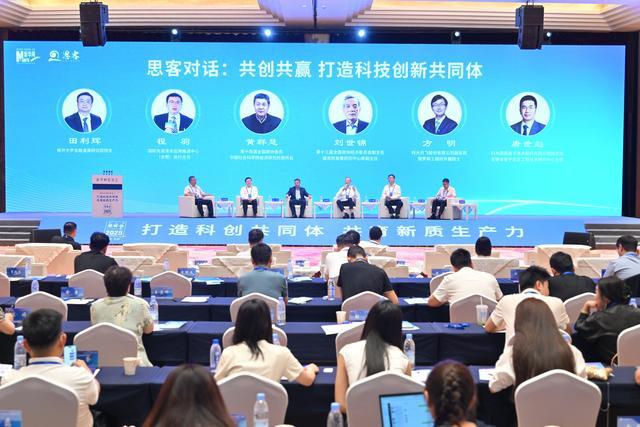
科创共同体与新质生产力有何关联?这场跨界对话有答案
Xin Hua Wang· 2025-07-25 14:14
Group 1 - The conference held in Hefei focused on building a collaborative innovation community to enhance new quality productivity [1][3] - Traditional industries, emerging industries, and future industries are essential for constructing a modern industrial system and developing new quality productivity [3][5] - The integration of new technologies with traditional industries presents significant potential for enhancing productivity, as highlighted by the example of iFlytek's application of large model technology [5][7] Group 2 - Artificial intelligence is transforming traditional industries, exemplified by AI applications in smart pig farming that improve efficiency and sustainability [7][9] - Quantum information technology is crucial for nurturing future industries and enhancing national strategic competitiveness, emphasizing the need for independent control over core technologies [9][12] - The shift in challenges for developing new quality productivity has moved from the supply side to the demand side, with a notable lack of effective demand from middle and low-income groups [9][12] Group 3 - The transition from "single innovation" to "cluster innovation" is necessary for achieving breakthroughs in productivity, as seen in the low-altitude economy [11][12] - A seamless connection within the industrial chain is vital for integrating technological and industrial innovation, which can enhance productivity [12][14] - Local governments play a crucial role in facilitating financing for quality innovation entities and bridging the gap between traditional industry needs and new technology applications [12][15] Group 4 - The rich innovation resources in Hefei have led to the emergence of leading technology companies like iFlytek and Guandun Quantum, creating a cluster advantage in AI and quantum technology [14][15] - In the context of global technological competition, China should balance open cooperation with self-reliance, particularly in critical technology sectors [15]
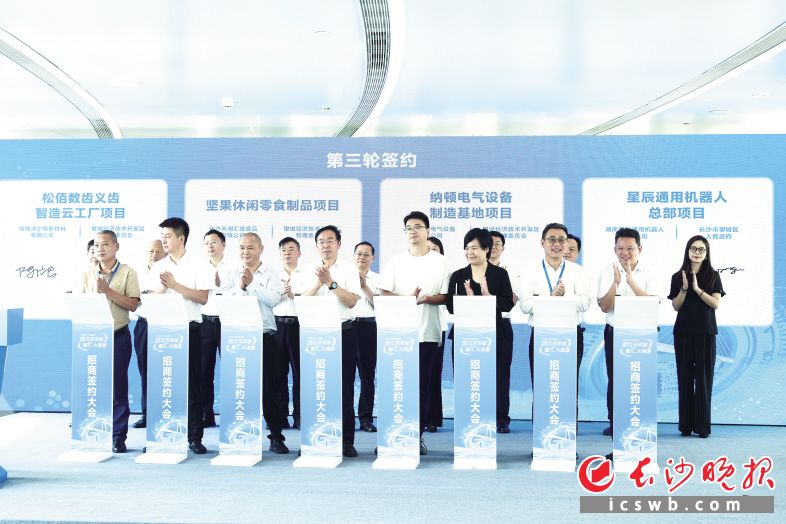
风起大泽湖畔 潮涌科创精尖
Chang Sha Wan Bao· 2025-07-25 00:14
Group 1 - The core event was the signing of 40 projects at the "Xiangjiang Future City Smart Dazeh Lake" investment conference, with a total investment amount of approximately 10 billion yuan [1][3] - The conference is part of a broader strategy to enhance economic development in Changsha, aligning with the "14th Five-Year Plan" and the upcoming "15th Five-Year Plan" [3][5] - The focus is on attracting high-tech and innovative enterprises to establish a presence in the region, with a commitment to fostering a modern industrial system [3][4] Group 2 - The projects signed include advanced manufacturing, quantum technology, and new materials, indicating a strong emphasis on high-tech industries [8][9] - Notable companies such as Starry General Robotics and Rui Lai New Energy are relocating or establishing headquarters in Wangcheng, highlighting the area's appeal for tech firms [7][8] - The Dazeh Lake base is positioned as a key hub for research and development, aiming to attract top talent and innovative companies [9][16] Group 3 - The investment strategy emphasizes a collaborative approach between government and market forces, moving away from traditional policy-driven incentives [9][10] - Wangcheng has established a market-oriented investment company to streamline the investment process and enhance service delivery for incoming businesses [10][11] - The region is also focusing on creating a supportive ecosystem for startups and innovation, including initiatives for university students and returning overseas talent [13][15] Group 4 - The local government aims to increase the number of high-tech enterprises and research institutions significantly by 2025, with specific targets set for new establishments [16][17] - The ecological environment of Dazeh Lake is highlighted as a key factor in attracting businesses and talent, contributing to a sustainable development model [15][16] - The overall vision is to transform Wangcheng into a leading center for technological innovation and high-quality economic growth [17]