
啤酒

Search documents
中国业绩大增,lululemon为何换帅?
2 1 Shi Ji Jing Ji Bao Dao· 2025-12-16 02:26
Core Viewpoint - Lululemon is undergoing significant changes, including the resignation of CEO Calvin McDonald, amid criticism regarding brand value erosion and declining stock performance [1][2]. Financial Performance - In the latest fiscal quarter ending November 2, 2025, Lululemon's net revenue in the Americas decreased by 2% to $1.7 billion, accounting for 68% of total revenue, with comparable sales down by 5% [3]. - Conversely, Lululemon's revenue in China grew by 46% to $465.4 million, representing 18% of total revenue, with comparable sales increasing by 24% (25% growth in constant dollars) [4]. - Other international markets saw a 19% increase in revenue to $367.2 million, making up 14% of total revenue, with comparable sales up by 9% [4]. Market Competition - The competitive landscape in China is challenging, with Li Ning experiencing a mid-single-digit decline in retail sales, while Nike's revenue in Greater China fell by 10% to approximately $1.512 billion [5]. - The potential impact of Lululemon's struggles in its home market on its performance in China is a point of concern [6]. Management and Strategy - Chip Wilson, the founder of Lululemon, expressed dissatisfaction with the board's support for McDonald, citing a 62.8% drop in LULU's stock value over the past two years and a lack of accountability for product innovation [2]. - Wilson emphasized the need for accelerated adjustments within the company to regain shareholder value [7].

万联晨会-20251216
Wanlian Securities· 2025-12-16 01:26
Core Insights - The report indicates a collective decline in the A-share market indices, with the Shanghai Composite Index down by 0.55%, the Shenzhen Component Index down by 1.1%, and the ChiNext Index down by 1.77% [1][6] - The total trading volume in the Shanghai and Shenzhen markets reached 1.773 trillion yuan [1][6] - The report highlights that the non-bank financial, retail, and agriculture sectors led the gains, while electronics, communications, and media sectors experienced the largest declines [1][6] Important News - An article by General Secretary Xi Jinping in "Qiushi" magazine emphasizes the strategic importance of expanding domestic demand for economic stability and security, advocating for a focus on consumption to drive economic growth [2][7] - China's economic performance for November shows a year-on-year industrial value-added growth of 4.8%, a service production index growth of 4.2%, and a retail sales growth of 1.3%. However, fixed asset investment decreased by 2.6% year-on-year, with real estate development investment down by 15.9% [2][7] Industry Analysis - The report discusses the recent National Medical Security Work Conference, which aims to optimize medical insurance payment mechanisms and support the development of innovative drugs, indicating a positive outlook for the pharmaceutical industry [8][9] - The National Healthcare Security Administration has added 949 new drugs to the medical insurance catalog, bringing the total to 3,253, and plans to implement a new payment scheme based on disease categories [9][10] - The report highlights the importance of commercial health insurance in creating a multi-tiered medical security system, with 19 innovative drugs included in the commercial health insurance catalog [10][11] - The report notes that the National Healthcare Security Administration will support the pharmaceutical industry's innovation and competition, including the implementation of national drug procurement and price registration systems [11]
啤酒行业更新点评:歪马送酒门店持续扩张,啤酒即时零售进程延续
Changjiang Securities· 2025-12-15 23:30
Investment Rating - The investment rating for the beer industry is "Positive" and is maintained [6]. Core Insights - As of December 12, 2025, Meituan's liquor instant retail platform "Yaimasongjiu" has surpassed 2,000 stores, serving nearly 30 million users, with a transaction volume exceeding 6 billion yuan, entering the top three liquor brands, indicating strong growth momentum [2][4]. - The instant retail platform leverages digitalization to better understand consumer preferences and trends, allowing beer companies that can quickly respond to market demands and create popular products to gain larger market shares in new channels [2][4]. Summary by Sections Industry Overview - The rapid expansion of the instant retail platform has prompted beer companies to increasingly engage in this sector. By early 2025, several beer brands have indicated their plans to enter the instant retail market [4]. - Qingdao Beer, for instance, has been strengthening its layout in instant retail and flash warehouse models, while China Resources Beer has collaborated with "Yaimasongjiu" to launch self-operated products [4]. Market Dynamics - The traditional beer sales channels are primarily focused on dining and distribution, where suppliers have more control. The open nature of instant retail platforms challenges these traditional barriers, presenting opportunities for the beer industry [4]. - Companies that can quickly adapt to market needs and create hit products are expected to thrive in this competitive landscape [4]. Recommended Companies - The report specifically recommends investing in Qingdao Beer, Yanjing Beer, China Resources Beer, and Chongqing Beer due to their strong positioning in the evolving market [2][4].




花了1亿元,还有3年“协议”,重庆啤酒把一颗“大雷”排掉了
Mei Ri Jing Ji Xin Wen· 2025-12-15 22:23
协议终止后不再续期 重庆啤酒与重庆嘉威啤酒有限公司(以下简称嘉威)的合同纠纷有望迎来终结。 12月15日晚间,重庆啤酒发布公告称,公司与嘉威拟在二审阶段达成调解,并签署《调解协议》,如顺 利达成调解,诉讼程序将以调解结案。 记者了解到,拟签署的《调解协议》包括:重庆啤酒或其子公司向嘉威一次性支付截至2025年12月31日 前的全部量价差结算款人民币1亿元(不含税);就重庆啤酒与嘉威2026年至2028年期间产品包销方面 的合作方式进行约定,以及约定嘉威分红等相关事宜。 支付1亿元了结旧账 长期悬而未决的重大诉讼,不仅是财务上的"定时炸弹",更是萦绕在管理层与投资者心头的不确定 性"阴云"。重庆啤酒与嘉威的这场合同纠纷,在2024年便已对公司业绩造成了实质性的显著拖累。 根据公司2025年3月的公告,针对一审判决,公司基于谨慎性原则计提了高达2.54亿元的预计负债,直 接导致公司2024年归母净利润同比下滑16.61%。 而此番达成调解,通过一揽子解决方案,有望从根本上移除这颗"巨雷"。 根据《调解协议》约定的会计处理,其核心是"冲回旧账,计提新债",重庆啤酒下属实施该包销业务的 控股子公司嘉士伯重庆啤酒有限公 ...
花了1亿元,还有3年“协议”,重庆啤酒把一颗“大雷”排掉了!
Mei Ri Jing Ji Xin Wen· 2025-12-15 16:25
每经记者|熊嘉楠 每经编辑|许绍航 肖芮冬 重庆啤酒与重庆嘉威啤酒有限公司(以下简称嘉威)的合同纠纷有望迎来终结。 12月15日晚间,重庆啤酒发布公告称,公司与嘉威拟在二审阶段达成调解,并签署《调解协议》,如顺利达成调解,诉讼程序将以调解结案。 记者了解到,拟签署的《调解协议》包括:重庆啤酒或其子公司向嘉威一次性支付截至2025年12月31日前的全部量价差结算款人民币1亿元(不含税); 就重庆啤酒与嘉威2026年至2028年期间产品包销方面的合作方式进行约定,以及约定嘉威分红等相关事宜。 支付1亿元了结旧账 协议终止后不再续期 据悉,双方合同纠纷源于2007年签署的《战略合作协议》、2009年签署的《产品包销框架协议》(以下简称《包销协议》)、2016年的《补充协议》《产 品包销备忘录》、2019年的《备忘录二》《备忘录三》及为履行该等协议和备忘录而签署和/或形成的所有会议纪要、会谈备忘等文件的履行而产生的争 议,包括双方在合作起源、合作关系定性、"山城"品牌使用期限、是否存在打压"山城"啤酒品牌等。 一纸《调解协议》的公布,标志着重庆啤酒与嘉威之间这场漫长的法律"拉锯战",并未走向二审的针锋相对,而是意外地 ...


明年冲刺IPO,今年逆势增长66%,解码辛巴赫“十年”向上答案
Sou Hu Cai Jing· 2025-12-15 16:05
Core Insights - The article highlights the emergence of Xinbah, a high-end craft beer brand in China, which has successfully navigated a challenging industry landscape to redefine the market and set a new price ceiling for craft beer [1][10]. Group 1: Industry Context - In 2015, the Chinese beer industry faced a significant downturn, with total production dropping to 47.16 million kiloliters, a year-on-year decrease of 5.06% [3]. - Despite the industry's decline, Xinbah was founded by two entrepreneurs with over 20 years of experience in the beverage distribution sector, who recognized a transformative shift in consumer preferences [3][5]. Group 2: Brand Development - Xinbah launched its first product in 2019 after three years of research and development, during which the team conducted over 400 experiments to perfect their brewing process [5][6]. - The brand's positioning as a high-end craft beer was solidified by using premium ingredients sourced globally, including French oak barrels and Belgian yeast [5][10]. Group 3: Strategic Innovation - Xinbah adopted a unique growth model by leveraging the "coexistence" logic from the high-end Chinese liquor market, targeting business dining and gifting scenarios, thus avoiding direct competition with traditional beer brands [7][9]. - The brand's consumer base includes over 82% of customers who also purchase premium liquors like Moutai and Wuliangye, validating its strategic positioning [9]. Group 4: Value Proposition - Xinbah emphasizes quality and craftsmanship, using 150-year-old French oak barrels for aging, which contributes to the complexity of flavors in its beers [10][12]. - The company aims to create positive value for consumers, partners, and the industry, exemplified by its "Qingyun Plan," which supports homebrewers and fosters innovation within the craft beer sector [12][13]. Group 5: Market Potential - The Chinese craft beer market has grown to over 80 billion yuan, with an annual growth rate of 30%, indicating significant potential for further expansion [15]. - Xinbah's journey from a niche player to a leading brand reflects the broader growth trajectory of the craft beer industry in China, which still has a low market penetration rate compared to international standards [15].
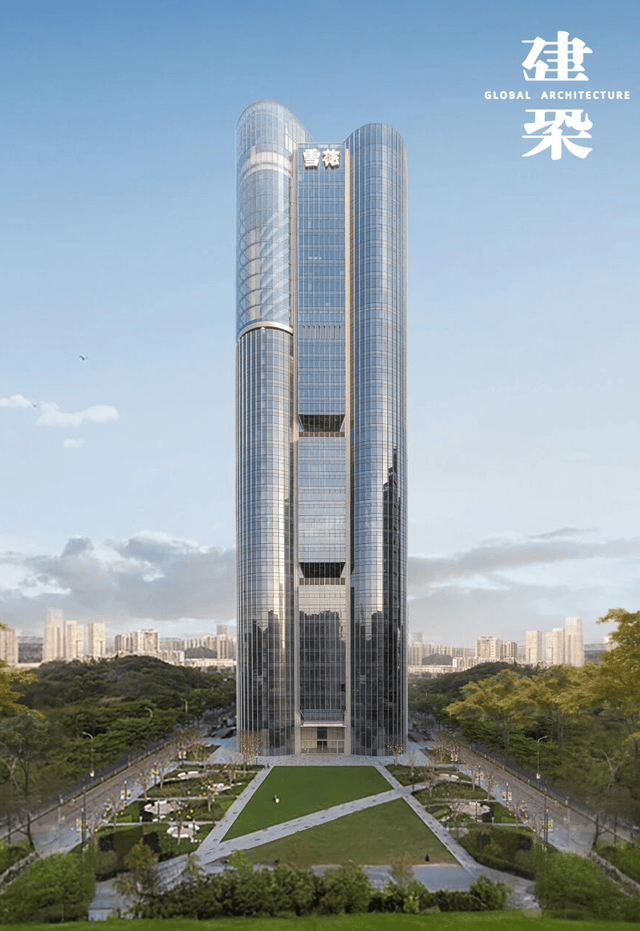
中国啤酒一哥的总部“搬家”深圳,新大楼形如啤酒罐!
Sou Hu Cai Jing· 2025-12-15 13:42
Core Viewpoint - China Resources Beer has officially relocated its headquarters from Beijing to Shenzhen, marking a strategic response to the Guangdong-Hong Kong-Macao Greater Bay Area initiative and reflecting the company's historical ties to the local beer market through its acquisition of the Shenzhen brand Kingway Beer in 2013 [2][4]. Group 1: Company Relocation and Strategy - The relocation of China Resources Beer to the Snow Beer Innovation City is a significant move, as it is the largest beer producer in China [4]. - The site of the new headquarters, formerly the Bao'an No. 2 Brewery of Kingway Beer, has a rich history of over a century in brewing [4]. - The transformation of the site into a comprehensive industrial complex with a total construction area of approximately 870,000 square meters is a collaborative effort between China Resources Land and China Resources Beer [4]. Group 2: Architectural and Cultural Aspects - The project, designed by Aedas, emphasizes "integration of production and city" and "industrial elevation," preserving industrial heritage while injecting modern vitality [6]. - The architectural design incorporates elements reminiscent of grain silos, with a striking 188-meter headquarters building that reflects the characteristics of beer cans through its three-block composition [9]. - The "Snow Beer Town" adjacent to the headquarters is designed as an open street area that creates an immersive beer culture atmosphere using light and materials [12]. Group 3: Investment and Future Vision - Over 10 billion yuan has been invested in this project, aiming to create a trillion-yuan industrial cluster and providing new ideas for advanced manufacturing development in high-density urban areas through the "industrial elevation" model [15]. - The evolution of this land from a former brewery to an innovation city symbolizes the city's legacy and advancement in industrial evolution [15].
惠泉啤酒:公司主营业务为生产销售啤酒
Zheng Quan Ri Bao Wang· 2025-12-15 13:15
Group 1 - The core business of the company is the production and sale of beer, which falls under the category of consumer goods [1] - The company is committed to tracking relevant policy opportunities, aligning with consumer demand, optimizing products and channels, and promoting business expansion [1] - The company aims to create performance returns for shareholders and contribute to society [1]

果味化、奶茶化、功能化,啤酒行业增长虽稳但竞争已入深水区
Di Yi Cai Jing· 2025-12-15 12:34
Core Insights - The beer industry is expected to maintain growth in 2025, driven by structural upgrades and flavor innovations, contrasting with the declining performance of the liquor and wine sectors [1][2] - High-end competition in the beer market is entering a new phase, focusing on quality and experience upgrades rather than just moving from low-end to high-end products [4] Industry Performance - From January to September, the beer sector is one of the few categories showing growth, while the domestic liquor and wine industries are experiencing declines in both production and sales [2] - The beer industry's revenue is projected to continue single-digit growth in 2025, with profits expected to grow in double digits [2] - Major brands like China Resources Beer, Tsingtao Brewery, and Yanjing Beer have reported revenue and net profit growth, primarily due to high-end product sales [3] Market Trends - The proportion of mid-to-high-end beer products has increased to over 40%, indicating a shift in consumer preferences towards premium offerings [2] - The entry of non-beer companies into the beer market is increasing, with various food and beverage firms announcing their foray into beer production, driven by the beer sector's growth amidst declines in other alcoholic beverages [3] Consumer Preferences - The younger generation (Z generation) is showing a higher participation rate in drinking, with 73% in 2025 compared to 66% in 2023, indicating a shift in drinking habits and preferences [6] - Young consumers prioritize taste, health, and aroma in their drinking choices, leading to a rise in low-alcohol, non-alcoholic, and functional beers [6] Innovation and New Products - The beer industry is witnessing rapid innovation in flavors, with fruit-flavored and tea-infused beers gaining popularity, reflecting a trend towards beverage-like characteristics [5] - The rise of instant retail channels is reshaping the beer market, allowing for quicker product development and consumer insights [7]
重庆啤酒与嘉威合同纠纷调解结案:一次性支付量价差结算款1亿元,包销协议2028年到期后不再合作
Cai Jing Wang· 2025-12-15 12:20
12月15日,重庆啤酒发布关于公司涉及诉讼进展暨拟签订《调解协议》的公告。当中披露,上市公司参 股公司嘉威就其与公司的合同纠纷,于2023年10月11日向重庆市第五中级人民法院(以下简称"重庆五 中院")提交《民事起诉状》。 上市公司于2023年12月5日收到重庆五中院下发的《民事起诉状》副本,本案案号为(2023)渝05民初 232号。公司已及时披露了涉诉信息。本案案件一审于2024年9月4日进行证据交换,公司当庭提交《民 事反诉状》。 公司于2025年3月13日收到一审判决后向重庆市高级人民法院(以下简称"重庆高院")提起上诉。2025 年4月17日,重庆高院受理该案(案号为:(2025)渝民终87号)。 在重庆高院的调解下,双方协商拟签订《调解协议》。《调解协议》已经公司第十一届董事会第六次会 议审议通过,尚需提交公司2025年第三次临时股东会审议。 公司将在取得股东会批准后签署该协议,以及为执行该协议,公司与嘉威、嘉士伯重庆啤酒有限公司、 重庆钰鑫实业集团有限公司将相应签署与《调解协议》主要内容一致的《调解框架协议》。如顺利达成 调解,则诉讼程序将以调解结案。 为彻底解决公司与嘉威本次诉讼涉及的合同纠 ...