房地产业

Search documents
第四季度中国企业信用指数保持稳中向好发展态势
Zhong Guo Xin Wen Wang· 2026-01-26 09:33
Group 1 - The core viewpoint of the article is that the China Enterprise Credit Index for the fourth quarter of 2025 shows a steady and positive development trend, with an index value of 162.18, indicating overall improvement in enterprise credit levels [1] - The fourth quarter index increased by 0.52 points compared to the third quarter, although it was 0.11 points lower than the second quarter, reflecting a long-term positive trend despite slight fluctuations [1] - In December, the enterprise credit index was recorded at 162.32, which is a decrease of 0.34 points from November [1] Group 2 - All industry credit indices experienced a quarter-on-quarter increase in the fourth quarter, with significant growth in the financial, real estate, and leasing and business services sectors [2] - The top five industries by credit index in the fourth quarter were financial services, education, electricity, heat, gas, and water production and supply, manufacturing, and water conservancy, environment, and public facilities management, indicating a solid foundation for continued improvement [2] - In December, there was a general pullback in industry credit indices, with the top five industries remaining the same as in the fourth quarter [2]
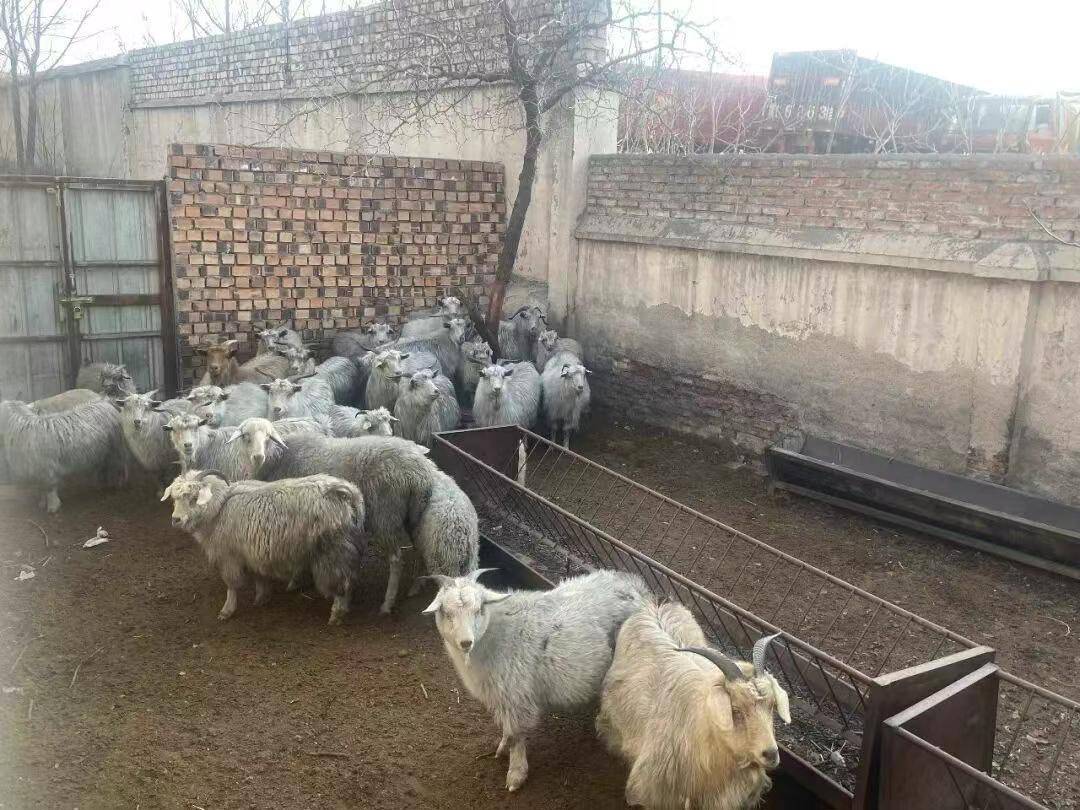
宁夏一房地产国企转让自养羊95只,平均每只挂牌价525元,当地一民政局曾公开转让82只养殖羊
Sou Hu Cai Jing· 2026-01-26 04:12
近日,宁夏科技资源与产权交易所发布了一则"转让95只羊"的项目公告,引发关注。 极目新闻记者 郭迩 该交易所由宁夏自治区政府批准设立,经宁夏国资委选定,并在上级单位备案的国有产权交易专业机构,依法组织企业国有产权、金融资产、行政事业单 位国有资产、涉诉国有资产和公共资源交易。 记者获悉,95只羊的转让方是宁夏德泓新能源科技有限公司。该公司一名职工称,此前国企合并时,一家公司向该公司移交了一些羊,该公司利用一片田 地饲养,经过繁育,目前共有95只羊,小羊多大羊少,其中还有刚出生的小羊羔。该公司是按照国有资产处置的正规流程,出让这批羊,公司不能私自处 理。例如,作为职工福利发放,或者自行宰杀食用,都是违规的,"私自处理一根羊毛都不行。"目前,已有多人联系看羊。 天眼查APP显示,宁夏德泓新能源科技有限公司成立于2012年,是一家以从事房地产业为主的企业,由宁夏德泓建设发展集团控股,该集团是平罗县财政 局实控的国企。 记者检索发现,该交易所在2022年还发布过关于"青铜峡民政局82只养殖羊"的转让公告,挂牌总价4.85564万元。上述石嘴山工作站工作人员向记者确认 了这一信息,并称该交易所还经办过转让牛的项目。 ( ...

上市公司数字化转型差距2010-2024年
Sou Hu Cai Jing· 2026-01-26 01:14
Group 1 - The core argument of the research is that digital transformation has shifted from being an optional strategy for companies to a necessary requirement for survival in the context of the expanding global digital economy [1][2] - The study identifies significant disparities in the digital transformation processes among companies of different sizes and industries, which not only restricts individual companies' competitiveness but also affects the overall upgrade of industries and the high-quality development of the digital economy [1][2] - The research provides precise guidance to address transformation challenges, helping companies reduce trial-and-error costs and transformation risks [1] Group 2 - The study highlights two major misconceptions in corporate digital transformation: large companies tend to blindly accumulate technology while neglecting organizational and business alignment, and small and medium-sized enterprises face resource constraints leading to a lack of capability or willingness to transform [1] - The research aims to address the uneven development of digitalization across industries and enhance the resilience of supply chains, emphasizing the need for synchronization in transformation between leading enterprises and their smaller partners [1][2] - The findings serve as empirical evidence for governments to formulate targeted support policies, promoting high-quality development in the digital economy [1][2] Group 3 - The methodology for analyzing the digital transformation gap (DIGGAP) involves extracting keywords from important national-level digital economy policy documents and calculating the frequency of these keywords in corporate annual reports [3] - The study defines leading companies in digital transformation as those in the top 10% of their industry, using their average transformation level to assess the gap for other companies [3]

每日债市速递 | 银行间市场资金面仍显紧平衡
Wind万得· 2026-01-25 22:43
海外方面,最新美国隔夜融资担保利率为3.63%。 (IMM) // 债市综述 // 1. 公开市场操作 央行公告称,1月23日以固定利率、数量招标方式开展了1250亿元7天期逆回购操作,操作利率1.40%,投标量1250亿元, 中标量1250亿元。Wind数据显示,当日867亿元逆回购到期,据此计算,单日净投放383亿元。当周实现净投放2295亿元。 Wind数据显示,1月26日至30日当周,央行公开市场将有11810亿元逆回购到期。此外,1月26日还将有2000亿元MLF到 期。 (*数据来源:Wind-央行动态PBOC) 2. 资金面 缴税影响尚未完全消除,银行间市场资金面仍显紧平衡,DR001加权平均利率降约2bp至1.39%附近。匿名点击(X-repo) 系统上,隔夜报价在1.42%附近,供给仍不稳;非银机构质押存单及信用债借入隔夜报价则在1.52%-1.55%一线。 6. 国债期货收盘 全国和主要股份制银行一年期同业存单最新成交在1.59%附近,较上日下行超1bp。 (*数据来源:Wind-国际货币资金情绪指数、资金综合屏) 3. 同业存单 (*数据来源:Wind-同业存单-发行结果) 4. 银行间 ...

上市公司管理者短视主义2005-2024年
Sou Hu Cai Jing· 2026-01-25 09:43
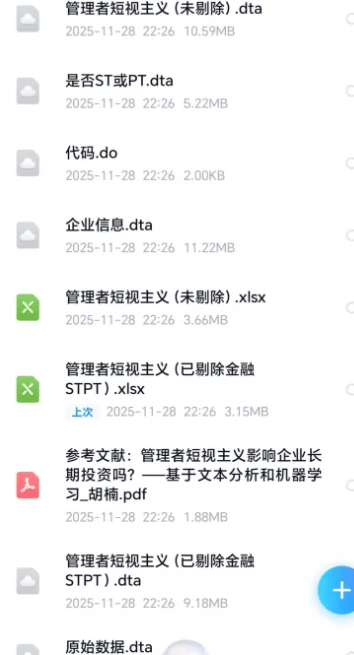
数据名称:2005-2024年管理者短视主义数据 时间:2005-2024年 (词频参考)管理者短视主义影响企业长期投资吗?——基于文本分析和机器学习_胡楠 下载: 包含原始数据、处理代码(stata)、最终结果 指标构建:基于上市公司年报文本进行文本分析和词频统计,将管理者短视主义关键词在年报 MDA 中 的词频占比*100作为衡量管理者短视主义的代理指标。首先整理上市公司年报,并通过Python 的 Java PDFbox 库提取所有文本内容,并进一步筛选出 MDA 部分,以此作为后续特征词筛选的数据基础。搜 集文本后,使用Python 中的jieba 分词将 MDA 部分进行分词处理,生成MDA 整体词频,最后提取管理 者短视主必关键词在年报-MIDA中的词频,计算管理者短视主义关键词在年报MDA 中的词频占比*100 即结果。 管理者短视关键词如下:严峻考验、之时、之际、关头、前夕、即刻、压力、双重压力、困 境、在即、天内、契机、尽快、年内、恰逢、数天、数月、日内、最晚、最迟、来临之际、正逢、立 刻、考验、适逢、通胀压力、遇止、随即、难度、马上。 参考文献: | Sheet1 | | | | | | ...
2026年宏观经济展望——全球经济再平衡|宏观经济
清华金融评论· 2026-01-25 09:20
Economic Outlook - The core viewpoint of the article emphasizes a recovery in prices and a stable GDP growth rate of around 5% for 2026, aligning with expectations. Inflation indicators are expected to gradually improve, leading to better corporate profits and household incomes. Overall, a trend of oscillating recovery is anticipated, with a key turning point expected in the second to third quarter when the comprehensive price level is projected to turn positive from negative [1][8]. GDP and Economic Growth - In 2025, China's GDP is expected to achieve a growth rate of 5%, with a similar outlook for 2026. Notably, the relationship between nominal GDP and real GDP is changing, with both showing a gradual recovery. A significant turning point is anticipated in the second to third quarter, where nominal GDP is expected to surpass real GDP, indicating a positive growth in overall inflation indicators [3]. Consumer Market - The "trade-in" policy for consumer goods has played a crucial role in supporting consumption. In 2025, the total retail sales of social consumer goods are projected to grow by approximately 3.7%, with categories related to the "trade-in" policy, such as communication equipment and home appliances, showing rapid growth. The policy's effects are expected to continue into 2026, with an expansion of coverage to include smart products and AI glasses [4]. Manufacturing Sector - The "14th Five-Year Plan" emphasizes maintaining a stable proportion of manufacturing in the economy. China's manufacturing sector is leading among major industrial countries, with improvements in quality and efficiency reflected in rising labor productivity. Emerging industries, including AI, big data, and biomedicine, are expected to drive future growth [4]. Real Estate Market - During the "14th Five-Year Plan" period, the focus in the real estate sector will be on inventory reduction. Although the inventory of unsold commercial housing has decreased, there remains a need for further de-stocking. Various policy tools have been prepared to support this, including central bank loans for affordable housing and special bonds for inventory reduction [5]. Infrastructure Investment - Debt reduction is crucial for infrastructure investment. The article categorizes provinces into "debt reduction" and "economic powerhouse" regions, noting that investment growth has been higher in economic powerhouse provinces. As debt reduction efforts progress, investment space in relevant provinces is expected to be released. New policy financial tools introduced recently are anticipated to positively impact infrastructure investment [6]. Export Performance - China's export growth has been unexpectedly strong, with a projected 5% increase in 2025 and a trade surplus of approximately $1 trillion. The resilience in exports is attributed to diversification and structural upgrades in the industry. The share of exports to the U.S. has decreased from nearly 20% to 11%, while exports to ASEAN countries have risen to 17% [7]. Monetary and Fiscal Policy - The fiscal policy for 2025 is described as very proactive, with a deficit rate of about 4% and an increase in special bond quotas. For 2026, fiscal policy is expected to remain expansive, focusing on structural optimization and potentially easing local financing restrictions [12]. Capital Market Trends - The domestic A-share market has shown an upward trend, particularly in the technology sector. The global capital markets have also experienced varying degrees of growth, with emerging markets performing notably well. The article suggests that these trends are likely to continue into 2026, driven by a weak dollar environment [14]. Currency and Gold Market - Since November 2025, the RMB has strengthened significantly, supported by a large trade surplus and increased demand for the currency. The article anticipates a continued moderate appreciation of the RMB in 2026. Additionally, gold prices have been rising, reflecting both its monetary and credit attributes, suggesting that gold will maintain its investment value in 2026 [15][16].

马云预言成真?手里有2套以上房子的家庭,可能要面临这4个问题
Sou Hu Cai Jing· 2026-01-24 12:49
Core Viewpoint - Recent claims about Jack Ma's predictions regarding real estate are deemed false, as he has not made such statements recently [1] Group 1: Real Estate Market Trends - Housing prices are experiencing a long-term downward trend, with a national average price drop exceeding 30%. Even major cities like Shanghai and Shenzhen are seeing declines, with Shanghai's central average price falling from over 90,000 yuan per square meter in 2021 to over 60,000 yuan now [3] - The decline in housing value is attributed to three main factors: significant price bubbles, stagnant income levels failing to support high prices, and the loss of speculative demand after four years of price drops [3][5] Group 2: Financial Pressure on Homeowners - Households with multiple properties are facing increasing mortgage pressures, as their incomes decline or they experience job losses while monthly mortgage payments remain relatively unchanged [5] - Rising costs associated with property ownership, such as maintenance fees and utilities, further exacerbate the financial burden on these households [5] Group 3: Challenges in Selling Properties - Selling properties has become increasingly difficult, with over 9.2 million second-hand homes listed nationwide by the end of 2025, indicating a lack of confidence in the housing market [7] - The rental market is also under pressure, with declining demand in lower-tier cities and high living costs in first- and second-tier cities leading to reduced rental income potential for homeowners [9]

把握中国房地产业的深刻转型
Jing Ji Ri Bao· 2026-01-22 21:59
回望2025年,我国房地产市场和房地产业在深度调整过程中面临一定压力,也在顶压前行中展现韧性。 我国着力促进房地产市场止跌回稳,房地产发展新动能正在转型中逐步形成。 市场呈现筑底调整 本轮房地产市场调整从2021年下半年开始,已经延续4年多时间。2025年,我国房地产市场呈现筑底调 整态势。房地产业是国民经济的重要产业和居民财富的重要来源。促进房地产市场平稳健康发展,关系 我国宏观经济稳定。 2025年,我国着力促进房地产市场止跌回稳,推动构建房地产发展新模式,坚定推动房地产高质量发 展。各地区、各部门形成合力,打赢保交房攻坚战,切实保障购房人合法权益,交付风险大幅度降低, 既保证了社会经济稳定,也为房地产后续发展奠定基础。各地落实好政策"组合拳",持续释放政策效 应,城市政府充分用好房地产调控自主权,调整优化房地产政策。有关部门统筹防风险和促转型,坚持 市场化、法治化原则,加强销售资金监管,推动地级及以上城市全部建立房地产融资协调机制,"白名 单"项目扩围增效。 2025年,我国房地产业统筹惠民生和稳增长。38个城市开展老旧住房自主更新、原拆原建,266个地级 及以上城市建立住房保障轮候库,以需定建、以需定 ...
楼市保卫战打响?央媒:房子是最大资产!2026房地产要下猛药?
Sou Hu Cai Jing· 2026-01-22 18:35
Core Viewpoint - The Chinese real estate market is undergoing significant changes in 2026, driven by government policies aimed at stabilizing housing prices and restoring consumer confidence in the face of declining market conditions [2][7]. Policy Measures - The government has introduced a series of unprecedented stimulus policies, including extending tax exemptions for home sales until the end of 2027 and reducing the down payment ratio for commercial properties from 50% to 30% [2][3]. - Local governments are also providing incentives, such as additional square meters for families with multiple children and subsidies to help with mortgage payments [3][5]. - The media's emphasis on housing as a major asset serves as a signal of the government's commitment to support the market [2]. Market Conditions - The real estate market is closely linked to overall consumer confidence, with the decline in housing values impacting spending in other sectors, such as luxury automobiles [5][7]. - National statistics indicate that new home prices in 70 major cities have been declining for 30 consecutive months, with second-hand home prices dropping for 31 months [8][10]. - The average price drop in first-tier cities has exceeded 35% from peak levels in 2021, with some areas experiencing declines of up to 40% [8]. Future Outlook - The expectation is that housing prices will continue to decline slowly, with a forecasted drop of 2-3% in 2026 for new homes nationwide [8][10]. - The market is expected to see a significant divide, where high-quality properties retain value while lower-quality properties face depreciation [10][11]. - The government is likely to continue implementing supportive policies, but the market dynamics have fundamentally shifted, requiring buyers to be more discerning [10][11].

稳预期,让企业和居民投资有利可图
Jing Ji Wang· 2026-01-22 08:03
Economic Performance - In 2025, China's GDP reached 140,187.9 billion yuan, marking a significant milestone as it surpassed 140 trillion yuan for the first time, with a growth rate of 5.0% compared to the previous year, aligning with market expectations and the annual growth target set at the beginning of the year [1][3] Growth Drivers - The primary drivers of economic growth were consumption and exports, with notable contributions from the improvement in manufacturing technology and the development of strategic emerging industries, reflecting a transformation in productivity [3][4] - The stock market showed a significant recovery, with the Shanghai Composite Index rising by 18% and the Shenzhen Component Index increasing by 30% in 2025 [4] Financing and Corporate Health - Social financing growth reversed its downward trend, increasing from 8.0% at the end of 2024 to 8.3% by the end of 2025, indicating a recovery in overall financing for enterprises, government, and households [4] - Non-financial corporate bank deposits saw a year-on-year growth rate rise from -2.2% in January 2025 to 3.6% by November 2025, suggesting improved cash flow conditions for enterprises [4] Challenges in Demand - Despite positive indicators, challenges remain, particularly the imbalance between strong supply and weak demand, which has become a major constraint on economic performance [6][7] - The decline in private investment and weak consumer sentiment, particularly in the housing market, have contributed to slower income growth and hindered consumption recovery [7][8] Policy Recommendations - To break the negative cycle of declining investment and consumption, it is crucial to improve expectations through policy guidance and institutional optimization, making investments and home purchases more attractive [8] - The focus of monetary policy in 2026 should be on achieving a clear inflation target of around 2%, with potential for further interest rate reductions to lower financing costs for the real economy [10][12]