汽车制造

Search documents
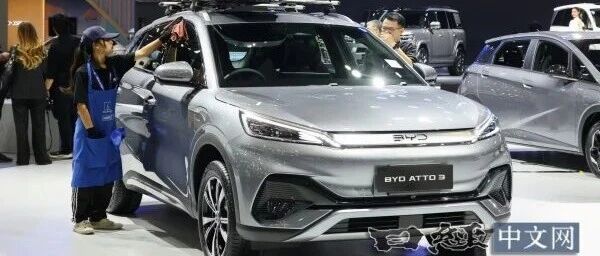
中国EV在泰国涨价,比亚迪最高涨3成
日经中文网· 2026-03-03 03:06
Core Viewpoint - Chinese electric vehicle (EV) manufacturers, including BYD, have raised prices in Thailand following the expiration of government subsidies, marking a shift away from aggressive price competition [2][5][7]. Group 1: Price Increases - BYD has increased the price of its popular electric SUV "ATTO3" by 21%, reaching 849,900 Thai Baht, and the standard version of the "Dolphin" hatchback by 33%, now priced at 599,900 Thai Baht [4][5]. - Other Chinese EV brands, such as MG, have also raised prices, with MG4 Electric increasing by 30,000 Thai Baht and Maxus 9 Plus by 50,000 Thai Baht [4]. Group 2: Market Context - The Thai government ended EV purchase subsidies, which previously provided up to 150,000 Thai Baht per vehicle, prompting manufacturers to adjust their pricing strategies [5][7]. - In 2025, EV sales in Thailand surged by 74% year-on-year, reaching a record high of 121,128 units, with EVs accounting for 24% of new car sales [5]. Group 3: Competitive Landscape - The price increases are seen as a way for Chinese manufacturers to move towards sustainable pricing after facing criticism for excessive discounting, which has distorted market prices [7]. - The market share of Chinese car manufacturers in Thailand has grown significantly, reaching 22% in 2025, up from just 4% in 2022, while Japanese manufacturers' share has decreased to 68% [7][8]. Group 4: Future Outlook - The demand for EVs may slow down, leading to intensified competition between Chinese and Japanese automakers, particularly as the market adjusts to the end of subsidies [8]. - 2026 is anticipated to be a pivotal year for EV demand in Thailand, with potential impacts on pricing and inventory affecting neighboring countries [8].


长城汽车后续展望
数说新能源· 2026-03-03 03:04
Group 1 - The core viewpoint of the article emphasizes the recovery of the domestic passenger car market and the expected growth in exports, particularly in the Middle East and Latin America [2] - In March, domestic passenger car sales are projected to gradually improve, with traditional commercial vehicle consumption peaking, and new models contributing to sales in April and May [2] - Inventory levels are reported at 1.5 months domestically and 2-3 months overseas, indicating a stable supply chain [2] Group 2 - The export market is expected to see significant contributions from regions such as Latin America, right-hand drive markets, and the Middle East, with Russia anticipated to account for one-third of exports [2] - Brand structure in February shows Haval at approximately 70%, with Tank and pickup trucks each contributing 10-15% [2] - The strategy for the EU market includes enhancing brand presence, establishing sales subsidiaries, and expanding the product range to include fuel and HEV models [2] Group 3 - The impact of raw material price increases is noted, with copper and aluminum comprising less than 5% of BOM costs, and strategies in place for cost management [3] - The cost increase per vehicle due to memory components is around 1,000 yuan, with a focus on supply assurance and cost transmission [3] - Battery supply chain dynamics are shifting, with Honeycomb's market share increasing from 40% to 70% [3] Group 4 - The company is enhancing its marketing efforts in the high-end market to strengthen consumer recognition of its intelligent driving capabilities [3] - Future products from Ora and Haval will focus on urban NOA functionality, indicating a push towards smart driving features [3] - The company is also expanding its intelligent driving technology into international markets [3]


斯柯达成为大众集团最大的纯电动车电池系统制造商
鑫椤锂电· 2026-03-03 02:54
关注公众号,点击公众号主页右上角" ··· ",设置星标 "⭐" ,关注 鑫椤锂电 资讯~ 通过全面外包CTP工艺并采用采用LFP(磷酸锂)化学标准化电池,斯柯达已实现了与现有MEB电池系统相比 30%的电池产品成本降低。 鑫椤报告预售: 本文来源:综合整理 ICC 鑫椤资讯年终盘点: 2025年碳酸锂市场盘点: 2025年电解液市场盘点: 2025年铜箔市场盘点: 2025年钴酸锂市场盘点: 2025年三元材料市场盘点: 2025年磷酸铁锂市场盘点: 2025年锰酸锂市场盘点: 2025年三元前驱体市场盘点: 2025年六氟磷酸锂市场盘点: 2025年磷酸铁市场盘点: 2025年添加剂VC市场盘点: 2025年钠离子电池市场盘点: 2025年新型锂盐LIFSI市场盘点: 2025年隔膜市场盘点: 2025年锂电池市场盘点: 2025年铝箔市场盘点: 2025年储能电池市场盘点: 2025年储能系统市场盘点: 2025年磷酸锰铁锂市场盘点: 2025年负极材料市场盘点: 据外媒消息, 斯柯达汽车 正式成为 大 众集团内最大的纯电动车电池系统制造商,此前其姆拉达博莱斯拉夫工 厂投资了2.05亿欧元扩大电池生产。 ...

中国汽车工业协会祝业界同仁元宵节快乐!
中汽协会数据· 2026-03-03 02:12
Core Viewpoint - The article emphasizes the growth and transformation of the Chinese automotive industry, highlighting its resilience and innovation in the face of challenges [1][4]. Group 1: Industry Overview - The Chinese automotive industry is experiencing significant growth, with a focus on electric vehicles (EVs) and sustainable practices [1]. - The industry is adapting to new technologies and consumer preferences, indicating a shift towards more environmentally friendly transportation solutions [2]. Group 2: Market Trends - There is a notable increase in the production and sales of electric vehicles, reflecting a broader trend towards electrification in the automotive sector [1]. - The market is witnessing a rise in competition among domestic and international players, driving innovation and improving product offerings [2]. Group 3: Future Outlook - The outlook for the Chinese automotive industry remains positive, with expectations of continued growth and expansion into global markets [1]. - Companies are encouraged to invest in research and development to stay competitive and meet evolving consumer demands [2].

交银国际每日晨报-20260303
BOCOM International· 2026-03-03 01:31
Automotive Industry - February car market performance was weak, with a focus on opportunities in the globalization and intelligence of new energy vehicles [1] - BYD's passenger car sales in February reached 187,782 units, down 41.0% year-on-year and 8.6% month-on-month, with exports increasing by 41.4% to 100,151 units, marking the first time overseas sales accounted for over 50% [1] - NIO delivered 20,797 new cars in February, up 57.6% year-on-year but down 23.5% month-on-month, with the new ES8 contributing 15,159 units, a 65.8% increase year-on-year [1] - Xpeng Motors delivered 15,256 new cars in February, down 49.9% year-on-year and 23.8% month-on-month, with plans to launch the second-generation VLA in March [1] - Li Auto delivered 26,421 new cars in February, with a slight increase of 0.6% year-on-year but a decrease of 4.5% month-on-month [1] - Xiaomi's car deliveries exceeded 20,000 units in February, remaining stable year-on-year but declining approximately 48.7% month-on-month [1] Market Outlook - With new consumer stimulus policies being implemented, the car market is expected to stabilize and recover in March 2026 [2] - Key investment themes include the progress of automakers in overseas commercialization and the construction of their underlying intelligent systems [2] - Recommended stocks include Xpeng Motors, which is launching new models and localizing production overseas, and BYD, which is entering a phase of increased overseas production capacity [2] Xinyi Solar - Xinyi Solar's performance was impacted by asset impairment, with a profit of 844 million yuan in 2025, a 16% year-on-year decline, primarily due to a fixed asset impairment provision of 2.32 billion yuan [3] - The price of photovoltaic glass has resumed a downward trend since November, leading the industry back into a loss state [3] - Due to slower-than-expected capacity clearance, profit forecasts for 2026 and 2027 have been reduced by 14% and 20% respectively, with the target price adjusted to HKD 3.67 [3]

比亚迪海外销量首超国内,百强房企拿地金额下降 | 财经日日评
吴晓波频道· 2026-03-03 00:30
Group 1: Real Estate Industry - The total land acquisition amount for the top 100 real estate companies in the first two months of 2026 was 95.04 billion yuan, with a year-on-year decline of 52.4% in February [2] - Despite the overall decline, the average premium rate for residential land in 300 cities was 11% in February, indicating continued competition for high-quality land in core cities [2] - The top three companies in terms of new value added were Yuexiu Property at 77 billion yuan, China Resources Land at 10.8 billion yuan, and Shijiazhuang Chengfa Investment Group at 6.7 billion yuan, with the top 10 companies accounting for 38.9% of the total new value added [2][3] - The real estate market is experiencing a clear differentiation, with a slow turnover rate in lower-tier cities leading to reduced land acquisition willingness among companies [2][3] Group 2: Automotive Industry - In February, BYD's overseas sales surpassed domestic sales for the first time, reaching 1 million units, a year-on-year increase of 41.4%, despite a 35.8% decline in total sales [4] - The overall automotive market saw a decline in sales due to the Chinese New Year holiday and a cooling market sentiment, with many companies adopting a conservative strategy [5] - The penetration rate of new energy vehicles is steadily increasing, but growth is slowing, making overseas markets crucial for domestic automakers [5] Group 3: Oil Market - Brent crude oil prices surged, reaching over $82 per barrel, with potential risks of rising to $120 due to escalating regional conflicts affecting oil transport through the Strait of Hormuz [6][7] - The Strait of Hormuz is critical for global oil transport, and any disruption could significantly impact oil supply and prices, leading to increased global inflation [6][7] Group 4: AI Industry - OpenAI announced a partnership with the Pentagon to deploy its AI models, which has sparked significant public backlash over concerns about the use of AI in military applications [8][9] - Alibaba has unified its AI branding under "Qwen," launching its first AI hardware product, the "Qwen AI Glasses," to streamline its AI offerings and enhance market presence [10][11] Group 5: Securities Industry - Dongwu Securities is planning to acquire control of Donghai Securities through a share issuance, reflecting ongoing consolidation trends in the domestic securities industry [12][13] - The new regulations on private fund information disclosure aim to enhance transparency and accountability, which may increase compliance costs for some firms [14][15]


广汽集团:首台飞行汽车将于3月下线
Bei Ke Cai Jing· 2026-03-02 14:05
Group 1 - The core point of the article is that GAC Group has launched its flying car brand, GOVY, which has begun production and is set to deliver its first vehicle by March [1] - GAC Group's flying cars include GOVY AirJet for medium to short-distance low-altitude travel and GOVY AirCab for urban or short-distance low-altitude travel, with the latter receiving nearly 2,000 customer orders and expected to obtain certification by the end of 2026 [1] Group 2 - In January and February, GAC Group's total sales reached 203,100 units, a year-on-year increase of 3% [2] - The overseas sales of GAC's self-owned brands reached 25,100 units, marking an 86% year-on-year growth [2] - Self-owned brands saw a cumulative sales increase of 43.25% year-on-year, with GAC Aion and GAC Trumpchi achieving sales growth rates of 48.69% and 39.92% respectively [2] - GAC Toyota and GAC Honda also reported sales growth, with GAC Toyota's sales increasing by 11.94% and GAC Honda's February sales showing a month-on-month growth of 102.3% [2] Group 3 - At the 2026 High-Quality Development Conference, GAC Group announced its commitment to three main tasks: stabilizing joint ventures, strengthening self-owned brands, and expanding its ecosystem, aiming to achieve significant performance improvements [3]

特斯拉,为何留不住高管?
36氪· 2026-03-02 13:50
Core Viewpoint - Tesla's recent launch of the Cybercab marks a significant step towards its ambitious "Robotaxi vision," which is crucial for the company's future valuation and growth [5][7]. Group 1: Cybercab Project and Management Changes - The Cybercab project is a major focus for Tesla this year, with efforts directed towards large-scale production and commercialization [8]. - The departure of Victor Nechita, the project manager for Cybercab, raises concerns about the project's future and highlights the ongoing trend of executive turnover at Tesla [9][11]. - Over the past two years, Tesla has experienced a significant loss of executives, including key figures from major projects like Cybertruck and Model Y, indicating a troubling trend in leadership stability [12]. Group 2: Reasons for Executive Turnover - The high-pressure work environment at Tesla, characterized by long hours and intense demands, contributes to the difficulty in retaining executives [15]. - Elon Musk's management style, which often involves direct intervention in projects, diminishes the authority and job satisfaction of executives, leading to a lack of security and fulfillment [16]. - Disparities in compensation, particularly the volatility of stock options, exacerbate the situation, creating a "high effort, low reward" scenario that drives executives to leave [17]. Group 3: Strategic Shifts and Future Implications - Tesla's strategic focus has shifted towards autonomous driving and AI, sidelining traditional automotive talent and causing anxiety among executives about their roles [19]. - The ongoing executive turnover reflects deeper issues within the company, including shifting goals and uncertainties about the future, which may impact morale and talent retention [20][21]. - Musk's dismissive attitude towards the departures suggests a potential underestimation of the impact these changes may have on the company's long-term success [23][28]. Group 4: Broader Industry Context - The current executive turnover at Tesla is seen as a significant challenge for the company, especially as it aims to compete in the AI sector, where team stability is crucial for success [26]. - While some fans believe that Musk's presence alone ensures the company's future, the frequent changes in leadership could pose risks to Tesla's operational effectiveness and strategic execution [28].


北奔重汽中标!
第一商用车网· 2026-03-02 13:38
Core Viewpoint - The company has successfully won a bid for an emergency special project, establishing a solid foundation for achieving its first-quarter performance goals and demonstrating its market competitiveness and brand influence in the emergency sector [1]. Group 1: Project Bid Success - The company's emergency team efficiently collaborated and meticulously planned during the bidding phase, deeply analyzing the core needs of the project and accurately identifying the suitability of vehicles and supporting equipment for the application scenarios [1]. - The proposal was refined across all dimensions, including equipment parameters, technical compatibility, and service assurance, ensuring the professionalism, practicality, and scenario matching of the configuration [1]. - The core proposal and equipment configuration received high recognition from the bidding party, allowing the company to stand out in a competitive bidding environment [1]. Group 2: Strategic Importance and Future Plans - Winning this project is a significant achievement for the company in deepening its engagement in the emergency rescue field and enhancing government-enterprise cooperation [1]. - The company aims to leverage this collaboration as an opportunity to strictly control product quality, service, and delivery, ensuring efficient project advancement and customer satisfaction [1]. - The company plans to continuously deepen its involvement in the emergency rescue sector, expand its market presence, and enhance service capabilities to inject strong momentum into its high-quality development and achieve annual performance targets [1].
玉柴商用车动力订单超4万台!
第一商用车网· 2026-03-02 13:38
春雷激荡,战鼓催征。2026开年以来,玉柴上下同心,奋力拼搏,在商用车市场一线捷报频传,为全年目标达成注入强劲动力。 牵引车市场多点开花。其中,玉柴YCK14N大马力燃气机批量配套东风柳汽牵引车交付北京、广西大客户。YCK16LN燃气机首次批量 投放市场,在北方区域热销。YC6K14FN王牌动力配套欧曼星翼燃气牵引车进军资源运输市场。黄金动力组合青岛解放JH6+YCK15N 即将焕新上市,为牵引车市场再添新动力。 截至目前,牵引车、工程车、载货车、专用车、客车等细分市场呈现"遍地开花"之势,累计接收订单超4万台,其中牵引车动力同比增 长42%,工程车动力同比增长44%,全面吹响了马年奋进的号角。 工程车市场王者归来。在福建,玉柴携手东风新疆与东风拓行签下百台渣土车订单,持续深化共赢格局。在西藏区域,搭载玉柴YCK13 发动机的东风柳汽重型自卸车实现批量入驻。同时,首台配套YCK14LN燃气机的东风柳汽重型自卸样车成功投放新疆市场,为2026年 产品的全面上量铺平道路。 载货车市场热度不减。产品端,玉柴联合东风柳汽、青岛解放打造搭载YCS05、YCS07L新品的高性价比标杆产品,凭借动力升级、油 耗优化、耐久性 ...