油气

Search documents
中国近两年在新核准核电项目中引入20家民企参股
Zhong Guo Xin Wen Wang· 2025-11-11 11:31
适应新型电力系统建设需要,中国还于去年底出台文件支持电力领域新型经营主体创新发展,鼓励民营 企业发展新型储能、充电设施、虚拟电厂、智能微电网等新业态新模式。 在降低投资成本方面,徐欣介绍,中国出台新一轮提升"获得电力"服务水平政策文件,将低压办电"零 投资"服务对象扩展至160千瓦及以下民营经济组织,预计未来五年可惠及民营企业约150万户,节省办 电投资约200亿元人民币。官方还修订有关政策压减许可等级,方便民营企业参与电力设施建设,该领 域民营企业数量占比已超85%。 (文章来源:中国新闻网) 中国国家能源局法制和体制改革司副司长徐欣11日在北京透露,官方支持民间资本参股核电项目,近两 年先后在新核准的核电项目中引入20家民营企业参股,2024年每个项目民资股比约为10%、2025年提高 至10%至20%。 国家发改委当天举行专题新闻发布会,介绍进一步促进民间投资发展有关情况。徐欣在会上谈及能源领 域为此打出的"组合拳"。 她提到,大渡河丹巴、金沙江波罗、奔子栏等水电站项目吸引优质民营企业参与投资取得重要进展;官 方支持民营企业投资油气上游和基础设施,在储气设施、油气管道支线及终端管道项目投资占比已超过 1 ...
国家能源局:近两年新核准核电项目中引入20家民企参股 民资股比有所提升
Xin Hua Cai Jing· 2025-11-11 09:52
Core Viewpoint - The National Energy Administration is actively promoting the participation of private enterprises in the energy sector, particularly in nuclear power projects, with a target of increasing private investment share to 10%-20% by 2025 [1][2]. Group 1: Investment Dynamics - In the past two years, 20 private enterprises have been introduced as shareholders in newly approved nuclear power projects, with private investment share expected to be around 10% in 2024 and increased to 10%-20% in 2025 [1]. - Significant progress has been made in attracting quality private enterprises to invest in hydropower projects such as Dadu River Danba, Jinsha River Boluo, and Benzilan [1]. - Private enterprises are also being supported to invest in oil and gas upstream and infrastructure, with their investment in gas storage facilities and oil and gas pipeline projects exceeding 10% [1]. Group 2: Innovative Investment Models - The private sector has played a crucial role in the rapid development of the renewable energy industry, with the number of private electricity sales companies reaching over 2,400, accounting for nearly 60% of the total [2]. - The number of oil and gas transporters has increased from 5 in 2019 to 1,005, with the share of resources transported by small and medium-sized transporters rising from 2.1% to 10.2% [2]. - Policies have been introduced to support the development of new business models in the energy sector, including new energy storage, charging facilities, virtual power plants, and smart microgrids [2]. Group 3: Optimizing Investment Environment - Efforts are being made to improve market order in the photovoltaic industry, addressing market interventions that restrict participation from private enterprises [2]. - A new policy has been introduced to enhance the "access to electricity" service level, expanding zero-investment services to private enterprises with a capacity of 160 kilowatts and below, potentially benefiting around 1.5 million private enterprises and saving approximately 20 billion yuan in investment costs over the next five years [3]. - The management measures for electrical facility licenses have been revised to lower entry barriers, with private enterprises now accounting for over 85% of the sector [3].
国家发展改革委:民间资本参与重点领域项目持股比例可在10%以上
Xin Hua Cai Jing· 2025-11-11 08:44
Core Viewpoint - The National Development and Reform Commission (NDRC) has introduced measures to encourage private investment in key sectors, allowing private capital to hold more than 10% in specific projects, signaling a strong push for private sector involvement in infrastructure development [1][2]. Summary by Relevant Sections Key Areas of Focus - The policy emphasizes participation in key sectors such as railways, nuclear power, hydropower, and oil and gas pipelines, which require national approval [1][2]. Profitability Considerations - The targeted projects are primarily foundational, public welfare, and long-term in nature, with some expected to yield returns, thus attracting private investment [2]. Special Feasibility Studies - There is a requirement for special feasibility studies to assess the viability of private capital participation in these key projects, which must be detailed in feasibility reports or project applications [2]. Practical Considerations - The policy acknowledges the diversity of projects and the varying willingness and capability of private enterprises, suggesting that the specific shareholding ratio should be determined based on actual project conditions and private sector interest [2]. Increased Shareholding Support - For projects that meet certain conditions, the shareholding ratio for private capital can exceed 10%, with examples indicating that some nuclear power projects have seen private participation rates as high as 20% [2]. Inclusive Support for Various Economic Entities - The NDRC aims to support all types of economic entities in project construction, promoting complementary advantages among different ownership structures for mutual development [3].
国家发改委:将推动细化民间资本参与项目建设的具体要求
Zhong Guo Xin Wen Wang· 2025-11-11 08:28
Core Viewpoint - The National Development and Reform Commission (NDRC) has introduced measures to encourage private capital participation in key sectors, allowing for a shareholding ratio of over 10% in certain projects [1][2]. Group 1: Key Areas of Focus - The policy specifically targets projects requiring national approval in sectors such as railways, nuclear power, hydropower, and oil and gas pipelines, emphasizing the importance of these areas [1]. - Projects in these sectors are primarily foundational, public welfare-oriented, and long-term, with some expected to yield certain returns, making them attractive for private investment [2]. Group 2: Implementation Requirements - There is a requirement for specialized feasibility studies to assess the viability of private capital participation in these key projects, which must be detailed in feasibility reports or project applications [2]. - The determination of specific shareholding ratios should consider the actual circumstances of each project, the willingness and capability of private enterprises, and relevant policy requirements [2]. Group 3: Future Directions - The NDRC plans to work with industry authorities and local governments to refine the specific requirements for private capital participation in project construction, ensuring effective policy implementation [3].
国家能源局:将进一步加大能源领域引入民间资本的政策供给
Zhong Guo Xin Wen Wang· 2025-11-11 08:28
Group 1 - The core viewpoint of the article is that the National Energy Administration has introduced a series of policies to support the development of the private economy in the energy sector, aiming to enhance private investment and participation in various energy projects [1][2][3] Group 2 - The first initiative focuses on releasing new investment momentum by allowing private capital to participate in nuclear power projects, with 20 private companies already involved in newly approved projects, and a target of 10% private capital share in 2024, increasing to 10%-20% in 2025 [1] - The second initiative emphasizes innovative investment models, highlighting the significant role of private enterprises in the rapid development of the renewable energy sector, with over 2,400 private electricity sales companies now accounting for nearly 60% of the total, and the number of oil and gas transporters increasing from 5 in 2019 to 1,005 [2] - The third initiative aims to optimize the investment environment by regulating market order, enhancing the service level for obtaining electricity, and reducing investment costs, with an estimated 200 billion yuan in savings for private enterprises over the next five years [3]
国家发改委:项目前期阶段就论证引入民间资本参与 为其提供更多参与机会
Zheng Quan Shi Bao Wang· 2025-11-11 07:27
Core Viewpoint - The National Development and Reform Commission (NDRC) has introduced measures to promote private investment in various sectors, emphasizing the need for early-stage feasibility studies to include private capital participation [1] Group 1: Policy Measures - The newly released measures require special feasibility studies for projects needing national approval, particularly in sectors like railways, nuclear power, hydropower, and oil and gas pipelines, to assess the viability of private capital involvement [1] - The measures encourage private capital participation and suggest determining specific equity ratios based on project specifics, private enterprise willingness, and relevant policy requirements [1] Group 2: Investment Opportunities - For eligible projects, private capital can hold more than 10% equity, with some nuclear power projects allowing private participation up to 20% [1] - The NDRC aims to foster collaboration among various ownership types to leverage their respective advantages and promote mutual development in key project areas [1]
COP30主席绷不住:对中国,美欧既要又要
Guan Cha Zhe Wang· 2025-11-11 03:25
Core Viewpoint - The article highlights China's significant role in the global clean energy transition, emphasizing that its advancements in renewable technology are beneficial for developing countries and the overall climate agenda, especially in the context of the COP30 conference in Brazil [1][5]. Group 1: China's Influence on Clean Energy - China has emerged as a clean technology superpower, significantly reducing the costs of clean energy, which allows developing countries to decrease fossil fuel imports and rely more on renewable energy [1][3]. - Since 2011, China's total investment in global manufacturing has exceeded $225 billion, with three-quarters of this investment flowing into "Global South" countries, surpassing the post-WWII Marshall Plan in inflation-adjusted terms [3][4]. - The shift in global climate action focus is evident, with developing countries like Brazil, India, and Vietnam rapidly expanding their solar and wind energy capacities, while poorer nations are skipping fossil fuel vehicles in favor of electric ones [4][5]. Group 2: Changing Global Dynamics - The article notes a transformation in the global economic landscape, where developing countries are now taking proactive steps in climate solutions, contrasting with the past when wealthier nations pressured them to reduce emissions without adequate support [4][5]. - The current market conditions for renewable energy are favorable, marking a turning point where political leadership is crucial for future climate initiatives [4][5]. - The absence of the U.S. at COP30, for the first time in 30 years, has positioned China at the center of negotiations, with its clean energy transition helping to maintain the integrity of the Paris Agreement [5].


干货满满,促进民间投资13条解读来了
21世纪经济报道· 2025-11-11 02:02
Core Viewpoint - The article discusses the release of the "Several Measures to Further Promote the Development of Private Investment," which includes 13 key support measures aimed at expanding market access, promoting fair competition, strengthening resource support, and optimizing investment and financing services for private enterprises [1][5]. Group 1: Expansion of Market Access - The measures aim to broaden the investment scope for private capital, including support for private enterprises to invest in major projects such as railways and nuclear power, as well as new urban infrastructure projects and emerging sectors like low-altitude economy and commercial aerospace [5][6]. - Special feasibility studies are required for private capital participation in projects needing national approval, ensuring that private investment can be effectively integrated into traditionally state-dominated sectors [6][7]. Group 2: Removal of Hidden Barriers - The measures focus on eliminating unreasonable entry restrictions for service industry operators and prohibiting the imposition of additional conditions on private enterprises in bidding processes [8][9]. - There is a commitment to protect the legal rights of private enterprises in network infrastructure operations, ensuring fair competition and reducing transaction costs for private firms [8][9]. Group 3: Increased Policy Support - A series of initiatives are outlined to support private enterprises, including leading national major technology research tasks, increasing government procurement support for small and medium-sized enterprises (SMEs), and facilitating the construction of major pilot platforms [11][12]. - The measures specify that for engineering procurement projects exceeding 4 million yuan, at least 40% of the budget should be reserved for SMEs, with encouragement for local governments to increase this proportion [12][13]. - The government plans to allocate 500 billion yuan in new policy financial tools to support important industry projects, with a significant portion directed towards private investment [13].

海南矿业股份有限公司关于2025年第三季度业绩说明会召开情况公告
Shang Hai Zheng Quan Bao· 2025-11-10 20:31
Core Viewpoint - The company held a Q3 2025 earnings presentation on November 10, 2025, to engage with investors and address their inquiries regarding the company's performance and future prospects [1][2]. Group 1: Company Operations and Strategic Initiatives - The company aims to leverage the historical opportunities presented by the Hainan Free Trade Port, utilizing tax incentives and cross-border financial innovations to enhance its operational framework [3]. - The company has received approval to operate as the fifth cross-border fund centralized operation center in Hainan, which will facilitate its global operations and financial transactions [3]. - The company is actively monitoring updates on the Free Trade Port policies to optimize cost reduction and investment opportunities [3]. Group 2: Production and Supply Chain Developments - The company's Bukuni lithium mine commenced trial production in Q1 2025, with a formal production ceremony held on November 3, 2025 [4]. - The first batch of 30,000 tons of lithium concentrate is expected to be shipped by the end of November 2025, arriving in Hainan in early 2026 to support the company's lithium salt processing project [4]. Group 3: Oil and Gas Business Model - The company operates its oil and gas exploration and development through partnerships with major state-owned and independent oil companies under a Product Sharing Contract (PSC) model [5]. - The pricing for crude oil sales is aligned with Brent crude prices, while natural gas sales are based on government benchmark prices, ensuring stable revenue streams [5]. Group 4: Product Development and Market Adaptation - The company is considering a technical upgrade for its lithium hydroxide project to enhance production flexibility, allowing for the production of either lithium hydroxide or lithium carbonate based on market conditions [6]. - The upgrade is expected to take approximately six months and will improve product quality and profit margins [6]. Group 5: Share Buyback Program - The company initiated a share buyback plan on March 15, 2025, with a minimum repurchase amount of 75 million yuan, aimed at enhancing shareholder returns and boosting investor confidence [6][7]. - The company will adjust the buyback price cap based on market conditions and will disclose any related arrangements in a timely manner [7].

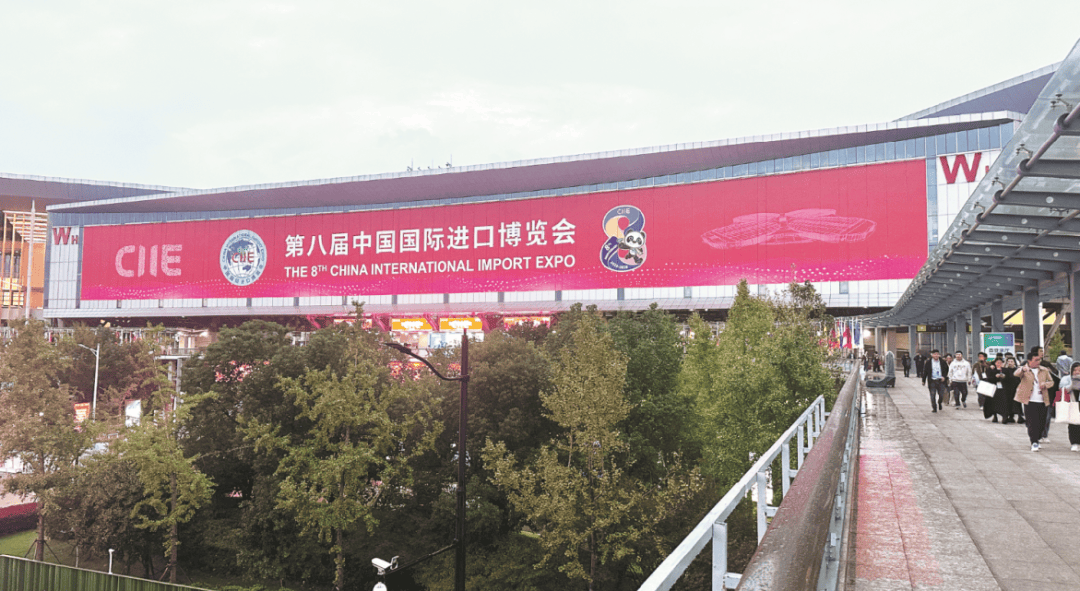
热点观察 | 共建公正、韧性、可持续的全球能源合作新范式
Sou Hu Cai Jing· 2025-11-10 17:52
Core Insights - The China International Import Expo (CIIE) has been held for eight consecutive years, promoting global cooperation and open development in the energy sector [1] - The China Petroleum International Cooperation Forum has also been held for eight years, serving as a crucial platform for energy cooperation and addressing global energy security and climate change [1][3] Forum Themes and Developments - The forum has evolved its themes over the years, focusing on high-quality development, international cooperation, and the impact of global events such as the COVID-19 pandemic [3][4] - The 2023 forum emphasized building a new paradigm for global energy cooperation, highlighting fairness, resilience, and sustainability as core principles [5][7] Key Proposals for Energy Cooperation - The forum's proposals include promoting bilateral and multilateral cooperation through the Belt and Road Initiative, enhancing energy technology innovation, and accelerating the transition to green and low-carbon energy [7][8] - There is a strong consensus among participants on the need for deepened trust and mutual benefits in energy cooperation to facilitate a green and low-carbon transition [7][8]