
乳制品

Search documents
美银看好中国消费股的三大理由:低基数、深度低估、“类可转债”防御
Hua Er Jie Jian Wen· 2026-01-06 12:07
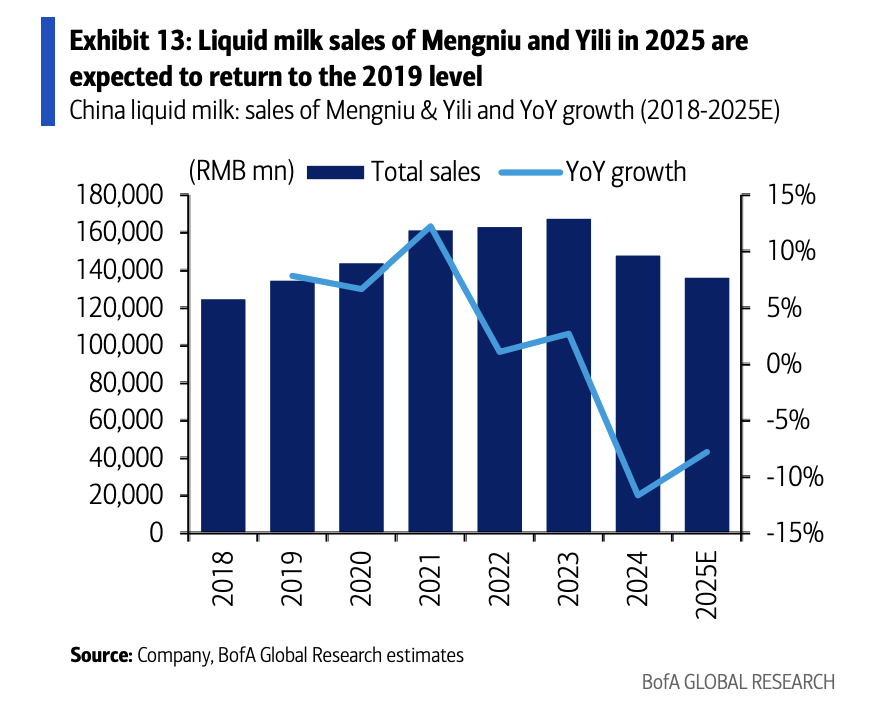
Group 1 - The core viewpoint of the report is that Bank of America Merrill Lynch is optimistic about the Chinese consumer sector, supported by three key changes: the low base effect opening a recovery window, valuations dropping to historical lows, and asset characteristics resembling "convertible bonds" [1] Group 2 - Reason 1: The low base effect is beginning to show, with several consumer segments, such as liquor and dairy, experiencing sales returning to levels seen a few years ago, providing a foundation for year-on-year performance recovery in 2026 [2][4] Group 3 - Reason 2: The valuation of the consumer sector has returned to historical lows, with the valuation of the consumer sector (Hong Kong stocks) dropping from 14.2 times to 12.7 times forward P/E, leading to the disappearance of the long-standing valuation premium relative to the MSCI China Index [5][11] Group 4 - Reason 3: The characteristics of "convertible bonds" provide defensiveness, as many leading consumer companies maintain strong net cash positions and cash flow generation capabilities, with increased dividend payout ratios and stock buybacks, offering effective downside protection for stock prices [12]

元气森林剥离乳品品牌“北海牧场”,后者将独立运营
Jin Rong Jie Zi Xun· 2026-01-06 09:28
Core Viewpoint - The ownership change of Beihai Pasture (Beijing) Dairy Co., Ltd. signifies the official separation of the "Beihai Pasture" brand from Yuanqi Forest Group, marking the beginning of its independent operational model [1] Group 1 - Yuanqi Forest announced at its 2025 distributor conference that it will divest the Beihai Pasture business to focus on the beverage sector [1] - The brand has established a specialized management team to promote its autonomous business development [1] - Beihai Pasture will continue to focus on low-temperature yogurt as its core business, enhancing product health attributes and increasing innovation efforts [1]
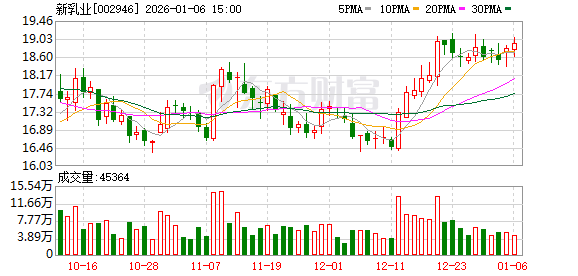
新乳业:截至2025年12月31日公司股东总户数为13119户
Zheng Quan Ri Bao· 2026-01-06 09:17
(文章来源:证券日报) 证券日报网讯 1月6日,新乳业在互动平台回答投资者提问时表示,截至2025年12月31日公司股东总户 数为13119户。 ...

新疆天润乳业股份有限公司关于2025年第四季度可转债转股结果暨股份变动公告
Zhong Guo Zheng Quan Bao - Zhong Zheng Wang· 2026-01-06 08:13
Core Viewpoint - The announcement details the conversion results of the convertible bonds issued by Xinjiang Tianrun Dairy Co., Ltd., highlighting the amount converted and the remaining unconverted bonds as of December 31, 2025 [2][5][6]. Group 1: Convertible Bond Issuance Overview - The company issued 9.9 million convertible bonds with a total value of 990 million yuan, each with a face value of 100 yuan, on October 24, 2024 [3]. - The bonds have a six-year term with a tiered interest rate starting at 0.30% in the first year and increasing to 2.00% in the sixth year [3]. - The bonds began trading on the Shanghai Stock Exchange on November 15, 2024, under the name "Tianrun Convertible Bonds" and code "110097" [3]. Group 2: Conversion Status - As of December 31, 2025, the total amount converted from "Tianrun Convertible Bonds" was 1,007,000 yuan, resulting in 121,590 shares, which is 0.0380% of the total shares issued before conversion [2][5]. - In the fourth quarter of 2025, the conversion amount was 9,000 yuan, leading to the creation of 1,094 shares [5]. - The remaining unconverted bonds amounted to 988,993,000 yuan, representing 99.8983% of the total issuance [6]. Group 3: Adjustment of Conversion Price - The conversion price was adjusted from 8.30 yuan per share to 8.28 yuan on June 27, 2025, due to the company's annual equity distribution [4]. - Following a change in the purpose of share repurchase and subsequent capital reduction, the conversion price was further adjusted to 8.21 yuan per share on August 19, 2025 [4].

熊猫乳品:部分募集资金投资项目延期
2 1 Shi Ji Jing Ji Bao Dao· 2026-01-06 07:56
Core Viewpoint - The company announced a net fundraising amount of 278 million yuan from its initial public offering, which will be allocated to various projects, including a concentrated dairy product production project and an optimization project for beverages and seasonings [1] Group 1: Fundraising and Project Allocation - The net amount raised from the IPO is 278 million yuan, designated for the "Cangnan annual production of 30,000 tons of concentrated dairy products project" and the "beverage and seasoning product optimization and upgrading project" [1] - The concentrated dairy product project will receive 187 million yuan, but due to significant subsidence of the factory building, the construction progress has been slower than expected, leading to a lawsuit with related parties and a postponement of the project's completion date to June 30, 2027 [1] - The beverage and seasoning optimization project is allocated 40 million yuan, but due to adjustments in the company's business layout, the project's progress has not met initial plans, resulting in a delay until January 31, 2027 [1] Group 2: Project Delays and Implications - The decision to delay some fundraising investment projects is based on a prudent assessment of actual implementation conditions, and it does not change the project implementation entities, the use of raised funds, or the investment scale [1] - There is no indication that the delays will adversely affect the company's normal operations or overall fundraising arrangements, aligning with the company's long-term development plans [1]
海通国际1月必选消费投资策略:建议短期跟随上涨 长期首选乳业
智通财经网· 2026-01-06 07:52
Core Viewpoint - The report from Haitong International indicates a rebound in investor risk appetite during the New Year period, with expectations for the consumer staples sector to follow suit, although the overall fundamentals lack catalysts [1] Demand - Among the eight key consumer sectors tracked in December, four showed positive growth while four experienced negative growth. The growing sectors included condiments, frozen foods, soft drinks, and dining, while the declining sectors included high-end and mid-range liquor, dairy products, and beer. Compared to the previous month, most sectors, except high-end liquor, saw improvements in year-on-year growth rates [2] Pricing - In December, the prices of most liquor products stabilized, with specific prices for various brands noted. For example, the price for Feitian liquor was 1600 yuan per box, down 50 yuan from the previous month and down 720 yuan year-on-year. The price for Wuliangye was 820 yuan, up 20 yuan from the previous month but down 100 yuan year-on-year [3] Cost - The cost index for six categories of consumer goods showed mixed results in December. The cost indices for soft drinks, instant noodles, condiments, dairy products, frozen foods, and beer changed by +1.06%, +0.49%, -0.29%, -0.45%, -0.54%, and -1.05% respectively. Prices for raw materials such as aluminum cans and paper saw significant year-on-year changes [4] Capital - As of the end of December, net inflows into Hong Kong Stock Connect amounted to 20.825 billion yuan, a decrease from the previous month's inflow. The market capitalization of the consumer staples sector accounted for 5.61% of the total, an increase of 0.2 percentage points from the previous month [5] Valuation - By the end of December, the historical PE ratio for A-share food and beverage sectors was at 16% (20.3x), a decrease of 5 percentage points from the previous month. The median valuation for leading food and beverage companies in A-shares remained stable at 22x [6]
2026食饮年度策略:消费者大时代
GOLDEN SUN SECURITIES· 2026-01-06 06:35
Group 1 - The report suggests that the liquor industry is expected to experience a dual improvement in supply and demand in 2026, following a risk release in 2025, with a focus on short-term sales recovery and mid-term structural and dividend considerations [4][78] - The consumer market is stabilizing, with structural growth changes continuing, as evidenced by a 4% decline in the food and beverage sector in 2025, which underperformed the Shanghai and Shenzhen 300 index by 20% [15][18] - The report highlights a significant differentiation in performance among consumer goods, with health products and frozen food sectors showing increases of 18% and 15% respectively, while liquor and beer sectors faced declines of 7% and 9% [15][18] Group 2 - The liquor sector is characterized by a threefold bottoming out, with supply clearing and value becoming more apparent, as major brands like Moutai and Wuliangye stabilize prices and restore confidence in the market [52][78] - The beer and beverage sectors are expected to benefit from a recovery in dining, with a focus on leading brands that can outperform expectations in terms of volume and price [4][52] - The food sector is positioned for recovery and growth, with a focus on strong alpha stocks, particularly in the restaurant supply chain and snack categories, as demand begins to rebound [4][52] Group 3 - The report indicates that the high-end consumer segment is showing signs of recovery, with luxury retail sales improving and experience-based consumption leading the way [30][33] - The report notes that the overall retail landscape is evolving towards discount retail, quality retail, and instant retail, reflecting a shift in consumer preferences [40][46] - The report emphasizes the importance of product innovation and channel development in the liquor industry, with a focus on lower alcohol content and appealing to younger consumers [72]





又一“刺客”倒下,背后公司曾一天亏300亿,市值蒸发90%
创业邦· 2026-01-06 04:28
Core Viewpoint - The high-end milk brand "Xietiandi" has experienced a significant price drop, indicating challenges in maintaining its premium positioning in a saturated market [5][12]. Brand Overview - "Xietiandi" was launched in November 2024 by "Yuexiu Huishan," which was formed after Guangzhou Yuexiu Group acquired Liaoning Huishan Dairy. The brand aims to replicate the success of "Telunsu," a premium product from Mengniu [5][14]. - The brand's marketing strategy included high-profile sponsorships of popular shows and a strong online presence, targeting rapid growth through e-commerce platforms [7][11]. Market Positioning - Initially, "Xietiandi" positioned itself as a high-end product with prices significantly above competitors, such as 128 yuan for its "Heitu Juan Shan Pure Milk," compared to around 50 yuan for similar products from established brands [9]. - The brand emphasized unique selling points like "global 1% Juan Shan cows" and high protein content, but these features were not exclusive, leading to challenges in differentiation [18][22]. Pricing Strategy - By late 2025, "Xietiandi" began to lower prices and introduce more affordable products, with its new "Heitu Organic Pure Milk" priced at 3.3 yuan per box, indicating a shift towards a volume-driven strategy [12][22]. Company Background - "Yuexiu Huishan" has a strong legacy, being the largest liquid milk producer in Northeast China before facing a major financial crisis in 2016. The company aims to achieve 10 billion yuan in revenue by 2025 [14][16]. - The current general manager, Bai Ying, has a history with Mengniu and is seen as a key player in the brand's strategy [16]. Challenges and Lessons - The rapid decline of "Xietiandi" highlights the difficulties new brands face in a saturated market, where established players dominate and consumer loyalty is hard to achieve [18][22]. - The experience serves as a cautionary tale for new brands, emphasizing that marketing alone cannot compensate for a lack of core product value and differentiation [22].

晨星:维持蒙牛乳业目标价20.5港元 料今年净利润反弹
Zhi Tong Cai Jing· 2026-01-06 03:53
Core Viewpoint - Morningstar maintains a fair value of HKD 20.5 per share for Mengniu Dairy (02319), indicating that the stock is currently undervalued with a projected price-to-earnings ratio of 10 times for 2026 [1] Group 1: Financial Projections - The company is expected to see a rebound in net profit by 2026, benefiting from limited downward pressure on raw milk prices and a recovery in liquid milk sales [1] - Liquid milk demand is projected to experience a moderate recovery in 2026, with sales expected to grow by 4% year-on-year [1] Group 2: Strategic Initiatives - The company plans to increase investments in deep-processed dairy products such as cheese, butter, and products for the food service channel [1] - These initiatives are anticipated to capture the increasingly diversified consumer demand in the long term [1]

晨星:维持蒙牛乳业(02319)目标价20.5港元 料今年净利润反弹
智通财经网· 2026-01-06 03:53
Core Viewpoint - Morningstar maintains a fair value of HKD 20.5 per share for Mengniu Dairy (02319), indicating that the stock is currently undervalued, with a projected price-to-earnings ratio of 10 times for 2026 [1] Group 1: Financial Projections - The company is expected to see a rebound in net profit by 2026, benefiting from limited downward space in raw milk prices and a recovery in liquid milk sales [1] - Liquid milk demand is projected to experience a moderate recovery in 2026, with sales expected to grow by 4% year-on-year [1] Group 2: Strategic Initiatives - The company plans to increase investments in deep-processed dairy products such as cheese, butter, and products for the food service channel [1] - These initiatives are anticipated to capture the increasingly diversified consumer demand in the long term [1]