家电

Search documents
康盛股份:预计2025年度净利润为1860万元~2540万元
Mei Ri Jing Ji Xin Wen· 2026-01-29 10:34
Core Viewpoint - The company expects to achieve a net profit attributable to shareholders of 18.6 million to 25.4 million yuan in 2025, marking a turnaround from a loss in the previous year [1] Financial Performance - The basic earnings per share are projected to be between 0.0164 yuan and 0.0224 yuan, compared to a loss of 0.0865 yuan per share in the same period last year [1] - The company experienced a significant reduction in asset impairment losses and credit impairment losses compared to the previous year, primarily due to a 130 million yuan provision for impairment of contract assets and other assets made in the prior year, with no new large impairment losses in the current reporting period [1] Business Segments - The traditional business showed steady growth, with the home appliance segment maintaining stable performance [1] - The new energy vehicle segment saw revenue growth after introducing strategic partners [1] - In new business areas, the liquid cooling and copper alloy segments are rapidly advancing, with steady revenue growth, although they have not yet achieved profitability, the losses have narrowed year-on-year [1]

江苏扬州:一场“扬味大集”燃动新春消费
Xin Lang Cai Jing· 2026-01-29 10:31
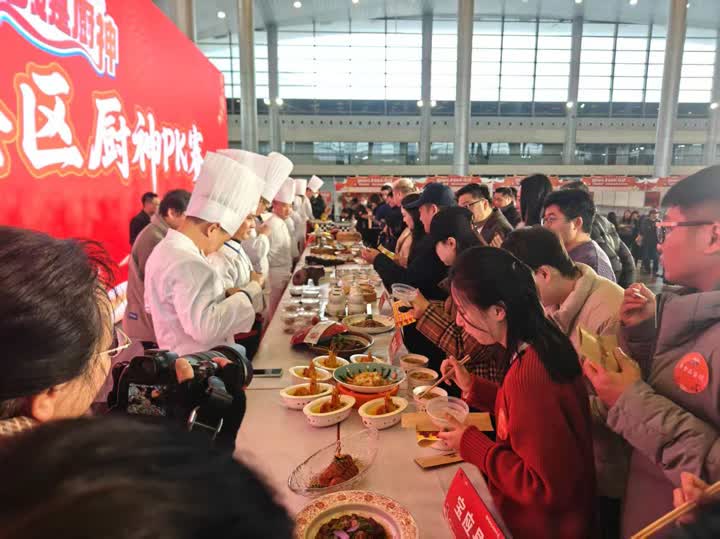
Core Insights - The "Yuegou Yangzhou · New Year Goods" promotional event successfully concluded, generating nearly 8 million yuan in sales over five days, significantly boosting consumer activity in Yangzhou during the Spring Festival [1][3][9] Group 1: Event Overview - The event featured nearly 160 merchants and over 2,000 unique products, creating a diverse shopping experience that included traditional goods, local delicacies, and cultural experiences [1][3] - The event was part of Yangzhou's broader "Come to Yangzhou · Celebrate the New Year · Prosperity" campaign aimed at enhancing consumer engagement during the festive season [1][9] Group 2: Sales Performance - The total sales during the event reached approximately 8 million yuan, with a notable increase in consumer participation and enthusiasm [3][9] - A significant highlight was the recharge area by Sinopec, which attracted over 1.8 million yuan in recharge transactions, showcasing the diverse spending habits of consumers [3] Group 3: Product Highlights - The event showcased a variety of local specialties, including Yangzhou's famous hairy crabs, geese, and various agricultural products, which were well-received by attendees [6][9] - Popular items included traditional snacks and innovative food products, with some brands reporting high sales volumes, such as over 500 chickens sold in a single day [3][6] Group 4: Consumer Engagement Strategies - The event integrated online and offline shopping experiences, with live streaming and promotional discounts enhancing consumer engagement [8][9] - Various promotional activities, such as trade-in subsidies for automobiles and home appliances, were implemented to encourage larger purchases [5][9] Group 5: Cultural Integration - The "I Am Chef" culinary competition featured 27 local delicacies, allowing consumers to experience Yangzhou's rich culinary heritage while shopping [9] - The event successfully combined traditional and modern elements, enriching the festive atmosphere and stimulating the local economy [9]

2025年陕西社会消费品零售总额同比增长6%
Shan Xi Ri Bao· 2026-01-29 07:35
Core Viewpoint - In 2025, Shaanxi's total retail sales of consumer goods reached 1,158.799 billion yuan, growing by 6.0% year-on-year, surpassing the national average growth rate by 2.3% [1] Consumer Market Performance - Retail sales from enterprises above designated size increased by 7.3% year-on-year [1] - The retail sales of goods amounted to 1,031.583 billion yuan, with a growth rate of 6.2%, while catering revenue reached 127.216 billion yuan, growing by 3.7% [1] - Urban retail sales were 1,027.654 billion yuan, growing by 6.0%, and rural retail sales were 131.145 billion yuan, with a year-on-year increase of 5.5% [1] Product Category Insights - Over 60% of product categories saw retail sales growth in 2025 [2] - Automotive retail sales grew by 5.8%, with new energy vehicles seeing a significant increase of 30.6%, accounting for 53.7% of automotive sales [2] - Home appliances and audio-visual equipment retail sales surged by 27.1%, while gold and jewelry sales increased by 19.2% [2] - Basic living goods showed stable growth, with food retail sales increasing by 12.4% [2] Online Sales Growth - Retail sales through public networks for enterprises above designated size grew by 22.9%, with online sales accounting for 23.0% of total retail sales [2] Private Sector Performance - Retail sales from private enterprises above designated size increased by 9.6%, contributing 5.6 percentage points to the overall retail sales growth [3] - The share of private enterprise retail sales in total retail sales for enterprises above designated size rose to 58.4% [3]
国盛证券:首予惠而浦“买入”评级,格兰仕赋能+惠而浦集团订单开拓
Jin Rong Jie· 2026-01-29 07:17
Group 1 - The core viewpoint of the report indicates that Whirlpool's development has been characterized by optimization of its equity structure, integration of brand resources, and iteration of product technology [1] - Significant changes in the equity structure and management occurred before and after Galanz took over, with Whirlpool Group being the core before the takeover and Galanz fully managing Whirlpool thereafter [1] - Starting from 2024, the company's revenue is expected to rebound significantly, with continuous release of profit elasticity [1] Group 2 - The company is expected to benefit from multiple factors including orders from Whirlpool Group, increased OEM releases from Japan and Southeast Asia, cost reduction and efficiency improvements post-Galanz takeover, and changes in competitive dynamics [1] - Future growth is anticipated, with projected net profit attributable to shareholders reaching 505 million, 616 million, and 743 million yuan for 2025-2027, representing year-on-year growth of 150.5%, 21.8%, and 20.7% respectively [1] - The report initiates coverage with a "buy" rating for the company [1]

事关消费品以旧换新,扩大市场准入和开放领域……商务部最新发布
中汽协会数据· 2026-01-29 07:04
Core Viewpoint - The article highlights the significant growth in China's consumer market, with a focus on retail sales, service consumption, and policies aimed at boosting domestic demand and international consumption [1][2][3]. Group 1: Retail Sales and Consumer Trends - The total retail sales of consumer goods in China exceeded 50 trillion yuan for the first time, reaching 50.1 trillion yuan, with a growth rate of 3.7%, contributing 52% to economic growth, an increase of 5 percentage points [1]. - The sales of products related to the "trade-in" program amounted to 2.61 trillion yuan, benefiting 366 million people, with significant growth in retail sales of home appliances (11%), communication equipment (20.9%), and furniture (14.6%) [2]. - The retail sales of services grew by 5.5%, with double-digit growth in sectors such as cultural and recreational services, tourism consulting, and transportation [3]. Group 2: Policy Initiatives and Market Development - The government is optimizing the "trade-in" policy to promote consumption of durable goods like automobiles and home appliances, and is implementing pilot reforms in automotive circulation to unleash consumption potential [5]. - There is a focus on cultivating new growth points in service consumption, enhancing supply levels in cultural entertainment, tourism, and healthcare, while also promoting new service consumption areas such as transportation and home services [6]. - The initiative to accelerate the development of international consumption center cities aims to create a more attractive consumption environment and new consumption scenarios for both domestic and international consumers [7]. Group 3: Foreign Investment and Trade - The government plans to expand market access and optimize foreign investment support policies, particularly in the service sector, to encourage foreign investment in areas like telecommunications, healthcare, and education [8][9]. - There is an emphasis on developing service trade and expanding inbound consumption through the establishment of a national service trade innovation development demonstration zone and promoting the export of professional services [10]. - The government is also supporting free trade zones to foster innovation in emerging industries and enhance the overall quality of service sector development [11]. Group 4: Digital Trade and Standards - The construction of a national digital trade demonstration zone is underway, along with the formulation of relevant standards to promote compatibility between domestic and international standards [12].
代表委员热议广货:如何在全球市场中更具竞争力
Sou Hu Cai Jing· 2026-01-29 06:26
Core Insights - The article discusses the transformation of "Guangdong goods" from merely exporting products to exporting capabilities, emphasizing the need for localization and resilience in supply chains to enhance global competitiveness [1]. Group 1: Localization and Market Adaptation - Companies are encouraged to fully embrace localization by forming market teams that understand local environments, consumer habits, and aesthetic preferences to ensure products are well-suited for their markets [4]. - The shift from "going out" to "integrating in" is highlighted, with companies establishing R&D centers in countries like the USA and Japan, and production bases in Indonesia and Brazil to align with local market needs [4][5]. Group 2: Supply Chain Resilience - A resilient global supply chain is essential for companies to mitigate trade risks and ensure stable and efficient global supply [5]. - Logistics companies are advised to develop integrated, digital, and intelligent global supply chain networks to support the export of Guangdong products [10][11]. Group 3: Technological Innovation - The integration of AI technology in traditional products, such as smart air conditioners, is seen as a way to enhance the appeal of Guangdong goods in the global market [4]. - The 3D printing industry is identified as a rapidly growing sector, with predictions that its market size will exceed 70 billion yuan by 2025, indicating strong export potential [14]. Group 4: Industry Diversification and New Markets - Companies are encouraged to diversify their product lines and explore emerging markets, such as the Middle East and South America, to adapt to changing global demands [24]. - The article notes the importance of monitoring new industry trends, such as electric vehicles and artificial intelligence, to stay competitive in international markets [24]. Group 5: Financial Support and Risk Management - The Guangdong government is increasing support for export credit insurance to help companies manage risks and enhance their competitiveness in global markets [32]. - Financial strategies should focus on integrating risk management and financing to bolster companies' capabilities in international trade [32].

李迅雷:如何提高“以旧换新”受益人口覆盖率 | 立方大家谈
Sou Hu Cai Jing· 2026-01-29 03:49
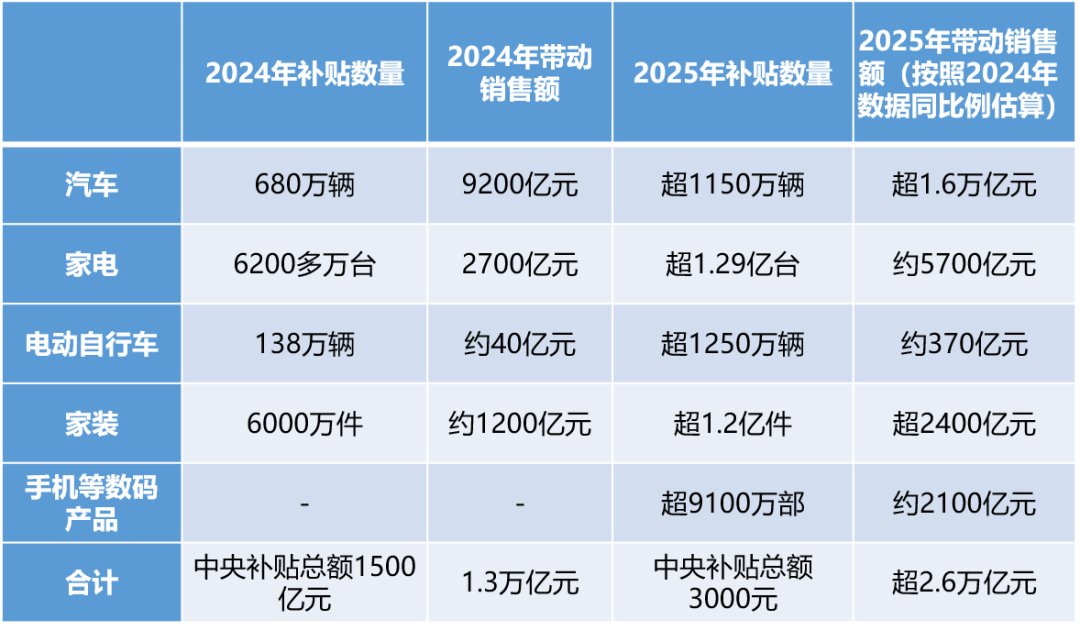
Core Viewpoint - The "old-for-new" policy for consumer goods, implemented from 2024 to 2025, is supported by a total of 450 billion yuan in long-term special government bond funding, aiming to stimulate consumer spending and boost retail sales, although its multiplier effect appears to be less than expected [1][2]. Group 1: Policy Implementation and Financial Support - The State Council issued measures in July 2024, allocating approximately 150 billion yuan in long-term special government bonds for the "old-for-new" policy, with an additional 300 billion yuan planned for 2025, expanding the range of eligible products from 8 to 12 categories [2]. - The estimated sales driven by the subsidies in 2024 and 2025 are projected to exceed 2.6 trillion yuan, with significant contributions from various sectors including automobiles and home appliances [3]. Group 2: Impact on Retail Sales - Retail sales growth for "old-for-new" related products showed an initial acceleration followed by a decline, with significant growth in categories like communication equipment and cultural office supplies, while automotive consumption lagged behind overall consumer spending [4][10]. - The first year after the policy implementation saw a 10% increase in sales for related categories, but the second year showed only a 2% increase, indicating a diminishing effect of the policy [7][10]. Group 3: Consumer Demographics and Coverage - The total number of beneficiaries from the "old-for-new" policy was only 480 million, with a notable drop to 80 million in the second half of 2025, suggesting limited reach among the broader population [25]. - The primary beneficiaries are higher-income groups, as the average price of eligible products, particularly automobiles, is high, limiting participation from lower-income consumers [25]. Group 4: Future Policy Adjustments - The 2026 policy adjustments include expanding the subsidy range to include smart glasses, standardizing subsidy amounts, and shifting from fixed to proportional subsidies for vehicle replacements, aiming to enhance fairness and effectiveness [24]. - To increase the coverage of the "old-for-new" policy, considerations include increasing funding, lowering average product prices, and focusing on job creation and income stability rather than solely on sales volume [26].
如何提高“以旧换新”受益人口覆盖率
李迅雷金融与投资· 2026-01-29 03:30
Core Viewpoint - The "old-for-new" policy for consumer goods, implemented from 2024 to 2025, is supported by a total of 450 billion yuan in long-term special government bond funds, with subsidies reaching over 480 million consumers. This policy is expected to drive sales exceeding 2.6 trillion yuan and contribute 0.6 percentage points to the growth of retail sales of consumer goods. However, the policy's multiplier effect appears to be less than expected, with a declining number of beneficiaries in the latter half of 2025 [1][2][29]. Group 1: Policy Implementation and Financial Support - The "old-for-new" policy has undergone a process of "introduction - strengthening - expansion," with the State Council allocating approximately 150 billion yuan in long-term special government bonds in July 2024 and 300 billion yuan in 2025 to support the initiative [2]. - The number of product categories eligible for subsidies increased from 8 to 12, including new subsidies for digital products like smartphones [2]. Group 2: Sales Impact and Trends - Retail sales growth for five major categories related to the "old-for-new" policy showed an initial acceleration followed by a decline, with significant growth in communication equipment and cultural office supplies, while home appliances and furniture saw negative monthly growth rates [4][14]. - The first full year after the policy's implementation saw a 10% increase in sales for related categories, significantly higher than the 3% growth in the year prior [8][11]. Group 3: Effectiveness and Challenges - The initial impact of the policy was strong, but the growth in retail sales is expected to weaken in the second year due to the nature of durable goods, where consumers may not replace items frequently [15]. - The expansion of eligible products is expected to support continued retail sales growth, particularly in categories like communication equipment and cultural office supplies [20]. Group 4: Automotive Sector Insights - The "old-for-new" subsidy for automobiles has had a limited effect on retail sales, as high vehicle prices and macroeconomic factors significantly influence consumer behavior [24]. - Despite a substantial number of vehicles benefiting from the subsidy, the overall impact on automotive retail sales remains modest compared to other categories [24]. Group 5: Environmental and Safety Benefits - The policy promotes green production and living practices, with significant energy savings and carbon emission reductions achieved through the promotion of low-carbon products and improved recycling systems [27]. - The initiative has also enhanced product safety, with a notable increase in the number of compliant electric bicycles being replaced [27]. Group 6: Future Considerations and Adjustments - The 2026 policy adjustments aim to increase the beneficiary population and improve subsidy effectiveness, including expanding the range of eligible products and standardizing subsidy amounts [28][29]. - There is a need to consider lowering the average price of subsidized products to enhance purchasing willingness among lower-income groups and to shift the focus of the policy towards job creation and income stability [30].
AI应用侧进展及新兴家电智能化前景
2026-01-29 02:43
Summary of Key Points from Conference Call Industry Overview - The conference call discusses advancements in AI applications, particularly in the smart home appliance sector, and the implications for various companies involved in this space [1][2][4]. Core Insights and Arguments - **AI Application Progress**: Significant advancements in AI applications are expected by 2026, with a shift from intellectual pursuits to practical applications. Model upgrades will enhance environmental interactions and application capabilities across various scenarios [2][3]. - **Multimodal Technology**: The average benchmark score for multimodal applications is currently 40, with expectations to reach 80, which will further open up visual-related scenarios [2][6]. - **Hardware Evolution**: In the AI era, hardware is transitioning from data transporters to data producers, making soft-hard integration applications crucial. Companies that can capture data production sources will have a competitive advantage [4][5]. - **Collaboration Preferences**: Large model enterprises prefer to collaborate with companies that can record diverse data, such as those producing AI glasses or smart recording devices, and those with integrated software and hardware capabilities [5][11]. - **Smart Home Appliances**: Major appliance manufacturers like Midea and Haier are integrating AI to enhance user experience and safety, with innovations leading to increased product value and market competitiveness [8][9]. Additional Important Insights - **Emerging Product Categories**: New product categories, such as AI headphones and robotic devices, are gaining traction, driven by advancements in AI technology and multimodal capabilities [9][11]. - **Investment Opportunities**: Current market conditions present a favorable environment for investors, particularly in companies like Anker and 9号, which have low valuations (around 16-17 times) and strong growth potential (over 20% growth rate expected) [12][14]. - **Long-term Growth Potential**: The integration of AI applications is expected to significantly enhance product functionalities and market appeal, providing substantial opportunities for companies to innovate and capture market share [10][13][14]. Conclusion - The conference highlights the transformative impact of AI on the smart appliance industry, emphasizing the importance of innovation, collaboration, and investment in emerging technologies and products. Companies that adapt to these changes are likely to thrive in the evolving market landscape [1][2][9][14].
数读中国开局新活力|1600余场活动持续发力 “三新”点燃新春消费热潮
Yang Guang Wang· 2026-01-29 02:12
Core Viewpoint - The consumption market in Hubei is experiencing a vibrant surge ahead of the 2026 Spring Festival, driven by various promotional activities and innovative consumption scenarios [4][12]. Group 1: New Consumption Scenarios - The integration of technology into consumption experiences is a significant highlight, exemplified by the popularity of the humanoid robot store in Optics Valley, which has attracted 18,000 visitors and generated sales of approximately 615,000 yuan within two months [6][9]. - The Zhiyin Pavilion, a new landmark combining historical culture with modern tourism, has drawn many visitors for its unique scenic views and immersive experiences [9][11]. - The "Guqin No. 1" cruise, featuring traditional cultural elements, has become a popular new spring project, merging traditional food culture with modern commercial forms [11]. Group 2: Consumer Incentives and Promotions - The launch of a home appliance and digital product trade-in program in Hubei has seen participation from 743 home appliance companies and 278 digital product companies, offering discounts up to 50% through various subsidies [12][14]. - The "Happy Shopping Hubei" campaign includes a 100 million yuan consumer gift package and various local incentives, such as automotive and dining vouchers, enhancing consumer engagement [14][16]. Group 3: Emerging Consumption Trends - Ice sports have emerged as a dynamic growth point in consumption, with activities and discounts attracting families to participate in winter sports [17][19]. - The Wuhan SKP shopping center has become a hub for high-end consumption, featuring over 400 brands making their debut in Central China, with daily foot traffic exceeding 50,000 [19][21]. - The integration of online and offline shopping experiences, including live-streaming sales and local markets, has contributed to a lively consumer atmosphere across Hubei [21].