证券业

Search documents
数智科技为金融高质量发展注入新动能
Jin Rong Shi Bao· 2025-10-13 02:07
Core Insights - The article emphasizes the necessity for China's financial system to transition from a scale-oriented model to one focused on efficiency, driven by the need for high-quality economic development [4][5][6]. Group 1: Evolution of Production Factors - The shift from traditional production factors (land, labor, capital) to the recognition of data as a fifth production factor highlights the changing landscape of economic growth in the digital age [2][3]. - Data is now seen as a core element driving productivity leaps, surpassing traditional information [2]. Group 2: Role of AI and Digital Technology - The rapid advancement of AI, particularly large model technologies, is transforming financial services by enhancing decision-making and operational efficiency [3][9]. - AI systems are replacing or augmenting human capabilities in information processing and predictive analysis, acting as a new engine for productivity transformation [3][9]. Group 3: Financial Development Goals - The financial sector must prioritize efficiency over mere scale to avoid systemic risks and improve resource allocation, especially for small and innovative enterprises [4][5]. - Enhancing capital allocation efficiency is crucial for the financial system to effectively support entities with high innovation potential and market prospects [5][6]. Group 4: Implementation of Smart Technology - Utilizing big data technology can significantly reduce information asymmetry and enhance transparency within the financial system [7][8]. - AI applications are driving financial services towards greater automation and personalization, improving service quality and efficiency [8][9]. Group 5: Strategic Recommendations for Financial Innovation - China should adopt a top-level design approach to integrate smart finance into national financial development strategies, focusing on long-term planning and cross-departmental coordination [10][11]. - Strengthening digital infrastructure and core technology research is essential for overcoming key technological challenges and fostering innovation [11][12]. - Establishing a regulatory framework that balances innovation and risk management is vital for the sustainable development of smart finance [12].
IMF警告美股泡沫及潜在的崩盘风险,投资者正加速离开美国
Huan Qiu Wang· 2025-10-13 01:08
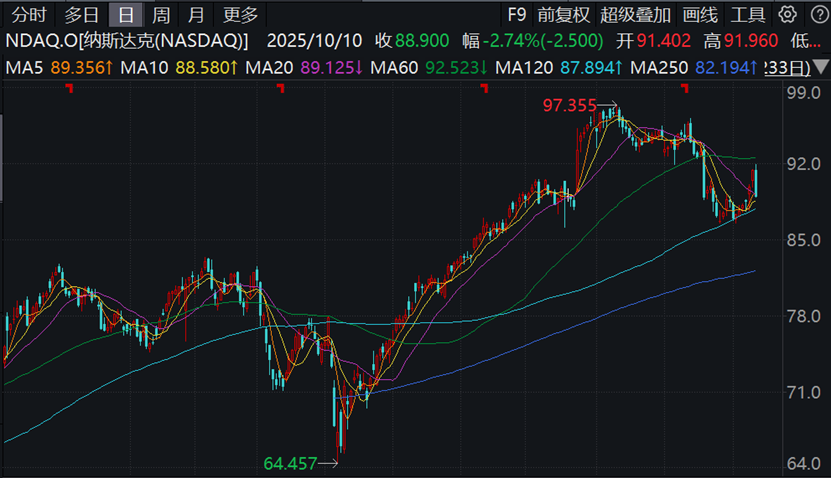
Group 1 - The U.S. stock market is experiencing heightened concerns about a potential downturn after reaching historical highs, with many market participants fearing the end of the bullish trend. However, some investors believe that external factors are unlikely to significantly alter market dynamics, as artificial intelligence remains a dominant influence [1] - Global central bank leaders will focus on stock market bubbles and potential crash risks during the IMF and World Bank's autumn meetings. IMF President Kristalina Georgieva warned that current asset valuations are nearing levels seen during the internet bubble 25 years ago, and a significant market correction could negatively impact the global economy. The Federal Reserve, European Central Bank, and Bank of England have all expressed concerns about overvaluation and the risks of a market pullback [3] - Moody's latest warning indicates that approximately 22 U.S. states are either in recession or on the brink of one. If economic weakness spreads from smaller manufacturing-focused states to larger states like California or New York, the U.S. economy could face an overall recession [3] Group 2 - Investors in global stock markets are accelerating the shift of funds from the U.S. to other regions to diversify risks and achieve portfolio diversification. Data shows that over the past month, more than $175 billion flowed into global stock funds and ETFs excluding U.S. stocks, while funds including U.S. stocks attracted only about $100 billion. As of the end of September, inflows into European stock ETFs reached a record $71 billion [3]

白银暴涨75%,散户为何总在接盘?
Sou Hu Cai Jing· 2025-10-12 15:58
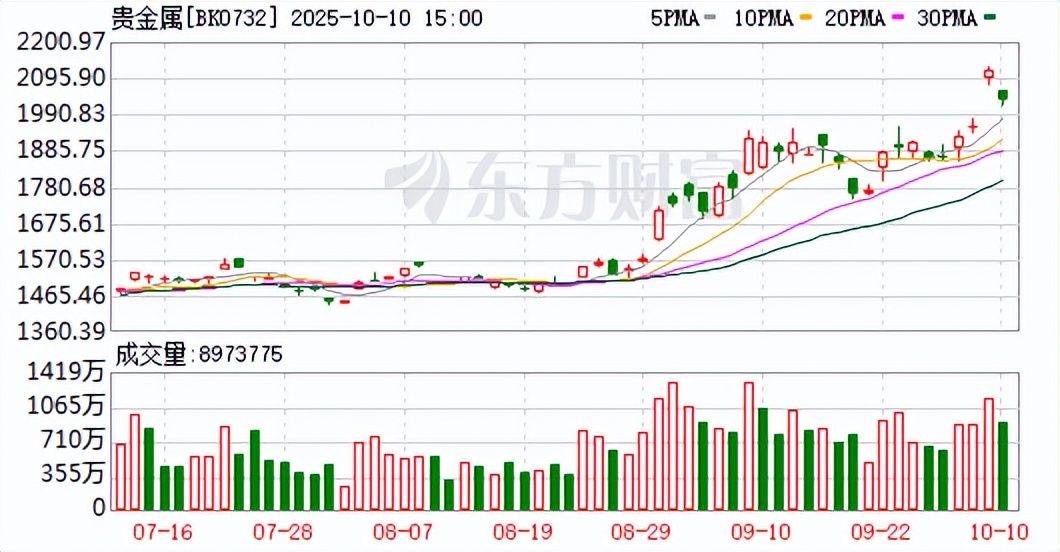
Core Insights - Recent surge in precious metal prices, with gold surpassing $3993 per ounce and silver reaching $50.67, reflecting significant year-to-date increases of over 50% and 75% respectively [1][3] - Market dynamics are influenced by factors such as risk aversion, Federal Reserve rate cut expectations, and central bank gold purchases, but the real opportunities often arise before consensus is reached [3][10] Market Behavior Analysis - Market trading behavior is complex, with different phases indicating various investor actions: bullish dominance, profit-taking, bearish dominance, and short covering [5] - Historical data shows that significant price movements can occur even when positive news is announced, as seen in a silver mining stock that dropped 15% despite a positive discovery announcement due to prior profit-taking [7][9] Current Precious Metals Market - The increase in silver ETF holdings by 1000 tons this year does not necessarily indicate retail investor buying, as commercial short positions are at historical lows, suggesting miners and refiners are reducing hedging [10][12] - The recent gold market surge is driven by more than just risk aversion; a multi-dimensional analysis reveals deeper insights into market behavior and potential pitfalls for investors [10][12] Investment Principles - Three key investment principles are highlighted: the need for data-driven decision-making, understanding market discrepancies, and the importance of dynamic tracking of market momentum [12][13] - The current precious metals market resembles past trends where early identification of industry turning points led to significant profits, emphasizing the importance of information processing capabilities in investment strategies [11][12]
78家机构入场,集中债券借贷业务上线
Zhong Guo Ji Jin Bao· 2025-10-12 10:58
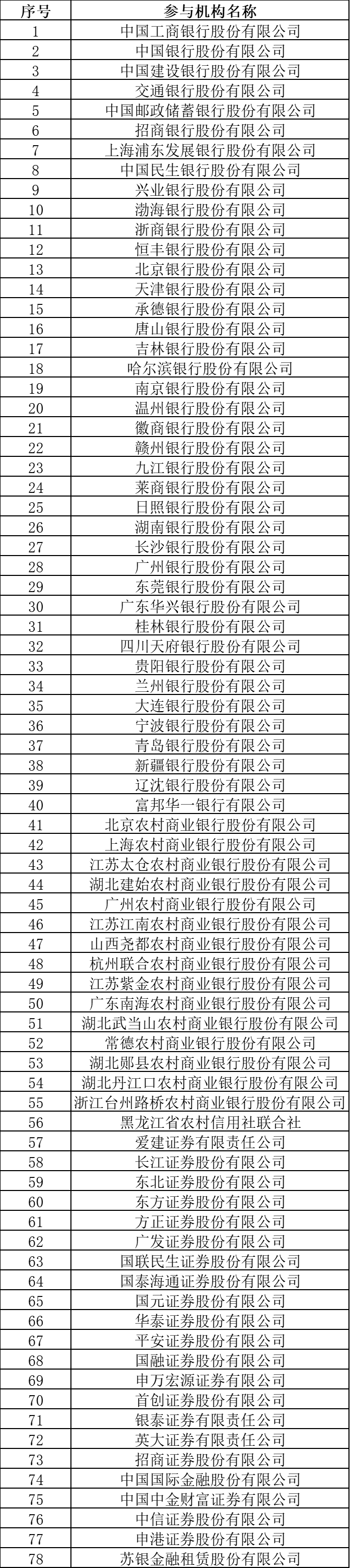
Core Viewpoint - The Central Securities Depository and the Interbank Lending Center have jointly launched a centralized bond lending business to enhance market liquidity and efficiency in the interbank bond market [1][6]. Group 1: Business Launch Details - The centralized bond lending business was launched on October 10, with 78 institutions participating in the initial phase, including major state-owned banks, joint-stock banks, city commercial banks, foreign banks, rural commercial banks, and securities companies [1][5]. - The first day of operation saw the bond pool scale exceed 1.3 trillion yuan, covering various types of bonds such as government bonds, local government bonds, policy bank bonds, and corporate bonds [5][6]. Group 2: Participant Institutions - The initial participants include five major state-owned banks, seven joint-stock banks, 27 city commercial banks, one foreign bank, 15 rural commercial banks, and 21 securities companies [1][2][3][4]. Group 3: Operational Mechanism - The centralized bond lending service allows lenders to set parameters and specify available bonds for lending, creating a bond pool. Borrowers can initiate lending requests through the interbank lending platform when they face shortfalls on settlement days [6][7]. - The lending period is set between one to three days, with rates based on historical transaction fees adjusted for extreme data [6][7]. Group 4: Market Impact - This innovation is expected to mitigate settlement risks, enhance market functionality, improve trading efficiency, and significantly reduce negotiation costs for bond lending [7][8].



流动性与同业存单跟踪:10月初票据利率快速下行
ZHESHANG SECURITIES· 2025-10-12 08:05
Report Industry Investment Rating No relevant content provided. Core Viewpoints - In early October, the bill rate dropped rapidly. The transfer and discount yield of 3M state-owned and joint-stock bank drafts across the year was only 0.47%. The expectation of real - economy credit supply within the year still needs to be boosted, and narrow - sense liquidity has an endogenous basis for loosening [1][2][10]. - Although narrow - sense liquidity has an endogenous basis for loosening, the central bank still emphasizes "preventing capital idling" in the third - quarter monetary policy meeting. The situation of a "lower limit" for repo rates still holds, and the yield range of 1 - year state - owned and joint - stock bank inter - bank certificates of deposit may be between 1.6% - 1.65% [3][11]. Summary by Directory 1. 10 - early - October Bill Rate Rapid Decline - The "five - factor method" shows that central bank investment, commercial bank credit supply, and fiscal factors may all be favorable to the capital market in the fourth quarter, indicating an endogenous basis for loosening of narrow - sense liquidity. The rapid decline in the transfer and discount yield of 3M state - owned and joint - stock bank drafts across the year in early October implies poor expectations for real - economy credit supply in the fourth quarter by commercial banks, which is favorable to narrow - sense liquidity. On October 9, the transfer and discount yields of overnight, 7 - day, 1M, 3M, and 6M state - owned and joint - stock bank drafts were 1.28%, 1.28%, 1.19%, 0.47%, and 0.77% respectively [2][10]. 2. Narrow - sense Liquidity 2.1 Central Bank Operations: Continuous Net Investment in Outright Repos - Short - term liquidity: In the past week (October 9 - 10), the central bank's pledged repos had a net withdrawal of 16423 billion yuan. As of October 10, the central bank's repo balance was 10210 billion yuan, significantly lower than on September 30 but still slightly higher than the seasonal level in previous years. The commercial bank system's excess reserves still depend on central bank investment [12]. - Medium - term liquidity: In October, the total maturity amount of outright repos was 13000 billion yuan, and the MLF maturity was 7000 billion yuan. On October 9, the central bank renewed 11000 billion yuan of 3M outright repos, with an excess renewal of 3000 billion yuan [13]. 2.2 Institution's Fund Lending and Borrowing Situation: Strong Supply and Demand - Fund supply: On October 10, large - scale banks' net fund lending (flow concept) was 38608 billion yuan, an increase of 14269 billion yuan compared to September 30. The net lending balance of large - scale banks was 45983 billion yuan, an increase of 3652 billion yuan compared to September 30. The net lending balance of money market funds was 18758 billion yuan, a decrease of 437 billion yuan compared to September 30. In early October, joint - stock commercial banks had large - scale net borrowing, and the net borrowing amount was at a relatively high level in the same period of previous years [16]. - Fund demand: On October 10, the balance of inter - bank pledged repurchase of bonds in the whole market was about 11.7 trillion yuan, an increase of 3358 billion yuan compared to September 30. The whole - market leverage ratio was 107%, an increase of 0.15 percentage points compared to September 30. The leverage ratio of non - legal person products was 112%, a decrease of 0.44 percentage points compared to September 30 [26]. 2.3 Repo Market Transaction Situation: Volume Increase and Price Decrease at the Beginning of the Month - Fund volume and price: In the past week, the volume of the inter - bank pledged repo market increased while the price decreased, in line with the seasonal pattern at the beginning of the month. The median daily trading volume of inter - bank pledged repos was 7.5 trillion yuan, an increase of 24969 billion yuan compared to September 29 - 30. The median R001 was 1.37%, a decrease of 9bp compared to September 29 - 30. The median spread between R001 and DR001 was 4.4bp, a decrease of 6.3bp; the median spread between GC001 and R001 was 13.2bp, an increase of 2.3bp, indicating small liquidity friction [28][30]. - Fund sentiment index: At the beginning of the month, the fund market was seasonally loose, and the fund sentiment index was around 50, generally loosening in the afternoon [32]. 2.4 Interest Rate Swaps: Slight Increase The 1 - year FR007 IRS interest rate decreased compared to last week. The median 1 - year FR007 IRS this week was 1.56%, a decrease of 2bp compared to last week, and the interest rate was at the 12% quantile since 2020 [33]. 3. Government Bonds: Low Net Payment Pressure for Government Bonds in the Coming Week 3.1 Next Week's Net Payment of Government Bonds - Affected by the holiday, the net payment of government bonds was small in the past week. In the coming week, the expected net payment of government bonds is 852 billion yuan, with a relatively low overall net payment pressure. Among them, the net payment of treasury bonds is 1261 billion yuan, and local bonds have a net repayment of 409 billion yuan. The net payment pressure is relatively large on Monday, and small on other weekdays [37]. 3.2 Current Issuance Progress of Government Bonds - As of October 11, the net financing progress of treasury bonds was 83.8%, an increase of 2.8% in the past week, with about 1.08 trillion yuan of remaining net financing space in 2025. The issuance progress of new local bonds was 83.6%, with 0.85 trillion yuan of remaining issuance space in 2025. The issuance progress of refinancing special bonds was 99.8%. Recently, the net supply scale of treasury bonds and special refinancing bonds has slowed down, but the issuance rhythm of new local bonds may still be relatively fast in October [38]. 4. Inter - bank Certificates of Deposit: Significant Decline in Net Financing Scale, and the Pressure on Banks' Long - term Liabilities May Be Controllable 4.1 Absolute Yield - On October 10, the SHIBOR quotes for overnight, 7 - day, 1M, 3M, 6M, 9M, and 1Y were 1.32%, 1.45%, 1.56%, 1.58%, 1.64%, 1.67%, and 1.68% respectively. Among them, overnight, 7 - day, and 1M increased by - 6bp, 5bp, and - 1bp respectively compared to September 30, and other terms remained unchanged. The yields to maturity of 1M, 3M, 6M, 9M, and 1Y inter - bank certificates of deposit of AAA - rated commercial banks on October 10 were 1.84%, 2.07%, 2.19%, 2.27%, and 2.33% respectively. Among them, 1M and 3M decreased by 1bp and 6bp respectively compared to September 30, and other terms remained unchanged [42]. 4.2 Issuance and Stock Situation - In the past week (October 9 - 10), the total primary issuance volume of inter - bank certificates of deposit was 16.52 billion yuan. In terms of issuance terms, the proportions of 1M, 3M, 6M, 9M, and 1Y were 70%, 7%, 5%, 8%, and 10% respectively. Among them, 1M increased by 59.19 percentage points compared to last week, while 3M, 6M, 9M, and 1Y decreased by 16.75 percentage points, 13.39 percentage points, 13.11 percentage points, and 15.93 percentage points respectively compared to last week [46]. 4.3 Relative Valuation - On October 10, the spread between the yield to maturity of 1 - year AAA - rated inter - bank certificates of deposit and R007 was 18bp, at the 37% quantile since 2020. The spread between the yield to maturity of 10 - year treasury bonds and 1 - year AAA - rated inter - bank certificates of deposit was 18bp, at the 41% quantile since 2020 [49].
78家机构入场,集中债券借贷业务破冰,首日融券池规模破万亿
21世纪经济报道· 2025-10-11 14:45
Core Viewpoint - The introduction of centralized bond lending business by the Central Securities Depository and Clearing Company and the Interbank Lending Center aims to enhance the efficiency of bond lending transactions and provide a more responsive service to market participants [1][9]. Group 1: Centralized Bond Lending Business Overview - The centralized bond lending business was launched on October 10, with 78 participating institutions, including major state-owned banks, joint-stock banks, city commercial banks, foreign banks, rural commercial banks, rural credit cooperatives, securities companies, and financial leasing companies [1][2]. - The business allows bond borrowers to provide collateral to borrow bonds from lenders, with an agreement to return the borrowed bonds on a specified date [1][2]. - The centralized lending model is designed to quickly respond to the various needs of bond borrowers, including financing, trading, and settlement demands [2]. Group 2: Participation and Scale - The first batch of participating institutions includes 5 state-owned banks, 7 joint-stock banks, 27 city commercial banks, 1 foreign bank, 15 rural commercial banks, 1 rural credit cooperative, 21 securities companies, and 1 financial leasing company [2]. - On the first day of operation, the bond pool size exceeded 1.3 trillion yuan, covering various types of bonds including government bonds, local government bonds, policy bank bonds, and corporate bonds [7]. Group 3: Operational Mechanism and Benefits - The centralized bond lending business operates under a framework where lenders voluntarily set parameters and establish a bond pool, allowing for automatic matching and settlement of bond transactions [9][10]. - This new model is expected to improve market efficiency by facilitating easier access to bond lending and enhancing price discovery through a transparent pricing mechanism [10][11]. - The business also strengthens risk management by ensuring that collateral covers 100% of the risk exposure, thus reducing the likelihood of settlement failures [11][12]. Group 4: Risk Management and Regulatory Framework - The introduction of a central counterparty mechanism is aimed at mitigating counterparty credit risk and ensuring market stability, as seen in historical contexts like the 2008 financial crisis [13]. - The implementation details and operational guidelines for the centralized bond lending business were established prior to its launch, ensuring a structured approach to its operation [9][10]. - Participants must adhere to strict management and disclosure obligations, ensuring clarity in the debt relationship and responsibilities [14].

重塑发展格局 多组亮眼数据铸就“金融与实体经济共生共荣”生动答卷
Yang Shi Wang· 2025-10-11 05:02
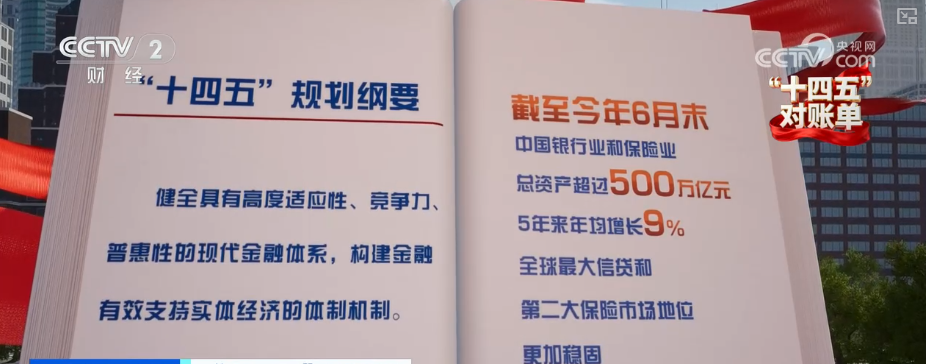
Group 1 - The core viewpoint emphasizes the importance of high-quality financial development in supporting China's modernization efforts during the "14th Five-Year Plan" period [1][3][30] - By June 2025, total assets of China's banking and insurance sectors are projected to exceed 500 trillion yuan, with an average annual growth rate of 9% over five years [3][30] - The banking and insurance industries have provided an additional 170 trillion yuan in funding to the real economy through various financial instruments [5][30] Group 2 - The A-share market's total market capitalization is expected to surpass 100 trillion yuan by August 2025, reflecting a significant increase in the quality of listed companies [5][30] - The number of companies listed on the Beijing Stock Exchange has grown from 81 to 277, with a total market value nearing 900 billion yuan [10][30] - The proportion of national-level specialized and innovative enterprises on the Beijing Stock Exchange has increased from 41% in 2021 to 70% in 2024 [10][30] Group 3 - Financial services have significantly supported the agricultural sector, enhancing efficiency and productivity through modernized farming practices [14][19][25] - The establishment of standardized breeding parks has improved the scale and efficiency of livestock farming, aided by financial support [18][19][28] - The financial sector has played a crucial role in transforming traditional farming methods into more industrialized and profitable operations [25][29] Group 4 - The financial sector has achieved multiple significant milestones during the "14th Five-Year Plan," providing strong momentum for high-quality economic development [30][34] - Experts highlight that the next five years will be critical for transitioning from a financial power to a financial stronghold, with a focus on technological and industrial innovation [34][35] - The integration of technology and finance is expected to drive new growth, with an emphasis on green finance becoming a global benchmark [36][34]
佳禾食品工业股份有限公司关于使用部分暂时闲置募集资金进行现金管理到期赎回并继续进行现金管理的进展公告
Shang Hai Zheng Quan Bao· 2025-10-10 18:42
Core Viewpoint - The company, Jiahe Food Industrial Co., Ltd., is utilizing part of its temporarily idle raised funds for cash management, aiming to enhance returns while ensuring that it does not affect the construction of investment projects or normal operations [1][9]. Group 1: Cash Management Overview - The company has approved the use of up to RMB 550 million of idle raised funds for cash management, focusing on low-risk, highly liquid financial products [2][8]. - The cash management initiative was discussed and approved in meetings held on April 24, 2025, and at the annual shareholders' meeting on May 16, 2025 [2][8]. - The company has already redeemed a structured deposit product from China Merchants Bank, with both principal and returns transferred to the company's special account for raised funds [3][4]. Group 2: Fundraising and Management - The total amount raised through a specific stock issuance was approximately RMB 725 million, with net proceeds after expenses amounting to about RMB 711 million [5][6]. - The raised funds are managed in a dedicated account, with strict regulatory agreements in place to ensure proper oversight [6][7]. Group 3: Impact and Measures - The cash management strategy is designed to increase the returns on idle funds without disrupting ongoing investment projects or the company's main business operations [9][10]. - The company has established internal controls to monitor and manage risks associated with cash management, including adherence to regulatory guidelines and regular oversight by independent directors [10][11].

天创时尚股份有限公司关于可转债转股结果暨股份变动公告
Shang Hai Zheng Quan Bao· 2025-10-10 18:15
Core Viewpoint - The announcement details the conversion results of the convertible bonds issued by Tianchuang Fashion Co., Ltd., including the amount converted, the number of shares issued, and the remaining unconverted bonds. Convertible Bond Conversion Situation - From July 1, 2025, to September 30, 2025, the total amount converted from "Tianchuang Convertible Bonds" was 6,000 yuan, resulting in 487 shares issued, all sourced from newly issued shares [2][7] - As of September 30, 2025, a total of 625,000 yuan of "Tianchuang Convertible Bonds" had been converted into company stock, totaling 50,567 shares (of which 2,026 shares were treasury stock, and the rest were newly issued shares), representing 0.011790% of the company's total issued shares before conversion [2][7] Unconverted Convertible Bonds - The amount of unconverted convertible bonds stands at 66,600,000 yuan, accounting for 11.1000% of the total issuance [3][8] Convertible Bond Issuance Overview - Tianchuang Fashion Co., Ltd. was approved to publicly issue 6 million convertible bonds on June 24, 2020, with a total issuance amount of 60,000 million yuan. The bonds have a term of 6 years, maturing on June 23, 2026, with a tiered interest rate structure [4] - The conversion period for "Tianchuang Convertible Bonds" is from January 4, 2021, to June 23, 2026, with an initial conversion price of 12.64 yuan per share, adjusted to 12.29 yuan per share due to profit distribution [4][6] Repurchase of Convertible Bonds - Due to triggering repurchase clauses, "Tianchuang Convertible Bonds" had a repurchase application period from August 12 to August 16, 2024, with valid applications totaling 5,327,750 bonds, amounting to 532,775,000 yuan [5] - No valid applications were received during subsequent repurchase periods in December 2024 and August 2025 [5] Use of Idle Funds for Wealth Management - The company has approved the use of idle self-owned funds for wealth management, with a maximum daily limit of 40,000 million yuan for purchasing low-risk financial products [12] - As of the announcement date, the balance of idle funds used for wealth management is 16,700 million yuan, representing 16.02% of the company's latest audited net assets [13]

突发回调!半导体板块重挫!发生了什么?
Zheng Quan Shi Bao· 2025-10-10 09:24
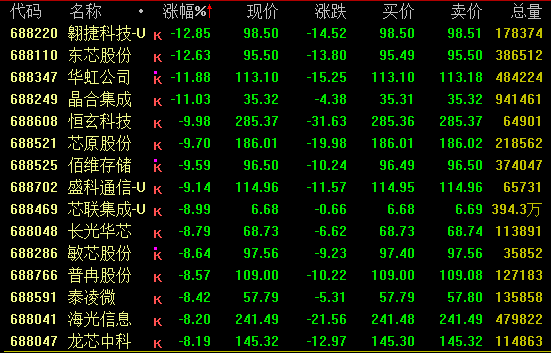
Market Overview - The Chinese asset market experienced a collective pullback, with the A-share market declining significantly after a strong opening on the first trading day post-holiday. The Shanghai Composite Index fell approximately 1% to below 3900 points, while the ChiNext Index dropped over 5% before slightly narrowing its losses at the close [1] - The total trading volume in the Shanghai and Shenzhen markets decreased by 137.8 billion yuan compared to the previous day, totaling 253.45 billion yuan [1] Sector Performance - The semiconductor sector saw a substantial decline, with companies like Aojie Technology and Dongxin Co. dropping over 10%, and SMIC falling nearly 8% [2][3] - Conversely, resource sectors such as gas, coal, steel, and oil experienced gains, with companies like Dazhong Public Utilities and Hongtong Gas hitting the daily limit up [2][7] - The coal sector is expected to see improved performance in Q3 due to rising coal prices, with potential further increases in Q4 as winter demand rises [8] Semiconductor Sector Insights - Analysts suggest that the recent adjustment in the semiconductor sector is a short-term fluctuation driven by profit-taking, rather than a fundamental shift in the industry's long-term growth prospects. The trend of domestic substitution remains a key focus [3][5] - Domestic wafer fabs are progressively establishing high levels of localization, particularly in advanced storage, with expectations for stable expansion needs through 2025 and rapid growth anticipated by 2026 [5] Brokerage Sector Dynamics - The brokerage sector showed strong performance, with stocks like Guosen Securities reaching their daily limit. The sector's growth is supported by favorable policies, improved market confidence, and a shift towards high-value-added services [9][10] - The current environment is seen as enhancing the brokerage sector's profitability outlook, making it an attractive investment opportunity [10]