太阳能

Search documents
Solar Stock Plummeting as Outlook Darkens
Schaeffers Investment Research· 2025-07-23 15:03
Solar stock Enphase Energy Inc (NASDAQ:ENPH) was last seen down 11.1% to trade at $37.80, despite the company reporting better-than-expected second-quarter earnings of 69 cents per share on revenue of $363.2 million. A disappointing third-quarter revenue forecast is weighing on the shares, with the Enphase citing ongoing tariff challenges. No fewer than five analysts slashed their price targets after the event, including BofA Global Research to $30. Moving back toward its June 17 five-year low of $33.01, th ...



Enphase Energy Q2 Earnings Beat Estimates, Revenues Rise Y/Y
ZACKS· 2025-07-23 13:26
Core Insights - Enphase Energy, Inc. (ENPH) reported second-quarter 2025 adjusted earnings of 69 cents per share, a 60.5% increase from 43 cents in the prior-year quarter, surpassing the Zacks Consensus Estimate of 62 cents by 11.3% [1][7] - The company's GAAP earnings were 28 cents per share, compared to 8 cents in the year-ago quarter [1] Revenue Performance - Enphase Energy's second-quarter revenues reached $363.2 million, exceeding the Zacks Consensus Estimate of $357 million by 1.9% and representing a 19.7% increase from $303.5 million in the prior-year quarter [3][7] - The revenue growth was driven by higher sales in the United States and Europe, with U.S. sales influenced by seasonality and European sales boosted by increased microinverter and battery shipments [3][4] Operational Metrics - The company shipped approximately 1.53 million microinverters and 190.9 megawatt-hours (MWh) of Enphase IQ Batteries during the quarter [4] - Adjusted gross margin improved by 150 basis points year over year to 48.6% [4][7] - Adjusted operating expenses decreased by 4.8% year over year to $77.8 million, while adjusted operating income rose 61.4% to $98.6 million [4][7] Financial Position - As of June 30, 2025, Enphase Energy had $370.5 million in cash and cash equivalents, slightly up from $369.1 million as of December 31, 2024 [5] - Cash flow from operating activities was $75 million, down from $176.3 million a year ago [5] Future Guidance - For the third quarter of 2025, Enphase Energy expects revenues between $330 million and $370 million, with the Zacks Consensus Estimate at $366.2 million [6] - The company anticipates shipping IQ batteries in the range of 190-210 MWh in the third quarter [6] - Adjusted operating expenses are projected to be between $78 million and $82 million, excluding approximately $52 million for stock-based compensation and acquisition-related costs [7][8]
Enphase Energy (ENPH) Surpasses Q2 Earnings and Revenue Estimates
ZACKS· 2025-07-22 22:15
Company Performance - Enphase Energy reported quarterly earnings of $0.69 per share, exceeding the Zacks Consensus Estimate of $0.62 per share, and up from $0.43 per share a year ago, representing an earnings surprise of +11.29% [1] - The company posted revenues of $363.15 million for the quarter ended June 2025, surpassing the Zacks Consensus Estimate by 1.92%, and an increase from year-ago revenues of $303.46 million [2] - Over the last four quarters, Enphase Energy has surpassed consensus EPS estimates two times and topped consensus revenue estimates two times [2] Stock Performance - Enphase Energy shares have declined approximately 42.3% since the beginning of the year, while the S&P 500 has gained 7.2% [3] - The current consensus EPS estimate for the upcoming quarter is $0.58 on revenues of $366.24 million, and for the current fiscal year, it is $2.46 on revenues of $1.45 billion [7] Industry Outlook - The solar industry, to which Enphase Energy belongs, is currently ranked in the top 33% of over 250 Zacks industries, indicating a favorable outlook [8] - Empirical research suggests a strong correlation between near-term stock movements and trends in earnings estimate revisions, which can impact stock performance [5]

研究所日报-20250722
Yintai Securities· 2025-07-22 05:19
Group 1 - The introduction of the "Housing Rental Regulations" aims to standardize rental activities and promote high-quality development in the housing rental market, marking a significant step towards establishing a dual housing system of purchase and rental [2] - Central Huijin's investment of 200 billion yuan in 10 broad-based ETFs during Q2 is expected to boost market confidence and support A-shares, particularly after the recent market fluctuations [3] - The construction of 14 major projects in China, with a total investment of 136.2 billion yuan, indicates a critical bidding window in the next 3-5 years, as the controlled nuclear fusion sector enters a phase of intensive infrastructure development [4] Group 2 - The National Energy Administration reported a 5.4% year-on-year increase in total electricity consumption in June, indicating strong domestic electricity demand and potential growth in related power generation capacities [5] - The upcoming World Robot Conference and World Humanoid Robot Games in Beijing are expected to showcase advancements in robotics, potentially driving investment opportunities in the humanoid robot sector [5] - UBS's analysis suggests that the "anti-involution" policies may lead to improved supply-demand relationships and enhanced corporate profitability, with a focus on industries like new energy vehicles and solar energy [6][8] Group 3 - The report highlights that stock prices typically respond positively to incremental policies, with significant outperformance observed in related sectors during the initial phases of policy implementation [6] - The initial correlation between stock prices and commodity prices tends to decouple over time, with significant price increases observed in commodities during capacity reduction efforts [7] - The distinction between "anti-involution" measures and supply-side reforms suggests that current adjustments may be more market-driven, focusing on emerging industries dominated by non-state enterprises [8] Group 4 - The construction materials, building decoration, and steel industries have shown the highest growth rates recently, indicating strong performance in these sectors [24] - The mechanical equipment, construction materials, and electric equipment sectors have seen significant net capital inflows, reflecting investor interest and confidence in these areas [26] - The recent changes in market turnover and trading volume suggest a dynamic shift in investor behavior and sector performance, with notable fluctuations in the TMT and cyclical sectors [31]
冯德莱恩3天后访华,中欧一旦联手,美国关税战或将彻底失败
Sou Hu Cai Jing· 2025-07-22 04:39
Group 1 - The European Union (EU) has not chosen to compromise with the United States amid the tariff war, while it has previously taken measures against China, making China's countermeasures a reasonable response [1] - China imposed anti-dumping duties on certain European brandy imports, with rates ranging from 27.7% to 34.9%, effective for five years, unless EU companies adjust their prices accordingly [1] - China also introduced countermeasures against EU medical devices due to restrictions imposed by the EU on Chinese companies' participation in procurement over 5 million euros [1] Group 2 - On July 16, China and the EU reached a consensus to lift mutual restrictions, including sanctions on certain European Parliament members, but the EU later sanctioned two Chinese financial institutions, causing dissatisfaction in China [3] - The Chinese Ministry of Commerce expressed strong opposition to the EU's sanctions, claiming they violate international law and disrupt China-EU economic and financial cooperation [3] - Negotiations on price commitments for electric vehicles between China and the EU are nearing completion, with both sides seeking a solution compliant with legal and WTO rules [3] Group 3 - The visit of the European Council President and the European Commission President to Beijing marks a significant diplomatic engagement, occurring just days before the US's tariff deadline on EU steel and aluminum products [4] - The EU's economy has been significantly impacted by the "reciprocal tariffs" policy implemented by the Trump administration, with China becoming the EU's largest trading partner over the past twelve years [6] Group 4 - In the EU's emerging new energy vehicle market, one in three cars is equipped with Chinese-made batteries, with CATL's factory in Hungary set to begin production [8] - The EU relies heavily on China for solar components and lithium batteries, indicating a "complementary model" of "Made in China, Designed in Europe" that is reshaping global industry [8] - European leaders are advocating for "strategic autonomy," indicating a shift away from being a "vassal" of the US, and recognizing China as a vital partner amid increasing tariff pressures [8]
新材料提升钙钛矿太阳能电池效率
Zhong Guo Hua Gong Bao· 2025-07-22 03:26
Core Viewpoint - The research team from the Changchun Institute of Applied Chemistry has made significant breakthroughs in the development of a new type of organic self-assembling molecular material for perovskite solar cells, enhancing their efficiency, stability, and uniformity in large-area processing [1][2]. Group 1: Research Breakthroughs - The new double radical self-assembling molecular material significantly improves the performance of the hole transport layer in perovskite solar cells, addressing key bottlenecks in the industry [2]. - The perovskite solar cells made with this new material achieved a power conversion efficiency of 26.3% for small-area devices and 23.6% for micro-components, with perovskite-silicon tandem cells exceeding 34.2% efficiency [2]. Group 2: Industry Implications - The technology is ready for mass production, with key equipment being domestically sourced, indicating a move towards self-sufficiency in core material development [2]. - Four supporting enterprises, including Suzhou Hongzheng Intelligent Technology, are establishing production facilities in Changchun, highlighting the commercial interest and potential for scaling this technology [2].

冯德莱恩2天后访华,中欧一旦联手,美国关税战或将彻底失败
Sou Hu Cai Jing· 2025-07-22 02:37
Group 1 - The upcoming visit of European Council President Costa and European Commission President von der Leyen to China marks a significant diplomatic event, being the first joint visit of both leaders to China in 50 years of diplomatic relations, occurring just days before the U.S. imposes a 25% tariff on EU steel and aluminum products [1] - The U.S. tariffs have already impacted the EU economy, particularly the automotive sector, which exported vehicles and components worth $58 billion to the U.S. in 2023, accounting for 20% of total EU automotive exports and affecting approximately 14 million jobs in Europe [1] - The EU is considering a simpler "tariff-for-tariff" proposal to negotiate with the U.S. regarding automotive tariffs, moving away from a more complex mechanism proposed by German manufacturers, which has caused internal disagreements among EU member states [3] Group 2 - In the first half of the year, trade between China and the EU reached 2.82 trillion yuan, a 3.5% increase year-on-year, with an average daily trade exceeding 15 billion yuan, highlighting the EU's position as China's second-largest trading partner [5] - The EU relies heavily on Chinese supply chains, with 60% of its solar components and 45% of lithium batteries sourced from China, indicating a growing interdependence in the renewable energy sector [5] - Recent tensions arose from China's imposition of anti-dumping duties on certain EU brandies and medical devices in response to EU restrictions on Chinese companies, reflecting ongoing trade disputes [5][7] Group 3 - The joint visit of Costa and von der Leyen presents an opportunity for deeper cooperation between China and the EU, potentially leading to stronger economic ties that could counter U.S. tariff pressures [9] - European leaders are increasingly advocating for "strategic autonomy," indicating a shift away from reliance on the U.S. and a desire to strengthen partnerships with countries like China in the face of geopolitical challenges [7][9] - The evolving dynamics suggest that cooperation and mutual benefit may become the prevailing trend in international trade, as opposed to unilateralism and protectionism [9]

美国麻省理工教授:这次的“中国冲击”,对美构成前所未有的挑战
Sou Hu Cai Jing· 2025-07-21 10:13
Group 1: Overview of "China Shock 2.0" - The concept of "China Shock 2.0" highlights China's advancements in high-tech sectors, posing unprecedented challenges to the U.S. [2][4] - The transition from "China Shock 1.0," which focused on low-end manufacturing, to "2.0," which targets high-tech industries, marks a significant shift in global economic dynamics [6][8] - Key high-tech areas affected include aerospace, artificial intelligence, telecommunications, semiconductors, robotics, nuclear energy, quantum computing, biomedicine, solar energy, and battery technology [6][8] Group 2: Economic and Technological Impact - China's rapid rise in the global value chain is attributed to its technological progress and industrial upgrades, leading to a reassessment of U.S. strategies [4][12] - The shift in focus from low-cost labor to technology-intensive industries requires long-term R&D investment and skilled talent [8][10] - China's electric vehicle industry has emerged as a global leader, with companies like BYD and CATL driving innovation and market share [8][10] Group 3: Policy and Strategic Shifts - The role of local governments and private enterprises has become central in driving China's industrial policy, moving from short-term growth to nurturing strategic emerging industries [10][12] - The competitive landscape has evolved, with Chinese firms like DJI and LONGi Green Energy demonstrating significant advancements in their respective fields [8][10] Group 4: Global Competition and Standards - China's dominance in 5G technology and its control over rare earth resources are critical components of "China Shock 2.0," enhancing its global influence [14][21] - The shift in technological leadership is evident, with China leading in 57 out of 64 frontier technologies by 2023, compared to only 7 for the U.S. [12][19] Group 5: U.S. Response and Strategic Recommendations - The U.S. response has primarily relied on tariffs, which have proven to be ineffective against China's high-tech advancements [17][22] - Recommendations for the U.S. include forming alliances, allowing Chinese firms in non-sensitive sectors, maintaining policy continuity, and improving reemployment systems for affected workers [17][22]





大不列颠能源公司所用太阳能电池板均产自中国,英国政客又炒作“强迫劳动”挑事
Guan Cha Zhe Wang· 2025-07-20 07:49
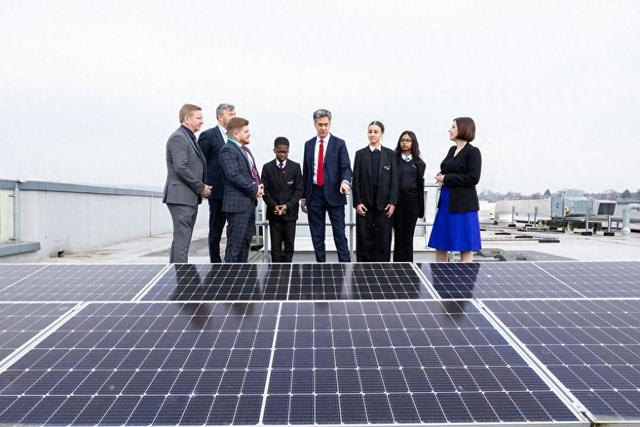
Core Points - The UK government, under the Labour Party, has established a state-owned energy company, Great British Energy, aimed at investing in renewable energy, particularly solar power [3] - The company has allocated approximately £200 million for solar projects in schools and NHS hospitals, with the first batch of solar panels sourced from Chinese companies Aiko and Longi [3][4] - Labour MP Sarah Champion has criticized the use of Chinese solar panels, citing concerns over alleged forced labor in the supply chain [1][4] - The UK imports a significant portion of its solar panels from China, with 68% of solar panel imports in 2024 coming from China, an increase from 61% in 2023 [4] - Chinese companies Aiko and Longi have denied any involvement in forced labor practices, asserting their commitment to ethical business practices [5] Company and Industry Insights - Great British Energy aims to support the UK's green transition by investing in renewable energy projects, despite political pressures regarding sourcing from China [3][6] - The solar industry is heavily reliant on Chinese manufacturing, particularly for polysilicon, which is a key component in solar panels [4][8] - The UK government's recent policy changes have raised concerns among officials about the feasibility of achieving climate goals without Chinese solar products [6][8] - The global solar market is dominated by Chinese suppliers, making it challenging for countries to avoid sourcing from China while trying to maintain low costs and carbon efficiency [4][5]
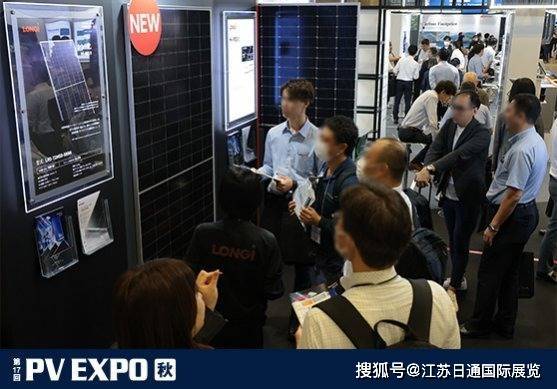
2025日本太阳能光伏展会 PV EXPO
Sou Hu Cai Jing· 2025-07-19 05:21
Core Insights - The Japan Solar Photovoltaic Expo (PVEXPO) is a significant platform for the solar energy industry in Asia, showcasing advancements and facilitating networking among professionals [1][4][8] Event Overview - The 2025 PVEXPO will take place in three sessions: Spring (February 19-21 in Tokyo), Autumn (September 17-19 in Chiba), and Winter (November 19-21 in Osaka) [1] - The event is expected to host approximately 1,200 exhibitors and attract around 50,000 visitors, highlighting its growing scale and influence [4] Industry Engagement - The expo will feature around 248 forums and presentations focused on solar technology and industry trends, providing deep insights for exhibitors and attendees [4] - Notable companies such as Huawei, Hanwha, Jinko Solar, JA Solar, Panasonic, Sharp, Sungrow, Yingli, BYD, and Hareon Solar have previously participated, showcasing their latest innovations [4] Product Range - The exhibition will cover a wide array of products, including solar cell materials (monocrystalline, polycrystalline, amorphous silicon), manufacturing equipment, and photovoltaic systems [5][7] - Key components such as connectors, junction boxes, and distribution boxes will be displayed, emphasizing their critical roles in solar energy systems [7] Networking and Collaboration - The event fosters a collaborative atmosphere where industry experts and representatives can share experiences and discuss future directions, enhancing market understanding and partnership opportunities [7] - Media coverage will amplify the event's visibility, encouraging greater participation from industry professionals [7] Future Outlook - As technology advances and market demands evolve, future expos are expected to feature more innovative products and solutions, with organizers committed to adapting to these changes [7][8] - The PVEXPO aims to continue its pivotal role in promoting renewable energy development and application within the solar industry [8]