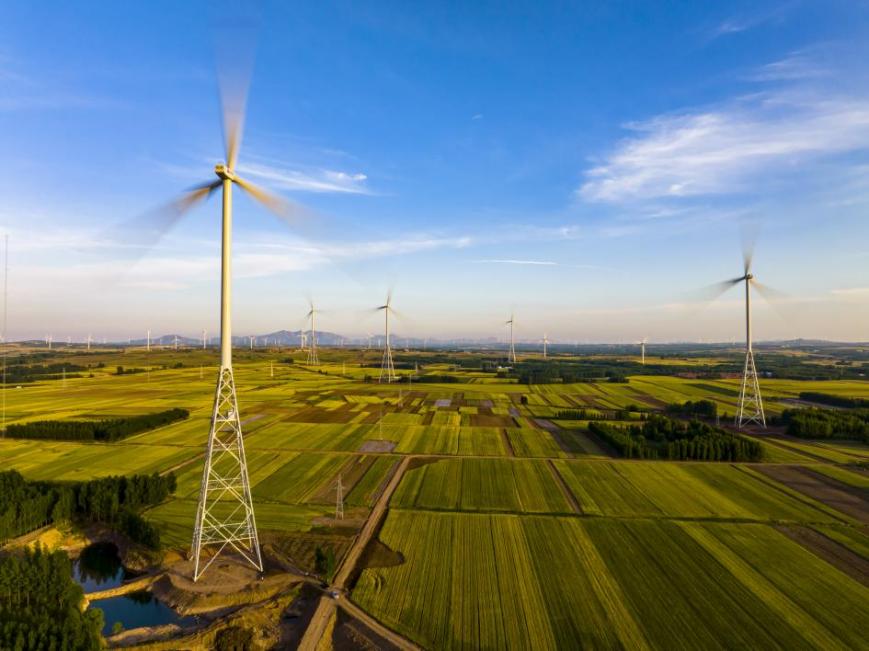
风电

Search documents
2026年我国科技创新有望继续实现突破,带来更多投资机会|资本市场
清华金融评论· 2026-01-02 10:13
Group 1 - The core viewpoint of the article emphasizes that the "14th Five-Year Plan" will focus on technological innovation as a key driver for economic growth, addressing critical technology issues and fostering new productive forces, particularly in areas like artificial intelligence, quantum information, and life sciences [3][10]. - In 2025, China's goods trade surplus exceeded $1 trillion, marking a historical record, with exports expected to maintain steady growth, particularly in competitive sectors such as new energy vehicles, lithium batteries, and photovoltaic products [5]. - The article highlights that by 2026, China's capital market is expected to continue a slow bull market, with the potential for further index growth and a shift from a structural bull market to a comprehensive bull market, enhancing market profitability [12][18]. Group 2 - The monetary policy outlook suggests that the Federal Reserve is likely to continue lowering interest rates, which may lead to a more favorable monetary environment in China, supporting the A-share and Hong Kong stock markets [6]. - The article notes that the RMB exchange rate is expected to appreciate, attracting more foreign capital into Chinese assets, which would positively impact asset valuations [7]. - The shift in China's economic structure from reliance on exports and investment to consumption and technology-driven growth is emphasized, with a need for measures to boost consumer spending as current growth rates remain low [8][9]. Group 3 - The Central Economic Work Conference has initiated systematic deployments to boost consumption, including policies to enhance service consumption and optimize the replacement of consumer goods, which are expected to stimulate new productive forces [9]. - In the technology innovation sector, significant advancements in AI and related fields are anticipated, with a focus on developing world-class research infrastructure and accelerating the transformation of scientific achievements [10][17]. - The article discusses the potential of humanoid robots as a significant industry, expected to surpass the automotive sector in value, with a shift from hardware speculation to order-driven business models by 2026 [15]. Group 4 - The article identifies two main categories of core assets for future investment: high-quality real estate in core areas and equity in quality companies, with many leading firms currently undervalued [16]. - The renewable energy sector is highlighted as entering a new phase, with China's advantages in solar and wind energy resources, which are crucial for future competitiveness in power and computing capabilities [16]. - The article concludes that the capital market is poised for significant growth due to a shift in household savings from real estate to equities, with a notable increase in new stock accounts and fund issuance indicating rising investor participation [19][20].


丹麦风电商Orsted称将挑战美国叫停东岸风电项目的决定
Xin Lang Cai Jing· 2026-01-02 09:13
Core Viewpoint - Danish wind power company Orsted is seeking a court injunction to challenge the U.S. government's decision to suspend its Revolution Wind joint venture contract, which is nearing completion and expected to start generating power soon [1] Group 1: Legal Actions - Revolution Wind has filed a lawsuit in the U.S. District Court for the District of Columbia against the suspension of its contract [1] - Orsted's statement indicates that approximately 87% of the contract project was completed at the time the suspension order was issued [1] Group 2: Financial Commitments - The Revolution Wind project has involved significant financial commitments, with Orsted stating that it has invested and committed billions of dollars in accordance with strict review procedures [1] Group 3: Joint Venture Details - Revolution Wind is a joint venture between Orsted and Global Infrastructure Partners' Skyborn Renewables, with both parties holding equal stakes [1] Group 4: Government Actions - The U.S. government suspended five large offshore wind contracts on the East Coast due to national security concerns as of December 29 [1]
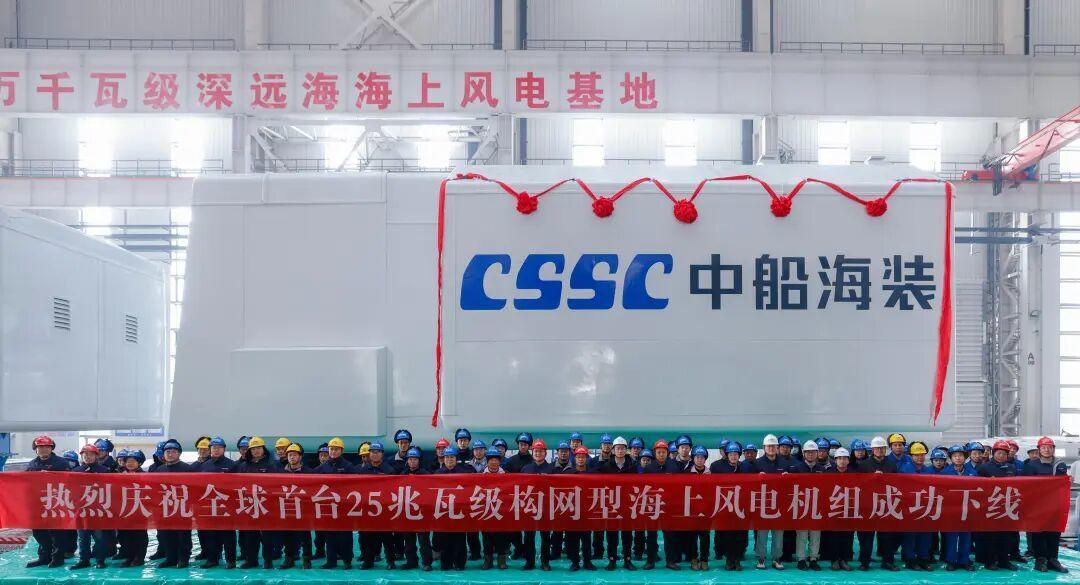
全球首台25兆瓦级构网型海上风电机组东营下线
Da Zhong Ri Bao· 2026-01-02 07:11
2025年12月30日,中船科技(600072.SH)自主研制的H305-25MW海上风电机组在山东东营成功下线,这是全球首台25兆瓦级构网型海上风电机组,刷新 了风电行业构网型海上风电单机容量与技术集成的全球纪录。 该机组由作为中船集团风电产业产业链"链长"的中船科技整合集团内外优势资源,以"高可靠性、高发电量、低度电成本"为核心研发目标,攻克全球最大 功率构网型技术、150米级超长叶片高稳定设计、机电传动系统高密度集成等核心技术研发而成,为破解深远海风电开发难题、推动产业提质增效提供了 新方案。 25兆瓦海上风电机组不仅是单机功率的突破,更是实现了发电性能、可靠性、电网支撑能力与经济性的全面突破。从应用前景来看,该机组可减少风场机 位点数量20%以上,有效降低基础、塔筒、集电海缆等设备用量与施工成本,使项目综合开发成本降低5%以上,收益率提升10%以上,适配浙江、福建、 广东、海南等中高风速区域的平价上网需求。 2024年4月,东营市与上海电气风电集团、中船科技签订了电气风电年产160万千瓦大型海上风电智能制造基地及海上风电测试认证基地项目,建成后可具 备年产风力发电机组125套的装配、试验能力。 随着全 ...

2026年我国经济高质量发展三大看点
Guo Ji Jin Rong Bao· 2026-01-01 00:31
Group 1 - China's economy is expected to maintain steady growth in 2025, successfully achieving annual targets, with strong momentum continuing into 2026 driven by new consumption, enhanced production capabilities, and a solid export position in global supply chains [1] Group 2 - New consumption is set to expand and improve, with policies aimed at boosting domestic demand, including increased quotas for trade-in programs and an expanded range of supported products, leading to over 2.5 trillion yuan in sales benefiting more than 360 million people in 2025 [2] - The shift in consumer trends towards value-for-money and emotional value is notable, with experiential consumption in areas like culture, travel, and fitness driving growth [2] - AI is enhancing both online and offline retail experiences, with innovations like instant retail and smart shopping becoming more prevalent, expected to lead to deeper integration and quality improvements in consumption by 2026 [3] Group 3 - Core technology breakthroughs are reshaping industrial advantages, with advancements in AI, semiconductors, and commercial aerospace expected to drive high-quality upgrades in various sectors [4] - The renewable energy sector is projected to expand significantly, with an expected addition of over 20 million kilowatts of wind and solar power capacity by 2026, contributing to energy structure optimization and carbon peak goals [4] - The digital transformation of manufacturing is advancing, with a penetration rate of 68% in 2025, leading to efficiency improvements of over 25% in key industries [4] Group 4 - Export resilience is anticipated, with a focus on diversifying markets and consolidating China's leading position in global supply chains [6] - The reduction of tariff uncertainties is expected to stabilize trade with the U.S., while high-value, green products are becoming key growth drivers, with electric vehicle exports reaching 3.01 million units in 2025, a 62% increase [7] - China's trade with Belt and Road Initiative countries accounted for over 50% of exports in 2025, indicating a strong foundation for non-U.S. trade [7] - Continued high-level openness and trade innovation are expected to strengthen global supply chain positions, with rapid growth in cross-border e-commerce and digital technologies reducing trade costs [8]
执笔“双碳”,绘就发展新画卷
Xin Lang Cai Jing· 2025-12-31 21:06
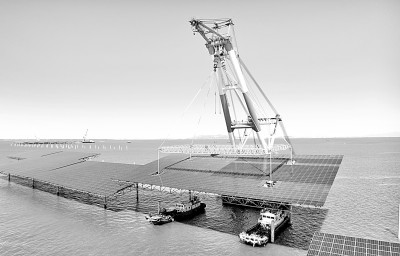
(来源:光明日报) 转自:光明日报 在河北省昌黎县海域,河北省海上光伏示范试点项目正在稳步推进。新华社发 云南省昆明市晋宁区沙堤村农户正在收割生态水稻。光明图片/视觉中国 安徽省芜湖市繁昌区平铺镇岱湖滩渔光互补 光伏电站与村庄、稻田、沟渠等相映成景。光明图片/视觉中国 【贯彻落实中央经济工作会议精神系列报道】 走进工业生产一线,各类"硬核"技术接续"上新",曾经高能耗、高排放的工厂能耗大幅降低,实现 了烟气净化;深入渤海的蔚蓝海面,海风吹拂中,辽宁1310万千瓦海上风电项目屹立海上、全速建设; 踏上毛乌素沙地腹地,在内蒙古鄂尔多斯嘎鲁图镇,一代代林草人将荒漠变成了绿洲……降碳、减排、 治污、增绿,让经济的每一次呼吸,都带着绿意。 日前召开的中央经济工作会议指出,坚持"双碳"引领,推动全面绿色转型。如何进一步落实"双 碳"目标?如何加快新型能源体系建设,深入打好蓝天、碧水、净土保卫战?记者对此进行了采访调 研。 节能降碳改造,助力产业绿色转型 厂房林立的厂区,生产繁忙、烟囱高耸,却不见"烟火气"。在山西临汾,蓝天白云下,山西立恒焦 化有限公司正在有序生产。优美的厂区环境,是绿色改造升级带来的美丽蝶变。 焦化、火 ...
广西120MW分散式风电项目公示
Xin Lang Cai Jing· 2025-12-31 16:01
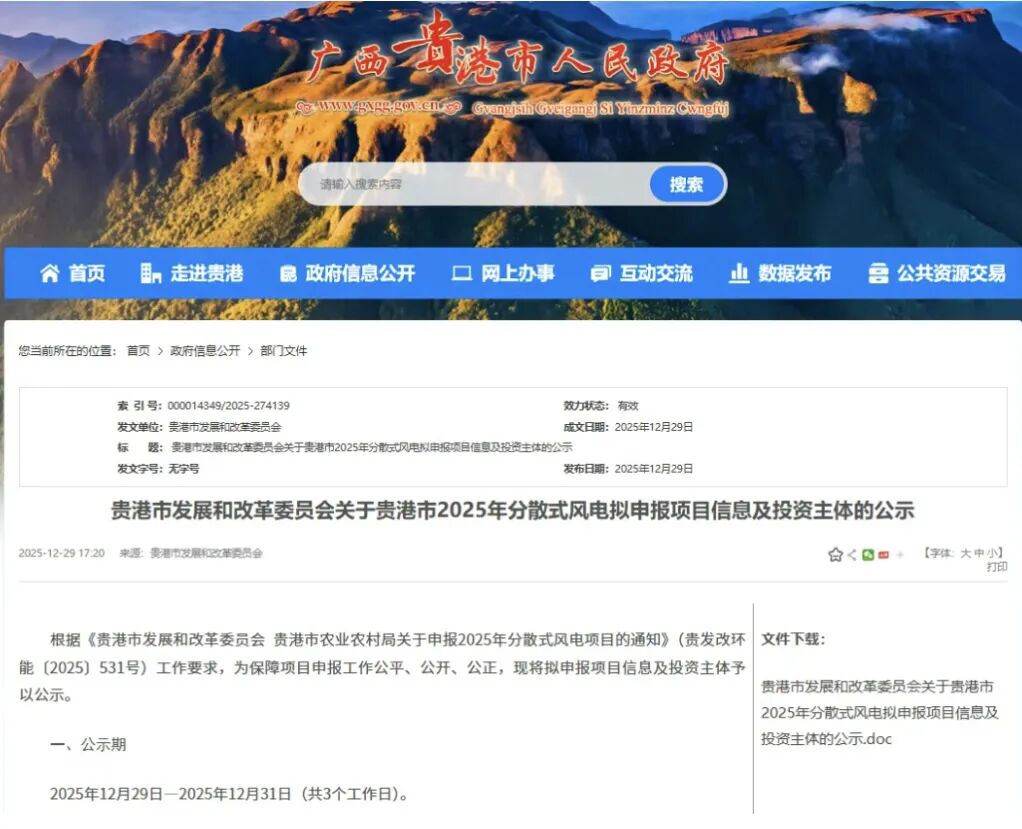
二、拟申报项目信息 1.项目名称:港北区分散式风电项目 装机容量:48兆瓦(MW) 投资主体:广西贵港市乡村振兴集团有限公司 2.项目名称:港南区分散式风电项目 装机容量:24兆瓦(MW) 投资主体:广西贵港市乡村振兴集团有限公司 3.项目名称:覃塘区分散式风电项目 装机容量:48兆瓦(MW) 投资主体:联合体(华能广西清洁能源有限公司;广西贵港市乡村振兴集团有限公司) 三、异议反馈方式 公示期内,如对拟申报项目及投资主体有异议,请以书面形式向我单位反映。反映材料需署真实姓名、联系方式,并提供相关证明材料,于2025 年12月31日前通过以下方式提交: (一)邮寄送达:贵港市荷城路888号C428办公室(邮寄后请及时电话告知),邮政编码:537000,以邮戳日期为准; (二)直接送达:贵港市荷城路888号C428办公室,以送达日期为准。 来源:贵港市发展和改革委员会 来源:贵港市发展和改革委员会 二、拟申报项目信息 1.项目名称:港北区分散式风电项目 装机容量:48兆瓦(MW) 投资主体:广西贵港市乡村振兴集团有限公司 2.项目名称:港南区分散式风电项目 装机容量:24兆瓦(MW) 投资主体:广西贵港市乡村振 ...
江苏500MW风电项目开工
Xin Lang Cai Jing· 2025-12-31 16:01
Core Viewpoint - The successful commencement of the 500MW wind power project by Jushi Green Energy (Lianshui) marks a significant step in the company's commitment to the "dual carbon" strategy and aligns with the goals of the 14th Five-Year Plan [2][4][5] Group 1: Project Details - The wind power project will install 76 modern wind turbines featuring 185-meter high mixed towers and 220-meter large blades, equipped with intelligent control systems [2][7] - Once completed, the project is expected to generate approximately 1.24 billion kilowatt-hours of electricity annually, which is equivalent to one-third of Lianshui County's annual electricity consumption [2][7] - The project aims to reduce carbon dioxide emissions by about 1 million tons per year, contributing to local efforts in establishing a "zero-carbon industrial park" [2][7] Group 2: Strategic Importance - The wind power project is a key initiative for Jushi in implementing its "dual carbon" strategy and is crucial for setting a positive trajectory for the 14th Five-Year Plan [2][7] - The project will also support the green electricity needs of the Huai'an zero-carbon intelligent manufacturing base's electronic fabric production line [2][7]

电力设备行业周报:发改委治理价格无序竞争 龙蟠科技签订130万吨铁锂订单
Xin Lang Cai Jing· 2025-12-31 12:37
Group 1: Photovoltaic Industry - The National Development and Reform Commission (NDRC) held a meeting to address issues of price disorder in the photovoltaic industry and to establish cost recognition standards [1] - The NDRC aims to combat price disorder and maintain a healthy market price order, which will help the photovoltaic industry achieve sustainable development [1] - Key focus areas include: 1) Supply-side reform leading to price increases, with attention on Tongwei Co., Longi Green Energy, JA Solar, JinkoSolar, and Trina Solar; 2) Long-term growth opportunities from new technologies, focusing on Mibet, Aiko Solar, and Juhua Materials; 3) Industrialization opportunities from perovskite GW-level layouts, focusing on Jinjing Technology, Wanrun Co., Jiejia Weichuang, Dier Laser, Jing Shan Light Machine, Delong Laser, and Manston [1] Group 2: Wind Power and Grid - Denmark's Energy Agency announced the launch of a tender for at least 2.8GW of offshore wind projects, with a total budget cap of 55.2 billion Danish Kroner (approximately 60.63 billion RMB) [2] - The State Grid Corporation of China initiated the fifth round of preliminary service bidding for projects including Qinggui DC and Nantong-Suzhou DC, with various technical specifications [2] - Key companies to watch include: Goldwind Technology, Yunda Co., Mingyang Smart Energy, and Sany Heavy Energy for wind turbine segments; Dongfang Cable, Zhongtian Technology, and Hengtong Optic-Electric for submarine cable and flexible DC technology [2] Group 3: Hydrogen Energy - Premier Li Qiang stated that China has built the world's largest renewable energy system and has cooperated with over 100 countries on green energy [3] - China has contributed to a reduction of approximately 4.1 billion tons of carbon emissions through wind and solar products over the past five years [3] - Recommended companies include: Shuangliang Eco-Energy, Huadian Heavy Industries, Shenghui Technology, and Huaguang Huaneng for quality equipment; Kaysun, Ice Wheel Environment, and Snowman for hydrogen compressors [3] Group 4: Energy Storage - The bidding price range for the W3 energy storage system project in November 2025 is between 0.456 RMB/Wh and 0.6664 RMB/Wh [3] - The average bidding price for W3 EPC is between 0.727 RMB/Wh and 1.6641 RMB/Wh [3] - Companies to focus on include: Sungrow Power Supply, Canadian Solar, Haibo Technology, and Sunking Electric for high-growth energy storage sectors [3] Group 5: New Energy Vehicles - Longpan Technology signed a supply agreement for 1.3 million tons of lithium iron phosphate, corresponding to nearly 600GWh of battery demand, with a total estimated value exceeding 45 billion RMB [4] - The agreement indicates a strong demand for battery materials, with expectations of over 300GWh of effective capacity by the end of 2026 [4] - Other partnerships include agreements with Tianci Materials and Nord Materials for significant procurement of electrolyte and copper foil [4]

上海电气与中广核集团深化能源产业合作
Sou Hu Cai Jing· 2025-12-31 11:43
Group 1 - The meeting between Shanghai Electric Group and China General Nuclear Power Group focused on consolidating cooperation, expanding collaboration areas, and enhancing innovation synergy [1][3] - Both companies acknowledged their long-standing strategic partnership and emphasized the importance of their collaboration in advancing China's clean energy sector [3] - The discussion highlighted the need to deepen traditional cooperation in nuclear energy while exploring practical collaboration in solar thermal, wind power, and green hydrogen and ammonia [3] Group 2 - Shanghai Electric aims to support China General Nuclear Power Group in areas such as nuclear safety, technological innovation, and domestic substitution [3] - The companies plan to focus on core technology breakthroughs and deep industrial integration to contribute to the national "dual carbon" strategy and the green transformation of the energy structure [3] - Key executives from both companies participated in the meeting, indicating a strong commitment to ongoing collaboration [4]


驭风四载启新程:金胶州风场的低碳发展图鉴
Zhong Guo Neng Yuan Wang· 2025-12-31 08:42
Core Insights - The Jin Jiaozhou Wind Farm has successfully operated for four years, utilizing advanced prestressed framework tower technology, marking a significant milestone in low-wind-speed wind power development [1][3]. Group 1: Technological Breakthrough - The wind farm features a cluster of 18 units of 160-meter towers and 1 unit of 170-meter tower, setting a world record for the highest prestressed framework towers at the time of its commissioning [3]. - The technology has proven its reliability over four years, with zero major faults during extreme weather conditions, thanks to its design that prevents fatigue crack propagation and resonance risks [3]. - The modular design of the components has significantly reduced installation time to just 10 days per unit, and the implementation of a drone inspection system has achieved a maintenance-free operation model, lowering operational costs [3]. Group 2: Ecological Symbiosis - The wind towers occupy only 6 square meters of land each due to a unique four-point foundation design, allowing agricultural activities to continue around the base of the towers [6]. - Noise level tests confirmed that the wind towers meet standard noise levels even at a distance of 158 meters, facilitating easier site selection and supporting decentralized wind power development [10]. Group 3: Green Benefits - The wind farm has generated substantial electricity over four years, significantly reducing carbon dioxide emissions, while also minimizing the use of concrete and steel, with over 95% steel reuse [13]. - The project has been recognized in the national green technology promotion directory, serving as a model for the integration of wind power and agriculture [13]. Group 4: Industry Impact - The achievements of the Jin Jiaozhou Wind Farm extend beyond a single project, influencing national wind power development and showcasing the technology at various international exhibitions [14]. - The collaboration with Tongji University has been pivotal in addressing industry challenges, with the wind farm contributing to high-quality wind power development through its safe, efficient, and low-carbon practices [18].