
低空经济

Search documents
沃兰特航空在进博会上达成超23亿元eVTOL订单
Zheng Quan Shi Bao Wang· 2025-11-06 02:39
人民财讯11月6日电,11月6日,在第八届中国国际进口博览会(进博会)上,低空经济企业沃兰特航空与 知名租赁公司北京亦庄国际融资租赁有限公司、北京神州汽车租赁有限公司、迪拜IC Leasing,知名运 营公司中国飞龙通航、山西成功通航、欧洲DC Aviation,供应商西百克科技分别签署了多项合作协 议。本次签约订单数量95架、签约金额达23.75亿元,为公司再添高等级商用客运eVTOL第四个商业确 认订单,并获订金数千万元。 ...
专访黄群慧:发展新质生产力是“十五五”产业政策主线
21世纪经济报道· 2025-11-05 12:40
Core Viewpoint - The article discusses China's strategic direction for industrial development during the "15th Five-Year Plan" period, emphasizing the construction of a modern industrial system and the strengthening of the real economy as primary tasks [1][11]. Group 1: Traditional Industry Transformation - The "15th Five-Year Plan" aims to optimize and enhance the global competitiveness of traditional industries such as mining, metallurgy, and machinery, which are crucial for economic resilience [6][7]. - The transformation of traditional industries is expected to generate significant economic value, potentially reaching a value increase of 10 trillion yuan through technological upgrades and smart manufacturing [7]. Group 2: Emerging Industries - The plan highlights the importance of strategic emerging industries like new energy, new materials, and aerospace, which are anticipated to become major drivers of economic growth [8][9]. - Local governments are encouraged to develop emerging industries based on regional resources and capabilities, fostering suitable industrial clusters [9]. Group 3: Future Industries - The article identifies future industries such as quantum technology and hydrogen energy as critical for gaining competitive advantages in global markets [10][12]. - The development of these future industries requires careful consideration of technological maturity and market potential, as they involve high risks and long investment cycles [10]. Group 4: Modern Industrial System - A modern industrial system is deemed essential for China's modernization, with a focus on intelligent, green, and integrated development [11][12]. - The article stresses the need for a robust manufacturing sector as the backbone of the modern industrial system, which is vital for achieving national development goals [11]. Group 5: New Infrastructure and Services - The plan calls for the construction of new infrastructure, particularly in computing power, to support technological advancements and industrial upgrades [12][13]. - The expansion and enhancement of productive services are highlighted as key to supporting manufacturing transformation and achieving high-quality development [14].

21专访|黄群慧:发展新质生产力是“十五五”产业政策主线
2 1 Shi Ji Jing Ji Bao Dao· 2025-11-05 11:49
Core Viewpoint - The article discusses China's strategic plan for industrial development during the 15th Five-Year Plan period, emphasizing the construction of a modern industrial system and the strengthening of the real economy as primary tasks [1][2]. Group 1: Traditional Industry Optimization - The 15th Five-Year Plan aims to consolidate and enhance the global competitiveness of traditional industries such as mining, metallurgy, and machinery, which are crucial for economic resilience [3][4]. - The transformation and upgrading of these traditional industries through intelligent, green, and high-end development are expected to generate significant economic value, potentially reaching trillions in added value [4]. Group 2: Emerging Industries - The plan highlights the importance of emerging industries like new energy, new materials, and aerospace, which are anticipated to become major drivers of economic growth and have strong interconnections with various sectors [5][6]. - The development of strategic emerging industries should be tailored to local conditions, leveraging regional resources and capabilities to foster suitable industry clusters [5]. Group 3: Future Industries - The proposal includes promoting future industries such as quantum technology and hydrogen energy, which are seen as critical for gaining competitive advantages in global markets [6][7]. - These future industries are characterized by high dependence on original innovation and long investment cycles, necessitating careful planning and support for their development [6]. Group 4: Modern Industrial System - The modern industrial system is identified as the material and technical foundation for China's modernization, with a focus on maintaining a robust manufacturing sector [7][8]. - The integration of advanced manufacturing with new technologies is essential for driving high-quality development and achieving the goals of the 15th Five-Year Plan [8]. Group 5: New Infrastructure and Service Industry - The plan emphasizes the need for new infrastructure, particularly in computing power, to support technological advancements and industrial upgrades [9][10]. - The expansion and enhancement of the productive service industry are crucial for facilitating the transformation of manufacturing and achieving higher value chains [11].
全球新产品、新技术进博舞台首发首秀!六大展区先睹为快→
Sou Hu Cai Jing· 2025-11-05 08:19
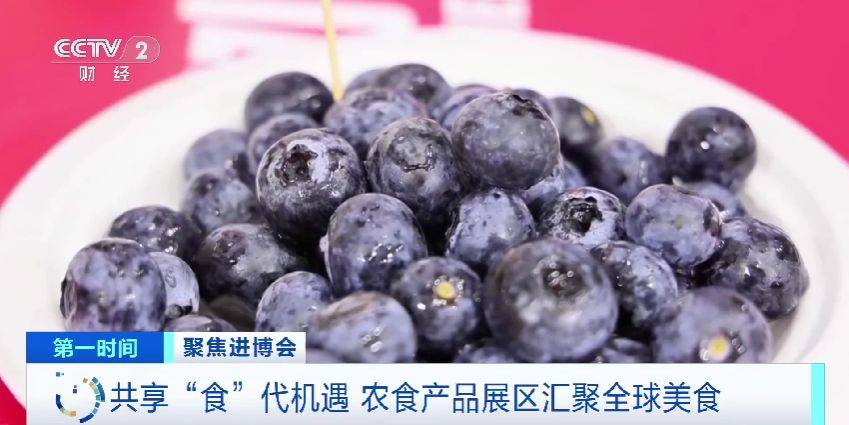
Core Points - The 8th China International Import Expo (CIIE) has opened in Shanghai, showcasing new products and technologies from around the world [1] Group 1: Agricultural and Food Products - The agricultural and food products exhibition area features over a thousand companies, including the return of Peru's desert blueberries and Ecuador's "red banana," highlighting global culinary delights [3] - The theme "From global farms to Chinese tables" emphasizes the importance of the expo in connecting international food products to Chinese consumers [3] Group 2: Consumer Goods - The consumer goods exhibition area, the largest at the expo, focuses on "higher quality, better life," showcasing cutting-edge beauty technology, AI smart appliances, and lifestyle products [5] - New features include a pet-themed display area and a "CIIE Sports Park," reflecting trends in modern living and technology [5] Group 3: Medical Devices and Healthcare - The medical devices and healthcare exhibition area is themed "Healthy China, Beautiful Life," presenting innovations such as a rapid imaging system for detecting small tumors and a new drug targeting triglycerides [7] - The area also highlights advancements in biomedicine and digital healthcare solutions [7] Group 4: Transportation and Smart Mobility - The expo features one of the largest eVTOL products, capable of cruising at 360 km/h with a noise level of only 56 decibels, marking its global debut [9] - The transportation area has seen a nearly 100% increase in low-altitude economy brands compared to last year, offering attendees the chance to experience new aircraft models [9] Group 5: Technology and Equipment - The technology and equipment exhibition area showcases significant upgrades in AI hardware, including a smart escalator system and various precision manufacturing products making their global debut [11] - The area will also host competitions featuring humanoid robots and AI esports, emphasizing the integration of technology in everyday life [11] Group 6: Service Trade - The service trade exhibition area, themed "Connecting Industries, Connecting China," has attracted over 50 Fortune 500 companies, showcasing innovations in logistics, finance, and consulting [13] - Key exhibits include autonomous navigation sorting arms and sustainable mining demonstrations, highlighting the role of service trade in the global economy's green and digital transformation [13]
蓄势待发 低空启航 | 毕马威发布《低空经济的黄金时代:解构行业生态,助力企业绘就增长蓝图》报告
Sou Hu Cai Jing· 2025-11-05 07:49
10月31日,第四届粤港澳大湾区服务贸易大会在珠海召开,毕马威在会上发布《低空经济的黄金时代:解构行业生态,助力企业绘就增长蓝图》报告,并 与参会嘉宾共同探讨低空经济行业前沿趋势,共谋企业实现高质量发展的路径。 毕马威中国交通运输行业主管合伙人、华南区市场部主管合伙人王洁进行报告发布并表示,在国家战略引领下,中国低空经济迎来黄金发展时代,并成为 经济发展新引擎,为企业带来了更多的发展机遇。2025年,国家在低空经济规划中引入"安全健康"理念,体现发展与规范并重,对企业提出了更高的要 求。为帮助低空经济企业抢占致胜点,毕马威推出了《低空经济的黄金时代:解构行业生态,助力企业绘就增长蓝图》研究报告,对低空经济的现状与未 来发展方向进行深入剖析,为企业提供了战略性参考,助力其在低空经济的广阔蓝天中蓄势腾飞。 毕马威中国客户与业务发展主管合伙人江立勤 连续两年,政府工作报告都将低空经济列为国家战略新兴产业,标志着其已从地方试点上升为国家科技竞争力的核心支点。这一转变不仅是产 业的扩容,更是围绕空域资源主权、高端制造自主权及未来交通话语权的系统性谋划。毕马威凭借全球网络与本土洞察,帮助企业把握政策机 遇,构建合规体系, ...

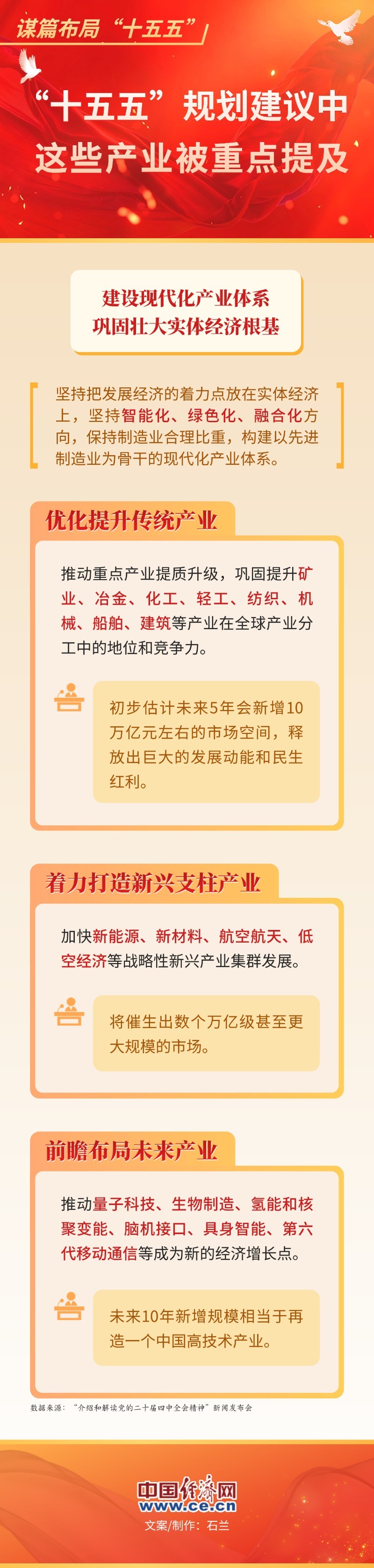
【图解】谋篇布局“十五五”|“十五五”规划建议中,这些产业被重点提及
Zhong Guo Jing Ji Wang· 2025-11-05 07:17
Core Viewpoint - The article emphasizes the importance of developing a modern industrial system focused on strengthening the real economy, with a commitment to intelligent, green, and integrated development, while maintaining a reasonable proportion of manufacturing [3][5]. Group 1: Modern Industrial System - The focus is on consolidating and expanding the foundation of the real economy by prioritizing the development of the real economy [3]. - There is a commitment to maintaining a reasonable proportion of manufacturing and constructing a modern industrial system centered on advanced manufacturing [3]. Group 2: Traditional Industry Optimization - The article discusses the need to enhance traditional industries such as mining, metallurgy, chemicals, light industry, textiles, machinery, shipping, and construction to improve their global competitiveness [5]. - An estimated market space of around 10 trillion yuan is expected to be added over the next five years, releasing significant development momentum and benefits for people's livelihoods [5]. Group 3: Emerging Pillar Industries - There is a push to accelerate the development of strategic emerging industries such as new energy, new materials, aerospace, and low-altitude economy [6]. - This initiative is expected to create several trillion-level markets or even larger scales [7]. Group 4: Future Industry Layout - The article highlights the importance of forward-looking layouts for future industries, promoting quantum technology, biomanufacturing, hydrogen energy, nuclear fusion energy, brain-computer interfaces, embodied intelligence, and sixth-generation mobile communication as new economic growth points [8]. - The anticipated scale of new high-tech industries over the next decade is comparable to recreating an entire high-tech industry in China [8].
国内首部低空经济蓝皮书在京发布 共探行业发展新路径
Zhong Guo Jing Ji Wang· 2025-11-05 03:34
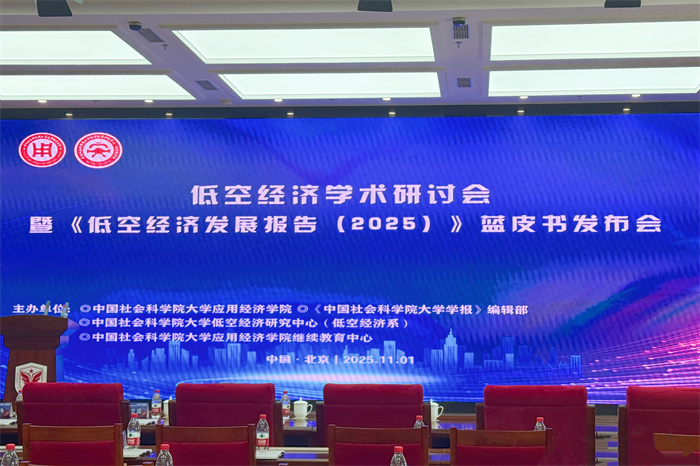
Core Insights - The low-altitude economy academic seminar and the release of the "Low Altitude Economic Development Report (2025)" blue paper were held in Beijing, marking a significant step in understanding and developing this emerging sector in China [1][3] Group 1: Event Overview - The seminar was co-hosted by the School of Applied Economics at the Chinese Academy of Social Sciences University and the editorial department of the Journal of the Chinese Academy of Social Sciences University, highlighting the collaborative effort in researching low-altitude economics [3] - The blue paper is the first of its kind in China, systematically outlining the market scale and regional cluster characteristics of the low-altitude economy, and analyzing the core logic and practical paths for industry development [3][14] Group 2: Educational Initiatives - The Chinese Academy of Social Sciences University has established a comprehensive talent training system for low-altitude economics, including doctoral and master's degree programs, with plans to expand undergraduate offerings [7] - The unveiling of the Low Altitude Economic Research Center aims to serve national strategic needs and focus on cultivating high-end, interdisciplinary talent while leading cutting-edge academic research [9] Group 3: Industry Challenges and Opportunities - Experts discussed the need for a shift in low-altitude airspace management from a one-size-fits-all approach to a risk-based, categorized management system, addressing current challenges such as regulatory gaps and talent shortages [10] - The low-altitude economy is characterized by its broad coverage, long industrial chain, and diverse application scenarios, with a call for innovation in technology and a focus on differentiated development paths to avoid low-end competition [10][11] Group 4: Future Projections - Predictions for the next generation of drones include the integration of hydrogen energy and quantum communication technologies, with an emphasis on creating intelligent logistics systems through AI and data fusion [11] - Shanghai aims to achieve a core industry scale of over 50 billion yuan in the low-altitude economy by 2027, focusing on overcoming common challenges in new aviation certification and infrastructure planning [12]
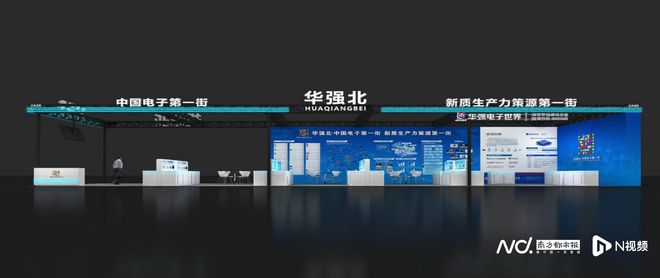
AI+消费电子硬核“出圈”,华强北亮相CEIC 2025
Nan Fang Du Shi Bao· 2025-11-05 03:02
Core Insights - The first CEIC 2025 Consumer Electronics Innovation Conference will take place from November 6 to 8 in Shenzhen, focusing on showcasing innovations in new productivity sectors such as AI smart terminals, robotics, XR devices, and low-altitude economy [1][8] - The theme of the event emphasizes filling innovation gaps and driving industrial paradigm shifts, with a significant focus on the "China's Electronics First Street" - Huaqiangbei [1][8] Group 1: Exhibition Highlights - The Huaqiangbei exhibition area will feature over 20 innovative companies presenting more than 20 self-developed technological achievements, showcasing a comprehensive ecosystem of new productivity in the consumer electronics sector [4][5] - Key areas of innovation include robotics, AI, low-altitude economy, XR devices, smart home technology, IC chips, and consumer electronics, with notable products such as six-axis collaborative robots and AI emotional economy toys [4][5] - Local leading enterprises in Huaqiangbei will demonstrate their capabilities in electronic component trading and services, highlighting the region's strength in the electronics information industry [5] Group 2: Forum and Discussions - The "Huaqiangbei High-Quality Development Forum" will be held concurrently, focusing on the relationship between Huaqiangbei and new productivity, featuring experts from various sectors discussing the evolution of the electronics industry [6] - Discussions will cover topics such as the transformation of the electronic market, the integration of AI and intelligent manufacturing, and the new opportunities in the low-altitude economy [6] Group 3: Innovation and Development - The event aims to accelerate the formation of a new productivity-driven ecosystem in Huaqiangbei, showcasing how AI technology is reshaping future living scenarios [7] - Huaqiangbei is recognized for its rapid innovation cycle, with a unique ecosystem that allows for quick transitions from design to production, exemplifying the flexibility and creativity of China's manufacturing system [7] - The conference aligns with national goals for high-level technological self-reliance and aims to leverage technological advantages to drive the development of the consumer electronics industry [8]
锚定“武汉都市圈绿色发展重要增长极”目标 湖北咸宁以“五大行动”赋能高质量发展
Ren Min Ri Bao· 2025-11-04 22:01
Core Viewpoint - The city of Xianning is focusing on becoming a significant growth pole for green development in the Wuhan metropolitan area, achieving impressive economic indicators and stability in the first three quarters of 2025, with all major economic indicators ranking in the top 10 of the province, marking the best performance in nearly four years [1] Group 1: Industrial Growth - Xianning is implementing a "5+4" modern industrial system, a "3+7" agricultural system, and a "3+3" high-quality service industry system to deepen industrial development [2] - The city has established a 30 billion yuan high-tech industry mother fund, expected to leverage 150 billion yuan in social capital, benefiting 61,700 business entities with a transaction volume of 28.876 billion yuan [2] - In the first three quarters of 2025, Xianning signed 402 projects worth over 100 million yuan and started 608 major projects, representing 1.98 times and 2.39 times increases in project numbers and investment scale compared to 2024 [2] Group 2: Technological Empowerment - Xianning has established a technology innovation center that has attracted five academic teams, 23 quality innovation projects, and 54 tech enterprises [3] - The number of high-tech enterprises in the city has reached 750, an increase of 477 since 2020, with 350 high-tech backup enterprises and 2,650 technology-based SMEs [3] - The city completed technology contract transaction amounts of 23.2 billion yuan in the first three quarters of 2025, a 22% increase from the previous year, ranking seventh in the province [3] Group 3: Economic Activation - Xianning has initiated significant reforms in key areas, including a large-scale financial system reform that has led to an 8.7% year-on-year increase in fixed asset investment [4] - The city has improved its business environment, resulting in the addition of 97 large-scale industrial enterprises, the best performance in five years [4] - In the first three quarters of 2025, the total foreign trade import and export volume increased by 35.2% [4] Group 4: Urban and Rural Development - Urban renewal efforts have benefited 4,770 households, with the addition of 5,927 parking spaces and nine pocket parks, achieving a green space rate of 40.53% in the main urban area [5] - Agricultural production has seen increases in area, yield, and total output, with the added value of the agricultural and sideline food processing industry growing by 27.8% [6] Group 5: Social Welfare - Xianning has maintained a high level of public welfare spending, with over 79% of fiscal expenditure allocated to improving people's livelihoods [7] - The city has organized nearly 1,200 cultural activities benefiting over 2 million people, aiming to establish itself as a well-known cultural tourism destination [7] - Environmental quality has improved, with stable water quality in the Yangtze River and air quality meeting national standards for four consecutive years [7]
上市公司投身产业实践 绘制昂扬向上科创曲线
Zhong Guo Zheng Quan Bao· 2025-11-04 20:17
Core Insights - The "14th Five-Year Plan" has laid a solid foundation for China's technological strength, with a projected R&D investment exceeding 3.6 trillion yuan in 2024, marking a 48% increase from 2020 [1] - A-shares listed companies are pivotal in transforming policy blueprints into industrial practices, with a total R&D investment of 1.16 trillion yuan in the first three quarters of 2025, reflecting a 3.88% year-on-year growth [1] - The focus on key areas such as integrated circuits, advanced materials, and biomanufacturing is expected to drive significant breakthroughs in core technologies during the "15th Five-Year Plan" [2] Group 1: Technological Breakthroughs - The "15th Five-Year Plan" emphasizes the need for decisive breakthroughs in critical core technologies across various sectors, including integrated circuits and high-end instruments [2] - Companies like Zhichun Technology are transitioning from equipment suppliers to solution partners, enhancing their competitive edge in the semiconductor industry [2] - The continuous increase in R&D investment by listed companies is crucial for enhancing their global market competitiveness [2] Group 2: Emerging and Future Industries - The development of strategic emerging industries such as new energy, aerospace, and low-altitude economy is highlighted as essential for economic growth [3] - Companies are actively engaging in the development of AMOLED display technologies, with a projected shipment area of nearly 8.8 million square meters in 2024 [3] - The rise of low-altitude economy is seen as a transition from policy-driven to technology-driven growth, with companies focusing on safety and efficiency [3] Group 3: Capital Market and Innovation Ecosystem - The capital market is undergoing reforms to support emerging industries, with companies like Yushu Technology and Blue Arrow Aerospace advancing their IPO processes [4] - The integration of innovation resources is being promoted, with companies forming innovation alliances to enhance collaboration across various sectors [5] - Artificial intelligence is identified as a key accelerator for the integration of technological and industrial innovation, with significant growth in AI applications [6]