快递

Search documents
国盛证券:予极兔速递-W“买入”评级 合理估值12.90港元
Zhi Tong Cai Jing· 2025-12-31 01:24
极兔速递是一家从东南亚崛起,并成功拓展至中国及拉美中东的全球化快递企业,快递网络覆盖了13个 国家,当前,核心投资逻辑在于,公司正同时享受东南亚电商及社媒平台崛起、中国的"反内卷"下盈利 修复与标准输出以及新市场电商的爆发式增长三重红利。 东南亚:盈利压舱石,乘社交电商东风而上 东南亚是公司的起家市场和利润"压舱石",市占率稳居行业第一。2025年,公司成功把握了TikTokShop 在东南亚爆发式增长的战略机遇,通过深度合作承接其主流件量,驱动市场份额持续提升至32.8% (2025H1)。东南亚2025年前三季度包裹量同比增长65%,2025年上半年经调整EBIT同比增长74%。通过 持续的成本优化和运营经验赋能,在获取市场份额的同时保持了健康的盈利能力,东南亚市场有望在未 来5年持续保持较高增长速度,并贡献主要的利润增量。 中国:规模基本盘,海外标准输出基地 国盛证券(002670)发布研报称,东南亚与新市场的电商红利带来的极兔速递-W(01519)业务规模增 长,中国的盈利能力改善,将共同驱动公司未来业绩高增。该行预测极兔速递2025-2027年经调整净利 润分别为3.71/5.71/7.64亿美元, ...

【咸阳】上线“小哥码”破解骑手“进门难”
Shan Xi Ri Bao· 2025-12-31 00:19
12月24日,"秦风骑手·咸阳小哥码"发布仪式暨"三秦暖新·心心向咸"关爱新就业群体慰问活动举 行,"秦风骑手·咸阳小哥码"服务平台正式上线运行。 该平台重点构建了"一码通、一图明、一键联、一积分"四大功能体系。骑手通过微信搜索"秦风骑 手"小程序并完成实名认证后,即可生成个人专属"小哥码",在试点社区和楼宇,只需扫码便可快速完 成身份核验与订单核对,实现"秒级通行";平台集成"小区服务地图",标注充电桩、饮水点、公共卫生 间等设施位置,并提供内部导航,帮助骑手快速定位,高效配送。在配送过程中,如遇管理盲区、安全 隐患等问题,骑手可通过"一键上报"功能即时反馈,信息直达社区与物业,推动问题快速响应,有效解 决。 "平台的上线,为我们带来了工作便利,让我们能更加便捷地进出小区、写字楼,不再因为身份核 验的问题耽误时间,也让我们能够更好地融入这座城市,提升职业归属感与社会尊重感。我们将用优质 的服务,回报社会对我们的关爱和支持。"外卖骑手喻兴玲说。 据介绍,该平台正在探索建立正向激励机制,骑手可通过规范服务、参与培训、反馈建议等方式获 得积分,并用这些积分兑换权益或服务,进一步增强归属感和获得感。 (记者:张乐佳 ...
极兔速递-W(01519):东南亚盈利基石稳固,新市场增长蓝图展开
GOLDEN SUN SECURITIES· 2025-12-31 00:19
Core Insights - The report highlights that Jitu Express (01519.HK) is a rapidly growing global express delivery company originating from Southeast Asia, with a strong presence in 13 countries, benefiting from the rise of e-commerce and social media platforms in the region, as well as profitability recovery in China and explosive growth in new markets [2][3]. Company Overview - Jitu Express is positioned to leverage three key growth drivers: the booming e-commerce market in Southeast Asia, the recovery of profitability in China due to reduced competition, and the rapid expansion of e-commerce in new markets [2][3]. Financial Projections - The adjusted net profit forecasts for Jitu Express from 2025 to 2027 are projected to be $369 million, $563 million, and $750 million, representing year-on-year growth rates of 84.3%, 52.6%, and 33.1% respectively [3]. - The expected adjusted EPS for the same period is $0.040, $0.061, and $0.081 per share [3]. Valuation and Investment Rating - Given the high growth potential in Southeast Asia and the Latin America and Middle East markets, the company is expected to command a valuation premium. The target P/E ratio for 2026 is set at 27x, based on the projected adjusted EPS of $0.061 [3]. - The report assigns a "Buy" rating for Jitu Express, indicating a favorable outlook for the company's stock performance [3].
大撤退,快递驿站,越来越难做了
3 6 Ke· 2025-12-30 23:17
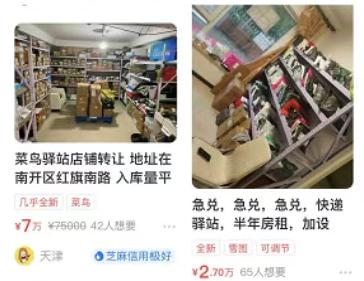
Core Insights - The express delivery station industry, once seen as a low-barrier path to wealth, is now facing significant challenges, with many stations struggling to find buyers for transfer [1][3] - Data shows that over half of the 187,000 express delivery stations in China are operating at a loss, with the average lifespan dropping from 2.3 years to just 11 months [2] Group 1: Industry Challenges - Most express delivery stations are not only unprofitable but are also incurring losses, primarily relying on delivery and shipping fees for revenue [6] - Delivery fees have decreased significantly due to intense competition, dropping from 0.5-0.8 yuan per item to as low as 0.2 yuan in highly competitive areas [7] - The average price for domestic express delivery has fallen to 7.52 yuan per item, a 7.7% decrease compared to the previous year [8] Group 2: Cost Structure - Fixed costs for express delivery stations are substantial, including rent (2,000-3,000 yuan per month for a small storefront) and labor costs (3,000-5,000 yuan per month for staff) [9] - Additional costs such as notification fees and system usage fees can add several thousand yuan to monthly expenses, making profitability difficult [10] Group 3: Consumer and Company Relations - Express delivery stations are caught in the middle, facing complaints from consumers due to issues like unauthorized package drop-offs, leading to a 43% increase in related complaints [12] - Delivery companies impose various penalties on stations, creating an unbalanced relationship where stations are financially penalized for issues beyond their control [13][14] Group 4: Market Saturation and Competition - The industry is experiencing saturation, with many stations competing for the same customer base, leading to a race to the bottom in pricing [16] - In many county-level cities, 95% have multiple delivery stations, resulting in fierce competition that drives down profits for all [16] Group 5: Attempts at Diversification - Many station owners have attempted to diversify their services, such as adding retail or community group buying, but these efforts often result in minimal returns and additional challenges [19] - The majority of users visit stations solely to pick up packages, with over 80% spending less than three minutes on-site, making retail efforts largely ineffective [19] Group 6: Future Outlook - Despite the challenges, the demand for last-mile delivery remains strong, with express delivery volumes expected to continue growing, indicating that express delivery stations are unlikely to disappear entirely [21]

8组数据,见证中国经济向“新”而行
Ren Min Wang· 2025-12-30 21:57
Group 1: Agriculture and Food Production - China's grain production reached 14,297.5 billion jin in 2025, an increase of 167.5 billion jin or 1.2% from the previous year, maintaining a stable level above 14 trillion jin [11][12] - The grain planting area in China increased to 1.791 billion mu, up by 1.348 million mu, marking six consecutive years of growth [11] - The average grain yield reached 399.1 kg per mu, an increase of 4.4 kg or 1.1% from the previous year, supported by improved agricultural policies and technology [12] Group 2: New Energy Industry - By the end of Q3 2025, China's installed capacity for wind and solar power exceeded 1.7 billion kilowatts, accounting for 46% of the national power generation capacity [13] - Wind and solar power generation reached 1.73 trillion kWh, representing 22.3% of the total electricity consumption during the same period [13] - The first batch of wind and solar power bases is expected to be operational, with plans for an additional 50 million kilowatts of capacity in subsequent phases [13] Group 3: E-commerce and Logistics - China's express delivery volume surpassed 18 billion pieces for the first time, with an average of over 6,200 pieces processed per second [15][16] - The express delivery business in central and western regions saw an increase in revenue share, indicating improved logistics accessibility [15] - The postal and express industry has become a significant driver for consumption and economic growth [16] Group 4: Telecommunications and Technology - China has built 4.83 million 5G base stations, achieving over 90% coverage in administrative villages [17][18] - The 5G network is integrated into 91 sectors of the national economy, with a complete industrial chain established from chips to base station equipment [18] - The development of 6G technology is underway, with over 300 key technologies in reserve, aiming for commercial capabilities by 2030 [18] Group 5: Infrastructure and Transportation - The national comprehensive transportation network is over 90% complete, connecting more than 80% of county-level administrative regions [21][22] - In 2025, transportation fixed asset investment is expected to exceed 3.6 trillion yuan, with significant expansions in highways and railways [21] - The construction of the "6 axes, 7 corridors, and 8 channels" framework is progressing, enhancing connectivity between major economic regions [22] Group 6: Automotive Industry - In the first 11 months of 2025, China's production and sales of new energy vehicles approached 15 million units, with exports exceeding 2.315 million units, reflecting over 30% growth [23][24] - The overall automotive market is expected to achieve record highs in production and sales, driven by policy support and market demand [24] - The number of electric vehicle charging facilities reached 19.322 million, alleviating previous concerns about charging accessibility [25]

我国加快推进快递包装绿色转型
Xin Lang Cai Jing· 2025-12-30 19:09
Core Insights - The postal industry is advancing green packaging initiatives during the "14th Five-Year Plan" period, achieving significant improvements in green, reduced, and recyclable packaging practices [1][2][3] Group 1: Green Packaging Initiatives - The industry has achieved full coverage of electronic waybills and circular transfer bags, with a packaging standardization rate of 86% [1] - Packaging box layers and bag thickness have been reduced by over 50%, and tape width has been reduced by 25% [1] - Smart packing algorithms have decreased material consumption by nearly 20%, and the proportion of circular packaging in same-city express delivery has reached 10% [1] Group 2: Regulatory and Policy Framework - The postal industry has developed a comprehensive regulatory framework, including 3 new laws, 15 standards, and 9 policies aligned with green principles [2] - The system features a complementarity between laws and regulations, coordination between national and local policies, and integration of industry standards [2] Group 3: Technological Innovations - The industry has implemented various new technologies and recycling scenarios, such as lightweight tape and reduced-size waybills [2] - The total area of photovoltaic installations across the industry is 4.48 million square meters, with over 4,300 high-speed security machines and more than 1,000 green distribution centers [2] Group 4: Carbon Reduction Strategies - The postal industry is focusing on carbon reduction through technological innovation and green management across four key stages: collection, transfer, transportation, and delivery [3] - Future plans include leveraging big data, blockchain, and intelligent technologies to enhance carbon footprint management across the entire logistics chain [3] Group 5: Future Goals - During the "15th Five-Year Plan" period, the postal industry aims to promote green high-quality development, focusing on carbon reduction, pollution reduction, and green expansion [4] - The industry will accelerate the transition to green packaging and strengthen source control and comprehensive governance [4]
前11个月全国社会物流总额同比增长5.0%
Zheng Quan Ri Bao· 2025-12-30 16:08
Core Insights - The total social logistics volume in China reached 331.2 trillion yuan in the first 11 months, with a year-on-year growth of 5.0%, slightly down by 0.1 percentage points from the previous 10 months [1] - In November, the growth rate was 4.5%, a decrease of 0.3 percentage points compared to October [1] Group 1: Industrial Sector - The logistics volume of industrial products grew by 5.2% year-on-year in the first 11 months, with a slight decline of 0.1 percentage points from the previous 10 months [2] - In November, the growth rate for industrial logistics was 4.7%, down by 0.2 percentage points month-on-month [2] - Traditional industries like coal and chemicals are seeing a logistics demand rebound due to upgrades, with growth rates exceeding 6% [2] - High-tech manufacturing logistics demand grew over 9%, with specific sectors like integrated circuit manufacturing and electronic materials exceeding 30% growth [2] Group 2: Consumer Sector - The logistics volume for units and residential goods increased by 5.8% year-on-year in the first 11 months, although this was a decline of 0.6 percentage points from the previous 10 months [2] - This growth rate remains above the average for total social logistics, aligning with the overall consumer market trends [2] Group 3: Import Sector - The logistics volume for imported goods decreased by 0.2% year-on-year in the first 11 months, but the decline was narrower by 0.3 percentage points compared to the previous 10 months [2] - In November, the import logistics volume grew by 3.0%, although this was a slight decrease of 0.4 percentage points from October [2] - Imports from countries involved in the Belt and Road Initiative increased by 6% year-on-year in the first 11 months [2] Group 4: Logistics Industry Performance - The total revenue of the logistics industry reached 13.1 trillion yuan, with a year-on-year growth of 4.6%, marking a 0.1 percentage point increase from the previous 10 months [3] - The logistics industry prosperity index averaged 50.7%, indicating expansion, with November's index at 50.9%, up by 0.2 percentage points [3] - Warehouse logistics turnover efficiency has improved, with the sales rate of industrial products rising to 96.5% in November [3] - The logistics pricing in various sectors, including maritime and road transport, has shown an upward trend due to seasonal demand [3] Group 5: Future Outlook - The business activity expectation index for logistics companies remains high at 54.9%, supported by ongoing policies aimed at reducing logistics costs and improving quality [4]
千城百县看中国|河北白沟新城:物流快递跑出“加速度”
Xin Hua She· 2025-12-30 15:08
0:00 近日,河北省保定市白沟新城的物流商贸中心内一派繁忙景象,一辆辆满载货物的快递车往来穿梭,工 人们正有条不紊地进行分拣、装车作业。 近年来,白沟新城聚焦特色产业发展需求,积极构建"制造+电商+物流"深度融合的产业生态。依托政 策红利,引进顺丰、中通、圆通等头部企业建立区域分拨中心。与此同时,快递企业组建专属团队进驻 产业聚集区,开通"随产随发"绿色通道,实现从"生产线到快递车"的无缝衔接,为电商订单的快速履约 提供了坚实保障。 目前,白沟新城拥有3个物流中心,物流企业189家,日均发出快件100余万件。 制片人:马宝军 策划:李琳 杜屹然 统筹:汪峰 陶玲君 编导:李聪 报道员:冯云 孙浩龙 薛银成 新媒体编辑:王家辉 黄传莉 ...

韵达股份:2025年第二次临时股东会决议公告
Zheng Quan Ri Bao· 2025-12-30 14:16
(文章来源:证券日报) 证券日报网讯 12月30日,韵达股份发布公告称,公司2025年12月30日召开2025年第二次临时股东会, 审议通过《关于公司董事津贴的议案》等多项议案。 ...

反内卷、抢存量、谋海外……2025中国快递10大瞬间
3 6 Ke· 2025-12-30 11:29
Core Insights - The express delivery industry is transitioning from a high-growth phase to a focus on efficiency and service competition, indicating a need for independent thinking and adaptation to new challenges [1] - The industry is experiencing a slowdown in growth rates, with the overall business volume growth dropping to 5% in November, down from 20% earlier in the year, suggesting a shift towards a more mature and stable growth phase [3] Group 1: Industry Trends - The "anti-involution" campaign initiated by the State Post Bureau aims to address the industry's low-price competition, leading to improved profitability for express companies, although some frontline outlets still face challenges due to rising costs [2] - The double eleven shopping festival saw a total of 139.38 billion packages collected, marking a 9% increase from the previous year, but the growth rate is slowing, indicating a potential shift in consumer behavior and market saturation [3] - The introduction of tax reporting requirements for online platforms starting October 1, 2025, will expose fraudulent activities such as order brushing, pushing the industry towards compliance and authenticity [5] Group 2: Company Developments - YTO Express launched its strategic hub, the Dongfang Tiandi Port, with an investment of 12.2 billion yuan, marking a significant step in its internationalization strategy and aiming to enhance its competitive edge in the logistics sector [6] - Shentong Express completed the acquisition of Daniao Logistics for 362 million yuan, enhancing its operational capabilities and positioning itself in the "quality express" market while Alibaba shifts its focus towards core strategic areas [7] - JD Logistics and SF Express are expanding their international operations, with JD launching a new self-operated B2C brand in Saudi Arabia and SF establishing international air routes, indicating a strong push towards global market penetration [14] Group 3: Technological Advancements - The integration of AI technologies in the express delivery sector is transforming operations, with applications in route optimization and operational efficiency, exemplified by YTO's "smart routing" system [9] - The rise of robotics in the industry is being observed, with advancements in sorting and delivery processes, although challenges remain in achieving efficiency comparable to human workers [15] Group 4: Market Dynamics - The frequent switching of return logistics among various express companies highlights the competitive nature of the market, with companies vying for the more profitable return business as opposed to standard deliveries [10] - The emergence of "sheep shearing" tactics among consumers exploiting platform loopholes poses a challenge for express companies, necessitating stricter regulations to protect the integrity of the logistics chain [12]