
服装

Search documents
李宁涨超5% 全球首家龙店开业 花旗上调其目标价至20.6港元
Jin Rong Jie· 2025-12-15 04:14
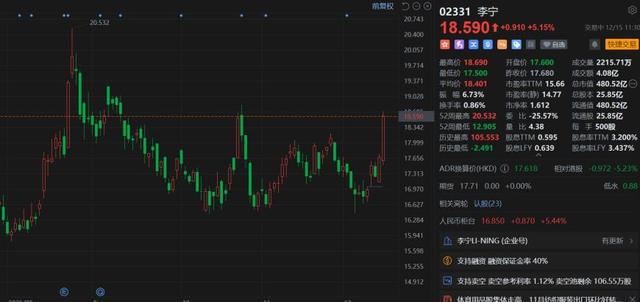
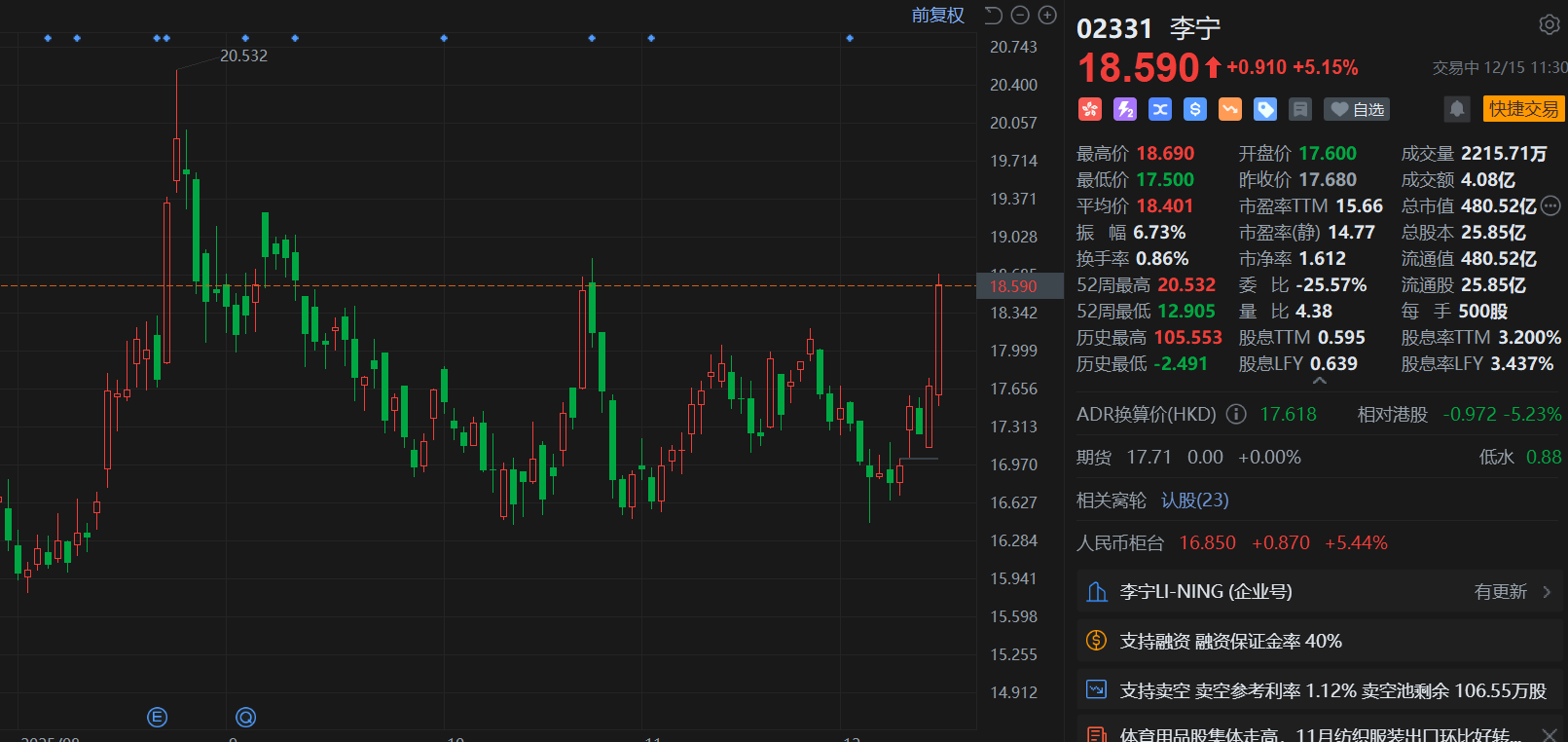
Core Viewpoint - Li Ning's stock rose over 5% to HKD 18.59, with a total market capitalization of HKD 48.05 billion, following the grand opening of its first "Dragon Store" and the launch of the new "Honor Gold" product line, marking a significant milestone in the brand's development and retail channel upgrade [1] Group 1: Company Developments - The "Dragon Store" was inaugurated in the prominent Sanlitun Taikooli shopping area in Beijing, showcasing Li Ning's commitment to innovative retail experiences [1] - The launch of the "Honor Gold" product series is expected to create a strong synergistic effect with the new store format, enhancing brand visibility and customer engagement [1] Group 2: Financial Projections - Citigroup updated its model for Li Ning, projecting revenue growth of 0% in 2025, 4% in 2026, and 8% in 2027, with net profit growth of 18%, 11%, and 17% respectively for the same years [1] - The target price for Li Ning was raised from HKD 18.1 to HKD 20.6, based on a forecasted price-to-earnings ratio of 17 times for 2026, while maintaining a "Buy" rating [1]


港股异动 | 李宁(02331)午前涨超5% 全球首家龙店落地北京太古里 荣耀金标产品系列正式发布
智通财经网· 2025-12-15 04:00
Core Viewpoint - Li Ning's stock rose over 5% following the grand opening of its first "Dragon Store" and the launch of the new "Honor Gold" product series, marking a significant milestone in the brand's development and retail channel upgrade [1] Group 1: Company Developments - Li Ning's stock price increased by 5.03%, reaching HKD 18.57, with a trading volume of HKD 425 million [1] - The "Dragon Store" opening in Beijing's Sanlitun area is themed "Dragon's Glory" and aims to create a unique consumer experience centered around sports culture and Chinese cultural confidence [1] - The new store will focus on three themes: "Award Moments," "Competitive Moments," and "Lifestyle Moments," providing tailored products and experiences for consumers [1] Group 2: Product Launch and Strategy - The launch of the "Honor Gold" product series is expected to synergize with the new Dragon Store, enhancing the brand's market presence [1] - Li Ning plans to expand its consumer demographic and enrich shopping scenarios by building on its established categories such as running, basketball, and outdoor sports [1] - The brand aims to convey sports spirit and culture while offering unique products and service experiences to consumers [1]
港股异动丨李宁涨超5% 全球首家龙店开业 花旗上调其目标价至20.6港元
Ge Long Hui· 2025-12-15 03:38
Core Viewpoint - Li Ning (2331.HK) experienced a significant increase of over 5%, reaching HKD 18.59, with a total market capitalization of HKD 48.05 billion. The company celebrated the grand opening of its first "Dragon Store" and the launch of the new "Honor Gold Standard" product series, marking a key milestone in its brand development and retail channel upgrade [1] Group 1: Company Developments - The grand opening of the "Dragon Store" in Beijing's Sanlitun Taikooli is a significant event for Li Ning, showcasing the brand's commitment to innovation and retail expansion [1] - The launch of the "Honor Gold Standard" product series is expected to create a strong synergistic effect with the new store format, enhancing the overall brand experience [1] Group 2: Financial Projections - Citigroup updated its model for Li Ning, reflecting expectations for revenue growth of 0%, 4%, and 8% for the years 2025 to 2027, respectively [1] - Net profit is projected to grow by 18%, 11%, and 17% year-on-year for the same period [1] - Citigroup raised Li Ning's target price from HKD 18.1 to HKD 20.6, based on a forecasted price-to-earnings ratio of 17 times for 2026, while maintaining a "Buy" rating [1]
中产羽绒服,集体站上2000元
3 6 Ke· 2025-12-15 03:29
Core Insights - The rising prices of down jackets have become a significant topic, with many well-known brands now entering the "2000 yuan era" for pricing [1][3] - A recent survey indicates a shift in consumer behavior, with a growing willingness to pay for preferred styles rather than just basic needs [4][11] Consumer Trends - Nearly 40% of respondents purchased down jackets this year, a significant increase from 20% last year [3] - The primary reason for purchasing down jackets has shifted to "liking a style," surpassing "basic need" and "promotional discounts" [4] - About 30% of consumers plan to increase their budget for down jackets this year, compared to only 7% last year [4] Income and Spending Patterns - The middle-income group, particularly those earning between 100,000 and 200,000 yuan annually, shows a strong desire to purchase higher-quality down jackets [5] - The proportion of consumers with a budget of 1,000 yuan or less has decreased from 77% to 51%, while those willing to spend 2,000 yuan or more has increased from 10% to 35% [6] Market Dynamics - The 2000 yuan price point has become a psychological anchor for middle-income consumers and a critical battleground for brands targeting the mid-to-high-end market [7] - Major brands like Bosideng and North Face have introduced products priced above 2000 yuan, reflecting the market's upward trend [7][9] Consumer Expectations - As prices exceed 2000 yuan, consumer expectations have evolved to prioritize design aesthetics, human-centered details, and professional specifications [13] - The focus on down quality remains, but consumers are increasingly interested in specific parameters like fill weight and loftiness [9][10] Brand Performance - High-end brands are seeing strong sales in the 2000 yuan price range, with products that blend traditional craftsmanship and modern aesthetics performing particularly well [11][12] - Outdoor brands are gaining popularity due to their dual value proposition of professional functionality and lifestyle appeal [13] Market Challenges - Despite the willingness to pay for high-quality down jackets, consumers express concerns about excessive price increases and product homogeneity [14] - The market faces a challenge where prices have risen significantly, but the differentiation in product value and quality has not kept pace, leading to skepticism among consumers [14]
比音勒芬跌落神坛,被踢出深证成指样本股
Xin Lang Cai Jing· 2025-12-15 01:21
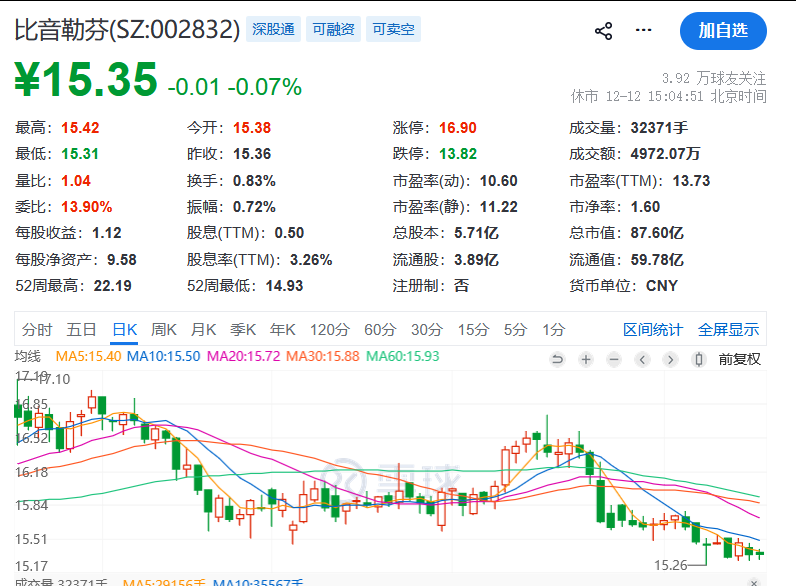
12月15日深市指数样本调整将生效,"衣中茅台"比音勒芬黯然出局! 来源|读创财经 编辑|薛婷阳 责编|马强 12月15日,深证成指、创业板指、深证100、创业板50等深市指数样本调整将生效。值得注意的是,被称为"衣中茅台"的比音勒芬被调出了深证成指样本 股名单。 相关指数样本股调整,对应的是万亿级规模基金同步调仓,对于被调出局的个股,短期内股价将面临一定的压力。比音勒芬近两年来在二级市场上跌幅明 显,2024年全年跌幅达30.76%,今年以来跌幅达26.59%,不到两年时间股价已经腰斩,最新市值仅剩下87.6亿元。 与跌跌不休股价对应的是,比音勒芬业绩堪忧,今年前三季度公司实现营收约32.01亿元,同比增加6.71%;归属于上市公司股东的净利润约6.2亿元,同 比减少18.7%;扣非净利润约5.78亿元,同比下滑21.36%。第三季度单季,比音勒芬归属于上市公司股东的净利润、扣非净利润同比分别减少27.42%、 32.01%。 比音勒芬今年前三季度销售费用增至13.4亿元,上年同期为10.49亿元。营销投入的加码并未带来预期的销售转化,截至 2025 年 9 月 30 日,比音勒芬的存 货金额攀升至 11. ...
阿迪达斯为什么跟新中式干上了?
3 6 Ke· 2025-12-15 00:36
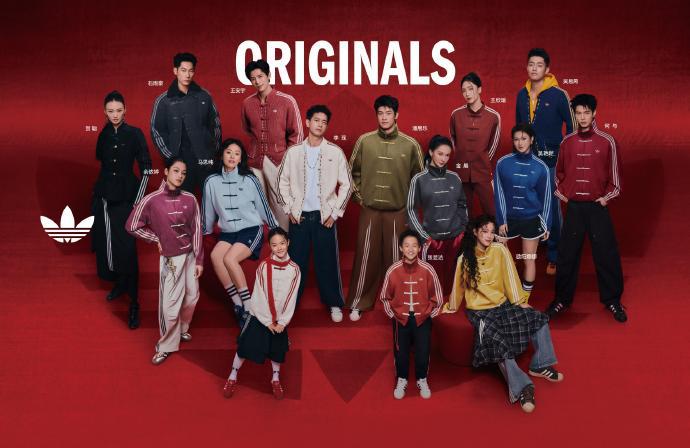
Core Insights - Adidas has launched a new collection of "New Chinese Style" jackets for the Spring Festival, featuring various colors and designs, and has engaged 15 celebrities and athletes for marketing [1][3] - The brand has experienced ten consecutive quarters of growth, with double-digit growth in the last four quarters, contrasting with competitors like Anta and Nike [3][12] - The success of the new jacket is attributed to its unique design elements and the effective marketing strategy that resonates with both local and international consumers [3][11] Product Strategy - The "New Chinese Style" jackets incorporate traditional Chinese elements with modern design, appealing to both local and foreign consumers [5][11] - Adidas has established a creative center in Shanghai for over 20 years, focusing on integrating Eastern aesthetics into their design language [11][34] - The brand emphasizes practicality and versatility in its products, ensuring they fit seamlessly into consumers' wardrobes [11][21] Market Positioning - Adidas has adopted a "China for China" strategy, leveraging local creative teams and flexible supply chains to respond quickly to market demands [21][36] - The brand has improved its relationship with distributors, enhancing its presence in lower-tier cities [15][19] - Adidas is focusing on affordable, stylish basics that appeal to younger consumers, with many products priced between 300-500 RMB [15][33] Financial Performance - Despite recent growth, Adidas's revenue in Greater China for the first three quarters of 2025 is estimated at 2.774 billion euros, indicating a decline from 4.428 billion euros in 2020 [36] - The market share in China has decreased from 15% in 2021 to 8.7% in 2024, highlighting ongoing challenges in the competitive landscape [36]

2025年第49周:服装行业周度市场观察
艾瑞咨询· 2025-12-15 00:06
Group 1: Luxury Goods Market - The Italian luxury goods association reports that the "crisis peak" in the Chinese market has passed, with a projected global luxury market growth of 5% by 2026, driven by recovering consumer confidence in China [3][4] - The report highlights significant market differentiation, with China expected to grow by 4%, while North America and the Middle East are projected to grow by 4.5% and 6%, respectively [3][4] - Key challenges for the industry include price dynamics, geopolitical factors, and sustainability [4] Group 2: Children's Clothing Market - The children's clothing market is experiencing accelerated concentration, with the top 10 brands expected to reach a CR10 of 31% by 2025, driven by leading brands like Balabala and Jinfa Labi [6][8] - Despite declining birth rates, the market is shifting towards a "consumption dividend," with Gen Z parents prioritizing brand, technology, and sustainability [5][8] - The market is projected to reach 473.8 billion yuan by 2025, attracting various players due to high profit margins [5] Group 3: Underwear Industry - The domestic underwear industry is showing signs of "weak recovery and strong differentiation," with major brands reporting varied revenue performance in Q3 2025 [7] - Aimer's revenue increased slightly by 0.16%, but it faced net losses due to weak mid-to-high-end demand [7] - Brands like Langsha and Huijie are experiencing growth through differentiated strategies, while others like Yimin Group's Gujin brand are struggling with revenue declines [7] Group 4: Eyewear Industry - The global eyewear market is expected to exceed $330 billion by 2030, with a CAGR of 8.6%, driven by increased screen time and aging populations [6] - The Asia-Pacific region is projected to become the fastest-growing market due to population growth and urbanization [6] Group 5: Fashion and Apparel Trends - Decathlon is attempting to reshape its brand image by collaborating with the French space agency to launch a space suit, aiming to shift consumer perception from "affordable" to "high-end" [9][10] - The rise of self-media IPs has enabled brands like Yingshijifeng to achieve significant sales in the apparel e-commerce sector, although reliance on IP poses risks [11] - ANTA's recent financial performance indicates a strong focus on high-end sports apparel, with a notable increase in revenue and profit margins [12][20] Group 6: Market Dynamics and Challenges - The luxury goods market in China is expected to contract by 3%-5% this year, with a shift towards experiential consumption and a focus on health and interpersonal connections [6] - Traditional brands like Diana have struggled to adapt to changing consumer preferences, leading to their exit from the Chinese market [17] - The competitive landscape is intensifying, with brands needing to innovate and enhance operational efficiency to thrive [19][20]


网红韩国潮牌,只有一年保鲜期?
虎嗅APP· 2025-12-14 23:54
Core Viewpoint - A new wave of Korean fashion brands is emerging in China, characterized by rapid expansion and a short lifecycle, often referred to as "disposable brands" due to their quick rise and fall in popularity [4][5][6]. Group 1: Rise of Korean Fashion Brands - The resurgence of Korean fashion brands in China is significantly influenced by K-pop culture, with many brands closely associating with popular idols to drive traffic and sales [8][9]. - The unique design and niche appeal of these brands resonate with young consumers who prefer individuality over mainstream labels, leading to a strong initial demand [10]. Group 2: Rapid Expansion Strategies - Korean fashion brands are expanding quickly in China, establishing a presence in major cities and online platforms within 1-2 years, often targeting core commercial areas [12][15]. - The use of pop-up stores and collaborations with local influencers has created buzz and attracted foot traffic, enhancing brand visibility [13][14]. Group 3: Challenges and Market Dynamics - Despite initial success, many Korean brands face challenges such as low brand loyalty and consumer fatigue, leading to a rapid decline in popularity once they become mainstream [19][20]. - The reliance on local agents for rapid expansion can dilute brand integrity and quality, as agents prioritize quick profits over long-term brand building [22][24]. - The market is saturated with new entrants, making it difficult for existing brands to maintain their unique appeal and consumer interest [21][25].

广州棠雾玩具有限公司成立 注册资本10万人民币
Sou Hu Cai Jing· 2025-12-14 20:46
天眼查App显示,近日,广州棠雾玩具有限公司成立,注册资本10万人民币,经营范围为服装服饰零售; 建筑材料销售;互联网销售(除销售需要许可的商品);家居用品销售;日用百货销售;企业管理咨询;广告 制作;商务代理代办服务;广告设计、代理;信息咨询服务(不含许可类信息咨询服务);技术服务、技术 开发、技术咨询、技术交流、技术转让、技术推广;软件开发。 ...
11月份物价数据彰显经济韧性与潜力
Zheng Quan Ri Bao· 2025-12-14 16:16
Group 1 - The core viewpoint of the articles highlights that the recent increase in consumer prices indicates a synchronized improvement in supply and demand, reflecting economic resilience and potential [1][2] - In November, the Consumer Price Index (CPI) rose by 0.7% year-on-year, the highest since March 2024, with the core CPI (excluding food and energy) increasing by 1.2% for three consecutive months [1] - The Producer Price Index (PPI) saw a month-on-month increase of 0.1%, marking two consecutive months of growth, indicating a positive trend in industrial pricing [1] Group 2 - The increase in consumer prices is attributed to effective policy measures and the growth of new economic drivers, with specific sectors like arts and crafts, sports equipment, and nutritional foods seeing price increases of 20.6%, 4.3%, and 1.1% respectively [1] - The prices of household appliances and clothing rose by 4.9% and 2.0% year-on-year in November, while prices for services such as airline tickets and home services also increased, reflecting a shift in consumer spending patterns [2] - The sustained rise in core CPI suggests a steady increase in consumer confidence, supported by macroeconomic policies and efforts to optimize market competition and production capacity [2]