汽车制造

Search documents
长城汽车2月销售新车7.26万台,新能源汽车1.27万台
Ju Chao Zi Xun· 2026-03-01 09:05
Core Insights - Great Wall Motors reported a total vehicle sales of 72,594 units in February, with a cumulative sales of 162,906 units for January and February, reflecting a year-on-year growth of 2.58% [2] - The company's globalization strategy has shown significant results, with overseas sales reaching 42,675 units in February, accounting for 58.8% of total sales, marking a historical high [2] - In the new energy vehicle sector, Great Wall Motors maintained steady growth, selling 12,744 units in February and a cumulative total of 30,773 units for the first two months [2] Brand Performance - The Haval brand sold 43,660 units in February, a year-on-year increase of 0.83%, with cumulative sales of 94,173 units for January and February, up 2.52% [2] - The Wey brand showed remarkable performance, with sales of 5,615 units in February, a significant increase of 54.13%, and cumulative sales of 13,488 units, up 55.93% [2] - The Tank brand sold 10,036 units in February, with cumulative sales of 24,541 units for the first two months, maintaining its leading position in the rugged off-road segment [3] - Great Wall Pickup sold 12,011 units in February, with cumulative sales of 27,361 units, reinforcing its industry-leading position in the pickup segment [4] - The Ora brand sold 1,263 units in February, with cumulative sales of 3,320 units, maintaining stable operations during its brand strategy adjustment period [5] Production Capacity - Great Wall Motors' total production in February was 64,811 units, with a cumulative production of 154,885 units for January and February [6] Strategic Outlook - Under the dual drive of overseas expansion and new energy transformation, Great Wall Motors is steadily advancing its strategic layout for 2026 [7]


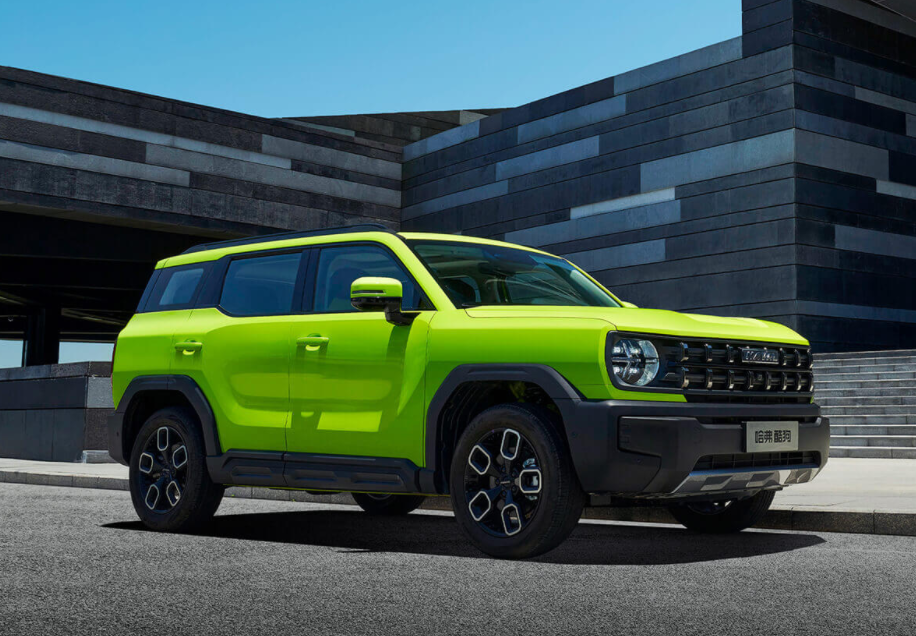
长城汽车:2月汽车销量同比下降6.79%
Zhi Tong Cai Jing· 2026-03-01 08:04
Group 1 - The core point of the article is that Great Wall Motors (601633.SH) reported a decline in sales for February, with a total of 72,594 vehicles sold, representing a year-on-year decrease of 6.79% [1] - In February, the company sold 12,744 new energy vehicles [1]
长城汽车:2月销量为72594台
Xin Lang Cai Jing· 2026-03-01 07:59
长城汽车3月1日公告,2026年2月公司销量为72,594台,同比下降6.79%;产量为64,811台,同比下降 13.42%。2026年1-2月,公司累计销量为162,906台,同比增长2.58%;累计产量为154,885台,同比下降 1.58%。2月新能源车销售12,744台,1-2月累计销售30,773台。 ...
长城汽车(601633.SH)产销快报:2月销量总计7.26万台 同比减少6.79%
Ge Long Hui A P P· 2026-03-01 07:59
格隆汇3月1日丨长城汽车(601633.SH)公布2026年2月产销快报,本月销量总计72,594台,同比减少 6.79%;本年累计销量162,906台,同比增长2.58%。此外,2月海外销售42,675台,1-2月累计销售82,953 台。2月新能源车销售12,744台,1-2月累计销售30,773台。 ...
2025年马来西亚汽车销量超越印尼,登顶东南亚第一;美国造车新势力Rivian官宣性能部门RAD丨汽车交通日报
创业邦· 2026-03-01 05:00
Group 1 - The core viewpoint of the article highlights significant developments in the automotive industry, including projections for vehicle ownership in China, advancements in electric vehicle technology, and shifts in market leadership in Southeast Asia [2][3][4]. Group 2 - According to the National Bureau of Statistics, by the end of 2025, the total number of private cars in China is expected to reach 323.36 million, an increase of 13.48 million from the previous year [2]. - Leap Motor announced an OTA upgrade for its B10, B01, and 2026 models C10 and C16, introducing city navigation assistance in five cities, enhancing driving convenience and safety [2]. - Malaysia is projected to surpass Indonesia in automotive sales by 2025, becoming the largest automotive market in Southeast Asia for the first time since 2014 [3]. - Rivian has launched its Adventure Department (RAD) to explore the off-road capabilities of its vehicles, indicating a focus on performance enhancement [4].

默茨来华,“敲打”得醒大众奔驰宝马吗?
虎嗅APP· 2026-03-01 02:46
Core Viewpoint - German automotive companies are facing significant challenges in the Chinese market due to strategic missteps, particularly in the areas of electrification and hybrid technology, which have led to declining sales and market share [5][8]. Group 1: Strategic Missteps - German Chancellor Merz criticized German automakers for their poor sales in China, attributing it to strategic errors, including a focus on low-cost fuel vehicles that missed the electrification opportunity [5]. - The share of German companies in joint ventures in China is substantial, with BMW and Volkswagen both having a 75% stake in their respective partnerships, yet they still struggle with sales [5]. - Merz emphasized the need for German automakers to learn from Chinese companies and respect local market demands to secure their future [5]. Group 2: Local Adaptation and Investment - BMW has invested over 120 billion yuan in its Shenyang production base and is establishing four R&D innovation centers and three software companies in China to enhance local development [8]. - The first domestically produced new-generation BMW iX3 is set to debut at the Beijing Auto Show in April 2026, showcasing a commitment to localize production and development [8]. - Mercedes-Benz is also focusing on local partnerships, having announced collaborations with Chinese tech firms to enhance its offerings in the smart driving sector [8][16]. Group 3: Market Performance and Challenges - BMW's market share in China has dropped to levels seen a decade ago, with a year-on-year decline of 11.2% in the first three quarters of 2025 [8]. - Mercedes-Benz's sales in China fell by 19% in 2025, marking the second consecutive year of over 10% decline, indicating a need for a shift towards technology-driven luxury [16]. - Volkswagen's sales in China have also decreased by 8%, with the company facing challenges in transitioning to electric and hybrid vehicles while maintaining its fuel vehicle market [18]. Group 4: Technological Transition - The concept of "oil-electric intelligence" is being pursued by both Mercedes-Benz and Volkswagen, aiming to integrate smart driving features into traditional fuel vehicles [18][26]. - However, there are significant challenges in implementing smart driving technologies in fuel vehicles due to their existing electrical architecture and consumer perceptions [24][26]. - The reluctance of traditional automakers to fully embrace a shift in their business models and supply chains is hindering progress in smart driving technology [26]. Group 5: Future Outlook - The collaboration between German and Chinese automotive companies is seen as essential for navigating the transition to electric and hybrid vehicles while maintaining competitiveness in the global market [29]. - The recent EU decision to exempt certain Chinese-produced vehicles from tariffs signals a potential easing of trade tensions and highlights the importance of cooperation in the automotive sector [29]. - The challenge remains for German automakers to effectively engage the large base of fuel vehicle owners in China and transition them to smart, electrified options [30].
道歉、喊话与预警
汽车商业评论· 2026-02-28 23:05
Group 1 - The automotive industry in China is experiencing a mix of competition and growth, with significant challenges arising from internal and external pressures [5] - Bosch, the world's largest automotive parts supplier, has adjusted its profit margin target to 2027 due to increased global tariffs and competition, indicating a tough year ahead for the automotive sector [8] - The CEO of Bosch warned that every profit margin will be fiercely contested, leading to plans for layoffs of 13,000 employees to maintain profitability [8] Group 2 - The founder of Leap Motor addressed employee dissatisfaction regarding a company event, acknowledging organizational shortcomings and emphasizing the need for improvement [10] - The CEO of Deep Blue Automotive highlighted a misunderstanding regarding their vehicle being mistaken for a Tesla, showcasing the growing recognition of Chinese electric vehicles on the global stage [13] - The CEO of IM Motors publicly apologized for previous comments that negatively impacted Tesla, following the clarification of a serious accident involving a Tesla vehicle [15] Group 3 - The CEO of Great Wall Motors expressed the need for the Chinese automotive industry to learn from established global players, acknowledging significant gaps in capabilities [21] - Ford's CEO announced a strategic shift towards developing low-cost, high-volume electric vehicles after facing substantial losses in their electric vehicle division [25] - Rivian's CEO predicted that by 2030, having an autonomous driving feature in vehicles will be a standard expectation among consumers [27] Group 4 - Tesla's CEO expressed appreciation for the seriousness with which China approaches his predictions regarding future technological advancements [30] - The CEO of BMW emphasized the necessity for German automakers to engage with the Chinese market to remain competitive globally, highlighting the importance of collaboration and innovation [33]



吉利汽车集团CEO淦家阅:千里浩瀚辅助驾驶将在今年实现出海
Zhong Guo Jing Ying Bao· 2026-02-28 14:54
Group 1 - The core viewpoint of the article is that Geely Auto Group's CEO announced the international launch of the Qianli Haohan advanced driver assistance system (ADAS) this year, marking it as the first Chinese high-level ADAS to achieve large-scale application in overseas markets [2] - The Qianli Haohan system is recognized as one of the highest "containing modulus," largest data volume, and strongest hardware ADAS globally, utilizing an industry-leading Smart AI Agent architecture and fully implementing the "WAM World Behavior Model" [4] - The Qianli Haohan G-ASD H7 solution will be gradually equipped in more Lynk & Co and Geely Galaxy models this year, with plans to introduce highway L3 and urban L4 functionalities where regulations permit, as well as trial operations for Robotaxi [4] Group 2 - The Zeekr 8X, which will debut the latest version of the Qianli Haohan G-ASD, is set to launch in the first half of this year and features a high-performance tri-motor version with power exceeding 1,000 horsepower [4]

官降、关店、换帅,BBA 等新车救场
晚点Auto· 2026-02-28 14:01
Core Viewpoint - The luxury car market in China is facing significant challenges, with traditional brands like BBA (BMW, Benz, Audi) experiencing declining sales and increased competition from domestic electric vehicle manufacturers [3][6][10]. Group 1: Market Dynamics - In 2020, the sales of new energy vehicles were low, with less than 6 out of every 100 new cars sold being electric [3]. - The market has shifted dramatically, with pure fuel vehicles now accounting for less than half of new car sales, and consumers are increasingly opting for more affordable options [3]. - BBA collectively sold 260,000 fewer vehicles last year, returning to sales levels seen seven to eight years ago [3]. Group 2: Dealer Challenges - Dealers are facing financial strain, with over half reporting losses and more than 70% of new car sales being unprofitable [6]. - The number of dealers is expected to decrease by 1,500, as they pressure manufacturers to lower official pricing [6]. - Major brands like Mercedes-Benz and BMW have begun to reduce their vehicle prices significantly, with reductions of up to 10% on key models [7]. Group 3: Brand Adjustments - BMW has proactively reduced prices on over 30 key models, while also lowering sales targets for dealers [7]. - The luxury car market is seeing a trend of dealer closures and brand consolidation, with Porsche and BMW reducing their dealership numbers significantly [10]. - Traditional luxury brands are losing their premium feel as cost-cutting measures lead to the reduction of value-added services [11]. Group 4: Leadership Changes - BBA is undergoing significant leadership changes, with new executives appointed to drive electric vehicle strategies and adapt to market demands [14][12]. - The new leadership's primary task is to stabilize sales before new models are launched, with BMW's electric vehicle strategy being the most aggressive [14]. Group 5: Product Development - BMW's upcoming models, including the iX3, are set to be fully localized and are expected to launch later this year [14]. - Mercedes-Benz plans to unify its smart cockpit experience across all models and is set to launch over 15 new and updated products this year [15]. - Audi is introducing a new brand to compete with domestic manufacturers, with plans to launch the E7X SUV, targeting the same market segment as local competitors [15].


陕汽夺冠!2026首月,氢能重卡表现如何?| 头条
第一商用车网· 2026-02-28 12:00
Core Insights - In 2025, China's new energy heavy truck sales exceeded 200,000 units, reaching 231,100 units, with a year-on-year growth of 182%. Fuel cell and hybrid heavy trucks accounted for only 3.7% of the total sales, indicating their limited presence in the market [1][5]. Sales Performance - In January 2026, the total sales of new energy heavy trucks reached 16,100 units, marking a year-on-year increase of 127%. The breakdown includes 15,900 units of pure electric trucks, 33 units of fuel cell trucks, and 147 units of hybrid trucks. Month-on-month, sales decreased by 61%, 99%, and 48% respectively, while year-on-year growth rates were 126%, -3%, and 259% [3][8]. Market Presence - The presence of fuel cell and hybrid heavy trucks has been notably weak. In January 2026, fuel cell trucks and hybrid trucks accounted for only 0.21% and 0.92% of the new energy heavy truck market, respectively, totaling 1.12%. The remaining 98.88% were pure electric models, slightly lower than the same period last year [5][11]. Fuel Cell Truck Sales - In January 2026, only five companies sold fuel cell heavy trucks, with Shaanxi Automobile leading by selling 20 units. Dongfeng followed with 8 units, while Xiamen King Long and Xugong each sold 2 units, and Hyundai sold 1 unit. Year-on-year, Dongfeng saw a significant increase of 700%, while Xugong grew by 100% [10][11]. Market Share - Shaanxi Automobile captured 60.6% of the fuel cell heavy truck market in January 2026, while Dongfeng held over 20% at 24.2%. Xiamen King Long and Xugong each had a market share of 6.1%, and Hyundai accounted for 3.0% [11].