
传统制造业

Search documents
清江浦区大力培育“小巨人”企业
Xin Hua Ri Bao· 2025-09-22 21:50
Group 1 - The company Huai'an Xinjia Nylon Co., Ltd. has been recognized as a "Little Giant" enterprise for 2025, focusing on technological innovation and modern production processes [1] - The company has automated over 70% of its production processes, maintaining a monthly capacity of approximately 600 tons and achieving sales of nearly 50 million yuan in the first half of the year [2] - Jiangsu Chengliu New Energy Technology Co., Ltd. has also been recognized as a "Little Giant" enterprise, specializing in the production of precision components for lithium batteries, significantly enhancing safety and efficiency [3] Group 2 - The Huai'an region is actively promoting industrial development by supporting technological upgrades and fostering specialized small and medium-sized enterprises [1][3] - The local government provides comprehensive support, including recruitment assistance and financial services, to boost the confidence and growth of enterprises [2][3] - The focus on high-end, intelligent, and green transformation of traditional manufacturing is aimed at achieving high-quality economic development in the region [1][3]


制造业高质量发展的理论贡献与实践路径
Jing Ji Ri Bao· 2025-09-17 22:31
Core Viewpoint - The manufacturing industry is crucial for national economic stability and security, with a focus on transitioning from a manufacturing powerhouse to a manufacturing stronghold through high-quality development [1][2][3] Group 1: Manufacturing Industry's Role - Manufacturing is emphasized as the foundation of national strength and modernization, with a need to address the challenges of key technology bottlenecks and supply chain resilience [1][2] - The industry is tasked with promoting employment, common prosperity, and ecological harmony through technological innovation and green transformation [1][3] Group 2: Strategic Directions - The direction for transformation includes high-end, intelligent, and green development, with a focus on breaking technology monopolies and enhancing value [2][4] - The integration of development and security is highlighted as a method for upgrading the manufacturing sector, ensuring both industrial safety and ecological protection [4][10] Group 3: Theoretical Framework - Advanced theoretical guidance is essential for high-quality development, rooted in Marxist political economy and addressing contemporary challenges [3][5] - The people-centered development approach prioritizes improving living standards and promoting employment as core objectives of manufacturing growth [3][5] Group 4: Unique Development Path - China's manufacturing development is characterized by a "parallel advancement" model, integrating industrialization, informatization, and intelligentization simultaneously [8][9] - This approach has allowed China to achieve significant advancements in manufacturing capabilities in a shorter time frame compared to developed nations [7][8] Group 5: Global Impact and Cooperation - China's manufacturing high-quality development serves as a response to global industrial challenges, promoting cooperation and shared benefits through technology transfer and capacity building [9][10] - The focus on green technology innovation reflects a commitment to sustainable development, contrasting with traditional industrial practices that prioritize short-term gains over environmental considerations [10][12] Group 6: Systematic Transformation - The synergy of high-end, intelligent, and green development is essential for a comprehensive transformation of the manufacturing sector, emphasizing the need for technological breakthroughs and institutional innovation [12][13] - The establishment of a robust digital infrastructure and the promotion of green factories are critical for achieving sustainable growth and enhancing competitiveness [12][13]
新型工业化取得新的历史性成就
Xiao Fei Ri Bao Wang· 2025-09-15 02:52
Core Viewpoint - During the "14th Five-Year Plan" period, China's manufacturing value-added is expected to increase by 8 trillion yuan, contributing over 30% to global manufacturing growth, with its share of global manufacturing value-added nearing 30% [1][2] Group 1: Manufacturing Growth - China's total industrial value-added is projected to grow from 31.3 trillion yuan in 2020 to 40.5 trillion yuan by 2024, while manufacturing value-added is expected to rise from 26.6 trillion yuan to 33.6 trillion yuan [2] - The modern industrial system, centered on advanced manufacturing, has shown significant progress, with traditional industries undergoing renewal and emerging industries accelerating [2] Group 2: Digital Economy Integration - The deep integration of the digital economy and the real economy has injected new momentum into high-quality development of manufacturing, with over 4.598 million 5G base stations established [3] - Key industrial internet platforms have connected over 100 million devices, fostering the growth of competitive industries such as photovoltaics, lithium batteries, and new energy vehicles [3] Group 3: Support for SMEs - The number, efficiency, and quality of small and medium-sized enterprises (SMEs) have significantly improved during the "14th Five-Year Plan," with over 12.8 million employees in large-scale SMEs [4] - The average annual growth rates for value-added, revenue, and profit of large-scale industrial SMEs are 6.4%, 7.4%, and 5.4%, respectively, all exceeding those of large enterprises [4] Group 4: Specialized and Innovative Enterprises - Over 100,000 specialized and innovative SMEs have been established, with more than 14,000 in total, and "little giant" enterprises exceeding 14,600, showcasing strong R&D investment [5] - More than 95% of "little giant" enterprises have stable partnerships with well-known domestic and international companies, primarily in strategic emerging industries [5] Group 5: Future Initiatives - Future measures are expected to further optimize the development environment for SMEs, focusing on policy regulations, enterprise cultivation, and public services [6]
全面推进传统制造业转型升级
Ren Min Ri Bao· 2025-09-14 22:03
Core Viewpoint - The traditional manufacturing industry is crucial for the economy and must undergo transformation and upgrading through technological innovation to remain vibrant and competitive [1][2]. Group 1: Importance of Traditional Manufacturing - Traditional manufacturing is a significant part of the real economy and serves as the foundation for a modern industrial system, contributing to economic growth and employment stability [1][2]. - The traditional manufacturing sector accounts for approximately 80% of the total manufacturing value added in China, highlighting its dominance and importance [2]. Group 2: Current Challenges and Opportunities - Despite its scale, traditional manufacturing faces challenges such as being "large but not strong" and "complete but not refined," with issues of low-end supply surplus and high-end supply shortages [2]. - There is substantial room for improvement and a bright future for traditional manufacturing, particularly in enhancing quality and efficiency [2]. Group 3: Market Demand Adaptation - Understanding market demand is essential, as consumer preferences are shifting towards quality and personalization, necessitating adjustments in production and supply systems [3]. - The rise of digital technologies offers opportunities for traditional manufacturers to respond to market changes more effectively through real-time demand response systems [3]. Group 4: Role of Technological Innovation - Technological innovation is identified as the core driver for upgrading traditional manufacturing, with a focus on digitalization and green technologies [4]. - Emphasizing craftsmanship and continuous improvement in processes and products can help traditional manufacturers build core competitiveness [4]. Group 5: Industry Integration and Collaboration - Promoting integration between traditional manufacturing and modern services can enhance efficiency and resource allocation [5]. - Encouraging collaboration within supply chains and the adoption of new business models can lead to more agile and customized production systems [5].
2025服贸会∣从“产品出海”到“智造出海”,企业全球化布局寻求新“链力”
Bei Jing Shang Bao· 2025-09-13 13:41
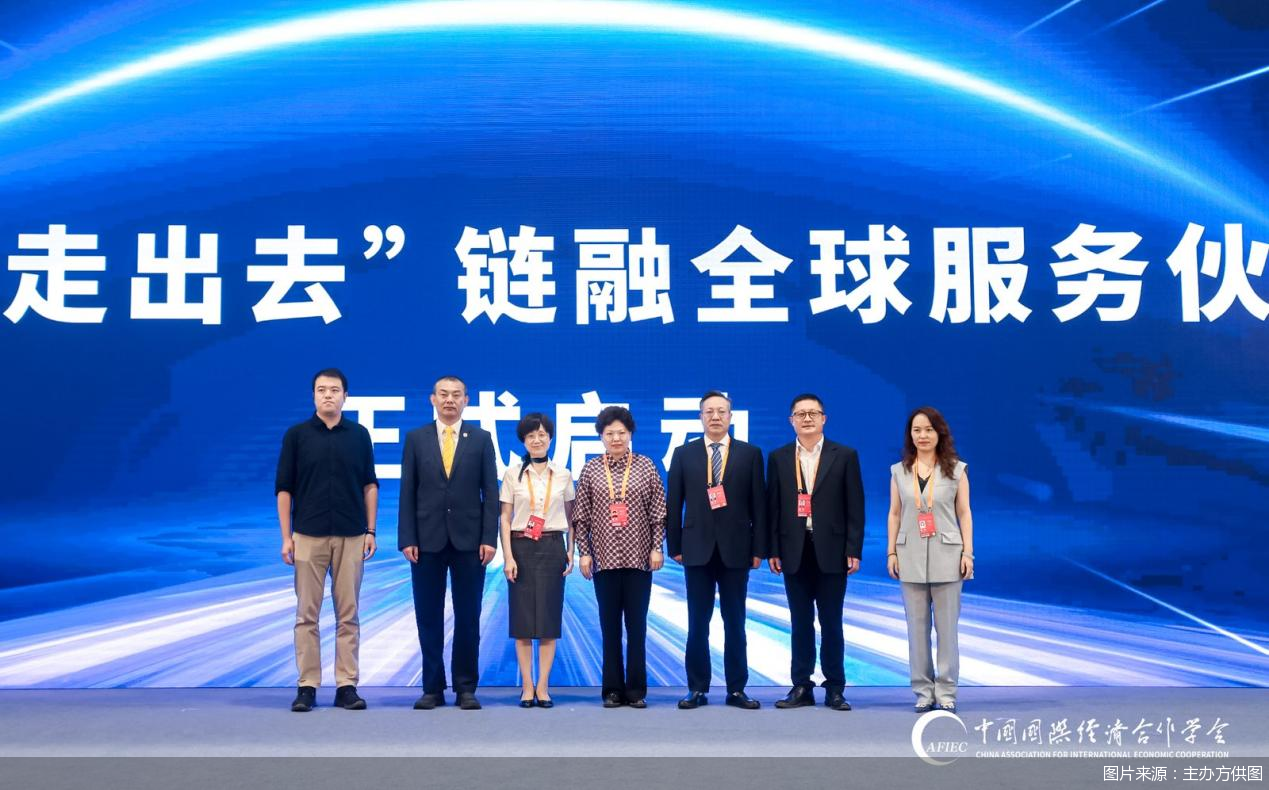
Core Insights - "Intelligent manufacturing going global" has become a core path for Chinese enterprises to integrate into the global value chain and enhance international competitiveness [1][3] - The launch of the "China Enterprises 'Going Global' Chain Integration Global Service Partner Program" aims to provide a new service platform for Chinese companies to overcome globalization bottlenecks and achieve high-quality development in intelligent manufacturing [1][8] Group 1: Globalization Strategy - The shift from "product going global" to "intelligent manufacturing going global" signifies a transition from simple low-end capacity transfer to the output of high-end manufacturing capabilities and comprehensive solutions [3][4] - The motivations for Chinese enterprises to "go global" have diversified, driven by the need for overseas market expansion, cost differences in global factors, and the pursuit of advanced technology and core resources [5][6] Group 2: Digital Economy - The rapid development of the digital economy is a significant support for "intelligent manufacturing going global," with global digital economy size projected to reach $50 trillion by 2024, accounting for over 40% of global GDP [4] - Challenges such as the digital divide, data security, and environmental impacts of the digital economy need to be addressed to ensure sustainable development [4] Group 3: International Cooperation - The complex geopolitical environment necessitates enhanced cooperation between countries, with platforms being established to facilitate collaboration and overcome challenges faced by enterprises in the globalization process [7][8] - The "China Enterprises 'Going Global' Chain Integration Global Service Partner Program" includes six practical service projects aimed at providing comprehensive support for enterprises, covering policy alignment, market expansion, and talent development [8]

2025湖北省百强镇名单发布在京发布
Sou Hu Cai Jing· 2025-09-12 02:27
Core Insights - The report highlights the strong economic performance and competitiveness of towns in Hubei Province, with a focus on the top 100 towns by comprehensive competitiveness for 2025, led by Dongshi Town in Zhijiang City [1] Economic Performance - Hubei's town economies are showing steady growth, with significant increases in key economic indicators. The average general public budget revenue for the top 100 towns is 347 million yuan, up 22.9% year-on-year, and the average industrial output value is 10.853 billion yuan, up 19.2% [1] - The number of market entities is increasing, with an average of 1,653 registered enterprises, an increase of 61 from the previous year, and 45 large-scale industrial enterprises, an increase of 6 [1] - Retail sales are also on the rise, with an average social retail sales total of 2.243 billion yuan, up 21.5%, and an increase in the number of comprehensive stores or supermarkets [1] New Production Capacity - The development of new quality production capacity is driving economic upgrades in Hubei's top towns, with traditional industries undergoing technological upgrades and new industries being cultivated [2] - Traditional manufacturing is evolving towards high-end, intelligent, and green development, while resource-based industries are extending into high-value sectors [2] - The number of specialized and innovative small and medium-sized enterprises is steadily increasing, reflecting a shift towards high-tech and high-quality characteristics [2] Industrial Development - The leading industries in Hubei's top towns are becoming more robust, with a focus on 1-2 competitive industries that are being strengthened [2] - The report indicates a 58.2% increase in total fixed asset investment for the top towns, showcasing the initial effects of industrial clustering [2] Regional Integration - Many towns are deeply integrating into regional development, supporting urban agglomeration construction and providing components for key industries such as automotive and electronics [3] - Nearly 60% of Hubei's top towns are located in key urban agglomeration areas, enhancing industrial collaboration [3] Development Environment - The development environment is continuously improving, with significant enhancements in infrastructure and governance capabilities [3] - Initiatives like "Four Good Rural Roads" and digital rural construction are strengthening the foundational support for industrial growth and talent attraction [3] Strategic Importance - Hubei Province plays a crucial role in the strategic development of central China, with county economies being fundamental to this strategy, and towns serving as essential components for high-quality development [4] - The report evaluates the comprehensive competitiveness of 922 towns based on economic scale, vitality, and per capita levels, using data from 2024 [4]
华泰证券:A股ROE拐点或在四季度出现
天天基金网· 2025-08-29 11:42
Group 1 - The core viewpoint is that the A-share market may see a turning point in ROE in the fourth quarter of this year, with optimism about the transition from liquidity-driven to fundamentally driven market dynamics [2][3] - The current market situation is characterized by a balance between fundamental and liquidity drivers, with a recommendation to maintain some cash reserves to manage potential future volatility [3] - The investment focus may shift from the AI sector to traditional manufacturing as the outlook for manufacturing improves with the anticipated interest rate cuts by the Federal Reserve [6][7] Group 2 - The stability of the market is currently supported by policy measures, with three underlying logics remaining intact: the importance of policy in stabilizing the capital market, advancements in technology, and the ongoing narrative against "involution" [4][5] - The white liquor sector is seen to have a solid foundation for continued recovery, with market participants already aware of the short-term performance pressures on companies in this sector [8][9]

国金证券:投资主线可能出现从经营现金流驱动的AI投资到信贷驱动的传统制造业投资切换
Zheng Quan Shi Bao Wang· 2025-08-29 01:00
Core Viewpoint - The article emphasizes that investors should avoid falling into a "deposit migration" cycle and instead seek areas with the greatest marginal improvement in fundamentals for future investments, especially in light of the anticipated interest rate cuts by the Federal Reserve in September [1] Group 1 - The market has reached a 10-year high, prompting a need for strategic investment rather than reactive behavior [1] - There is an optimistic outlook for a recovery in manufacturing sector performance following the expected interest rate cuts [1] - A potential shift in investment focus is anticipated, moving from AI-driven investments based on operating cash flow to traditional manufacturing investments driven by credit [1]

张辉:“人工智能+”赋能现代化产业体系
Jing Ji Ri Bao· 2025-08-27 00:14
Group 1: Core Insights - Artificial intelligence (AI) is a strategic technology leading a new wave of technological revolution and industrial transformation, significantly changing human production and lifestyle [1][2] - The integration of AI with traditional industries is essential for enhancing resource efficiency and driving innovation, as highlighted by the need for a collaborative innovation system [3][5] - AI can optimize production processes and enhance productivity through real-time data collection and analysis, leading to a shift towards data-driven production models [4][5] Group 2: Industry Transformation - AI enables traditional industries to undergo "incremental innovation" by optimizing resource allocation and reshaping production processes, thus enhancing resilience [2][3] - The development of AI-driven industrial internet platforms can improve supply chain efficiency and responsiveness, addressing issues like information asymmetry and slow response times [4][10] - The transition from a resource-consuming model to a knowledge and service-oriented model is crucial for the transformation of traditional manufacturing [4][11] Group 3: Future Development - AI is a key driver for new technological revolutions and is vital for gaining a competitive edge in global technology [6][7] - There are challenges in AI development, including the need for core technology innovation and deeper integration with emerging industries [7][8] - Fostering collaboration between traditional, emerging, and future industries through AI can enhance the resilience and efficiency of the modern industrial system [10][11]
美股投资需了解哪些关键信息?
Jin Rong Jie· 2025-08-25 11:28
Group 1 - The U.S. stock market is characterized by high openness and diversity, encompassing various industries and companies of different sizes, providing a wide range of investment targets from tech giants to traditional manufacturing firms [1] - The trading mechanism in the U.S. stock market is flexible, with long trading hours and unique rules such as the market maker system, which helps maintain market liquidity and stability [1] - Strict market regulation ensures a fair, just, and transparent trading environment for investors [1] Group 2 - Investors need to have a deep understanding of listed companies, as the U.S. market includes a wide range of sectors, each affected differently by macroeconomic conditions, industry cycles, and technological changes [2] - Financial health, operational strategies, and governance quality are key factors determining a company's investment value, with strong financial statements and effective strategies supporting sustainable growth [1][2] Group 3 - Macroeconomic and policy environments significantly impact the U.S. stock market, with indicators like economic growth, inflation, and employment data influencing corporate performance and profitability [2] - Changes in monetary and fiscal policies directly affect market liquidity and funding costs, while tax adjustments and government spending can either support or constrain different industries [2] - Currency exchange rates are crucial for non-U.S. dollar investors, as fluctuations can affect investment returns when converting to local currencies [2] Group 4 - Risk awareness is essential in U.S. stock investment, as market, industry, and company-specific risks can affect returns [3] - Market risks arise from macroeconomic fluctuations and geopolitical tensions, while industry risks stem from competition and technological advancements [3] - Company-specific risks focus on internal management and operational issues, and diversifying investment portfolios through asset allocation is an effective way to mitigate risks [3]