制药业

Search documents
关税突发!特朗普宣布:10月14日起生效!
证券时报· 2025-09-30 01:36
Core Viewpoint - The article discusses the recent announcement by President Trump regarding new tariffs on various imported goods, including softwood lumber, cabinets, and pharmaceuticals, which are expected to impact prices and the market significantly [1][2]. Tariff Details - On September 29, Trump announced a 10% tariff on imported softwood lumber and a 25% tariff on cabinets and wooden products, effective October 14, with some rates increasing on January 1 [1]. - A new round of tariffs starting October 1 includes a 50% tariff on kitchen cabinets and bathroom sinks, a 30% tariff on imported furniture, and a 100% tariff on patented and branded drugs, with a future plan to impose the same on all branded drugs by October 2025 unless companies establish manufacturing in the U.S. [1]. - Heavy trucks will also face a 25% tariff starting October 1 [1]. Market Impact - The U.S. Bureau of Labor Statistics reported that furniture prices in the U.S. rose by 4.7% year-on-year as of August 2025 due to the tariff policies [2]. - The U.S. Chamber of Commerce has urged the government to reconsider the new tariffs on heavy trucks, highlighting that the top five sources of heavy truck imports are allied countries [2]. Film Industry Concerns - Trump criticized the film industry, claiming it has been "stolen" from the U.S. and announced a 100% tariff on films produced outside the U.S. [3][4]. - This move has raised concerns among industry professionals and experts regarding its implications for the film sector [4]. Legal Challenges - A recent ruling by the U.S. Court of Appeals stated that the legal basis for Trump's tariffs may not grant him the authority to impose them, leading to a request for the Supreme Court to review the decision [4].


英国经济陷“滞胀式”僵局:高利率或成常态
Xin Hua Cai Jing· 2025-09-29 00:38
Core Insights - The UK economy is facing a complex situation of high inflation and sluggish growth, leading to a rapid decline in expectations for interest rate cuts this year [1][2] - The OECD has indicated that the pace of inflation decline in the UK is expected to be slower than in other major economies, which poses pressure on homeowners reliant on lower borrowing costs [1] - Concerns are rising regarding the upcoming budget announcement in November, which may include tax increases, further dampening consumer borrowing willingness [1] Economic Indicators - The UK National Statistics Office is set to release the final GDP data for Q2 2025, but analysts expect no significant new information due to recent doubts about data collection capabilities [1] - The preliminary GDP growth for Q2 was recorded at 0.3% quarter-on-quarter, but this figure diverges from several independent economic indicators [1] - Government spending was the main driver of economic growth in the quarter, while the private sector struggled, with corporate investment declining by 4% and wholesale and retail trade down by 0.9% [1] Sector Performance - The pharmaceutical industry showed strong performance, potentially linked to companies preemptively stocking up in response to potential tariff discussions [1] - Retail sales data for August has been revised downward, indicating that the National Statistics Office previously overestimated retail sector performance [2] - The current economic structure is characterized by "high inflation, weak domestic demand, and reliance on public spending," reinforcing the Bank of England's high interest rate stance [2]
德国制药业批美滥施关税造成负面影响
Xin Hua She· 2025-09-27 15:34
Core Points - The U.S. government has announced a 100% tariff on all imported brand-name or patented drugs starting October 1, which will severely impact the German and European pharmaceutical industries and negatively affect U.S.-EU trade relations [1] - The German Chemical Industry Association expressed deep concern over the U.S. measures, indicating that it marks a new low in U.S.-EU trade relations [1] - The German Pharmaceutical Industry Association highlighted that the new tariffs will disrupt international supply chains, increase drug production costs, and threaten the supply of medications for patients in both the U.S. and Europe [1] Industry Impact - The German Pharmaceutical Industry Association stated that the U.S. tariffs represent a "brutal and problematic" approach, signaling a dangerous message to the German pharmaceutical sector [1] - The U.S. is a crucial export market for the German pharmaceutical industry, with exports expected to exceed €27 billion in 2024, accounting for about one-quarter of Germany's total pharmaceutical exports [1]
金价,爆了!还有它,大幅上涨!
Sou Hu Cai Jing· 2025-09-27 13:07
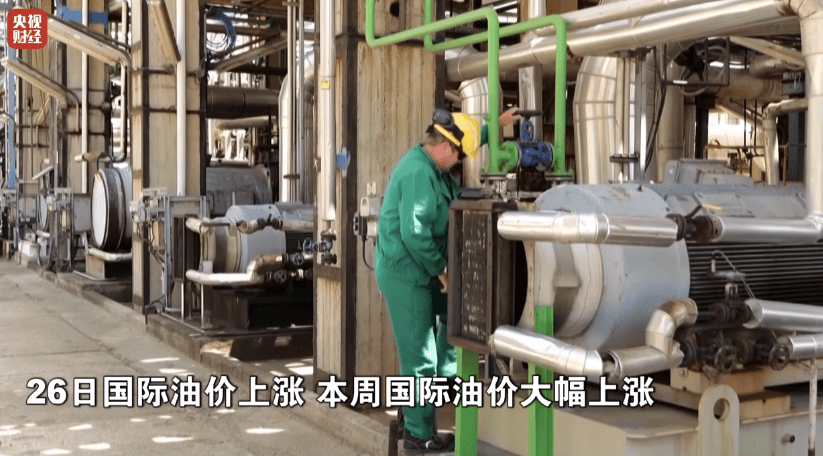
Group 1: Economic Indicators - The core PCE price index for August in the U.S. rose by 0.2% month-on-month and 2.9% year-on-year, aligning with market expectations but still exceeding the Federal Reserve's 2% inflation target [8] - Consumer spending in the U.S. has shown consistent growth for three consecutive months, despite inflationary pressures [8] - The market anticipates a high probability of interest rate cuts by the Federal Reserve, with an 89.8% chance of a cut in October and a 65.1% chance in December [8] Group 2: Stock Market Performance - U.S. stock indices collectively rose after the inflation data release, ending a three-day decline, with the Dow Jones up 0.65%, S&P 500 up 0.59%, and Nasdaq up 0.44% [1] - Concerns over high valuations in the AI sector led to a decline in Oracle's stock by over 8%, contributing to a collective drop in major U.S. indices earlier in the week, with the Dow down 0.15%, S&P 500 down 0.31%, and Nasdaq down 0.65% [5] Group 3: Commodity Prices - International oil prices increased significantly, with light crude oil futures rising by 4.85% and Brent crude futures by 5.17% over the week [3] - Gold prices also saw an increase, with December gold futures rising by 1.01% on Friday and a cumulative increase of 2.78% for the week [3]

Britain says pushing for better outcome on US pharma tariffs
Reuters· 2025-09-26 10:10
Core Viewpoint - Britain is actively engaging with the United States regarding pharmaceutical tariffs, aiming for a favorable resolution after President Trump announced a potential 100% tariff on companies unless they establish manufacturing operations in the U.S. [1] Group 1 - The British government is pressing the U.S. on pharmaceutical tariffs [1] - President Trump indicated that a new 100% tariff would be imposed on firms without a manufacturing presence in the U.S. [1]
特朗普新关税威胁,亚洲股市集体下挫,韩国首尔综指跌逾2%,金银回调
Sou Hu Cai Jing· 2025-09-26 06:44
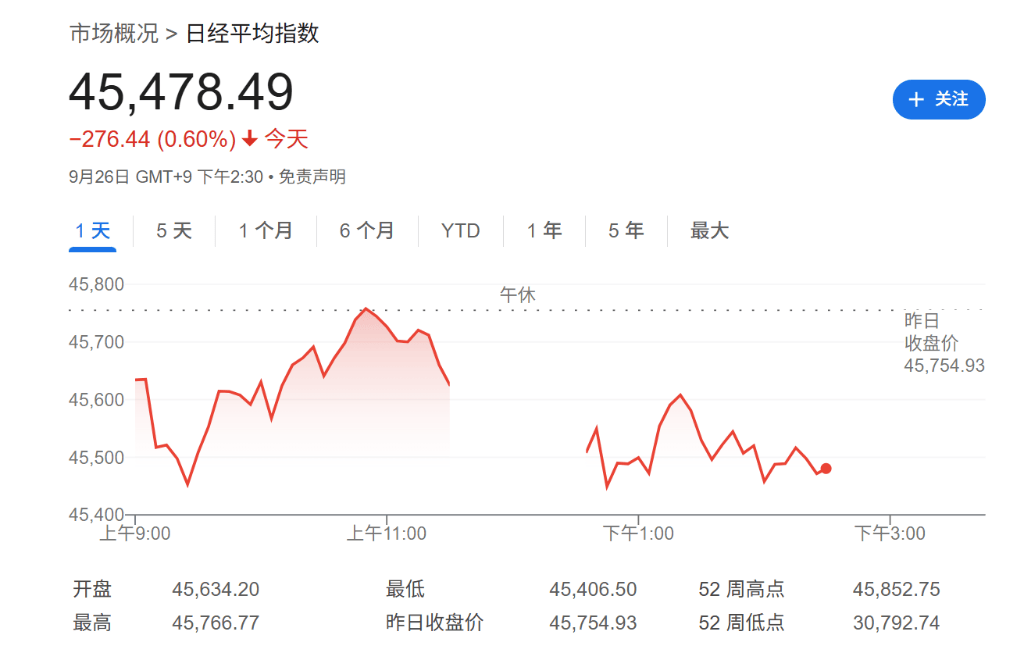
Group 1: Tariff Announcement and Market Reaction - President Trump announced a new round of tariffs on various imported products, effective October 1, including 50% on kitchen cabinets and bathroom sinks, 30% on imported furniture, and 100% on patented and branded drugs [1] - The announcement triggered a risk-off sentiment in global markets, with major Asian stock indices declining, particularly Japan and South Korea [1][2] - The new tariffs added uncertainty to an already tense market environment, as investors were closely monitoring upcoming inflation reports for clues on future interest rate movements [1] Group 2: Impact on Asian Markets - The Nikkei 225 index in Japan fell approximately 0.6% to 45,478 points, with significant declines in pharmaceutical stocks, including a 5.2% drop for Sumitomo Pharma and a 3.9% drop for Chugai Pharmaceutical [2] - The South Korean KOSPI index dropped 2.5% to 3,384.58 points, marking its third consecutive day of decline amid growing concerns over prolonged tariff negotiations with the U.S. [4] - Other markets showed weakness, with the Indian BSE Sensex index down 0.7%, while the Australian S&P/ASX 200 index managed a slight increase of 0.2% [4] Group 3: U.S. Market Performance - U.S. stock markets experienced a three-day decline prior to Trump's tariff announcement, primarily due to stronger-than-expected economic data that raised doubts about the Federal Reserve's future rate cuts [4] - The strong economic performance has led to skepticism regarding the continuation of rate cuts, which have been a significant driver of U.S. stock market gains this year [4] - The U.S. dollar index decreased by 0.1% to 98.36, while the euro rose by 0.1% to 1.1680 [4] Group 4: Oil Market Dynamics - Despite the overall market downturn, oil prices rose, with Brent crude futures reaching $69.67 per barrel and West Texas Intermediate crude up 0.3% to $64.59 per barrel [9] - The increase in oil prices was driven by geopolitical tensions and an unexpected decline in U.S. crude oil inventories, pushing benchmark prices to their highest levels since August 1 [12]
Asian Markets Drop As US Data, New Tariff Threats Dent Sentiment
International Business Times· 2025-09-26 03:21
Economic Growth and Market Sentiment - The US economy showed stronger-than-expected growth in the second quarter, with a revised growth rate of 3.8 percent, up from the initial estimate of 3.3 percent, marking the fastest quarterly expansion in nearly two years [3] - Wall Street experienced a pullback, with all three main indexes ending in the red after reaching record highs earlier in the week, indicating concerns over stock valuations following a lengthy rally [4] Interest Rate Outlook and Federal Reserve Actions - The Federal Reserve recently cut interest rates due to a weakening labor market but indicated that further reductions are not guaranteed, leading to uncertainty in the market [2][3] - Decision-makers at the Federal Reserve have expressed varying views on future monetary policy in light of persistent inflation and soft job data [3] Tariff Implications on Pharmaceuticals - President Trump's announcement of new tariffs includes a 100 percent levy on "branded or patented" pharmaceuticals unless companies establish manufacturing plants in the US, which has raised concerns among Asian pharmaceutical firms [5][6] - Asian pharmaceutical companies, including Shanghai Fosun and South Korea's Daewoong, saw significant stock declines following the tariff announcement, with Fosun dropping more than four percent [6] Legislative Uncertainty - Traders are closely monitoring the ongoing negotiations in Washington regarding a funding package to prevent a government shutdown, with a deadline approaching next week [2][7] - The lack of agreement between Democrats and Republicans over spending plans is contributing to market unease, as both parties remain at an impasse [8]
长春高新股价涨5.09%,中信保诚基金旗下1只基金重仓,持有5.51万股浮盈赚取34.37万元
Xin Lang Cai Jing· 2025-09-26 01:54
Group 1 - The core viewpoint of the news is that Changchun High-tech has seen a significant increase in its stock price, rising by 5.09% to 128.80 CNY per share, with a total market capitalization of 52.542 billion CNY [1] - Changchun High-tech was established on June 10, 1993, and listed on December 18, 1996. The company primarily engages in the research, production, and sales of biopharmaceuticals and traditional Chinese medicine, with a revenue composition of 92.83% from pharmaceuticals, 6.81% from real estate, and 0.36% from services [1] - The trading volume for Changchun High-tech reached 777 million CNY, with a turnover rate of 1.53% [1] Group 2 - According to data, one fund under CITIC Prudential has a significant holding in Changchun High-tech. The CITIC Prudential CSI 800 Pharmaceutical Index (LOF) A (165519) increased its holdings by 2,700 shares in the second quarter, bringing the total to 55,100 shares, which represents 2.18% of the fund's net value [2] - The CITIC Prudential CSI 800 Pharmaceutical Index (LOF) A (165519) was established on January 1, 2021, and has a current size of 235 million CNY. The fund has achieved a return of 28.93% this year, ranking 1892 out of 4220 in its category [2] - The fund manager, Huang Zhi, has been in charge for 7 years and 66 days, with the fund's total asset size at 3.01 billion CNY. The best return during his tenure was 146.63%, while the worst was -20.24% [3]

天风MorningCall·0924 | 固收-国债买卖与降息/银行-国债买卖/医药-创新药产业/农业-牛专题
Xin Lang Cai Jing· 2025-09-24 10:46
Group 1: Government Bond Trading and Monetary Policy - The expectation for government bond trading is heating up, while the reality is cooling down, with liquidity management remaining a key focus [1] - If interest rate cuts occur, the extent of the cuts will significantly impact the bond market, with a likely continuation of a 10 basis point reduction seen in the first half of the year [1] - The central bank's potential reintroduction of government bond trading tools is expected to enhance banks' asset-liability management stability [5] Group 2: Innovation in Pharmaceutical Industry - The Chinese innovative drug industry is transitioning towards global commercialization, with a strong pipeline of quality projects driving industry growth [8] - Early drug development in China is significantly faster than the global average, saving 30%-50% of time from target validation to product commercialization [8] - Future innovation will further unlock commercial value, with academic and industrial collaborations playing a crucial role in successful drug development [8] Group 3: Dairy and Meat Industry Trends - The dairy sector is experiencing a strong supply contraction, with demand expected to rise due to seasonal consumption and supportive policies [11] - The meat industry is at a super cycle turning point, with reduced import volumes anticipated due to narrowing price differentials [11] - The interconnection between dairy and meat sectors is expected to enhance profitability for livestock companies [11] Group 4: Company Performance and Projections - A company reported a 44.50% year-on-year increase in revenue for the first half of 2025, driven by demand in the smart connected vehicle and edge AI hardware sectors [14] - Another company achieved a 13.55% year-on-year revenue growth in 2024, with a significant market share in the global SSD controller market [16] - A third company reported a 11.02% year-on-year revenue increase in the first half of 2025, with ongoing acquisitions to expand its product offerings [22]

21书评︱后发经济体弯道超车的三条路径
2 1 Shi Ji Jing Ji Bao Dao· 2025-09-24 04:57
Group 1 - The core argument of the article emphasizes the challenges faced by latecomer economies in achieving leapfrog development, highlighting the need for innovative strategies to overcome obstacles such as capability failure and scale failure [2][4][6] - The author identifies three viable "bends" or strategies for latecomer economies to achieve leapfrog development, which include promoting imitation innovation under relaxed intellectual property protection, engaging with global value chains, and focusing on short-cycle high-tech sectors before transitioning to long-cycle industries [4][5][6] - The concept of "crossing over" is defined as the final stage of catching up, allowing latecomer economies to bypass existing intellectual property and enter new technological fields, which can be achieved through both inter-industry and intra-industry transitions [6][7] Group 2 - The article discusses the importance of a comprehensive theory of economic catch-up that integrates the sequence of "late entry → bend strategy → leapfrog development," which is crucial for overcoming the identified failures and barriers [7] - The author presents three paradoxes that underpin the catch-up theory: "different paths lead to the same goal," "bends are faster than straight roads," and "only well-prepared firms can attempt to leap," emphasizing the need for unique strategies to surpass leading economies [8]