
啤酒

Search documents
直击华润啤酒业绩会:啤酒要创新、白酒要稳固
Guo Ji Jin Rong Bao· 2026-03-24 14:57
Core Viewpoint - China Resources Beer reported a decline in revenue and net profit for 2025, primarily due to goodwill impairment in its liquor business, but showed growth in its beer segment driven by high-end product sales [4][5]. Beer Business Performance - The beer segment achieved sales of 11.03 million kiloliters, a slight increase of 1.4% year-on-year, with a gross margin improvement of 1.4 percentage points to 42.5% [5]. - High-end beer products saw significant growth, with premium and above beer sales increasing by mid to high single digits, accounting for nearly 25% of total sales [5]. - Notable brands like "Heineken" and "Snow" recorded substantial growth, with "Snow" achieving nearly 60% growth and "Red Duke" doubling its sales compared to the previous year [5][6]. - The company plans to continue its high-end strategy while extending focus to mid-tier products, adapting to a more balanced market structure [5][6]. Liquor Business Challenges - The liquor segment faced a revenue decline of approximately 30.77%, with a significant goodwill impairment of about 2.88 billion yuan [9][10]. - Management acknowledged unexpected difficulties in the liquor sector, attributing the impairment to macroeconomic factors and industry cycles [8][10]. - The company is implementing measures to stabilize prices and improve cost-effectiveness, including controlling expenses and adjusting profit-sharing models with distributors [11]. Strategic Initiatives - The company is actively working to fill gaps in emerging business areas, particularly in online sales and instant retail, which have seen over 50% annual growth [6]. - Plans to "revive" local brands through innovative strategies are underway, targeting specific markets with tailored products [6]. - International expansion is a priority, focusing on markets that are culturally and politically favorable, leveraging partnerships to minimize risks [7]. Future Outlook - The company anticipates that by the end of the 14th Five-Year Plan (2030), the market share of mid-tier and above products could exceed one-third of total beer sales [6]. - The liquor business aims to enhance efficiency and optimize product structure, focusing on high-margin products while phasing out lower-margin SKUs [10][11].


华润啤酒(00291):啤酒主业稳健,白酒减值弱化
Haitong Securities International· 2026-03-24 14:35
Investment Rating - The report maintains an "Outperform" rating for the company [2][6]. Core Insights - The company's core net profit for 2025 reached RMB 5.72 billion, a year-over-year increase of 19.6%, exceeding market expectations despite a slight revenue decline of 1.7% to RMB 37.99 billion [3][10]. - The beer business showed solid performance with a sales volume of 11.03 million kiloliters in 2025, a 1.4% increase year-over-year, and a gross margin improvement to 42.5% [4][11]. - The baijiu segment faced challenges with a revenue drop of 31% to RMB 1.50 billion, but the impact of goodwill impairment has been mitigated [5][12]. - The company plans to enhance shareholder returns with a proposed dividend of RMB 1.021 per share, a 34.3% increase from the previous year [3][10]. Financial Performance Summary - Revenue projections for 2026 are expected to rise to RMB 39.19 billion, with a net profit forecast of RMB 5.53 billion, reflecting a 48% increase [9]. - The gross profit margin is anticipated to improve to 43.5% in 2026, with a projected diluted EPS of RMB 1.71 [9][10]. - The company maintains a strong financial position with a net cash position of RMB 4.23 billion, providing ample resources for future development [3][10]. Beer Business Analysis - The beer segment is expected to benefit from a premiumization strategy, with anticipated average selling price (ASP) growth in 2026 [4][11]. - The company expects low single-digit growth in beer sales volume for 2026, driven by a recovery in on-premise channels [4][11]. Baijiu Business Analysis - The baijiu business is projected to decline by approximately 5% in revenue for 2026, but operational optimizations are expected to narrow losses [5][12]. - The company is focusing on building its core market presence and cultivating high-quality distributors to prepare for future recovery [5][12]. Investment Recommendation - The report emphasizes the potential for revenue and gross profit improvements driven by market share expansion and ASP recovery in the beer segment [6][13]. - The company is committed to enhancing dividend sustainability and increasing shareholder returns, reinforcing its long-term value creation strategy [6][13].
复苏改善在途,底部价值凸显
CAITONG SECURITIES· 2026-03-24 12:55
Core Insights - The report maintains a positive outlook on the food and beverage industry, highlighting a recovery trend and the emergence of bottom-value opportunities [1][4] - The first quarter of 2026 is expected to show improvement, particularly in the restaurant chain sector, driven by the long holiday period and the recovery of consumer demand [5][8] Industry Overview - The food and beverage sector is projected to continue its recovery into the second quarter of 2026, with strong performance expected in new business models, oatmeal, energy drinks, sugar-free tea, and low-temperature milk [5][8] - The white liquor market is experiencing structural differentiation, with leading brands like Guizhou Moutai and Wuliangye outperforming others during the Spring Festival sales [9][11] - The beer segment is expected to maintain stable sales, with innovations and O2O channels driving growth despite challenges in on-premise consumption [12][11] - The frozen food sector is showing signs of demand recovery, with leading companies focusing on product and channel optimization [13][11] - The beverage industry is witnessing a mix of challenges and opportunities, particularly in the energy drink segment, which continues to expand [14][11] - The dairy sector is stabilizing, with low-temperature milk and cheese presenting structural growth opportunities [15][11] - The snack food industry is facing challenges but also revealing structural opportunities through new product categories and innovative channels [17][11] - The seasoning segment is entering a potential price increase window, benefiting from improved demand and cost transmission dynamics [19][11] - The health and wellness sector is undergoing regulatory changes that may lead to market consolidation, with leading brands likely to gain market share [21][11] Investment Recommendations - The report suggests focusing on companies with strong fundamentals, high dividends, and those less affected by geopolitical tensions [22][23] - Key investment targets include leading brands in white liquor, beer, and dairy, as well as companies in the restaurant chain and health sectors [22][23]


华源晨会精粹20260324-20260324
Hua Yuan Zheng Quan· 2026-03-24 12:08
Group 1: Fixed Income/Banking - The overall scale of corporate annuities in China continued to expand in Q4 2025, with a decrease in investment returns compared to the previous quarter [7][8] - The number of enterprises establishing annuity plans increased by 2,730 to 178,000, and the number of insured employees rose by 109,400 to 3,343,000, indicating steady growth in scale metrics [8][9] - The average management scale of insurance funds is higher than that of public funds, with several institutions showing significant growth in both scale and percentage increase [7][11] Group 2: Robotics - Yushu Technology's IPO has been accepted, aiming to become the first humanoid robot company listed on A-shares, with over 5,500 humanoid robots shipped in 2025, ranking first globally [14][15] - The domestic humanoid robot industry is accelerating its capitalized process, with multiple companies completing significant financing rounds in 2026 [15][16] - The government is increasingly prioritizing the embodied intelligence industry, with new national standards being established to support the sector [16][17] Group 3: Construction/Building Materials - Infrastructure fixed asset investment reached 1.88 trillion yuan in January-February 2026, a year-on-year increase of 11.40%, with significant growth in energy and public facilities sectors [23][24] - The issuance of special bonds is accelerating, with a cumulative issuance of 1.048 trillion yuan as of March 22, 2026, reflecting a 50.82% year-on-year increase [24] - The construction investment logic is shifting towards structural investments that serve national strategies and security needs, particularly in energy and water resources [26][27] Group 4: Food and Beverage - China Resources Beer reported a total revenue of 37.985 billion yuan in 2025, a slight decrease of 1.68%, with a net profit of 3.371 billion yuan, down 28.87% due to goodwill impairment in its liquor business [28][30] - The beer segment showed resilience with a revenue of 36.49 billion yuan, maintaining stable performance despite a slight decline in sales volume [29][30] - Wanchen Group achieved a revenue of 51.459 billion yuan in 2025, a year-on-year increase of 59.17%, with a net profit of 1.345 billion yuan, reflecting a significant growth in its snack retail business [32][33] Group 5: Pharmaceuticals - Junshi Biosciences, established in December 2012, focuses on innovative therapies and reported a sales revenue of 2.068 billion yuan for its core product in 2025, a growth of 37.72% [36][37] - The company has multiple potential products in its pipeline that are expected to contribute to revenue growth, including a PD-1/VEGF dual antibody and a CLDN18.2 ADC [37][38] - The company is projected to have total revenues of 3.398 billion yuan in 2026, with a strong emphasis on innovation and clinical development [38]

大华继显:降华润啤酒目标价至30.3港元 集团管理层对旺季审慎乐观
Xin Lang Cai Jing· 2026-03-24 09:41
Core Viewpoint - China Resources Beer (00291) reported a revenue of RMB 37.985 billion for 2025, reflecting a 2% year-on-year decline [1][2] - Adjusted EBITDA reached RMB 9.879 billion, marking a 10% year-on-year increase [1][2] Group 1: Sales Performance - In the second half of 2025, beer sales increased by 0.4%, while the average selling price decreased by 5%, primarily due to proactive promotional activities [1][5] - Management noted positive effects from these promotions, with sales volume and average price both recording growth in the first two months of the year [1][5] Group 2: Management Outlook - The management remains cautiously optimistic about the upcoming peak season [1][5] - For the liquor business, it is anticipated that if operations stabilize, the goodwill impairment losses will narrow this year [1][5] Group 3: Investment Rating - The firm maintains a "Buy" rating, with the target price adjusted from HKD 33.8 to HKD 30.3, which corresponds to an estimated enterprise value to EBITDA ratio of 6.3 times for this year [1][5]
中信里昂:上调华润啤酒(00291)目标价至34.6港元 维持“跑赢大市”评级
Zhi Tong Cai Jing· 2026-03-24 09:05
Group 1 - The core viewpoint of the report is that Citic Securities has raised the target price for China Resources Beer (00291) by 4.2%, from HKD 33.2 to HKD 34.6, while maintaining an "outperform" rating [1] - The company has lowered its earnings forecast for 2026 and 2027, indicating a cautious outlook despite the target price increase [1] - The performance of China Resources Beer in 2025 was largely in line with previous profit warnings, but the average selling price (ASP) of beer in the second half of 2025 is expected to decline by 4.6% year-on-year, which is worse than anticipated [1] Group 2 - The decline in ASP is attributed to one-time consumer promotional activities, with expectations for a return to normal in 2026 [1] - Management remains optimistic about ASP growth in 2026, with January and February showing year-on-year increases in both average selling price and sales volume [1] - The company's dividend payout ratio for 2025 is 53%, which is below market expectations, although the current dividend yield exceeds 4% [1]
小摩:华润啤酒(00291)去年业绩符预期 维持“增持”评级
智通财经网· 2026-03-24 08:59
Core Viewpoint - Morgan Stanley expects market to raise profit forecasts for China Resources Beer (00291) this year, reflecting better-than-expected beer profit margins and strong sales momentum year-to-date [1] Group 1: Financial Performance - Last year's performance for China Resources Beer was in line with earlier profit warnings, with adjusted EBIT for the beer business growing by 21% year-on-year, outperforming expectations [1] - The adjusted net profit, excluding one-time items like goodwill impairment from the liquor business, was 5.7 billion RMB, meeting expectations [1] - The group's beer sales volume and adjusted EBIT were flat and grew by 21% year-on-year respectively, while sales volume declined by 4% in the second half of the year, with adjusted EBIT increasing by 239% [1] Group 2: Strategic Initiatives - In the fourth quarter, the group allocated commercial resources to the ready-to-drink channel to capture demand, which led to a 5% decline in average beer prices in the second half, but this strategic move sustained brand momentum into the first two months of this year, resulting in positive growth in both sales volume and average price [1] - Management anticipates a 3% to 5% increase in beer costs this year, which is lower than market expectations, and expresses confidence in offsetting cost pressures through price increases and efficiency improvements to maintain stable gross margins [1] Group 3: Liquor Business - The liquor business experienced a 30% decline in sales last year, resulting in an EBIT loss and triggering a goodwill impairment of 2.9 billion RMB [2] - The group aims to stabilize liquor sales this year [2] Group 4: Dividend Policy - The annual dividend was set at 1.021 RMB per share, a 34% increase year-on-year, with a payout ratio of approximately 53%, slightly below market expectations of around 60% [2] - Management reiterated a long-term goal to increase the payout ratio to about 70%, although no specific timeline was provided [2]
华润啤酒:“十四五”圆满收官,“十五五”继续高端化-20260324
GOLDEN SUN SECURITIES· 2026-03-24 08:24
Investment Rating - The report maintains a "Buy" rating for China Resources Beer [5] Core Views - The company reported a revenue of 37.985 billion RMB in 2025, a decrease of 1.7% year-on-year, with a net profit attributable to shareholders of 3.371 billion RMB, down 28.9% year-on-year. However, if the impairment of goodwill related to liquor business of 2.877 billion RMB is added back, the net profit would be 6.248 billion RMB, reflecting a year-on-year increase of 31.8% [1] - The beer business showed stable growth, with revenue of 36.489 billion RMB in 2025, a slight increase of 0.01% year-on-year, and sales volume reaching 11.03 million kiloliters, up 1.43% year-on-year. The company continues to focus on high-end beer products, with sales of mid-to-high-end beers growing in the mid-single digits year-on-year, accounting for nearly 25% of total sales [1][2] - The liquor business faced significant challenges, with revenue of 1.496 billion RMB in 2025, down 30.39% year-on-year, primarily due to deep adjustments in the liquor industry and shrinking consumer demand. The company has recognized an impairment of 2.877 billion RMB for its liquor business [2] - The company is expected to benefit from the recovery of the dining sector and the upcoming World Cup, with projected net profits for 2026-2028 expected to grow by 42.9%, 15.9%, and 13.2% respectively, reaching 4.82 billion RMB, 5.58 billion RMB, and 6.32 billion RMB [3] Financial Summary - In 2025, the company achieved a gross margin of 43.1%, an increase of 0.5 percentage points year-on-year, driven by the ongoing high-end strategy. The EBITDA margin for the beer business reached 26.3%, up 3.9 percentage points year-on-year [2] - The projected financials for 2026-2028 indicate a gradual recovery, with revenues expected to grow from 38.948 billion RMB in 2026 to 40.861 billion RMB in 2028, and net profits expected to rise from 4.816 billion RMB to 6.319 billion RMB over the same period [4][9]
华润啤酒2025年高端化领跑 “9年战略”期间净利润复合年均增长率达23%
Zheng Quan Ri Bao· 2026-03-24 08:06
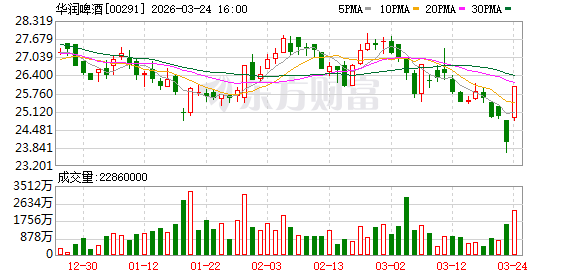
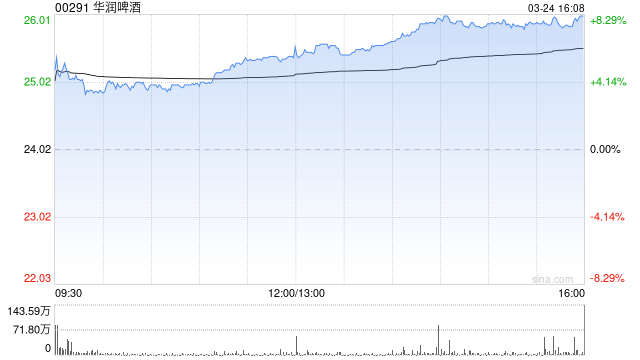
Core Viewpoint - In 2025, China Resources Beer is concluding its "14th Five-Year Plan" and the "3+3+3" nine-year strategy, with a focus on high-end beer development and addressing emerging business gaps while maintaining cautious optimism for future growth in revenue and profit despite market challenges [1][2]. Group 1: Financial Performance - In 2025, China Resources Beer achieved revenue of 37.985 billion yuan, an increase of 6.537 billion yuan during the "14th Five-Year Plan" period [1]. - The net profit for 2025 was 3.371 billion yuan, a year-on-year decline of 28.87%, while the net profit excluding non-recurring losses was 5.724 billion yuan, reflecting a year-on-year growth of 19.6% [2]. - The compound annual growth rate (CAGR) for revenue from 2017 to 2025 was 3%, while the net profit CAGR was 23%, indicating a strong performance over the nine-year strategy [2]. Group 2: Business Strategy and Market Position - The company is committed to a high-end strategy, with a focus on the mid-to-high-end beer segment, which now accounts for nearly 25% of total sales, and has seen significant growth in brands like "Heineken" and "Snow" [3]. - The beer business generated revenue of 36.489 billion yuan in 2025, with a gross margin increase of 1.4 percentage points to 42.5% due to cost savings and operational efficiency improvements [3]. - New product launches include Belgian-style white and black beers, as well as tea and fruit beers, aimed at diversifying the product range [3]. Group 3: Online Business Development - The online business of China Resources Beer has seen rapid growth, with a year-on-year increase of over 30% in 2025, supported by strategic partnerships with major online platforms [4]. Group 4: White Wine Business - The white wine segment generated revenue of 1.496 billion yuan in 2025, but faced challenges leading to a goodwill impairment of 2.877 billion yuan [5]. - The company views the white wine business as a long-term growth opportunity, emphasizing the importance of brand stability, pricing strategy, and channel management [5]. - Experts suggest that the company’s strong capital and channel capabilities will enhance its resilience and potential for mergers and acquisitions in the white wine sector [5]. Group 5: Market Reaction - Following the financial report release, the market responded positively, with the stock price increasing by 5.66% to 25.38 HKD per share [6].
大华继显:降华润啤酒(00291)目标价至30.3港元 集团管理层对旺季审慎乐观
Zhi Tong Cai Jing· 2026-03-24 07:40
Core Viewpoint - DCH's report indicates a cautious optimism from China Resources Beer management regarding the upcoming peak season despite a slight decline in revenue and a drop in average selling prices [1] Group 1: Financial Performance - China Resources Beer reported a revenue of 37.985 billion RMB for 2025, reflecting a year-on-year decrease of 2% [1] - Adjusted EBITDA reached 9.879 billion RMB, showing a year-on-year increase of 10% [1] - Beer sales volume increased by 0.4% in the second half of 2025, while the average selling price decreased by 5% due to proactive promotional activities [1] Group 2: Management Outlook - Management has observed positive effects from recent initiatives, with sales volume and average price both recording growth in the first two months of the year [1] - DCH maintains a "Buy" rating for China Resources Beer, adjusting the target price from 3.38 HKD to 3.03 HKD, which corresponds to an estimated enterprise value to EBITDA ratio of 6.3 times for the year [1] Group 3: Liquor Business - The report anticipates that if operations stabilize, the goodwill impairment losses for the liquor business will narrow this year [1]