青岛白啤

Search documents
西方营销模式正在失效,中国市场进入“本土规则”时代
Sou Hu Cai Jing· 2026-01-09 15:40
Core Insights - The global floor cleaning robot industry is witnessing a significant shift, with the acquisition of iRobot by its Chinese manufacturing partner, marking the end of an era for the former industry leader [2] - Local brands in China are rapidly gaining market share, forcing international brands like Starbucks, Nike, and Adidas to adapt or face decline [2] - A survey indicates that 85.79% of consumers prefer domestic trendy brands, highlighting the rise of local brands in various consumer sectors [2] Industry Trends - The traditional Western marketing models are becoming ineffective in the Chinese market, as local brands redefine the rules of engagement [4][7] - The previous reliance on mass advertising and standardized marketing strategies is being replaced by personalized and emotionally resonant approaches [9][10] - The emergence of new consumer behaviors emphasizes the importance of emotional connections and personalized experiences over traditional functional marketing [10][11] Brand Strategies - Successful local brands like Qingdao White Beer are leveraging cultural symbols and emotional narratives to resonate with consumers [19][21] - Qingdao White Beer has effectively created immersive experiences that connect with local culture, enhancing brand visibility and consumer engagement [21][22] - The focus has shifted from merely selling products to creating emotional experiences that align with consumers' lifestyles and values [22]





酒行业周度市场观察-20251205
Ai Rui Zi Xun· 2025-12-05 06:27
Investment Rating - The report indicates a long-term investment value in the high-end liquor industry, particularly for leading brands like Moutai and Wuliangye, despite short-term challenges [4]. Core Insights - The high-end liquor sector is facing short-term challenges but maintains a strong investment logic due to brand moat, high gross margins (85%+), and stable cash flow [4]. - The report highlights the need for liquor companies to balance online and offline strategies, especially in the context of the growing trend of instant retail [4][6]. - The domestic wine industry is experiencing a "bumper harvest but no profit" situation, primarily due to supply-demand imbalances and competition from imported wines [6]. Industry Trends - High-end liquor industry re-evaluation: The core logic remains unchanged despite short-term challenges, with leading companies still showing long-term investment potential [4]. - Instant retail's impact on the liquor industry: Instant retail is rapidly penetrating the market, but the response from manufacturers is mixed due to high costs and low order volumes [4][6]. - The "liquor+" strategy is emerging, integrating liquor with various cultural and lifestyle elements to enhance consumer engagement and brand value [6]. - The domestic wine industry faces significant challenges, including supply-demand imbalances and high production costs, necessitating a shift towards consumer value and brand differentiation [6]. Top Brand News - Young consumers are shifting their purchasing criteria from "value for money" to "emotional value," with brands like Qingdao White Beer successfully tapping into this trend [13]. - Xijiu is promoting a lifestyle approach through its "Xijiu+" strategy, integrating liquor with local culinary experiences to enhance consumer connection [13][26]. - Jian Nan Chun achieved significant sales during the Double Eleven shopping festival, showcasing the effectiveness of its cultural branding and e-commerce strategies [24].




2025年第47周:酒行业周度市场观察
艾瑞咨询· 2025-11-27 00:04
Group 1: High-end Baijiu Industry Reflection - The high-end baijiu industry faces short-term challenges, but the core investment logic remains unchanged, with leading companies like Moutai and Wuliangye maintaining long-term investment value due to brand moat, high gross margins (over 85%), and stable cash flow [3][4] - Current inventory pressure is significant, with Moutai's price dropping below 1800 yuan, yet cultural foundations and business models support resilience [3] - Valuations have returned to reasonable levels, with Wuliangye's P/E ratio at 14 times, and high dividends (Luzhou Laojiao's dividend yield exceeds 6%) provide a safety net [3][4] Group 2: Instant Retail and Alcohol - Instant retail is rapidly penetrating the alcohol industry, but manufacturers experience uneven effects, with platforms like Douyin tightening regulations on low-price sales [5] - The online alcohol sales are primarily dominated by beer, with baijiu being less represented, indicating a need for balance between online and offline channels [5] - Challenges include high costs for distributors and risks of counterfeit products, necessitating a differentiated development approach rather than blindly following trends [5] Group 3: Domestic Wine Industry Challenges - The domestic wine industry faces a "bumper harvest but no profit" dilemma due to supply-demand imbalances, homogenization, and competition from imported wines [7] - Low capacity utilization and lack of product differentiation exacerbate the crisis, with high costs and weak industry chains further complicating recovery [7] - Solutions involve focusing on unique terroir characteristics, creating differentiated IP, and embracing new consumption scenarios to drive sustainable development [7] Group 4: E-commerce and Alcohol Market Dynamics - E-commerce platforms are aggressively using subsidies and low-price pre-sales to disrupt offline pricing, leading to conflicts with traditional alcohol distributors [12] - The market is experiencing a "tear and reconstruction" phase, with some distributors forced to supply online, creating a dependency relationship [12] - Future collaboration is essential, with e-commerce expanding breadth and alcohol distributors deepening service to achieve industry chain upgrades centered on consumer needs [12] Group 5: Young Consumer Trends - Young consumers are shifting their purchasing criteria from "value for money" to "worth it," with emotional resonance becoming a key factor in their buying decisions [15][16] - Products like Qingdao White Beer have gained popularity by aligning with emotional and quality expectations, reflecting a broader trend in consumer behavior [15][16] Group 6: Innovations in Alcohol Products - New product launches, such as the "No Rush Sparkling Yellow Wine," signify a shift towards value creation in the yellow wine industry, targeting younger consumers with innovative blends [18] - The introduction of limited-edition products, like the "Bingwu Horse Year Zodiac Wine" by Jianan Chun, highlights the importance of cultural significance and scarcity in appealing to high-end markets [37] Group 7: Industry Resilience and Transformation - The baijiu industry is transitioning from high-speed growth to a focus on quality, with leading brands maintaining their positions while smaller firms face increased pressure [11] - Companies are encouraged to concentrate on product quality, brand building, and operational efficiency to achieve sustainable growth amid industry adjustments [11] - The emergence of new business models, such as "group buying," reflects innovative approaches to address challenges like high inventory and price control [21]

东吴证券:2024啤酒需求韧性仍在 2025关注场景修复
智通财经网· 2025-11-06 03:56
Core Viewpoint - The beer sector is currently at a bottoming phase, with potential recovery opportunities driven by macro policy changes and improved fundamentals in the coming year [1] Group 1: Current Market Conditions - The beer consumption is in a seasonal downturn in Q4, with limited changes in the fundamentals, but there are expectations for recovery opportunities if consumption policies are introduced [1] - For the first three quarters of 2025, the beer sector generated revenue of 61.726 billion yuan, a year-on-year increase of 1.99%, and a net profit of 9.339 billion yuan, a year-on-year increase of 10.43% [1] Group 2: Financial Performance - Revenue and profit growth rates for the beer sector weakened sequentially in 2025, attributed to limited consumption scenarios and high costs, although overall gross profit margins showed improvement [2] - The revenue for Q1, Q2, and Q3 of 2025 was 20.043 billion, 21.491 billion, and 20.192 billion yuan respectively, with year-on-year growth rates of 3.68%, 1.90%, and 0.45% [1] Group 3: Future Outlook - Demand resilience is expected to continue into 2024, with strong support for beer demand from the middle-income population and improved performance in core provinces [3] - The free cash flow of leading Chinese beer companies is anticipated to remain at a high level, with increasing dividend and yield rates expected [3]

啤酒2025年三季报总结:2024需求韧性仍在,2025关注场景修复
Soochow Securities· 2025-11-05 11:04
Investment Rating - The report maintains an "Overweight" rating for the beer sector, indicating a positive outlook for investment opportunities in this industry [2]. Core Insights - The beer sector is currently at a bottoming phase, with potential recovery driven by macro policy changes and improved fundamentals in the coming year [2][63]. - Demand resilience is expected to continue into 2024, with a focus on scene recovery in 2025 [5][46]. Summary by Sections 1. Revenue and Profit Trends - For the first three quarters of 2025, the beer sector reported revenues of 61.726 billion yuan, a year-on-year increase of 1.99%, and a net profit of 9.339 billion yuan, up 10.43% year-on-year [10]. - Quarterly revenues for 2025 were 20.043 billion yuan, 21.491 billion yuan, and 20.192 billion yuan, with year-on-year growth rates of 3.68%, 1.90%, and 0.45% respectively [10]. 2. Margins and Cost Dynamics - Despite weak sales volume and price performance, the overall gross margin has been improving due to cost elasticity, with major brands like Qingdao Beer and Yanjing Beer showing strong performance [18][19]. - Gross margins for major brands in Q3 2025 were as follows: Qingdao Beer at 43.66%, Chongqing Beer at 50.17%, Yanjing Beer at 47.19%, and Zhujiang Beer at 51.51% [19][22]. 3. Demand Resilience and Market Dynamics - The report highlights that middle-income households are experiencing faster disposable income growth, which supports beer demand at mainstream price points [46][51]. - The overall beer production is showing a recovery trend, with high-end products like Qingdao White Beer and Yanjing U8 continuing to perform well [49][54]. 4. Cash Flow and Dividend Outlook - The free cash flow of leading beer companies is expected to remain high, with steady improvements in dividend rates and payout ratios anticipated [58][59]. - The report notes that capital expenditures related to high-end beer production are expected to stabilize, further supporting cash flow sustainability [58]. 5. Investment Recommendations - The report suggests focusing on companies with strong fundamentals such as Qingdao Beer, Yanjing Beer, and China Resources Beer, which are expected to benefit from improved market conditions in 2025 [2][63].


青岛啤酒(600600):产品结构持续优化升级,盈利能力提升
Jianghai Securities· 2025-10-30 11:34
Investment Rating - The investment rating for the company is upgraded to "Accumulate" [4] Core Views - The company reported a revenue of 29.367 billion yuan for the first three quarters of 2025, reflecting a year-on-year increase of 1.41%. The net profit attributable to shareholders was 5.274 billion yuan, up 5.70% year-on-year [4] - The company continues to optimize its product structure, leading to improved profitability. The gross margin for the first three quarters of 2025 was 43.66%, an increase of 1.90 percentage points year-on-year [7] - The company is focusing on brand and product structure optimization, with a strong emphasis on developing high-end products and new categories [7] Financial Performance - For Q3 2025, the company achieved a revenue of 8.876 billion yuan, a slight decrease of 0.17% year-on-year, while the net profit was 1.370 billion yuan, an increase of 1.62% year-on-year [4] - The company’s sales volume for the first three quarters of 2025 was 6.894 million kiloliters, a year-on-year increase of 1.6%, with the main brand Qingdao Beer showing a sales volume of 3.99 million kiloliters, up 4.1% year-on-year [7] - The company’s operating expenses remained stable, with sales expense ratio at 11.58%, management expense ratio at 3.27%, and R&D expense ratio at 0.27% [7] Future Outlook - Revenue projections for 2025-2027 are estimated at 32.955 billion yuan, 33.891 billion yuan, and 34.920 billion yuan respectively, with growth rates of 2.54%, 2.84%, and 3.04% [7] - The net profit attributable to shareholders is projected to be 4.795 billion yuan, 5.165 billion yuan, and 5.482 billion yuan for 2025-2027, with growth rates of 10.35%, 7.73%, and 6.13% respectively [7] - The company plans to continue developing distinctive products to meet consumer demand, including new flavors and product lines [7]
青岛啤酒(600600):旺季承压 强化内功
Xin Lang Cai Jing· 2025-10-28 12:29
Core Viewpoint - The company reported its Q3 2025 results, showing stable revenue growth despite slight declines in sales volume and price due to promotional activities and seasonal effects [1][2]. Financial Performance - For the first three quarters of 2025, the company achieved revenue of 29.37 billion yuan, a year-on-year increase of 1.4%, and a net profit attributable to shareholders of 5.27 billion yuan, up 5.7% year-on-year [1]. - In Q3 2025, the company recorded revenue of 8.88 billion yuan, a slight decrease of 0.2% year-on-year, with a net profit of 1.37 billion yuan, reflecting a year-on-year increase of 1.6% [1]. - The company's gross margin improved by 1.4 percentage points to 43.6%, with unit costs decreasing by 3.0% to 2,317 yuan per ton [2]. Sales and Volume Analysis - Q3 2025 beer sales volume increased by 0.3% year-on-year to 2.162 million kiloliters, although the growth rate showed a slight decline compared to the previous quarter [1]. - The sales volume of the Qingdao brand increased by 4.2% year-on-year, while other brands saw a decline of 4.8% [1]. - The average price per ton of beer decreased by 0.5% year-on-year to 4,105 yuan per kiloliter, attributed to promotional activities [1]. Strategic Initiatives - The company is focusing on optimizing brand and product structure, accelerating the development of major and innovative products, and enhancing its product mix [2]. - The company is expanding its online channels and developing new business models such as instant retail and specialized liquor stores [2]. - The company is expected to continue its strategic planning for 2026, with a focus on the 14th Five-Year Plan [2]. Investment Outlook - The company maintains its previous profit forecasts, expecting net profits of 4.70 billion, 5.06 billion, and 5.41 billion yuan for 2025-2027, representing year-on-year growth of 8.2%, 7.6%, and 6.9% respectively [3]. - The current stock price corresponds to a price-to-earnings ratio of 19, 18, and 17 for the years 2025, 2026, and 2027 [3].
啤酒五巨头,半年吸金840亿
36氪· 2025-09-22 10:37
Core Viewpoint - The Chinese beer market is experiencing a significant shift, with domestic giants gaining ground against foreign competitors, particularly in the context of the "takeout war" that has revitalized the industry [4][6][30]. Group 1: Market Dynamics - The competitive landscape of the Chinese beer market is changing, with domestic brands outperforming foreign giants in the first half of 2025 [4][6]. - In the first half of 2025, China’s beer market saw a decline in overall production by 0.3%, continuing a trend of stagnation [18]. - Despite the overall market decline, domestic giants like China Resources Beer, Qingdao Beer, and Yanjing Beer achieved over 2% growth in sales [19][20]. Group 2: Performance of Major Players - China Resources Beer surpassed Budweiser APAC to become the market leader, with a revenue of approximately 239.42 billion RMB, a 0.8% increase year-on-year [10][11]. - Budweiser APAC reported a revenue of 31.36 billion USD (approximately 224.5 billion RMB), a 5.6% decline year-on-year, marking the worst performance among the top five [9]. - Yanjing Beer and Chongqing Beer are in a tight race for the fourth position, with Yanjing Beer achieving a net profit growth of 45.45%, surpassing Chongqing Beer [13][14]. Group 3: Impact of Instant Retail - The "takeout war" has provided a new growth driver for the beer industry, with instant retail becoming a significant channel for sales [17][21]. - Qingdao Beer reported a nearly 60% increase in sales through instant retail platforms, significantly outperforming the industry average [26]. - China Resources Beer noted a nearly 40% growth in its online business and a 50% increase in its instant retail business [27]. Group 4: Foreign Brands' Struggles - Foreign brands, particularly Budweiser APAC and Chongqing Beer, are facing challenges, with Budweiser's sales in China declining by 8.2% [10][30]. - The high-end beer market, once dominated by Budweiser, is seeing its advantages eroded by the growth of domestic brands [30][33]. - Both Budweiser APAC and Chongqing Beer are shifting focus to non-immediate channels in response to declining performance in traditional immediate consumption venues [36][37].

东吴证券:啤酒量价节奏相对平稳 关注场景修复节奏
Zhi Tong Cai Jing· 2025-09-05 03:56
Group 1 - The overall performance of the beer industry in the first half of 2025 shows steady revenue growth and double-digit profit increase, with total revenue reaching 41.534 billion yuan, up 2.75% year-on-year, and net profit attributable to shareholders at 6.512 billion yuan, up 11.81% year-on-year [1] - In Q1 and Q2 of 2025, the beer sector's revenue was 20.043 billion yuan and 21.491 billion yuan respectively, with year-on-year growth rates of 3.68% and 1.90%, while net profits were 2.519 billion yuan and 3.993 billion yuan, reflecting growth rates of 10.62% and 12.57% [1] - The beer market is expected to see a recovery in consumption patterns, with potential for beta configuration opportunities in the beer sector if consumer policies improve marginally [1] Group 2 - The beer industry's sales and price performance have been weak in 2025, attributed to slow recovery in consumer spending and temporary policy impacts on on-premise consumption [2] - Despite the weak beta performance, emerging brands like Yan Beer and Zhu Beer have shown strong sales and pricing performance, while overall cost elasticity continues to improve, leading to a steady increase in gross profit margins [2] - The beer sector is anticipated to maintain a steady operational trend in the second half of 2025, supported by resilient demand from middle-income consumers and a recovery in beer production [3] Group 3 - The free cash flow of leading Chinese beer companies is expected to remain at a high-quality level, with increasing dividend and yield rates, driven by significant improvements in net profit margins since 2018 [3] - The focus on high-end beer products and the gradual reduction of capital expenditures from previous peaks are expected to support the continued stability of free cash flow [3]
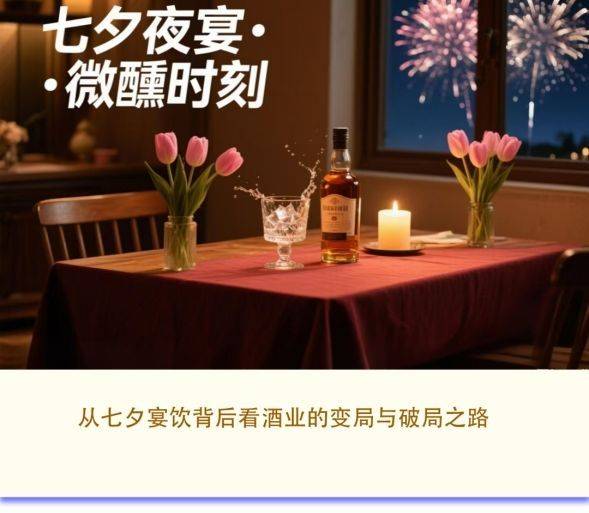
一场七夕宴,酒业新棋局
Sou Hu Cai Jing· 2025-09-01 04:27
Core Insights - The article highlights the transformation of the liquor industry through innovative marketing strategies during the Qixi Festival, focusing on low-alcohol products and immersive experiences to attract younger consumers [2][18] Product Trends - The liquor industry is shifting towards "low-alcohol" products, with brands like Wuliangye launching a 29-degree product and Gujinggong introducing a 26-degree variant, both targeting younger consumers who prefer lower alcohol content [3][12] Marketing Strategies - Companies are implementing online and offline marketing strategies that emphasize experiential and scenario-based consumption, such as interactive online campaigns and immersive offline events [5][9] - Online initiatives include social media interactions and themed content, while offline events focus on creating unique experiences that resonate with consumers [11][12] Targeting Young Consumers - The combination of low-alcohol products and scenario-based marketing aims to break traditional stereotypes associated with liquor, appealing to the younger generation's drinking habits and lifestyle [12][14] - Brands are redefining their image from "traditional liquor" to "social currency" by integrating elements relevant to young consumers, such as romance and social interactions [12][14] New Consumption Scenarios - The industry is witnessing a shift from traditional consumption scenarios like business dinners to new contexts such as family gatherings and emotional consumption, with brands adapting their offerings accordingly [13][14] - Marketing efforts are increasingly focused on emotional connections, with campaigns linking drinking to significant life moments and personal experiences [13][14] Embracing Female Consumers - The rise of the "she economy" is being recognized as a significant market opportunity, with products designed to appeal to female consumers through aesthetics and lower alcohol content [14][15] - Marketing strategies are tailored to resonate with women's self-care and emotional needs, further expanding the consumer base [15] Industry Challenges - Despite the innovative marketing approaches, the industry faces challenges such as homogenized competition and the risk of consumer fatigue due to similar marketing tactics [17] - The need for brands to convert short-term festival excitement into long-term consumer loyalty remains a critical challenge [17][18] Future Directions - The liquor industry is expected to further segment its marketing strategies, targeting emerging consumer scenarios like solo drinking and self-rewarding experiences [17][18] - Long-term success will depend on continuous product innovation and the ability to integrate drinking into everyday life rather than limiting it to festive occasions [17][18]