城市更新

Search documents
东城区:王府井海港城等重点项目今年开工
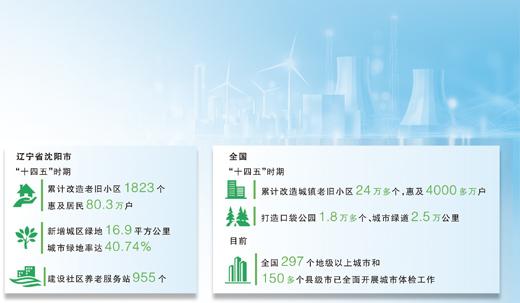
Xin Jing Bao· 2026-01-13 11:52
Group 1 - The East District will focus on completing 2,000 applications for rental withdrawal and over 100 protective renovations of courtyards this year, while promoting substantial commencement of key projects such as Wangfujing Haigang City and Qianmen East District [1] - By 2025, the East District aims to complete 110 protective renovations of courtyards, benefiting over 1,000 residents through rental withdrawal applications around Guozijian and the Forbidden City, marking a breakthrough in the withdrawal of state-owned cultural relics [1] - The East District is committed to enhancing the functionality of the core area by implementing control regulations and completing the withdrawal projects of state-owned cultural relics [1] Group 2 - The Baohuali project has achieved the first batch of resident relocations, and new entrances for Dongsi Station on Line 6 have been put into use, with projects like Wangfujing Foreign Language Bookstore and Qianmen West District commencing [2] - This year, the East District will steadily advance the renovation of dilapidated buildings, improving living conditions based on the principle of "who benefits, who pays," while enhancing the overall environment of the flat-roofed areas [2] - The East District aims to use urban renewal as a means to achieve the development goal of preserving nostalgia while envisioning the future, ensuring that the results of urban renewal are tangible for residents [2]

中山出台全省地级市首个老旧街区改造指引
Nan Fang Ri Bao Wang Luo Ban· 2026-01-13 09:06
《指引》践行"城市更宜居、更韧性、更智慧"发展导向,系统回应老旧街区"改什么、怎么改"现实问 题,以持续推进城市更新、建设"好房子、好小区、好社区、好城区"为总体目标,系统构建功能复合、 特色鲜明、活力充沛、民生宜居、智慧高效、韧性发展的精品街区,探索未来社区建设模式,并致力于 为青年人拓展创新创业空间,为市民丰富多元消费场景,助力中山迈向未来城市。 在改造理念上,《指引》坚持"留改拆并举、以保留提升为主",反对大拆大建,倡导"微改造、精提 升"。《指引》提出通过修缮历史建筑、改善基础设施、优化公共空间、引入商业业态等精细化手段, 打造Citywalk(城市漫步)路线,让老街在延续烟火气的同时更有活力,实现"历史感"与"现代性"的有 机融合。 近日,《中山市老旧街区改造建设指引》(下称《指引》)发布,该《指引》是全省地级市中首个针对 老旧街区改造的系统性指导文件,标志着中山在城市更新、老街焕新方面迈入规范化、制度化新阶段。 在改造内容方面,《指引》提出老旧街区改造按照改造内容与资金筹措方式,可分为基础完善类和特色 类两类。基础完善类应做到"应改尽改、宜改则改",主要由政府主导投入,鼓励有条件的街区积极引入 社 ...
AI、高股息、新质生产力:2026开年市场如何走?|投向预言家
Sou Hu Cai Jing· 2026-01-13 08:47
Group 1 - The core viewpoint for 2026 A-shares is likely to be driven by a dual engine of "consumption recovery" and "technological self-reliance" [4] - The national fiscal work conference has set the tone for 2026, emphasizing "strongly boosting consumption" and committing to "continue arranging funds to support the replacement of consumer goods" [3] - Short-term focus should be on sectors directly benefiting from policies, such as major appliances, new energy vehicles, and smart home industries, which are the primary targets for subsidies [3] Group 2 - Mid-term investments should target "hard technology" sectors like semiconductors, industrial mother machines, and AI hardware, as the conference highlighted increased investment in technology and key manufacturing industry actions [3] - Long-term attention should be given to areas related to employment services, vocational training, and urban renewal, which are crucial for improving consumer capacity [3] - The market's risk appetite is expected to remain neutral to warm, with a significant reduction in concerns over potential tariff and trade-related risks, supported by positive government statements from both China and the U.S. regarding economic performance in 2026 [5] Group 3 - Structural opportunities are anticipated to expand further in 2026, with cyclical industries like non-ferrous metals and chemicals expected to benefit from economic recovery and supply-side improvements [5] - The ongoing AI wave and the demand for self-reliance in technology remain core investment themes [5] - The difficulty of stock selection is expected to increase in 2026, necessitating in-depth research to seize stock picking and timing opportunities [5]


开局即冲刺 广州市天河区召开城中村改造工作会议
Zheng Quan Shi Bao Wang· 2026-01-09 12:26
Group 1 - The core viewpoint of the news is the significant progress and achievements in the urban village renovation work in Tianhe District, Guangzhou, with a strong emphasis on continuous improvement and acceleration of the projects [1][2] - In 2025, Tianhe District completed a fixed asset investment of 342.33 billion yuan in urban renewal, achieving a completion rate of 106.98%, with an expected total of 350 billion yuan for the year, accounting for nearly one-fifth of the city's annual target [1] - The Xian Village renovation project, which took 15 years, achieved a historic breakthrough by clearing all 1,950 village houses by July 20, 2025, marking it as the first village in Guangzhou to successfully implement legal relocation [1] Group 2 - The district adopted a "retain, renovate, and demolish" approach, with five completed renovation projects and several others in progress, including the successful application for special bond support for 14 environmental remediation projects [2] - For 2026, the overall goal is to complete a fixed asset investment of 330 billion yuan in urban renewal, striving to exceed 350 billion yuan, while accelerating the renovation of 27 projects in 22 remaining urban villages [2] - Specific quantitative targets have been set for four projects using the "legal acquisition and net land transfer" model, with mechanisms for responsibility and assessment established to ensure progress [2][3]
助力经济平稳开局地方债“早发早用早见效”
Zhong Guo Zheng Quan Bao· 2026-01-08 20:50
Core Viewpoint - The issuance of local government bonds is expected to accelerate in 2026, with a focus on effective investment and stimulating domestic demand, which will support a stable economic start in the first quarter of 2026 [1][2][3] Group 1: Local Government Bond Issuance - Ningbo issued 25.372 billion yuan in local bonds on January 8, while Shandong was the first province to issue local bonds in 2026, totaling 72.381 billion yuan on January 5 [1] - As of January 8, 27 regions, including Beijing, Hebei, and Shanxi, have disclosed bond issuance plans for the first quarter, with a total scale of approximately 2 trillion yuan [1] Group 2: Investment Focus and Economic Impact - The newly disclosed special bonds are primarily directed towards new infrastructure and urban renewal, which are expected to enhance effective investment and boost domestic demand [1][2] - The first quarter of 2026 is anticipated to see a concentrated issuance of special bonds, with an estimated issuance scale of around 670 billion yuan [2] Group 3: Policy and Management Trends - The Ministry of Finance plans to advance the issuance of local government bonds and has indicated that the new debt limit for 2026 will be announced early to facilitate project funding [1][3] - There is a growing need for local governments to increase investment in major projects in transportation, energy, and urban renewal to meet the demands of domestic consumption and economic growth [3][4] Group 4: Evaluation and Oversight - The expansion of the scope of special bonds will increase the complexity of evaluating project profitability, necessitating more specialized personnel for oversight [4] - A more scientific performance evaluation system for special bond projects is recommended, including mechanisms for pre-, mid-, and post-evaluation [4]
天河公布城中村改造最新计划,城市更新固投力争超350亿元
Nan Fang Du Shi Bao· 2026-01-08 08:24
Core Insights - The Guangzhou Tianhe District is accelerating the urban village renovation plan for 2026, aiming to complete urban renewal fixed asset investments of 33 billion yuan, striving to exceed 35 billion yuan [1] Group 1: Urban Village Renovation Plans - In 2026, Tianhe District will expedite the renovation of 27 projects across 22 remaining urban villages, with a focus on specific projects and clear quantitative targets [1] - Four new model projects (Changban Village, Yuangang Village, Lingtang Village, and Kemulang Village) will have defined goals for special loan expenditures, agreements, and construction timelines [1] - The district will also push forward with government reserve projects, ensuring substantial progress in planning, approvals, demolition, and construction [1] Group 2: Achievements and Future Goals - By the end of 2025, significant milestones were achieved, including the completion of 1,950 village houses in the Xian Village renovation project and the initiation of reconstruction for four new model projects [2] - From January to November 2025, the Tianhe District completed urban renewal fixed asset investments of 34.233 billion yuan, achieving a completion rate of 106.98% and contributing nearly one-fifth of the city's annual target [2]
上半年启动石牌安置房建设,广州天河公布城中村改造最新计划
Nan Fang Du Shi Bao· 2026-01-08 06:46
Group 1 - The core viewpoint of the news is the acceleration of urban village renovation projects in Tianhe District, Guangzhou, with a focus on completing 27 projects by 2026 and achieving a fixed asset investment of 330 billion yuan, aiming for over 350 billion yuan [2] - In 2026, Tianhe District plans to expedite the renovation of 22 remaining urban villages, implementing a new model for four projects that includes clear quantitative goals for funding, agreements, and construction [2] - The district aims to make substantial progress on government storage projects, accelerating the preparation, approval, demolition, and construction processes to meet set timelines [2] Group 2 - In 2025, significant achievements in urban village renovation were reported, including the completion of 1,950 village houses in Xian Village and the initiation of reconstruction for four projects under the new model [3] - From January to November 2025, Tianhe District completed a fixed asset investment of 342.33 billion yuan, achieving a completion rate of 106.98%, with expectations to reach 350 billion yuan for the year, accounting for nearly one-fifth of the city's annual target [3]
从交通基础的网络完善到城市更新的品质升级,从医疗服务的普惠到教育事业的走心
Nan Jing Ri Bao· 2026-01-08 03:42
Group 1: Urban Development and Infrastructure - The opening of the elevated main line of National Highway 312 between Ningzhen and Qixianghe has improved connectivity between the two areas, reducing travel time by nearly 20 minutes for residents [1] - Nanjing has been selected as one of the first pilot cities for urban renewal during the 14th Five-Year Plan, launching 48 urban renewal pilot projects, enhancing the quality of urban life [2][3] - The city has implemented micro-transformation plans to alleviate traffic congestion, resulting in a 30% decrease in congestion index and a 20% increase in average vehicle speed on key road segments [3] Group 2: Transportation Enhancements - The newly opened 2-kilometer dual six-lane expressway has significantly reduced travel time from 90 minutes to 40 minutes for drivers traveling to Zhenjiang [5] - Nanjing's urban rail transit system has expanded to 524.4 kilometers, adding 129.7 kilometers since the end of the 13th Five-Year Plan, enhancing commuting convenience for residents [6] - The introduction of the "Little Blue Whale" micro-circulation bus brand has improved access to public transportation, addressing the "last mile" issue for residents [6] Group 3: Social Services and Welfare - Nanjing has implemented a high-quality, inclusive elderly care service strategy, achieving 100% coverage of district-level elderly service centers and over 1,400 community care centers [9] - The city has introduced a "zero out-of-pocket" policy for hospitalization expenses related to childbirth, significantly reducing financial burdens for families [10] - The establishment of "Ninghai Shiguangli," an all-age dining facility, exemplifies the city's commitment to enhancing elderly care services [7][8] Group 4: Education Improvements - Nanjing has launched 24 educational projects during the 14th Five-Year Plan, including the installation of air conditioning in all ordinary classrooms, improving the learning environment for students [11][12] - The city has added approximately 120,000 new compulsory education seats and over 40,000 high school seats, facilitating access to quality education [12] - Comprehensive health monitoring and nutritional standards have been established for students, ensuring their well-being and academic performance [12]
2026年冲刺2000亿元投资大关,广州城市更新持续放大招
2 1 Shi Ji Jing Ji Bao Dao· 2026-01-07 12:20
Core Viewpoint - Guangzhou is set to increase its investment in urban renewal, with a planned fixed asset investment of 200 billion yuan in 2026, following a completion of 190 billion yuan in 2025 [1][2][3]. Investment Plans - In 2026, Guangzhou's urban renewal plan aims to complete a fixed asset investment of 200 billion yuan, focusing on the renovation of old neighborhoods, streets, factories, and historical cultural areas [2][4]. - The city will initiate over 30 urban renewal area renovations during the "14th Five-Year Plan" period, with a focus on six key areas including Shamian and Baihetan [2][4]. Project Progress - In 2025, Guangzhou completed a fixed asset investment of 190 billion yuan, with significant projects including the comprehensive start of urban village renovations and the successful advancement of pilot projects for dilapidated housing [3][4]. - The San Yuan Li urban renewal project has received over 10 billion yuan in funding, with 83% of compensation agreements signed and the relocation of over 2,000 businesses completed [4][6]. Funding and Financial Mechanisms - Urban renewal projects in Guangzhou are primarily led by state-owned enterprises, which have shifted from private enterprises that previously dominated the sector [6][8]. - The introduction of Real Estate Investment Trusts (REITs) for urban renewal facilities is expected to provide new funding channels, with Guangzhou being a key city in the Greater Bay Area [6][7]. Strategic Importance - Urban renewal is viewed as a crucial strategy for stabilizing investment and expanding demand, with policies being elevated to unprecedented levels [8]. - The shift in focus from new construction to revitalizing existing spaces indicates a transformation in the real estate industry, emphasizing the importance of upgrading and repurposing existing assets [8].
老工业城市探索内涵式发展新路(大数据观察·点读“十四五”)
Ren Min Ri Bao· 2026-01-07 05:15
Core Viewpoint - The city of Shenyang is actively promoting urban renewal to enhance the functionality of old neighborhoods, factories, and urban villages, aiming to create a modern, livable, and resilient city that prioritizes the well-being of its residents [1][2]. Group 1: Urban Renewal Initiatives - Shenyang has installed over 1,600 elevators in old residential buildings, benefiting more than 110,000 residents during the "14th Five-Year Plan" period [2]. - The city has completed the renovation of 1,823 old residential communities, which constitute over half of the 6,500 residential complexes in the city [3]. - A total of 252 kilometers of gas pipelines have been laid since September 2024, with 20,000 households no longer needing to use liquefied gas for cooking [5]. Group 2: Community Services and Infrastructure - Since 2021, Shenyang has established 955 community elderly care service stations and 193 community health service centers to enhance community services for the elderly and children [4]. - The city has upgraded 1,933 kilometers of water supply pipelines, 393 kilometers of drainage pipelines, and 844 kilometers of heating pipelines, significantly improving urban safety and resilience [5]. Group 3: Environmental Improvements - Shenyang has added 16.9 square kilometers of urban green space, achieving a city green space rate of 40.74% during the "14th Five-Year Plan" period [7]. - The city has implemented systematic treatments for its water systems, including the removal of 28,400 cubic meters of sludge and the restoration of over 40,000 square meters of greenery [6]. Group 4: Cultural Heritage and Industrial Transformation - The city has transformed historical and cultural districts, preserving 359 building facades and introducing 54 brand flagship stores, increasing experiential cultural tourism from 3% to 46% [9][10]. - Shenyang has designated 700,000 square meters of industrial heritage protection zones, repurposing old factories into cultural and creative spaces [10].