工业机械

Search documents
券商密集召开2026年度策略会;国联民生1.71亿元拿下民生证券0.72%股权 | 券商基金早参
Mei Ri Jing Ji Xin Wen· 2025-11-13 00:41
Group 1 - Major securities firms, including CITIC Securities and Guotai Junan, are holding annual strategy meetings for 2026, focusing on global market opportunities and industry transformation [1] - CITIC Securities' general manager highlighted that the "14th Five-Year Plan" period will present new characteristics in the global context, technology trends, and institutional environment, potentially leading to new opportunities [1] - Guotai Junan's president emphasized that the new round of capital market reforms aims to enhance institutional inclusiveness and competitiveness, which may lead to a broad revaluation of Chinese assets [1] Group 2 - Guolian Minsheng successfully acquired 0.72% of Minsheng Securities' shares for approximately 171 million yuan, increasing its stake to 99.98%, just shy of full control [2] - This acquisition is expected to enhance Guolian Minsheng's control over Minsheng Securities and improve resource integration efficiency, potentially boosting its stock price [2] - The trend of consolidation in the securities industry is accelerating, leading to increased competition for smaller firms [2] Group 3 - Public fund research activity has significantly increased in Q4, with a total of 10,115 research activities conducted, reflecting a more than 50% increase compared to the previous quarter [3] - The focus of these research activities is primarily on growth sectors such as industrial machinery, electronic components, and integrated circuits, indicating a strong interest in high-growth areas [3] - The rise in research activity suggests a consensus on improving macro liquidity and profit expectations among market participants [3] Group 4 - In October, the number of new margin trading accounts decreased to 130,200, a significant drop from 205,400 in September, while the total number of margin trading accounts reached approximately 15.4 million [4] - The margin trading balance has increased from less than 1.9 trillion yuan at the beginning of the year to 2.49 trillion yuan, indicating a growing participation of leveraged funds [5] - Several leading securities firms have raised their margin trading limits, with CITIC Securities increasing its limit from 150 billion yuan to 250 billion yuan, and Huatai Securities setting its limit at approximately 286.5 billion yuan [5]



四季度公募调研升温 聚焦成长领域
Zheng Quan Shi Bao Wang· 2025-11-12 23:23
人民财讯11月13日电,进入四季度,伴随上证指数多次在4000点附近小幅震荡,公募基金调研热度明显 升温。数据显示,截至11月12日,四季度以来公募机构合计开展调研10115次,环比上升超50%,调研 个股覆盖上证主板、深证主板、北交所、创业板及科创板,其中,调研的科创板、创业板个股占比近六 成,主要聚焦在工业机械、电子元件、电气设备与集成电路等四大核心板块,显示机构关注的重心仍聚 焦于成长领域。沪上一位基金评价人士分析,近期调研热度的回升,一方面反映出机构在三季度结构性 行情中保持相对稳健仓位的基础上,开始进一步加大对明年潜在高景气赛道的研究力度,另一方面也显 示市场对宏观流动性与盈利预期的改善已有一定共识。 ...
公募四季度调研升温 聚焦四大核心板块
Zheng Quan Shi Bao· 2025-11-12 18:33
进入四季度,伴随上证指数多次在4000点附近小幅震荡,公募基金调研热度明显升温。 数据显示,截至11月12日,四季度以来公募机构合计开展调研10115次,环比上升超50%,调研个股覆 盖上证主板、深证主板、北交所、创业板及科创板,其中,调研的科创板、创业板个股占比近六成,主 要聚焦在工业机械、电子元件、电气设备与集成电路等四大核心板块,显示机构关注的重心仍聚焦于成 长领域。 整体来看,公募在制造业高端化、科技自主化主线上的调研力度持续加大,体现出资金对于科技周期与 产业链升级逻辑的持续押注。 沪上一位基金评价人士分析,近期调研热度的回升,一方面反映出机构在三季度结构性行情中保持相对 稳健仓位的基础上,开始进一步加大对明年潜在高景气赛道的研究力度,另一方面也显示市场对宏观流 动性与盈利预期的改善已有一定共识。 "从节奏上看,当前调研重点更多集中在高端装备、电子零部件、新能源配套等领域,这些板块在经历 前期估值消化后,业绩确定性开始显现,叠加政策支持信号增强,机构倾向于提前锁定潜在高成长标 的。"上述人士指出,调研频次上升,往往意味着机构在积极寻找新的景气赛道与盈利拐点,尤其是在 制造业和科技链条中,资金布局节奏 ...
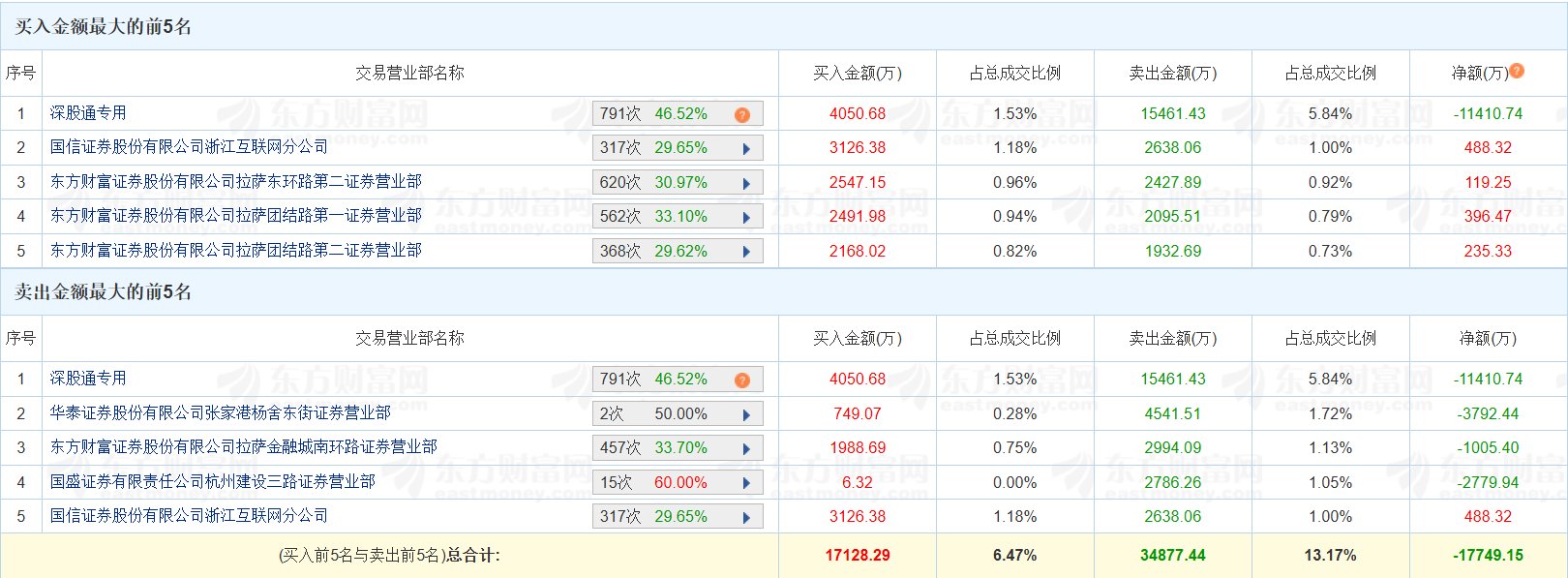
龙虎榜丨海陆重工逼近跌停,深股通净卖出1.14亿元
Ge Long Hui A P P· 2025-11-12 08:52
海陆重工(维权)(002255.SZ)今日跌9.64%,换手率32.64%,成交额26.48亿元。龙虎榜数据显示,深股通位列买入4051万元,卖出1.55亿元,净卖出1.14亿 元。上榜席位全天买入1.71亿元,卖出3.48亿元,合计净卖出1.77亿元。(格隆汇) | 序号 | 交易营业部名称 | | 买入金额(万) | 占总成交比例 | | --- | --- | --- | --- | --- | | 1 | 深股通专用 | 791次 46.52% 2 | 4050.68 | 1.53% | | 2 | 华泰证券股份有限公司张家港杨舍东街证券营业部 | 2次 50.00% | 749.07 | 0.28% | | 3 | 东方财富证券股份有限公司拉萨金融城南环路证券营业部 | 457次 33.70% | 1988.69 | 0.75% | | 4 | 国盛证券有限责任公司杭州建设三路证券营业部 | 15次 60.00% | 6.32 | 0.00% | | 5 | 国信证券股份有限公司浙江互联网分公司 | 317次 29.65% | 3126.38 | 1.18% | | | (买入前5名与卖出前5名)总 ...


伊之密(300415.SZ):目前公司与ACRC以联合研发为核心合作模式
Ge Long Hui· 2025-11-11 07:05
Core Insights - The company Yizhiming (300415.SZ) is currently collaborating with ACRC focusing on joint research and development [1] Group 1: Collaboration and Focus Areas - The collaboration with ACRC centers around joint research and development [1] - The key areas of technological exploration include magnesium alloy casting and digital manufacturing [1]

4000亿消费电子龙头,获220多家机构调研
Zhong Guo Zheng Quan Bao - Zhong Zheng Wang· 2025-11-09 10:41
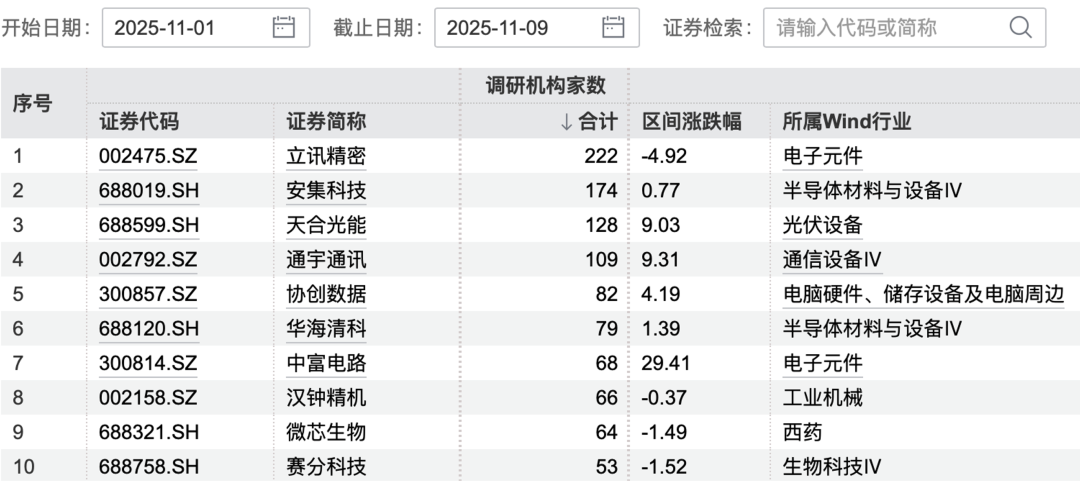
Core Insights - Over 400 A-share listed companies have been investigated by institutions since November, with Luxshare Precision receiving the most attention from over 200 institutions [1] - The focus of institutional research is on "hard technology" sectors such as electronic components and integrated circuits [1] - Companies are increasingly being asked about their future R&D directions and strategies to maintain competitive advantages in the evolving tech landscape [2][3] Group 1: Company Research Highlights - Luxshare Precision has been the most investigated company, with 222 institutions participating, despite a price drop of 4.92% [1] - Tongyu Communication is preparing for the transition from 5G to 6G, focusing on satellite internet as a core infrastructure and has made advancements in multi-beam communication and microwave technologies [3] - HNA Holding plans to optimize its fleet structure during the 14th Five-Year Plan period to enhance operational efficiency [5] Group 2: Industry Trends and Focus Areas - The technology sector, particularly in electronic components and integrated circuits, remains a focal point for institutional research, indicating a sustained interest in tech investments [6] - Investment opportunities are suggested in advanced semiconductor manufacturing, new energy systems, quantum technology, and AI-related fields [6] - The application side of technology is seen as a key area for structural growth, with high demand in sectors like robotics, consumer electronics, and power management chips [6]

海陆重工成交额创上市以来新高
Zheng Quan Shi Bao Wang· 2025-11-07 02:27
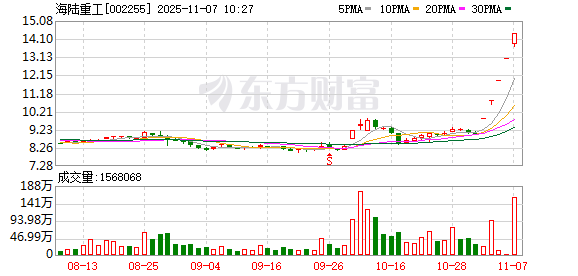
Core Viewpoint - The trading volume of Hailu Heavy Industry reached a record high of 2.121 billion yuan, marking a significant increase since its listing, with the latest stock price rising by 10.02% and a turnover rate of 23.57% [2] Company Summary - Hailu Heavy Industry Co., Ltd. was established on January 18, 2000, with a registered capital of 8,308.81055 million yuan [2]
近一月953公司被调研, 半导体、高端制造成焦点,多股已大涨
2 1 Shi Ji Jing Ji Bao Dao· 2025-11-07 01:48
Core Insights - The article highlights the increasing activity of broker research following the disclosure of third-quarter reports by listed companies, with a notable focus on sectors such as solar energy, semiconductor materials, and consumer electronics [2][5]. Group 1: Broker Research Trends - As of early November, over 35 brokers have conducted research on companies in the solar component supply chain, semiconductor materials, and leading consumer electronics firms [2]. - From October 1 to November 5, a total of 953 listed companies in A-shares received broker research, with 42 companies receiving research from 40 or more brokers [5]. - The most researched companies include Aibo Medical, Huace Testing, and Jinpan Technology, which received 65, 64, and 62 broker inquiries respectively, all categorized under the new productivity label [5]. Group 2: Sector Focus - Brokers are particularly interested in sectors such as semiconductors, industrial automation, and high-end manufacturing, reflecting ongoing market attention to technology-driven industries [2][6]. - Companies like Zhaoyi Innovation and Canadian Solar have also attracted significant broker interest, receiving 55 and 49 inquiries respectively [5]. - The research interest extends to various industries, including medical devices, power equipment, and gaming, indicating a broad focus on high-growth sectors [6]. Group 3: Investment Strategies - Broker investment strategies are concentrated on high-prosperity industries, with a focus on sectors like AI, semiconductor equipment, and consumer electronics [10]. - The research teams from CITIC Securities and CICC suggest that the electronic sector's performance is expected to remain strong, driven by AI and domestic production growth [10][11]. - Recommendations for November include focusing on new economic sectors such as AI software and semiconductor equipment, while traditional sectors like coal and steel are also highlighted [11].






近一月953公司被调研, 半导体、高端制造成焦点,多股已大涨
21世纪经济报道· 2025-11-07 01:38
Core Viewpoint - The article highlights the increasing activity of broker research in various sectors following the disclosure of Q3 financial reports, with a particular focus on technology and new productivity sectors [1][2]. Group 1: Broker Research Activity - As of early November, over 953 A-share listed companies have been researched by brokers, with 42 companies receiving attention from 40 or more brokers [3]. - The most popular companies include Aibo Medical, Huace Testing, and Jinpan Technology, which received 65, 64, and 62 broker research reports respectively, all associated with new productivity [3]. Group 2: Sector Focus - Brokers are particularly interested in the semiconductor industry, high-end equipment, and companies with strong technological barriers and growth potential [5][6]. - Notable companies receiving significant attention include storage chip leader Zhaoyi Innovation and solar component leader Artis, which received 55 and 49 broker research reports respectively [3]. Group 3: Investment Strategies - Broker investment strategies are concentrated on high-growth industries, with a focus on sectors like AI, semiconductor equipment, and consumer electronics [8][9]. - The research teams suggest that the electronic sector is expected to maintain its performance, driven by AI and domestic production growth [8]. Group 4: Market Trends and Recommendations - The article emphasizes the importance of monitoring annual performance expectations and the quality of corporate earnings, as well as the potential for market funds to shift between technology, consumer, and defensive sectors [10]. - Investors are advised to consider policy direction, industry hotspots, valuation rationality, and risk control when making investment decisions [10].

加仓!外资,盯上这些股票!高盛:上调!
券商中国· 2025-11-06 12:35
Core Viewpoint - Foreign investment in A-shares is increasing, with significant focus on high-growth sectors such as artificial intelligence, industrial automation, new energy, semiconductors, and consumer electronics [1][2][9]. Group 1: Foreign Investment Trends - As of the end of Q3 this year, the market value of A-shares held by QFII institutions reached 150.4 billion yuan, an increase of over 33 billion yuan compared to the end of 2024, representing a growth rate of 28.4% [2][7]. - In Q3, QFII entered the top ten shareholders of 687 A-share companies and increased holdings in 141 companies [8]. Group 2: Company Research Focus - Since October, foreign institutions have conducted research on 309 A-share companies, primarily in industries such as industrial machinery, electrical equipment, electronic components, and healthcare [3][6]. - Notable companies receiving significant foreign interest include Huaming Equipment, United Imaging, Lens Technology, and Luxshare Precision, with many being in high-growth sectors [5][6]. Group 3: Economic Outlook and Predictions - Goldman Sachs has raised its forecasts for China's export growth and actual GDP growth, indicating a positive outlook for the "14th Five-Year Plan" period [9][11]. - The firm expects China's export volume to grow by 5% to 6% annually over the next few years, contributing to overall economic expansion [11].