
生物制造

Search documents
杭州生物制造大会“免费路演”!路演项目火热征集中!为你的项目寻找资金+合作伙伴!
synbio新材料· 2026-01-27 06:55
Core Insights - The article discusses the "5th China Synthetic Biology and Biomanufacturing Conference" scheduled for March 31 to April 1, 2026, in Hangzhou, focusing on innovative synthetic biology projects and providing a platform for interaction among founders, industry experts, investors, and government representatives [3][5][6]. Event Details - The conference will take place in Hangzhou with an expected attendance of 1,000 participants [6]. - The event is organized by synbio深波 and hosted by 享融智云 [6]. - Media support will come from various platforms including synbio新农食 and synbio新美护 [7]. Conference Agenda - The agenda includes multiple sessions over two days, covering topics such as biomanufacturing industry ecology, functional foods, and applications of synthetic biology [7]. - Specific sessions include "New Growth · New Breakthroughs: Biomanufacturing Industry Ecology Conference" and "Future Foods and All-Age Nutrition Special" [7]. Roadshow Participation - A roadshow segment is included to showcase innovative synthetic biology projects, with a limited time of 8-10 minutes per project for presentations [8]. - Interested participants must submit a brief project introduction related to synthetic biology and biomanufacturing, with limited slots available on a first-come, first-served basis [8][11]. Previous Roadshow Highlights - Past roadshow projects have included topics such as efficient production of terpenoids, enzyme development, and applications of synthetic biology in skincare and agriculture [8][9]. - Notable projects from previous years highlight advancements in biomanufacturing and the integration of AI with synthetic biology [8][9].


打好产业强省建设攻坚战
Xin Lang Cai Jing· 2026-01-26 22:08
Core Viewpoint - Yunnan Province is prioritizing the construction of a modern industrial system through the "14th Five-Year Plan," focusing on key industries and investment to establish itself as a strong industrial province [1][2]. Group 1: Key Industry Development Directions - The industrial blueprint emphasizes three categories: "4+5+6," where "4" includes strengthening resource-based industries such as green aluminum, silicon photovoltaic, phosphorus chemical, and non-ferrous and rare metals [1]. - "5" focuses on consolidating and enhancing five characteristic advantageous industries: plateau characteristic agriculture, cultural tourism, green energy, tobacco, and modern logistics [1]. - "6" targets six key breakthrough areas: biomedicine, new materials, advanced equipment manufacturing, digital economy, low-altitude economy, and biomanufacturing, aiming to develop strategic emerging industries and future industries [1]. Group 2: Implementation and Strategic Focus - The plan requires local governments and departments to understand and implement the strategy effectively, as these selected industries contribute over 90% of the province's industrial added value [2]. - The focus on resource-based industries like aluminum and silicon is based on solid foundations, with an emphasis on extending and strengthening supply chains and improving quality [2]. - The strategy aims to convert resource advantages into industrial strengths, with a focus on major projects that drive significant industrial breakthroughs, particularly in the non-ferrous and rare metals sectors [3].
地方两会|广东政协委员丘育华建言AI多维发力 赋能经济高质量发展
Xin Lang Cai Jing· 2026-01-26 15:53
Core Viewpoint - The "14th Five-Year Plan" emphasizes technological self-reliance, modern industrial system construction, and high-level opening-up, aligning closely with Guangdong's economic development needs [1][3]. Group 1: Proposals for Economic Development - During the Guangdong Two Sessions in 2026, proposals were made to leverage the "14th Five-Year Plan" to address development bottlenecks and cultivate new productive forces [1][3]. - Key proposals include enhancing open cooperation, promoting industrial upgrades, and utilizing low-carbon computing and AI systems to empower economic development [1][4]. Group 2: Directions for Industrial Upgrade - Three main directions for activating new industrial upgrade momentum were proposed: deepening open cooperation, transforming traditional industries, and cultivating emerging future industries [3][4]. - In open cooperation, suggestions include leveraging the "Belt and Road" initiative to enhance international collaboration and optimize export-import channels for high-value products [4][5]. - For traditional industry upgrades, the focus is on integrating AI and green technologies to improve efficiency and sustainability in sectors like home appliances and textiles [4][5]. - Emerging industries such as low-altitude economy and biomanufacturing are highlighted, with specific targets for growth and development by 2027 [5][6]. Group 3: Empowering Development through AI and Computing - The proposal emphasizes the importance of low-carbon computing as a core production factor, suggesting three practical paths for its integration into industrial upgrades [5][6]. - The first path involves establishing a collaborative ecosystem for low-carbon distributed intelligent computing nodes, leveraging local resources and technologies [5][6]. - The second path focuses on creating a trusted data space to drive AI applications in healthcare, enhancing data management and operational efficiency [6]. - The third path explores integrating AI into urban renewal processes, improving planning, construction, and operational efficiency through intelligent systems [6]. Group 4: Policy Environment and Future Outlook - Guangdong's strong manufacturing base, innovative ecosystem, and large market size position it well to capitalize on the "14th Five-Year Plan" policies [6]. - Ongoing initiatives like the construction of a national computing hub in the Guangdong-Hong Kong-Macao Greater Bay Area are expected to provide a favorable policy environment for these proposals [6].
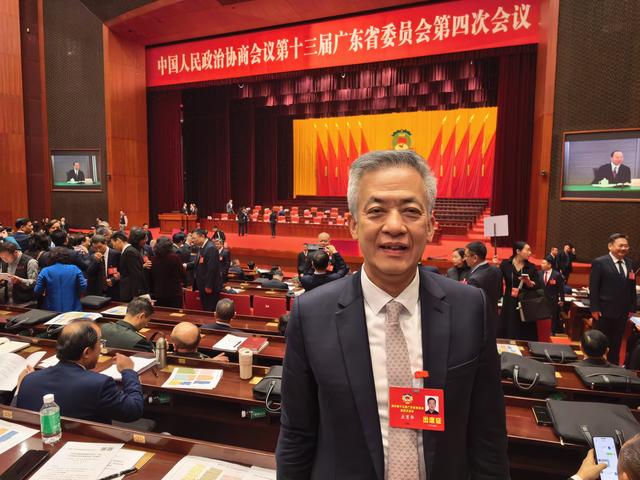
地方两会 广东政协委员丘育华建言AI多维发力 赋能经济高质量发展
Zhong Guo Jing Ying Bao· 2026-01-26 15:09
中经记者 赵毅 广州报道 "十五五"规划聚焦科技自立自强、现代化产业体系建设、高水平对外开放等核心任务,与广东经济发展 需求高度契合。 2026年广东两会期间,围绕如何充分释放"十五五"规划红利,破解发展瓶颈、培育新质生产力,广东省 政协委员、广州市工商联副主席、华安达实业有限公司董事长丘育华带来两份针对性提案,分别从深化 开放合作、推动产业升级、布局未来产业及利用低碳算力与AI体系赋能等维度,为广东经济高质量发 展建言献策,助力经济大省向经济强省跨越。 作为经济大省,广东制造业基础雄厚、数字经济领先、开放优势突出,但也面临核心技术瓶颈、区域发 展不均、产业升级压力等挑战。 传统产业升级方面,丘育华主张以智能、绿色双擎驱动,运用人工智能深度渗透家电、陶瓷等传统产业 生产全流程,通过AI质检、智能调度与柔性生产系统提升效率与精准度;同时聚焦工艺革新与循环发 展,在纺织业推广无水染色技术,建材企业打造绿色工厂,形成全链条低碳生产模式,推动传统产业从 规模扩张向质量效益转型。 新兴与未来产业布局上,重点聚焦低空经济与生物制造两大赛道。建议依托国家级低空经济创新发展试 点政策,简化飞行计划申报审批流程,借助大湾区区位 ...
把生态优势深度融入现代化产业体系
Xin Lang Cai Jing· 2026-01-25 22:24
Core Viewpoint - The article emphasizes the need for integrating ecological advantages into modern industrial systems in Guizhou, promoting a green transformation of the economy and society through innovative and sustainable practices [2]. Group 1: Transformation of Ecological Advantages - The key to transforming ecological advantages into industrial advantages lies in finding scientific and sustainable pathways, leveraging technology to enhance product value and meet market demands [2]. - Development of integrated scenarios such as "Ecology + Health Care," "Ecology + Research Learning," and "Ecology + Cultural Experience" is essential to make ecological resources the core of consumer experiences [2]. - Strategic emerging industries such as new energy, green manufacturing, electric vehicles, and biomanufacturing should be actively cultivated to build a modern industrial system that is green, low-carbon, and circular [2]. Group 2: Challenges in Economic Transformation - The current bottleneck in Guizhou's transformation is the lack of a robust mechanism for realizing the value of ecological products, characterized by short industrial chains and low added value [3]. - Issues such as poor market connection for value certification, absence of unified assessment standards, and a lack of skilled talent and technical support are prevalent [3]. Group 3: Policy and Mechanism Improvements - There is a need to accelerate the establishment of an ecological product value accounting system and improve cross-regional ecological compensation and market trading mechanisms [3]. - Policies should be integrated across ecology, industry, technology, and finance to support key links in the industrial chain and technological research and development [3]. Group 4: Balancing Development and Protection - A rigid ecological constraint must be established as a baseline, with clear delineation of ecological carrying thresholds as prerequisites for industrial project approvals [3]. - Digital monitoring networks should be utilized to track resource and environmental indicators in real-time, implementing restrictions on over-exploited areas [3]. Group 5: Differentiated Industrial Development - Industrial development should be based on local resource characteristics and potential, creating specialized and differentiated development paths [4]. - A cross-regional industrial collaboration platform is necessary to promote division of labor and complementarity in the industrial chain, avoiding low-level homogeneous competition [4]. Group 6: Brand Protection and Value - Strict brand certification, usage, and regulatory rules should be established, creating a collaborative supervision system involving government, industry, and third parties [4]. - Policies should incentivize long-term brand value appreciation, discouraging short-term profit-seeking behaviors [4]. Group 7: Enhancing Industrial Growth Quality - A development model that integrates green transformation, innovation-driven approaches, and digital empowerment is essential for achieving synergy between industrial growth and ecological protection [5]. - Traditional industries should undergo a comprehensive green transformation, promoting clean production and resource recycling in high-energy-consuming and high-emission sectors [5]. - New emerging industries should be supported through collaborative efforts in research and development, optimizing production processes with big data and IoT, and exploring "Industry + Carbon Sink" models [5].
未来产业周报第7期(2026、1、18-2026、1、24):双重码降低量子纠错开销,风电直连提升制氢效率-20260125
Shenwan Hongyuan Securities· 2026-01-25 13:42
Group 1: Quantum Technology - The report highlights significant advancements in quantum error correction technology, with Zhejiang University and Tsinghua University demonstrating low-overhead quantum error correction codes, effectively reducing logical error rates below physical error rates [4][5] - Horizon Quantum Computing has formed a strategic partnership with Alice&Bob to accelerate the development of fault-tolerant quantum computing, integrating their software and hardware capabilities [5] - GuoDun Quantum plans to sign a technology licensing contract with the University of Science and Technology of China, involving quantum random number generators and superconducting quantum computing control systems [6][7] Group 2: Biomanufacturing - The Chinese Academy of Sciences has achieved a breakthrough in synthesizing L-arginine using methanol as the sole carbon source, marking a shift towards non-grain-based production methods [8][9] - The Shenzhen Advanced Institute has developed the MARS intelligent system, which integrates multiple AI agents and robots to significantly shorten the new material development cycle from four months to four hours [9][10] - Jinbo Biological has registered a 2 billion yuan private placement to enhance its humanized collagen protein FAST database project, aiming to improve research and development efficiency [11] Group 3: Hydrogen Energy and Nuclear Fusion - The Baowu Clean Energy green hydrogen industrial park project, with a total investment of 11.09 billion yuan, has been launched in Guangdong, establishing a new model for offshore wind power direct hydrogen production [12][13] - A Chinese consortium has signed a significant contract for the ITER edge local model power supply system, marking a major step in China's contribution to global fusion energy projects [15] - Zhejiang Fu Nuclear Power will participate in the development of core components for the China Fusion Engineering Demonstration Reactor (CFEDR), focusing on ultra-high heat load components [16][17] Group 4: Brain-Computer Interfaces - Neuralink has successfully implemented OTA wireless upgrades for its invasive brain-computer interface, allowing for performance optimization without the need for additional surgeries [18][19] - This advancement addresses the traditional limitations of invasive devices, reducing clinical maintenance risks and costs while enhancing the adaptability of the technology [20] Group 5: Embodied Intelligence - World Labs, founded by Fei-Fei Li, has partnered with Guanglun Intelligent to create an evaluation system for embodied intelligence, addressing high verification costs and discrepancies between simulation and reality [21][22] - The Marble model developed by World Labs generates high-fidelity 3D environments from various inputs, solving traditional model issues but lacking physical interaction capabilities [22][23] Group 6: Future Industry Catalysts - The report outlines key catalytic events for 2026 across six future industries, including significant conferences and technological milestones that investors should monitor [28][29]



速读2026年北京市政府工作报告| 北京市将全面实施“人工智能+”行动,建设国家人工智能应用中试基地
Bei Jing Shang Bao· 2026-01-25 02:13
报告提出,大力发展高精尖产业。巩固壮大实体经济根基,推动集成电路重点项目扩产量产,高水平建 设国际医药创新公园,全生态链推进绿色先进能源、新能源汽车、机器人、商业航天等重点项目;加快 建设全球数字经济标杆城市,全面实施"人工智能+"行动,建设国家人工智能应用中试基地;推进未来 产业先导区建设,培育6G、量子科技、生物制造等新增长点;推动传统产业提质升级,促进制造业数智 化转型。 北京商报讯(记者 程靓)1月25日上午,北京市第十六届人民代表大会第四次会议在北京会议中心开 幕。市长殷勇作政府工作报告。 ...
我国经济结构逐“绿”向新
中国能源报· 2026-01-25 02:08
节能降碳标准稳步提升,绿色能源投资持续增长。 2025年我国经济实现质的有效提升和量的合理增长,全年经济总量迈上140万亿元新台阶,5%的增速在全球主要经济体中继续保持前 列; 新能源、新材料、航空航天、量子科技、生物制造、具身智能等新的经济增长点正在蓄势待发,新型储能装机规模已经突破1亿千瓦; ………… 2025年,面对国内外形势复杂深刻变化,全国上下迎难而上、奋力拼搏,经济社会发展主要目标顺利完成,经济运行稳中有进,发展 韧性进一步彰显,民生政策更有温度,交出一份高质量答卷。 展望20 26年,我国经济结构将持续向"优"、发展动能持续向"新"、整体发展态势持续向"好",新质生产力稳步发展,消费与投资、科 技与产业、城乡与区域都将释放出巨大的发展潜能。 坚持智能化、绿色化、融合化方向,推动重点产业提质升级,大力培育壮大新兴产业和未来产业,深入开展"人工智能+"行动。去年实 施的"人工智能+"行动,为我国海量场景优势赋能增效,人工智能加速从数字世界走向物理世界,将带动高端制造、新兴消费、新业态 新模式爆发式增长;从2025年数据看,高技术制造业增加值占规模以上工业的比重已经超过17%。 新技术新产品新场景蔚然 ...
建好枢纽深化合作
Jing Ji Ri Bao· 2026-01-24 21:59
Core Viewpoint - The city of Kekedala is undergoing significant transformation during the "14th Five-Year Plan" period, focusing on high-quality development and integration into the Silk Road Economic Belt [1][2]. Group 1: Development Initiatives - Kekedala has established several key areas: a western opening pilot zone, a characteristic industry agglomeration area, an ecological civilization demonstration area, and an integrated development model area [1]. - The city aims to enhance its industrial structure by optimizing layouts towards digitalization, greening, and integration, with a focus on biomanufacturing, new materials, and green chemical industries [1]. Group 2: Open Economy Strategy - The strategy includes creating a western opening pilot zone that leverages various policy platforms to establish a green electricity industrial hub and a cross-border processing agglomeration area [2]. - There is a shift from "channel economy" to "industrial economy" in port economics, with plans to improve modern cross-border logistics infrastructure [2].
提升发展能级 打造重要增长极 云南省出台34条政策措施推动滇中新区高质量发展
Xin Lang Cai Jing· 2026-01-24 05:11
Core Viewpoint - The Yunnan provincial government has issued 34 specific measures to support the high-quality development of the Yunnan Central New Area, aiming to enhance its development capabilities, deepen reform and innovation, and accelerate the construction of a modern city, thereby becoming a significant growth engine for the province's economy [1] Group 1: Enhancing Industrial Competitiveness - The policy focuses on accelerating the transformation and upgrading of traditional industries such as petrochemicals and metallurgy, promoting the extension of industrial chains towards deep processing and terminal manufacturing, and creating billion-level industrial clusters [2] - Key industries to be developed include semiconductor materials and equipment, new energy battery materials, non-ferrous and precious metal materials production, and green food processing [2] - The initiative also aims to cultivate strategic emerging industries such as low-altitude economy, biomanufacturing, and new materials, and establish public service platforms for pharmaceutical R&D outsourcing and contract processing outsourcing [2] Group 2: Deepening Reform and Innovation - The policy grants greater autonomy to the New Area, delegating provincial economic management powers according to the principle of "maximal delegation" [3] - It supports the establishment of innovation incubation demonstration bases and offshore innovation and entrepreneurship bases for overseas talents, with financial incentives for newly recognized national key laboratories and technology innovation centers [3] - The initiative encourages the relocation of national and provincial applied research institutions to the New Area and supports pilot projects for mixed-use land reform [3] Group 3: Enhancing Open Cooperation - The policy supports Kunming Changshui International Airport in conducting international transit pilot projects and the development of cross-border e-commerce and bonded logistics in the Kunming Comprehensive Bonded Zone [3] - It aims to strengthen direct export capabilities for foreign trade entities and establish a transaction settlement center for fruits and seafood in South Asia and Southeast Asia [3] - The initiative promotes collaboration with other national-level new areas to explore industrial planning alignment and resource integration [3] Group 4: Improving Urban Functionality and Quality - The policy encourages the composite utilization of urban above-ground and underground spaces, promotes park city construction, and accelerates urban renewal to address shortcomings in education, healthcare, and culture [4] Group 5: Strengthening Element Guarantee - The provincial government will allocate annual incentive funds for high-quality development, and the municipal government will provide financial support to the New Area [4] - Revenue from the transfer and leasing of state-owned land use rights will be fully retained for the New Area's development funding [4] - The policy includes financial support for key construction projects and aims to facilitate land acquisition and development processes [4]