
碳交易

Search documents
生态环境部李高:加快建设全国统一碳市场,稳步扩大市场覆盖范围
2 1 Shi Ji Jing Ji Bao Dao· 2025-09-24 09:28
Core Viewpoint - The national carbon market in China has made significant progress over the past four years, becoming a key mechanism for carbon pricing and promoting carbon peak and carbon neutrality goals [1] Group 1: National Carbon Market Development - The Ministry of Ecology and Environment has outlined plans to accelerate the construction of a unified national carbon market, improve the institutional framework, and expand market coverage [1][2] - The first central document on carbon market development was released, setting clear goals and tasks for the market's advancement by 2027 and 2030 [2][3] Group 2: Key Goals and Tasks - By 2027, the carbon emissions trading market aims to cover major industrial sectors, with a focus on total quota control for stable emission industries [2][3] - The voluntary emission reduction trading market will achieve full coverage in key areas, supporting low-carbon technologies [2][3] Group 3: Market Expansion and Performance - The carbon market has expanded its industry coverage, adding over 1,300 new key emission units, which increases the controlled greenhouse gas emissions by approximately 3 billion tons [4] - The trading volume in 2024 reached a historical high, with an average daily transaction volume up by about 44% compared to the previous compliance cycle [5] Group 4: Data Quality and Management - The Ministry emphasizes data quality as crucial for carbon market construction, implementing a three-tier review mechanism and utilizing big data and blockchain for enhanced regulatory efficiency [6] - The number of non-compliant greenhouse gas emission reports decreased by about 24% year-on-year, indicating improved data quality management [6] Group 5: Impact on Emission Reduction - The carbon market has contributed to a 10.8% reduction in carbon emission intensity in the power sector compared to 2018, highlighting its role in guiding corporate emission reduction strategies [7]
2024年全国碳市场成交额创市场启动以来年度新高
Xin Hua Wang· 2025-09-24 08:08
Core Insights - The national carbon emissions trading market in China has seen significant growth, with a cumulative trading volume of nearly 700 million tons and a transaction value of approximately 48 billion RMB as of the end of August 2023, marking a record high for annual transaction value since the market's inception in 2021 [1] - The market's trading activity is increasing, with a 43.55% rise in average daily trading volume compared to the previous compliance cycle, resulting in a total trading volume of 18.9 million tons and a total transaction value of 18.114 billion RMB in 2024, the highest since the market started [1] - The carbon intensity of electricity generation in China decreased by 10.8% in 2024 compared to 2018, highlighting the significant role of the carbon market in achieving emissions reductions [1] Market Expansion - In March 2025, the State Council approved the inclusion of the steel, cement, and aluminum smelting industries into the national carbon emissions trading market, expanding the market's coverage [1] - This expansion added over 1,300 new key emission units, increasing the proportion of carbon dioxide emissions covered by the market to over 60% of the national total [1] Voluntary Emission Reduction Market - The national voluntary greenhouse gas emission reduction trading market was launched as a significant policy tool to support China's "dual carbon" goals, with the first batch of newly registered certified voluntary emission reductions starting trading in March 2025 [2] - As of the end of August 2023, the voluntary emission reduction market recorded a cumulative trading volume of 2.7061 million tons and a transaction value of 229 million RMB, with transaction prices frequently exceeding 100 RMB per ton [2] - The Ministry of Ecology and Environment plans to steadily expand the coverage of the carbon market, enrich trading varieties and methods, and enhance international cooperation in the carbon market sector [2]
上海碳排放权交易市场开市以来连续十二年实现100%履约 累计成交金额55.44亿元
Zhong Guo Xin Wen Wang· 2025-09-22 10:51
Group 1 - The Shanghai carbon market has cumulatively traded 265 million tons of carbon emissions since its inception in 2013, with a total transaction value of 5.544 billion yuan, making it the only pilot region in China to achieve 100% compliance for twelve consecutive years [1] - Shanghai has implemented an "electricity-carbon" collaborative mechanism, with green electricity transactions exceeding 8 billion kilowatt-hours from January to September 2025, and has introduced incentives for outstanding companies, offering free quota rewards of 0.3% or 0.5% [1] - The carbon market in Shanghai covers over 400 enterprises across 28 industries, including steel, chemicals, automotive, aviation, and water transport, with a total carbon quota of approximately 100 million tons [1] Group 2 - Shanghai has organized 16 sessions of paid quota auctions by August 2025, with a total of 26.68 million tons of quotas auctioned and a total transaction value of 628 million yuan [2] - The city is promoting carbon financial innovations, forming a "carbon spot + carbon forward" linkage model, and has developed various financial products such as carbon funds, carbon trusts, and carbon insurance [2] - A carbon inclusive management platform has been established, attracting over 200,000 citizens to open accounts and involving nearly 500 distributed photovoltaic projects, resulting in the issuance of over 100,000 tons of emission reductions [2] Group 3 - Future plans for the Shanghai carbon market include enhancing operational capabilities and focusing on three major actions: improving the carbon trading market, incentivizing voluntary greenhouse gas reductions, and enhancing innovation capabilities [3] - The city has outlined 16 key reform tasks, including establishing quota management systems, improving greenhouse gas reporting, and enriching carbon financial products and services [3] - Shanghai aims to stimulate market vitality by expanding market participants, integrating carbon assets into financial institutions' collateral, and developing a carbon account system based on corporate carbon performance [3]
《关于推进绿色低碳转型加强全国碳市场建设的意见》发布
Xin Hua She· 2025-09-19 08:12
Core Viewpoint - The article discusses the Chinese government's strategic plan to enhance the national carbon market, aiming for a more effective and internationally influential system to address climate change and promote green transformation in the economy [1][2]. Group 1: Overall Requirements - The plan emphasizes the integration of Xi Jinping's thoughts on ecological civilization and economic development, aiming for a balance between green transformation and economic growth [2]. - Key goals include achieving comprehensive coverage of major industrial sectors in the carbon trading market by 2027 and establishing a robust carbon pricing mechanism by 2030 [2]. Group 2: Carbon Emission Trading Market Development - The national carbon emission trading market will expand its coverage based on industry development, pollution reduction contributions, and carbon emission characteristics [3]. - A transparent carbon quota management system will be established, transitioning from intensity control to total volume control by 2027 for stable emission sectors [3]. Group 3: Voluntary Emission Reduction Market - The development of a voluntary emission reduction trading market will be accelerated, focusing on areas with significant sustainable development benefits [5]. - The government encourages the use of certified voluntary emission reductions in various sectors, including government and corporate social responsibility initiatives [6]. Group 4: Market Vitality Enhancement - Financial institutions will be encouraged to develop green financial products related to carbon emissions, enhancing support for greenhouse gas reduction [7]. - The introduction of new trading participants, including individuals and financial institutions, will be facilitated to broaden market engagement [7]. Group 5: Capacity Building for Carbon Market - A comprehensive management system will be established to support the carbon market's development, including digital and intelligent management systems [8]. - The article highlights the importance of accurate carbon emission accounting and reporting, with a focus on improving data quality and regulatory oversight [9]. Group 6: Organizational Implementation and Legal Support - Local governments are tasked with implementing the carbon market strategy, ensuring compliance and effective management of emission quotas [11]. - The government will strengthen legal frameworks to support carbon market operations and enhance regulatory measures against violations [11]. Group 7: International Cooperation - The article emphasizes the importance of participating in international climate agreements and promoting China's carbon market practices globally [12].
两岸业内人士在湘共话绿色低碳循环产业新机遇
Xin Hua Wang· 2025-09-19 03:30
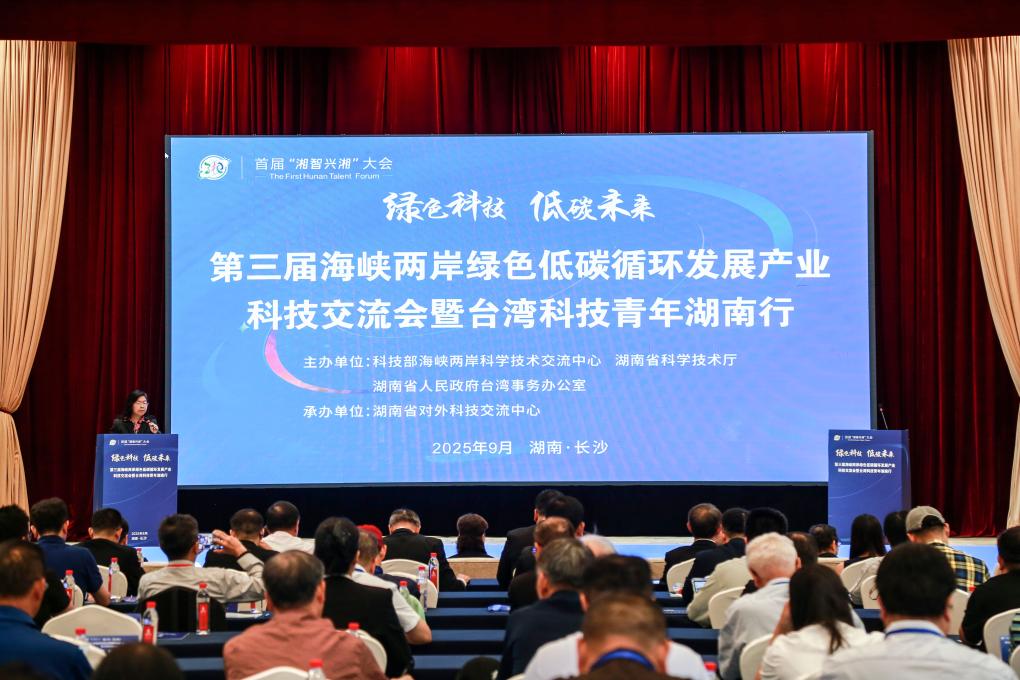
Group 1 - The third Cross-Strait Green Low-Carbon Circular Development Industry Technology Exchange Conference was held in Changsha, Hunan, focusing on promoting cutting-edge technologies in the green low-carbon sector and signing low-carbon agricultural cooperation projects [2][3] - Over 150 participants, including experts, scholars, and entrepreneurs from both sides of the Taiwan Strait, engaged in discussions to inject new momentum into the development of the green low-carbon circular industry [2] - Key topics of interest included the transformation of conventional crop planting methods to organic agricultural product cultivation, as highlighted by the signing of cooperation agreements in the agricultural carbon sink field [2] Group 2 - The event featured multiple thematic seminars where experts and entrepreneurs from Taiwan, Fujian, Zhejiang, and Hunan discussed themes such as new energy, carbon trading, and green agriculture [3] - A delegation of over 30 Taiwanese youth participated in the Hunan tour, engaging in exchanges and gaining valuable agricultural data for their research [3] - The event was co-hosted by the Ministry of Science and Technology's Cross-Strait Science and Technology Exchange Center, Hunan Provincial Department of Science and Technology, and the Hunan Provincial Taiwan Affairs Office [3]

全国碳市场建设迈入新阶段
仪器信息网· 2025-09-18 03:58
Core Viewpoint - The carbon market is a crucial policy tool for promoting green and low-carbon transformation in China, with a focus on establishing a robust national carbon market system that includes both mandatory and voluntary carbon markets to achieve the "dual carbon" goals [2][3]. Summary by Sections Carbon Market Development - China has established a national carbon emissions trading market that mandates key emission units to fulfill reduction responsibilities, alongside a voluntary carbon market that encourages self-reduction efforts. These two markets operate independently but are interconnected through a quota management system [4][5]. - As of August 22, 2023, the mandatory carbon market has seen a cumulative transaction volume exceeding 680 million tons, with a transaction value of 47.41 billion yuan. The voluntary carbon market has recorded a cumulative transaction of 2.49 million tons, amounting to 210 million yuan [4]. Future Plans and Roadmap - The "Opinions" document outlines a timeline and roadmap for the development of the national carbon market. By 2027, the mandatory carbon market will expand to cover major industrial sectors, while the voluntary market will broaden its scope to include biomass utilization and solid waste management [6][9]. Quota Management System - A clear and transparent carbon emissions quota management system is essential for the healthy operation of the national carbon trading market. The distribution of quotas will balance reduction targets with economic costs and industry differences, aiming for a stable total carbon emissions control by 2027 [7][8]. Market Vitality and Financial Integration - The Ministry of Ecology and Environment plans to enhance market vitality by collaborating with financial institutions to develop green financial products related to carbon emissions rights. This includes mechanisms like carbon pledges and carbon repurchase agreements to facilitate financing for key emission units [11]. Data Quality and Regulatory Framework - Accurate and reliable carbon emission data is critical for quota trading and compliance. The government is enhancing data quality management through a three-tier review system and utilizing advanced technologies like big data and blockchain to improve regulatory efficiency [9][12]. Systematic Improvement - The construction of the national carbon market is a complex system engineering task that requires a problem-oriented and goal-oriented approach. The focus will be on improving the reliability of data and inclusivity across industries [10].

双碳周报:全国碳市场碳排放额累计成交量下降-20250917
GUOTAI HAITONG SECURITIES· 2025-09-17 06:35
Report Summary 1. Investment Rating The report does not mention the industry investment rating. 2. Core View The report tracks important dynamics in the domestic and international "dual carbon" fields from September 8th to September 12th, 2025, mainly in the carbon quota trading area. It shows that last week, carbon quota trading prices in European and American carbon markets decreased, while prices in the South Korean carbon market increased. The trading volume in the South Korean carbon market rose significantly, while the cumulative trading volume of carbon emission allowances in the national carbon market decreased. There were also significant developments in the green - development field [2][5]. 3. Summary by Directory 3.1 International Carbon Trading Market Tracking - **European Carbon Quota Price and Volume**: EUA spot price dropped by 1.75% from September 8th to September 12th, and the trading volume increased by 314.67% to 31.10 tons. EUA futures price decreased by 1.79%, and the trading volume decreased by 45.63% to 216.50 tons [6]. - **US Carbon Quota Price and Volume**: EUA futures price declined by 1.81%, and the total trading volume decreased by 7.59% to 169.99 million tons. UKA futures price dropped by 1.73% [12]. - **South Korean Carbon Quota Price and Volume**: KAU25 spot price rose by 10.76%, and the trading volume increased by 72.31% to 60.93 tons [17]. 3.2 Domestic Carbon Market Tracking - **National Carbon Market Carbon Quota Volume and Average Transaction Price**: The cumulative trading volume of carbon emission allowances (CEA) was 532.81 tons, and the cumulative transaction amount was 332.6115 million yuan, with decreases of 36.42% and 38.62% respectively compared to the previous week. The average daily transaction price of CEA was 62.58 yuan/ton, a 4.29% decrease [21]. - **Weekly Average Transaction Price of Carbon Quotas in Domestic Pilot Provincial and Municipal Carbon Markets**: Except for HBEA in Hubei and GDEA in Guangdong, the weekly average transaction prices of carbon quotas in domestic pilot carbon markets showed a downward trend. FJEA in Fujian had the largest decline, reaching 10.00% week - on - week and 26.41% month - on - month [25]. - **Trading Volume and Transaction Amount of Carbon Quotas in Domestic Pilot Provincial and Municipal Carbon Markets**: The carbon quota trading in domestic pilot carbon markets was mainly concentrated in Shenzhen, Shanghai, Beijing, and Tianjin, accounting for 97.23% of the total weekly trading volume and 98.10% of the total weekly transaction amount. The total weekly trading volume of domestic pilot carbon markets was 21.60 tons, a 118.54% increase [27]. 3.3 Dual - Carbon Frontier Technology Tracking - **China's First Offshore Carbon Dioxide Storage Project Exceeds 100 Million Cubic Meters in Storage**: The Enping 15 - 1 oilfield carbon storage project has successfully stored over 100 million cubic meters of carbon dioxide, marking the maturity of China's offshore carbon dioxide storage technology and providing a new model for marine energy recycling [29]. - **China's Largest All - Vanadium Redox Flow Battery Photovoltaic - Energy Storage Integration Project Conducts Its First Charging Experiment**: The energy storage power station of the project in Jimsar, Xinjiang, has successfully started the first charging experiment, providing key technical support for solving the problem of large - scale new energy grid - connected consumption [32].
买卖什么? 如何更有活力? 碳市场2.0,中国这样布局
Ren Min Ri Bao Hai Wai Ban· 2025-09-16 03:35
Core Viewpoint - The establishment of a national carbon market in China marks a significant step towards utilizing market mechanisms to address climate change and promote green transformation in the economy and society [1][5]. Group 1: Carbon Market Structure - The national carbon market consists of two main components: the mandatory carbon market, which started in 2021, and the voluntary carbon market, set to launch in 2024 [2][6]. - The mandatory carbon market will cover over 2,000 key emission units by 2024, with a nearly 100% compliance rate for quota clearance [3][6]. - The voluntary carbon market aims to incentivize self-directed emission reductions and is expected to achieve full coverage in key areas by 2027 [6]. Group 2: Market Performance and Impact - As of August 22, 2023, the mandatory carbon market has seen a cumulative transaction volume of over 680 million tons of carbon emission allowances (CEA), with a total transaction value of 47.41 billion yuan [3]. - The voluntary carbon market has recorded a cumulative transaction of 2.49 million tons of certified voluntary emission reductions (CCER), amounting to 210 million yuan [3]. - The carbon market is expected to drive the transformation of key industries, including steel, cement, and aluminum, by promoting the use of renewable energy and enhancing energy efficiency [3][6]. Group 3: Future Development Goals - By 2027, the mandatory carbon market aims to cover all major industrial sectors, transitioning to a total control system for carbon emissions by 2030 [6]. - The voluntary carbon market is set to establish a transparent and unified methodology by 2030, aligning with international standards [6]. - The government plans to increase the proportion of paid carbon allowances, moving from a free allocation system to a combination of free and paid allocations [6]. Group 4: Financial Mechanisms and Innovations - The carbon market will introduce policies for carbon pledging and repurchase, allowing companies to use carbon assets as collateral for loans, thereby enhancing financing channels [9]. - Carbon emissions can also be insured, with innovative products like forestry carbon index insurance being developed to protect against carbon loss due to natural disasters [10][11]. - The establishment of a robust carbon pricing mechanism is expected to stimulate green technology innovation and attract broader participation from financial institutions and individuals in the carbon market [12].
经济日报:海南创新驱动产业提质
Jing Ji Ri Bao· 2025-09-15 06:25
Group 1 - Hainan Province is focusing on tourism, modern services, high-tech industries, and tropical agriculture as its leading sectors, leveraging its resource endowment and free trade port policies to drive an "innovation-driven" industrial transformation [2] - In the first seven months of this year, Hainan's industrial added value above designated size grew by 10.4% year-on-year, while service import and export totaled 40.338 billion yuan, marking a 23.9% increase [2] - The Wenchang International Aerospace City aims to cultivate an aerospace industry cluster, targeting a revenue of 10 billion yuan by 2027, with plans for significant projects like a space-themed park [2] Group 2 - The Haikou National High-tech Zone has made significant progress with the "Lecheng Application - High-tech Production" model, which facilitates the introduction of foreign innovative drugs and devices, enhancing the domestic production of the biopharmaceutical industry [2] - Sanya has achieved several "firsts" in various fields, including the first S fund in the province and the first offshore international trade business, indicating a leap in industrial development [3] - Hainan's open policy framework and competitive business environment are highlighted as key factors for attracting investment and fostering future opportunities [3]
湖北区域碳市场累计成交额超100亿 筑牢生态支点加快释放绿色转型动能
Chang Jiang Shang Bao· 2025-09-14 23:07
Core Viewpoint - Hubei Province is actively implementing the "Beautiful Hubei" strategy during the 14th Five-Year Plan period, focusing on ecological protection and sustainable development, with significant improvements in environmental quality and a robust carbon market [1][2]. Group 1: Ecological Protection and Environmental Quality - Hubei has prioritized ecological protection, implementing the "Double Ten Actions" and "Ten-Year Fishing Ban," leading to enhanced biodiversity and stability in the Yangtze River ecosystem [3]. - The province has achieved a 99.8% completion rate in the remediation of 12,462 pollution outlets into the Yangtze River, maintaining Class II water quality for six consecutive years [3][4]. - PM2.5 concentration has decreased by 15.6% compared to pre-2019 levels, and the proportion of days with good air quality has increased by 7.7 percentage points [4]. Group 2: Carbon Market Development - Hubei has established itself as a key base for the national carbon market, with a cumulative transaction volume of 4.18 billion tons and a transaction value exceeding 10.3 billion yuan, ranking first in the country [5]. - The province's carbon market has completed two compliance cycles, with a total transaction volume of 6.93 billion tons and a transaction value of 47.63 billion yuan [5]. Group 3: Infrastructure and Economic Development - Yichang, as a model for ecological protection and economic development, has achieved a GDP exceeding 600 billion yuan, focusing on high-level protection of the Yangtze River [6]. - Significant investments have been made in wastewater treatment and solid waste management, improving the sewage collection rate from 43.34% to 81.95% over five years [6][7]. Group 4: Community Engagement and Volunteerism - Hubei has over 20,000 environmental protection volunteer organizations and more than 1,800 university teams participating in ecological conservation efforts [5].
