
绿色金融

Search documents
中国“双碳”行动五年记:一场绿色发展的全民奔赴
Jin Rong Shi Bao· 2025-11-11 01:26
Core Insights - The article emphasizes China's significant progress in achieving carbon peak and carbon neutrality goals, highlighting the establishment of a comprehensive carbon reduction policy system and the rapid development of renewable energy [1][2][3] Group 1: Waste Management and Recycling - By the end of 2024, 98.5% of urban communities in China will have waste classification facilities, reflecting a shift in public attitude towards environmental responsibility [1] - The transition from a single waste disposal method to a four-bin system symbolizes a broader commitment to green development [1] Group 2: Energy Transition - China is focusing on renewable energy to achieve its carbon neutrality goals, with non-fossil energy consumption increasing from 16.0% in 2020 to 19.8% in 2024, averaging nearly a 1 percentage point increase per year [2] - By August 2025, installed capacity for wind and solar power is expected to exceed 1.69 billion kilowatts, tripling the capacity from 2020 and contributing to 80% of new power installations since 2020 [2] - The share of fossil energy consumption is projected to decrease from 84.0% in 2020 to 80.2% in 2024, indicating a steady move towards cleaner energy sources [2] Group 3: New Energy Vehicles (NEVs) - As of June 2025, the number of NEVs in China is expected to reach 36.89 million, accounting for 10.27% of the total vehicle ownership, showcasing the rapid adoption of electric vehicles [3] - In 2024, NEVs are projected to be exported to over 180 countries, helping to reduce global carbon emissions by more than 50 million tons [3] - The contribution of the green low-carbon industry to China's GDP is increasing, with the "new economy" accounting for over 18% of GDP in 2024 [3] Group 4: Green Finance and Carbon Market - China has established a robust green finance framework, with green loan balances reaching 36.6 trillion yuan by the end of 2024, with nearly 70% directed towards carbon reduction projects [5] - The national carbon trading market, launched in July 2021, covers over 60% of carbon emissions, with cumulative trading volume reaching approximately 728 million tons and transaction value around 49.83 billion yuan by September 2025 [5] - The voluntary greenhouse gas reduction trading market was initiated in January 2024, with 31 projects registered and a total reduction of 15.04 million tons by October 2025 [5]
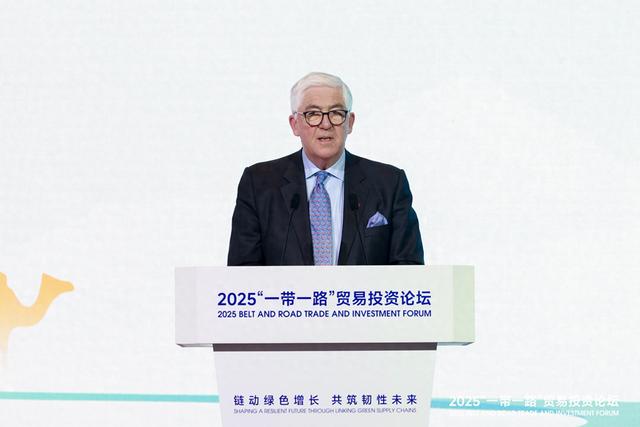
英中商业发展中心主席:中国已大幅降低了对美国的依赖
Bei Jing Ri Bao Ke Hu Duan· 2025-11-08 13:18
Group 1 - The core viewpoint is that Chinese electric vehicles are entering the UK market with advantages in technology, quality, and price [1][3] - The UK has not imposed tariffs on Chinese electric vehicles, allowing companies like BYD and Geely to expand their market presence [3] - BYD sold over 11,000 vehicles in the UK in September, making it the largest overseas market for the company [3] Group 2 - The UK and China are discussing cooperation in renewable energy technologies such as wind, solar, and hydrogen, indicating significant potential for collaboration [3] - There is ongoing collaboration in green finance and green bonds, establishing a solid framework in the financial sector [3] - The recent communication between the foreign ministers of the UK and China reflects the strengthening relationship and decreasing uncertainties between the two countries [3]

香港财政司司长陈茂波:将以双引擎战略发展AI
2 1 Shi Ji Jing Ji Bao Dao· 2025-11-05 04:16
Core Insights - Hong Kong is implementing a "dual-engine strategy" to develop artificial intelligence (AI), focusing on both AI-centric industries and the transformation of traditional sectors through AI [1][2] - AI is recognized as a key driver across various industries, including finance, logistics, healthcare, and smart manufacturing, reshaping how people live and work [1] - The Greater Bay Area provides seamless application scenarios for AI technology, facilitating real-world testing and validation [1] Industry Development - The Hong Kong government has introduced several special plans and incentive policies to attract leading AI companies, alongside financial support to guide private capital into AI startups and related projects [1] - Talent acquisition is emphasized as a core support for AI development, with adjustments made to the "Quality Migrant Admission Scheme" to attract top global AI talent and build a local youth AI talent network [2] Sustainable Finance - Hong Kong is positioned as a leader in green and sustainable finance in Asia, actively contributing to regional energy transition efforts [2] - The issuance scale of green and sustainable bonds in Hong Kong for 2024 has exceeded $80 billion, involving local and international entities, including multilateral development banks and local governments from mainland China [2] - Innovative financial tools, such as catastrophe bonds, are being utilized to meet the diverse financing needs of emerging economies, with Hong Kong issuing seven catastrophe bonds totaling $800 million since 2021 to support countries in mitigating risks from natural disasters [2]
清华五道口:ESG数据资产化:风险与治理白皮书(2025)
Sou Hu Cai Jing· 2025-11-04 02:07
Core Insights - The report "ESG Data Assetization: Risks and Governance White Paper (2025)" focuses on the development of ESG data assetization at the intersection of the digital economy and green transformation, providing a comprehensive guide for industry development [1][3]. Group 1: ESG Data Assetization Overview - ESG data assetization involves transforming decentralized, unstructured ESG-related data into digital assets with clear ownership, quantifiable value, and tradability through processes such as collection, cleansing, rights confirmation, evaluation, pricing, and trading [1][27]. - The economic significance of ESG data assetization includes enhancing asset pricing efficiency, attracting long-term capital, fostering green financial innovation, empowering supply chain risk management, and providing data support for government regulation and policy-making [1][28]. Group 2: Policy Environment and International Trends - Domestic ESG information disclosure has transitioned from voluntary guidelines to mandatory regulations, establishing clear compliance boundaries [2][33]. - Internationally, three main frameworks—EU CSRD, US SEC climate rules, and ISSB standards—coexist, showing a trend towards unified disclosure standards while differing in substantive principles and focus [2][34]. Group 3: Technological Support and Implementation Path - The lifecycle of ESG data assetization encompasses five stages: data source aggregation, collection and preprocessing, governance and quality control, analysis and modeling, and service application, with cutting-edge technologies like privacy computing, blockchain, and artificial intelligence playing crucial roles [2][38]. - Privacy computing ensures data is usable but not visible, blockchain guarantees trustworthy data storage and traceability, and AI aids in processing vast amounts of data for value extraction [2][40]. Group 4: Governance Framework - The white paper proposes a multi-level collaborative governance framework based on three core principles: safety, efficiency, and fairness, which includes national data governance committees, top-level legal regulations, industry standards, market constraints, public supervision, and internal controls within enterprises [2][49]. - Effective governance requires a dynamic regulatory technology (RegTech) system that utilizes automated reporting, intelligent monitoring, and penetrative regulation to manage ESG data throughout its lifecycle [2][50]. Group 5: Strategic Outlook and Future Path - The report emphasizes the need for consensus among various stakeholders through technological innovation, regulatory improvement, and collaborative governance to build a trustworthy, inclusive, and sustainable ESG data ecosystem [3][30]. - It highlights the importance of ESG data assetization as a key node in bridging the gap in green finance, addressing challenges such as value measurement, risk assessment, and circulation [3][30].

绿色创新提速快进 汇丰大湾区ESG指数三季度同比提升
Xin Hua Cai Jing· 2025-11-03 04:46
Core Insights - The "HSBC Greater Bay Area ESG Index" has shown a slight year-on-year increase, reaching 122.79 in Q3 2025, while the industry sub-index has hit a new high of 250.92, reflecting a 19% year-on-year growth [1] Group 1: ESG Developments in the Greater Bay Area - The Greater Bay Area is advancing in carbon footprint management and green financial innovation, establishing itself as a national hub for green development [1] - The launch of the Guangdong Carbon Label Information Management Platform facilitates digital management of carbon footprints for enterprises and allows consumers to easily check product carbon footprints, marking a significant step in aligning domestic carbon accounting with international standards [1] Group 2: Growth in Green and Sustainable Finance - The scale of GSSS (Green, Social, Sustainable, and Sustainability-Linked) bonds, green loans, and ESG-themed funds has been on the rise, indicating a maturing and multi-layered green financial ecosystem in the Greater Bay Area [1] - The financial sector's ESG performance has steadily improved, with a focus on the issuance of GSSS bonds and enhanced climate information disclosure [2] - Digital innovations in the financial industry, particularly in green finance, are lowering investment barriers and attracting more investors to participate in green investments [2]
绿色贸易领域首个专项政策文件出台!
券商中国· 2025-11-01 02:21
Core Viewpoint - The Ministry of Commerce has released the "Implementation Opinions on Expanding Green Trade," which includes 16 targeted measures to enhance the green and low-carbon development capabilities of foreign trade enterprises, expand the import and export of green low-carbon products and technologies, create a favorable international environment for green trade development, and establish a robust support system for green trade [1][2]. Group 1: Policy Framework - The "Implementation Opinions" is the first specialized policy document in the field of green trade, reflecting a clear focus on innovation and addressing weak links in China's green trade development, such as the shortcomings in enterprises' green low-carbon development capabilities and the untapped carbon reduction potential in logistics [2][3]. - Key measures include strengthening financial policy support, enhancing the carbon footprint database for foreign trade products, improving carbon pricing mechanisms, and establishing a green trade statistical monitoring and analysis system [2]. Group 2: Global Engagement - Green transformation is recognized as a significant trend and growth engine in the global economy, with China committed to participating in global green governance and enhancing the "green content" of its free trade agreements [3]. - China aims to actively engage in discussions on green development topics at international forums such as the G20 and BRICS, sharing its practices and proposals [3]. Group 3: Market Opportunities - The shift towards green trade is accelerating, with green low-carbon products becoming a new driving force for foreign trade. The global market for electric vehicles, solar energy, and wind energy is projected to reach $2.1 trillion by 2030, five times its current size [4]. - China's exports of green low-carbon products have shown remarkable growth, with wind turbine exports increasing by over 30% in the first three quarters of this year, and electric vehicle exports surpassing 2 million units last year [4]. Group 4: Financial Support - Strengthening financial policy support is a targeted measure to establish a robust support system for green trade, with the People's Bank of China focusing on green credit, green bonds, and green equity funds to empower the development of green service trade [5]. - Future efforts will include promoting the application of green finance standards, encouraging financial institutions to support various production service sectors, and facilitating the issuance of green financial products in global markets to provide more Chinese green assets to global investors [5].

我国首个绿色贸易领域专项政策文件出台
Sou Hu Cai Jing· 2025-10-31 19:53
Core Insights - The global market for green technologies such as electric vehicles, solar energy, and wind energy is projected to reach $2.1 trillion by 2030, which is five times the current size [1] - China has issued its first special policy document on green trade, titled "Implementation Opinions on Expanding Green Trade," focusing on addressing weaknesses in the country's green trade development [1] - China aims to actively participate in discussions on green development at major international forums and has included environmental content in existing free trade agreements [1] Group 1 - The Ministry of Industry and Information Technology plans to increase the proportion of output from green factories to 40% by 2030 and promote zero-carbon factories [2] - The People's Bank of China will support the application of green finance and transition finance standards, encouraging financial institutions to provide more support for green service trade enterprises [2] - China's wind power, photovoltaic, and new energy vehicle products have been exported to over 200 countries, significantly reducing global wind and solar power generation costs by over 60% and 80%, respectively [2]
最高人民法院:司法精准护航 引导金融资源向绿色低碳领域倾斜
Zheng Quan Ri Bao Wang· 2025-10-31 06:27
Group 1 - The core viewpoint emphasizes the role of finance in directing capital towards a green low-carbon circular economy, highlighting the need for robust legal support to guide financial resources into green sectors [1] Group 2 - The Supreme People's Court has introduced judicial rules to facilitate the smooth flow of production factors, including the issuance of guidelines on carbon emissions trading and related disputes, thereby supporting the transition to ecological assets [1] - The court aims to clarify legal boundaries for green investments through the adjudication of environmental public interest litigation and damage compensation cases, thus providing clearer investment expectations [2] Group 3 - The court is actively exploring green bankruptcy models to assist struggling green low-carbon industries by optimizing debt structures and attracting external investment, thereby fostering a stable and predictable legal business environment [2]
商务部:将持续推进自贸谈判 大力推动双向市场开放、削减非关税壁垒
智通财经网· 2025-10-31 06:27
Core Viewpoint - The Chinese government emphasizes the importance of green trade as a key driver for economic growth and a response to global climate change, while also addressing challenges such as unilateralism and protectionism [1][4][20]. Group 1: Global Governance and Cooperation - China actively participates in global governance related to green trade through platforms like the G20, BRICS, and APEC, sharing its practices and proposals [1][8]. - The "Digital Economy and Green Development International Trade Cooperation Framework Initiative" has received positive responses from over 50 economies, indicating its popularity [1][8]. - China has committed to reducing tariffs on environmental products to below 5% as part of its APEC commitments [1][8]. Group 2: Free Trade Agreements and Standards - Recent free trade agreements, such as the China-ASEAN Free Trade Area 3.0, include chapters on green economy and prioritize green trade [2][9]. - Ongoing negotiations with countries like Switzerland, South Korea, and Peru also incorporate environmental protection and green industry cooperation [2][9]. - The government aims to enhance the "green content" of its free trade agreements and create a fair and transparent market environment [2][9]. Group 3: Domestic Reforms and Standards Alignment - The Ministry of Commerce is working to align domestic standards with international green standards, focusing on environmental standards and product certification [2][10]. - Efforts are underway to improve the green product standard, certification, and labeling systems, facilitating better integration of Chinese green products into global markets [2][10]. Group 4: Implementation of Green Trade Policies - The "Implementation Opinions" on expanding green trade aim to enhance the green development capabilities of foreign trade enterprises through training and best practice sharing [5][26]. - The government encourages the development of sustainable fuel trade and the exploration of remanufactured products for import and export [5][26]. - A public service platform for green trade is being established to improve third-party green service capabilities [5][26]. Group 5: Financial Support and Infrastructure - Financial policies are being strengthened to support green trade, including enhancing export credit insurance for green industries [6][31]. - The establishment of a carbon footprint database and a carbon pricing mechanism is underway to support green trade initiatives [6][31]. Group 6: International Collaboration and Standards - China is committed to participating in international discussions on carbon trade rules and aims to establish inclusive and fair international green trade regulations [6][20]. - The government is actively involved in the development of international standards for carbon emissions and green products, enhancing its role in global governance [6][24]. Group 7: Market Trends and Characteristics - Green low-carbon products are becoming a new driving force for foreign trade, with significant growth in exports of wind power, solar products, and electric vehicles [20][21]. - The shift from merely selling products to providing integrated solutions, including technology and services, is evident in international markets [22][34]. Group 8: Support for SMEs - The government is focused on helping small and medium-sized enterprises (SMEs) navigate the challenges of green transformation through enhanced public services and training [26][27]. - Initiatives include organizing trade promotion activities and establishing a platform for sharing best practices among SMEs [26][27].
中外嘉宾2025金融街论坛年会共论数智科技助力绿色金融
Zhong Guo Xin Wen Wang· 2025-10-30 19:48
Core Viewpoint - The forum emphasizes the integration of digital technology and green finance to support global sustainable development, highlighting the critical role of green finance in achieving carbon neutrality and addressing climate change [1][2][3]. Group 1: Green Finance and International Cooperation - Green finance is essential for China's dual carbon goals and global sustainable development, serving as a necessary tool for international climate change efforts [1]. - The "Belt and Road" Green Development International Alliance is a key platform for promoting global green cooperation, focusing on green investment and financing [1]. - Denmark's experience in reducing carbon emissions while growing its economy showcases the potential of green finance, with China emerging as a global leader in this area [2]. Group 2: Policy and Framework Development - Beijing is enhancing its green development framework through policy guidance, promoting green buildings, and transitioning to renewable energy sources [3]. - The establishment of a new energy system and smart power grid is crucial for China's energy transition, with digital technology playing a vital role [4]. Group 3: International Collaboration and Knowledge Sharing - The forum featured discussions on the application of digital technology in green finance, with experts sharing insights on future challenges and opportunities [2]. - The launch of the International Expert Workstation for Green Innovation aims to create a collaborative space for research and technology transfer in the field of green and technological innovation [4].
