
美容护理

Search documents
粤开市场日报-20260122-20260122
Yuekai Securities· 2026-01-22 07:47
Market Overview - The A-share market indices all experienced gains today, with the Shanghai Composite Index rising by 0.14% to close at 4122.58 points, the Shenzhen Component Index increasing by 0.50% to 14327.05 points, the Sci-Tech 50 up by 0.41% to 1541.64 points, and the ChiNext Index climbing by 1.01% to 3328.65 points [1][10] - Overall, a total of 3576 stocks rose while 1774 stocks fell, with 120 stocks remaining flat. The total trading volume in the Shanghai and Shenzhen markets reached 26,917 billion yuan, an increase of 911 billion yuan compared to the previous trading day [1][10] Industry Performance - Among the Shenwan first-level industries, the top gainers included building materials (up 4.09%), defense and military (up 3.23%), petroleum and petrochemicals (up 3.07%), telecommunications (up 2.83%), coal (up 1.85%), and steel (up 1.81%). Conversely, the sectors that saw declines included beauty and personal care (down 0.76%), banking (down 0.43%), and pharmaceuticals and biology (down 0.42%) [1][10] Concept Sector Performance - The leading concept sectors with significant gains today included large aircraft, aircraft carriers, copper-clad laminates, MoE threads, superhard materials, natural gas, selected power equipment, military-civilian integration, AVIC system, satellite internet, oil and gas extraction, cultivated diamonds, military information technology, nuclear fusion, and China Shipbuilding Industry Corporation [2]
开源证券:维持美丽田园医疗健康(02373)“买入”评级 内生+外延重塑美业价值新空间
智通财经网· 2026-01-22 07:23
Core Viewpoint - The company, Meili Tianyuan Healthcare (02373), is expected to reshape the beauty industry value space through a robust "internal + external" dual-driven strategy, leading to an upward revision of profit forecasts by Open Source Securities [1] Group 1: Financial Performance - The company has issued a positive profit forecast, expecting a net profit growth of no less than 34% in 2025 [1] - For 2025, the company anticipates revenue of at least 3 billion yuan (a year-on-year increase of 16% or more) and an adjusted net profit of no less than 380 million yuan (a year-on-year increase of 40% or more) [1] - The revised net profit estimates for 2025-2027 are 342 million yuan, 436 million yuan, and 491 million yuan respectively, with corresponding EPS of 1.36, 1.73, and 1.95 yuan [1] Group 2: Growth Strategy - The company is accelerating external expansion by acquiring high-quality brands such as Beili Shi and Nairui Er, successfully integrating them to enhance its "dual beauty + dual healthcare" business layout [2] - The adjusted net profit margin for Nairui Er increased significantly from 6.5% before acquisition to 10.4%, demonstrating the company's resource integration and operational empowerment capabilities [2] - A strategic acquisition of Siyuanli on October 15, 2025, solidifies the company's leading position, with the number of stores exceeding 734, covering 456 high-end commercial locations in first-tier and new first-tier cities [2] Group 3: Strategic Initiatives - The company has launched a "super brand, super chain, super digitalization" strategy to reshape the beauty industry [3] - The "super brand" initiative focuses on building a differentiated competitive edge through brand recognition and consumer experience [3] - The "super chain" strategy aims to overcome the highly fragmented industry landscape by establishing "1 billion revenue Clubs" in 20 core cities in China, enhancing supply chain control [3] - The "super digitalization" approach leverages low customer acquisition costs (below 2%) to achieve an 80% retention rate for new members in the following year, with ongoing efforts to integrate AI capabilities into product innovation [3]
美丽田园医疗健康研究(02373.HK):2025年业绩高增 内生+外延重塑美业价值新空间
Ge Long Hui· 2026-01-22 06:18
Core Viewpoint - The company has issued a positive profit forecast, expecting a net profit growth of no less than 34% year-on-year for 2025, demonstrating strong resilience and growth potential through its "internal + external" dual-driven strategy [1] Group 1: Financial Performance - The company anticipates achieving a revenue of no less than 3 billion yuan in 2025, representing a year-on-year increase of at least 16% [1] - Adjusted net profit is expected to be no less than 380 million yuan, reflecting a year-on-year growth of at least 40% [1] - The net profit forecast is set at no less than 340 million yuan, indicating a year-on-year increase of at least 34% [1] - The company has revised its profit forecast for 2025-2027, projecting net profits of 342 million, 436 million, and 491 million yuan respectively, with corresponding EPS of 1.36, 1.73, and 1.95 yuan [1] Group 2: Growth Strategy - The company is accelerating external expansion by acquiring high-quality brands such as Beili Shi and Nai Rui Er, successfully integrating them to enhance its business landscape [1] - The adjusted net profit margin for Nai Rui Er increased significantly from 6.5% before acquisition to 10.4% post-acquisition, showcasing the company's resource integration and operational empowerment capabilities [1] - The strategic acquisition of Si Yan Li on October 15, 2025, solidifies the company's leading position, with the number of stores exceeding 734, covering 456 high-end commercial locations in first-tier and new first-tier cities [1] - The company is capitalizing on the "self-consumption" demand of women in high-tier cities, driving same-store revenue growth and enhancing its high-margin medical business capabilities [1] Group 3: Strategic Initiatives - The company has launched a "super brand, super chain, super digitalization" strategy to reshape the beauty industry [2] - The "super brand" initiative focuses on building a differentiated competitive edge through brand recognition and consumer experience [2] - The "super chain" strategy aims to overcome the highly fragmented industry landscape by establishing "1 billion yuan revenue Clubs" in 20 core cities in China, enhancing supply chain control [2] - The "super digitalization" approach includes leveraging AI capabilities in product innovation and achieving a new member retention rate of 80% with customer acquisition costs below 2% [2]
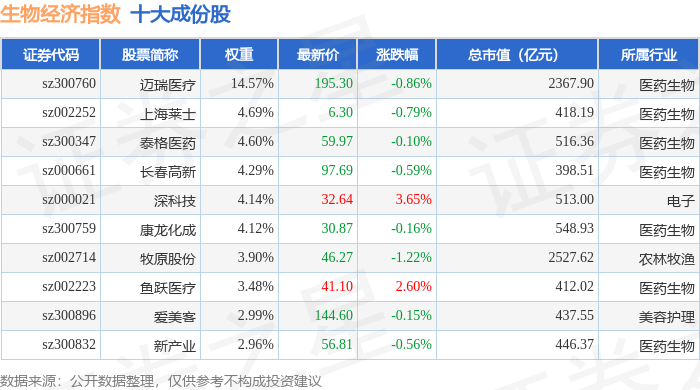
1月21日生物经济(970038)指数涨0.3%,成份股迪安诊断(300244)领涨
Sou Hu Cai Jing· 2026-01-21 10:40
证券之星消息,1月21日,生物经济(970038)指数报收于2249.37点,涨0.3%,成交272.77亿元,换手 率2.27%。当日该指数成份股中,上涨的有28家,迪安诊断以5.59%的涨幅领涨,下跌的有22家,康弘药 业以1.78%的跌幅领跌。 生物经济(970038)指数十大成份股详情如下: | 代码 | 名称 | 主力净流入(元) | 主力净占比 游资净流入 (元) | | 游资净占比 散户净流入 (元) | | 散户净占比 | | --- | --- | --- | --- | --- | --- | --- | --- | | 000021 | 深科技 | 1.87亿 ﮯ | 3.06% | -9441.13万 | -1.55% | -9272.83万 | -1.52% | | 300142 | 沃森生物 | 6444.78万 | 8.62% | -3115.26万 | -4.16% | -3329.52万 | -4.45% | | 000930 | 中粮科技 | 5427.62万 | 9.84% | 491.65万 | 4 0.89% | -5919.27万 | -10.73% | | 002 ...


商社美护行业周报:春节出行预定火热,潮宏基业绩预增-20260120
Guoyuan Securities· 2026-01-20 10:07
Investment Rating - The report maintains an "Overweight" rating for the industry, focusing on service consumption, beauty care, IP derivatives, and new consumption sectors such as gold and jewelry [6][27]. Core Insights - The report highlights a significant increase in consumer activity during the upcoming Spring Festival, with travel bookings and hotel reservations showing substantial year-on-year growth [4][25]. - Notable developments in the beauty care sector include the approval of a new medical device by Juzi Biotechnology and strategic partnerships between companies like Ruoyuchen and Meisidike [3][25]. - The retail sector is experiencing mixed results, with Chaohongji expected to report a net profit increase of 125% to 175% for 2025, while Chongqing Department Store anticipates a revenue decline [5][26]. Summary by Sections Market Performance - During the week of January 12-16, 2026, the performance of the commerce retail, social services, and beauty care sectors was -1.47%, +1.53%, and -0.21%, respectively, ranking them 23rd, 6th, and 14th among 31 primary industries [15][18]. Key Industry Events and News - The State Council, led by Premier Li Qiang, discussed measures to boost consumption and develop new growth points in service consumption [3][25]. - In the beauty care sector, Juzi Biotechnology's new product received regulatory approval, and several companies are pursuing strategic partnerships and IPOs [3][25]. - Travel bookings for the Spring Festival are significantly higher than last year, with a 70% increase in hotel reservations for popular cities [4][26]. - The retail sector is seeing varied performance, with Chaohongji projecting substantial profit growth while Chongqing Department Store reports a revenue decline [5][26]. Investment Recommendations - The report suggests focusing on companies such as Ruoyuchen, Maogeping, Shangmei, Pop Mart, Chaohongji, and Laopu Gold as potential investment opportunities within the highlighted sectors [6][27].

刚刚,A股突变!三大原因!
天天基金网· 2026-01-20 05:21
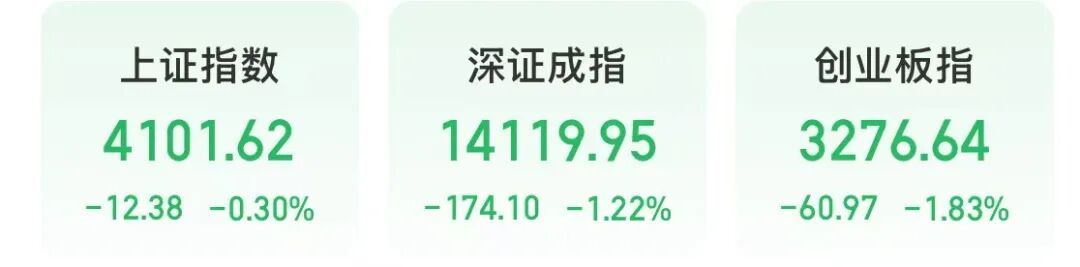
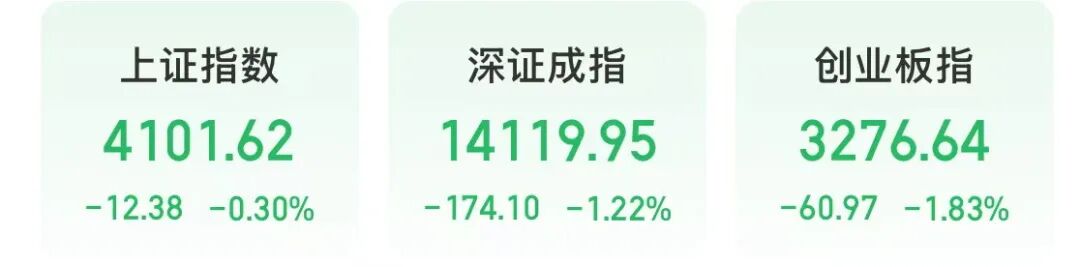
Market Overview - The Shanghai Composite Index experienced significant fluctuations, dropping below 4100 points and later recovering slightly, with a maximum decline of over 0.8% [2] - The Shenzhen Component Index fell by 1.22%, and the ChiNext Index decreased by 1.83% by the close of the morning session [4] Market Influences - Concerns over the performance of US markets following the Martin Luther King Jr. Day holiday contributed to negative sentiment in the Asia-Pacific markets [2] - A report indicated that the US will impose a 10% tariff on goods from several European countries starting February 1, which added to market anxiety [2] - A notable decline in market liquidity was observed, with the A-share market's financing balance decreasing by 8.5 billion yuan to 27,059 billion yuan as of January 19 [2] Consumer Sector Performance - The consumer sector showed strong performance, with significant gains in beauty care, food processing, and liquor sectors [6] - The stock of Pop Mart surged after announcing a share buyback of approximately 251 million HKD, positively impacting market sentiment towards new consumption [8] - Recent government policies aimed at boosting domestic consumption were highlighted, including plans to enhance service consumption and address supply-demand imbalances [8][9] AI Sector Activity - The AI for Science (AI4S) concept saw active trading, with leading stocks like Zhizhi New Materials rising over 17% [11] - Analysts noted that advancements in AI model capabilities are accelerating the commercialization of AI applications, particularly in scientific research [11] - The competition among major AI model providers for market share is expected to intensify, creating growth opportunities across various sectors [11]

A股调整,三大原因
Zhong Guo Zheng Quan Bao· 2026-01-20 05:05
Market Overview - The Shanghai Composite Index experienced significant volatility, dropping below 4100 points and reaching a maximum decline of over 0.8% before recovering slightly [1] - The technology sector faced a pullback, particularly in the computing industry chain, while consumer sectors, high-dividend assets, and chemicals saw gains [1] Market Influences - The U.S. stock market was closed on Martin Luther King Jr. Day, leading to concerns about its performance upon reopening, which negatively impacted the Asia-Pacific markets [1] - A report indicated that U.S. President Trump announced a 10% tariff on imports from Denmark, Norway, Sweden, France, Germany, the UK, the Netherlands, and Finland starting February 1 [1] - Market liquidity has changed, with a rapid decline in trading volume since January 15 and a decrease in margin financing balance, which reported 2.7059 trillion yuan as of January 19, down 8.5 billion yuan from the previous day [1] Consumer Sector Activity - The consumer sector showed strong performance, with significant gains in beauty care, food processing, and liquor sectors. Notably, stocks of "new consumption" companies like Pop Mart, Mixue Group, and Laopu Gold rose collectively [4] - Analysts attribute the strength in the consumer sector to several factors, including Pop Mart's announcement of a share buyback worth approximately 251 million Hong Kong dollars, which positively influenced market sentiment [6] Policy Support - Recent government policies aimed at boosting consumption were highlighted, including a meeting on January 16 that discussed measures to enhance service consumption and domestic demand [7] - The National Development and Reform Commission emphasized the need to strengthen domestic demand and adapt to the evolving demand structure, with plans to develop a strategy for expanding domestic demand from 2026 to 2030 [7] AI Sector Developments - The AI for Science concept saw active performance, with leading stocks like Zhite New Materials rising over 17%. Other AI application stocks also experienced significant gains [8] - Analysts noted that advancements in model capabilities and cost reductions are accelerating the commercialization of AI applications, suggesting a growing competitive landscape among major AI model providers [8]
A股调整 三大原因
Zhong Guo Zheng Quan Bao· 2026-01-20 05:03
Market Overview - The Shanghai Composite Index experienced significant volatility, dropping below 4100 points with a maximum decline of over 0.8%, before narrowing its losses [1] - The technology sector faced a pullback, particularly in the computing industry chain, while sectors such as consumer goods, high-dividend assets, and chemicals saw gains [1] Market Fluctuation Reasons - The U.S. stock market was closed on Martin Luther King Jr. Day, leading to concerns about its performance upon reopening, which negatively impacted the Asia-Pacific markets [2] - A notable decrease in market liquidity was observed, with the A-share market's financing balance reported at 27,059 billion yuan, down 8.5 billion yuan from the previous day, ending a 10-day increase [2] - The commercial aerospace concept has cooled down, contributing to the overall market decline, with the Shanghai Composite Index down 0.3%, Shenzhen Component Index down 1.22%, and ChiNext Index down 1.83% [3] Consumer Sector Activity - The consumer sector showed strong performance, with significant gains in beauty care, food processing, and liquor manufacturing [6] - The stock of Pop Mart surged, positively influencing the new consumption sector. On January 19, Pop Mart announced a repurchase of 1.4 million shares for approximately 251 million HKD, with prices ranging from 177.7 HKD to 181.2 HKD per share [7] - Recent favorable policies have been released, including a meeting on January 16 focused on boosting consumption and a commitment to expand domestic demand [8] - Analysts suggest that the consumer sector is in a phase of "policy catalysis + peak season drive," with opportunities in essential and discretionary consumption expected to continue improving [9] AI for Science Sector - The AI for Science (AI4S) concept saw active performance, with leading stocks like Zhizhi New Materials rising over 17%, alongside significant gains in other related stocks [11] - Analysts from CITIC Securities noted that advancements in model capabilities and cost reductions are accelerating the commercialization of AI applications [11] - Open Source Securities highlighted the competitive landscape among major AI model companies, suggesting that the commercialization of AI applications could open up growth opportunities across various sectors [11]
【盘中播报】沪指跌0.73% 国防军工行业跌幅最大
Zheng Quan Shi Bao Wang· 2026-01-20 03:37
Market Overview - The Shanghai Composite Index fell by 0.73% as of 10:27 AM, with a trading volume of 783.95 million shares and a transaction value of 1,378.36 billion yuan, an increase of 0.13% compared to the previous trading day [1] Industry Performance - Real estate, oil and petrochemicals, and beauty care sectors showed the highest gains, with increases of 0.86%, 0.72%, and 0.70% respectively [1] - The defense and military, comprehensive, and communication sectors experienced the largest declines, with decreases of 3.41%, 3.19%, and 3.06% respectively [1][2] Leading Stocks - In the real estate sector, Chengdu Investment Holdings led with a gain of 10.11% [1] - In the oil and petrochemical sector, Blue Flame Holdings increased by 2.86% [1] - In the beauty care sector, Yanjiang Co. rose by 9.34% [1] Detailed Industry Data - Real Estate: 0.86% increase, transaction value of 189.40 billion yuan, up 20.93% from the previous day [1] - Oil and Petrochemicals: 0.72% increase, transaction value of 80.28 billion yuan, up 26.01% from the previous day [1] - Beauty Care: 0.70% increase, transaction value of 35.84 billion yuan, up 11.01% from the previous day [1] - Defense and Military: 3.41% decrease, transaction value of 883.06 million yuan, up 45.81% from the previous day [2] - Communication: 3.06% decrease, transaction value of 754.04 million yuan, up 0.40% from the previous day [2]
A股三大股指相继翻红,电网设备、贵金属、汽车整车、美容护理等方向领涨,沪深京三市上涨个股近2700只
Ge Long Hui· 2026-01-19 01:59
Group 1 - The A-share market saw all three major indices turn positive, indicating a bullish trend in the market [1] - Sectors such as power grid equipment, precious metals, complete automobiles, and beauty care led the gains, showcasing strong performance in these industries [1] - Nearly 2,700 stocks in the Shanghai, Shenzhen, and Beijing markets experienced an increase, reflecting broad market participation and investor confidence [1]