高技术产业

Search documents
6月和二季度经济数据点评:财政政策加力提效对下半年稳经济很重要
Bank of China Securities· 2025-07-16 06:09
Economic Growth - In the first half of 2025, the actual GDP grew by 5.3% year-on-year, with Q1 growth at 5.4% and Q2 at 5.2%[3] - The nominal GDP growth rate for Q2 was 3.9%, down 0.7 percentage points from Q1[3] - The cumulative year-on-year growth of industrial added value in the first half was 6.4%[40] Industrial Performance - In June, industrial added value increased by 6.8% year-on-year, surpassing expectations of 5.5%[11] - The manufacturing sector's added value grew by 7.0% in the first half, while high-tech industries saw a 9.5% increase[11] - Fixed asset investment in manufacturing rose by 7.5% year-on-year in the first half, while infrastructure investment grew by 4.6%[27] Consumer Spending - Retail sales in June grew by 4.8% year-on-year, a decline of 1.6 percentage points from May[17] - Cumulative retail sales for the first half increased by 5.0% year-on-year, with service consumption rising by 5.3%[40] - The average per capita disposable income in the first half was 21,840 yuan, up 5.3% year-on-year[36] Investment Trends - Fixed asset investment growth for the first half was 2.8%, down 0.9 percentage points from the previous period[24] - Real estate investment fell by 11.2% year-on-year in the first half, with new housing starts down 20.0%[28] - The decline in real estate sales area was 3.5%, and sales revenue decreased by 5.5%[30] Policy Implications - Strengthening fiscal policy is crucial for stabilizing economic growth in the second half of 2025[40] - The uncertainty of external demand, particularly due to U.S. tariff policies, poses risks to economic stability[41] - Monitoring the outcomes of the July Politburo meeting will be essential for understanding future economic strategies[41]
上半年国内生产总值同比增5.3%
Sou Hu Cai Jing· 2025-07-15 21:06
Economic Overview - The GDP for the first half of the year reached 660,536 billion yuan, with a year-on-year growth of 5.3%, slightly up from 5.4% in Q1 to 5.2% in Q2 [1][2] - The economic performance is characterized by stability, with key indicators showing a steady growth trend [2][7] Sector Performance - The primary industry added value was 31,172 billion yuan, growing by 3.7%; the secondary industry reached 239,050 billion yuan, with a growth of 5.3%; and the tertiary industry increased to 390,314 billion yuan, growing by 5.5% [1] - The service sector accounted for 59.1% of GDP, contributing over 60% to economic growth [7] Consumption Trends - Retail sales of consumer goods increased significantly, with notable growth in service consumption and holiday spending [4][5] - The contribution of final consumption expenditure to GDP growth was 52%, indicating it as the main driver of growth [3] Monetary and Trade Indicators - The M2 money supply grew by 8.3% year-on-year as of the end of June, reflecting improved liquidity in the economy [3] - The trade balance remained stable, with import and export volumes reaching record highs [2] Future Outlook - Analysts express optimism for continued consumption growth, supported by government policies and a favorable demographic landscape [5][6] - The macroeconomic policies are expected to provide a solid foundation for stable growth in the second half of the year, despite external uncertainties [6][7]


上半年我国GDP同比增长5.3% 经济稳中向好
Zheng Quan Ri Bao· 2025-07-15 16:56
Economic Overview - The Chinese economy has shown a stable growth trend with a GDP growth of 5.3% year-on-year in the first half of the year, which is an increase of 0.3 percentage points compared to the same period last year and the entire year [1][3] - The unemployment rate has remained stable, fluctuating between 5.0% and 5.4% throughout the year, while consumer prices have shown signs of recovery with a CPI increase of 0.1% in June [1][3] Economic Characteristics - The economy is characterized by a sustained "stability" with major indicators performing better than expected, including a significant contribution from domestic demand to GDP growth at 68.8% [2][3] - The "progress" in economic transformation and high-quality development is evident, with high-tech industries seeing a value-added growth of 9.5% year-on-year [2][3] - The "new" momentum is accumulating as new industries and technologies continue to develop rapidly, with the share of new industries in GDP expected to reach around 18% by 2024 [2][3] Consumer Market Insights - The consumer market has become more active, with retail sales of consumer goods reaching 24.55 trillion yuan, a year-on-year increase of 5%, indicating a robust market performance [3][4] - The ongoing consumption structure upgrade is crucial, with significant potential in sectors like cultural tourism, healthcare, and elderly care, supported by a large population and market scale [4] Future Outlook - The economic growth target for the year is projected to be around 5.0%, with expectations of accelerated growth in consumption and investment in the second half of the year [5] - The decision-makers are likely to maintain a flexible approach to policy implementation, considering the controllable pressure to achieve the annual goals [5]
今年1月至5月科技创新和制造业减税降费及退税达6361亿元
Yang Guang Wang· 2025-07-05 00:37
Group 1 - The National Taxation Administration reported that tax reductions and refunds supporting technological innovation and manufacturing reached 636.1 billion yuan in the first five months of this year, accelerating high-quality development in these sectors [1] - Tax policies have been effectively implemented to ensure that benefits reach businesses quickly, with high-tech enterprises receiving 140.7 billion yuan in tax reductions from a 15% corporate income tax rate, and advanced manufacturing receiving 415.8 billion yuan in VAT reductions and refunds [1] - The tax incentives are aligned with national strategic development, supporting the transformation and optimization of technological innovation and manufacturing, which is beneficial for long-term growth [1] Group 2 - High-tech industry sales revenue increased by 14.2% year-on-year, significantly outpacing the overall national growth rate, indicating rapid growth in innovative industries [2] - The core digital economy sector grew by 10% year-on-year, with national enterprise spending on digital technologies increasing by 9.7%, reflecting orderly progress in the integration of digital and real economies [2] - Manufacturing sales revenue grew by 4.2% year-on-year, with advanced manufacturing sectors like computer and smart equipment manufacturing seeing sales increases of 21.6% and 19.4% respectively, demonstrating the positive impact of tax reduction policies on business transformation and innovation [2]
三大产业2024年减税1.97万亿元 税收为新质生产力赋能
Zhong Guo Jing Ying Bao· 2025-07-02 15:21
Core Insights - The tax department has effectively implemented tax incentives to support technological innovation, significantly boosting the digital economy, high-tech industries, and the robotics sector [1][2] - In 2024, the three sectors collectively benefited from a corporate income tax reduction of 1.97 trillion yuan, with total operating revenue and profit increasing by 7.1% and 5.2% year-on-year, respectively [1] Digital Economy - The digital economy continues to thrive, with operating revenue and profit growth of 5.9% and 2.7% year-on-year in 2024 [1] - The information transmission, software, and IT services industry saw substantial growth, with revenue and profit increasing by 11.5% and 13.2% year-on-year [1] High-Tech Industries - High-tech industries are making significant advancements, particularly in high-end manufacturing, with revenue and profit growth of 8.9% and 7.5% year-on-year in 2024 [1] - The aerospace industry experienced remarkable growth, with revenue and profit increasing by 10.5% and 26.3% year-on-year [1] Robotics Sector - The robotics industry is on a fast track, with an average year-on-year revenue growth of 10.2% over the past two years [2] - Specific segments such as special operation robots, service robots, and industrial robots saw year-on-year growth of 28.4%, 12.4%, and 7%, respectively, indicating accelerated application across multiple scenarios [2] Tax Policy and Compliance - The tax department is committed to implementing structural tax reduction policies and ensuring that eligible entities fully benefit from these incentives [2] - There is a strong emphasis on combating fraudulent claims for tax benefits to ensure that the incentives support legitimate growth in high-end, intelligent, and green manufacturing [2]
共减免1.97万亿元,总营收同比增长7.1%
Jin Rong Shi Bao· 2025-07-01 12:37
Group 1: Digital Economy - The digital economy is experiencing rapid growth, with data production expected to increase by 25% in 2024, and the core industry's added value accounting for approximately 10% of GDP [2] - The total computing power is projected to reach 280 EFLOPS, and 5G base stations have reached 4.251 million [2] - Revenue and profit for the digital economy and its core industries are expected to grow by 5.9% and 2.7% respectively in 2024, with significant growth in information transmission, software, and IT services [2] Group 2: High-Tech Industry - The high-tech industry is showing positive development, with revenue and profit for sectors like pharmaceuticals and aerospace increasing by 8.9% and 7.5% respectively in 2024 [3] - The aerospace sector has seen revenue and profit growth of 10.5% and 26.3%, respectively, with significant achievements in commercial aircraft and lunar exploration [3] - The value added of high-tech manufacturing increased by 9.5% from January to May, with notable production growth in 3D printing and integrated circuits [3] Group 3: Robotics Industry - The robotics industry in China has rapidly developed, maintaining its position as the largest industrial robot market globally for 11 consecutive years, with effective patents exceeding 190,000 [4] - Average revenue growth for the robotics industry over the past two years is 10.2%, with specific segments like special operation robots and service robots growing by 28.4% and 12.4% respectively in 2024 [4] - Significant increases in production were noted in intelligent unmanned aerial vehicles and industrial robots, with production growth of 85.9% and 35.5% respectively in May [4]
1—5月首都经济运行总体平稳、稳中有进
Sou Hu Cai Jing· 2025-06-18 15:14
Economic Stability and Growth - The overall economic operation in the capital has been stable and improving since May, driven by a series of policies aimed at stabilizing employment and the economy [2] Industrial Performance - From January to May, the city's industrial added value above designated size increased by 6.8% year-on-year, a 0.2 percentage point increase compared to January to April [3] - Advanced manufacturing and strategic emerging industries showed strong growth, with a 16.9% increase, 3.8 percentage points higher than the same period last year. The electronics and automotive sectors grew by 27.2% and 13.9%, respectively [3] - The information service industry revenue increased by 13.6% year-on-year, up 1.9 percentage points from January to March [3] - The Beijing Stock Exchange's trading activity has been robust, with the North Exchange 50 Index rising nearly 36% year-to-date, leading among major market indices [3] Investment and Consumption - Fixed asset investment grew by 17.8% from January to May, driven by "two heavy" projects and equipment upgrades [4] - High-tech industry investment surged by 81%, while infrastructure investment rose by 16.2% [4] - Total market consumption increased by 1.3% year-on-year, with a 0.3 percentage point improvement from January to April [4] - The integration of commerce, culture, and tourism led to a 4.9% growth in service consumption, with nearly 100 large cultural and sports events held in May, resulting in a 32.1% increase in visitor numbers at key scenic spots [4] - The number of newly established foreign-funded enterprises in May increased by 11.5% year-on-year, a 22.8 percentage point improvement compared to the previous year [4] Employment and Prices - The urban survey unemployment rate remained low, with measures taken to meet the employment needs of college graduates [5] - In May, consumer prices decreased by 0.1%, while service prices rose by 0.4% [5] - The city plans to leverage national policy tools to create a favorable development environment, focusing on stabilizing employment and promoting high-quality economic growth [5]

推动经济高质量发展的“新动能”正持续积聚
Zheng Quan Ri Bao· 2025-06-15 16:17
Group 1 - The concept of "new momentum" is crucial for promoting high-quality economic development, driven by technological innovation and new industries, business models, and forms [1] - In May, sales revenue in high-tech industries grew by 15% year-on-year, while the core digital economy industries saw an 11.2% increase, indicating a strong growth trend [1] - The integration of digital and physical realms is accelerating, with technologies like big data, cloud computing, and artificial intelligence becoming key drivers for industrial upgrades and economic structure optimization [1] Group 2 - In May, sales revenue for industrial robots and special operation robots increased by 13.2% and 28.3% year-on-year, reflecting the deepening implementation of the "Artificial Intelligence +" initiative [2] - The high-tech manufacturing PMI has remained in the expansion zone for four consecutive months, showcasing robust development in new quality productivity [2] - The emergence of new foreign trade models, such as bonded maintenance projects, indicates an increase in the "new momentum" within the foreign trade sector, enhancing the competitiveness of high-tech and high-value-added products [2] Group 3 - There is a recognition of the need to stabilize the foundation for the continuous recovery of the national economy amidst external uncertainties, emphasizing the importance of technological innovation in creating new growth points [3] - The ongoing transition from old to new momentum is essential for exploring new fields and tracks, which will further cultivate "new momentum" to support high-quality economic development [3]
中美经贸关系优势互补、共生共赢(钟声)
Ren Min Ri Bao· 2025-06-09 21:56
Group 1 - The core viewpoint emphasizes the importance of the first meeting of the China-U.S. economic and trade consultation mechanism in London, highlighting it as a significant opportunity for both parties to resolve differences through equal dialogue [1] - The article discusses the balanced benefits of China-U.S. trade relations, noting that the U.S. trade deficit with China is a result of structural issues in the U.S. economy and the comparative advantages of both countries [1][2] - It is mentioned that the U.S. service trade surplus with China is projected to reach $27.3 billion in 2024, indicating a significant advantage for the U.S. in the service sector [1] Group 2 - The article points out that the U.S. trade deficit with China, when calculated based on trade value added, would be significantly reduced, suggesting that China does not actively pursue a trade surplus [2] - It highlights that the U.S. trade deficit with China has decreased as a percentage of its total trade deficit, from 47.5% in 2018 to 24.6% in 2024, indicating a shift in the U.S. trade dynamics [2] - The article criticizes the U.S. for politicizing economic issues and implementing discriminatory measures against China, which hinder U.S. companies from capitalizing on market opportunities in China [2] Group 3 - China is actively promoting high-level openness and expanding imports, providing more opportunities for countries, including the U.S., through various trade exhibitions and initiatives [3] - The article asserts that the true nature of China-U.S. economic relations is one of complementary advantages and mutual benefits, advocating for the removal of artificial barriers to enhance cooperation [3] - It expresses optimism that through equal consultation and pragmatic cooperation, both countries can find mutually beneficial solutions that will contribute to global economic recovery and growth [3]
25Q1,几个有意思的经济“转折点”
Hu Xiu· 2025-06-09 00:18
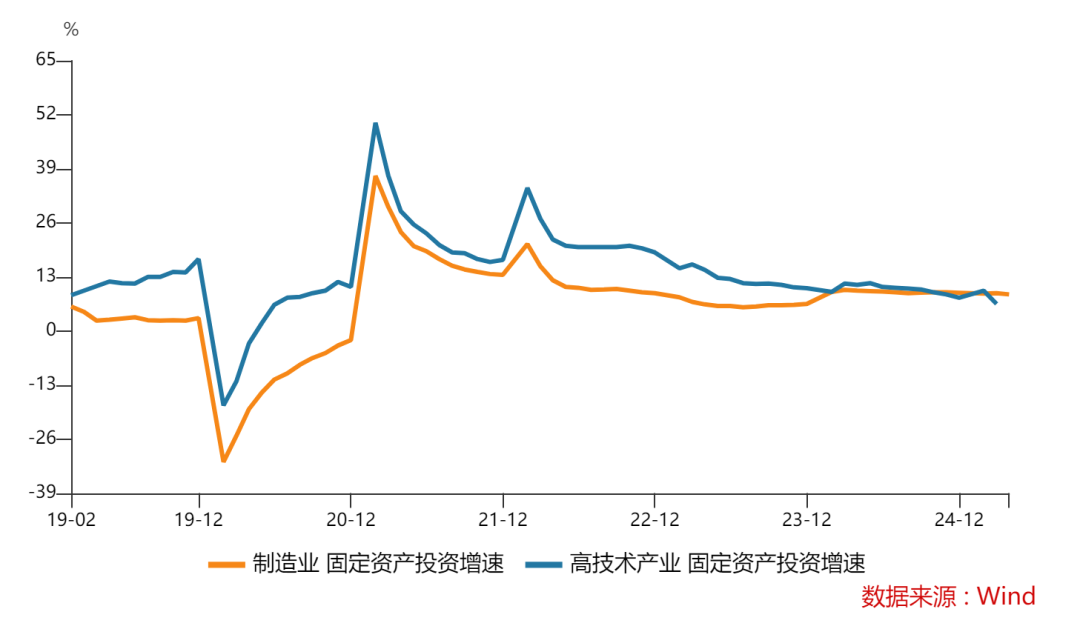
Group 1 - Investment in high-tech industries has been surpassed by overall manufacturing investment for the first time, indicating a shift in trends after three years of low returns on investments [1][3][4] - Many sectors, including new energy and semiconductors, are showing signs of overcapacity, with rapid technological iterations leading to outdated "new" technologies [3][4] - Private investments focused on financial returns have lagged behind state-owned enterprises, highlighting a disparity in investment strategies [4] Group 2 - Corporate profits are finally showing signs of recovery, with many sectors experiencing profit rebounds, although the automotive industry continues to struggle [5][9] - The gap between fixed asset investment in manufacturing and overall profits is narrowing, suggesting a potential shift towards prioritizing shareholder returns [9][11] - Regulatory pressures in the automotive sector and tightening capital constraints are contributing to a more sustainable investment environment [11] Group 3 - The growth rate of high-tech service industries remains strong, outperforming the manufacturing sector [14] - Consumer spending on services is lagging behind goods due to supply constraints and a lack of quality offerings, impacting overall consumption patterns [17][19] - New consumption trends, particularly those with emotional and differentiated attributes, are gaining traction, indicating a shift in consumer preferences [21]