石油天然气

Search documents
油气ETF(159697)涨超1%,政策推动油气管网等基础设施提质增效
Xin Lang Cai Jing· 2025-11-14 02:02
Group 1 - The core viewpoint of the news is the strong performance of the oil and gas sector, highlighted by the rise of the National Petroleum and Natural Gas Index and specific stocks such as Shun Oil and Victory Shares [1] - The National Petroleum and Natural Gas Index (399439) increased by 1.26%, with significant gains in constituent stocks like Shun Oil (up 10.01%) and Victory Shares (up 9.92%) [1] - The newly published "Regulations on the Planning, Construction, and Operation Management of Oil and Gas Infrastructure" will take effect on January 1, 2025, emphasizing the need for enhanced natural gas reserves and a refined market mechanism for gas storage [1] Group 2 - The OPEC monthly report indicates that despite an agreement to increase production, OPEC+ produced an average of 43.02 million barrels per day in October, a decrease of 73,000 barrels per day from September [1] - The top ten weighted stocks in the National Petroleum and Natural Gas Index as of October 31, 2025, include major companies like China National Petroleum and Sinopec, collectively accounting for 65.09% of the index [2] - The oil and gas ETF (159697) closely tracks the National Petroleum and Natural Gas Index, reflecting the price changes of publicly listed companies in the oil and gas sector [2]





2025年11月上旬流通领域重要生产资料市场价格变动情况
Guo Jia Tong Ji Ju· 2025-11-14 01:33
Core Viewpoint - The monitoring of market prices for 50 important production materials across nine categories shows a mixed trend, with 26 products experiencing price increases, 23 seeing declines, and one remaining stable in early November 2025 compared to late October 2025 [2][3]. Group 1: Price Changes in Major Categories - In the black metal category, prices for rebar decreased by 3.8 yuan per ton to 3118.5 yuan, while ordinary medium plates fell by 13.7 yuan to 3411.8 yuan [5]. - In the non-ferrous metal category, electrolytic copper saw a decline of 599.6 yuan per ton, now priced at 86209.2 yuan, while aluminum ingots increased by 319.5 yuan to 21418.3 yuan [6]. - Chemical products experienced varied changes, with sulfuric acid rising by 71.0 yuan to 785.3 yuan, while methanol dropped by 86.9 yuan to 2074.4 yuan [6][10]. Group 2: Energy and Coal Prices - In the petroleum and natural gas sector, liquefied natural gas (LNG) prices increased by 86.8 yuan to 4323.9 yuan per ton, while gasoline (95) prices decreased by 93.3 yuan to 8000.3 yuan [8]. - Coal prices showed a mixed trend, with ordinary mixed coal rising by 24.4 yuan to 611.8 yuan per ton, while coking coal prices were reported at 1623.3 yuan [9]. Group 3: Agricultural Products and Fertilizers - In agricultural products, the price of rice fell by 9.9 yuan to 3909.7 yuan per ton, while soybean prices increased by 49.2 yuan to 4298.3 yuan [10]. - Fertilizer prices also varied, with urea increasing by 3.1 yuan to 1619.8 yuan per ton, while the price of glyphosate decreased by 125.0 yuan to 27375.0 yuan [10]. Group 4: Monitoring Methodology - The price monitoring encompasses 31 provinces and over 300 trading markets, involving nearly 2000 wholesalers, agents, and distributors [13]. - The methodology includes on-site price collection, telephone inquiries, and electronic communications for data accuracy [14].
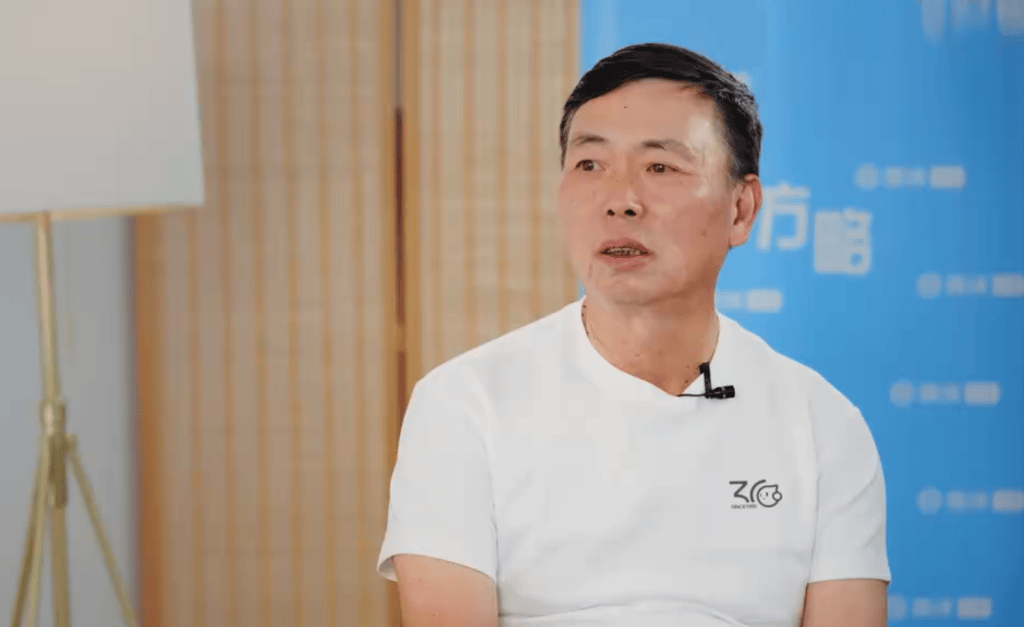
段永平:A股我只买了茅台,苹果未来翻1-3倍存在可能,只是现在不便宜,还有一个赚钱方法是它
Sou Hu Cai Jing· 2025-11-13 16:12
Core Insights - The conversation between Fang Sanwen and Duan Yongping highlighted the importance of understanding what not to do in investment, emphasizing that avoiding unsuitable actions can lead to fewer mistakes and better decision-making [2][37] - Duan Yongping discussed the concept of "margin of safety," clarifying that it relates more to the depth of understanding of a company rather than just its price [3][33] - The discussion included a recommendation to invest in the S&P 500 index for long-term gains, suggesting that this approach can yield positive results over time [4][24] Investment Philosophy - Duan Yongping shared his experience of investing in the oil and gas index, where he lost over $10 million, and emphasized the importance of quickly correcting mistakes in investment decisions [5][48] - He expressed a cautious approach to investing, stating that he only invests in companies he understands, such as Moutai, and highlighted the risks of "copying" investment strategies without understanding the underlying companies [53][50] - The conversation pointed out that many retail investors lose money in both bull and bear markets, with an estimated 80% of them facing losses [10][59] Company Analysis - Duan Yongping mentioned that Moutai is a relatively easy-to-understand company and suggested that it may be a worthwhile investment for many, despite concerns about changing consumer habits [12][62] - He also discussed the potential for Apple to grow significantly in the future, although he noted that its current price is not attractive for investment [38][40] - The dialogue included reflections on past investments, such as General Electric, where changes in corporate culture and business model led to a decision to sell [41][44] Market Trends - The impact of AI and quantitative funds on stock trading was discussed, with Duan Yongping warning that these advancements make it increasingly difficult for individual investors to succeed in short-term trading [11][58] - He emphasized that true investment requires a deep understanding of companies and their business models, rather than relying on market trends or technical analysis [65][66] - The conversation concluded with a recognition that while investing can be challenging, it is possible to succeed by focusing on companies that one understands and believes in [61][67]




国家发改委:服务油气行业绿色低碳发展 完善油气基础设施规划体系
智通财经网· 2025-11-13 12:21
Core Points - The National Development and Reform Commission has revised and issued the "Regulations on the Planning, Construction, and Operation Management of Oil and Gas Infrastructure," effective from January 1, 2026, focusing on green and low-carbon development in the oil and gas industry [1][29] - The regulations emphasize the need for technological innovation and digital transformation in infrastructure construction and operation, promoting the development of new technologies, industries, and business models [1][32] Summary by Sections General Principles - The regulations aim to standardize the planning, construction, and operation management of oil and gas infrastructure, ensuring service quality and efficiency while safeguarding public interests and energy security [3] - The regulations apply to all oil and gas infrastructure activities within the jurisdiction of the People's Republic of China, excluding certain facilities like military and gas facilities [3] Planning of Oil and Gas Infrastructure - The State Council's energy department will coordinate the planning and construction of major oil and gas infrastructure, ensuring alignment with national and regional energy plans [5][6] - Local governments are prohibited from independently segmenting and approving cross-border or cross-province oil and gas pipeline projects [6][7] Construction of Oil and Gas Infrastructure - The National Pipeline Group is responsible for the construction of main oil and gas pipelines, with encouragement for social capital participation in various projects [7][8] - Projects must comply with investment management regulations and undergo necessary approvals, with a focus on environmental protection during construction [8][9] Operation of Oil and Gas Infrastructure - Operators of oil and gas pipelines must ensure fair access and usage of facilities, with strict regulations against engaging in competitive businesses [11][12] - The regulations require operators to maintain safety standards and provide transparent information regarding service capabilities and operational status [14][15] Natural Gas Storage and Regulation - The regulations establish a framework for natural gas storage facilities, mandating a minimum storage capacity for gas supply companies [17][18] - A market mechanism for gas storage services will be developed to ensure effective supply during peak demand and emergencies [17][18] Supervision and Management - The energy departments at various levels are tasked with supervising the planning and construction of oil and gas infrastructure, ensuring compliance with regulations [28][29] - The regulations outline the responsibilities of the State Council's energy department in overseeing fair access to oil and gas pipeline facilities [19][20] Legal Responsibilities - Clear legal responsibilities are defined for violations of the regulations, including penalties for non-compliance in project approvals and operational standards [21][22] - The regulations emphasize the importance of maintaining safety and environmental standards in the operation of oil and gas infrastructure [23][24] Implementation and Future Considerations - The regulations will be implemented starting January 1, 2026, with a focus on aligning with national energy strategies and improving the overall management of oil and gas infrastructure [28][29] - The government will continue to refine and develop supporting guidelines to enhance the effectiveness of the regulations [38][39]
国家发改委公布《石油天然气基础设施规划建设与运营管理办法》
Di Yi Cai Jing· 2025-11-13 11:50
(文章来源:第一财经) 国家发改委公布《石油天然气基础设施规划建设与运营管理办法》,自2026年1月1日起施行。 ...
石化行业央企ESG评价结果分析:应对气候变化和安全生产是石化央企的重点关注
Shenwan Hongyuan Securities· 2025-11-13 08:44
Investment Rating - The report rates the petrochemical industry as "Positive" for investment, indicating an expectation of outperforming market performance [1]. Core Insights - The report highlights that addressing climate change and safety production are key focuses for state-owned petrochemical enterprises [1]. - Most companies in the industry have performed well in ESG scores, with a 100% coverage of ESG reporting, particularly excelling in environmental and social aspects, while governance needs improvement [10][16]. - Seven companies scored above 80 points, including China National Offshore Oil Corporation (CNOOC), China Petroleum, and China Petrochemical, while two companies scored between 40-80 points [10]. Summary by Sections 1. ESG Reporting Coverage - The ESG report coverage is complete, with high scores in environmental and social aspects, but governance remains an area for improvement [10][16]. 2. Environmental Indicators - Companies show a strong commitment to environmental management, with five companies scoring over 15 points and eight scoring above 10 points. However, disclosure on oil spill risk management and circular economy indicators is lacking [16][20]. 3. Climate Change Response - The industry generally scores high in climate change response, with 100% disclosure rates for climate management and indicators. However, there is a need for better disclosure on internal supervision and financial impact assessments [26][30]. 4. Social Responsibility - Most companies score moderately high in social responsibility, focusing on rural revitalization, social contributions, innovation, safety production, and employee welfare. However, the disclosure rate for public awareness initiatives is low [43][46]. 5. Governance Structure - The governance structure is largely complete, with high scores in governance indicators. However, the disclosure of ESG information reporting and supervision mechanisms needs improvement [57][66].
研报掘金丨长江证券:维持中国石油“买入”评级,天然气销售业务盈利能力持续提高
Ge Long Hui· 2025-11-13 07:46
Core Viewpoint - China Petroleum's net profit for the first three quarters of 2025 reached 126.294 billion yuan, a year-on-year decrease of 4.9%, with the third quarter net profit at 42.287 billion yuan, down 3.9% [1] Financial Performance - Oil and gas production saw a slight increase, and cost reduction and efficiency improvements led to better performance in oil, gas, and new energy businesses compared to oil price fluctuations [1] - Chemical product prices declined, but refining operations improved the performance of the refining and chemical segments [1] - Increased sales and effective procurement cost control contributed to the sustained profitability of the natural gas sales business [1] Shareholder Returns - The company emphasizes shareholder returns, showcasing confidence through share buybacks [1] - A stable cash dividend policy is maintained, with a mid-2025 dividend of 0.22 yuan per share, totaling approximately 40.265 billion yuan in dividends [1] - The company maintains a "buy" rating [1]
中国石油(601857):天然气销售大幅增利 凸显对冲油价能力
Ge Long Hui· 2025-11-13 04:53
Core Viewpoint - The company reported a decline in revenue and net profit for the first three quarters of 2025, but managed to achieve some operational improvements in oil and gas production, refining, and natural gas sales despite challenging market conditions [1][2][3] Group 1: Financial Performance - For the first three quarters of 2025, the company achieved revenue of 21,692.56 billion yuan, a year-on-year decrease of 3.9% [1] - The net profit attributable to shareholders was 1,262.94 billion yuan, down 4.9% year-on-year [1] - In Q3 2025, revenue was 7,191.57 billion yuan, showing a year-on-year growth of 2.3%, while net profit was 422.87 billion yuan, a decline of 3.9% year-on-year [1] Group 2: Oil and Gas Operations - The company reported a slight increase in oil and gas equivalent production, reaching 1,377.2 million barrels, up 2.6% year-on-year [1] - Domestic oil and gas equivalent production was 1,234.3 million barrels, a 3.2% increase, while overseas production decreased by 2.0% to 142.8 million barrels [1] - The unit operating cost for oil and gas was 10.79 USD/barrel, down 6.1% year-on-year, despite a 14.3% decline in Brent crude average price to 70.93 USD/barrel [1] Group 3: Refining and Chemical Business - The company processed 1,040.6 million barrels of crude oil, a 0.4% increase year-on-year, and produced 668.8 million tons of ethylene, up 5.2% [2] - The refining and chemical segment achieved an operating profit of 162.40 billion yuan, a year-on-year increase of 6.28%, with refining business profit rising by 22.68% to 144.53 billion yuan [2] - Chemical business profit decreased by 48.93% to 17.87 billion yuan due to falling prices of most chemical products [2] Group 4: Natural Gas Sales - The company sold 2,185.41 billion cubic meters of natural gas, a year-on-year increase of 4.2% [2] - The natural gas sales business achieved an operating profit of 312.79 billion yuan, up 23.79% year-on-year, attributed to increased sales volume and effective cost control [2] Group 5: Shareholder Returns - The company maintained a stable cash dividend policy, with a mid-2025 dividend of 0.22 yuan per share, totaling approximately 402.65 billion yuan [3] - A share buyback plan was announced, with the controlling shareholder intending to purchase between 28 billion yuan and 56 billion yuan of A and H shares over the next 12 months, reflecting confidence in the company [3] - Expected EPS for 2025-2027 are 0.87 yuan, 0.91 yuan, and 0.92 yuan, with corresponding PE ratios of 11.36X, 10.83X, and 10.72X based on the closing price on November 10, 2025 [3]
港股开盘丨恒生指数跌0.53% 石油股走弱
Xin Lang Cai Jing· 2025-11-13 02:01
(本文来自第一财经) 来源:第一财经 恒生指数开盘跌0.53%,恒生科技指数跌0.82%。石油股走弱,中国海洋石油跌超2%。大型科技股表现 低迷,阿里巴巴跌近2%。 ...

港股开盘 | 恒指低开0.53% 华润万象生活(01209)跌近8%
智通财经网· 2025-11-13 01:40
Group 1 - The Hang Seng Index opened down 0.53%, with the Hang Seng Tech Index falling 0.82%. China National Offshore Oil Corporation dropped over 2%, and China Petroleum & Chemical Corporation fell over 1%. China Resources Mixc Lifestyle Services Limited saw a decline of nearly 8% as its controlling shareholder, China Resources Land Limited, proposed to place shares at HKD 41.7 each [1] - Guotai Junan Securities indicated that the foundation for a bull market in Hong Kong stocks remains intact, but the evolution is likely to be characterized by "oscillating upward with a gradually rising center" rather than a rapid one-sided increase. The fundamental drivers in November are strong, emphasizing the value of high-prosperity sectors [1][2] - Wang Qian from Yongying Fund noted that the recent adjustment in Hong Kong stocks is mainly due to weakened upward momentum and increased uncertainties, leading some investors to take profits. Additionally, the market remains uncertain about the Federal Reserve's interest rate cuts in December [1][2] Group 2 - Market focus will shift towards policy implementation and interest rate trends by year-end. As valuations of Hong Kong stocks become more attractive next year, a confirmed trend reversal in U.S. interest rates or clearer signals of domestic economic recovery could help the market regain upward momentum. Key sectors to watch include internet, high dividends, and high-end manufacturing [2] - The valuation of the Hang Seng Internet Technology Index is currently at a PE ratio of 21.45, which is at a historical low of 16.09% over the past decade, indicating significant valuation recovery potential [2][3] - The core narrative of Hong Kong's internet sector is shifting from user growth and business models to new growth curves driven by AI empowerment [2] Group 3 - Zhang Xia, Chief Strategy Analyst at招商证券, stated that the Hang Seng Tech Index is one of the few indices with a current PE ratio below its historical average, indicating substantial valuation recovery potential [3] - The Hong Kong market is primarily driven by liquidity, and uncertainties in external liquidity may lead to short-term oscillations. However, in the medium to long term, the opening of the U.S. interest rate cut cycle and the end of the Fed's balance sheet reduction could lead to a resonance of easing policies between China and the U.S. [3] - The current economic fundamentals in China are stable and improving, with continuous policy support, which has significantly boosted market confidence [3][4] Group 4 - Guotai Haitong Securities highlighted that the current position of Hong Kong stocks is not high compared to historical and overseas levels, suggesting potential for upward movement. The market is expected to attract over 1.5 trillion yuan in inflows next year due to low allocation and the backdrop of U.S. interest rate cuts [4] - Hong Kong is seen as a gathering place for innovative assets, with sectors like internet, new consumption, innovative pharmaceuticals, and dividends expected to support the ongoing bull market [4] - JPMorgan noted that the current valuation of Hong Kong stocks remains relatively low, supported by multiple favorable factors, and anticipates that the current rally will continue into next year [4][5]