金融

Search documents
推动服务业开放提速加力 苏州再领一项“国家试点”
Su Zhou Ri Bao· 2026-01-10 00:22
Core Viewpoint - The Ministry of Commerce has issued a comprehensive pilot task for the expansion of the service industry in nine cities, aiming to accelerate the opening up of the service sector in China [1] Group 1: Pilot Tasks and Focus Areas - The pilot tasks include 159 specific initiatives for nine cities: Dalian, Ningbo, Xiamen, Qingdao, Shenzhen, Hefei, Fuzhou, Xi'an, and Suzhou [1] - The focus areas for these initiatives include telecommunications services, healthcare and wellness, trade and tourism, and finance [1] Group 2: City-Specific Support Initiatives - Dalian is supported to leverage its role as a Northeast Asia international shipping center to enhance logistics and transportation channels [2] - Ningbo is encouraged to utilize its advanced manufacturing and cross-border trade advantages to promote the healthy development of new business models in bonded maintenance [2] - Xiamen will focus on facilitating cultural trade and enhancing service trade cooperation with BRICS countries through key parks and platforms [2] - Qingdao aims to strengthen marine technology innovation and conduct trial cruises for non-destination sea routes [2] - Shenzhen is set to optimize and upgrade its free trade account functions and trial electronic bills of lading in shipping and trade [2] - Hefei will deepen reforms in the technology service sector by leveraging its technological innovation and industrial development advantages [2] - Fuzhou will enhance cross-strait economic and trade cooperation, particularly in the areas of livelihood and commerce [2] - Xi'an will implement a trial reform for the property rights of railway waybills and strengthen technology innovation and industrial application [2] - Suzhou will explore the import of materials for biopharmaceutical research and develop efficient and secure mechanisms for cross-border data flow [2]
内蒙古加速构筑新兴领域“青春之家”
Zhong Guo Qing Nian Bao· 2026-01-09 23:14
Core Viewpoint - The Inner Mongolia Youth League is actively promoting the establishment and vitality of youth organizations in emerging sectors, utilizing innovative methods to engage and support young employees in various industries [1][2][3][4][5] Group 1: Engagement Activities - A series of "theoretical policy lectures" were organized for young employees in key enterprises, enhancing their confidence and providing practical answers to their questions [1] - The Youth League has developed a "knowledge menu" tailored to the needs of young workers, facilitating learning during breaks and meetings [1] Group 2: Data-Driven Organization Building - The "big data + grassroots" model was implemented to identify and engage young people in emerging sectors, overcoming initial challenges of unclear demographics [2] - Collaborative efforts between Youth League officials and market regulators have led to the establishment of comprehensive youth committees in industrial parks, covering over 250 platform enterprises [2] Group 3: Organizational Vitality - Various local Youth League organizations have adopted a rotation system to enhance engagement and collaboration among different industry sectors [3] - A "service menu" was created, allowing new organizations to request specific training and support services, making assistance more accessible [3] Group 4: Community and Support Services - The Youth League launched a "Youth Night School" program, attracting nearly 1,000 participants, with over 30% being from emerging sectors [4] - Initiatives like the "Youth Wing Station" provide free accommodation and employment services for recent graduates, benefiting over 900 young individuals [5] Group 5: Strengthening Connections - The Youth League has facilitated platforms for young people to voice their concerns, leading to increased recognition and engagement [5] - Collaborative projects, such as the "Love Car Team" and tourism initiatives, demonstrate the active participation of youth in community development [5]
陆家嘴财经早餐2026年1月10日星期六
Wind万得· 2026-01-09 22:45
Market Performance - The A-share market saw significant gains, with the Shanghai Composite Index achieving a 16-day winning streak, closing at 4120.43 points, a 0.92% increase, marking a new high in over 10 years [3] - The market turnover exceeded 3.1 trillion yuan, making it the sixth instance in A-share history where turnover surpassed 3 trillion yuan [3] - The performance of sectors included a surge in AI applications related to film, short dramas, and gaming, while the photovoltaic industry chain showed weakness [3] Regulatory Developments - The State Council's Anti-Monopoly and Anti-Unfair Competition Committee is investigating the competitive landscape of the food delivery platform service industry, with major players like Meituan and JD Express agreeing to cooperate [3] - The Ministry of Finance and the State Taxation Administration announced the cancellation of VAT export rebates for photovoltaic products starting April 1, which is expected to lead to a short-term increase in exports but a long-term decline of 5% to 10% [9] Economic Indicators - In December 2025, China's CPI rose by 0.8%, the highest increase since March 2023, while the core CPI increased by 1.2% [4] - The PPI decreased by 1.9% year-on-year, but the decline was narrower than the previous month [4] - The employment data from the U.S. showed a lower-than-expected increase in non-farm payrolls, leading to a diminished expectation for a Fed rate cut in January [3] Industry Initiatives - The State Council announced a comprehensive policy package to promote domestic demand, including loan interest subsidies for service industry operators and small and micro enterprises [4] - Shanghai has launched a three-year action plan to support the transformation and upgrading of advanced manufacturing, aiming to add 100 manufacturing enterprises with an annual output value exceeding 1 billion yuan by 2028 [5] Stock Market Movements - The Hong Kong stock market experienced fluctuations, with the Hang Seng Index rising by 0.32% [6] - The China Securities Regulatory Commission introduced a reward system for whistleblowers reporting serious violations in the securities and futures markets [6] - The first batch of fund quarterly reports indicated a strong performance in equity funds, particularly in sectors like computing power and semiconductors [7] Corporate Announcements - Notable corporate announcements included North Rare Earth reporting a 2.4% increase in rare earth concentrate prices, and China First Heavy Industries clarifying its limited involvement in controlled nuclear fusion [8] - The first performance disclosure from the trust industry showed a slight increase in revenue for Shaanxi Guotou, with a 0.03% year-on-year growth [7]


商务部:推进大连等9城市服务业 扩大开放综合试点工作
Xin Lang Cai Jing· 2026-01-09 19:44
Core Viewpoint - The Ministry of Commerce has issued a task document to promote the comprehensive pilot work for service industry expansion in nine cities, aiming to accelerate the opening up of the service sector [1] Group 1: Pilot Task Overview - The task document assigns 159 pilot tasks to nine cities: Dalian, Ningbo, Xiamen, Qingdao, Shenzhen, Hefei, Fuzhou, Xi'an, and Suzhou, focusing on 15 key areas including telecommunications, healthcare, financial cooperation, and trade and tourism innovation [1] - The pilot tasks are designed to encourage differentiated exploration based on the unique advantages and characteristics of each city, promoting innovation and integration of results [1] Group 2: Implementation Strategy - The Ministry of Commerce will take a leading role in coordinating with relevant departments and local governments to actively explore and implement the pilot tasks, aiming to enhance the overall service industry opening and high-quality development across the country [1]
商务部:推进大连等9城市服务业扩大开放综合试点工作
Shang Hai Zheng Quan Bao· 2026-01-09 18:41
下一步,商务部将发挥牵头部门作用,会同相关部门和省市主动探索、大胆实践,推动各项试点任务落 实落细,更好为全国服务业开放创新和高质量发展发挥带动作用。 (文章来源:上海证券报) 商务部近日印发《大连等9城市服务业扩大开放综合试点任务》(下称《试点任务》),进一步推动服 务业开放提速加力。《试点任务》赋予大连、宁波、厦门、青岛、深圳、合肥、福州、西安、苏州等9 个城市159项试点任务,聚焦支持电信服务及相关数字产业开放发展、提高医疗康养领域对外开放和服 务保障水平、推进金融领域国际合作、增强商贸文旅领域创新活力等15类重点工作。 《试点任务》主要包括全面有效推进大连等9城市试点工作、鼓励大连等9城市因地制宜开展差异化探 索、加强组织实施三方面内容。 商务部外资司负责人介绍,《试点任务》提出,鼓励大连等9城市因地制宜开展差异化探索。结合9城市 自身区位优势和特色产业,聚焦电信服务、医疗康养、商贸文旅、金融等多个服务业重点领域,因地制 宜赋予个性任务,在试点领域、任务内容、具体实施路径等方面形成错位,促进创新成果的互补互鉴和 系统集成。 ...
国企改革深化提升行动主体任务基本完成
Zheng Quan Shi Bao· 2026-01-09 17:48
Group 1 - The core message of the news is that the State-owned Assets Supervision and Administration Commission (SASAC) has completed the main tasks of the deepening reform action, but emphasizes that reform efforts must continue to institutionalize and sustain the results achieved [1] - During the 14th Five-Year Plan period, significant progress has been made in state-owned enterprises (SOEs) regarding industrial layout optimization, technological innovation, corporate governance, and regulatory mechanisms [1] - New central enterprises such as China Yajiang Group and China Resource Environment Group have been established, and local governments have conducted 116 strategic reorganizations involving 229 first-level enterprises to focus on pillar industries [1] Group 2 - Traditional industries are accelerating their transformation and upgrading, with companies like Ansteel and China National Building Material increasing their high-end products and new materials business [2] - Central enterprises achieved over 11 trillion yuan in revenue from strategic emerging industries in the first 11 months of 2025 [2] - R&D expenditure of central enterprises has grown by an average of 6.5% annually since the 14th Five-Year Plan, with basic research investment increasing at an annual rate of 19% [2] Group 3 - The regulatory system for state-owned assets is continuously improving, with enhanced regulatory effectiveness [3] - Currently, 89 central enterprises are piloting treasury management platforms for online procurement, identifying over 1,000 issues related to false trade and other problems [3]

香港富豪的财富到底被低估了多少?
Sou Hu Cai Jing· 2026-01-09 16:20
Core Insights - The wealth of Hong Kong's elite, particularly the top 20 billionaires, is significantly underestimated, as highlighted by Liu Luanxiong, a rising figure in the Hong Kong wealthy circle [1] - Liu Luanxiong's apparent wealth, primarily from his company Chinese Estates Holdings, is around 7 billion to 8 billion, but his actual financial strength is much greater due to undisclosed private investments [1][2] Group 1 - Liu Luanxiong's company, Chinese Estates Holdings, has contributed over 40 billion in dividends to him, which are not reflected in his reported wealth [2] - He has strategically sold core assets of his company over the past decade, converting them into substantial cash and dividends [2] - In 2008, prior to the Lehman Brothers collapse, Liu invested heavily in U.S. bank bonds, purchasing hundreds of millions at a time [5] Group 2 - Liu's investment strategy allowed him to buy bonds at a significant discount during the financial crisis, leading to a profit of over 50 billion when he sold them at a much higher price [6] - His total cash from dividends and investment profits could exceed 100 billion, showcasing his financial acumen [8] - The wealth of other prominent families in Hong Kong, such as the Ho family and Li Ka-shing, is likely even more underestimated, with substantial assets held across various properties and businesses [8]

商务部详解关于《大连等9城市服务业扩大开放综合试点任务》情况
Yang Shi Xin Wen· 2026-01-09 14:11
Core Viewpoint - The Ministry of Commerce has issued the "Comprehensive Pilot Tasks for Expanding the Opening of the Service Industry in Dalian and Eight Other Cities," aiming to enhance the opening-up of the service sector and promote regional development through specific pilot tasks [2][3]. Group 1: Background and Objectives - The pilot program is part of a significant initiative by the central government to expand market access and open up the service sector, as emphasized in the 20th National Congress and subsequent meetings [2]. - Nine cities, including Dalian, Ningbo, and Shenzhen, have been designated as pilot areas to implement these tasks, with a focus on accelerating the opening-up process [2][3]. Group 2: Main Content of the Pilot Tasks - The pilot tasks encompass three main areas: 1. Support for the development of telecommunications services and related digital industries 2. Improvement of foreign openness and service assurance in the healthcare and wellness sectors 3. Promotion of international cooperation in finance and enhancement of innovation in trade and tourism [3][4]. - A total of 159 specific pilot tasks have been proposed, including 103 common tasks and 3 additional tasks tailored for the nine cities [3]. Group 3: Implementation Strategies - Cities are encouraged to develop differentiated exploration based on their unique advantages and industries, fostering innovation and collaboration [4]. - The Ministry of Commerce will strengthen organizational implementation, ensuring that responsibilities are clear and that tasks are executed effectively [5][6]. - Future efforts will include promoting the pilot policies to market entities, conducting evaluations of the pilot work, and sharing successful practices to enhance the overall quality and efficiency of the service industry [6].
国常会定调!2026年继续补贴消费贷、实施中小微企业贷款贴息
2 1 Shi Ji Jing Ji Bao Dao· 2026-01-09 13:48
Core Viewpoint - The State Council's meeting emphasizes the implementation of a coordinated fiscal and financial policy package to stimulate domestic demand, enhance effective demand, and innovate macroeconomic regulation [1][2]. Group 1: Fiscal and Financial Policies - The coordinated policy aims to strengthen the interaction between fiscal and financial policies, guiding social capital to participate in promoting consumption and expanding investment [1]. - Key components include optimizing the implementation of service industry loan interest subsidies and personal consumption loan interest subsidies to enhance consumer capacity [1][2]. - A special guarantee plan for private investment and a risk-sharing mechanism for private enterprise bonds will be established to lower financing thresholds and costs for enterprises [1]. Group 2: Support for Service Industry - The service industry loan interest subsidy policy is part of the broader initiative to expand domestic demand, with a focus on improving consumption infrastructure and service supply capabilities [5]. - The policy includes a one-year interest subsidy at a rate of 1% for loans up to 1 million yuan, with the central and provincial finances covering 90% and 10% of the subsidy, respectively [5]. Group 3: Personal Consumption Loans - The personal consumption loan interest subsidy policy will be effective from September 1, 2025, to August 31, 2026, covering various consumer sectors with a similar interest subsidy structure [6]. - The subsidy will apply to personal loans used for consumption, with a maximum subsidy of 50% of the loan contract interest rate [6]. Group 4: Support for Small and Micro Enterprises - The meeting confirmed the implementation of a loan interest subsidy policy for small and micro enterprises in 2026, aimed at reducing financing costs [9]. - Recent measures have been introduced to enhance financing support for small and micro enterprises, including risk compensation and guarantee fee subsidies [10]. Group 5: Equipment Upgrade Support - The equipment upgrade loan interest subsidy policy, initiated in 2024, will continue to be implemented in 2025, focusing on reducing financing costs for enterprises upgrading equipment [8]. - The policy includes additional interest subsidies from special long-term bonds to further lower financing costs for eligible enterprises [8].

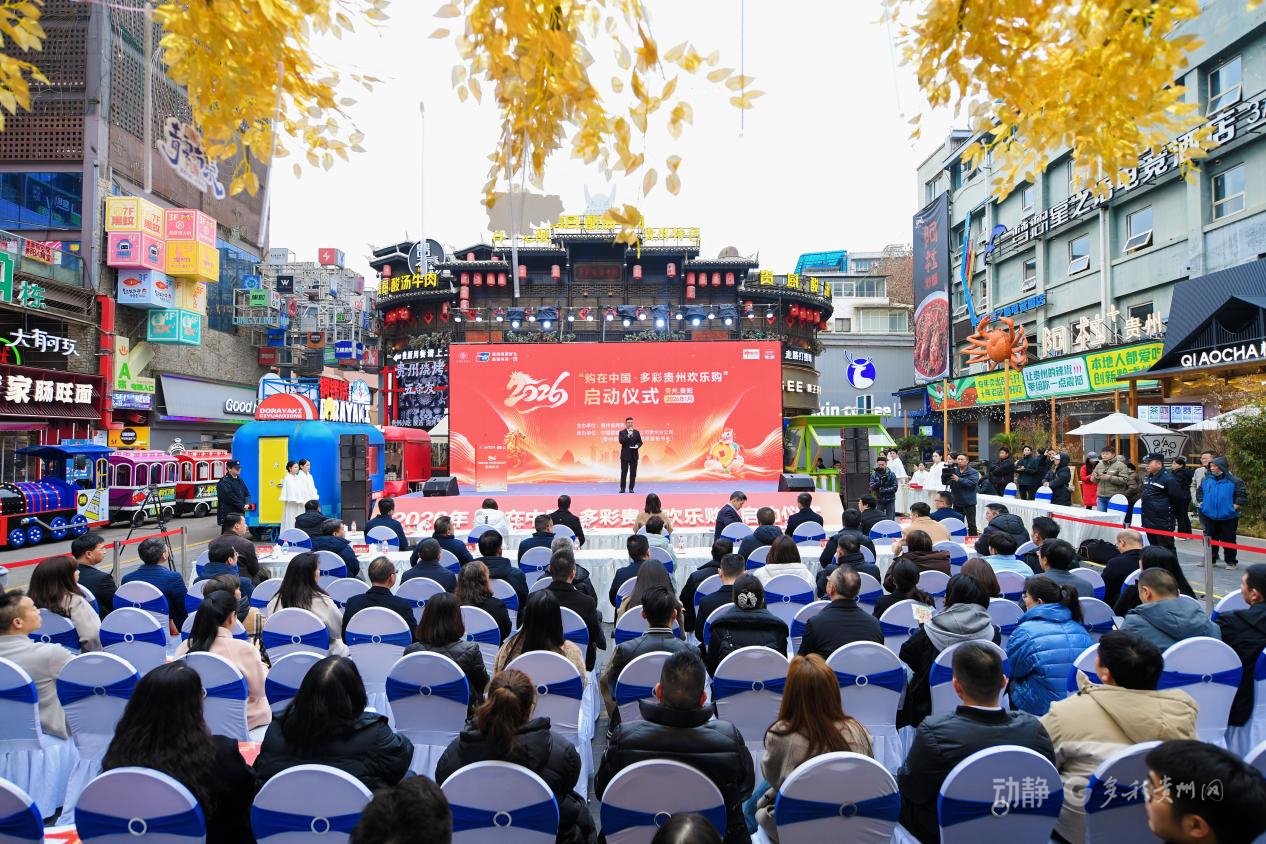
2026年“购在中国·多彩贵州欢乐购”启动,购新车最高补贴6000元 餐饮满2500减500
Xin Lang Cai Jing· 2026-01-09 13:35
Group 1 - The "Buy in China · Colorful Guizhou Happy Shopping" event was launched in Guiyang on January 9, 2026, focusing on four major seasonal shopping themes: New Year and Spring Festival, New Year’s Shopping Season, Summer Vacation Shopping, and Autumn Shopping Season [1] - The event aims to stimulate consumption in key sectors such as automobiles, supermarkets, dining, time-honored brands, online shopping, liquor, and cultural tourism, with eight major promotional policies introduced [1] Group 2 - The first quarter's "New Year and Spring Festival Shopping Season" will feature significant initiatives tailored to holiday consumption and family reunion needs, including cash subsidies for car purchases up to 6,000 yuan and dining vouchers offering discounts [2] - Special promotions include a dining coupon for "spending 2,500 yuan to get 500 yuan off" for New Year's Eve dinners and a 500 yuan consumption voucher for out-of-town tourists with ticket stubs from scenic spots or events, providing an 80% discount [2] Group 3 - The launch event included experience sharing from various companies such as China UnionPay Guizhou Branch, Agricultural Bank of China Guizhou Branch, and Xiaomi Group Guizhou Branch, highlighting the role of "One Code Guizhou" in enhancing digital connections between production and consumption [5] - Xiaomi Group plans to increase its automotive experience stores in Guizhou to five and engage over 450 local stores in promotional activities, while Heli Supermarket will introduce themed events to boost holiday shopping [5] Group 4 - A financial support signing ceremony for consumption promotion was held, involving China UnionPay Guizhou Branch, Agricultural Bank of China Guizhou Branch, Guiyang Bank, and CITIC Bank Guiyang Branch [7]