
光伏

Search documents
上海艾录:已积极关注并聚焦光伏边框产品在航空航天(低轨道)新赛道的应用拓展
Zheng Quan Ri Bao Wang· 2026-02-10 05:48
Core Viewpoint - Shanghai Ailu (301062) is focusing on the development of ultra-low carbon, corrosion-resistant, and PID-resistant polyurethane composite material frames for photovoltaic applications, which are cost-effective compared to traditional aluminum frames [1] Group 1: Product Development - The subsidiary Aina New Energy has achieved mass production capability for its photovoltaic frames [1] - The frames are suitable for offshore photovoltaic and high-corrosion commercial photovoltaic scenarios [1] Group 2: Aerospace Applications - The company is actively exploring the application of photovoltaic frame products in the aerospace sector, particularly for low Earth orbit [1] - The focus will be on overcoming technical challenges related to high temperature, low temperature, vacuum ultraviolet, space radiation, atomic oxygen resistance, and vacuum environment adaptability [1] Group 3: Strategic Goals - The company aims to solidify its traditional photovoltaic frame business while steadily advancing the transformation and industrialization of technological achievements [1] - The goal is to cultivate new performance growth points and support the upgrade of the aerospace new energy industry [1]
深市规模最大的光伏ETF(159857)盘中申购超7000万份,换手率深市同标的第一
Mei Ri Jing Ji Xin Wen· 2026-02-10 05:31
Group 1 - The photovoltaic sector is experiencing a decline, with the photovoltaic ETF (159857) index dropping by 1.67% during trading, and key stocks such as Aotewi, Robotech, and Maiwei falling over 5% [1] - The photovoltaic ETF (159857) has seen a net inflow of 144 million yuan over the last ten trading days, reaching a new high of 2.41 billion yuan as of February 9, 2026, making it the largest in the Shenzhen market [1] - The ETF tracks the photovoltaic industry index, covering the entire industry chain from silicon materials to solar power station operations, reflecting the core competitiveness of China's photovoltaic industry [1] Group 2 - Elon Musk announced that SpaceX and Tesla will each establish 100 GW of annual photovoltaic capacity, with some dedicated to space data centers and Starlink satellites [2] - The cancellation of export tax rebates for photovoltaic products in April is expected to trigger a rush in exports, with component production in February projected to increase by nearly 30% month-on-month [2] - Leading companies like Trina Solar have raised component prices to 0.88-0.92 yuan/W, indicating price stabilization in the industry [2]
英大证券电力能源行业周报-20260210
British Securities· 2026-02-10 05:01
Investment Rating - The industry investment rating is "Outperform the Market" [1] Core Insights - The report highlights that in 2026, the installed capacity of solar power generation in China is expected to surpass that of coal power for the first time, with the combined installed capacity of wind and solar power reaching half of the total installed capacity by the end of the year [10] - The report indicates that the energy sector is transitioning from a coal-dominated system to one led by renewable energy, reshaping the power source structure and market rules [11] - The report notes significant growth in the energy storage sector, with a cumulative installed capacity of 213 GW by the end of 2025, marking a 54% year-on-year increase [42] Summary by Sections Industry Events - The China Electricity Council predicts that in 2026, the installed capacity of solar power will exceed that of coal power, with wind and solar combined accounting for 80.2% of new installed capacity in 2025 [10] - Major energy projects are being advanced, including the successful installation of a nuclear power unit and the completion of significant transmission lines [11] Market Performance - During the period from February 2 to February 8, 2026, the Shanghai Composite Index fell by 1.33%, while the power equipment index rose by 2.20%, outperforming the Shanghai Composite by 3.53 percentage points [13] - Among the sub-sectors related to power energy, photovoltaic battery components, photovoltaic processing equipment, and cable components saw the highest increases, with respective rises of 8.10%, 6.01%, and 4.20% [19] Power Industry Operations - In December 2025, the total electricity consumption in society was 908 billion kWh, a year-on-year increase of 2.77%, with a total of 1,036.82 billion kWh consumed throughout the year, marking a 5.00% increase [21] - The newly added power generation capacity in 2025 was 54,617.1558 MW, a year-on-year increase of 26.07% [23] New Power System Situation Photovoltaics - As of February 4, 2026, the average price of polysilicon was 54 CNY/kg, remaining stable compared to the previous week [39] Energy Storage - By the end of December 2025, the cumulative installed capacity of energy storage projects in China reached 213 GW, with new energy storage capacity growing by 85% year-on-year [42] Lithium Batteries - As of February 6, 2026, the price of lithium carbonate was 134,000 CNY/ton, down by 1,400 CNY/ton from the previous week [46] Charging Stations - By the end of December 2025, the total number of charging infrastructure units in China reached 20.092 million, a year-on-year increase of 56.75% [51]
工信部定调: 光伏还在深度调整期
2 1 Shi Ji Jing Ji Bao Dao· 2026-02-10 04:56
Group 1: Carbon Neutrality Policy - The Ministry of Industry and Information Technology (MIIT) indicates that the photovoltaic (PV) industry is currently in a deep adjustment period, with 2026 being a critical year for governance and addressing internal competition within the industry [1][2] - The MIIT plans to implement measures such as capacity regulation, standard guidance, quality supervision, and market expansion to achieve a dynamic balance between supply and demand in the PV sector [2] - The industry is transitioning from scale expansion to value competition, which is essential for maturity, requiring policy guidance and technological breakthroughs from enterprises [2] Group 2: Solar Power Capacity Forecast - The China Electricity Council predicts that by 2026, the installed capacity of solar power will exceed that of coal power for the first time, with total installed capacity of wind and solar power reaching half of the total power generation capacity [2][3] - It is expected that over 400 million kilowatts of new power generation capacity will be added in 2026, with more than 300 million kilowatts coming from renewable sources [3] - By the end of 2026, the total installed capacity is projected to reach approximately 4.3 billion kilowatts, with non-fossil energy sources accounting for 63% of the total [3] Group 3: Waste Photovoltaic Equipment Recycling - The Ministry of Ecology and Environment has released the "Technical Specifications for Pollution Control in the Recycling and Treatment of Waste Photovoltaic Equipment," establishing guidelines for the entire recycling process [4][5] - The specifications emphasize the principles of reduction, resource utilization, and harmlessness, requiring recycling companies to have environmentally compliant storage facilities [4] - The new regulations aim to promote green management throughout the lifecycle of the photovoltaic industry, preventing secondary pollution and achieving resource recycling [5] Group 4: Local Dynamics - Qinghai Province aims to reduce carbon emissions by 28.1 million tons by 2025, expanding green electricity exports to 22 provinces and cities, with a 32% increase in output [6] - The province is implementing a "carbon peak action plan" and establishing ecological compensation mechanisms to enhance its ecological value and economic output [6] Group 5: Corporate Practices - Ningxia Tianrui Thermal Energy Co., Ltd. was fined 423.99 million yuan for failing to complete carbon emission quota compliance on time, signaling stricter enforcement in the national carbon market [7] - The company has faced multiple penalties for non-compliance, highlighting the importance of proactive carbon asset management for enterprises [7] - A breakthrough in compressed air energy storage technology has been achieved, with the development of the world's first and largest single-unit power compressed air storage compressor, which has passed third-party testing [8][9] - This new compressor significantly improves efficiency and reduces costs, supporting the integration of renewable energy sources [9]
马斯克引爆光伏,产业链市值"回血"!太空光伏前景几何
Bei Jing Shang Bao· 2026-02-10 04:56
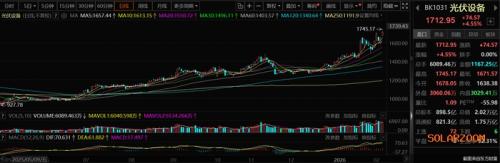
Core Viewpoint - The capital market is experiencing a surge in interest in the photovoltaic sector, particularly driven by Elon Musk's support for space photovoltaic technology, which has led to significant stock price increases in related companies [1][5][15]. Group 1: Market Dynamics - The photovoltaic sector saw a market capitalization recovery of over 200 billion yuan from January 23 to February 9, with leading companies like GCL-Poly and TCL Zhonghuan hitting their daily price limits [4][9]. - Following Musk's endorsement of space photovoltaic technology at the World Economic Forum on January 22, the A-share photovoltaic sector collectively surged [5][7]. - The market is witnessing a rotation of interest from traditional AI and chip sectors to the photovoltaic sector, particularly space photovoltaic concepts [1][2]. Group 2: Industry Challenges - The photovoltaic industry is currently facing an oversupply situation, with the China Photovoltaic Industry Association predicting a decline in new installed capacity in 2026 by 23.81% to 42.86% year-on-year [1][14]. - Many leading photovoltaic companies have reported significant expected losses for 2025, with 73.47% of the 49 companies that disclosed earnings forecasts predicting net losses [13]. - The industry is undergoing a deep adjustment phase, with many companies expressing concerns about the sustainability of stock price increases without corresponding performance improvements [12][13]. Group 3: Space Photovoltaic Technology - Space photovoltaic technology involves deploying large solar power stations in space to convert solar energy into electricity, which can then be transmitted back to Earth or used to power satellites and space stations [6][15]. - While space photovoltaic technology presents significant advantages over ground-based systems, such as uninterrupted sunlight and higher light intensity, it is still in the early stages of technological exploration and faces various challenges [2][15]. - The potential for space photovoltaic technology to become a new growth driver for the photovoltaic industry is acknowledged, but its realization will depend on overcoming technical, cost, and industry chain challenges [17].


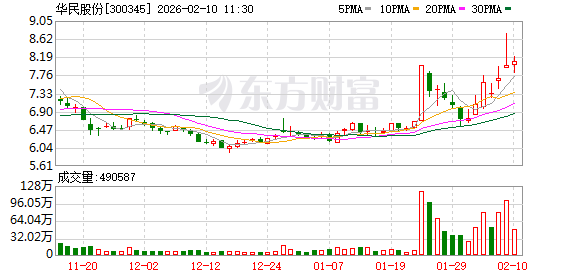
华民股份:公司已成功研发出更薄的G12(40μm)半片并量产100μm异质结电池专用硅片
Mei Ri Jing Ji Xin Wen· 2026-02-10 04:45
Core Viewpoint - The company, Huamin Co., Ltd. (300345.SZ), is a pioneer in producing HJT (Heterojunction Technology) dedicated monocrystalline silicon wafers, utilizing advanced chain doping equipment and processes to enhance product quality and reduce costs [1]. Group 1 - The company has successfully developed and mass-produced thinner G12 (40μm) half-wafers and 100μm HJT battery-specific silicon wafers, receiving unanimous recognition from downstream customers [1]. - The production line is equipped with industry-leading chain doping equipment, which purifies internal impurities in silicon wafers, enhances minority carrier lifetime, and lowers silicon material usage costs [1]. - The company aims to leverage its expertise in the HJT wafer sector to actively explore emerging business development opportunities in the future [1].

【价值发现】建信基金经理陶灿业绩优异,精准的投资策略与行业配置,旗下基金收益率高达473.70%
Sou Hu Cai Jing· 2026-02-10 03:27
Core Viewpoint - The continuous rise of the Shanghai and Shenzhen stock indices since 2025 is attributed to multiple factors including policy support, industrial transformation, improved liquidity, and restored market confidence, with high-growth sectors like artificial intelligence, semiconductors, and new energy showing strong performance [2] Group 1: Fund Performance - The fund managed by Tao Can has achieved a remarkable return of 473.70% since its inception, with a year-to-date return of 5.07% and a one-year return of 51.37% [5][6] - The fund's strategy focuses on capturing "reform dividends" by investing in sectors benefiting from national reforms, such as state-owned enterprise reform and resource pricing reform [6][14] - The fund's performance is supported by a stable management team and a dual-dimensional approach that enhances risk resistance [4][14] Group 2: Investment Strategy - The investment strategy employs a "3+3" framework, selecting industries from a top-down perspective while also picking stocks from a bottom-up approach, focusing on business models and competitive landscapes [2] - The fund emphasizes long-term value and adjusts positions flexibly to respond to market changes, which has proven effective during market fluctuations [4][14] - The fund's core investment logic revolves around identifying structural opportunities arising from national policies, avoiding short-term fads [6][14] Group 3: Sector Focus - The fund has prioritized investments in leading companies that achieve scale through mergers and restructuring, which tend to have stronger growth potential [4] - In the new energy sector, the fund focuses on high-growth areas such as upstream materials for electric vehicles and midstream manufacturing, benefiting from technological advancements and demand expansion [18][20] - The fund's holdings include significant investments in companies like Ningde Times, which has seen a stock price increase of 343% during the fund's holding period [20]

太空光伏催化不断,CSP大厂资本开支超预期
2026-02-10 03:24
Summary of Conference Call Industry Overview - The conference call primarily focused on the telecommunications and renewable energy sectors, particularly in the areas of space photovoltaics and energy storage [1][2][4][10]. Key Points and Arguments Telecommunications and Renewable Energy - The overall performance of the telecommunications sector has shown significant differences in recent weeks, particularly in space photovoltaics [1]. - The energy storage sector is currently at a relatively cost-effective position, presenting a good opportunity for investment after recent adjustments [2]. - Catalysts for growth in the space sector include news related to SpaceX and Elon Musk's Twitter activity, which have positively influenced market sentiment [2][4]. - The price fluctuations of lithium carbonate have raised concerns about future demand, but there is optimism regarding the energy storage and lithium battery markets [3]. Space Photovoltaics - Recent developments in space photovoltaics have been notable, with significant actions from SpaceX, including the approval of 1 million satellites and mergers involving SPAC and XAI [4]. - Companies like Foxconn and Junda are actively engaging in partnerships and acquisitions to strengthen their positions in the space photovoltaics market [4][10]. - The traditional photovoltaic market has not seen significant changes in demand, but it still supports the space photovoltaics sector [5][6]. Energy Storage - The energy storage market remains robust, with substantial monthly data indicating strong bidding activity despite some fluctuations in January [12]. - The pricing of energy storage systems is gradually stabilizing, which is expected to positively impact downstream demand [12][13]. - Companies like Yangguang and CATL are highlighted as key players in the energy storage sector, with favorable valuations and growth prospects [14][15]. Market Trends and Recommendations - The focus on space photovoltaics and energy storage is expected to continue, with recommendations for companies like Junda, Mingyang, and Jinko as key investment targets [11]. - The energy storage sector is viewed as a value discovery opportunity, with attractive price-to-earnings ratios [12]. - The overall sentiment in the energy storage market is optimistic, with expectations for demand recovery and improved profitability [19][20]. Future Outlook - The conference emphasized the importance of monitoring catalysts in the space and energy sectors, particularly in relation to production schedules and order confirmations from major companies [8][9]. - The anticipated growth in the AI and electric power sectors, particularly in North America, is expected to drive demand for related electrical equipment [33][34]. Additional Important Content - The call also touched on the broader implications of macroeconomic trends on the telecommunications and renewable energy sectors, highlighting the need for strategic positioning in light of evolving market dynamics [18][22]. - The discussion included insights into the competitive landscape of the battery and materials sectors, with a focus on companies that are well-positioned to benefit from upcoming technological advancements [24][25]. This summary encapsulates the key insights and recommendations from the conference call, providing a comprehensive overview of the current state and future outlook of the telecommunications and renewable energy sectors.
太空算力时代-太空光伏万亿蓝海
2026-02-10 03:24
Summary of Key Points from the Conference Call on Space Photovoltaics Industry Overview - The focus is on the space photovoltaic (PV) industry, which is expected to grow significantly due to increasing demand for space-based computing power and advancements in solar technology [1][10][23]. Core Technologies and Companies - **Gallium Arsenide (GaAs) Solar Cells**: - Highest efficiency (31.5%-34.5%) but very high cost (RMB 200,000-300,000 per square meter) [1][2][12]. - Leading companies: GanZhao Photovoltaics and Sanan Optoelectronics [2][5]. - **P-Type Heterojunction (HJT) Solar Cells**: - Efficiency of 26%-27% (up to 30% when stacked) with lower costs (a few thousand RMB per square meter) [1][2][4]. - Notable progress by Dongfang Risheng in ultra-thin HJT technology [2][5]. - **Perovskite Solar Cells**: - Single-layer efficiency around 20%, can exceed 35% when stacked; lower raw material costs but complex manufacturing [1][2][4]. - Companies like GCL-Poly and Shanghai Gangwan are making significant advancements [2][5]. Cost and Efficiency Challenges - GaAs cells face limited cost reduction potential due to material scarcity and complex manufacturing processes [3][11]. - HJT is seen as a promising short-term technology due to its lower manufacturing costs and reliability [4]. - Perovskite technology has great potential if stability issues can be resolved [4]. Special Requirements for Space Applications - Space PV materials must withstand extreme temperature variations (from -180°C to +120°C) and UV radiation [16]. - Low-temperature silver paste and light conversion technologies are critical for performance in space [16]. Packaging and Materials - Space PV packaging uses CPI or UTG films instead of traditional glass, with UTG offering better performance but at a higher cost (RMB 6,000-8,000 per square meter) [20][21]. - The cost structure of packaging materials is influenced by raw materials (40%-50%), core processes (25%-35%), and yield losses (10%-15%) [22]. Market Dynamics and Future Outlook - The space PV market is expected to expand significantly in the next 3-5 years, driven by satellite launches and technological advancements [23]. - The demand for PV components will increase as more satellites are deployed, potentially leading to explosive market growth [23]. Risks and Challenges - Key risks include the ability of companies to survive until the market matures and the adaptability of technologies to space environments [29]. - Companies must address challenges related to UV resistance and thermal shock to succeed in the space PV market [29]. Conclusion - The space photovoltaic industry is poised for growth, with various technologies and companies leading the charge. However, significant challenges remain in terms of cost, efficiency, and material stability in the harsh space environment.

太空算力加速发展-光伏-航天成热点
2026-02-10 03:24
Summary of Key Points from Conference Call Records Industry Overview - **Precious Metals Market**: The precious metals market has experienced significant volatility, with silver rebounding over 20%, alleviating market risk aversion and driving global stock markets higher. Investors should be cautious of declining trading volumes that may lead to a bear market similar to 2011-2012 [1][2][4] - **Solar and Commercial Aerospace**: The solar and commercial aerospace sectors have shown strong performance, driven by SPAC merger news, with valuation expectations reaching $1.25 trillion and potentially increasing to $2 trillion. The integration of space solar power with AI hardware and other industry chain segments is a key trend for future development [1][6][11] Core Insights and Arguments - **Market Trends**: The current bull market has lasted nearly two years, and investors should focus on low-position sectors with improving fundamentals, such as space solar technology and the role of Chinese solar giants in establishing space solar production bases [1][10][12] - **Spring Festival Effect**: The Spring Festival effect typically begins to manifest about a week before the holiday, with a strong market performance expected in the two to three weeks following the holiday. The Shanghai Composite Index has shown signs of stabilization after a decline from 4,170 points to around 3,190.90 points [1][5] - **Volume and Market Sentiment**: High trading volumes with high turnover rates may indicate a strengthening market, while declining volumes could signal a repeat of past bear market conditions. Historical data suggests that significant volume increases at market peaks are often followed by corrections [4][9] Important but Overlooked Content - **Financing Margin Adjustment**: In mid-January 2026, the financing margin ratio was raised to 100%, leading to a rapid market increase with trading volumes approaching 4 trillion yuan. However, such rapid volume increases are often precursors to market fluctuations and differentiation [1][8] - **Performance of A-Share Companies**: Nearly 3,000 A-share companies reported a nearly 60% year-on-year increase in net profit, indicating strong fundamentals. This trend is crucial for the stability of A-share performance in 2026 [12] - **Investment Opportunities in Commercial Aerospace**: Key events in the commercial aerospace sector include the first flight of the reusable rocket by Dongfang Space and SpaceX's potential market entry. The "15th Five-Year Plan" emphasizes building a strong commercial aerospace nation, presenting significant investment opportunities [19][20] Future Outlook - **Solar Industry Developments**: The solar sector is expected to benefit from advancements in space solar technology, with the potential for new growth curves as technology costs decrease. Chinese solar giants are positioned to play a significant role in this development [11][23][24] - **Storage Industry Trends**: Recent policy changes aimed at improving the pricing mechanism for generation capacity are expected to drive the development of the storage industry, impacting lithium batteries and renewable energy sectors [25]