文旅

Search documents
“痛客”的声音是改进的方向
Xin Lang Cai Jing· 2026-01-11 22:25
Core Viewpoint - The initiative "Satisfaction Tourism Pain Points" in Guizhou aims to transform tourist complaints into opportunities for service improvement, reflecting a genuine commitment to enhancing the tourism experience [1][2][3] Group 1: Initiative Overview - The "Satisfaction Tourism Pain Points" award ceremony emphasizes the importance of listening to tourists' feedback to improve service quality [1] - Guizhou encourages public participation in identifying and addressing tourism pain points, aiming to integrate natural beauty with quality service [1][2] Group 2: Governance and Participation - Effective governance in tourism involves engaging various stakeholders through communication and collaboration, which can lead to better public sector management and community involvement [2] - The initiative helps uncover hidden issues in the tourism market, promoting self-improvement and resilience within the industry [2] Group 3: Industry Dynamics - The tourism industry is characterized by competition for positive reviews and reputation, making it crucial to address negative feedback constructively [3] - Guizhou's approach of welcoming criticism and encouraging tourists to voice their concerns demonstrates a commitment to quality enhancement and brand reputation [3]
秦淮区:“一城一带一中心”引领动能转换
Xin Hua Ri Bao· 2026-01-11 20:42
Group 1 - The core development strategy for Qinhuai District is established as "One City, One Belt, One Center," integrating technological innovation with historical culture to create new advantages in urban competition [1] - "One City" refers to the International Science and Technology Innovation City focusing on new productive forces, "One Belt" represents the Qinhuai River Industry Integration Development Belt emphasizing cultural economy, and "One Center" is the vibrant center area supported by commerce and trade [1] - The strategy aims to address spatial constraints in urban centers, promote functional restructuring, and enhance overall capabilities [1] Group 2 - In the past year, the cultivation of new productive forces in Qinhuai District has shown initial success, with projected industry scales for the Internet of Things and low-altitude economy reaching 30 billion and 16.5 billion respectively by 2025, alongside a network security industry revenue exceeding 3.95 billion [2] - The cultural economy has also thrived, with over 90 million tourists received and total cultural tourism consumption exceeding 92 billion, both ranking first in the city [2] - The report sets a target for the regional GDP to exceed 200 billion by 2030, with a focus on enhancing the technological innovation system and accelerating the gathering of strategic emerging industries by 2026 [2]
抓实重点工作推动兵团经济提质增效
Xin Lang Cai Jing· 2026-01-11 18:13
Core Viewpoint - The article emphasizes the importance of focusing on key tasks to drive economic development in the Xinjiang Production and Construction Corps, aligning with the central government's strategic positioning and promoting high-quality economic growth. Group 1: Economic Development Strategies - The Corps aims to focus on eight key tasks to enhance economic work and provide clear action guidelines [1] - Emphasis on maintaining social stability and implementing a comprehensive risk management system to prevent major accidents and ensure economic safety [1] - The strategy includes optimizing the consumption environment and enhancing urban-rural commercial networks to stimulate consumer activity [2] Group 2: Investment and Infrastructure - The Corps promotes a "project-first" approach to direct investments towards infrastructure, public welfare, and industrial upgrades [2] - There is a focus on utilizing central budget investments and special bonds to support key projects [2] Group 3: Innovation and Industry - The article highlights the need for innovation-driven development to build a modern industrial system, with a focus on digital and intelligent transformation of traditional industries [4] - Support for collaboration between enterprises and research institutions to overcome technological bottlenecks and enhance competitiveness [4] Group 4: Reform and Governance - Continuous reform efforts are necessary to address development challenges and enhance market vitality, including streamlining administrative processes [5] - The article stresses the importance of supporting private enterprises and improving communication between government and businesses [5] Group 5: Open Economy - The Corps aims to expand high-level openness by leveraging various trade platforms and enhancing infrastructure connectivity with surrounding regions [6] - Focus on optimizing export structures and increasing the scale of key product exports [6] Group 6: Social and Environmental Responsibility - The article emphasizes the importance of green development, promoting clean energy and sustainable agricultural practices [8] - There is a commitment to improving public services and ensuring that development benefits the population, particularly in employment and healthcare [9]

北交所消费服务产业跟踪第四十七期(20260111):\票根经济\有效促进文旅产业发展,关注北交所文旅消费相关标的
Hua Yuan Zheng Quan· 2026-01-11 11:01
Policy Insights - The Ministry of Culture and Tourism of the People's Republic of China issued a joint opinion on January 6, 2026, to promote high-quality development in cultural and sports activities, aiming to release consumption potential and meet the growing cultural needs of workers[6] - The "ticket root economy" is defined as economic activities formed through the collection, trading, and secondary development of tickets from various events, which can stimulate secondary consumption and extend the consumption chain[3] Market Performance - From January 5 to January 9, 2026, 90% of companies in the North Exchange's consumer service sector saw stock price increases, with a median market value change of +2.99%[28] - The total market value of consumer service companies rose from 109.71 billion yuan to 112.86 billion yuan, with a median market value increase from 1.87 billion yuan to 1.93 billion yuan[34] Industry Trends - The median price-to-earnings (P/E) ratio for the broad consumer sector increased by 2.56% to 50.5X, indicating a positive valuation trend[40] - The sports industry in China is projected to exceed 5 trillion yuan by 2025 and reach 7 trillion yuan by 2030, reflecting rapid growth from a niche to a pillar industry[18] Company Highlights - Notable stock performers include Greer (+29.99%), Guangzi International (+12.22%), and Zhu Laoliu (+10.67%) during the reporting period[36] - The median P/E ratio for Greer increased significantly, indicating strong market confidence in its future performance[39] Risk Factors - Potential risks include changes in the macroeconomic environment, market competition, and statistical data inaccuracies, which could impact the overall performance of the consumer service sector[3]
人民日报刊发第五篇钟才平署名文章|宏观经济
清华金融评论· 2026-01-11 08:38
Group 1 - The core viewpoint emphasizes the importance of improving people's livelihoods as a driving force for economic development, highlighting the need to expand domestic demand and create a strong domestic market as a foundation for economic growth [3][4][5]. - The article discusses the significant potential for high-quality development in the real estate sector, noting that while urban housing stock is substantial, many residents still have unmet housing needs, particularly in terms of quality and location [4][5]. - It highlights the changing consumer preferences towards service consumption, with a notable increase in per capita service consumption expenditure from 5,000 yuan to 13,000 yuan between 2013 and 2024, indicating a shift towards experiential and emotional consumption [5][6]. Group 2 - The article outlines the necessity of creating a virtuous cycle of employment, income, consumption, and investment, emphasizing the importance of stabilizing employment and increasing income to boost consumption [7]. - It stresses the need for coordinated efforts to promote both consumption and investment, suggesting that they are interdependent and should work together to enhance the domestic market's growth and stability [8][9]. - The article calls for increased investment in sectors that align with new consumer demands, such as healthcare and cultural tourism, to better meet the needs of the population [10][11]. Group 3 - The article discusses the implementation of more proactive macroeconomic policies, including fiscal and monetary measures, to support economic stability and growth, with a focus on enhancing the effectiveness of these policies [25][26]. - It emphasizes the importance of precise and effective fiscal policies, advocating for increased government spending on key projects and social welfare to stimulate economic activity [26][27]. - The article also highlights the need for flexible monetary policies that adapt to changing economic conditions, ensuring liquidity and supporting the real economy [28][29].

惠民生促发展,第五篇“钟才平”关注“有温度”的新供给
Xin Lang Cai Jing· 2026-01-11 01:44
Core Viewpoint - The article emphasizes the importance of prioritizing people's livelihoods to drive economic development, advocating for a model that combines consumer demand with investment in both goods and people [8][9]. Group 1: Economic Development and Livelihood Improvement - The article highlights that ensuring and improving people's livelihoods is a crucial driver for economic growth, with a strong domestic market being essential for a new development pattern [8]. - It notes that as the economy develops, the public's demand for better living conditions is evolving, covering various aspects from basic needs to services like education and healthcare [8][9]. - The article points out that there is significant potential for high-quality development in the real estate sector, as many urban residents' housing needs remain unmet despite a large total housing stock [9][10]. Group 2: Real Estate and Urban Development - The article suggests that there is a need for a new model of real estate development, focusing on high-quality urban renewal and increasing the supply of better-quality housing to meet public expectations [10]. - It mentions that the urbanization rate for permanent residents is projected to reach 67% by 2024, indicating ongoing demand for housing from new urban residents [9]. - The article also discusses the potential for urban renewal, particularly in densely populated communities where infrastructure and amenities are lacking [9][10]. Group 3: Consumer Demand and Service Sector Growth - The article identifies a shift in consumer preferences towards service-oriented consumption, with spending on services expected to rise significantly, from 5,000 yuan to 13,000 yuan per capita between 2013 and 2024 [10]. - It emphasizes the importance of creating new supply that meets the diverse needs of consumers, including emotional and experiential aspects of consumption [11]. - The article highlights examples of innovative products and services that cater to changing consumer demands, such as personalized products and enhanced experiences in tourism and entertainment [11]. Group 4: Employment and Income Generation - The article stresses the need to maintain stable employment as a foundation for improving livelihoods, advocating for policies that support job creation and skills training [12]. - It calls for measures to increase income for urban and rural residents, including improving wage mechanisms and promoting wealth accumulation [12]. - The article suggests that a well-functioning cycle of employment, income, consumption, and investment is essential for achieving sustainable economic growth [12][13].
经济日报:精准施策持续扩大消费
Xin Lang Cai Jing· 2026-01-11 01:43
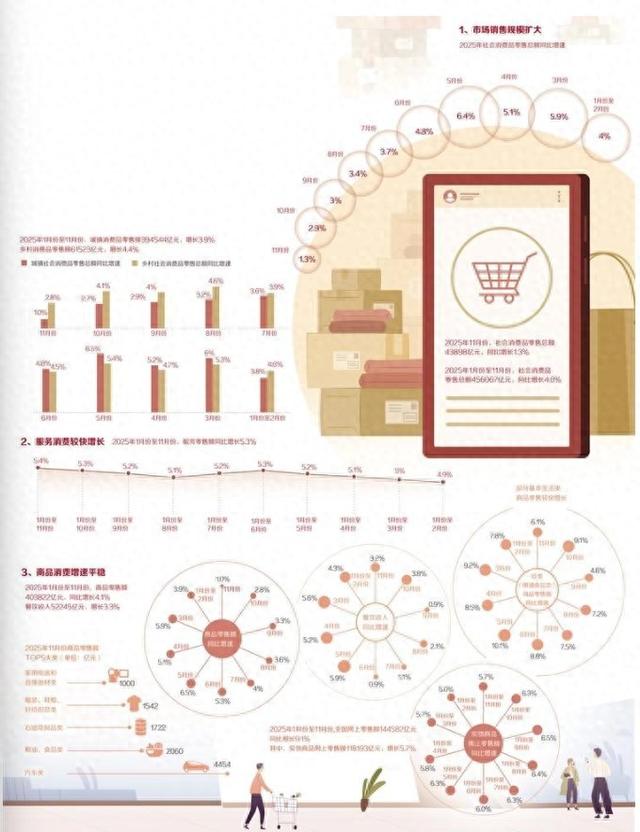
Group 1 - The core viewpoint of the article emphasizes the importance of consumption in economic development and improving people's livelihoods, highlighting a steady performance in China's consumption market with a retail sales total of 45.6 trillion yuan, a year-on-year growth of 4.0%, which is 0.5 percentage points faster than the same period last year [2] - The article discusses the implementation of various policies since the beginning of 2025, such as the "Special Action Plan to Boost Consumption," which aims to create a comprehensive support system for consumption through financial and fiscal collaboration, including government subsidies and financial support [3] - It notes a recent slowdown in consumption growth, particularly in retail sales, which have seen a decline for six consecutive months, indicating that insufficient domestic demand remains a prominent issue in the current economic landscape [3] Group 2 - The article highlights a shift in consumer behavior from primarily goods consumption to a balanced focus on both goods and service consumption, with strong demand in areas such as cultural tourism and elderly care services [4] - It emphasizes the potential for service consumption to drive economic growth, citing examples like immersive cultural experiences and community-based elderly care facilities that cater to evolving consumer needs [4] - The article concludes that expanding domestic demand is a top priority for 2026, with boosting consumption being crucial for this goal, and stresses the need to enhance residents' income and strengthen the service consumption sector to unlock the market's potential [4]
以旧换新加力扩围 加速释放居民消费潜力
Ren Min Wang· 2026-01-11 01:41
Core Insights - The article highlights the integration of modern commerce with traditional culture, showcasing various consumer experiences that stimulate economic growth and enhance consumer enthusiasm [1] Group 1: Consumer Trends - There is a notable shift in consumer preferences towards high-performance, green, intelligent, and healthy products, leading to a significant increase in sales of smart home appliances [2] - The implementation of trade-in programs for consumer goods is expanding, with more green and smart products entering households, indicating a growing market for sustainable consumption [2] Group 2: Innovative Consumption Experiences - Various regions are enhancing consumer experiences by integrating cultural and technological elements, such as immersive art performances and interactive VR experiences, which attract more visitors and enrich consumer engagement [3] - Events like the technology consumption carnival in Guangzhou, featuring humanoid robots and VR experiences, exemplify the innovative approaches being adopted to enhance consumer interaction and satisfaction [3] Group 3: Economic Policies and Challenges - The article discusses the need for effective short-term and long-term policies to stimulate consumption, reduce uncertainty, and encourage innovation in supply [1][3] - Challenges such as mismatches between supply and demand for high-quality goods and services, as well as the impact of excessive competition among platforms, are identified as barriers to fully unlocking consumer potential [3]
连续五日 人民日报刊发钟才平文章
Ren Min Ri Bao· 2026-01-11 01:01
Core Viewpoint - The articles emphasize the importance of prioritizing people's livelihoods to drive economic development, advocating for a strategy that combines consumer demand with investment to create new growth opportunities in the economy [1][3]. Group 1: Economic Development and Livelihood Improvement - The central economic work conference highlights the need to focus on improving people's livelihoods as a key driver for economic growth, advocating for a people-centered development approach [3][4]. - The demand for housing quality and living conditions remains significant, with a notable gap in meeting urban residents' housing needs, indicating substantial potential for the real estate sector [4][5]. - The shift in consumer preferences towards service-oriented and experiential consumption is evident, with per capita service consumption expenditure increasing from 5,000 yuan to 13,000 yuan from 2013 to 2024, representing a rise from 39.7% to 46.1% of total consumption [5][6]. Group 2: Investment and Consumption Dynamics - The articles stress the need for a new model of real estate development that focuses on high-quality urban renewal and the construction of affordable housing to meet the evolving expectations of residents [5][6]. - A virtuous cycle of "employment—income—consumption—investment" is essential for promoting livelihoods and economic growth, with a focus on stabilizing employment and increasing income through various policy measures [7][8]. - The integration of new demands into supply chains is crucial, with examples of innovative products and services being developed to meet diverse consumer needs, such as personalized shoes and tourism experiences [6][11]. Group 3: Policy Support and Economic Governance - The articles advocate for a coordinated approach to macroeconomic policies, emphasizing the need for effective fiscal and monetary policies to support economic stability and growth [13][16]. - The importance of enhancing the efficiency of fiscal spending and ensuring that public funds are used effectively to support social welfare and economic development is highlighted [15][18]. - The need for a flexible and effective monetary policy that adapts to changing economic conditions is emphasized, with a focus on maintaining liquidity and supporting the real economy [16][17].
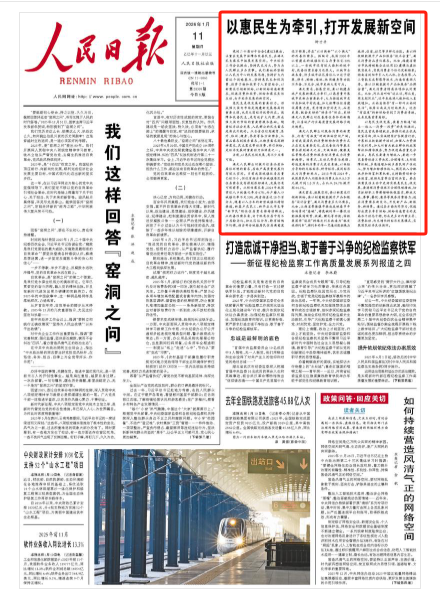
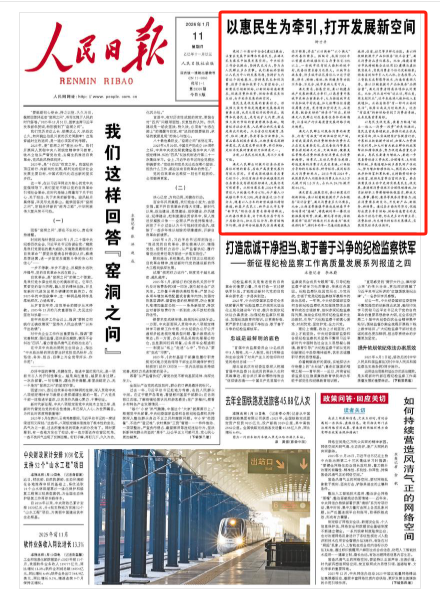
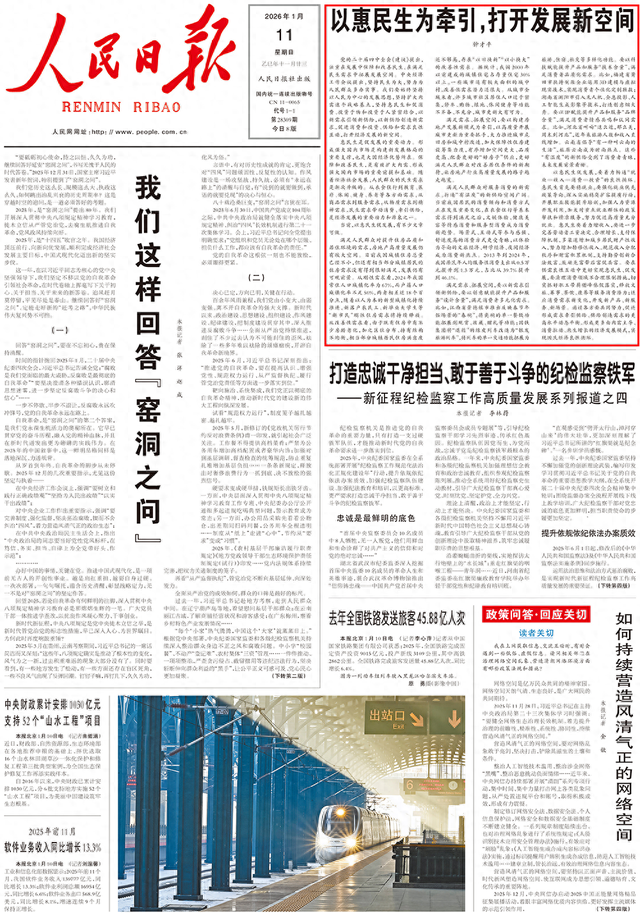
人民日报钟才平:以惠民生为牵引,打开发展新空间
Ren Min Ri Bao· 2026-01-11 00:50
Core Viewpoint - The article emphasizes the importance of prioritizing people's livelihoods to drive economic development, advocating for a strategy that combines consumer demand with investment in both material and human resources to create new growth opportunities [3][11]. Group 1: Economic Development and Livelihood Improvement - The 20th Central Committee's Fourth Plenary Session suggests focusing on improving people's livelihoods while expanding development space, highlighting the need for a people-centered development approach [3][11]. - The Central Economic Work Conference stresses the importance of prioritizing livelihoods and providing practical services to the public [3][11]. - Enhancing people's livelihoods is seen as a crucial driver for economic growth, with a strong domestic market being essential for a new development pattern [3][11]. Group 2: Housing Market and Urbanization - There is significant potential for high-quality development in the real estate sector, as many urban residents' housing needs remain unmet despite a substantial total housing stock [4][12]. - By 2024, the urbanization rate for the resident population is projected to be 67%, while the registered population's urbanization rate is below 50%, indicating a gap of nearly 18 percentage points [4][12]. - The demand for improved housing quality is driven by aging properties and uneven distribution, with over 30% of urban residential buildings constructed before 2000 [4][12][13]. Group 3: Service Consumption Trends - There is a notable shift in consumer preferences towards experiential and service-oriented consumption, with spending on service consumption per capita increasing from 5,000 yuan to 13,000 yuan from 2013 to 2024, rising from 39.7% to 46.1% of total consumption [5][13]. - New consumption trends include a focus on emotional and experiential services, such as cultural tourism and wellness, which are becoming increasingly popular [5][13]. Group 4: Employment and Income Generation - To promote livelihoods, it is essential to stabilize employment through policies that support job retention and expansion, as well as vocational training initiatives [7][15]. - Increasing income through improved wage mechanisms and diversified income sources is crucial for enhancing residents' financial stability [7][15]. - A balanced interaction between supply and demand is necessary to achieve livelihood improvements and economic growth, with a focus on removing unreasonable restrictions in the consumption sector [7][15].