智能汽车

Search documents
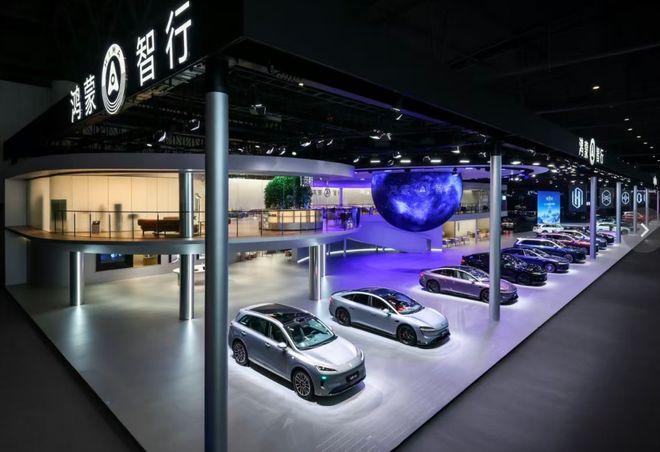
“五界十车”亮相成都车展,鸿蒙智行打响“体系战”
2 1 Shi Ji Jing Ji Bao Dao· 2025-08-31 15:54
Core Insights - The Chengdu Auto Show in 2025 saw the absence of ultra-luxury brands, with the spotlight on Hongmeng Zhixing showcasing its full lineup for the first time [1][3] - Hongmeng Zhixing's booth was the most crowded, covering 3000 square meters and featuring ten vehicles across five series, demonstrating a comprehensive market coverage from mainstream to ultra-luxury [3][4] - The company is actively implementing an "altruistic win-win" ecosystem strategy, leveraging its extensive ICT experience to enhance partners' operational quality and efficiency [3][6] Product Launch and Market Response - The pre-sale of the new models, including the Zhijie S7 and R7, exceeded 10,000 orders within 24 hours, while the H5 model surpassed 50,000 orders in just 18 hours [4][6] - The luxury model, the Zunjie S800, achieved over 12,000 orders within three months, setting new sales records for million-level luxury cars in China [4][6] - Upcoming models like the S9T and the new Wanjie M7 are expected to further solidify Hongmeng Zhixing's market position [6] Strategic Positioning - Hongmeng Zhixing adopts a "difficult first, easy later" strategy, establishing a technical reputation with high-end products before expanding into broader markets [6][7] - The company invested 96.95 billion yuan in R&D in the first half of 2025, accounting for 22.7% of its revenue, indicating a strong commitment to technological advancement [6] - As of August 2025, the cumulative mileage of assisted driving reached 1.67 billion kilometers, preventing over 2.15 million potential collisions [6] Competitive Landscape - The automotive industry is shifting focus from mechanical specifications to intelligent capabilities, with Hongmeng Zhixing redefining the value system of smart vehicles [12][13] - The company emphasizes a unified architecture that integrates smart cockpit, assisted driving, and electric drive systems, enhancing user experience and operational efficiency [14][15] - Hongmeng Zhixing's approach contrasts with traditional automakers, which often rely on fragmented supplier models, leading to challenges in system integration and user experience [13][14] Ecosystem and Future Outlook - The competitive edge of Hongmeng Zhixing lies in its comprehensive ecosystem, which combines technology, product offerings, and partner relationships to create systemic competitiveness [15] - The company aims to redefine competition rules for the next decade through its agile iteration and user experience enhancement strategies [15]

“五界十车”亮相成都车展,鸿蒙智行打响“体系战”
21世纪经济报道· 2025-08-31 15:47
Core Viewpoint - The Chengdu Auto Show in 2025 showcased the absence of ultra-luxury brands, with the highlight being the debut of Huawei's Hongmeng Zhixing featuring a full lineup of vehicles, demonstrating a comprehensive market coverage from mainstream to ultra-luxury segments [1][3]. Group 1: Product Launch and Market Response - Hongmeng Zhixing's exhibition area reached 3,000 square meters, making it one of the most crowded areas at the show, with ten vehicles from the "Five Realms" series on display [3]. - The pre-sale of the new models, including the Zhijie S7 and R7, saw over 10,000 orders within 24 hours, while the H5 model surpassed 50,000 orders in just 18 hours [5]. - The luxury model, the Zunjie S800, achieved over 12,000 pre-orders within three months of its launch, setting new sales records for million-level luxury cars in China [5]. Group 2: Strategic Positioning and R&D Investment - Hongmeng Zhixing's strategy differs from traditional automakers by adopting a "difficult first, easy later" approach, establishing a reputation with high-end products before expanding to broader markets [7]. - Huawei's R&D expenditure reached 96.95 billion yuan in the first half of 2025, accounting for 22.7% of its revenue, indicating a strong commitment to technological advancement [7]. - As of August 2025, Hongmeng Zhixing's assisted driving system has accumulated over 1.67 billion kilometers of driving, preventing more than 215,000 potential collisions [7]. Group 3: Market Differentiation and Ecosystem Development - The introduction of the "Five Realms" brand strategy allows Hongmeng Zhixing to cover diverse user travel needs through a systematic approach, leveraging Huawei's full-stack technology [9]. - The brand aims to penetrate the mass market by accurately identifying core user needs while maintaining cost efficiency, with strong confidence expressed by both Huawei and SAIC regarding the market potential [8][9]. - The differentiation lies in the ability to respond to various user demands through technology, with a focus on safety, space, and cost balance in the mainstream family market [9]. Group 4: Competitive Landscape and Future Outlook - The automotive industry's competitive focus has shifted from mechanical specifications to intelligent capabilities, with Hongmeng Zhixing redefining the value system of smart vehicles [12]. - The company has established a unified architecture that integrates smart cockpit, assisted driving, and electric drive systems, enhancing user experience and enabling rapid iterations [14]. - As the competition enters a new phase, the emphasis is on ecosystem efficiency, with Hongmeng Zhixing's comprehensive system capabilities positioning it to redefine competition rules for the next decade [15].

中科创达(300496):智能物联网爆发 海外表现强势
Xin Lang Cai Jing· 2025-08-31 12:49
Group 1: Financial Performance - In H1 2025, the company reported revenue of 3.299 billion yuan, a year-on-year increase of 37.4%, and a net profit attributable to shareholders of 158 million yuan, up 51.8% year-on-year [1] - In Q2 2025, revenue reached 1.831 billion yuan, reflecting a year-on-year growth of 49.7%, while net profit attributable to shareholders surged to 66 million yuan, a remarkable increase of 384.2% year-on-year [1] Group 2: Business Segments - The smart IoT business experienced significant growth, with revenue of 1.270 billion yuan in H1 2025, representing a year-on-year increase of 136.1%. This growth was driven by enhanced delivery capabilities in diverse handheld terminals and deep integration of AI technology [1] - The smart automotive segment generated revenue of 1.189 billion yuan in H1 2025, marking a year-on-year increase of 7.9%. The company introduced the AI-native vehicle operating system, Drip OS, aimed at becoming the intelligent core of vehicles in the AI era [2] - The smart software segment saw revenue of 841 million yuan in H1 2025, reflecting a year-on-year growth of 10.5%, continuing the recovery trend since Q4 2024 [2] Group 3: International Expansion - The company's overseas revenue reached 1.558 billion yuan in H1 2025, a year-on-year increase of 81.4%, with revenue from Europe and America alone surging by 151.1% to 1.105 billion yuan [3] - The demand for automotive intelligence and IoT solutions in overseas markets is robust, and the company supports enterprises in their global expansion through a "globalization + localization" strategy [3] Group 4: Future Outlook - The overall gross margin is under pressure, with revised forecasts predicting a gross margin of 35.0% for 2025 and 35.1% for 2026, down from previous estimates of 37.4% and 37.8% respectively [3] - Revenue forecasts for 2025 and 2026 have been adjusted to 6.402 billion yuan and 7.047 billion yuan, respectively, with net profit forecasts of 510 million yuan and 618 million yuan [3] - The company is expected to enter an operational upcycle, maintaining an "overweight" rating [3]

任正非:干就完了!华为利润降32%,却狂砸970亿搞研发
Sou Hu Cai Jing· 2025-08-31 07:12
Core Insights - Huawei's revenue increased steadily while net profit significantly declined, reflecting a strategic choice to invest heavily in research and development [1][3][9] Financial Performance - In the first half of 2025, Huawei reported revenue of 427.04 billion yuan, a year-on-year increase of 3.95%, while net profit was 37.195 billion yuan, down 32.19% [1][3] - R&D expenses reached 96.95 billion yuan, a 9.04% increase, accounting for 22.7% of revenue, which is significantly higher than the typical 5%-15% for tech companies [3][4] Business Segments - Huawei's business structure has evolved to include multiple sectors such as ICT infrastructure, cloud computing, consumer devices, digital energy, and smart automotive solutions [4] - In the consumer segment, Huawei led the domestic smartphone market with a shipment of 12.5 million units in Q2 2025, capturing an 18.1% market share [4] - The smart automotive sector also showed progress, with over 900,000 units of HarmonyOS vehicles delivered, expected to exceed one million by October [4][5] Cloud Computing Growth - Huawei Cloud's overall computing power grew nearly 250% year-on-year, with the number of clients using Ascend AI cloud services increasing from 321 to 1,714 [5] Leadership Philosophy - Founder Ren Zhengfei emphasized a pragmatic approach to challenges, advocating for a focus on action rather than obstacles [6][7] - He acknowledged Huawei's technological gaps but highlighted innovative methods to address these challenges [7] Commitment to Research - Ren stressed the importance of foundational research, viewing it as essential for future stability and growth, with Huawei investing approximately 60 billion yuan annually in non-assessed foundational research [8] Financial Health - Despite the decline in net profit, Huawei's financial health remains robust, with total assets of 1.251 trillion yuan and a debt ratio of 56.9% [9][10] - The company holds 1.81 trillion yuan in cash, ensuring sufficient operational and strategic investment capacity [9][10] Future Outlook - Ren expressed optimism about artificial intelligence as a potential revolutionary technology, noting China's unique advantages in this field [11] - He also emphasized the importance of openness and collaboration for progress, believing in the potential for a unified market under government leadership [12]
华为上半年增收不增利,研发投入增至近千亿
Xin Jing Bao· 2025-08-30 15:38
Core Insights - Huawei's revenue for the first half of 2025 reached 427.04 billion yuan, a year-on-year increase of 3.95%, while net profit declined by 32% to 37.195 billion yuan due to rising operating costs and significant losses in fair value changes [1][5][6] - The company continues to focus on core areas such as terminal products, smart automotive solutions, and cloud computing, with notable performance in the domestic smartphone market [2][3] Financial Performance - Huawei's total assets amounted to 1.25 trillion yuan, with total liabilities of 712.1 billion yuan, resulting in a debt-to-asset ratio of 56.9% as of June [1] - Operating costs for the first half of 2025 reached 224.33 billion yuan, an increase of 9.33%, outpacing revenue growth [5] - Research and development expenses totaled 96.95 billion yuan, accounting for 22.7% of total revenue, reflecting the company's commitment to innovation despite short-term cost pressures [6] Business Segments - In the terminal business, Huawei launched multiple products, including smartphones and laptops, regaining significant market share in China [2] - The smart automotive division, under the brand Hongmeng Zhixing, delivered 44,400 vehicles in May, 52,700 in June, and 47,700 in July, with cumulative deliveries surpassing 900,000 units [3] - Huawei Cloud introduced the CloudMatrix 384 super node, enhancing its capabilities in AI and cloud computing, which are seen as critical for future growth [4][6] Market Challenges - The overall Chinese smartphone market faced a 4.1% year-on-year decline in the second quarter of 2025, indicating potential challenges for Huawei's mobile business in the latter half of the year [2] - The automotive sector is experiencing intensified competition from new entrants like Li Auto and XPeng, which are offering high-cost performance vehicles [3] - Huawei's automotive division is under pressure to control costs, particularly with the introduction of lower-priced models [5]
华为上半年营收增长但利润下降,研发投入历史最高
Feng Huang Wang· 2025-08-30 15:12
Core Insights - Huawei's revenue for the first half of 2025 reached 427.04 billion RMB, a year-on-year increase of 3.95%, while net profit decreased by 32.2% to 37.20 billion RMB, primarily due to significant R&D investments [1] - R&D expenses amounted to 96.95 billion RMB, up 9.04% year-on-year, representing a record high of 22.7% of total revenue, indicating Huawei's commitment to technological innovation [1] - The company reported a loss of 5.84 billion RMB in "fair value changes," a significant increase from a loss of approximately 0.35 billion RMB in the same period last year, reflecting adverse market fluctuations affecting its financial instruments [2] Financial Performance - Huawei's operating cash flow turned positive in the first half of 2025, with a net inflow of 31.18 billion RMB, contrasting with negative cash flows in previous years [2] - The cash flow improvement was attributed to the timing of employee bonus payments, which previously strained cash flow [2] Business Segments - Huawei's six major business segments include ICT infrastructure, terminals, cloud computing, digital energy, smart automotive solutions, and chips/devices, with a focus on ICT infrastructure, terminals, smart automotive solutions, and chips/devices for future financial performance [2] - ICT infrastructure revenue was 369.90 billion RMB, accounting for 42.9% of total revenue, but faced pressure due to reduced capital expenditures from telecom operators [3] - The terminal segment performed well, with Huawei regaining the top position in the Chinese smartphone market with a 18.1% market share and 12.50 million units shipped in Q2 2025 [3] Smart Automotive Solutions - Huawei does not manufacture cars but provides core technologies for smart driving and connected vehicles, achieving significant market share and technological advancements in the automotive sector [4] - The smart automotive solutions segment generated 26.35 billion RMB in revenue, representing only 3% of total revenue, indicating limited short-term contribution to overall revenue [4] Chip and Device Business - The "chips and devices" segment, previously known as "HiSilicon," aims to enhance Huawei's chip capabilities and drive the semiconductor industry [5] - Key products include the Kirin series for mobile, Kunpeng series for data centers, and Ascend chips for AI computing, with significant market shares in their respective categories [5] - The Kunpeng CPU has achieved over 20% market share in the Chinese server market, while Ascend chips hold approximately 23% of the AI chip market [5][6] AI Chip Market Outlook - The domestic AI chip market is expected to grow, with predictions indicating an increase in the localization rate of AI chips from 17% in 2023 to 55% by 2027 [7] - The ecosystem around Huawei's Kunpeng and Ascend chips is anticipated to experience substantial growth, contributing positively to the company's financial outlook [7]
高阶智能辅助驾驶究竟能如何改变出行?
Guan Cha Zhe Wang· 2025-08-30 14:13
Core Insights - Huawei's Intelligent Automotive Solutions Business Unit held a media event in Shanghai, showcasing advancements in the HUAWEI ADS 4 system since its launch at the Shanghai Auto Show in April [1] - The upcoming release of several new models equipped with this system in Q3 and Q4 has heightened market interest [1] - The focus of the event was on how advanced intelligent driving assistance can transform travel experiences, particularly in complex urban environments like Shanghai [1] Summary by Categories - **Product Development** - The HUAWEI ADS 4 system has seen significant improvements, addressing various non-typical road conditions encountered in urban settings [1] - **Market Impact** - The launch of new models featuring the HUAWEI ADS 4 system is expected to increase consumer attention and market engagement [1] - **Urban Mobility** - Shanghai serves as a representative city for testing the capabilities of advanced driving assistance technologies due to its complex road structures and diverse traffic scenarios [1]
华为公布2025年上半年业绩:营收4270亿元,同比增长3.95%
Sou Hu Cai Jing· 2025-08-30 12:36
Core Insights - Huawei Investment Holding Co., Ltd. reported a revenue of 427.04 billion yuan for the first half of 2025, representing a year-on-year growth of 3.95% [2][3] - The net profit for the same period was 37.20 billion yuan, showing a significant decline of 32.20% compared to the previous year [2][3] - Research and development (R&D) expenses reached 96.95 billion yuan, an increase of 9.04%, accounting for 22.7% of total revenue [3][6] Financial Performance - Revenue for H1 2025: 427.04 billion yuan, up from 410.82 billion yuan in H1 2024 [4] - Net profit for H1 2025: 37.20 billion yuan, down from 54.86 billion yuan in H1 2024 [4] - R&D expenses: 96.95 billion yuan in H1 2025, compared to 88.91 billion yuan in H1 2024 [4] Market Position - Huawei regained the top position in the Chinese smartphone market with a 18.1% market share, selling 12.50 million units in Q2 2025 [6] - The company sold a total of 25.40 million smartphones in the first half of 2025, leading the market [6] R&D Strategy - Huawei's R&D investment for H1 2025 exceeded that of many tech companies' annual budgets, with cumulative R&D spending over the past decade reaching 1.25 trillion yuan [7] - The company emphasizes long-term R&D investment as a key to maintaining competitive advantage in technology [7] Future Outlook - Huawei is focusing on cloud computing and AI as critical areas for future growth, with significant advancements in its Ascend processor ecosystem [7][9] - The overall computing power of Huawei Cloud has increased by nearly 250% year-on-year, with a substantial rise in clients utilizing Ascend AI cloud services [9]
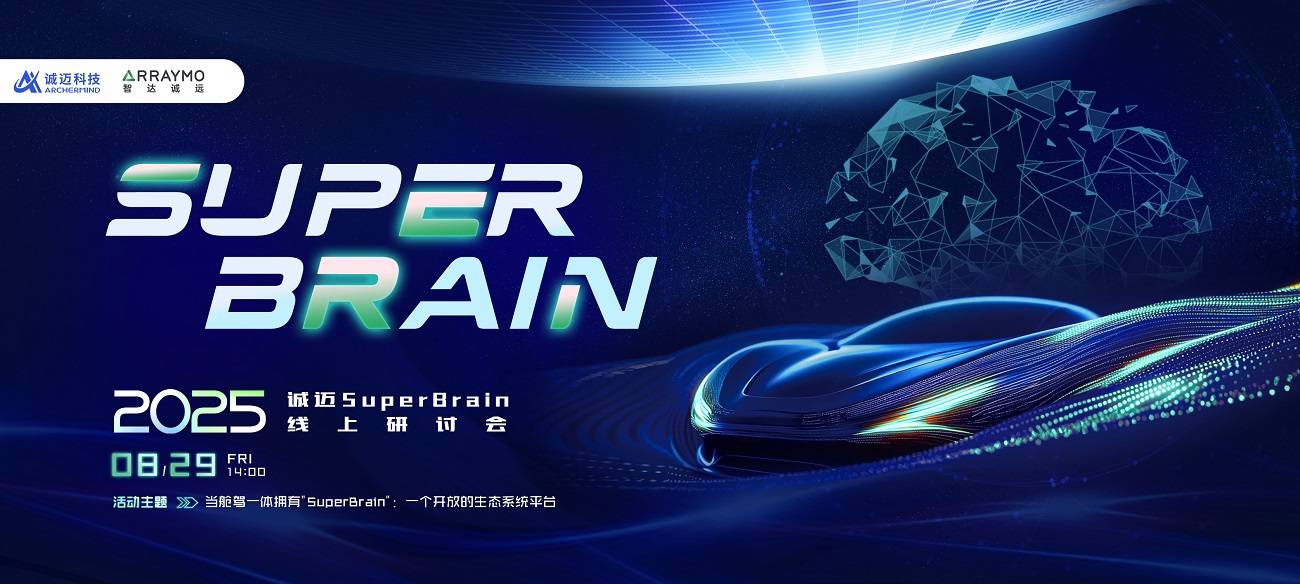
诚迈科技发布SuperBrain平台,携手伙伴加速舱驾一体量产落地
Quan Jing Wang· 2025-08-30 03:55
Core Insights - The article discusses the successful hosting of the 2025 Chengmai SuperBrain online seminar, focusing on the theme of "integrating cockpit and driving with 'SuperBrain': an open ecosystem platform" [1] - Chengmai Technology launched the cockpit-driving integration production accelerator "SuperBrain platform," aimed at promoting the implementation of cockpit-driving integration [1][3] Industry Trends - The automotive industry is transitioning from distributed electronic architectures to domain control architectures, ultimately moving towards a central computing platform to address challenges such as long R&D cycles and insufficient hardware-software collaboration [3] - Cockpit-driving integration is identified as a key path to reduce costs and enhance efficiency by sharing computing power and building a unified software platform [3] Company Developments - Chengmai Technology has over ten years of experience in the smart automotive sector, offering mature solutions in smart cockpits, central domain control, and assisted driving [3] - The SuperBrain platform is designed for the next generation of automotive electronic architectures, leveraging established chip solutions from partners like NXP, Qualcomm, NVIDIA, and Horizon [3][5] Product Features - The SuperBrain platform is an integrated intelligent computing platform that supports flexible hardware configuration and continuous software upgrades, enabling real-time data sharing and dynamic computing power allocation [5] - It aims to help clients compress project development cycles and quickly create differentiated functionalities [5] Partner Insights - NXP highlighted the complexity and cost challenges of diverse ADAS architectures and introduced a scalable vehicle computing platform for software-defined vehicles [6] - Continental Group emphasized China's leadership in SDV and EEA evolution, suggesting that global OEMs may adopt strategies from Chinese manufacturers [6] - Nullmax discussed its evolution from independent domain control to integrated cockpit-driving solutions, focusing on AI-driven multi-domain integration for various transportation scenarios [7] Collaborative Efforts - A roundtable discussion among industry leaders reached consensus on the necessity of cross-chip integration and the establishment of unified interface standards as critical for mass production [8] - The launch of the SuperBrain platform marks a significant step for Chengmai Technology in the cockpit-driving integration field, with plans for continued collaboration with global partners to accelerate the large-scale implementation of smart automotive technologies [8]

华为上半年营收增长利润下降,研发投入历史最高
Sou Hu Cai Jing· 2025-08-30 03:25
Core Insights - Huawei's strategy of "exchanging profit for technology" is evident in its significant investment in core technology research and development, particularly in the first half of 2025 [2][10] - The company's revenue for the first half of 2025 reached 427.04 billion RMB, a year-on-year increase of 3.95%, while net profit decreased by 32.2% to 37.20 billion RMB due to high R&D expenditures [2][3] - R&D expenses amounted to 96.95 billion RMB, representing 22.7% of total revenue, marking the highest proportion in history [2][3] Financial Performance - The decline in profit is attributed to a significant loss of 5.84 billion RMB in "fair value changes" compared to a minor loss of 0.035 billion RMB in the same period last year [3] - A positive highlight in the financial report is that operating cash flow turned positive with a net inflow of 31.18 billion RMB, contrasting with negative cash flows in previous years [3] Business Segments - Huawei operates six major business segments: ICT infrastructure, terminals, cloud computing, digital energy, smart automotive solutions, and chips & devices [4] - The ICT infrastructure segment generated 369.90 billion RMB, accounting for 42.9% of total revenue, but faces pressure due to reduced 5G investments from telecom operators [4] - The terminal segment performed well, with Huawei regaining the top position in the Chinese smartphone market with a shipment of 12.50 million units and a market share of 18.1% in Q2 2025 [5] Smart Automotive Solutions - Huawei does not manufacture cars but provides core technologies for smart driving and connected vehicles, achieving significant market share and technological advancements [5] - The revenue from the smart automotive solutions segment was 26.35 billion RMB, representing only 3% of total revenue, indicating limited short-term contribution to overall revenue [5] Chip and Device Business - The chip and device segment, previously known as "Shanghai HiSilicon," aims to enhance Huawei's chip capabilities and drive the semiconductor industry [6] - Huawei's chip business spans various fields, with significant products including the Kirin series for mobile, Kunpeng for data centers, and Ascend for AI computing [7] - The Kunpeng CPU has captured over 20% of the server market in China, while the Ascend chip holds about 23% of the AI chip market [7][9] AI Computing Developments - Huawei has made strides in AI computing, addressing performance limitations of the Ascend 910 chip and launching the CloudMatrix 384 "super node" solution [8] - The company has invested over 10,000 personnel in R&D for AI capabilities, indicating a strong commitment to advancing its technology [8] - The domestic AI chip market is expected to see a significant increase in localization, with projections indicating a rise from 17% in 2023 to 55% by 2027 [9]