
航空航天

Search documents
发展壮大耐心资本大胆资本!深圳重大发布!
Zheng Quan Shi Bao Wang· 2025-12-29 23:36
Core Viewpoint - The Shenzhen Municipal Government has released the full text of the "15th Five-Year Plan" proposal, focusing on economic development strategies and the establishment of a modern industrial system to drive growth and innovation in the region [1][2][3][4][5]. Group 1: Economic Development Strategies - The proposal emphasizes the acceleration of emerging industries, the optimization of traditional industries, and the establishment of Shenzhen as a global advanced manufacturing center [1]. - It aims to promote high-quality development in the service sector, establishing Shenzhen as a significant global industrial financial, consumption, and logistics center [2]. - The plan includes fostering a robust financial system that supports innovation and the real economy while effectively managing risks [2]. Group 2: Technological Innovation - The proposal highlights the importance of artificial intelligence as a key driver of technological revolution and industrial transformation, advocating for high-quality development and application of AI across various sectors [3]. - It calls for the establishment of a leading industrial technology innovation center to enhance productivity and support original innovation and core technology breakthroughs [4]. Group 3: Real Estate Development - The plan outlines strategies for promoting high-quality development in the real estate sector, focusing on affordable housing and improving living conditions for new citizens, youth, and migrant workers [5]. - It aims to create a comprehensive housing supply guarantee system to ensure that individuals can settle and thrive in Shenzhen [5]. Group 4: Regional Coordination and Collaboration - The proposal stresses the importance of regional coordination, enhancing Shenzhen's role as a core engine in the Guangdong-Hong Kong-Macao Greater Bay Area and promoting urban integration with neighboring cities [4].

工信部部署2026年十项重点工作 将培育一批重点行业智能体
2 1 Shi Ji Jing Ji Bao Dao· 2025-12-29 23:09
Core Viewpoint - The national industrial and information technology conference emphasizes the need to consolidate the positive momentum of the industrial economy as the primary task for 2026, shifting focus from promoting stable growth to ensuring quality improvement [2][3]. Group 1: Industrial Economy - The conference highlights the importance of stabilizing the industrial economy, with expectations for telecommunications and software business revenues to grow by approximately 9% and 12% year-on-year, respectively, in 2025 [2]. - The shift in focus from "promoting stable growth" to "consolidating a positive momentum" reflects a deeper policy transition from stabilizing the economy to enhancing quality [2][3]. - The conference outlines ten key areas of focus for 2026, with the first being the consolidation of the industrial economy's positive momentum [2]. Group 2: Supply and Demand - The conference plans to increase the supply of green products, trendy products, and products for the elderly, responding to market demand trends [3]. - The emphasis on domestic demand as a priority aligns with the need for relevant supply to stimulate demand, indicating a policy shift towards domestic market strengthening [3]. Group 3: Technological Integration - The conference promotes the "Artificial Intelligence + Manufacturing" initiative, aiming to cultivate key industry intelligent entities and original intelligent enterprises [4][5]. - The transition from "digital empowerment" to "intelligent empowerment" signifies a deeper integration of intelligent technologies into traditional industries, enhancing efficiency and value creation [6]. Group 4: Emerging Industries - The conference outlines plans to develop emerging pillar industries such as integrated circuits, new displays, new materials, aerospace, low-altitude economy, and biomedicine [8][9]. - The focus on these industries is seen as a strategic move to address key technological challenges and enhance new productive forces, aligning with national strategic needs [10]. Group 5: Quality Enterprises - The conference emphasizes the cultivation of high-quality enterprises, including "little giant" enterprises and manufacturing champions, while addressing issues of overdue payments to businesses [12]. - The goal is to enhance the service capabilities of the information and communication industry, with significant growth in 5G infrastructure, reaching 4.758 million base stations by the end of October 2025 [12]. Group 6: Low-altitude Economy - The conference highlights the low-altitude economy as a new growth point, with the introduction of frequency development guidelines to support the industry [13]. - This initiative aims to facilitate the commercial operation of low-altitude logistics and aerial tourism, ensuring resource allocation and regulatory clarity [13].
成都市新都区:“新工赛场”锻造区域发展新引擎
Si Chuan Ri Bao· 2025-12-29 22:39
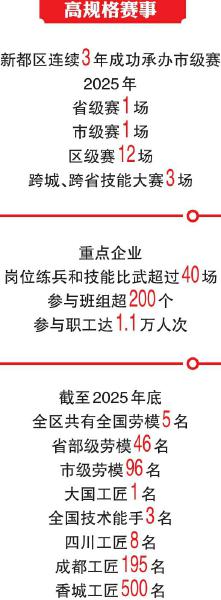
Core Insights - The Chengdu Million Workers Skills Competition has evolved from a competitive event to a practical empowerment platform, significantly contributing to the high-quality economic development of the Xindu District in Chengdu [2] Group 1: Event Overview - The 2025 Chengdu Million Workers Skills Competition will take place on May 22-23, featuring nearly 100 skilled workers from the Xindu High-tech Industrial Park competing in CNC milling and welding [2] - The event has been recognized as a catalyst for regional economic development, showcasing the transition from competition to practical application [2] Group 2: Competition Structure - Xindu District has successfully hosted high-level competitions for three consecutive years, including one provincial-level and one city-level competition in 2025, along with 12 district-level competitions [3] - High-level events not only enhance worker skills but also broaden corporate perspectives, facilitating a platform for enterprise collaboration [3] Group 3: Grassroots Engagement - The district has stimulated grassroots enthusiasm for hosting competitions through demonstration, financial support, and joint events, conducting five labor and skills competitions in 2025 that involved over 80 key industry chain enterprises [4] - Major companies like China Aviation Engine Corporation and Sichuan Kelun Pharmaceutical have participated in over 40 skill competitions, engaging more than 11,000 workers [4] Group 4: Communication and Participation - Xindu District emphasizes comprehensive media promotion to create an inclusive competition atmosphere, regularly holding meetings to address worker concerns and clarify competition requirements [5] - The district has actively solicited competition project ideas from various stakeholders, ensuring alignment with industry development and talent cultivation needs [5] Group 5: Focused Competitions - The district targets key industries such as aerospace, rail transportation, and food and beverage, hosting competitions that attract hundreds of skilled talents and enhance regional competitiveness [6] - The Chengdu Aviation Industry Park has seen significant growth, with 52 supporting projects and an annual output value exceeding 10 billion [6] Group 6: Industry Coverage - The district has organized competitions across various sectors, including healthcare, logistics, and public services, fostering a platform for resource sharing and skill exchange [7] Group 7: Innovation in New Fields - The district has expanded competition scope to include new employment forms, such as hosting skill competitions for couriers, showcasing advancements in intelligent delivery systems [8] - Special features like drug education zones have been integrated into competitions to enhance safety awareness among participants [8] Group 8: Results and Impact - The district has established an incentive mechanism for competitions, rewarding winners and their coaches with substantial monetary prizes based on competition levels [9] - Over the past three years, the district has produced numerous skilled workers and recognized labor models, contributing to a positive cycle of development within enterprises [9] Group 9: Future Directions - The Chengdu Million Workers Skills Competition is positioned as a catalyst for industrial development and worker growth, with plans to enhance talent cultivation platforms and improve collaboration across regions [10]

专访迟福林:海南对标高标准经贸规则 以制度型开放应对逆全球化
2 1 Shi Ji Jing Ji Bao Dao· 2025-12-29 16:24
Core Insights - The Hainan Free Trade Port officially commenced its closure operation on December 18, 2023, marking a significant transformation in China's economic landscape and showcasing the country's commitment to high-level openness [1][2] Group 1: Economic Impact - In the first week of operation, Hainan Customs supervised over 400 million yuan worth of "zero tariff" imports and over 20 million yuan of domestic processing goods exempt from tariffs [1] - Hainan saw the addition of 1,972 foreign trade registered enterprises, a year-on-year increase of 230% [1] Group 2: Institutional Reform - The concept of institutional openness focuses on internationalization and legalization of rules, regulations, management, and standards, moving beyond traditional policy incentives [4][5] - The core of institutional openness is to establish a stable, transparent, and predictable system to attract global high-end resources [5] Group 3: Global Trade Dynamics - Hainan's closure operation serves as a "pressure test" for China's high-level openness and aims to counteract rising global protectionism and unilateralism [2] - The initiative is designed to align with international high-standard trade rules, enhancing China's participation in global competition and cooperation [2] Group 4: Regional Cooperation - Hainan is positioned to implement "unilateral openness" towards ASEAN, offering lower tariffs or zero tariffs on goods and higher levels of service trade openness [3] - The region aims to enhance economic resilience and upgrade the China-ASEAN Free Trade Area through proactive regional cooperation [3] Group 5: Future Development Potential - The "zero tariff, low tax rate" policies combined with Hainan's geographical and ecological advantages are expected to drive growth in green low-carbon industries, digital economy, and high-end tourism [8][9] - Hainan is anticipated to attract foreign investment by reducing the negative list and allowing foreign control in sectors like healthcare and education [9] Group 6: Legal and Regulatory Framework - The Hainan Free Trade Port Law grants significant legislative power to ensure policy stability and predictability post-closure, focusing on the development of local regulations in trade, investment, finance, and ecology [6][7] - Key tasks include establishing an international commercial court and a diversified dispute resolution mechanism to enhance legal frameworks [6]
国际科创中心“扩围” 这条“大动脉”再获重任
Mei Ri Jing Ji Xin Wen· 2025-12-29 15:33
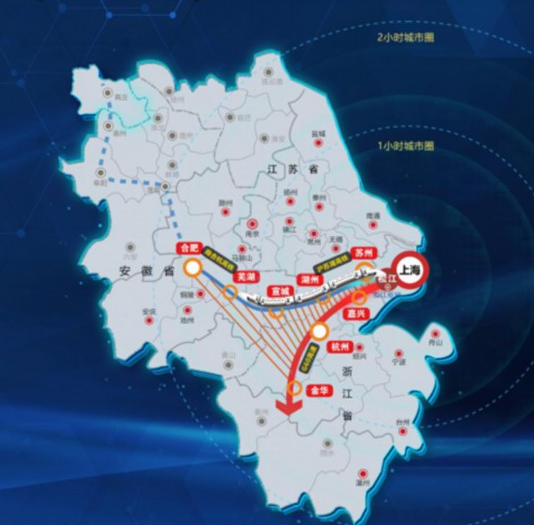
Core Viewpoint - The recent Central Economic Work Conference emphasizes the construction of international technology innovation centers in Beijing, Shanghai (Yangtze River Delta), and the Guangdong-Hong Kong-Macao Greater Bay Area, indicating a shift from focusing on core cities to a collaborative approach among city clusters [1][6]. Group 1: G60 Innovation Corridor - The G60 Innovation Corridor, initiated in 2016, connects multiple innovation cities along the G60 highway and has expanded to include nine cities in Jiangsu, Zhejiang, Anhui, and Shanghai [2]. - The newly released measures support the construction of the G60 Innovation Corridor, focusing on building a world-class industrial cluster and fostering an international first-class innovation ecosystem through 23 supportive policies [1][5]. Group 2: Economic Impact and Innovation Capacity - The nine cities in the G60 corridor account for 1/15 of the national GDP, 1/7 of high-tech enterprises, and 12% of unicorn companies in China, showcasing significant economic contributions [5]. - The G60 corridor aims to enhance innovation capabilities by focusing on new-generation electronic information and aerospace industries, exploring new collaborative development models [7][11]. Group 3: Challenges and Future Directions - Despite the strong economic foundation, the region faces challenges in achieving original breakthroughs and self-controlled key technologies, which are essential for becoming a world-class industrial cluster [11][12]. - The need for effective integration of innovation resources among universities, research institutions, and enterprises is highlighted, with a focus on collaborative platforms and resource sharing to enhance innovation efficiency [9][10].
晨曦航空:截至2025年12月19日股东人数约64000户
Zheng Quan Ri Bao Wang· 2025-12-29 13:13
证券日报网讯12月29日,晨曦航空(300581)在互动平台回答投资者提问时表示,截至2025年12月19日 股东人数约64000户。 ...

专访迟福林:海南对标高标准经贸规则,以制度型开放应对逆全球化
2 1 Shi Ji Jing Ji Bao Dao· 2025-12-29 11:57
Core Insights - Hainan Free Trade Port officially commenced its closure operation on December 18, 2023, marking a significant transformation in institutional restructuring, industrial upgrading, and improvement of people's livelihoods [1] - The first week of closure saw the release of policy dividends, with over 400 million yuan in "zero tariff" imports and 20 million yuan in value-added goods exempt from tariffs [1] - The establishment of a stable, transparent, and predictable institutional system is crucial for attracting global high-end resources [4] Group 1: Institutional Opening - The concept of institutional opening focuses on the internationalization and legalization of rules, regulations, management, and standards, moving beyond traditional policy incentives and tariff reductions [2][3] - Hainan aims to implement "five conveniences and one flow" to enhance trade and investment freedom, including zero tariffs and a regulatory model of "one line open, one line controlled" [3][6] - The core barriers to institutional opening include balancing efficiency and cost in regulatory frameworks, managing financial openness while preventing systemic risks, and coordinating social management with increased foreign personnel [6] Group 2: Global Trade Dynamics - Hainan's closure operation serves as a "pressure test" for China's high-level opening, demonstrating the country's commitment to global competition and cooperation amid rising protectionism and unilateralism [2] - The Free Trade Port is positioned to lead "unilateral opening" towards ASEAN, implementing more open policies in trade, services, investment, and personnel exchanges compared to mainland China [3][5] - Hainan's practices will provide valuable experience for China in participating in global trade rule reconstruction, particularly in aligning with high-standard agreements like CPTPP [5] Group 3: Economic Development Potential - The combination of "zero tariffs and low tax rates" with Hainan's geographical and ecological advantages is expected to create new development momentum in sectors like green economy, digital economy, and high-end tourism [7] - Hainan is anticipated to attract foreign investment by further reducing the negative list and allowing foreign control in sectors such as healthcare and education [8] - The region aims to establish a differentiated collaborative mechanism with the Guangdong-Hong Kong-Macao Greater Bay Area, focusing on institutional opening and regional cooperation [8]
上大股份:在海外航空航天领域,公司已通过多个国际航空航天企业的资质认证
Zheng Quan Ri Bao Wang· 2025-12-29 10:42
证券日报网讯12月29日,上大股份(301522)在互动平台回答投资者提问时表示,在海外航空航天领 域,公司已通过多个国际航空航天企业的资质认证,并建立了合作关系。 ...
2026重点工作:芯片被提及
半导体芯闻· 2025-12-29 10:26
Core Viewpoint - The primary task for 2026 is to "consolidate the stable and positive trend of the industrial economy," reflecting a shift in policy focus from short-term growth to long-term quality improvement [3][4][5]. Group 1: Industrial Economy - The meeting emphasizes the need to support industrial provinces and stabilize effective investment in manufacturing [4]. - The industrial economy is expected to show resilience and vitality, with telecommunications and software business revenues projected to grow by approximately 9% and 12% respectively [3]. - The shift from "promoting stable growth" to "consolidating a stable and positive trend" indicates a deeper understanding of the current industrial economic situation [4]. Group 2: Supply and Demand - The focus on increasing the supply of green products, trendy products, and products for the elderly aligns with market demand trends [4]. - The emphasis on domestic demand as a primary driver of economic growth reflects a strategic shift towards building a strong domestic market [5]. Group 3: Technological Integration - The meeting highlights the importance of "AI + manufacturing" initiatives, aiming to cultivate key industry intelligent entities and original intelligent enterprises [7][10]. - The transition from "digital empowerment" to "intelligent empowerment" signifies a deeper integration of intelligent technologies into traditional industries [8]. Group 4: Emerging Industries - The conference outlines plans to develop emerging pillar industries such as integrated circuits, new displays, new materials, aerospace, low-altitude economy, and biomedicine [10][11]. - These industries are seen as crucial for addressing "bottleneck" issues and fostering new productive forces, with a focus on high value-added and high-tech characteristics [12]. Group 5: Quality Enterprises - The meeting stresses the need to cultivate high-quality enterprises, including "little giant" companies and manufacturing champions, while addressing issues of overdue payments to businesses [15][17]. - The goal is to enhance the service capabilities of the information and communication industry, with significant growth in 5G infrastructure [15]. Group 6: Governance and Competition - The meeting calls for improved governance efficiency in the industrial and information sectors, aiming to curb "involution" competition and promote high-quality standards [17]. - Strengthening policy coordination across industries, finance, and taxation is essential for fostering productive cooperation [17].

航天彩虹:公司参股设立子公司是围绕低空经济发展趋势所进行的战略性布局
Zheng Quan Ri Bao Wang· 2025-12-29 09:48
Core Viewpoint - The company is strategically establishing a subsidiary to capitalize on the low-altitude economy development trend, aiming to seize future opportunities in related fields [1] Group 1: Strategic Initiatives - The new subsidiary is part of a forward-looking industrial collaboration and capability building effort [1] - The company plans to focus on low-altitude logistics aircraft and low-altitude manned aircraft, aligning with national strategic directions and market prospects [1] Group 2: Market Positioning - The establishment of the new company is intended to prepare for the formation of a low-altitude economic industrial ecosystem [1]
