
银行业

Search documents
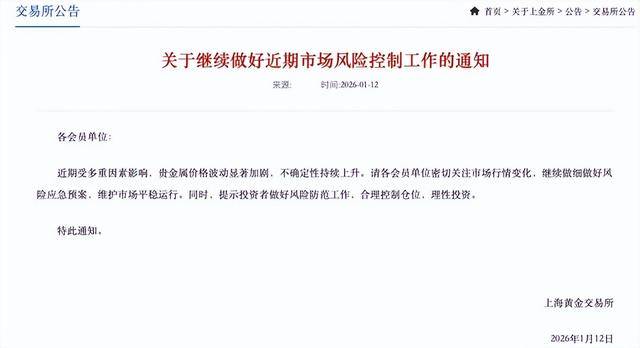
金银还能不能买?答案只有一个:看你是想配置保险,还是想赌短线
Sou Hu Cai Jing· 2026-02-13 10:46
Core Viewpoint - The gold and silver markets have experienced significant volatility in early 2026, with gold prices surpassing $5000 per ounce and silver prices increasing nearly 8% in a single day, prompting regulatory bodies to implement stricter risk management measures [1][2]. Market Dynamics - The recent surge in gold and silver prices has led to a series of adjustments in trading regulations, including higher margin requirements and revised price fluctuation limits, indicating a recognized shift into a high volatility zone [1][5]. - The Shanghai Gold Exchange and the Shanghai Futures Exchange have both issued notifications regarding adjustments to margin and trading limits for silver contracts, reflecting the increased market volatility [1]. Regulatory Actions - Financial institutions, including banks, have raised the minimum investment thresholds for precious metals, with examples such as Industrial Bank increasing the starting point for accumulation gold from 1200 yuan to 1400 yuan, emphasizing the need for cautious investment strategies [5][6]. - The adjustments made by banks aim to mitigate risks associated with concentrated buying and selling during periods of high volatility, indicating a proactive approach to managing investor behavior [5]. Investment Strategies - For ordinary investors, gold and silver should not be viewed as short-term speculative assets but rather as long-term hedges against extreme risks, especially in uncertain macroeconomic environments [8][9]. - The People's Bank of China has been increasing its gold reserves, which reflects a strategic preference for gold as a long-term asset rather than a short-term trading tool [8]. Investment Tools - Different investment vehicles are available for gold and silver, including ETFs, accumulation gold, and physical gold, each with distinct risk profiles and suitability for various investor strategies [11][12]. - ETFs are recommended for those looking to track gold prices with lower risk, while accumulation gold allows for smaller, incremental investments, though recent changes in bank policies require investors to adapt to new rules [12]. - Physical gold is considered a safe asset for long-term holding, while leveraged tools like futures and options are deemed risky for ordinary investors due to the potential for significant losses in volatile markets [12][14].




央行节前发布重要数据:社融增量7.22万亿元
证券时报· 2026-02-13 10:21
Group 1 - The core viewpoint of the article highlights the robust growth in social financing and M2, indicating strong financial support for the economy at the beginning of the year, with social financing reaching a record high of 7.22 trillion yuan in January 2026, an increase of 1,662 billion yuan year-on-year, and M2 growing by 9% year-on-year, surpassing market expectations [2][4][5] Group 2 - In January 2026, the rapid growth of social financing and M2 reflects the effectiveness of the moderately loose monetary policy, which is crucial for supporting a stable economic start to the year [4][5] - The increase in government bond financing in January reached 976.4 billion yuan, a year-on-year increase of 283.1 billion yuan, accounting for 13.5% of the total social financing, the highest level for the same period since 2021 [4][5] - The structure of new loans in January shows a significant increase in medium to long-term loans for enterprises, driven by the launch of major projects, with corporate loans increasing by 4.45 trillion yuan, of which medium to long-term loans accounted for over 70% [9][10] Group 3 - The average interest rate for newly issued corporate loans in January was approximately 3.2%, down about 20 basis points year-on-year, while the average interest rate for personal housing loans remained stable at around 3.1% [10] - The article emphasizes the importance of cumulative effects in observing monetary policy outcomes, noting that the integration of stock and incremental policies will continue to show effects, with significant reductions in policy rates since 2018 [11][12] - The current personal housing loan rates in China are approaching the average levels seen during the "zero interest" periods in the US, UK, and Japan, indicating a favorable financing environment for consumers [12][13]
首月金融数据“开门红”
Di Yi Cai Jing· 2026-02-13 10:09
Group 1 - The core viewpoint of the articles highlights a positive trend in credit growth, supported by high M2 and social financing scale growth, creating a favorable monetary environment for economic recovery [2][10] - As of January 2026, M2 balance reached 347.19 trillion yuan, with a year-on-year growth of 9.0%, exceeding market expectations [2] - Social financing scale stock was 449.11 trillion yuan, with a year-on-year growth of 8.2%, indicating a stable financial support for the economy [2][10] Group 2 - Personal loans showed steady growth, with a balance of 276.62 trillion yuan, reflecting a year-on-year increase of 6.1%, supported by various favorable conditions [3][5] - The increase in household loans was 456.5 billion yuan, driven by pre-festival consumption activities, indicating a release of consumer vitality [5] - The Ministry of Finance extended the personal consumption loan interest subsidy policy until the end of 2026, which is expected to enhance consumer willingness and support loan growth [5] Group 3 - Significant project loans increased due to accelerated approval in the infrastructure sector, with corporate loans adding 4.45 trillion yuan in January, of which long-term loans accounted for over 70% [4] - The trend of "quality improvement" in credit is evident, with inclusive small and micro loans growing by 11.6% year-on-year, indicating a shift towards high-quality development [7][8] - The average interest rate for newly issued corporate loans was approximately 3.2%, reflecting a decrease of about 20 basis points from the previous year, which supports the operational efficiency of enterprises [8][9] Group 4 - The financing structure is evolving, with the importance of direct financing through bonds and stocks increasing significantly, as evidenced by a 47% share of stock and bond financing in the social financing scale increment [12] - Government bond financing reached its highest level since 2021, accounting for 13.5% of the total social financing scale, indicating a robust fiscal policy [11][12] - The macroeconomic policy is becoming more proactive, with expectations of continued expansion in fiscal spending and an increase in government bond issuance, projected to approach 1.5 trillion yuan [12]
货币政策靠前发力,M2和社融保持较高增速
Sou Hu Cai Jing· 2026-02-13 09:58
Group 1 - The People's Bank of China reported that the social financing scale increased by 7.22 trillion yuan in January 2026, which is 166.2 billion yuan more than the same period last year [1] - The broad money supply (M2) reached 347.19 trillion yuan, showing a year-on-year growth of 9%, with an increase of 0.5 percentage points compared to December of the previous year [1] - The narrow money supply (M1) stood at 117.97 trillion yuan, with a year-on-year growth of 4.9%, up by 1.1 percentage points from December [1] Group 2 - In January 2026, the demand for loans in renminbi increased by 4.71 trillion yuan, with household loans rising by 456.5 billion yuan and corporate loans increasing by 4.45 trillion yuan [1] - The total deposits in renminbi increased by 8.09 trillion yuan, with household deposits growing by 2.13 trillion yuan and non-financial enterprise deposits increasing by 2.61 trillion yuan [1] Group 3 - As of the end of January 2026, the total social financing stock was 449.11 trillion yuan, reflecting a year-on-year growth of 8.2% [2] - The balance of renminbi loans to the real economy was 273.3 trillion yuan, with a year-on-year increase of 6.1% [2] - The balance of government bonds reached 95.9 trillion yuan, showing a year-on-year growth of 17.3% [2] Group 4 - The People's Bank of China announced a series of monetary policies, including structural interest rate cuts and adjustments to the minimum down payment ratio for commercial housing loans [4] - The central bank emphasized the continuation of a moderately accommodative monetary policy to enhance the effectiveness of both incremental and stock policies [4]
市场权威专家:观察货币政策效果要看累积效应
Di Yi Cai Jing Zi Xun· 2026-02-13 09:52
Group 1 - The People's Bank of China has introduced a series of monetary policies to support the real economy, focusing on optimizing economic structure and enhancing support for key domestic demand areas such as private enterprises, technological innovation, green initiatives, and consumption [1] - Since the second half of 2018, the central bank has lowered the reserve requirement ratio 18 times, providing sustained medium- and long-term liquidity to the banking system and financial markets [1] - The cumulative reduction in policy interest rates since the peak of the current interest rate cycle is 1.15 percentage points, leading to a decrease in corporate loan rates by 2.5 percentage points and personal mortgage rates by 2.7 percentage points [1] Group 2 - Current RMB loan balance is approximately 270 trillion yuan, and the reduction in loan rates is estimated to save borrowers over 6 trillion yuan in interest payments annually [1] - While developed economies are in a rate-cutting cycle, China's monetary policy remains relatively loose, focusing on reducing overall financing costs for society [1] - China's personal mortgage rates are nearing the average levels seen during the "zero interest rate" periods in the US, UK, and Japan, with consumer loan rates even lower than those during the same periods in the US [2]
【笔记20260213— 牛马:马年盼牛市】
债券笔记· 2026-02-13 09:52
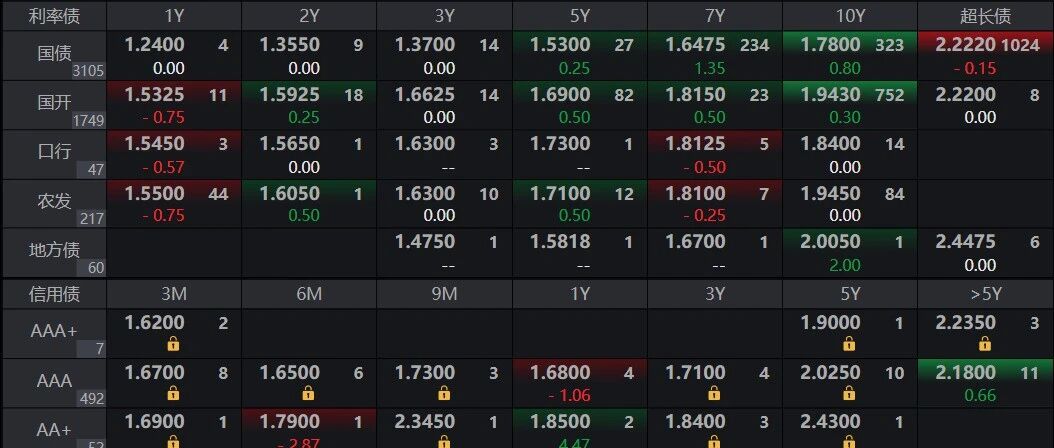
Group 1 - The article emphasizes that in a bear market, trading often leads to losses, while in a bull market, there is a risk of missing out on gains [1] - The current financial environment shows a balanced and slightly loose liquidity, with the central bank conducting a net injection of 113.5 billion yuan through reverse repos [3] - The interbank funding rates have decreased, with DR001 at approximately 1.26% and DR007 at around 1.43% [3] Group 2 - The stock market is showing weak performance, with financial data for January meeting expectations and interest rates fluctuating [5] - Recent developments in the US stock market have caused a decline, with AI advancements previously seen as beneficial now leading to caution among investors [6] - The bond market experienced volatility, with the 10-year government bond yield initially opening lower at 1.7675% before rising to around 1.78% [5][8]
首月金融数据“开门红”
第一财经· 2026-02-13 09:49
Core Viewpoint - The article highlights the positive trends in credit growth and monetary supply in January 2026, indicating a supportive financial environment for economic recovery, with M2 and social financing growth rates remaining high [3][11]. Group 1: Monetary and Credit Data - As of January 2026, the broad money supply (M2) reached 347.19 trillion yuan, growing by 9.0% year-on-year, exceeding market expectations [3]. - The total social financing stock was 449.11 trillion yuan, with a year-on-year increase of 8.2%, reflecting a stable financial environment [3][11]. - In January, the increment in social financing was 7.22 trillion yuan, which was 1.662 trillion yuan more than the same period last year [3][11]. Group 2: Loan Growth and Consumer Activity - By the end of January, the balance of RMB loans was 276.62 trillion yuan, with a year-on-year growth of 6.1%, indicating a recovery in demand [5]. - Personal loans increased by 456.5 billion yuan, driven by pre-festival consumption activities, with short-term loans rising by 109.7 billion yuan and medium to long-term loans by 346.9 billion yuan [7]. - The Ministry of Finance extended the personal consumption loan interest subsidy policy until the end of 2026, which is expected to enhance consumer willingness and support loan growth [7]. Group 3: Structural Changes in Lending - The balance of inclusive small and micro loans reached 37.16 trillion yuan, growing by 11.6% year-on-year, indicating a shift towards higher quality lending [8]. - The average interest rate for newly issued corporate loans was approximately 3.2%, down about 20 basis points from the previous year, reflecting a favorable financing environment for businesses [9]. - The financing costs for the real economy have been reduced, allowing businesses to operate more efficiently and stimulating market vitality [9]. Group 4: Fiscal Policy and Financing Trends - The article notes that various financing methods are increasingly substituting traditional loans, with a focus on social financing scale and monetary supply as better indicators of financial support for the real economy [11][13]. - In January, government bond financing accounted for 13.5% of the total social financing scale, the highest level for the same period since 2021 [12]. - The overall macroeconomic policy is becoming more proactive, with expectations for increased fiscal spending and government bond issuance in 2026, potentially reaching close to 1.5 trillion yuan [13].

首月金融数据“开门红”:M2增速9%超预期,需求端显回暖动能
Di Yi Cai Jing· 2026-02-13 09:36
Group 1 - The core viewpoint of the articles highlights the positive trends in monetary policy and credit growth, indicating a supportive environment for economic recovery at the beginning of 2026 [1][7] - The broad money supply (M2) reached 347.19 trillion yuan at the end of January 2026, growing by 9.0% year-on-year, exceeding market expectations [1][7] - The total social financing scale stood at 449.11 trillion yuan, with a year-on-year growth of 8.2%, reflecting a stable increase in credit demand [1][7] Group 2 - Personal loans increased by 456.5 billion yuan in January, driven by consumer demand ahead of the Spring Festival, with short-term loans rising by 109.7 billion yuan and medium to long-term loans by 346.9 billion yuan [3][4] - The demand for loans is supported by favorable conditions, including the implementation of a personal consumption loan interest subsidy policy extended until the end of 2026 [3][4] - Transaction data from online platforms indicates a stable growth in commodity consumption, with January 2026 showing a 16.8% year-on-year increase in transaction volume [3][4] Group 3 - The structure of credit growth is shifting towards higher quality, with inclusive small and micro loans growing by 11.6% year-on-year, and medium to long-term loans in the service sector (excluding real estate) increasing by 9.2% [5][6] - The weighted average interest rate for newly issued corporate loans was approximately 3.2%, down about 20 basis points from the previous year, indicating a favorable financing environment for businesses [6] - The financing costs remain low, reflecting a relatively abundant credit supply and the effectiveness of financial support for the real economy [6] Group 4 - The government bond financing increment accounted for 13.5% of the total social financing scale in January, the highest level for the same period since 2021 [8] - The overall financing structure is evolving, with direct financing through bonds and stocks becoming increasingly significant, surpassing traditional loan financing [8] - The macroeconomic policies are becoming more proactive, with expectations of continued expansion in fiscal spending and an increase in the issuance of government bonds, projected to approach 1.5 trillion yuan [8]
1月金融数据出炉!M2余额347.19万亿元,同比增长9% 1月人民币贷款增加4.71万亿元
Jin Rong Jie· 2026-02-13 09:28
Group 1 - The central bank reported that as of the end of January, the broad money supply (M2) was 347.19 trillion yuan, a year-on-year increase of 9% [1] - The narrow money supply (M1) was 117.97 trillion yuan, with a year-on-year growth of 4.9% [1] - The cash in circulation (M0) reached 14.61 trillion yuan, growing by 2.7% year-on-year [1] - In January, a net cash injection of 519.1 billion yuan was recorded [1] Group 2 - In January, the total amount of social financing increased by 7.22 trillion yuan, which is 166.2 billion yuan more than the same period last year [2] - The increase in RMB loans to the real economy was 4.9 trillion yuan, which is a decrease of 317.8 billion yuan compared to the previous year [2] - The net financing of corporate bonds was 503.3 billion yuan, an increase of 57.9 billion yuan year-on-year [2] - The net financing of government bonds was 976.4 billion yuan, which is 283.1 billion yuan more than the previous year [2] Group 3 - The total RMB deposits increased by 8.09 trillion yuan in January, with household deposits rising by 2.13 trillion yuan [2][4] - The total balance of RMB deposits reached 336.77 trillion yuan, reflecting a year-on-year growth of 9.9% [2] - The foreign currency deposit balance was 1.1 trillion USD, showing a year-on-year increase of 23.7% [2] Group 4 - The total RMB loans increased by 4.71 trillion yuan in January, with household loans rising by 456.5 billion yuan [3][4] - The balance of RMB loans was 276.62 trillion yuan, reflecting a year-on-year growth of 6.1% [3] - The balance of foreign currency loans was 570.1 billion USD, with an increase of 251 billion USD in January [4] Group 5 - The average weighted interest rate for interbank RMB market lending was 1.4%, which is 0.04 percentage points higher than the previous month [4] - The total transaction volume in the interbank RMB market reached 211.96 trillion yuan in January, with a daily average transaction of 10.09 trillion yuan [4] - The average weighted interest rate for pledged bond repos was 1.43%, which is 0.03 percentage points higher than the previous month [4] Group 6 - The cross-border RMB settlement amount under the current account was 1.49 trillion yuan in January [5] - The direct investment cross-border RMB settlement amount was 0.78 trillion yuan, with foreign direct investment accounting for 0.51 trillion yuan [5]
央行:1月份人民币贷款增加4.71万亿元 符合市场预期
Jin Rong Jie· 2026-02-13 09:23
Group 1 - In January, the People's Bank of China reported an increase in RMB loans by 4.71 trillion yuan, aligning closely with the median forecast of 4.7 trillion yuan from the Zhitong Finance C50 sentiment index survey [1] - Household loans rose by 456.5 billion yuan, with short-term loans increasing by 109.7 billion yuan and medium to long-term loans increasing by 346.9 billion yuan [1] - Corporate loans increased by 4.45 trillion yuan, with short-term loans rising by 2.05 trillion yuan and medium to long-term loans increasing by 3.18 trillion yuan, while bill financing decreased by 873.9 billion yuan [1] - Loans from non-bank financial institutions decreased by 188.2 billion yuan [1]