电动车

Search documents
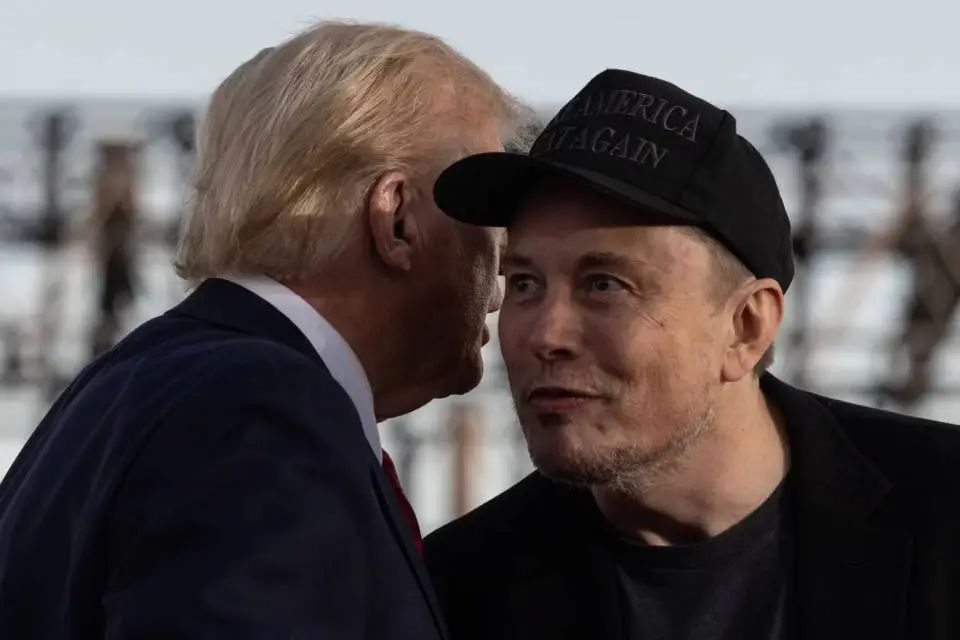
川普想让马斯克“滚出美国”
3 6 Ke· 2025-07-03 01:10
Group 1 - The relationship between Musk and Trump was initially a strategic alliance, with Musk needing a president who would support his business interests and Trump seeking to appeal to younger voters and the tech community [7][9] - The turning point in their relationship was the introduction of the "Big Beautiful Bill," which Musk vehemently opposed, viewing it as detrimental to American freedom and threatening to establish a new political party [10][11] - The fallout from their split resulted in significant market volatility, with Tesla's stock dropping 14% in just 48 hours due to investor fears over reduced electric vehicle subsidies [15] Group 2 - Musk's management style is characterized by extreme efficiency and a lack of empathy, as evidenced by his cold response to employee leave requests [5][6] - Trump's leadership approach involves public humiliation and immediate punishment for dissent, creating a toxic environment for those around him [12][14] - The clash between Musk's technocratic ideals and Trump's populist politics highlights a broader structural crisis in modern governance, where extreme personalities dominate and undermine potential collaborations [19]


特斯拉6月销量现转机?中国市场九个月来首次上涨,Model Y改款推动部分欧洲市场反弹
Hua Er Jie Jian Wen· 2025-07-02 12:31
Core Insights - Tesla's sales showed signs of recovery in June, driven by the delivery of the revamped Model Y, with notable increases in key markets like China, Norway, and Spain [1][2][3] - Despite the positive performance in certain regions, Tesla continues to face significant competition and declining sales in other European markets and the U.S. [1][4] Group 1: Sales Performance - Tesla's Shanghai factory delivered 71,599 vehicles in June, marking a 0.8% year-on-year increase and a 16% month-on-month increase, the first year-on-year growth in nine months [1][2] - In Norway, Tesla's vehicle registrations increased by 54% in June, with Model Y registrations soaring by 115.3% to 5,004 units, making it the best-selling model in June [3] - Spain also saw strong performance, with Tesla's sales rising by 60.7% to 2,632 units, and Model Y sales increasing by 127.2% to 1,179 units [3] Group 2: Competitive Landscape - Tesla's main competitor in China, BYD, reported a global sales increase of 11% to 377,628 vehicles in June, significantly outpacing Tesla [2] - Xiaomi's new YU7 SUV is priced nearly 4% lower than the Model Y, indicating increasing competition in the electric vehicle market [2] - In Europe, Tesla's sales are declining in key markets such as Sweden, Denmark, France, and Italy, with significant drops in registrations [3] Group 3: Future Outlook - Despite the June rebound, Tesla's overall performance for Q2 is expected to be disappointing, with a 6.8% year-on-year decline in sales of Chinese-made electric vehicles from April to June [4] - Counterpoint Research predicts a 10% decline in Tesla's global electric vehicle sales for 2025, while BYD's sales are expected to grow by 45% [5] - The recent model updates may provide only a short-term boost, as new model launches have not occurred since 2020, raising concerns about the sustainability of sales growth [5]
【Tesla每日快訊】 川普大而美法案通過!馬斯克會如何反擊?🔥Tesla的交付危機(2025/7/2-1)
大鱼聊电动· 2025-07-02 04:50
Market Trends & Policy Impact - US Senate passed a bill including approximately 4500000000000 USD (45% trillion) in tax cuts, potentially stimulating the economy [1] - The bill initially proposed tariffs on solar and wind energy projects, which could have increased costs by 8% to 10%, but these were removed [1] - Electric vehicle subsidies, including 7500 USD for new cars, 4000 USD for used cars, and 7500 USD for commercial vehicles, are set to expire on September 30, 2025 [1] - Federal debt limit increased by 5000000000000 USD (5 trillion) [1] Company Performance & Challenges (Tesla) - Tesla's stock closed at 30071 USD, down 1695 USD or 534% [1] - Q2 delivery data is expected to be around 385000 vehicles, a 13% decrease compared to the previous year's 444000 vehicles [2] - Q1 energy storage deployments reached 104 GWh, a 153% growth [2] - Tesla's Q1 vehicle inventory reached 101000 units, indicating a potential imbalance between production and demand [2] - The termination of subsidies, political disputes, and tariff-related price increases are impacting Tesla's sales in Canada [2] Strategic Initiatives & Leadership - Tesla officially launched its Robotaxi service in Austin, Texas [2] - Omead Afshar, VP of North American and European sales and manufacturing, left Tesla [2]
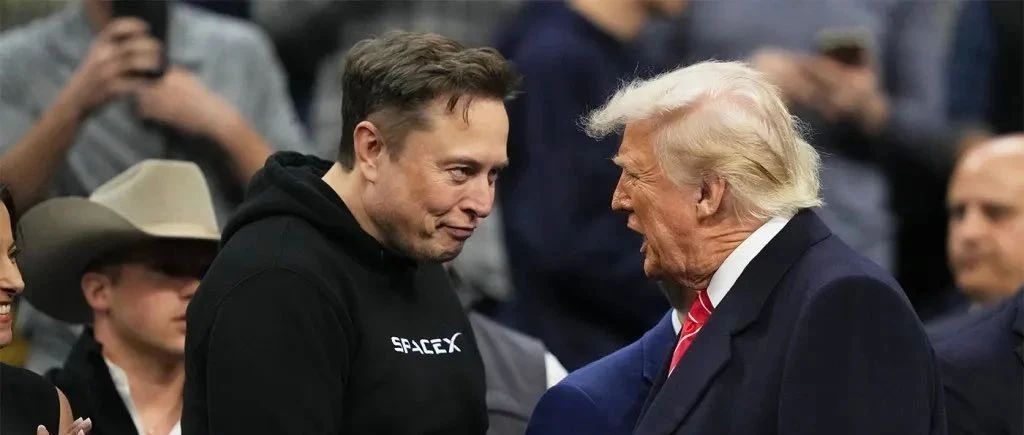
马斯克和特朗普决裂了,真的因为钱?
首席商业评论· 2025-07-02 04:45
Core Viewpoint - The article discusses the conflict between Elon Musk and Donald Trump regarding the "Great America" bill, which increases the U.S. debt ceiling by $5 trillion and reduces benefits for the poor while providing tax cuts for the wealthy and middle class [1][2]. Group 1: Legislative Impact - The "Great America" bill has passed the House of Representatives by a narrow margin and is now under review in the Senate, where significant modifications are expected before it can be signed into law by Trump [2]. - The bill is anticipated to have a major impact on the U.S. economy and social order over the next decade, favoring the wealthy and middle class while pushing the poor to become more self-reliant [3]. Group 2: Economic Implications - The increase in U.S. debt and potential tax changes may influence global investment dynamics, particularly in attracting more capital back to the U.S. [3]. - A potential decrease in interest rates, driven by Trump's influence, could lead to higher bond prices and increased valuations for some companies, although it remains uncertain whether this will effectively channel funds into the real economy [3].
欧盟只给中国30天,必须要解决稀土供应,否则冯德莱恩取消访华
Sou Hu Cai Jing· 2025-07-01 07:55
Group 1 - The EU has set a 30-day deadline for China to resolve issues related to rare earth supply, threatening to cancel the planned visit of EU Commission President Ursula von der Leyen if not addressed [1][15][17] - The friction between China and Europe began with the EU's anti-dumping investigation into Chinese electric vehicles, leading to tariffs of nearly 40% on certain imports [3][5] - The EU's reliance on China for rare earth materials exceeds 90%, posing a significant risk to its technological development and energy transition [13][21] Group 2 - European companies are facing production halts due to difficulties in obtaining rare earth magnets, with some suppliers reporting inventory that could last only two to four weeks [23] - The EU is actively seeking to diversify its rare earth supply by exploring domestic mining opportunities and collaborating with countries like Australia and the US [25][27] - The ongoing tensions highlight the strategic importance of rare earths in high-tech industries, with both sides needing to negotiate for mutual benefit [19][30][32]
民企出口含“新”量提升
Ren Min Ri Bao Hai Wai Ban· 2025-06-30 22:59
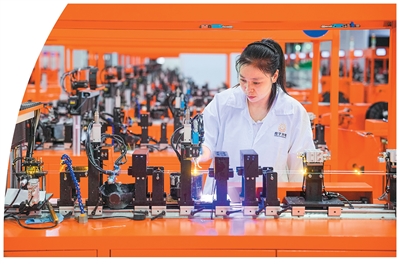
Core Insights - China's private enterprises are increasingly becoming the main force in foreign trade, with a significant shift from low-cost manufacturing to high-tech exports, particularly in sectors like industrial robots and green technology [3][6][13]. Group 1: Export Growth and High-Tech Products - In the first five months of the year, China's private enterprises achieved a total import and export value of 10.25 trillion yuan, a growth of 7%, with exports reaching 6.97 trillion yuan, up 8% [3]. - The export value of industrial robots increased by 55.4% year-on-year, with private enterprises being the primary manufacturers [3][5]. - High-tech product exports from private enterprises reached a historical high of nearly 1 trillion yuan in the first quarter, with industrial robots and high-end machine tools seeing growth rates of 67.4% and 16.4%, respectively [5][6]. Group 2: Technological Innovation and R&D Investment - Private enterprises contributed over 50% of the total R&D investment and personnel in China, with the top 1,000 private companies investing a total of 1.39 trillion yuan in R&D in 2023 [7][9]. - The continuous increase in R&D investment efficiency has led to a significant rise in the technological added value of export products [6][9]. - Companies are focusing on core technology development to enhance their competitiveness in international markets, with many achieving breakthroughs in previously monopolized technologies [8][9]. Group 3: Policy Support and Market Expansion - The Chinese government has implemented various policies to support private enterprises in their international expansion, including improved intellectual property protection and financial risk-sharing mechanisms [9][12]. - Many private enterprises are transitioning from trade-based models to localized operations, establishing factories and warehouses overseas to enhance their global presence [14]. - In Brazil, several Chinese private car manufacturers have announced significant plans, indicating their growing influence in international markets [14].
新日股份: 2025年第二次临时股东会会议资料
Zheng Quan Zhi Xing· 2025-06-30 16:44
Meeting Overview - The company is holding a shareholders' meeting to ensure the rights of shareholders and maintain order and efficiency during the meeting [1] - Only authorized personnel, including shareholders, directors, supervisors, and invited guests, are allowed to attend the meeting [1][2] Agenda Items - **Proposal 1**: The company plans to use idle funds for entrusted financial management to improve fund utilization efficiency while ensuring safety and operational liquidity. The investment period will not exceed 12 months, and the management is authorized to decide on specific products [2][3] - **Proposal 2**: The company intends to adjust its business scope and amend its articles of association to align with development needs. The original scope included vehicle production and special equipment manufacturing, while the new scope will expand to include various services and products [3][4][5] Business Scope Adjustment - The proposed new business scope includes licensed projects such as vehicle production and special equipment manufacturing, as well as general projects like electric bicycle sales, battery manufacturing, and property management [4][5] - The final adjustment of the business scope will be subject to administrative approval [4][5]

爱玛科技: 北京海润天睿律师事务所关于爱玛科技部分股权激励限制性股票回购注销实施的法律意见书
Zheng Quan Zhi Xing· 2025-06-30 16:24
北京海润天睿律师事务所 朝阳区建外大街甲14号广播大厦5层、9层、10层、13层、17层 邮政编码:100022 电话:010-65219696 传真:010-88381869 二〇二五年六月 北京海润天睿律师事务所 关于爱玛科技集团股份有限公司 部分股权激励限制性股票回购注销实施的法律意见书 致:爱玛科技集团股份有限公司 关于爱玛科技集团股份有限公司 部分股权激励限制性股票回购注销实施的法律意见书 中国·北京 北京海润天睿律师事务所(以下简称"本所")接受爱玛科技集团股份有限 公司(以下简称"爱玛科技"或"公司")的委托,担任公司"2024 年限制性 股票激励计划"(以下简称"本激励计划")的法律顾问。根据现行有效适用的 《中华人民共和国公司法》(以下简称"《公司法》")、《中华人民共和国证 券法》(以下简称"《证券法》")、《上市公司股权激励管理办法》(以下简 称"《管理办法》")等有关法律法规的规定,为公司回购注销部分限制性股票 (以下简称"本次回购注销")相关事项,出具本法律意见书。 为出具本法律意见书,本所律师审阅了《爱玛科技集团股份有限公司2024 年限制性股票激励计划(草案)》(以下简称"《激励 ...

爱玛科技: 爱玛科技关于2024年限制性股票激励计划部分限制性股票回购注销实施公告
Zheng Quan Zhi Xing· 2025-06-30 16:24
证券代码:603529 证券简称:爱玛科技 公告编号:2025-049 转债代码:113666 转债简称:爱玛转债 爱玛科技集团股份有限公司 关于 2024 年限制性股票激励计划部分限制性股票回购注销实 施公告 本公司董事会及全体董事保证本公告内容不存在任何虚假记载、误导性陈述 或者重大遗漏,并对其内容的真实性、准确性和完整性承担法律责任。 重要内容提示: 一、本次限制性股票回购注销的决策与信息披露 于提请股东大会授权董事会办理股权激励相关事宜的议案》。公司股东大会授权董 事会在出现 2024 年限制性股票激励计划所列明的需要回购注销激励对象尚未解除 限售的限制性股票,办理该部分限制性股票回购注销所必需的全部事宜,包括但 不限于修改公司章程、公司注册资本的变更登记。具体内容详见公司于 2024 年 3 月 1 日在上海证券交易所网站(www.sse.com.cn)及指定披露媒体刊登的公告。 十四次会议,审议通过了《关于调整 2024 年限制性股票激励计划回购价格的议案》 《关于 2024 年限制性股票激励计划第一个解除限售期解除限售条件未成就暨回购 注销部分限制性股票的议案》,同意公司因权益分派实施调整 20 ...
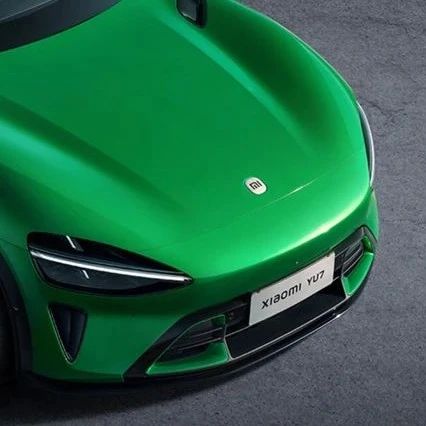
YU7锁单破24万,雷军的麻烦来了
36氪· 2025-06-30 13:46
Core Viewpoint - Xiaomi's YU7 electric vehicle launch has generated significant market interest, challenging Tesla's Model Y and setting new benchmarks for pre-sale speed and order volume in the electric vehicle sector [5][8][62]. Group 1: Launch and Market Response - Xiaomi's YU7 received overwhelming pre-orders, with 20,000 units booked in 3 minutes and over 289,000 units in 18 hours, showcasing a new standard for electric vehicle pre-sales [5][26]. - The launch event was compared to major sales events like Double 11, indicating a strong consumer response and market excitement [4][62]. - The CEO expressed pride in witnessing a "miracle" in the Chinese automotive industry, highlighting the significance of this launch [6][62]. Group 2: Competitive Positioning - YU7 is priced lower than Tesla's Model Y, with the standard version costing 253,500 CNY, which is 10,000 CNY less than the Model Y rear-wheel drive version [11][12]. - The vehicle offers superior specifications, including an 800V silicon carbide high-voltage platform and advanced features like laser radar and NVIDIA Thor chip, positioning it competitively against Tesla [14][16]. - Performance metrics are impressive, with the Max version achieving 0-100 km/h in just 3.23 seconds and a range of 835 km, setting a high bar for vehicles in its price range [18][20]. Group 3: Production and Capacity Challenges - The surge in orders has raised concerns about Xiaomi's production capacity, which is currently limited to 150,000 units annually, with the second factory expected to increase capacity to 300,000 units but still facing ramp-up challenges [30][32][33]. - The company has implemented a "transfer order mechanism" allowing customers of the SU7 to switch to the YU7, aiming to manage production and customer expectations [35][38]. - Xiaomi's commitment to expanding production is evident, with plans for future factory developments to potentially increase capacity beyond 600,000 units by 2026 [39][40]. Group 4: Safety and Technology Focus - Safety has been emphasized as a core selling point for the YU7, featuring high-strength steel and advanced safety systems, aiming to build consumer trust [45][46]. - The vehicle includes a comprehensive driver assistance system, with over 10 million training clips, indicating a focus on enhancing autonomous driving capabilities [49][57]. - Xiaomi aims to address previous criticisms by ensuring that the YU7 meets high safety and quality standards, reflecting a shift in strategy from merely competing on price to establishing a reliable brand reputation [60][65].