医美

Search documents
早盘直击 | 今日行情关注
申万宏源证券上海北京西路营业部· 2025-06-25 01:29
Group 1 - The recent tensions in the Middle East have led to a temporary impact on A-share market sentiment, but the market has rebounded, with the Shanghai Composite Index reaching a new high in nearly a month [1] - The market is expected to maintain a slow upward trend as it approaches the policy window period at the end of June, with potential for new policies aimed at stabilizing employment and promoting high-quality development [1] - Popular sectors such as banking and innovative pharmaceuticals may experience short-term fluctuations due to accumulated gains, while TMT and technology growth sectors are anticipated to see a rebound after sufficient adjustments [1] Group 2 - The outlook for July suggests a theme-driven market with high-low sector rotation, as popular sectors like innovative pharmaceuticals and banking have shown signs of correction, while TMT and advanced manufacturing sectors are beginning to rebound [2] - Key focus areas for 2025 include expanding domestic demand and consumption, with expectations for policies to support sectors like dairy products, IP consumption, leisure tourism, and medical aesthetics [2] - The trend towards domestic production of robotics is expected to continue, with opportunities arising in sensors, controllers, and functional robots [2] - The semiconductor industry is projected to see continued domestic growth, with attention on semiconductor equipment, wafer manufacturing, materials, and IC design [2] - The military industry is anticipated to experience a rebound in orders by 2025, with signs of recovery already visible in various sub-sectors [2] - The innovative pharmaceutical sector is expected to reach a turning point in fundamentals by 2025, following a period of adjustment [2] - The AI sector is poised for new catalysts, with significant updates expected from companies like MiniMax, indicating a resurgence in AI-related investments [2] Group 3 - The A-share market has ended a month-long period of consolidation, with the Shanghai Composite Index reaching a new high, supported by a broad-based rally among individual stocks [3] - The market saw a significant increase in the number of rising stocks, with over 4,700 stocks gaining, while only a few sectors like oil and coal experienced declines due to falling international oil prices [3] - Leading sectors included electric power equipment, non-bank financials, retail, automotive, and machinery [3]


1.8万元/支童颜针,现在只要5999元?新氧和圣博玛又“火拼”了
阿尔法工场研究院· 2025-06-24 10:14
Core Viewpoint - The article discusses the ongoing price war in the aesthetic medicine market, particularly focusing on the "童颜针" (youthful needle) products, highlighting the conflict between upstream material suppliers and downstream clinics, with New Oxygen's pricing strategy causing significant market disruption [2][4][39]. Group 1: Market Dynamics - New Oxygen's self-operated clinic is selling the "艾维岚" (Aivilan) product at 5,999 yuan, which is one-third of the market price of 18,000 yuan, leading to dissatisfaction from the brand owner, Changchun Shengboma [2][12]. - The price war is intensifying as more competitors enter the market, with at least seven "童颜针" products now approved for sale in China, compared to only two in 2021 [32][36]. - The market for "童颜针" is projected to grow from 1.488 billion USD in 2024 to 2.082 billion USD by 2033, indicating significant potential for growth despite current pricing pressures [29]. Group 2: Company Strategies - New Oxygen has established a strategic partnership with Oriental Yanmei, securing exclusive rights to commercialize several upcoming products, including the XH301 "童颜针" [6][21]. - Oriental Yanmei's XH301 is expected to complete its domestic listing review in the second half of the year, with the company currently facing a projected revenue of only 0.13 million yuan for 2024 and a loss of 0.64 million yuan [9][19]. - The company plans to adopt an agency sales model rather than direct sales, which is seen as a safer approach given its current financial situation [20][25]. Group 3: Product Development - The XH301 product, which utilizes a combination of PLLA and CMC, is designed to stimulate collagen regeneration and improve skin tightness, with a reported effectiveness rate of 95.5% in correcting severe wrinkles [18]. - The competitive landscape is challenging for XH301, as it faces pricing pressures from existing products and the potential for lower-priced alternatives to emerge [38][44]. - Oriental Yanmei is also exploring overseas markets for its products, which may provide additional growth opportunities amid domestic competition [48][50].


2025年中国玻尿酸三巨头经营密码分析:昊海生科“投资并购”助推医美,华熙生物全产业链覆盖,爱美客聚焦医美
Qian Zhan Wang· 2025-06-24 07:19
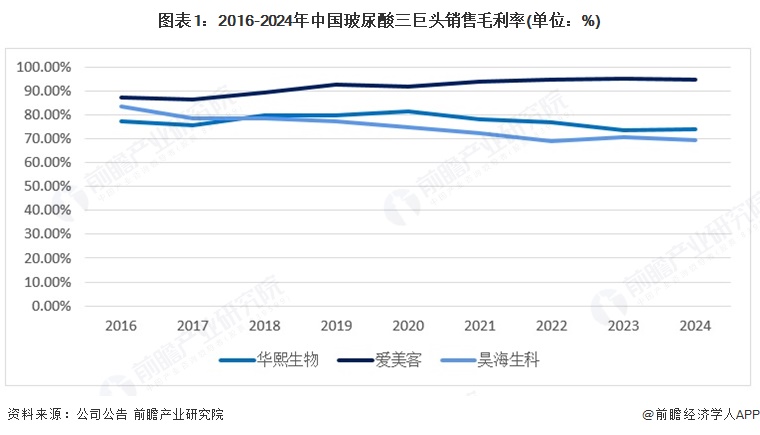
Core Insights - The medical beauty industry, particularly the hyaluronic acid market, is experiencing rapid growth, with major players like Aimeike, Huaxi Biological, and Haohai Biological achieving significant revenue increases and maintaining high gross profit margins, although there are signs of potential declines in these margins due to increased competition and market saturation [1][2][7][8] Group 1: Sales and Profitability - The overall gross profit margin for the leading companies in the hyaluronic acid market remains above 70%, with Aimeike reaching a peak margin of 95% by 2024, while Huaxi Biological and Haohai Biological are projected to see declines in their margins to 74.07% and 69.52% respectively by 2024 [1] - Aimeike's injection products contribute nearly 98% of its total revenue in 2024, with sales of solution-type injections reaching 1.744 billion and gel-type injections at 1.216 billion [8] Group 2: Business Development Strategies - Haohai Biological has pursued a strategy of mergers and acquisitions since 2007, completing nearly 20 transactions to expand its business into various sectors, including ophthalmology and medical aesthetics, with medical beauty and wound care projected to generate 1.195 billion in revenue in 2024, reflecting a 13.06% year-on-year growth [2][5] - Huaxi Biological has diversified its business model since 2012, moving from raw material supply to include medical, functional skincare, and functional food sectors, with functional skincare sales expected to reach 2.569 billion in 2024, accounting for 47.84% of total revenue [7]



深夜回应!两大巨头纷争迎“终章”
Zhong Guo Ji Jin Bao· 2025-06-24 04:31
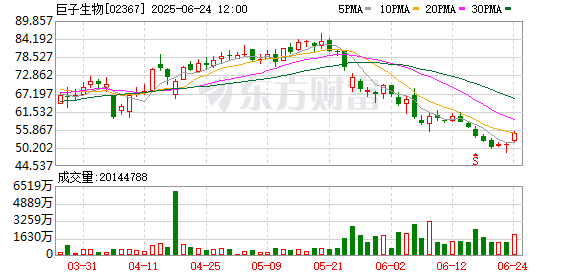
Group 1 - The core issue revolves around the dispute between two major players in the medical beauty industry, Juzi Biotechnology and Huaxi Biotechnology, regarding recombinant collagen products [2] - Juzi Biotechnology acknowledged limitations in its current quality standards, testing methods, and labeling, which are not fully aligned with the industry's evolving high standards and technological advancements [2][7] - Following the announcement, Juzi Biotechnology's stock price surged over 7% on June 24 [3] Group 2 - Juzi Biotechnology outlined three future initiatives: collaborating with research institutions to enhance testing methods for recombinant collagen in cosmetics, gradually disclosing key technical parameters and quality control data, and actively participating in the formulation of national and industry standards for recombinant collagen [7] - Huaxi Biotechnology previously addressed concerns about the lack of relevant testing standards in the recombinant collagen sector, emphasizing the misuse of the term "collagen" and the need for clear scientific conclusions to avoid misleading the market and consumers [10]
深夜回应!两大巨头纷争迎“终章”
中国基金报· 2025-06-24 04:25
Core Viewpoint - The article discusses the ongoing dispute between two major players in the beauty industry, Juzi Biotechnology and Huaxi Biotechnology, focusing on Juzi's acknowledgment of limitations in their collagen product standards and their plans for improvement [2][8]. Group 1: Juzi Biotechnology's Response - Juzi Biotechnology admitted that their current quality standards, testing methods, and labeling have limitations that do not fully meet the high standards and requirements of industry development and technological advancement [2][8]. - The company plans to collaborate with research institutions to accelerate the optimization and validation of qualitative and quantitative testing methods for recombinant collagen in cosmetics [8]. - Juzi will gradually disclose key technical parameters and quality control data for raw materials and finished products to empower industry development and accept public supervision [8]. Group 2: Industry Standards and Developments - The latest industry standard for recombinant collagen dressings, YY/T 1947-2025, is set to be implemented in March 2026, indicating a need for updated compliance among companies [6]. - Juzi Biotechnology emphasized the necessity for continuous optimization and iteration of their quality standards and methods in response to the rapid development of the recombinant collagen industry and increasing consumer quality demands [8]. Group 3: Huaxi Biotechnology's Position - Huaxi Biotechnology previously addressed concerns regarding the lack of relevant testing standards in the recombinant collagen field, highlighting the misuse of the term "collagen" in the market [9]. - They criticized the misleading use of the term "collagen" by some companies, which do not produce the actual collagen sequence and structure, thus lacking physiological functionality [9]. - Huaxi believes that clear and scientifically verifiable conclusions are essential to avoid prolonged disputes and help companies resolve their issues quickly [9].

靠谱医生难找?美团瞄准千亿医美赛道信任危机
Guan Cha Zhe Wang· 2025-06-24 02:43
Core Insights - The "beauty economy" is experiencing explosive growth, with China's medical beauty market expected to exceed 100 billion yuan by 2025, serving over 26 million people annually [1] - Despite rapid development, the industry faces challenges such as chaotic market information, excessive marketing by institutions, and unguaranteed results, leading to consumer anxiety throughout the decision-making process [1] - There is a shift in consumer preferences from drastic surgical changes to more refined, minimally invasive procedures that provide immediate results, reflecting a deeper understanding and higher expectations from consumers [2][4] Industry Trends - The demand for medical beauty services is becoming increasingly diversified and refined, with consumers now seeking to enhance their natural features rather than undergo drastic transformations [2][3] - The trend towards "natural anti-aging" and precision adjustments indicates a maturation of the industry, moving away from a rough development model [4] - Consumers are now more knowledgeable and specific about their desired outcomes, often requesting detailed adjustments and utilizing technology such as AI for pre-surgery simulations [3] Consumer Behavior - Many consumers express frustration over the difficulty of finding reliable doctors, highlighting a common sentiment that trustworthy medical professionals are hard to locate [5][6] - The decision-making process for consumers is lengthy and anxiety-inducing, as they navigate a plethora of information that is often misleading or inconsistent [6] - The average user visits medical beauty platforms 6-8 times daily, spending significant time researching doctors and comparing their qualifications and aesthetic styles [5] Challenges in the Industry - The medical beauty industry is plagued by information asymmetry, leading to increased trust costs for consumers who must engage in extensive research before making decisions [6] - The presence of unregulated marketing practices exacerbates the trust issues within the industry, causing consumers to experience multiple unsatisfactory encounters before finding suitable providers [6] - The lengthy and often trial-and-error nature of the selection process can result in wasted time and financial resources, as well as potential psychological and physical harm to consumers [6]


新氧毛利率受挫背后:传统支柱业务遭冲击,轻医美连锁业务转型面临盈利难题
Hua Xia Shi Bao· 2025-06-23 09:37
Core Viewpoint - The company is facing a dual challenge of declining revenue and increasing losses, primarily due to the significant downturn in its traditional core business of "information and appointment services" [2][6][11]. Revenue and Profitability - In Q1 2025, the company's total revenue was 297 million RMB, a year-on-year decline of 6.6%, with net losses expanding to 33.1 million RMB, a 56.13% increase from the same period in 2024 [3]. - The company's revenue experienced significant fluctuations in recent years: 1) 2021 revenue reached 1.692 billion RMB, up 30.7% due to the recovery of the medical beauty industry and acquisitions; 2) 2022 saw a sharp decline of 25.7% to 1.258 billion RMB; 3) 2023 revenue rebounded to 1.498 billion RMB (+19.1%); 4) 2024 revenue slightly decreased to 1.467 billion RMB (-2.1%) [4][5]. - The net profit turned positive in 2023 at 21.28 million RMB but turned into a significant loss of 589 million RMB in 2024, primarily due to goodwill impairment related to a previous acquisition [5] [11]. Core Business Decline - The main reason for the negative revenue growth is the drastic decline in the traditional core business of "information and appointment services," which fell by 19.3% from 1.151 billion RMB in 2023 to 929 million RMB in 2024, now accounting for only 63.4% of total revenue [6][11]. - This core business, which previously constituted 100% of revenue in 2020, has been severely impacted by competition from emerging platforms like Douyin and Xiaohongshu, which have diverted advertising budgets from medical beauty institutions [6][11]. New Business Development - In response to the pressure on traditional business, the company launched the "Brand Aesthetic Center" in 2023, generating revenue of 13 million RMB, which grew to 169 million RMB in 2024 [7][11]. - Despite rapid revenue growth in the light medical beauty chain business, its profitability remains weak, with gross margins of only 22.26% in 2024 and further declining to 18.78% in Q1 2025 [8][11]. Cost and Operational Challenges - The operational costs of the light medical beauty chain business have surged, with costs rising from 9.6 million RMB in 2023 to 132 million RMB in 2024, representing 77.7% of revenue [8][10]. - The company faces challenges in managing the operational efficiency of its new business model, which differs significantly from its traditional medical beauty operations [11].

Z世代消费图鉴来了!做新消费“型”动派
Zhong Guo Ji Jin Bao· 2025-06-23 07:34
当下,消费市场正经历一场"静悄悄的变化":品质、体验、个性表达成为新刚需,线上线下加速融合, 新业态层出不穷。但是,信息过载让人眼花缭乱?预售套路、冲动消费频踩坑?钱包和权益如何守护? 别慌!新消费时代,清醒的"型"动派绝不躺平! 中国基金报紧抓时代脉搏,联合各大金融证券机构,倾力打造 《新消费"型"动派》 主题系列活动! 聚 焦Z世代消费力,以专业视角和多元形式,为您奉上一份实用、前瞻的《新消费指南》。 洞察Z世代消费力,解码趋势背后的投资逻辑! 本次《新消费"型"动派》主题系列活动将在中国基金报官方微信公众号、官方视频号、官方APP、官方 微博、官方抖音、官方社群等媒体平台进行同步宣传和推广,覆盖用户超1200万! 同时,活动将在中国基金报投资者教育社群中深度互动,让理性消费与科学理财的理念深入人心。 (原标题:Z世代消费图鉴来了!做新消费"型"动派) 您的反馈,将直通《基民来了》直播间,变身"基民树洞"热聊话题。参与即是对自身消费主张的清晰表 达,更是为行业提供价值洞察! 基民来了 新消费投资,你入局了吗? 6月23日起,精彩活动不停歇,助你成为新消费"清醒玩家": 投资热点说 新消费崛起!如何挖掘投资 ...
商贸零售行业周报:618电商高质增长,强品牌龙头及新锐功效品牌突围-20250622
KAIYUAN SECURITIES· 2025-06-22 13:51
Investment Rating - The industry investment rating is "Positive" (maintained) [1] Core Views - The 618 shopping festival saw a total e-commerce sales of 855.6 billion yuan, representing a year-on-year growth of 15.2% [23][24] - The beauty sector performed well during the 618 festival, with total GMV across four major platforms reaching 65.9 billion yuan, growing over 10% year-on-year [23][24] - International high-end beauty brands showed signs of recovery, with brands like Lancôme and Estée Lauder maintaining strong positions on platforms like Tmall and Douyin [32] Summary by Sections Retail Market Overview - The retail industry index closed at 2062.20 points, down 2.75% for the week, underperforming the Shanghai Composite Index by 2.24 percentage points [5][14] - The retail sector has seen a year-to-date decline of 7.89%, lagging behind the overall market performance [14][17] 618 Shopping Festival Insights - The 618 shopping festival was extended to the longest duration in history, from May 13 to June 20, 2025 [23] - Tmall's GMV during the festival grew by 10%, marking the largest increase in three years, with 453 brands achieving over 100 million yuan in sales [24][29] - Douyin's e-commerce saw over 60,000 brands doubling their sales, with more than 2,000 products exceeding 10 million yuan in sales [24][29] Investment Recommendations - Focus on high-quality companies in high-growth sectors driven by emotional consumption themes, particularly in gold and jewelry, offline retail, cosmetics, and medical aesthetics [6][35] - Recommended companies include Lao Pu Gold, Chao Hong Ji, Mao Ge Ping, and Pei Lai Ya, among others [38] Company Performance Highlights - Lao Pu Gold reported a revenue of 8.506 billion yuan for FY2024, up 167.5%, with a net profit increase of 253.9% [37] - Mao Ge Ping achieved a revenue of 3.885 billion yuan for FY2024, growing by 34.6%, with a net profit increase of 33% [37] - Pei Lai Ya's revenue for 2024 was 10.778 billion yuan, up 21%, with a net profit increase of 30% [37]
商贸零售行业周报:若羽臣回购价格大幅上调至88.4元/股 周大福FY25业绩超预期
Xin Lang Cai Jing· 2025-06-22 04:36
Industry Changes - In May, domestic brands such as Zhenjia, Feicui, PA, and Perfect Diary showed strong performance on Tmall and Douyin, with Feicui's GMV exceeding 60 million, and several brands achieving over 100% growth [1] - The import value of cosmetics in May decreased by 4.9% year-on-year, totaling 10.19 billion, indicating a downward trend in overall imported cosmetics despite some recovery among foreign beauty brands [2] Company Updates - Ruoyu Chen raised its share repurchase price significantly from 30.22 yuan to 88.4 yuan per share, reflecting confidence in the company's future development [1] - Ying Tong Group, a major player in the Chinese perfume market, is preparing for its listing on the Hong Kong Stock Exchange, with projected revenue of 2.083 billion for FY2025, representing an 11.8% year-on-year increase [2] - Juzi Holding Co., Ltd, the controlling shareholder of Juzi Biotechnology, plans to increase its stake by no less than 200 million HKD, indicating confidence in the company's long-term value [2] Retail Sector Insights - Chow Tai Fook reported a revenue of 89.66 billion HKD for FY25, a decrease of 17.5%, but showed signs of recovery with a narrowing decline in retail sales [4] - Yonghui Supermarket is accelerating its store renovation plan, aiming to complete renovations for 300 stores by the Lunar New Year in 2026 [5] Investment Recommendations - The current low valuation combined with new consumer growth remains a core theme, with a focus on domestic leading brands and the upcoming 618 shopping festival as a potential catalyst [3] - The jewelry sector is recommended, particularly Chow Tai Fook, with attention to other low-valuation Hong Kong jewelry companies [6][14] - New consumption trends in the jewelry sector are expected to drive growth, with a shift in consumer demographics towards younger buyers and a focus on self-purchase attributes [10][12]